.png?width=400&height=150&name=My%20project-1%20(1).png)


Choosing the best mobile marketing software isn't just about finding a tool that works; it's about finding one that works for you. If you're a marketer trying to drive re-engagement without the right segmentation tools, or an e-commerce team watching SMS revenue flatline because your platform can't personalize at scale, the tool you're on matters more than most people admit.
Whether you're scaling SMS campaigns with Attentive or Textedly, orchestrating omnichannel journeys with Insider One or Braze, driving retention with CleverTap, or tracking attribution with AppsFlyer, the right platform can directly impact your KPIs, such as user retention, conversion rates, and lifetime value.
But not every tool fits every team. Some platforms excel at push notifications but lack depth in personalization. Others offer robust segmentation but fall short in multichannel orchestration or actionable reporting. That's exactly why I tested the best mobile marketing software in hands-on workflows. I compared their capabilities, evaluated their strengths and gaps, and analyzed G2 reviews to uncover how they perform.
Questions like "which platform works best for e-commerce SMS?" or "how do I choose between a full-stack engagement suite and a dedicated attribution tool?" kept coming up in my research. I've tried to answer both throughout this piece.
The result is a curated list of tools that don't just check boxes, they solve problems. G2's 2026 report on AI-driven mobile user acquisition also highlights how AI-powered predictive segmentation is reshaping how teams acquire and retain mobile users, which shaped how I weighted each platform. If you're ready to find a mobile marketing platform that actually fits your goals, let's dive in.
According to the Summer 2026 G2 Grid Report, these mobile marketing platforms are top-rated in their category. Pricing details are included where publicly available to help you compare options more easily.
To me, mobile marketing software is the control center for creating customer moments that actually stick. It's where push, SMS, in-app messaging, and email all come together, not as siloed blasts, but as coordinated conversations. The best platforms help me send the right message to the right user at the right time without guessing what might work well.
What separates great mobile marketing tools from the rest isn't automation or campaign volume. It's how quickly they help me recognize when engagement is slipping, identify who's falling off, and take action to fix it. I don't want to juggle five tools or rebuild segments manually. A great platform already knows my audience, adapts to behavior in real time, and makes it easy to respond with relevance.
Because at the end of the day, that's the whole point: connection. Whether I'm nudging a user back into the app or driving urgency during a promotion, I want a system that makes it easier to act with context.
I spent weeks testing mobile marketing platforms, narrowing down the best options based on features, ease of use, pricing, and real user feedback. I also used AI-driven research to analyze software updates, buyer preferences, and common challenges to ensure these recommendations are as accurate and helpful as possible.
In cases where I couldn't personally test a tool due to limited access, I consulted a professional with hands-on experience and validated their insights using verified G2 Reviews. The screenshots featured in this article may be a mix of those captured during testing and those obtained from the vendor's G2 page.
Each tool on this list is reliable, easy to use, and built to help create personalized experiences, engage users across channels, and drive meaningful action, whether you're focused on in-app messaging, lifecycle campaigns, or B2C re-engagement. My research and analysis are also based on real-time buyer sentiment and the proprietary G2 Scores awarded to each of these mobile marketing solutions.
Instead of chasing long feature checklists, I focused on what matters in real marketing workflows. From my research and conversations, these are the criteria I kept coming back to:
After testing 15+ platforms, I narrowed it down to the 6 best mobile marketing tools. Each one stands out for different reasons, but all of them align with the needs of mobile-first marketing teams.
The list below contains genuine user reviews from the Mobile Marketing Software category. To be included in this category, a solution must:
*This data was pulled from the G2 Grid Report in 2026. Some reviews may have been edited for clarity.
After digging into Insider One's feature set and reading through G2 reviews, the appeal really clicked for me. This isn't just a tool for sending SMS or emails, it's a full-stack mobile marketing platform built for segmentation, dynamic content, geo-targeting, predictive audience building, and coordinated campaigns across web, app, messaging, and more. And if you're trying to personalize at scale, it's one of the strongest I've come across.
The segmentation engine stood out most to me. Marketers talk about how easy it is to target audiences based on behavior, geography, lifecycle stage, and past interactions, then build campaigns that reflect those details. I also saw praise for AI-driven predictive segments, which help marketers identify churn-prone users or high-value audiences without endless manual setup.
Insider One's personalization and automation tools came up frequently, too. People mentioned using dynamic content blocks, interactive widgets, and recommendation engines to tailor experiences in real time. The Web Suite plays a big role here, helping teams optimize websites so the user experience feels both dynamic and relevant. Beyond that, reviewers consistently appreciated journey automation, being able to coordinate campaigns across email, SMS, push notifications, in-app messages, and web from a single place. The platform's latest addition, Agent One, takes this further by deploying autonomous AI agents that manage high-intent customer moments and two-way conversational journeys across 12+ channels without manual intervention.
And integrations? Insider One performs surprisingly well here. Its integration APIs and data import/export tools both hold a 95% satisfaction rating on G2, based on 1,200+ reviews, showing how reliable the platform is at connecting with other tools and systems. Many marketers also liked the breadth of partner applications available, making it easier to fit Insider One into existing stacks without heavy IT work.

With so many channels, capabilities, and AI features packed into one place, new users, especially teams coming from simpler point solutions, often find the initial learning curve genuinely steep. It's the flip side of breadth: the more a platform can do, the more there is to get comfortable with. Reviewers consistently noted that the customer success team and documentation help considerably, and once teams are through that first phase, the range of what's possible becomes a real competitive advantage.
If personalization at scale is your priority, Insider One is one of the most feature-rich and forward-looking platforms I've tested. It's not just built for multichannel marketing; it's built to make those channels work together in ways that actually drive retention and revenue.
"The platform lets us test different communication strategies across channels without adding operational complexity. As a result, we've been able to sharpen campaign targeting, optimize user flows, and respond faster to seasonal trends and evolving customer needs. It's also worth highlighting the Insider team's partnership mindset. They don't just provide technical support; they actively contribute strategic recommendations, use-case ideas, and optimization suggestions that help us continue getting more value from the platform over time."
- Insider One Review, Seray Y.
"Sometimes the platform feels very advanced, and it takes time to explore and fully use all the features. We are not a classic e-commerce partner, so our goals are very different, and learning how to track these goals in Insider takes a little bit of time. But the Customer Success team is very helpful."
- Insider One Review, Anıl Turan G.
Building a cross-channel strategy? Read our guide to multi-channel marketing to understand how to coordinate messaging across SMS, email, push, and in-app without losing consistency.
Braze is rated 4.5 out of 5 stars on G2, based on 1,400+ reviews, and after testing it myself, I can see why it's such a trusted name in mobile marketing. It's the platform that comes up when teams need serious cross-channel messaging power, with a reputation for being both robust and scalable.
The Canvas journey builder was a personal favorite. Reviewers rave about it! It's a clean, visual drag-and-drop interface where you can map onboarding flows, re-engagement campaigns, transactional messages, anything really.
Paired with Braze's powerful segmentation engine, you can build nuanced audience groups based on behavior, events, and attributes, then engage users across push, email, in-app, and more, all in one flow.
And with the April 2026 launch of BrazeAI Operator and the Agent Console, an in-dashboard AI assistant that builds campaigns, generates content, and troubleshoots workflows, teams can now execute complex strategies without leaning on technical resources at every turn.
Personalization is another standout. Braze uses Liquid templating to let you insert dynamic content and tailor experiences in real time. Once you're up to speed, it's incredibly effective, whether you're referencing past behaviors in your messaging, adjusting send times, or customizing content based on location or app activity.
G2 users also appreciated onboarding. Braze doesn't just hand over the keys and wish you luck; they pair you with a customer success manager, walk you through a structured setup, and help guide both technical and strategic implementation. That kind of support makes a difference when you're learning a platform this robust.
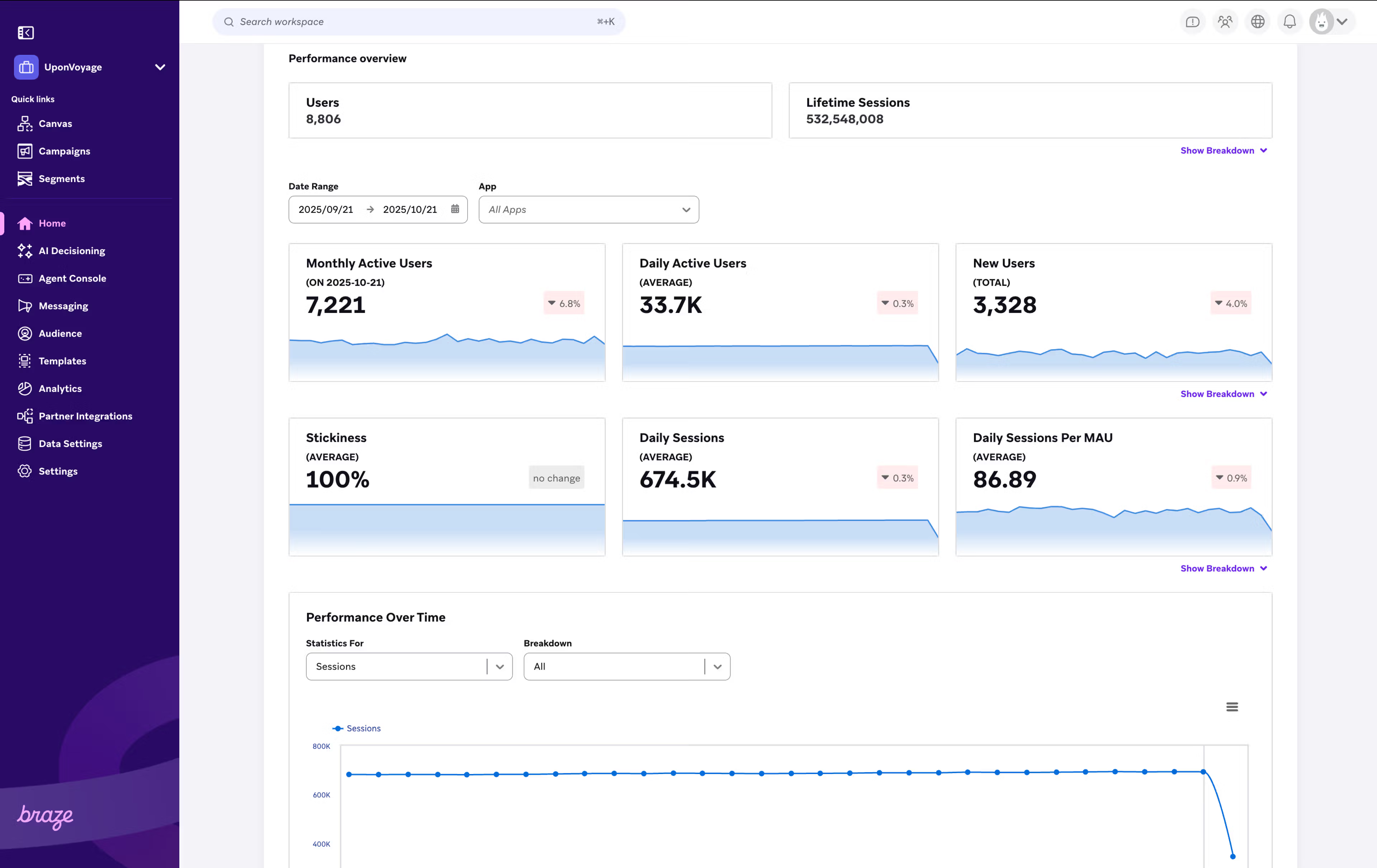
Pricing is worth thinking through carefully as you scale into Braze's AI capabilities. G2 reviewers noted that autonomous decisioning features and add-on channels, like in-app messages, are priced separately from the core platform, which makes cost forecasting harder as usage grows. For enterprises running complex, high-volume campaigns, the platform's depth makes it a strong return; just model out those costs before you commit to scaling up.
If you're looking for a serious mobile marketing platform with the flexibility to scale across channels and teams, Braze delivers. It's ideal for companies running complex customer journeys, experimenting frequently, and personalizing at scale. Once you're in the rhythm, the control and clarity it gives you are worth every step of the ramp-up.
"Braze continues to outpace the market by shifting from simple automation to true AI-native orchestration. In 2026, the standout feature is definitely the BrazeAI™ Decisioning Studio. Unlike old-school A/B testing, it uses reinforcement learning to autonomously decide the best channel, timing, and offer for each user in real-time.
I’m also incredibly impressed with the BrazeAI™ Liquid Assistant. It has turned complex Liquid coding into a conversational task, allowing our team to build hyper-personalized logic (like dynamic product catalogs) in minutes rather than hours."
- Braze Review, Federico M.
"Unlike some other tools, Braze doesn’t automatically save changes to campaigns or canvases. This can lead to extra work if you forget to save manually, especially since the platform logs you out after a few hours, which can result in losing unsaved progress. Another limitation is that once a campaign is launched, not all elements can be adjusted—even if it hasn’t actually been sent yet."
- Braze Review, Vanessa Viola M.
Ready to optimize your push campaigns? See our top picks for push notification software that drives engagement.
Attentive is one of the first names I hear when people talk about SMS marketing and mobile marketing for e-commerce. It's a platform designed to drive conversions, grow subscriber lists, and help brands own their mobile relationship with customers. And with a 4.5 out of 5 rating on G2, based on 1,200+ reviews, the results speak for themselves.
The first thing I noticed across reviews and in my own testing is how quickly teams scale SMS with Attentive. G2 reviewers consistently mentioned how fast they launched campaigns, grew subscriber lists using pop-ups, and turned SMS into one of their highest-performing channels. I also saw a lot of love for the AI-powered content suggestions, which help marketers craft better messages without having to start from scratch every time.
Customer support was another standout. I read dozens of G2 reviews highlighting how proactive, responsive, and strategic their customer success managers are. Whether during onboarding or when refining a campaign strategy, users said they never felt like they were figuring things out alone.
The platform also makes it easy to create on-brand signup units like pop-ups and banners, and to automate key flows such as welcome series and abandoned cart reminders. Several G2 users mentioned they were able to ditch third-party agencies or extra tools because Attentive covered everything they needed to run a full SMS program in-house.
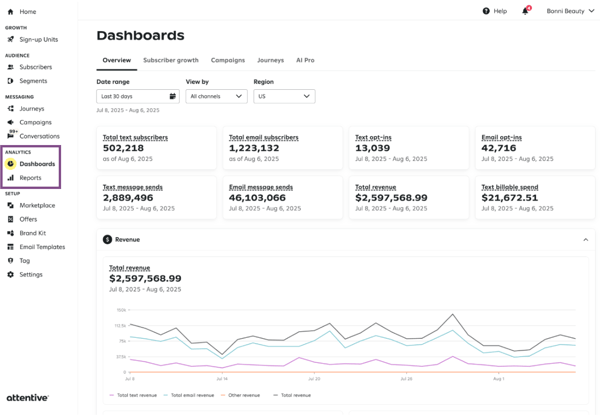
Reporting accuracy came up as a recurring point of friction across G2 reviews. Several users noted that Attentive's default attribution window pulls in revenue beyond what SMS directly drove, making it harder to present clean channel-level results to leadership. It's a straightforward fix once you know where to find it, and the support team walks new users through the adjustment during onboarding, so the numbers you're reporting reflect actual SMS performance from early on.
Even with that watch-out, Attentive holds strong. I'd recommend it for DTC brands, online retailers, and ecommerce marketers looking to scale SMS revenue without stitching together multiple tools. Just go in with a clear understanding of your contract terms, and plan your spend around seasonal volume shifts. If you're a marketer like me who values personalization, efficiency, and smart tools, Attentive is built to help your SMS and email channels thrive.
"I love that Attentive allows us to reach our customers right in their pockets on the phone and helps us create a brand voice that can communicate directly with clients. The push into AI has been a really cool thing to see and grow, and I can do a lot of great things with Attentive's tools and their use of AI. The AI tools allow me to dictate the tone and messaging around key sales and set it live, capturing a lot of engagement. This helps me use my time for other tasks in SMS and Email."
- Attentive Review, Connor C.
"While the platform is strong for core flows and campaigns, more advanced customisation sometimes requires additional setup or support. That said, these are relatively minor trade-offs given the revenue impact the channel can deliver when managed well."
- Attentive Review, Yingni Q.
Need expert help to scale your marketing? Explore the best digital marketing services for growth-focused teams.
Textedly wasn't the first SMS marketing platform I explored, but it surprised me with how streamlined it makes day-to-day texting. In a space crowded with full-stack marketing suites, Textedly focuses on what many small and mid-sized teams actually need: fast, no-fuss texting without a huge learning curve. And based on the G2 reviews I read, a lot of users agree.
The ease of sending bulk text messages and setting up auto-responses with keyword triggers came up again and again in G2 feedback. I saw users repeatedly praise how simple it was to configure something like "TEXT JOIN to 12345" and instantly add a contact to their list or trigger an automated follow-up. On G2, the Bulk SMS feature holds a 91% satisfaction score, based on 1,200+ reviews. It's the kind of feature that saves serious time when you're managing outreach at scale.
Contact management and message scheduling were another highlight. Whether people were uploading CSV files, segmenting lists, or setting up recurring campaigns, G2 reviewers talked about how smooth the process felt. For busy teams running appointment reminders, flash sales, or event notifications, that kind of speed to launch really matters.
I also noticed G2 users consistently call out Textedly's two-way messaging. You can manage customer replies right in the dashboard, which makes it easy to turn a one-way text blast into a real conversational marketing exchange. Several service businesses mentioned how helpful this is when answering customer questions on the fly.

One thing worth knowing before you commit to a plan: message length has a bigger impact on monthly usage than most people expect. Long messages, emojis, or special characters split a single send into multiple message units, which means your allocation runs down faster than the plan headline suggests. It's a pattern common across SMS platforms, but worth mapping against your typical message style before choosing a tier, as the support team is genuinely helpful here in pointing teams to the right plan from the start.
Overall, I'd recommend Textedly for small and mid-sized teams who want to run SMS campaigns without hiring an ops team. It's especially useful for businesses focused on sending clean, on-brand messages rather than building complex customer journeys.
"I like that Textedly's interface is relatively easy to use. It allows me to see how the message is going to be displayed before it's sent, making communication more effective. I can both manually upload numbers and also let people text and opt-in, which adds flexibility. Additionally, the initial setup of Textedly was fairly easy and pretty intuitive, asking only for the phone numbers I wanted to include."
- Textedly Review, Jesse R.
"The number of messages we get a month is deceiving because if it says 3,500, then after 147 characters, it's already considered one message. In reality, we use 7 messages to send out 1 text due to the information we provide as a nonprofit organization. So, 622 people end up being around 4,800 messages in one shot."
- Textedly Review, Verified User
Ready to go beyond SMS? Explore proven customer retention strategies to understand how mobile marketing fits into a broader lifecycle engagement plan.
CleverTap is one of those platforms that quietly powers a ton of retention and engagement strategies, especially for mobile-first teams. After digging through G2 reviews and real user feedback, it became clear to me why it stands out.
One of the first things that stood out to me and to G2 reviewers is how structured and intuitive the segmentation and campaign tools feel. CleverTap makes it easy to create personalized messages, whether it's email, push notifications, or in-app alerts, and tie them to real-time behavioral analytics. A lot of marketers described it as flexible and fast, especially when you're building segments on the fly or reacting to user drop-offs.
I also saw repeated mentions of CleverTap being a true partner for growth. G2 users talked about reducing churn, improving retention, and even tracking app uninstall rates, something many platforms overlook. What I appreciated was how clearly CleverTap surfaces these insights and links them to actions, like sending a re-engagement message or triggering an onboarding reminder.
On the creative side, the drag-and-drop builder is a fan favorite, and I can see why. It's not just for email; it powers push and in-app campaigns, too. G2 reviewers consistently called out how easy it was to build polished campaigns without leaning on a designer. Automation flows earned praise for being clear, customizable, and reliable once they're set up.

One recurring note in G2 reviews is that the interface, while functional, can feel dated compared to newer platforms in the category. Several 2026 reviewers described it as clunky in places, particularly when filtering users or navigating between modules. For teams managing multiple campaigns simultaneously, this adds friction to what should be quick workflows. That said, the underlying analytics and automation capabilities remain among the strongest in the category, and most teams find that the platform's output more than compensates for the navigation overhead once they're in a regular rhythm.
Overall, if your team is scaling fast and ready to dive deep into lifecycle marketing, CleverTap has real potential. I'd recommend it most to product marketers, growth teams, and mobile-first businesses that want deeper control over retention strategies and customer journeys.
"The ability to bring together analytics and engagement within a single platform is really valuable. It provides deep insights into user behavioural data, and the automation and personalization features make it easy to target our users more effectively."
- CleverTap Review, Sachin K.
"The segments are too static, and new ones have to be made each time. Uploads via SFTP are not straightforward and sometimes do not work well. Support is too slow, and they do not accept when there is an error. The download of users is not clear, the identities have too many IDs in the same field, and it makes analysis difficult without a very good filter on the information."
- CleverTap Review, Irene M.
Drive action before it's too late with the best proactive notification software for real-time engagement.
AppsFlyer is widely adopted by mobile marketers looking to measure, analyze, and optimize their app performance. It's a popular choice across industries like gaming, e-commerce, and fintech, where accurate attribution and engagement data are critical for scaling user acquisition. AppsFlyer holds an impressive 85% G2 Satisfaction Score for engagement tracking based on reviews, reflecting its reliability in measuring metrics like session length, retention, and exit tracking.
One thing that stood out repeatedly in reviews was how clear and easy-to-view the data is. Multiple users mentioned that AppsFlyer's dashboards provide a comprehensive snapshot of campaigns, helping teams quickly identify performance trends without toggling between multiple tools. For marketers managing multi-channel campaigns, this clarity is a real time-saver.
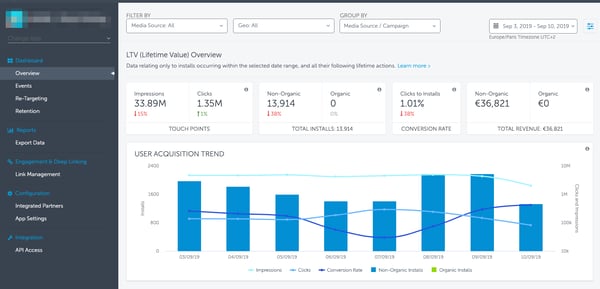
Another commonly praised feature is granular engagement measurement. Reviewers valued how the platform accurately captures where and when users drop off, which is key for optimizing the app experience. Metrics like retention rates and bounce tracking were highlighted as particularly useful for teams trying to improve lifecycle marketing efforts.
I also came across positive mentions of AppsFlyer's attribution tracking. Users appreciated being able to see exactly where app downloads originated, whether from ads, UTMs, or organic sources. This made it easier to allocate budgets and double down on high-performing acquisition channels.
Reporting customization has some limits, particularly for teams that need more granular configurations or deeper segmentation beyond the standard views. For most campaign workflows, the defaults serve well, but teams managing complex multi-market reporting may find it worth pairing AppsFlyer with a dedicated BI tool for that extra layer; a trade-off most find reasonable given how strong the attribution layer itself is.
Even so, AppsFlyer consistently earns high marks for its data accuracy, campaign insights, and breadth of measurement capabilities. For mobile marketers who want reliable attribution and actionable analytics in one place, it remains a top-tier choice.
"I like that AppsFlyer provides accurate attribution tracking and real-time analytics, making it easier to analyze campaign performance. Its easy integration with multiple ad platforms and CRM tools streamlines our marketing processes. The user-friendly dashboard gives detailed insights into installs and user behavior, which helps optimize our campaigns and improve marketing ROI."
- AppsFlyer Review, Brijkishor A.
"One downside is that AppsFlyer can get quite expensive as your event volume grows, so it may not be the easiest tool to justify for smaller teams. While the platform is generally user-friendly, some of the more advanced reports and settings take time to understand properly. A few integrations also need technical setup, which can slow things down. Reporting can occasionally lag a bit during heavy traffic periods. Support is helpful overall, though non-urgent issues sometimes take longer than expected."
- AppsFlyer Review, Sahib S.
Got more questions? G2 has the answers!
Attentive is a top choice for retail and e-commerce brands. It offers personalized SMS campaigns, deep Shopify integration, and even text-to-buy functionality, making it highly effective for driving conversions in retail environments.
Textedly is highly rated among small businesses for its simplicity, quick setup, and affordability. Its high-volume SMS support, keyword opt-ins, and unlimited contact groups make it easy for lean teams to execute powerful text campaigns without a steep learning curve.
Braze and Insider One both lead in mobile marketing automation. Braze shines with Canvas Flow, a drag-and-drop journey builder that automates customer engagement across mobile, web, and messaging. Insider One leverages AI-powered segmentation and predictive triggers for real-time engagement, making it a strong enterprise contender.
Attentive is purpose-built for e-commerce brands. Features like personalized product recommendations, SMS promos, and seamless Shopify sync make it a favorite for online stores looking to scale mobile revenue.
CleverTap is a great fit for tech companies focused on user retention and engagement. It combines user analytics, in-app messaging, and A/B testing in one intuitive platform, helping fast-moving product teams iterate quickly.
Textedly is the most budget-friendly option here. With plans starting at $29/month for 600 texts, it's ideal for local businesses that want to stay connected with customers through SMS without overspending.
While all the tools offer customer support, Braze and Insider One are frequently praised by mid-market and enterprise teams for their dedicated onboarding and solution engineers. For smaller teams, Textedly is known for responsive support and easy setup, helping non-technical users succeed quickly.
AppsFlyer and CleverTap are strong picks for driving and tracking app installs. AppsFlyer provides granular attribution data to identify which channels are actually delivering installs, while CleverTap helps convert new installs into retained users through behavioral targeting and onboarding automation.
Textedly is a practical starting point for early-stage teams thanks to its low entry price and simple setup. For startups focused on app growth and retention from day one, CleverTap's free trial and structured onboarding make it a solid option without requiring a large team to operate it effectively.
AppsFlyer is consistently recommended for mobile advertising measurement, offering reliable attribution across paid channels like Meta, Google, and programmatic networks. For teams that also want to run and personalize the campaigns themselves, Insider One and Braze are the most recommended full-stack options on G2.
Insider One and CleverTap lead on segmentation depth. Insider One's AI-driven predictive segments identify high-value and churn-prone users automatically, while CleverTap lets teams build behavioral segments tied directly to real-time campaign actions, helping lift engagement without manual audience rebuilds.
CleverTap is purpose-built for consumer app retention, with uninstall tracking, cohort analytics, and lifecycle automation in one platform. Braze is also highly rated for LTV-focused programs, particularly for apps running complex re-engagement journeys across push, email, and in-app.
Attentive and Insider One both handle email and SMS natively in a single platform. Attentive is the stronger pick for e-commerce teams where email and SMS need to work together around campaigns and flows, while Insider One suits teams that also want to layer in push, web, and in-app alongside both channels.
Textedly and Attentive are the easiest to use without technical skills, with straightforward dashboards and minimal setup. CleverTap is ranked among the easiest to use in its category on G2 and offers visual builders that make campaign execution accessible to non-technical marketers despite the platform's analytical depth.
CleverTap and Braze consistently earn high marks from retention marketing professionals on G2. CleverTap is valued for unifying behavioral data with campaign execution, while Braze is trusted for its reliability at scale across complex, high-volume lifecycle programs.
Insider One and Braze are the most frequently cited by analysts and product teams in G2 reviews, both recognized as Leaders in the Spring 2026 G2 Grid Report. AppsFlyer is the top-trusted platform specifically for measurement and attribution, particularly among growth and product analytics teams.
Braze and Attentive are consistently praised for their modern, intuitive interfaces. Braze's Canvas Flow and Attentive's campaign builder both reflect current UX standards, making them a natural step up for teams migrating from older or more rigid platforms.
Insider One and Braze both address notification fatigue directly through frequency capping, behavioral triggers, and AI-driven send time optimization, so messages only go out when they're most likely to land well. CleverTap's real-time segmentation also helps teams avoid over-messaging by targeting only users showing relevant behavioral signals.
Attentive and Insider One are the strongest here. Attentive's AI content suggestions and signup flow optimization reduce generic blasts, while Insider One's predictive segmentation ensures messages are contextually relevant. Both platforms are specifically designed to protect list health as subscriber volume grows.
Personalization is what separates high-engagement platforms from the rest. Insider One, Braze, and Attentive all use behavioral data and AI to tailor message content, timing, and channel to individual user preferences, which G2 reviewers consistently credit as the reason for strong open and click-through rates on their programs.
If there's one thing I kept coming back to after going through all of these platforms, it's that the "best" tool is really just the one that matches where your team is right now. A DTC brand scaling SMS revenue has completely different needs from a fintech app trying to reduce churn, and neither of them needs the same thing as a lean local business sending appointment reminders.
What I'd actually suggest: start with the problem, not the platform. If attribution and measurement are your biggest gaps, AppsFlyer is the obvious starting point. If you're trying to orchestrate journeys across a dozen channels with AI doing the heavy lifting, Insider One or Braze are worth the investment. If SMS is your primary channel and you need it to just work without a steep learning curve, Attentive or Textedly will get you there faster.
The tools on this list are all genuinely good at what they do. The difference is knowing which one is good for you.
Want to take your mobile strategy one step further? Check out the best location-based marketing software to deliver even more targeted, real-time experiences.
.png)

As a marketer, I’ve relied on email marketing tools to boost customer engagement for as long...
.png) by Devyani Mehta
by Devyani Mehta

It seems like it’s harder than ever to capture the attention of buyers.
 by Lauren Pope

Your customers experience your brand. And when the email says one thing, the website shows...
 by Sagar Joshi