If you've ever managed a deal room during due diligence or fundraising, you know how quickly things get messy. Legal teams, investment bankers, and corporate development leaders are often juggling sensitive files across email threads and shared drives, hoping nothing slips through the cracks. That's usually the moment teams start looking for the best virtual data room software, and in this guide, I'm walking you through my top 6 picks: Datasite Diligence, Ideals, Clinked, Firmex, Ansarada, and SecureDocs.
I've seen how much smoother things run when everything lives in a secure, structured workspace instead of scattered folders. The best virtual data room(VDR) software gives teams granular permissions, audit trails, and clear visibility into who accessed what and when, which is critical when the stakes are high.
Now, I'm not an M&A advisor or a corporate lawyer, but I evaluate software for a living and understand how the right tools can make complex workflows far more manageable. So I put together this list after comparing platforms using G2 data and additional research.
6 best virtual data room software: My picks for 2026
- Datasite Diligence: Best for AI-driven M&A redaction and deal management
For mergers and acquisitions, offering advanced AI tools and redaction (pricing available on request)
- Ideals Virtual Data Room: Best for secure, user-friendly VDRs
For top-tier security, granular permissions, and ease of use. (Pricing available on request.)
- Clinked: Best for secure client collaboration through branded portals
Branded client portals for securely sharing files and collaborating with external clients in one centralized workspace. (Starting at $299/mo)
- Firmex Virtual Data Room: Best for secure file sharing within Critix
For a highly secure VDR with a focus on compliance and ease of use.
(Pricing available on request)
- Ansarada: Best for AI-powered deal readiness and risk scoring
For AI-driven insights that assess deal readiness, risks, and compliance.
(Pricing available on request)
- SecureDocs Virtual Data Room: Best for SMBs with fast setup
For instant setup, unlimited users, and flat rate pricing (Starting at $250/mo)
* These virtual data room software are top-rated in their category, according to G2 Winter 2026 Grid Reports. The pricing for all these tools is available on request.
6 Best virtual data room software I recommend
At a basic level, virtual data room (VDR) software gives teams a secure place to store, share, and control sensitive documents during high-stakes business processes like mergers and acquisitions, fundraising, audits, and legal reviews. Instead of passing files around through email or scattered cloud drives, a VDR keeps everything centralized with permissions, activity tracking, and version control built in.
What separates the best virtual data room platforms from the rest is how well they balance security with usability. The strongest tools make it easy to organize large volumes of documents, manage granular user permissions, track viewer activity, and control access down to the file or page level. Features like audit trails, watermarking, and secure collaboration help teams move faster while keeping sensitive information protected.
Market growth reflects how essential these tools have become for modern dealmaking and secure collaboration. The global virtual data room market is projected to grow $17.46 billion by 2034, expanding at a 19.8% CAGR.
Growth numbers aside, the takeaway is simple: virtual data rooms are no longer niche deal tools. They’ve become a core platform for secure document management, collaboration, and transparency when businesses need to share critical information without losing control of it.
How did I find and evaluate the best virtual data room software?
I started with G2’s Grid Reports to build a shortlist of the top virtual data room software based on G2 Score, user satisfaction, and overall market presence.
Next, I dug into G2 reviews at scale with AI assistance to identify patterns that repeatedly show up for teams using virtual data rooms. Many buyers today also search for terms like most recommended data room software in tech industry or top virtual data room provider with strong security features when evaluating platforms for high-stakes transactions. To address those needs, I focused heavily on security, usability, and deal workflow capabilities reflected in verified G2 reviews.
I looked closely at what users say about document security, permission controls, file organization, audit trails, and collaboration features, along with how well each platform supports high-stakes workflows like due diligence and secure document sharing. Since I couldn’t test every platform first-hand, I relied on insights from people who use these tools daily and validated those takeaways against verified G2 reviews.
The screenshots in this article come from G2 vendor profiles and publicly available product documentation.
What makes the best virtual data room software: my opinion
When evaluating the best virtual data room software, I focus on several key features that determine its effectiveness for organizations handling sensitive transactions. These criteria are particularly important for teams researching the top virtual data room providers with strong security features, since capabilities like encryption, role-based access control, and detailed audit logs are essential for protecting confidential documents during due diligence.
- Document management: A virtual data room should act as a centralized, secure repository for all sensitive documents. I evaluate how easily users can upload, organize, and manage files while maintaining strict security and access control. Features such as data encryption, watermarking, and password protection are essential to prevent unauthorized access.
- Collaboration and file sharing: VDR software should facilitate secure collaboration among internal teams and external parties (such as investors, lawyers, and auditors). I check whether the system allows real-time commenting, document sharing, and secure communications within the platform, ensuring smooth collaboration while protecting confidentiality. Tools for version control and document comparison are also crucial to ensure that all parties work from the most up-to-date version of documents.
- Audit trails and activity monitoring: I evaluate whether the software offers comprehensive audit trails and activity tracking. This is critical for maintaining transparency and accountability during due diligence or other sensitive transactions. I assess the system's ability to track who accessed specific documents, what actions were taken (e.g., viewed, downloaded, or edited), and whether this information is readily available for auditing and reporting purposes.
- Role-based access control (RBAC): Security is paramount in a virtual data room, so I focus on whether the software provides role-based access control. This allows administrators to set granular permissions, ensuring that users only access the files and data they are authorized to view. I evaluate the system’s ability to support multiple levels of access, such as read-only, commenting, or full editing access, and if it tracks these permissions across the platform.
- Compliance and regulatory support: Many VDRs cater to highly regulated industries, such as finance, healthcare, and legal. I check whether the software complies with industry-specific regulations like GDPR, HIPAA, or SEC requirements. A good VDR should offer features like data encryption at rest, secure file sharing, and audit-ready reporting tools to ensure compliance during sensitive transactions.
- Document tracking and versioning: A VDR should provide version control and document tracking to ensure that all parties are working with the latest documents. I look for features like automatic versioning and alerts that notify users when new documents or updates are available. This eliminates the risk of outdated versions being circulated, ensuring that the transaction runs smoothly with minimal confusion.
- Secure document expiration and retention: Security extends beyond access; I evaluate whether the VDR supports document expiration and retention policies, allowing organizations to set automatic expiration dates for sensitive documents. This builds the foundation of long-term information security and reduces the risk of unauthorized access after a transaction is completed.
30%
of dealmakers see AI and machine learning as key factors for the transformation of the M&A industry in the next five years.
Source: PwC
- Enable secure cloud storage and distribution of content, data, and documents in a controlled environment
- Provide security measures such as encryption, two-factor authentication, and single sign-on controls
- Offer customizable permissions structures
- Remotely control files through digital rights management
- Verify, track, and enforce document permissions
- Allow for the compartmentalization of data within multiple projects, guaranteeing zero overlap or interaction between the individual projects
This data was pulled from G2 in 2026. Some reviews have been edited for clarity.
1. Datasite Diligence: Best for AI-driven M&A redaction and deal management
Datasite Diligence stands out as a dependable VDR solution, especially for mid-sized to large enterprises handling complex due diligence processes.
Based on G2 reviews, Datasite Diligence shows strong customer satisfaction across multiple categories. According to G2 Data, 90% of users say they would recommend the platform, and satisfaction scores remain high across operational metrics.
It’s frequently mentioned in the context of financial services, legal teams, private equity firms, and M&A advisors who need a secure and intuitive way to manage confidential document exchanges and prevent data breaches.
One standout capability, according to users, is how easy it is to upload and organize files within the platform. I frequently see G2 reviewers highlight the drag-and-drop functionality and folder structure, which they say makes navigating large volumes of data much more manageable. From what I’ve read, the sorting and search tools are also well-received, helping users quickly locate specific documents, even in data-heavy deals. G2 Data also shows file sharing satisfaction at 90%, reinforcing how consistently users rely on the platform for distributing and managing deal documents.
Something G2 reviewers seem to really appreciate is the platform’s ease of use, particularly for onboarding new team members. Several users mention that even those with limited technical skills found the interface intuitive. This ease of adoption seems to be a key advantage for teams with diverse user backgrounds collaborating on tight timelines.
Another recurring theme in reviews I’ve read is customer support. Users often describe the support team as highly responsive and proactive. I’ve seen multiple reviewers mention that Datasite staff don’t just answer questions, they often go the extra mile to help with setup, permissions, and even tailoring the workspace to the team’s needs.
There’s also a lot of love for the mobile app experience. According to feedback I gathered from G2 users, the app helps professionals stay on top of updates while traveling or away from their desks. This level of accessibility is consistently seen as a value-add in time-sensitive deal environments.
Integration and setup also stand out. The initial configuration process is described as smooth, with minimal friction. Several reviewers note that features like user provisioning and permissions management fit easily into their existing workflows, which helped accelerate deal prep.
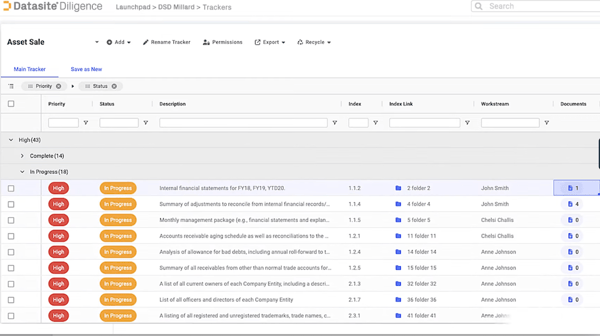
According to G2 user feedback, Datasite Diligence is built to support structured deal workflows and reporting. While these capabilities help track activity during complex transactions, a few reviewers mention that creating polished dashboards for stakeholders can take some time to get comfortable with. From what I gathered in the reviews, teams mainly focused on secure document management and deal tracking tend to find it works well, while those expecting more customizable reporting visuals may need to spend extra time configuring dashboards.
Permissions management is another area reviewers bring up. The platform offers detailed access controls by file, user type, or buyer group, which helps maintain security during sensitive deals. However, some users mention that setting up these permissions can feel a bit complex at first, especially in large deal rooms with many participants. Teams handling complex transactions often appreciate the level of control, though newer users may need some time to get familiar with the setup.
Overall, G2 sentiment reflects Datasite Diligence as a trusted and secure platform for managing sensitive transactions. Its usability challenges are generally outweighed by its depth of features and reliability.
What I like about Datasite Diligence Virtual Data Room:
- I’ve read that users really appreciate how easy it is to upload, sort, and search files, especially during complex deals.
- I’ve seen G2 reviewers highlight how intuitive the platform is, making onboarding smooth even for less tech-savvy users.
What G2 users like about Datasite Diligence Virtual Data Room:
"This is a very secure platform to manage confidential business transactions. The workflow and reporting give a detailed insight about different types of potential risks involved."
- Datasite Diligence Virtual Data Room review, Debjit M.
What I dislike about Datasite Diligence Virtual Data Room:
- I’ve come across several reviews where users struggled with setting permissions and felt unsure if access was correctly assigned.
- I’ve noticed feedback about the auto-conversion of Word files to PDFs, creating extra steps when editable documents are needed.
What G2 users dislike about Datasite Diligence Virtual Data Room:
"Some advanced features take time to learn, especially for first-time users. The platform is powerful, but new users may need guidance to fully understand permissions, indexing, and reporting. A simpler onboarding flow would help."
- Datasite Diligence Virtual Data Room review, Dharamveer P.
2. Ideals Virtual Data Room: Best for secure, user-friendly VDRs
Ideals Virtual Data Room is a VDR built to support deal teams effectively. It’s especially well-suited for small to mid-sized businesses in industries like legal, finance, life sciences, and real estate, anywhere secure document sharing and compliance-driven workflows are essential.
One feature that I frequently see getting strong praise is the user interface. G2 reviewers often highlight that uploading files, creating user groups, and assigning access levels can be done with minimal effort. There's a very small learning curve, even for users joining during fast-moving, high-stakes projects.
Something else that stood out to me in the reviews was how simple the onboarding experience is. Many users note that once new users are invited, iDeals automatically prompts them to activate their accounts and get started. According to multiple reviewers, this self-serve activation eliminates the need for extra training or walkthroughs, which helps teams, especially external partners, get up and running quickly.
From what I’ve read, users also value iDeals’ flexible permission system. There are repeated mentions of how easy it is to assign detailed access controls and limit document visibility based on group or individual roles. This seems especially critical for compliance-heavy projects, and several G2 reviewers say they feel confident sharing sensitive materials because of this granular access control.
Another theme that appears repeatedly in G2 reviews is the quality of customer support. Many users mention that the support team responds quickly and helps resolve issues without much back-and-forth. I have seen several reviewers say that when they needed help configuring permissions or troubleshooting document access, the support staff stepped in quickly with clear guidance. This level of responsiveness seems particularly valuable during time-sensitive transactions where delays can impact deal timelines.
Security is another area where iDeals receives consistent praise. From what I gathered in the G2 feedback, users feel confident sharing sensitive documents because of the platform’s strong security controls and compliance-focused design. Several reviewers mention features like permission-based access and secure document storage as reasons they trust the platform for confidential transactions. This emphasis on protecting sensitive information appears to be a key reason why legal teams, financial advisors, and deal professionals rely on iDeals during due diligence processes.
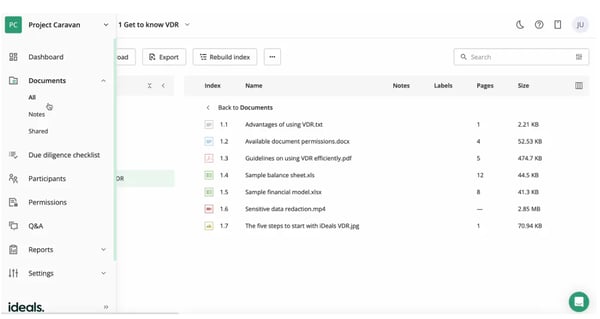
According to G2 reviews I looked through, iDeals VDR is valued for its secure document sharing and structured folder organization, which helps teams manage large volumes of deal materials. That said, a few reviewers mention that navigating deeply nested folders can sometimes take extra effort, particularly when multiple layers of subfolders are involved. From what I gathered, teams with simpler folder structures tend to navigate the platform comfortably, while projects with more complex document hierarchies may require additional organization.
Another theme in G2 feedback relates to tracking document progress during due diligence. While users appreciate the platform’s strong security and document management capabilities, some reviewers note the absence of a built-in tracker for monitoring document collection. Because of this, teams occasionally rely on spreadsheets or external tools to track progress. From what I saw in the reviews, organizations that already use separate tracking systems tend to manage this easily, while teams expecting an integrated tracker may need to supplement the workflow.
Overall, G2 sentiment highlights Ideals VDR as a secure and efficient platform for sensitive transactions, with most drawbacks tied to folder navigation and progress tracking rather than its core strengths.
What I like about Ideals Virtual Data Room:
- I’ve seen G2 reviewers highlight how simple the platform is to use, from uploading files to setting access levels with ease.
- The onboarding process is smooth, with users appreciating how quickly new teammates or partners can self-activate and get started.
What G2 users like about Ideals Virtual Data Room:
"I like the great support from the team and find Ideals Virtual Data Room to be an intuitive product. This makes it easier for me to use and set up, especially during M&A activities where collaboration with external partners is key."
- Ideals Virtual Data Room review, Rob C.
What I dislike about Ideals Virtual Data Room:
- The folder structure works well for organizing documents, but when deal rooms contain many layers of subfolders, some users mention it can take extra effort for recipients to quickly locate specific files.
- The platform handles secure document sharing effectively, though teams that want a built-in tracker for monitoring due diligence progress may need to rely on spreadsheets or external tools to keep track of document collection.
What G2 users dislike about Ideals Virtual Data Room:
"I think it would be very useful if Ideals Virtual Data Room could automatically generate an Excel file that keeps count of document submissions when creating a data room or subfolder. It would help track which files have been submitted or still need to be submitted, providing an automatic checklist with file names and tracking numbers. I also believe that it would not be bad if the same instructions could be provided even through the voice of the user, in the era of the massive usage of AI tools."
- Ideals Virtual Data Room review, Paolo G.
3. Clinked: Best for secure client collaboration through branded portals
When I explored Clinked in the virtual data room category, the first thing that stood out was its client portal experience, designed to give businesses a secure and professional space to share documents and collaborate with external stakeholders.
The platform is clearly built around the idea of giving businesses a secure, professional space where they can share files, collaborate, and manage projects with external stakeholders. Instead of sending documents back and forth over email or juggling multiple tools, Clinked creates a centralized workspace where clients can log in, access materials, and interact with teams in a structured way.
The client portal itself is the feature reviewers talk about the most. According to G2 Data, Clinked sees solid adoption with 71% user adoption, which aligns with the feedback from reviewers who say the platform makes it easy to provide clients with a dedicated workspace. Many users describe it as a professional hub where external partners, customers, or contractors can securely access documents and collaborate without needing separate systems.
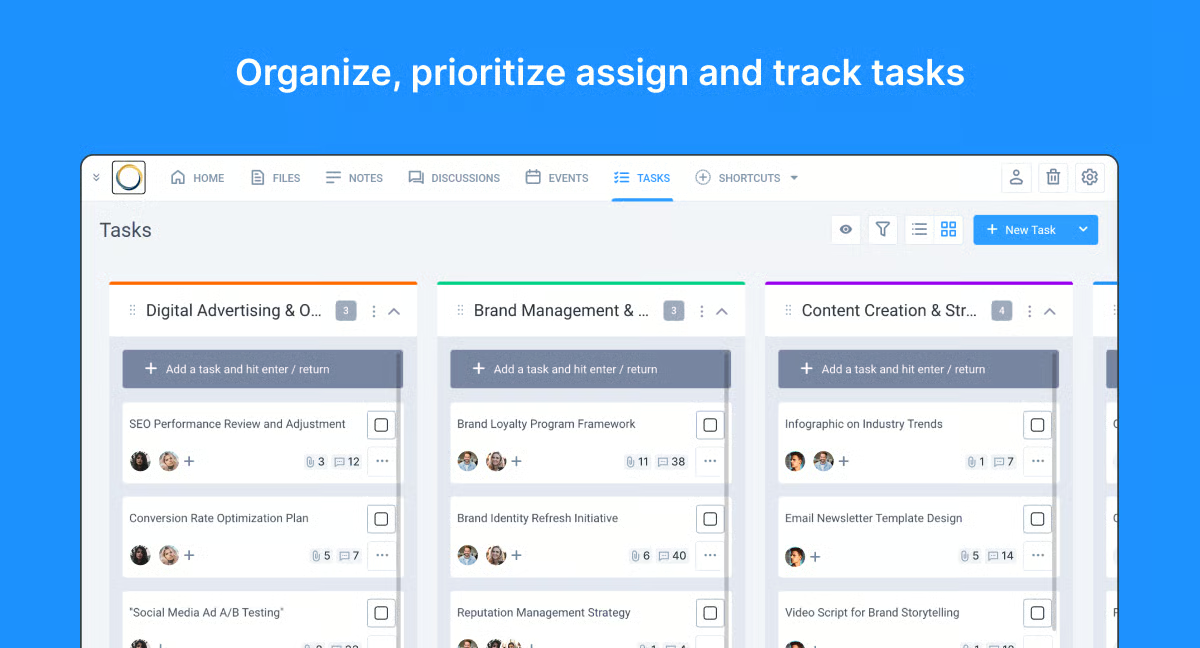
File sharing and document management also show up as a major strength across the platform. Many users describe Clinked as a centralized document hub where teams can upload files, organize folders, and distribute materials securely to both internal users and external clients. According to G2 Data, file-sharing satisfaction sits at 100%, reinforcing how consistently reviewers highlight the reliability of the document-sharing experience.
Another theme I noticed across the reviews is how approachable the interface feels. While the platform focuses heavily on document management, reviewers often say the interface is intuitive enough that both internal teams and clients can navigate it without much friction. Reviewers often mention that new users can quickly understand where files live, how to upload documents, and how to participate in shared workspaces.
Beyond file sharing, reviewers also talk about the collaboration tools built into the platform. Many users mention that Clinked supports shared workspaces where teams and clients can coordinate projects, discuss documents, and track work in a single place. According to G2 reviewers, these collaboration capabilities help reduce the need to move between separate messaging tools, storage systems, and project platforms.
Multiple reviewers note that having documents, discussions, and client interactions in a single portal helps them keep projects organized. This consolidation is particularly helpful for agencies, consultants, and service teams that manage multiple clients at once.
At the same time, the platform’s structured approach to portals and workspaces comes with some design trade-offs. While many reviewers appreciate the simplicity and consistency across portals, the customization options for layout and interface behavior can feel somewhat limited for teams that want deeper configuration. From what I saw in the G2 reviews, organizations that mainly need a clean, standardized client workspace tend to find it works well, while teams looking for more advanced portal customization may find it better suited for straightforward collaboration use cases.
Pricing also comes up occasionally in the feedback. Many reviewers say the value makes sense when the platform is used as a central client collaboration hub, but some teams note that costs can feel higher as organizations grow or when only a portion of the available functionality is being used. Based on G2 reviews, this tends to matter most for smaller businesses or teams scaling quickly, whereas companies that rely heavily on client portals and document collaboration often feel the investment aligns well with the operational benefits.
Taking everything together, Clinked reads as a collaboration-first virtual data room built specifically for organizations that work closely with external clients.
What I like about Clinked:
- The client portal makes it easy to create a secure, professional workspace where clients can access files and collaborate with teams.
- I like how the platform combines document sharing, collaboration, and project organization in one centralized portal.
What G2 users like about Clinked:
"Clinked provides a secure and professional client portal that makes it easy to collaborate with record labels, managers, and business partners in one centralized place. We use it to store and share documents, manage tasks, track events, and maintain structured communication without relying on scattered emails or file-sharing tools. The platform helps present our agency in a polished, organized way while keeping sensitive information accessible only to the right stakeholders."
- Clinked reviews, Christian K.
What I dislike about Clinked:
- The portal design keeps things clean and structured, but G2 users note that teams seeking a deeper layout or interface customization may find the configuration options somewhat limited.
- The platform delivers strong value as a full client collaboration hub, though smaller teams or fast-growing organizations may want to evaluate pricing as their usage scales.
What G2 users dislike about Clinked:
"I don't like the limited customization. Users desire more flexibility in customization options, particularly regarding file structure, task management, and the ability to rearrange dashboard elements or add custom elements."
- Clinked reviews, Grey W.
4. Firmex Virtual Data Room: Best for secure file sharing within Critix
I’ve found that Firmex Virtual Data Room is often described as a solid and secure platform, especially well-suited for industries like legal, finance, private equity, and corporate development.
A consistent theme in the reviews is how much users value its emphasis on security and simplicity, particularly when managing sensitive M&A or legal documentation. From what I’ve seen, the platform is built with confidentiality in mind, and that resonates well with its target audience.
One feature that I see getting frequent praise is how easy it is to set up new data rooms. G2 users often mention that they can create multiple rooms, assign permissions, and get started without a lengthy or complicated setup process. I’ve come across several reviews highlighting how this straightforward configuration process saves time and ensures a smooth kickoff for critical projects. According to G2 Data, ease of setup is rated at 94%, which aligns with feedback describing how quickly teams can launch a data room and begin sharing documents for active projects.
Search functionality is another standout capability. In document-heavy environments, users seem to really appreciate how quickly and accurately Firmex surfaces relevant files. Whether they’re searching by keyword, file type, or other filters, users report that the search tool is responsive and effective, saving them time and helping reduce friction when working under tight deadlines.
Another strength, according to feedback I gathered from G2 users, is Firmex’s training and support. Multiple reviewers call out the onboarding sessions as clear and helpful, with knowledgeable trainers who respond promptly to questions. G2 Data reflects this strength as well, with quality of support rated at 94%, suggesting users feel well supported when implementing and managing their deal rooms.
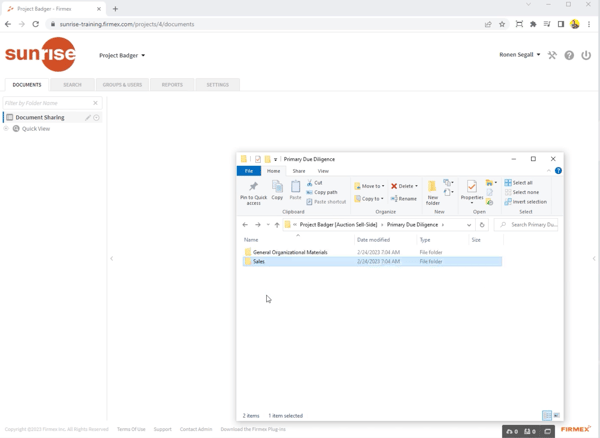
From what I saw in G2 reviews, Firmex is valued for its secure deal management and structured document sharing, which helps teams keep sensitive materials organized. That said, some reviewers mention that collaboration features are somewhat limited, since the platform doesn’t focus on real-time editing or shared commenting. From the feedback I read, teams mainly using the platform for secure document exchange tend to find it works well, while deals requiring frequent cross-team collaboration may rely on additional tools.
Another point mentioned in G2 feedback relates to document handling and administration. Users appreciate the platform’s structured permission controls, but some reviewers note that importing index spreadsheets can feel more manual compared to other VDR tools. I also saw mentions that setting up roles and permissions for new users can take a little time initially, though teams managing structured deal rooms tend to adjust quickly.
Overall, G2 sentiment highlights Firmex VDR as a secure and reliable platform for high-stakes transactions. Most drawbacks are tied to collaboration and workflow efficiency rather than its core strengths in data protection.
What I like about Firmex Virtual Data Room:
- I’ve noticed that G2 users frequently highlight Firmex’s emphasis on security and simplicity, particularly for managing sensitive M&A or legal documentation.
- I’ve seen multiple reviewers praise how easy it is to set up new data rooms, with minimal effort required to assign permissions and get started.
What G2 users like about Firmex Virtual Data Room:
"I love Firmex Virtual Data Room for secure document sharing and deal management, especially during our M&A transactions. The granular permission controls offer peace of mind, allowing us to share sensitive documents without worrying about unauthorized access. I also appreciate the Q&A workflow, which keeps deal questions organized and efficient, making due diligence a breeze. Integrating Firmex with DocuSign and Salesforce streamlines our workflow. Moreover, the UI is way more intuitive than our previous tool, and their support team is super responsive. The setup process was straightforward, with Firmex's team helping us migrate data and onboard with minimal hiccups. Firmex scales nicely for our company of around 50 people.
- Firmex Virtual Data Room review, Saidu M.
What I dislike about Firmex Virtual Data Room:
- Firmex does a strong job supporting secure document sharing, but teams that rely heavily on real-time collaboration may notice the lack of built-in editing or shared commenting features for faster cross-team discussions.
- The platform offers detailed permission controls for managing secure deal rooms, though some users mention that importing index spreadsheets and configuring user roles can take a little extra time during the initial setup.
What G2 users dislike about Firmex Virtual Data Room:
"The reporting analytics could be more robust. I think customizable templates and real-time updates would boost insights."
- Firmex Virtual Data Room review, Hafsat A.
5. Ansarada: Best for AI-powered deal readiness and risk scoring
In evaluating user feedback on Ansarada from G2, I’ve found it to be positioned as a smart, AI-driven Virtual Data Room designed to support high-stakes transactions with precision and security.
From what I’ve seen, Ansarada is widely used by deal teams across company sizes. G2 Data shows 35% of customers are mid-market organizations and 33% are enterprises, with 32% coming from small businesses, which aligns with its use in industries like investment banking, legal advisory, and corporate finance, where secure deal execution is essential.
A consistent theme I’ve noticed in G2 reviews is praise for how intuitive the platform’s navigation is. Many users say that the interface is clean and easy to grasp, making onboarding smoother. They highlight that teams are able to jump right into using the system without needing extensive training, which saves time and allows users to stay focused on the deal. G2 Data supports this feedback, with ease of use rated at 92% and ease of setup at 91%, indicating that most users are able to get comfortable with the platform quickly.
Another standout capability is AI-powered tools. I’ve encountered multiple reviewers who value how artificial intelligence-backed features flag risks and identify trends early in the due diligence process. These insights are often described as helpful in staying proactive and avoiding deal bottlenecks. AI isn’t just a buzzword; it actively contributes to better decision-making.
Security is another area where Ansarada gets strong marks. Across reviews, I’ve seen repeated mentions of robust security features, such as end-to-end encryption and customizable user permissions. For users managing sensitive or confidential data, this level of security gives them the confidence to share documents internally and externally without hesitation.
Mobile accessibility is something else that G2 users seem to really appreciate. I’ve read several reviews that mention how the mobile platform helps users stay connected to deal activity even when they’re away from their desks. In high-pressure environments where speed is everything, this level of access appears to be a real advantage.
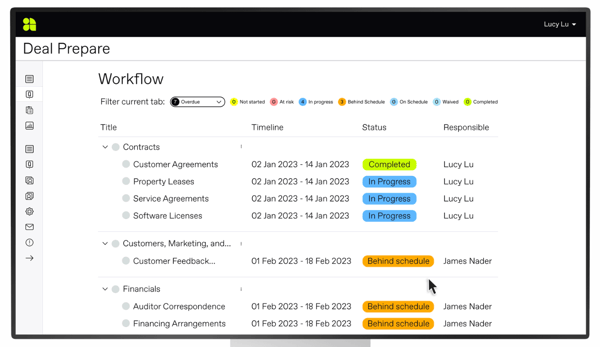
From what I saw in G2 reviews, Ansarada is appreciated for how well it organizes deal documents and supports structured collaboration during transactions. That said, a few reviewers mention that the document viewing experience can interrupt the workflow slightly, since files sometimes open in new tabs or require downloading when reviewing multiple documents. From the feedback I read, teams focused mainly on secure document storage and sharing tend to work comfortably with the setup, while users reviewing large volumes of files in quick succession may notice the extra step.
Another point mentioned in G2 feedback relates to notifications and alerts. While users value the platform’s activity tracking and update alerts, some reviewers note that time-sensitive notifications don’t always arrive immediately. I also saw a few mentions that copying text from PDF previews can take additional steps. From what I gathered, most teams manage this without much trouble, though those working under very tight deal timelines may want to keep an extra eye on updates.
Overall, G2 sentiment reflects Ansarada as a modern and user-friendly platform for due diligence and deal management, with minor usability gaps that don’t overshadow its efficiency and ease of use.
What I like about Ansarada:
- I’ve noticed that users consistently praise Ansarada’s intuitive navigation, allowing teams to quickly onboard and dive into their projects without extensive training.
- I’ve seen strong feedback about the AI-powered tools, which users appreciate for identifying risks early and helping streamline the due diligence process.
What G2 users like about Ansarada:
"I like that Ansarada is reliable and secure, which makes it well-suited for high-stakes situations. The permissions and controls are very strong, which is critical in sales and leads. The customer support is responsible and always there when I face an issue. The setup was very easy and user-friendly, and the initial understanding of the features was effortless."
- Ansarada review, Rafee N.
What I dislike about Ansarada:
- The platform does a good job organizing deal documents, but when reviewing multiple files in sequence, some users mention that opening documents in new tabs or downloading them can slightly interrupt the workflow.
- Ansarada provides activity alerts and notifications to keep teams informed during transactions, though a few users note that time-sensitive updates may not always arrive immediately, so teams working under tight deal timelines may want to monitor activity closely.
What G2 users dislike about Ansarada:
"The performance of access via mobile devices sometimes feels slower, and the preview process for some fairly large files is very long. The performance should be improved."
- Ansarada review, Reinzo K.
6. SecureDocs Virtual Data Room: Best for SMBs with fast setup
Based on my review of G2 user feedback, SecureDocs, an Onit product, is generally praised for being a simple, secure, and cost-effective virtual data room solution.
One feature that G2 reviewers frequently highlight is the ease of use. Many users appreciate how straightforward the platform is to navigate. From what I’ve seen, users consistently mention that no extensive training or onboarding is required, making it easy for teams to quickly get up to speed. This simplicity is especially appreciated by small to mid-sized businesses, as it allows for fast document sharing without the need for complex configurations.
I’ve noticed that access control is another area where SecureDocs stands out in G2 reviews. G2 users frequently point out how the platform gives them complete control over who can view specific documents and for how long. The ability to expire access or restrict document forwarding is frequently mentioned as a feature that provides peace of mind, especially when handling sensitive materials like fundraising documents or contracts.
When looking at SecureDocs, a recurring theme in G2 reviews is its affordability. I’ve seen multiple users comment on how the platform provides great value, particularly for companies that don’t need a lot of integrations or complex customizations. The general consensus seems to be that for the price, SecureDocs delivers a reliable and secure solution, without the unnecessary features that can drive up costs in other platforms.
Another capability that appears frequently in G2 reviews is SecureDocs’ activity tracking. Several users mention that the platform allows them to see who accessed documents and when, which helps monitor engagement during due diligence or investor discussions. This visibility reduces the need for follow-ups and gives teams more confidence when sharing sensitive materials with external stakeholders.
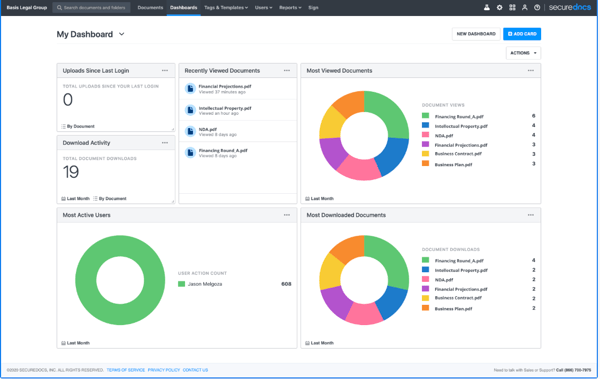
SecureDocs is generally appreciated for its simple and reliable design, but some G2 reviewers mention that the reporting features are fairly basic. Users who need deeper insights into document activity or user behavior may find the analytics somewhat limited for detailed monitoring.
Another point mentioned in G2 feedback relates to document loading performance. While the platform handles secure document storage well, a few reviewers note that larger files can take longer to open, which may slow workflows slightly during time-sensitive reviews.
Overall, G2 sentiment reflects SecureDocs as a simple and reliable virtual data room, with reporting depth and document speed seen as areas for refinement.
What I like about SecureDocs Virtual Data Room:
- From what I’ve seen in G2 reviews, SecureDocs is widely appreciated for its simplicity and ease of use, with many users mentioning that no extensive training is required, making it easy for teams to quickly get started.
- Another common praise is SecureDocs' affordability. Users consistently highlight its great value, especially for small to mid-sized businesses that don’t need complex customizations or integrations. It offers a reliable solution at a reasonable price.
What G2 users like about SecureDocs Virtual Data Room:
"What stands out most is the combination of simplicity and security. SecureDocs delivers a powerful virtual data room experience without unnecessary complexity — the interface is intuitive for both administrators and external users, which significantly reduces onboarding time and support friction."
- SecureDocs Virtual Data Room review, Aman P.
What I dislike about SecureDocs Virtual Data Room:
- SecureDocs works well for simple and secure document sharing, but the reporting features are fairly basic. Teams that need deeper insights into document activity or user behavior may find the analytics somewhat limited.
- The platform handles secure document storage reliably, though some users mention that larger files can take longer to open, which may slow workflows slightly during time-sensitive reviews.
What G2 users dislike about SecureDocs Virtual Data Room:
"Some features could be more refined, especially the search, which can feel a bit slow when dealing with large numbers of documents. The interface could also be more modern and intuitive, and additional customization options for notifications would be helpful."
- SecureDocs Virtual Data Room review, Nagaseshu D.
Bonus virtual data room software worth exploring
Mentioned below are a few more VDR platforms that expand on the main list.
1. Intralinks DealCentre AI: Best for AI-assisted diligence and Q&A on live M&A processes. DealCentre AI covers the full deal lifecycle, from self-service deal prep and NDA management through diligence and closing, with its Link assistant surfacing answers across thousands of documents.
G2 reviewers highlight the Q&A monitoring tools, the ability to spot duplicate questions, and investor activity tracking that shows sellers which parties are most engaged.
2. DocSend: Best for link-based sharing with page-level engagement analytics.
DocSend replaces email attachments with a single controlled link, letting senders set permissions per stakeholder and see exactly how long each recipient spent on each page. Reviewers value dynamic watermarking for compliance-heavy work, bulk folder imports that preserve structure when building deal rooms, and versioning that keeps one link pointing to current content.
3. Papermark Virtual Data Room: Best for open-source data rooms with self-hosting control. Papermark is an open-source VDR with a free tier, an open API, and the option to self-host so sensitive documents stay inside your own infrastructure. G2 users point to bulk uploads, page-by-page view analytics, custom branding on shared links, and access controls that can be changed after a document has gone out. Native Notion support, tagging, and folder management also come up often, alongside password protection and screenshot controls for confidential files.
Virtual data room software: Frequently asked questions (FAQs)
1. How can I ensure the security of sensitive documents during M&A?
To secure sensitive documents during M&A, companies typically use virtual data room (VDR) software with encryption, granular permissions, watermarking, and detailed audit logs. These features help ensure only authorized stakeholders can access confidential files while maintaining a complete record of document activity during due diligence.
2. Can I customize the interface of a VDR to match my company branding?
Yes. Many virtual data room platforms allow branding customization, including company logos, branded portals, and custom domains. These features help organizations create a professional and consistent experience when sharing documents with investors, auditors, and external partners.
3. Which secure data room providers offer seamless integration with financial tools?
Several virtual data room platforms support integrations with financial and productivity tools. Datasite Diligence Virtual Data Room and Firmex Virtual Data Room integrate well with tools such as Excel, Salesforce, and enterprise document systems commonly used in financial analysis and due diligence.
4. Can you use Google Drive or Dropbox as a data room?
Google Drive or Dropbox can support basic file sharing, but they are not designed for secure deal management. Virtual data rooms provide additional protections such as watermarking, role-based access controls, document tracking, and audit logs, which are essential for M&A, fundraising, and legal transactions.
5. How long does it take to set up a secure data room?
Setting up a virtual data room can take anywhere from a few hours to several days, depending on the project. Simple data rooms for document sharing can be set up quickly, while larger due diligence projects may require additional time to organize files and configure user permissions.
6. Who is the leading provider of virtual data room software for small businesses?
Small businesses often prefer virtual data room platforms that are easy to deploy and affordable. SecureDocs Virtual Data Room is commonly used by SMBs because they offer simple setup, secure document sharing, and predictable pricing.
7. Which VDR service has the best reviews for startups?
Startups often choose virtual data rooms that are simple to use and quick to deploy for fundraising. Ideals Virtual Data Room and SecureDocs Virtual Data Room are frequently recommended because they provide intuitive interfaces and secure document sharing for investor communications.
8. What is the best VDR software for mergers and acquisitions?
For mergers and acquisitions, companies often use Datasite Diligence Virtual Data Room and Ansarada. These platforms provide structured deal management, secure document sharing, and advanced tracking features that help teams manage due diligence more efficiently.
9. What’s the top-rated virtual data room for legal firms?
Legal teams typically rely on VDR platforms that support strict access control, compliance, and audit trails. Firmex Virtual Data Room is commonly used by legal professionals to securely manage confidential documents during litigation, audits, and regulatory processes.
10. What are the most recommended data room tools in the tech industry?
Technology companies frequently use Ideals Virtual Data Room, Ansarada, and Datasite Diligence Virtual Data Room for secure document collaboration. These platforms support investor communications, fundraising, and acquisitions while providing strong access controls and activity tracking.
11. What are the best virtual data room solutions for secure document sharing?
Popular virtual data room platforms for secure document sharing include Firmex Virtual Data Room, Ideals Virtual Data Room, and SecureDocs Virtual Data Room. These tools offer encryption, granular permission settings, watermarking, and activity tracking to help organizations safely share confidential files.
12. What’s the best virtual data room app for financial services?
Financial services teams often use Datasite Diligence Virtual Data Room and Firmex Virtual Data Room. These platforms support complex due diligence workflows with detailed audit trails, structured document management, and secure access controls.
13. What’s the most cost-effective VDR for project management?
For teams seeking affordable virtual data room solutions, SecureDocs Virtual Data Room is often considered a cost-effective option. They provide essential features like secure file sharing, permission controls, and activity tracking without the complexity of enterprise-focused platforms.
14. Who offers the top virtual data room security features?
Leading virtual data room providers offer advanced security capabilities such as encryption, multi-factor authentication, granular permissions, watermarking, and activity tracking. These features help organizations protect confidential documents during sensitive business transactions.
15. What is the best cloud-based virtual data room for confidential transactions?
For confidential cloud-based transactions, Datasite Diligence Virtual Data Room, Ansarada, and Firmex Virtual Data Room are widely used. These platforms combine secure cloud storage with permission controls, document tracking, and compliance-ready infrastructure for managing sensitive information.
You need more than just a lock and key!
After thoroughly evaluating the top virtual data room software, I've realized how much the right system can enhance data security and streamline operations.
Each VDR platform offers unique features to meet different needs, whether it's secure document sharing, advanced access controls, or detailed user tracking. With so many options, you'll find a solution that makes managing sensitive data and transactions much more efficient.
I hope these insights help you choose the best VDR for your organization, because let’s face it, the last thing you want is scrambling to secure data at the eleventh hour!
Unlock the full value of your VDR with cutting-edge OCR technology. Make every document searchable and secure.
.png?width=400&height=150&name=Untitled%20design%20(56).png)


.png)

.png?width=400&name=directory%20services%20(1).png)