


It all started when I was buried under a mountain of paperwork that needed signatures — fast. My inbox was flooded with contract requests, approval forms, and freelancer agreements. I was printing, signing, scanning, and emailing back and forth like I was stuck in a time warp from 2005. It wasn’t just time-consuming — it was downright exhausting.
After one particularly chaotic day, I realized something had to change. I needed a way to simplify this process, and getting the best e-signature software seemed like the perfect solution.
However, with so many tools promising to “revolutionize” workflows, I didn’t want to pick the first one that came up in a Google search. I wanted the best electronic signature software for my needs — one that combined simplicity, security, and efficiency.
So, I did what any curious person would do: I dove headfirst into research and testing. Over the past few months, I’ve explored dozens of e-signature tools, putting them through their paces to see how they stack up. I tested everything — from user interfaces and integrations to pricing and customer support. I even tried signing real contracts with them to see how they fit into my daily workflows.
Now, I’m here to share my findings. Whether you’re running a business, managing a team, or just looking for a tool to make life a little easier, I’ve got you covered. These are the 8 best e-signature software I’ve personally tested and selected after trying 30+ solutions.
TL; DR: The best e-signature software are Adobe Acrobat Sign, PandaDoc, Jotform Sign, Foxit eSign, DocuSign, Xodo Sign, Dropbox Sign, and BoldSign.
DocuSign: Best for fast and secure e-signatures
Streamlined platform to send, sign, and manage documents quickly and securely. ($10/mo)
Xodo Sign: Best for secure and flexible e-signature workflows
Provides encrypted signing and adaptable workflows for individuals and teams. ($10/mo)
Dropbox Sign: Best for seamless Dropbox integration
Simple e-signature solution built directly into Dropbox for easy file management. ($15/mo)
BoldSign: Best for SMBs and budget concious teams
Unlimited envelopes with no overages or hidden limits, plus SMS signature requests and custom branding at an affordable price ($5/mo)
* These electronic signature software solutions are top-rated in their category, according to G2's Spring 2026 Grid Report. I’ve also added their monthly or annual pricing to make comparisons easier.
When I first started exploring e-signature software, I wasn’t sure what to expect. I mean, what exactly makes one e-signature app better than another?
At its core, e-signature software allows me to sign documents electronically. But it’s not just about adding a squiggly line to a PDF — it’s about ensuring that my signature is secure, legally binding, and incredibly easy to execute.
For me, the real magic of these tools lies in their ability to facilitate the entire document-signing process. Instead of printing, signing, scanning, and emailing, I can sign or request a digital signature with just a few clicks. And it’s not limited to my end — these tools make it just as seamless for the other party to sign, no matter where they are. And did you know? The global digital signature market, valued at approximately $13.70 billion in 2026, is expected to reach $154.52 billion by 2034, driven by growing government and enterprise investments in digital documentation.
I also love how e-signature software adds layers of security and verification. Many platforms use encryption, audit trails, and identity authentication to ensure your signed documents meet legal standards. According to G2 Data, core features like signing, compliance, signature workflows, audit logs, performance and reliability have over 90% user satisfaction.
This means that whether you're signing a contract, closing a deal, or onboarding a new hire, you can rest assured that the process will stand up to scrutiny.
I started by listing must-have criteria for the best electronic signature software. My goal was to find platforms that were not only reliable but also easy to use and adaptable for different workflows. To refine my list, I turned to G2 grid reports and used AI to analyze hundreds of G2 reviews to see how real users rated these tools based on their experiences, needs, and pain points.
Once I had my contenders, I got hands-on with each tool. I signed real documents, sent contracts for signatures, and explored their features in-depth. I tested how smoothly they integrated with other apps I use, like Google Drive and Slack, and paid close attention to how the tools handled mobile signing since that’s a big part of my workflow.
In cases where I couldn’t personally test a tool due to limited access, I consulted a professional with hands-on experience and validated their insights using verified G2 reviews. The screenshots featured in this article may be a mix of those captured during testing and those obtained from the vendor’s G2 page.
By the end of my testing, I had a clear sense of which tools excelled and which fell short, giving me a solid foundation to recommend the best options.
When I started testing e-signature software, I thought the choice would come down to a few simple features — how easy it was to sign a document, how quickly I could send one, and maybe the price tag. But as I dug deeper, I realized that the best tools do much more than just replace a pen.
With all that in mind, I set out to identify the factors that truly separate the great tools from the mediocre ones. Here’s what I found to be the most important:
The list below contains genuine user reviews from G2’s E-Signature Software category page. To be included in this category, a solution must:
*This data was pulled from G2 in 2026. Some reviews may have been edited for clarity.
Adobe Acrobat Sign (part of Adobe Acrobat ecoystem) is a heavyweight in the e-signature space, combining its renowned PDF tools with a robust suite of signing features. It’s a platform built for professionals who need more than just a signature tool — it’s an all-in-one solution for managing documents seamlessly and securely.
What I love about Adobe Acrobat for e-signatures is how polished and professional the process feels. Sending documents for signatures is incredibly straightforward, whether I’m working from my desktop or mobile app. I can add signature fields, customize workflows, and even collect multiple signatures in a specific order. The guided signing experience ensures recipients know exactly where to sign, reducing errors and back-and-forths.
Integration with other tools allows me to pull a file directly from cloud storage, add signature fields, and send it out in just a few clicks. It’s also great for teams — collaborating on documents, setting permissions, and tracking progress is built right into the platform.
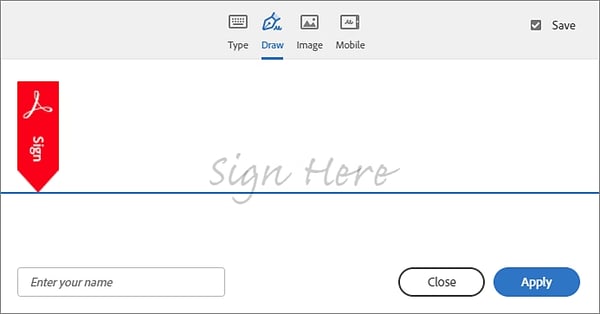
Security is another area where Acrobat shines. I love that I can lock sensitive documents with passwords or even redact confidential information directly in the PDF. And when it comes to e-signatures, every action is meticulously logged in a detailed audit trail, so there’s never any doubt about the document’s authenticity.
G2 users back this up: satisfaction score for document signing is at 94%, signature history and audit at 92%, and regulatory compliance at 92% — all hovering at or near category averages, reflecting consistent, reliable performance across the board.
On the whole, many G2 users value Adobe Acrobat for its comprehensive set of e-signature and PDF editing tools, especially when teams need more than just basic signing functionality. There are certain things to consider too.
G2 reviewers note the platform works reliably for sending and completing documents, particularly for structured workflows. For teams that rely on instant visibility into document activity, such as tracking when a recipient opens or signs in real time—some reviewers note that updates may not always be immediate. Even so, the overall workflow remains dependable and well-suited for teams managing steady, process-driven agreements.
G2 users also share that the platform works reliably for quick approvals on the go, particularly for straightforward signing tasks. At the same time, some reviewers mention that the mobile experience feels more limited compared to desktop, especially when handling detailed edits or more complex workflows. Even so, it remains a convenient option for keeping documents moving when you’re away from your desk.
I'd recommend Adobe Acrobat Sign to anyone who already lives in Adobe's ecosystem — the PDF-native signing experience is hard to match, and you won't need to stitch together separate tools to get it done.
“Hassle-free and paperless document is the primary reason why we implement Adobe Acrobat Sign into our documentation software stack. It is easy to track which papers are already signed and which are still pending. The platform is also available as a mobile application, making it easy to meet with clients and instantly create a quotation for them to sign. In addition, we now don't have to provide physical space to store new contract files anymore, with integration with Google Drive, all the document is now stored in the cloud for faster access and secure storage.”
- Adobe Acrobat Sign review, Ishak Y.
“I find the mobile experience with Adobe Acrobat Sign a bit lacking; while mobile signing is possible, the app isn’t always as smooth or intuitive as the desktop version. I also think the pricing is too high, and there's a learning curve, especially for the advanced features. Additionally, while the initial setup is pretty straightforward for individual users, it can feel more complex for administrators handling enterprise-level workflows.”
- Adobe Acrobat Sign review, Shashikumar Y.
Navigating e-signature regulations can be tricky. Learn how to stay compliant with e-signature legal requirements.
PandaDoc completely transformed how I manage my e-signature. It’s a dynamic tool that accelerates proposals, quotes, contracts, and more workflows. I’ve used it extensively, and what sets it apart isn’t just its ease of use and ability to adapt to diverse signing scenarios while keeping the process secure and professional.
One feature I absolutely rely on is PandaDoc’s sequential signing capability. This lets me set up workflows where multiple signers must sign in a specific order. It’s been a lifesaver when dealing with contracts or approvals that need hierarchical sign-offs. With just a few clicks, I can ensure that each party receives the document at the right stage, eliminating the confusion of handling parallel signers.
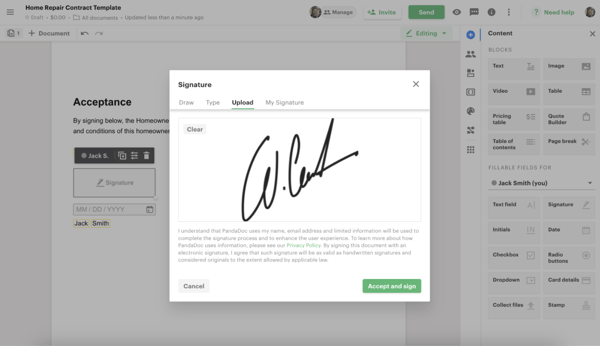
The auto-reminders for pending signatures are super useful for me. Once a document is sent, PandaDoc monitors it for you, automatically nudging signers who haven’t completed their part. I no longer need to follow up manually with stakeholders, which saves me time and keeps my workflows moving smoothly.
What I also love about PandaDoc is its embedded signing feature. When I was a freelancer, I integrated this into my website for client agreements, allowing users to sign directly on the page without needing to download or email documents. It’s a seamless experience that makes me look incredibly polished and professional.
Another standout feature is its ability to handle multi-language support for e-signatures. I worked with clients across different regions, and PandaDoc allowed me to send documents in their preferred language, complete with localized signing instructions. It’s a small detail that goes a long way in creating a client-friendly experience.
PandaDoc is consistently praised on G2 for its strong document automation and template library, which streamlines contracts, proposals, and client onboarding. Across core e-signature features, PandaDoc consistently outpaces category averages on G2 — scoring 97% for document signing, 95% for sign-in process, and 95% for signature history and audit.
From the G2 feedback I analyzed, there are a few things worth noting. PandaDoc works especially well for teams that rely on templates and structured documents, where the editor feels fast and efficient. For teams creating highly customized layouts or design-heavy documents, some G2 reviewers note that the editing and formatting experience can feel less flexible for more complex use cases. That being said, it still delivers strong efficiency for high-volume, repeatable document workflows.
The platform also delivers strong value for teams that actively use its automation, integrations, and workflow features. But some reviewers mention that certain advanced capabilities are tied to higher-tier plans, making it a better fit for teams that plan to use the platform more extensively rather than just for basic e-signatures. Overall, it offers solid value when you’re leveraging its full feature set.
If you're looking for an e-signature tool that doubles as a full document workflow platform, PandaDoc is where I'd point you, especially if proposals, quotes, and contracts are a regular part of your day.
“I like how easy it is to create, send, or track documents with PandaDoc. The interface is good, and the templates save us time. It's easy for users from different departments to learn quickly, and templates help us standardize documents instead of creating them from scratch. I really value the e-signatures and templates in PandaDoc. The UI setup and workspace setup are easy.”
- PandaDoc review, Kyle B.
“The limitations in editing images can make things difficult at times when needing more precise control over image size after inserting them into your document. This is why I generally edit my visual elements before adding content as a pdf, it works, but having more options for flexibility in this area would be great.”
- PandDoc review, Jada R.
From improving processes to enhancing security and compliance, learn how e-signatures transform the manufacturing industry.
Having transitioned from freelancing to working as a content marketer, I’ve come to value tools that simplify processes without losing the personal touch. Jotform Sign stands out because it combines simplicity with flexibility, offering features that cater to personalized workflows and dynamic signing experiences.
One feature I find genuinely unique is Jotform Sign’s interactive documents. Unlike static PDFs, I can create agreements or proposals where signers can make choices — like selecting pricing options or confirming details — that automatically tailor the rest of the document. It’s like giving clients control while keeping everything professional.
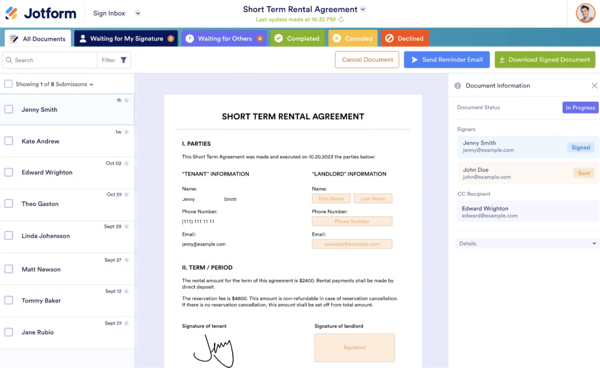
Another standout is the auto-population from forms. As part of the Jotform ecosystem, I can gather client or vendor information through a Jotform form and feed that data directly into an agreement. This has been invaluable for campaigns requiring detailed client input, turning manual data entry into an automated, time-saving process.
For event-based work, Jotform Sign’s kiosk mode for in-person signing is a feature I’ve come to appreciate. It allows me to collect signatures during events using a tablet or shared device without needing paper forms. This is particularly helpful for collecting approvals or waivers at in-person campaigns or workshops.
Security-wise, Jotform Sign excels with multi-factor authentication (MFA) for sensitive documents. I can require email and SMS verification for added protection, which gives me peace of mind when handling confidential agreements. Additionally, the document version history ensures I can track every edit and version of a contract, preventing any confusion or disputes down the line.
On G2, Jotform Sign matches the category average for document signing at 95% and pulls ahead on mobile signatures at 93% (vs. 91% avg) and performance and reliability at 92% — a strong showing for a tool built around simplicity and consistent uptime.
From the G2 reviews I analyzed, it receives positive attention on G2 for its smooth integration with Jotform Forms, making it easy to automate document workflows alongside form submissions. Many users also value its ability to create interactive documents that enhance the signing experience.
Jotform Sign works especially well for straightforward signing workflows, internal approvals, and teams that want an easy, all-in-one form and e-signature setup. At the same time, some G2 reviewers note that pricing and plan limits can feel more tailored to teams with steady, ongoing usage. Still, it offers solid value for businesses that plan to use its broader form, workflow, and automation capabilities.
While the platform is a strong fit for standard documents and fast turnaround processes, for teams that want deeper control over branding, layout, signature styles, or more tailored workflows, some reviewers mention they’d like more customization. Still, it still delivers plenty of flexibility for everyday signing needs.
Overall, if you need a lightweight, form-first signing tool that just works — especially on mobile — Jotform Sign is the one I'd reach for.
“I appreciate that Jotform Sign is a simple platform and easy to use. I enjoy the options Jotform offers, as it provides several ways to send out the forms I need signed and track the completion rate of signatures. The initial setup was also simple, which is a big plus for me.”
- Jotform Sign review, Remnant R.
“Maybe the price options could be more affordable for a small business like mine. Just cheaper month to month. ”
- Jotform review, Sylvia W.
Foxit eSign is designed for professionals who need secure, customizable, and efficient workflows to manage their agreements. From handling sensitive contracts to managing team approvals, it offers advanced e-signature capabilities tailored to modern business needs.
One of the features I value most is handwritten-style biometric signatures. Unlike many tools that stick to typed or image-based signatures, Foxit eSign enables signers to use touchscreen devices to create authentic, handwritten signatures. This adds a personal and legally binding touch that feels more genuine for all parties involved.
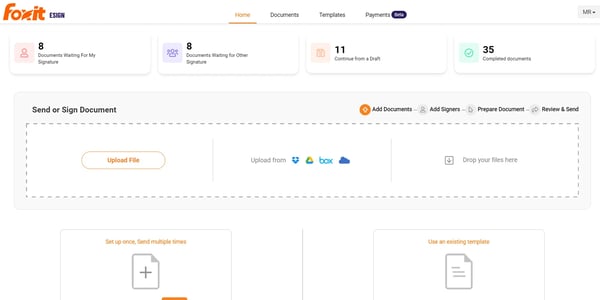
Another standout feature is the collaborative review process. Before finalizing a document, I can share it with stakeholders for comments, edits, and approvals. This ensures that everyone is aligned on the final version before signatures are added, reducing the need for revisions after the fact.
Foxit eSign’s batch signature requests are ideal for larger workflows. I’ve used this feature to simultaneously send a single document to multiple recipients, tracking their progress in real time. It’s particularly helpful for onboarding new team members or managing multi-recipient agreements.
Time-stamped digital signatures add another layer of security and compliance. They include precise timestamps from a trusted certificate authority, ensuring that signatures are verifiable and legally valid. This feature is especially useful for agreements that require time-sensitive authentication, such as legal or regulatory documents.
The template library is a time-saver for frequent workflows. I’ve created reusable templates with pre-configured fields for contracts, NDAs, and other commonly used documents, making it quick to send professional, consistent agreements without starting from scratch each time.
On G2, Foxit eSign pulls significantly ahead of category averages on AI-powered features like natural language interaction at 100% (vs. 81% avg), autonomous task execution at 98% (vs. 80% avg), and adaptive learning at 97% and that intelligence carries into its PDF editor, where signature document creation and reliable performance round out a capable, cohesive document workflow.
It is frequently recognized in G2 reviews for its compliance-driven features and ability to handle legally binding agreements across industries like finance, healthcare, and legal. Users value its strong security standards and the reliability of its signing process.
On the flip side, Foxit eSign works well for teams that prioritize speed and simplicity in their signing workflows, with a straightforward interface that gets the job done efficiently. For teams looking for a more modern, highly polished, or deeply intuitive experience, especially when managing templates or formatting, some G2 reviewers note there’s room for refinement, though it remains reliable for everyday document signing needs.
Similarly, Foxit eSign is a strong fit for straightforward signing workflows and standard approval processes, especially for teams that want a simple setup. For organizations managing more complex, multi-step workflows or needing deeper reporting and integrations, some G2 reviewers note that customization and analytics capabilities are more standardized. Even then, many note that it still handles core document workflows efficiently and reliably.
Overall, Foxit eSign is viewed on G2 as a secure, compliance-ready solution that meets high industry standards. It's is my pick for anyone who wants AI-powered signing baked into a full PDF workflow — no extra tools, no switching tabs.
“I use Foxit eSign for signing legal documents, and I find it way faster than any other program I've ever used. I really like the easy use and fast signing process. It is very easy to send documents directly from the PDF viewer program installed on my PC, which I believe is a very strong differentiator. The integration with all the brand's apps is impressive. The initial setup was very easy for my team.”
- Foxit eSign review, Roberto S.
“One thing I dislike about Foxit eSign is that the interface feels a bit basic compared to some other eSign tools. It works fine, but visually, it could feel more modern and polished. Another downside is that advanced workflow customization is limited for very complex approval processes or conditional workflows; it may not be flexible enough. Reporting and tracking are also somewhat basic; you can see document status, but deeper insights or analytics about turnaround time or signer behavior are limited. Sometimes the notification emails feel minimal, and customization options for email branding or messaging could be better. And also integrations with third-party tools are available, but not as extensive as some bigger platforms, so automation across systems can require extra effort."
- Foxit eSign review, Sanket P.
When managing electronic signatures, DocuSign is another popular name that comes to mind and for good reason.
DocuSign makes signing documents ridiculously easy. Whether on my laptop or using the mobile app, it’s a matter of a few clicks to upload, add signature fields, and send a document off for signing.
The user interface is clean and intuitive; even first-timers can figure it out without much effort. I especially appreciate how seamless it is to track the progress of a document — you’ll know exactly when it’s been viewed, signed, and completed.
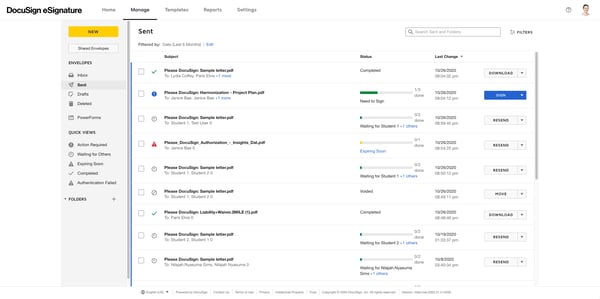
Another thing I love about DocuSign is how reliable it feels. It complies with legal standards like eIDAS, ESIGN, and UETA, which means the signatures are legally binding and secure. They also provide detailed audit trails, so you have all the necessary proof in one place if there's a dispute.
One standout feature is the bulk send capability, which lets me simultaneously send the same document to multiple recipients. This feature is perfect for large-scale agreements or onboarding processes. Another hidden gem is the smart sections feature, which dynamically adjusts documents based on recipient input, making complex forms easier to manage.
The integration options are another big plus. DocuSign works well with the platforms I use, making it easy to pull documents from wherever they’re stored and send them for signing without switching between apps.
DocuSign holds steady at the top on G2 — 96% for document signing, 93% for signature history and audit, and 92% for regulatory compliance — numbers that reflect why it's still the benchmark most e-signature tools are measured against.
Based on my research, I'd say DocuSign is a strong fit for teams that need a reliable, enterprise-ready e-signature solution with flexible workflows; But for smaller teams or those with lower document volume, some G2 reviewers note that pricing and envelope-based limits are better suited to consistent, high-usage environments. Still, it delivers strong value for organizations managing frequent, large-scale agreements.
Also, for users handling detailed edits, document organization, or more precise field placement, some reviewers mention the interface can take a bit of getting used to. However, once familiar, it remains highly effective for streamlining core signing workflows.
I'd say DocuSign is the safe bet for enterprises that need a proven, compliance-ready e-signature platform — years of industry trust, deep integrations, and a feature set that rarely leaves teams wanting more. If scale and reliability are non-negotiable, it's hard to argue against it.
“What I like best about DocuSign is how effortless it makes the entire document signing process, from start to finish. Implementation is very straightforward and doesn’t require much technical effort, so teams can start using it quickly without long onboarding or setup time. We use it very frequently for contracts, approvals, and official documentation, and it consistently works without issues.
It also has a strong set of features like reusable templates, automated reminders, real-time tracking, audit trails, and secure signing, w
hich makes it suitable for both simple and complex workflows. Integrations with common tools like email, cloud storage, and CRM platforms are smooth and reliable, so it fits easily into existing processes. Overall, it saves a lot of time, improves turnaround, and removes the usual delays that come with manual signing and follow-ups.”
- DocuSign review, Ankit P.
“The only two things I find problematic about this program are the editing capabilities and the cost.”
- DocuSign review, Jamail B.
Is DocuSign safe for your e-signature needs? Learn about its safety features, encryption standards, and industry compliance in our detailed breakdown.
Xodo Sign caught my attention for its lightweight yet feature-packed approach to e-signatures. Its intuitive design and features make it a perfect fit for anyone who needs to handle document signing quickly and efficiently without getting bogged down by unnecessary complexity.
One of Xodo Sign’s standout features is its real-time collaboration capability. Unlike other e-signature tools, this feature allows multiple people to simultaneously review, comment on, and sign a document. I’ve used it to fasten approvals on contracts and agreements, and it’s completely removed the hassle of back-and-forth edits. Everyone can see updates in real time, which keeps the process moving and ensures no miscommunication.
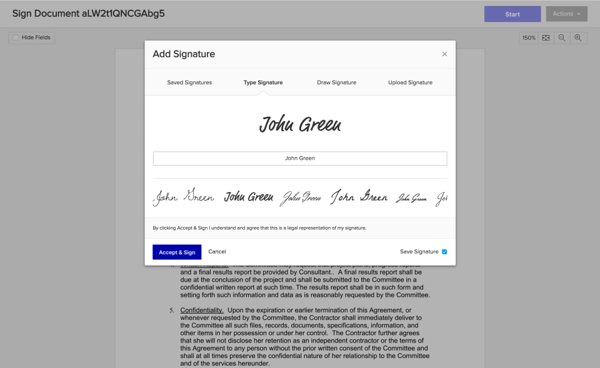
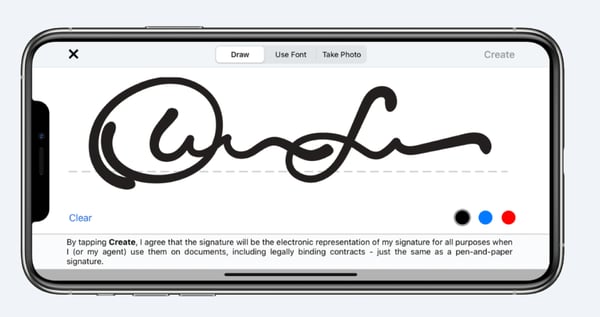
The custom signing link feature is another game-changer for me. Instead of emailing individual documents, I can generate a unique link and share it however I want—via text, chat, or even a shared team platform. It’s quick and makes working with multiple signers in different locations effortless.
Xodo Sign also excels with its mobile-first approach. The mobile app is designed with ease of use in mind, allowing me to prepare, send, and sign documents directly from my phone. Whether in the office or on the go, I can handle contracts without missing a beat, and the experience is just as smooth as using the desktop version.
Another feature I rely on is document locking after signing. Once a document is signed, it’s automatically locked to prevent unauthorized changes, and an audit trail tracks all activity. This is a huge plus for maintaining document integrity and ensuring compliance with legal standards. The notification and reminder system is also worth highlighting. Xodo Sign automatically follows up with signers who haven’t completed their part, which saves me time and ensures deadlines are met without me having to nudge anyone manually.
Xodo Sign is often highlighted on G2 for its secure e-signature workflows and intuitive design that make document signing simple across devices. Users especially appreciate its accessibility and ease of use for quick signing needs.
In terms of its highest-rated features, Xodo Sign punches above category averages across the board — document signing at 97%, signature history and audit at 96% (vs. 93% avg), and performance and reliability at 96% — numbers that speak to a tool that's more capable than its profile might suggest.
On the other hand, G2 reviewers observe that for use cases that require more flexibility, like advanced customization, or dynamic recipient handling, it might feel more standardized, though it remains efficient for core document workflows.
Also, while the platform offers solid value for individuals and small teams, especially with its accessible pricing and ease of use, for teams needing more advanced features like bulk actions, deeper automation, or expanded controls, some reviewers mention these are tied to higher plans or evolving capabilities. That said, it still covers the essentials reliably for everyday signing needs.
Overall, Xodo Sign is seen by G2 reviewers as a reliable solution for straightforward e-signature needs, with opportunities to expand its reporting depth and template management features for power users. In my opinion, Xodo Sign is the underdog worth betting on — strong performance numbers, reliable signing, and a no-fuss experience that holds its own against tools with far bigger reputations.
“I use Xodo Sign for electronic signatures on contracts, which reduces the time and need for manual signing of business documents. It's easy to use, has a great pricing format, and possesses all the features I need. The pricing tiers, especially the free-fee options, are excellent for small businesses. The automation features like email delivery, e-signatures, and auto reminders are excellent as they take the burden off one of our admin tasks, reducing time and cost.”
- Xodo Sign review, Hope H.
“Unfortunately, I can’t create signing links that I can send directly to the end user; it always has to be tied to a specific recipient. In situations where we can’t use email, I end up using an alias for myself and then forwarding the link on manually. It would be great to have official support for this.”
- Xodo Sign review, Chris V.
Watching your budget? See the best free e-signature software for small businesses for a breakdown of which tools offer real free plans versus trials.
Dropbox Sign (formerly HelloSign) offers a practical and efficient approach to e-signatures, making it a great choice for managing contracts and approvals. Its deep integration with Dropbox and straightforward tools make document signing and sharing quick and organized, particularly for those already familiar with Dropbox.
One feature I’ve come to rely on is the role-based team management. With Dropbox Sign, I can assign permissions to team members, control who can send documents, and track progress across the team. This has been invaluable for collaborative workflows where multiple people must contribute or approve before a document is finalized. It eliminates confusion and ensures accountability at every step.
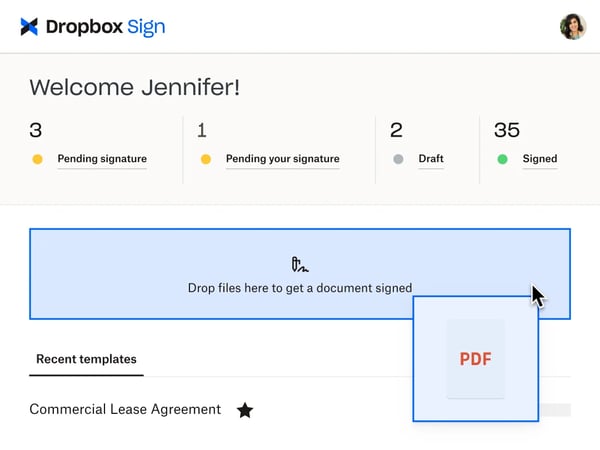
The drag-and-drop editor is simple yet effective for preparing documents. Adding signature fields, checkboxes, and dates is fast and doesn’t require a steep learning curve. I’ve used it to prepare agreements and contracts, customizing fields for specific signers with ease. This functionality ensures that the right fields are always assigned to the right person.
What really sets Dropbox Sign apart is its direct integration with Dropbox. I can pull documents straight from my Dropbox folders, set them up for signing, and save the signed versions back into the same folder automatically. This seamless integration keeps everything organized and ensures I never have to waste time on uploads or downloads.
The request expiration feature is another valuable tool. Setting deadlines for signatures helps ensure that documents are signed promptly. It also sends automated reminders to signers, so I don’t have to worry about following up manually. This has kept my projects on schedule without requiring additional effort.
On G2, Dropbox Sign scores above category averages across its core features — document signing at 96%, signature history and audit at 95% (vs. 93% avg), and regulatory compliance at 94% — reflecting a tool that's quietly dependable where it matters most.
That said, for teams needing deeper visibility into document status or more consistent notification delivery, some reviewers mention that tracking and email reliability could be more robust. Neverthelessm users note it still keeps core signing processes smooth and manageable.
Similarly, some G2 reviewers note that customization, bulk actions, and advanced document handling can feel more standardized though it remains efficient for everyday signing needs.
My recommendation? Dropbox Sign is a natural fit for teams already in the Dropbox ecosystem — clean, reliable, and built for teams that want signing handled without the overhead of a heavier platform.
“What I love most about Dropbox Sign is how it brings absolute clarity to my daily contract management without overcomplicating the process. The Documents dashboard is a lifesaver allowing me to see exactly which agreements, like our Social Media Policy, are still Pending signature and who I need to nudge. The Email reminder button is a masterstroke for productivity it's just one click to follow up on a Liability Waiver that's been sitting for a day.”
- Dropbox Sign review, Verified G2 user.
“I don’t love that it’s hard to see who has signed and who hasn’t. Without a clear overview or an easy way to export the data, it makes tracking progress and following up on outstanding signatures more time-consuming and frustrating.”
- Dropbox Sign review, Kimberly L.
When I started exploring BoldSign, I wasn’t expecting it to stand out as much as it did but it quickly proved to be one of those tools that just works without getting in your way. If your goal is to send documents, get them signed, and move on, BoldSign keeps things refreshingly simple without cutting corners where it matters.
What stood out to me first was how effortless the signing experience is. Uploading a document, adding fields, and sending it out takes just a few clicks, and the entire flow feels intuitive from start to finish. It’s not surprising that BoldSign scores 96% for document signing on G2 because it genuinely nails the core job.
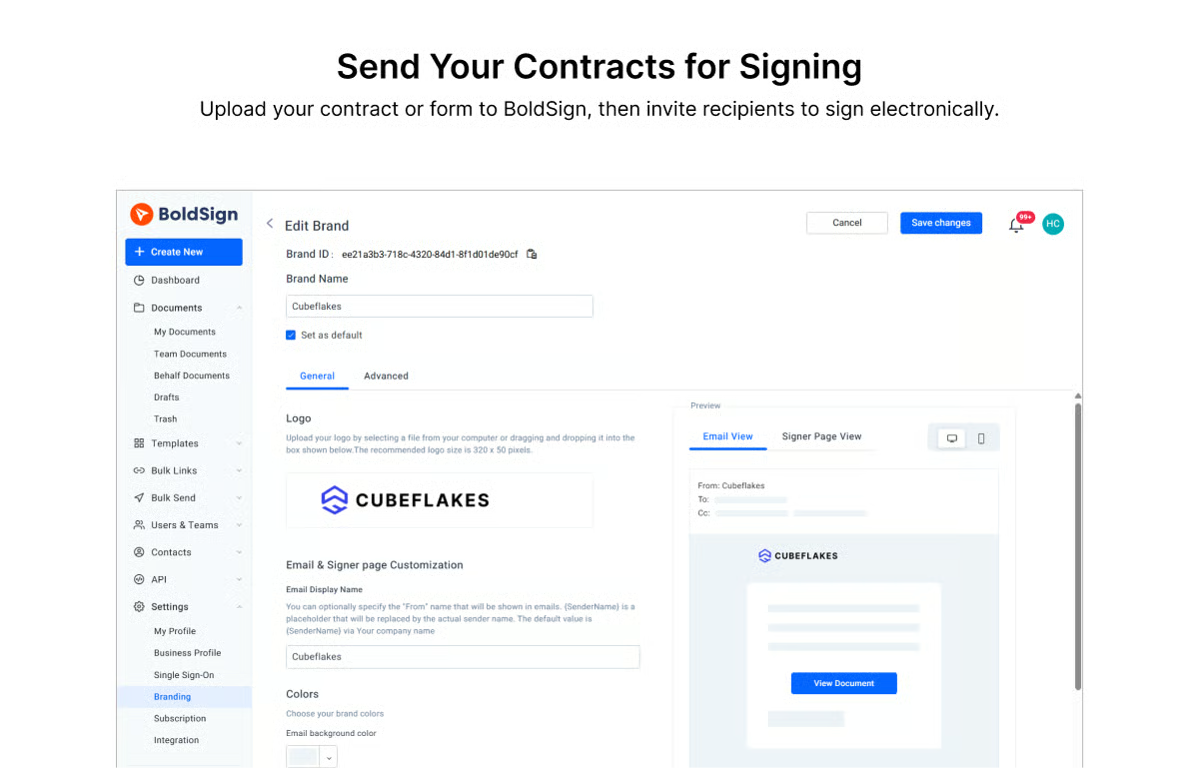
I also really liked how clean and frictionless the sign-in process is. There’s no unnecessary complexity when accessing documents or completing signatures, which makes a big difference when you’re working with external stakeholders who just want to get things done quickly. That ease of access shows up in its 95% rating for sign-in experience, again outperforming the average.
Another thing that impressed me is how reliable the audit trail and tracking features are. Every action is clearly logged, giving you full visibility into the document lifecycle. It’s one of those features you don’t think about until you need it, and BoldSign handles it well, with a 94% rating for signature history and audit on G2.
From a workflow perspective, BoldSign feels fast and efficient. Sending documents, setting up reminders, and tracking progress all happen without friction, which makes it easy to keep things moving, especially when you’re handling multiple agreements at once. It’s clearly built for teams that value speed and clarity over unnecessary complexity.
I also appreciate how approachable it is for teams of all sizes. Whether you’re a small business or part of a growing team, the platform doesn’t feel overwhelming, and you don’t need a steep learning curve to get started. It strikes a nice balance between simplicity and functionality, which isn’t always easy to pull off in this category.
There are few things to consider too. Based on G2 reviews, BoldSign works especially well for straightforward signing workflows and standard approval processes. For teams managing scenarios with multiple signers sharing the same email address or needing more flexible parallel signing options, some reviewers note that the signing flow can feel more structured — still, it remains efficient and reliable for most common document workflows.
Also, for teams managing large volumes of templates or more complex document structures, some G2 reviewers note that template management and certain UI interactions can take a bit more effort — that said, it remains efficient for everyday document creation and signing needs.
Overall, BoldSign stands out as one of the best e-signature tools for SMBs looking for something fast, reliable, and easy to adopt without unnecessary complexity. With its unlimited envelope plan at just $15, it offers strong value for growing teams that need to send documents frequently without worrying about usage limits—making it a practical, no-fuss choice for keeping workflows moving smoothly.
“I appreciate how BoldSign allows staff to track the flow of documents instead of waiting for paperwork to be returned in the mail. It's great that it makes the process easier and manageable by letting us resend requests electronically. I like that it's somewhat user-friendly and eliminates a lot of documents being sent via regular mail. I enjoy that frequently used documents can be shared within the organization, and everything is at your fingertips, instead of on paper in a file.”
- BoldSign review, Marsha M
“I didn’t like that, sometimes, the email didn’t include the signed documents. Instead, I had to click the download link in the email, which then took me to the website just to download the individual files. I did like that I couldn't search for the individual file names within the different batches of signed documents within the website.”
- BoldSign review, Adrian G.
If you’re exploring beyond the top picks, tools like SignWell, DocuSeal, DottedSign, Signaturely, and SignNow are also worth considering, especially for SMBs looking for simple, affordable e-signature solutions without the overhead of enterprise-heavy platforms.
PandaDoc and DocuSign both appear high on this list for different reasons. See how they compare when put through the same five-page contract, from import to completed signature.
Have more questions? Find more answers below.
The best e-signature software depends on your use case, scale, and integration needs.
DocuSign’s closest competitor is Adobe Acrobat Sign, especially for enterprise buyers.
Microsoft doesn’t offer a standalone e-signature product but integrates with leading solutions.
These integrations allow document signing within Microsoft 365 apps like Word, Excel, and Outlook.
DocuSign is not free but offers a limited free trial.
For high-security use cases, these platforms stand out:
For free plans with solid functionality:
Small businesses need affordability and scalability.
Real estate teams benefit from templates and integrations.
For legal compliance and auditability:
Startups prioritize speed and scalability.
For contract workflows:
Enterprises need scalability and integrations.
Healthcare requires strong compliance and security.
For macOS compatibility:
For distributed teams:
For secure document handling:
For SaaS and product teams building document workflows:
Reliability depends on scale and use case:
Based on user reviews, DocuSign and Adobe Acrobat Sign are the most trusted at enterprise scale. DocuSign scores 96% for document signing and 92% for regulatory compliance on G2 and is described as the enterprise benchmark, while Adobe Acrobat Sign pairs 94% document signing with deep PDF-native workflows trusted for structured, process-driven agreements.
For distributed teams, DocuSign and PandaDoc rate highly. DocuSign is cited as highly reliable and scalable for remote teams with real-time status tracking, and PandaDoc combines sequential signing, auto-reminders, and 97% document-signing satisfaction to keep multi-signer workflows moving securely across locations.
DocuSign and Xodo Sign score high on both. Reviewers describe DocuSign's implementation as straightforward with quick onboarding, backed by 96% document-signing satisfaction, while Xodo Sign outperforms category averages across the board (97% document signing, 96% performance and reliability), pointing to consistent, dependable rollouts.
DocuSign and Adobe Acrobat Sign are built for high-volume enterprise use. DocuSign supports bulk send for large-scale agreements with 96% document-signing satisfaction, and Adobe Acrobat Sign handles structured, process-driven workflows reliably. Both sit at or above the category's 90%+ marks for performance and reliability.
BoldSign and Xodo Sign deliver value without heavy setup or consulting. BoldSign offers unlimited envelopes at an entry price with no overages, and Xodo Sign is praised for accessible pricing and ease of use, both letting small and growing teams get signing quickly without paid implementation services.
BoldSign and Xodo Sign are the most approachable for non-technical teams. Reviewers describe BoldSign's signing flow as intuitive with no steep learning curve, and Xodo Sign's mobile-first, no-fuss interface as easy to adopt, so teams get running with little training.
DocuSign, Adobe Acrobat Sign, and Dropbox Sign integrate cleanly with existing systems. DocuSign connects smoothly with email, cloud storage, and CRM platforms; Adobe Acrobat Sign pulls files directly from cloud storage like Google Drive; and Dropbox Sign works natively inside the Dropbox ecosystem, all without custom development.
For fast time-to-value, BoldSign, DocuSign, and Xodo Sign stand out. Reviewers describe quick setup and immediate paperless workflows with BoldSign, straightforward DocuSign onboarding without long setup, and Xodo Sign's fast, cross-device signing. Actual payback depends on document volume and workflow complexity.
PandaDoc and DocuSign cut manual work most directly. PandaDoc automates reminders, sequential signing, and reusable templates so teams stop chasing signers manually, and DocuSign's bulk send, automated reminders, and real-time tracking remove the delays of manual signing and follow-up.
PandaDoc and Adobe Acrobat Sign handle complex workflows without heavy IT involvement. PandaDoc supports sequential signing, embedded signing, and template-driven automation through a no-code editor, and Adobe Acrobat Sign lets teams build ordered, multi-signer workflows with guided signing that reduces errors, both manageable without dedicated IT.
Whether you’re looking for something simple and cost-effective or a tool with advanced features and integrations, the key is understanding what matters most for your workflows and focusing on tools that deliver those results.
The next step is to explore your options. Start by identifying the most important features — ease of use, security, or integration with tools you already use. Then, test a few platforms to see how they align with your goals. Most e-signature tools offer free trials or demos, a great way to get a feel for their capabilities.
As you evaluate your choices, think about scalability. It’s worth considering how well the software can adapt to your future needs, whether that’s increased document volume, team collaboration, or more advanced processes.
If you’re looking to take things a step further and automate how your documents are created before they’re even sent for signing, it’s worth exploring our guide to the best document generation tools.


Not all "free" e-signature tools are free in the same way, and for a small business, that...
 by Shashank D Shastry

Contracts, offer letters, and other agreements are part of everyday business, and choosing the...
.png) by Devyani Mehta
by Devyani Mehta

You’ve finalized the proposal, secured internal approvals, and sent it to the client. The deal...
 by Aditi Rai