.png?width=400&height=150&name=My%20project-1%20(1).png)


If you’re leading a sales or revenue team, you already know how quickly planning breaks down, territories drift out of balance, quotas stop matching capacity, and forecasts shift from confident to speculative the moment assumptions change. I’ve seen this pattern across high-growth teams and mature enterprises alike. The real issue isn’t effort, it’s the tools: static spreadsheets, siloed data, and disconnected planning cycles that make it impossible to adjust in real time.
That’s why sales planning software has become non-negotiable for revenue organizations.
To understand which platforms actually deliver on that promise, I evaluated the best sales planning software using G2’s Sales Planning Grid® Report, feature-level breakdowns, and insights from hundreds of verified user reviews.
Some platforms excel at structured planning for enterprise teams. Others are built for faster implementation, CRM alignment, or compensation-connected planning. My goal was to separate tools that look sophisticated from those that genuinely improve revenue accuracy, planning efficiency, and cross-functional visibility.
If you’re ready to find a sales planning platform that strengthens forecasting, reduces operational overhead, and keeps every team working from the same assumptions, here’s what stood out when I compared them.
*These best sales planning software are picked based on G2’s Fall 2025 Grid Report. I’ve added their standout features for easier comparison.
Sales planning is no longer a once-a-year exercise. Revenue teams today are expected to rebalance territories, adjust quotas, rerun forecasts, and model new assumptions constantly — and doing all of this through manual spreadsheets creates misalignment fast. When Sales, RevOps, and Finance each work off different versions of the plan, small discrepancies quickly turn into inaccurate forecasts, uneven territories, and targets that don’t reflect real capacity.
And the demand for stronger planning infrastructure isn’t slowing down. The sales performance and planning software market, valued at $15 billion in 2025, is projected to grow at a 12% CAGR from 2025 to 2033, reaching approximately $45 billion by 2033. That acceleration reflects what teams are feeling: the need for more dynamic, connected, and data-driven planning processes.
That’s why modern sales planning platforms have become so impactful. The best tools automate the heaviest parts of the planning cycle — consolidating CRM and financial data, recalculating quotas, updating models, and surfacing performance insights — so teams don’t waste hours maintaining spreadsheets. They help identify coverage gaps earlier, ensure territories are balanced more fairly, and reduce the inconsistency that slows revenue execution. The strongest platforms also connect planning with day-to-day operations.
To build this list, I started with G2’s Grid® Report for sales planning software to create a shortlist, using a mix of user satisfaction scores and market presence as my initial filter. This helped ensure a balanced view of tools that are both widely adopted and consistently rated highly by real revenue teams.
From there, I evaluated each platform based on how effectively it supports core sales planning needs, including scenario modeling, territory and quota workflows, forecasting accuracy, performance visibility, and integrations across CRM, ERP, and broader RevOps systems.
I also used AI to analyze hundreds of verified G2 reviews, paying close attention to what sales, RevOps, and finance teams valued most, where they experienced friction, and which tools consistently improved planning efficiency and revenue alignment.
The screenshots featured in this article come from G2 vendor listings and publicly available product documentation.
After digging into G2 Data and evaluating how modern revenue teams build, adjust, and operationalize their plans, I found the same priorities coming up again and again. Here’s what I focused on when identifying the best sales planning software:
Of course, not every platform is built to excel in every area, but the tools that stand out consistently deliver strong performance where it matters most: flexibility, accuracy, and operational alignment across the entire revenue organization.
The list below contains genuine user reviews from the Sales Planning Software category page. To be included in this category, a solution must:
*This data was pulled from G2 in 2025. Some reviews may have been edited for clarity.
Salesforce Sales Cloud remains one of the most widely adopted platforms for revenue teams looking to unify pipeline management, forecasting, and planning workflows. With a 4.4 out of 5 rating from 25,300+ reviews, it consistently ranks as a Leader in the Sales Planning category based on its strong Satisfaction Score and large market presence. G2 Data shows that 91% of users say they would recommend Salesforce Sales Cloud, and features like multi-step planning, pipeline visibility, and sales analytics continue to be highly rated by users across industries.
Teams highlight how effective Salesforce is at consolidating leads, opportunities, and account activity into a single source of truth. The platform’s structured tracking makes it easier to map pipeline stages, monitor deal progress, and feed accurate data into forecasting models — a foundational requirement for sales planning. Many users also call out Salesforce’s task and reminder system, which helps sales teams stay on top of follow-ups and maintain clean pipelines that accurately reflect deal health.
Customizability is another standout theme across reviews. Salesforce’s flexible architecture allows revenue teams to tailor objects, fields, flows, and dashboards to match their planning processes. This adaptability is especially valuable for organizations that need territory-specific views, quota tracking dashboards, or custom forecasting categories to support more granular planning. For many teams, Salesforce becomes the backbone of their forecasting and execution rhythm because it mirrors how their sales cycle actually operates.
Users also frequently mention Salesforce’s reporting capabilities. The platform’s dashboards provide real-time visibility into performance metrics, pipeline coverage, win rates, and rep activity. These insights help revenue leaders run more data-driven planning cycles and make adjustments before they impact targets. Several reviewers also praise Salesforce’s AI features, including deal insights and predictive recommendations, which enhance pipeline evaluations and help planners identify which opportunities are most likely to convert.
With a strong integration feature, Salesforce can connect seamlessly with the broader Salesforce ecosystem, including Marketing Cloud, Service Cloud, and CPQ, as well as third-party systems. This connectivity ensures that planning, forecasting, and execution remain aligned across all revenue-impacting functions. The mobile app also receives repeated positive mentions for helping sales reps stay productive on the go, ensuring data freshness for forecasting and planning activities.
Salesforce’s depth does come with considerations for certain teams. Some reviewers note that the interface can feel complex or unintuitive at first, especially for users new to enterprise CRMs. This reflects the system’s structured, highly configurable design, which tends to benefit organizations that already have established planning and operational frameworks.
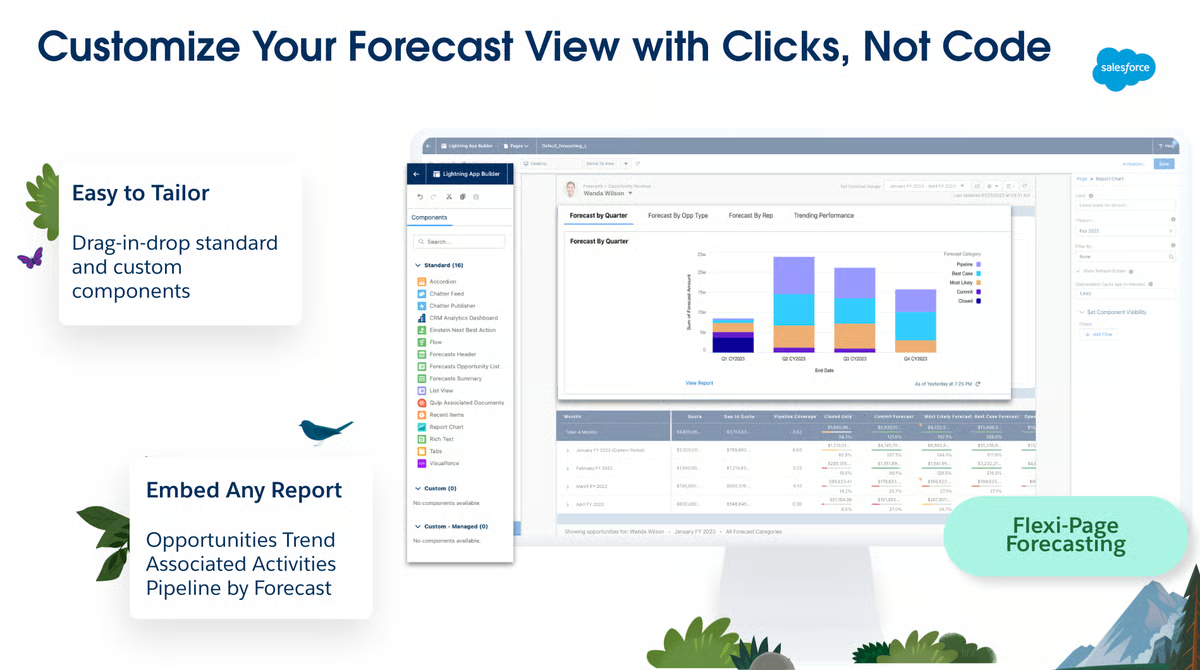
A smaller subset of users mention slower navigation when working across larger records or complex setups, a trade-off that can occur in feature-rich, enterprise-scale environments that prioritize breadth and extensibility over lightweight speed.
Still, for organizations looking to anchor their planning cycles in accurate CRM data, Salesforce Sales Cloud stands out for its visibility, flexibility, and broad ecosystem. Its combination of tracking, analytics, customization, and AI-powered insights makes it a reliable foundation for teams building more predictable and scalable sales planning processes.
"The main downside is the learning curve. New users often find the interface a bit overwhelming because there are so many features and settings. Sometimes simple actions take more clicks than expected, and system updates occasionally change the layout, which requires re-adjustment. Apart from that, most things work well once you get used to it."
- Salesforce Sales Cloud review, Santhoshi K.
“The platform does have some drawbacks. The initial setup and onboarding can be quite complex, often requiring external expertise or training, which can be a hurdle for smaller teams or businesses new to CRM tools. The cost of licensing and customizations can be a challenge for startups or companies with limited budgets, as advanced features come with a higher price tag. Additionally, while feature-rich, the user interface can sometimes feel cluttered or overwhelming, slowing down adoption for new or non-technical users.”
- Salesforce Sales Cloud review, Shivam S.
Anaplan is widely regarded as one of the strongest platforms for complex sales planning, capacity modeling, and quota-setting at scale. With a 4.6 out of 5 rating from 409+ reviews, and 98% of users rating it 4 or 5 stars, Anaplan consistently earns high marks in the Sales Planning category. G2 Data also shows that Scenario Modeling, Quota Management, and Sales Forecasting all hold a 92% satisfaction score, underscoring its strength as a planning engine for large and fast-changing revenue organizations.
Across the reviews, users frequently highlight Anaplan’s flexible, multidimensional modeling capabilities, which allow RevOps, Finance, and Sales teams to build granular planning structures without relying on heavy development resources. It has a highly connected planning framework, where assumptions, targets, and scenario outputs are linked across models, making it easy to update plans without juggling multiple spreadsheets or siloed tools.
Real-time data responsiveness appears repeatedly as a standout benefit. Reviewers mention that forecast adjustments and planning recalculations reflect instantly, helping leaders understand the impact of shifting territories, headcount changes, or performance trends. Many also note that Anaplan’s ability to scale, large data sets, multi-layered planning logic, and enterprise workflows are handled with ease, making it especially effective for teams with complex or global sales structures.
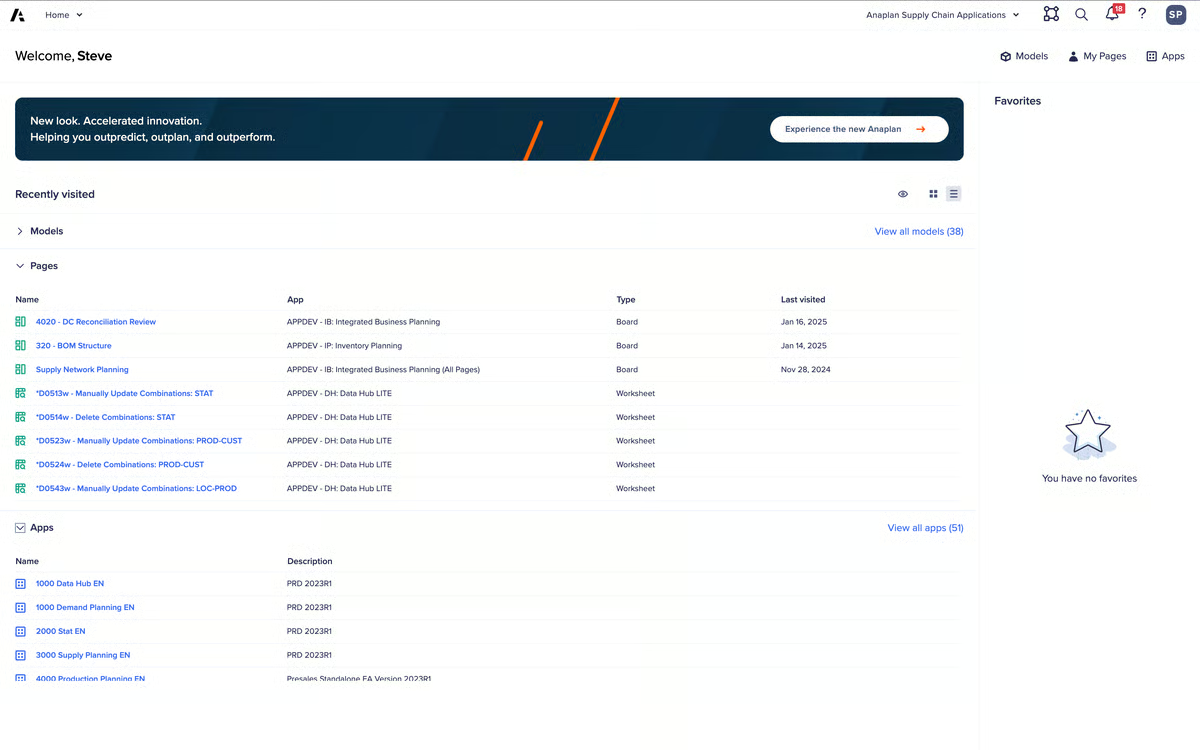
Integrations also show up frequently in the positive feedback. Users explain that Anaplan connects smoothly with CRM systems, data warehouses, and ERP tools, helping organizations keep planning and execution aligned. Mixed with its collaborative environment, where multiple stakeholders can work inside planning cycles without version control issues or conflicting data sources, Anaplan makes a powerful contender for best sales planning software.
Some reviewers mention that Anaplan can feel complex for new users, especially when working inside large or highly detailed models. While this may be challenging for teams looking for something more lightweight. However, others who manage intricate planning cycles say the structure gives them the flexibility they need for multi-layer modeling.
A few users also point out that recalculations in very large models can take longer than expected. This can be noticeable for teams that prefer fast, simple workflows, while organizations working with deeper, multi-dimensional planning logic may find that the platform’s ability to handle volume matters more than speed.
Overall, Anaplan stands out as a powerful choice for organizations that require precise, scalable, and interconnected sales planning. Its strong ratings in forecasting, scenario modeling, and quota management make it especially valuable for teams looking to align revenue assumptions, capacity planning, and targets in a single, unified environment.
“This is a low-code/no-code platform that empowers business users to take ownership of their applications, reducing dependence on IT and eliminating common bottlenecks. Its hyper-block technology supports real-time collaboration throughout the organization, helping to break down silos. The platform also gives you the flexibility to define your own models without being constrained by rigid structures or limitations. Its user-friendly UX allows model builders to build highly customized UX with KPIs, charts, and conditionally formatted tables, hence improving overall user experience.”
- Anaplan review, Ken C.
“Anaplan is a very expensive tool, but it can be worthwhile if you develop a well-defined use case. Although Anaplan is capable of handling almost any task, it's important to consider whether a particular task truly needs to be done within Anaplan or if it would be more cost-effective to handle it elsewhere. We should remember that Anaplan is the planning tool at first. For example, raw data transformation might be better performed outside of Anaplan to save on performance/cost.”
- Anaplan review, Evgeny S.
Vena is a strong fit for revenue teams that want the familiarity of Excel paired with automated workflows, centralized data, and structured sales planning models. With a 4.5 out of 5 rating from 360+ reviews and 98% of users rating it 4 or 5 stars, Vena consistently performs well for organizations that rely heavily on spreadsheet-driven planning. G2 Data shows that Sales Forecasting, Quota Management, and Territory Planning all score 97%, making Vena a compelling option for sales teams that need structured planning without abandoning their Excel-based processes.
Reviewers frequently highlight Vena’s Excel interface, noting that it allows teams to maintain their existing planning habits while benefiting from automation, version control, and centralized models. This hybrid approach appears across many reviews; users appreciate that Vena preserves Excel’s flexibility but eliminates manual consolidation, broken formulas, and late-stage planning bottlenecks. For sales organizations transitioning from spreadsheet-heavy planning, the familiarity of Excel significantly reduces onboarding time and keeps adoption smooth.
Another recurring theme is workflow automation. Users mention that Vena automates repetitive tasks such as data pulls, template distribution, and consolidation cycles, which helps planners and analysts reduce manual effort during budgeting, forecasting, and quota cycles. Teams also highlight Vena’s structured model and template system, which provides guardrails for data quality while allowing contributors to work in their preferred Excel environment.
Vena’s data accuracy and auditability show up often in reviews. Revenue teams value its ability to maintain a single source of truth for plan inputs, sales data, and forecasting assumptions. Many users also call out the platform’s strong customer support, which holds a 96% G2 Satisfaction Score and is often praised for fast responses and helpful guidance during complex planning cycles.
Users also emphasize Vena’s reporting capabilities, noting that the platform allows for flexible reporting inside Excel while providing centralized storage, workflows, and visibility across contributors. This makes it easier for teams to share sales forecasts, quota models, and performance updates without version control issues.
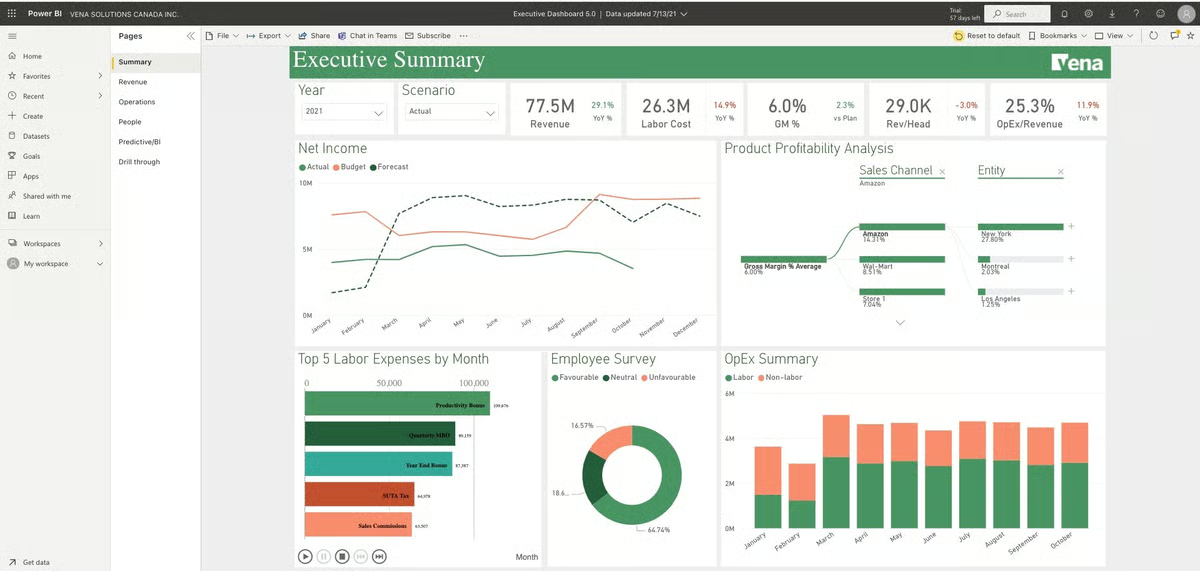
Some G2 reviewers mention that Vena can feel like an expert system, especially for teams that aren’t used to working within structured planning models. While this may feel demanding for groups expecting something more lightweight, others who manage more formalized planning processes say the structure supports the level of control they need.
A few users also note slower performance when working with large or highly complex reports. This can be noticeable for teams that want fast, simple spreadsheets, whereas organizations relying on detailed Excel templates and centralized data connections may find the added depth worth the occasional slowdown.
Overall, Vena stands out for organizations that want to modernize their sales planning workflows without abandoning the flexibility and familiarity of Excel. Its combination of structured modeling, strong forecasting ratings, and automation capabilities makes it particularly well-suited for teams looking to streamline their quota planning, forecasting, and reporting cycles while staying grounded in tools they already know.
“Vena centers its functionality around Excel, but all your data is securely stored in the cloud rather than within the spreadsheets themselves. Together with Excel flags, there is potential to build reports that do exactly what you intend to show. The ability to dynamically expand within models, reports, and templates greatly simplifies the work for those responsible for maintaining them. The cascade feature of reports dynamically runs the report in slices without having to select the slices manually, saving a lot of time.”
- Vena review, Choy C.
“In our experience, Vena's account reconciliation tool does not match the capabilities of some specialized reconciliation solutions. However, as a relatively affordable add-on, it adequately serves our requirements. Additionally, the ease of implementation largely depends on the amount of effort dedicated to data cleansing beforehand and having a clear understanding of predefined expectations.”
- Vena review, Peter P.
CaptivateIQ is a top choice for revenue teams that want to streamline incentive compensation and align commission structures with their sales planning workflows. With a 4.7 out of 5 rating from 3,440+ reviews, and 100% of users rating it 4 or 5 stars, CaptivateIQ consistently scores high for ease of use, admin experience, and overall satisfaction. G2 Data also shows strong performance across planning-related features, including Quota Management (87%) and Scenario Modeling (87%), making it well-suited for organizations that link planning decisions closely to compensation outcomes.
Across the reviews, users repeatedly highlight how transparent and reliable the commission process becomes once CaptivateIQ is implemented. Sales reps and managers appreciate being able to view commission details in one place, track earnings with clarity, and understand how performance ties directly to payouts. This visibility also helps planners anticipate payout obligations more accurately during quota-setting and forecasting cycles.
Customization emerges as another major theme. Reviewers note that CaptivateIQ provides flexible calculation logic and detailed rule-building, making it easier to manage complex incentive structures without engineering-heavy workflows. Many teams use these capabilities to model different commission scenarios, adjust payout logic during planning cycles, and maintain consistency across teams, roles, or territories.
Users also praise CaptivateIQ for providing a single source of truth for commission data, which simplifies audits, reduces errors from spreadsheet-driven processes, and gives leadership confidence in payout accuracy. Several reviews mention that CaptivateIQ significantly streamlines manual work, helping operations teams save time on reconciliation, validation, and month-end payout cycles.
The platform’s ease of use also stands out in G2 Data, with scores like: Ease of Use: 94%, Ease of Admin: 94%, Ease of Doing Business With: 94%.
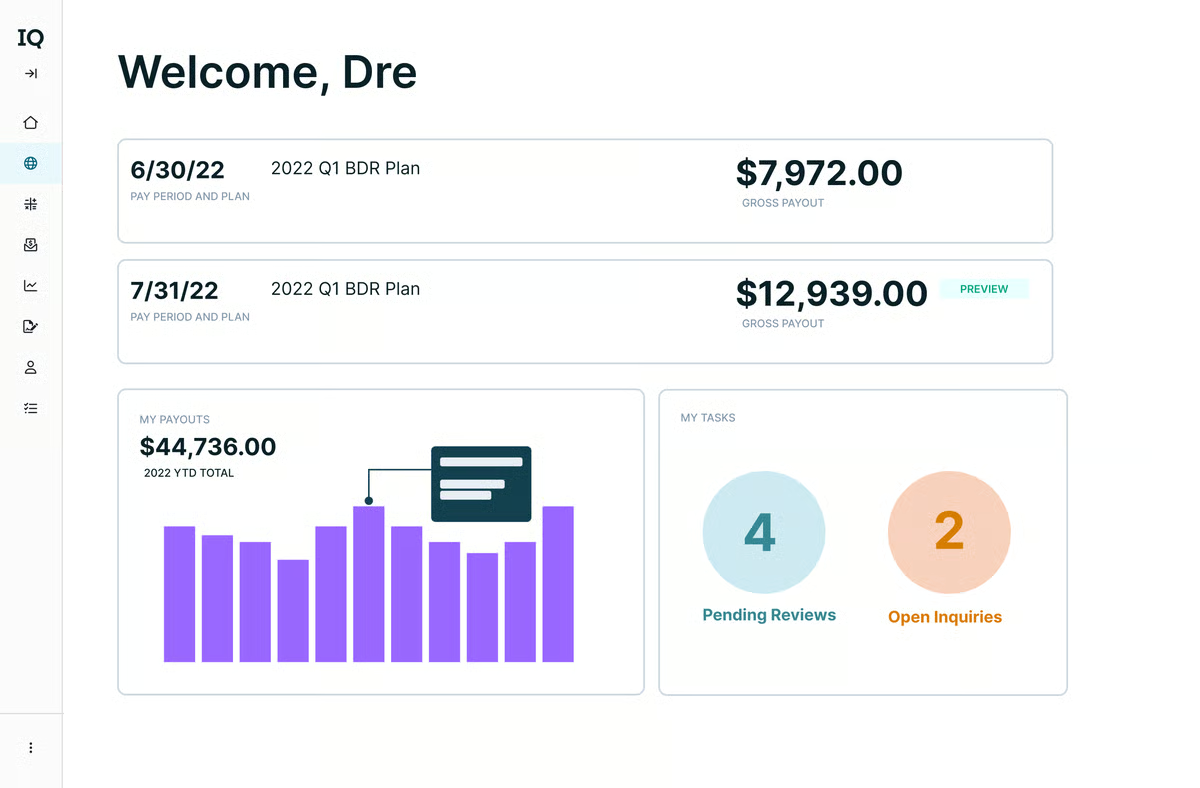
Reviewers mention that once set up, the interface is clear, intuitive, and well-organized, making it simple for sales reps to access commission breakdowns and for admins to manage changes.
Some G2 reviewers mention that initial setup or onboarding can feel challenging, particularly for teams configuring multiple plans, rule sets, or complex payout logic for the first time. While this may be a hurdle for teams looking for something more plug-and-play, others working with nuanced compensation structures often find the flexibility helpful once everything is in place.
A few users also note that having many tabs or views can make navigation feel busy. This tends to stand out more for teams that prefer simpler layouts, while groups managing detailed compensation components in one workspace may appreciate having everything visible and centralized.
Overall, CaptivateIQ stands out for organizations that want to bring clarity, accuracy, and automation to incentive compensation while strengthening the link between sales planning and payout modeling. Its strong ease-of-use scores, flexible rule engine, and consistent review feedback make it an excellent fit for teams building scalable, incentive-driven planning processes.
“Captivate IQ makes processing large quantities of sales commission payments very simple and quick. The tool is pretty straightforward and allows our organization to quickly set up comp plans and begin paying our sales reps. Adding reporting has been a game-changer for us!”
- CaptivateIQ review, Kellen I.
“At this point, I haven't encountered any downsides. Over the past eight years, this has been my favorite tool for achieving my goals as a rep. It would be fantastic if there were a way to identify the most important metrics for each department, or even more specifically for each individual seller, and have those metrics automatically sent to Slack or Gmail each month. However, this is not a deal breaker by any means.”
- CaptivateIQ review, John R.
Oracle Sales Performance Management (SPM) is built for large organizations that need structured, enterprise-grade workflows for compensation, quota planning, and territory management. Backed by a 4.0 out of 5 rating from 107+ reviews, Oracle SPM performs well among teams with complex incentive structures and layered sales operations. G2 Data highlights key strengths in ease of doing business (87%) and solid scores across meets requirements (85%) and ease of admin (84%), reflecting its value for enterprises that prioritize governance, data integrity, and end-to-end performance visibility.
Across user reviews, one of the strongest themes is Oracle SPM’s ability to manage complex compensation plans at scale. Revenue and operations teams mention that the platform centralizes payout logic, incentive rules, and performance metrics in one structured environment — reducing manual work and ensuring accuracy during monthly or quarterly payout cycles. This structure makes it easier for enterprises to manage multi-tiered plans, role-based variations, and detailed compensation calculations across large sales organizations.
Reviewers also highlight Oracle’s flexibility and configurability, noting that it adapts well to the needs of sophisticated enterprise processes. Many describe it as “powerful” and “enterprise-grade,” emphasizing that its modeling capabilities support large datasets and intricate planning requirements. Teams also call out strong data import/export and integration capabilities, which help organizations connect compensation and quota workflows with CRM, ERP, and financial systems.
Oracle’s process automation streamlines manual tasks associated with plan approvals, performance tracking, and incentives administration, which is a total win for G2 reviewers. Several note that this helps businesses improve sales performance by aligning compensation mechanics with organizational targets more effectively.
Oracle has the ability to provide clear visibility into sales results, giving leaders access to consolidated information on performance, quota attainment, and payout implications. For organizations with multi-product portfolios or distributed sales teams, this centralized visibility supports more accurate planning and governance.
Some G2 reviewers mention that setup and customization can feel complex, particularly for teams working with very unique or non-standard compensation models. While this may be challenging for groups wanting a more plug-and-play approach, others managing sophisticated incentive structures say the configuration options support the level of detail they need.
A few users also note that the interface could feel more intuitive. This tends to stand out for teams looking for something lightweight, while organizations that prioritize structured workflows and detailed auditability may find the layout aligns better with their operational requirements.
Still, for large organizations that need rigorous compensation planning, structured territory and quota workflows, and enterprise-level oversight, Oracle SPM offers a robust environment built for scale, control, and long-term alignment across sales, finance, and operations.
“Oracle SPM excels in automating complex compensation plans and providing transparent visibility to both sales teams and leadership. The dashboard views are customizable and comprehensive, making it easy to track performance against targets. Its integration with other Oracle Cloud products makes it convenient for organizations already in that ecosystem.”
- Oracle SPM review, Shrey A.
“What I didn't quite like was the initial complexity in the setup or the need for training to fully leverage its advanced features. Additionally, integration with legacy systems sometimes requires technical adjustments. However, these aspects are usually overcome with a well-planned implementation.”
- Oracle SPM review, Edson P.
Varicent is a strong choice for organizations that need scalable sales performance management supported by real-time visibility and automation. With a 4.5 out of 5 rating from 580+ reviews, Varicent maintains high user satisfaction, particularly in areas like Quality of Support (91%), Ease of Use (89%), and Ease of Admin (90%). G2 Data also shows high scores across Integrations (93%), Sales Performance (89%), and Scenario Modeling (89%), highlighting its strengths in supporting both day-to-day operations and long-term planning initiatives.
Across user reviews, one of the most consistent themes is Varicent’s flexibility and configuration depth. Reviewers frequently mention how well the platform adapts to complex commission workflows, rule logic, and performance structures without requiring extensive custom development. This configurability makes Varicent well-suited for organizations with multiple sales motions, layered incentives, or rapidly evolving compensation structures.
Automation is another recurring benefit. Users highlight Varicent’s ability to automate complex calculations, reduce manual reconciliation, and streamline payout cycles, which is especially valuable for enterprise teams with high-volume transaction data. Several reviews mention that automation improves accuracy and reduces time spent validating compensation data, helping teams shift focus from reconciliation work to strategic planning.
Users also consistently call out data accuracy and governance as standout strengths. Many appreciate how Varicent centralizes data from various systems, supports structured workflows, and enables audit-ready processes. This makes it easier for revenue teams to maintain consistent data across compensation, performance, and planning cycles.
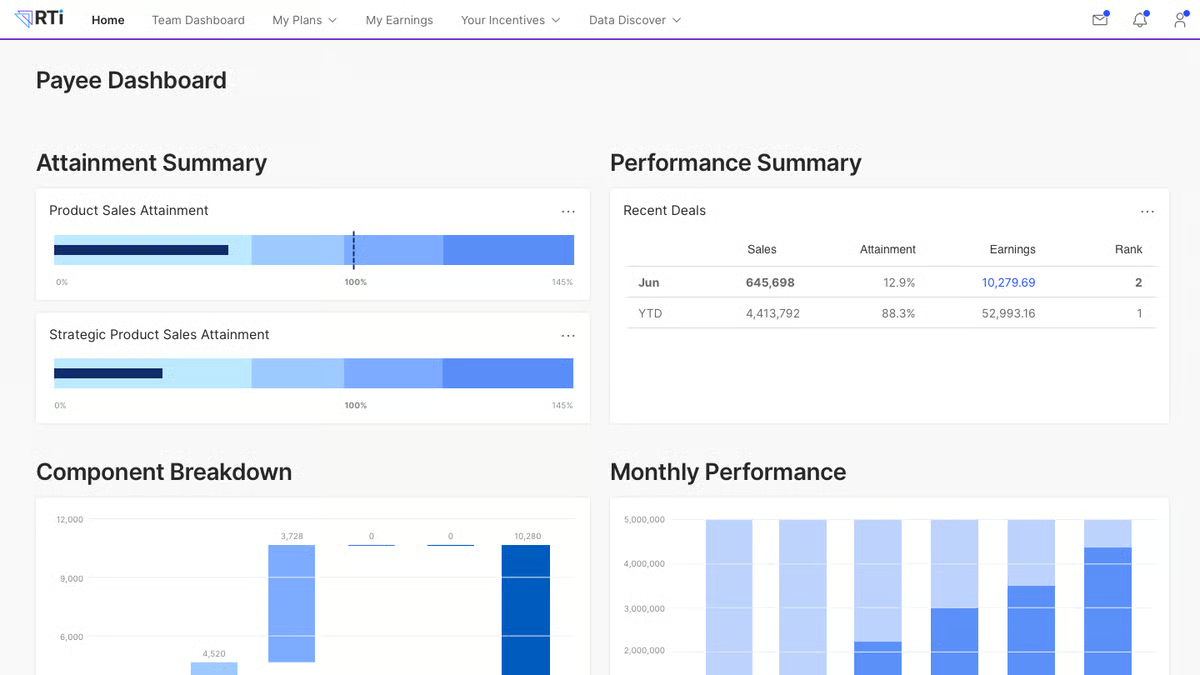
Strong customer support is another notable theme. Multiple reviewers mention that Varicent’s support teams and expert resources are responsive and knowledgeable, which helps organizations maintain smooth operations and adopt new features more effectively.
Reviewers also highlight Varicent’s continuous product improvement, noting that regular updates and new capabilities, including emerging AI features, help the platform evolve with their needs. This ongoing investment contributes to its value for teams operating in dynamic or high-growth environments.
Some G2 reviewers mention that reporting can feel less intuitive or slower at times, especially when working with large volumes of compensation or performance data. This may be noticeable for teams that prefer quick, lightweight reporting, while organizations handling more complex datasets often prioritize the platform’s ability to manage scale over speed.
A few users also note that certain features require additional setup or customization. This can feel demanding for teams looking for immediately ready workflows, whereas groups operating in more complex environments may appreciate having the flexibility to configure the system to match their specific compensation structures.
Still, for organizations that need a powerful platform to manage compensation, performance visibility, scenario modeling, and integrations at scale, Varicent stands out for its flexibility, automation capabilities, and strong operational backbone.
“While the bonus calculation features are fundamentally expected, the best aspect of Varicent is the ability to produce presenter adaptive reports and ELT reports which aggregate data from multiple sources to provide unique insights. The ELT tool is also an incredible addition.”
- Varicent review, Ian F.
“Really not a dislike, but we would like to see a more customizable workflow (we have very specific requirements). In addition, we would like to see more use cases/examples of how to use the API. We have a number of integrations with other systems (using imports), and while it works well, we are looking for something more seamless.”
- Varicent review, David H.
Got more questions? We have the answers.
If forecasting accuracy is your top priority, Anaplan and Salesforce Sales Cloud stand out. Anaplan’s 92% rating in Sales Forecasting reflects its strength in scenario modeling and real-time recalculation. Salesforce excels in CRM-driven forecasting, offering pipeline visibility and deal-level insights that help teams adjust forecast numbers based on real-time sales activity.
For territory and quota workflows, Anaplan and Vena lead. Anaplan supports quota allocations at scale with multidimensional planning, while Vena holds a 97% score for Quota Management and Territory Planning — ideal for teams that want to maintain Excel familiarity without losing governance. Varicent also performs well for territory planning in enterprise environments where compensation is tightly linked to territory design.
CaptivateIQ is the top choice for automating commissions, modeling incentive structures, and providing transparent payout visibility. For teams that need deeper enterprise governance, Varicent and Oracle SPM offer strong rule engines and workflow automation for complex, multi-tiered compensation plans.
For large or global sales organizations, Anaplan and Oracle SPM are the most reliable options. Anaplan’s modeling engine scales across thousands of reps and complex quota models, while Oracle SPM offers enterprise-grade controls, data governance, and workflow automation built for high-volume compensation and planning cycles.
If scenario modeling is critical to your planning cycles, Anaplan and Varicent are top picks. Both offer highly rated scenario modeling (Anaplan at 92%, Varicent at 89%), helping teams test territory shifts, hiring changes, or performance outcomes without rebuilding their models from scratch.
For broad integration needs, Varicent and Salesforce Sales Cloud stand out. Varicent’s 93% score in Integrations makes it ideal for teams connecting multiple data sources, while Salesforce naturally syncs planning and forecasting with CRM activity. Vena also integrates well with financial systems for organizations, bridging sales and FP&A workflows.
Mid-market organizations often prefer Vena or CaptivateIQ. Vena offers strong forecasting and quota capabilities with a familiar Excel interface, reducing training overhead. CaptivateIQ provides excellent value for teams whose planning cycles are heavily tied to commissions, simplifying both payouts and incentive modeling.
For ease of use, CaptivateIQ and Salesforce Sales Cloud are standouts. CaptivateIQ’s 94% Ease of Use rating reflects how easily reps can understand commission data, while Salesforce provides intuitive dashboards and mobile access for reps who need real-time insight into pipeline and forecasting numbers.
Anaplan and Salesforce Sales Cloud deliver some of the strongest real-time capabilities. Anaplan recalculates planning models instantly as assumptions change, while Salesforce updates forecasts and pipeline metrics as reps log activities or move deals through stages.
For deep visibility, Varicent and Anaplan excel. Varicent scores 89% in Sales Performance and is known for strong operational reporting, while Anaplan offers robust dashboards across forecasting, quota attainment, and scenario outputs. Salesforce also provides reliable analytics tied directly to pipeline and deal activity.
Sales planning isn’t just about targets on a spreadsheet — it’s about building a revenue engine that teams can trust. The best sales planning software helps you forecast with confidence, align territories fairly, and turn every planning cycle into a repeatable, data-driven process. When your assumptions, capacity plans, and targets all live in one place, execution becomes faster, decisions become sharper, and your sales organization becomes far more predictable.
Whether you prefer the modeling power of Anaplan, the Excel-native familiarity of Vena, or the compensation-connected planning in CaptivateIQ, each platform brings its own strengths to your revenue operations. Once you experience real-time visibility across quotas, capacity, and pipeline health, it becomes clear how much smoother planning can be when everything works in sync.
So stop wrestling with disconnected spreadsheets and start building a system that scales with your team. Stronger forecasting, cleaner territories, and more consistent performance are all within reach when the right tools power your planning process.
And when you're ready to deepen alignment between planning and payouts, explore the best sales compensation software, because predictable revenue starts with compensation that motivates, aligns, and scales.
.png)

Messy commission processes frustrate your reps and put revenue at risk. When payouts feel...
.png) by Devyani Mehta
by Devyani Mehta

Sales performance rarely falls apart all at once. I've seen it slip through the cracks when...
 by Harshita Tewari

A gaze into the future would be a good leg up for businesses everywhere.
 by Mary Clare Novak