

I evaluated G2 reviews, product research, and category data to identify the best loyalty management software for different customer retention strategies. Based on my analysis, five platforms consistently stood out: Smile.io, LoyaltyLion, AdvantageClub.ai, Okendo, and Yotpo.
One thing working in marketing has taught me is that keeping existing customers engaged is just as important as acquiring new ones. The difference often comes down to the technology behind the scenes. The strongest loyalty programs aren't just creative — they rely on platforms that make personalization, multi-channel engagement, and actionable customer insights easier to manage as programs grow.
As I analyzed G2 reviews, I noticed buyers were focused on more than just reward programs. Many identified loyalty management with exceptional ease of use and minimal implementation time for non-technical teams, while also seeking reliable integrations, flexible workflows, and the ability to launch and optimize loyalty initiatives without unnecessary complexity.
The more products I evaluated, the clearer it became that loyalty management software serves a wide range of business needs. Some platforms excel at helping e-commerce brands launch points and referral programs quickly, while others combine loyalty with reviews, customer engagement, or broader retention initiatives.
In this article, I'll break down where each solution performed best, the strengths and considerations that surfaced during my evaluation, and which teams are most likely to benefit from each platform.
Smile.io: Best for easy-to-launch points, referrals, and VIP programs
Helps e-commerce brands quickly launch loyalty programs with points, referrals, VIP tiers, Shopify integrations, and customer rewards that are easy to manage as programs grow. ($15/month.)
LoyaltyLion: Best for customizable loyalty programs for growing e-commerce brands
Builds flexible loyalty experiences with advanced reward rules, customer segmentation, referrals, VIP programs, and integrations for scaling Shopify businesses. ($199/month.)
AdvantageClub.ai: Best for AI-powered rewards and engagement programs
Combines rewards, recognition, incentives, AI-assisted engagement, and analytics to help organizations build stronger loyalty and long-term engagement across multiple user touchpoints. (Custom pricing)
Okendo: Best for connecting loyalty with customer reviews and referrals
Brings together loyalty, referrals, customer reviews, quizzes, surveys, and Shopify integrations to help brands strengthen customer relationships throughout the buying journey. ($105/month.)
Yotpo: Best for combining loyalty with reviews, SMS, and subscriptions
Unifies loyalty programs with customer reviews, SMS marketing, subscriptions, and referral campaigns in a single customer retention ecosystem. ($15/month)
*These loyalty management software are top-rated in their category, according to the latest G2 Summer 2026 Grid Report. I've included their standout capabilities and current pricing information to make comparisons easier.
Building customer loyalty takes more than discounts or points. The best loyalty management software helps brands create personalized experiences, reward repeat purchases, and strengthen long-term relationships while keeping loyalty programs manageable as customer expectations evolve. Businesses are investing accordingly, with the global loyalty management market valued at $13.6 billion in 2025 and projected to grow to $31.1 billion by 2033.
As I analyzed G2 reviews and researched products in this category, I found that the strongest platforms approached customer retention in different ways. Some focused on helping e-commerce brands launch loyalty programs quickly, while others combined rewards with customer reviews, referrals, engagement, or broader retention strategies.
Rather than looking at feature checklists alone, I evaluated how well each platform supports personalization, integrations, ease of administration, scalability, and long-term customer engagement. I also considered how these products complement broader customer advocacy software strategies by encouraging repeat purchases and stronger customer relationships.
The five platforms below stood out because each solves a different loyalty challenge particularly well. Whether your priority is launching a rewards program quickly, connecting loyalty with customer reviews, or scaling customer retention initiatives, these recommendations reflect where each product consistently delivers value based on my research and analysis.
I started by identifying the products with the strongest combination of market presence, user satisfaction, and review activity on G2. To narrow the list, I focused on platforms that consistently help businesses build customer loyalty through rewards, personalization, referrals, and customer engagement, rather than simply offering points-based programs. That approach helped me identify the best loyalty management software across different business needs and growth stages.
As I researched each product, I looked beyond feature lists to understand how effectively they support day-to-day loyalty management. I evaluated capabilities such as reward program customization, referral and VIP programs, integrations with e-commerce and marketing platforms, reporting, scalability, and the overall administrative experience. I also paid close attention to which loyalty management platforms avoid complex setups that typically cause project delays and scope creep, particularly for teams that want to launch or expand loyalty initiatives without extensive technical resources.
I also used AI to analyze verified G2 reviews at scale. This helped me identify recurring patterns in user feedback, including ease of implementation, usability, customer support, personalization capabilities, integration quality, and the long-term value businesses experienced after adopting each platform.
The final recommendations reflect a combination of G2 data, review insights, product capabilities, and workflow fit. Rather than relying solely on vendor claims, I evaluated how consistently each platform solved real customer retention challenges through user experiences. The screenshots featured throughout this article come from G2 vendor profiles and publicly available product documentation.
Every product on this list supports loyalty programs, but they don't solve the same business problems. I evaluated each platform based on the areas that most influence long-term success, from flexibility and integrations to reporting, ease of administration, and the ability to support evolving customer engagement strategies.
The five platforms that made this list performed well across the following evaluation areas:
The list below contains genuine user reviews from the Loyalty Management category page. To qualify for inclusion in this category, a product must:
*This data was pulled from G2 in 2026. Some reviews may have been edited for clarity.
Smile.io is built for e-commerce teams that want to launch loyalty programs quickly without adding operational complexity. As I reviewed G2 data and feedback, it consistently showed up as a strong fit for smaller teams, with 92% of its customer base coming from small businesses, which aligns closely with how users describe adopting and scaling the platform.
The biggest advantage I found while analyzing G2 reviews is how quickly teams can move from setup to a live loyalty program. Many users describe connecting Smile.io to Shopify in minutes and configuring rewards, referrals, and earning rules without technical friction. That speed becomes especially relevant for teams evaluating what the best loyalty management platforms are for 2-10 employees looking for quick implementation and proven ROI, where simplicity directly impacts time-to-value.
Integration is another area where Smile.io performs consistently well. The Shopify connection is frequently described as seamless, with points balances, rewards, and loyalty messaging appearing naturally within the storefront. From what I saw in the reviews, this tight integration reduces operational overhead and helps teams incorporate loyalty into everyday workflows rather than managing it as a separate system.
Customer experience is a recurring strength across G2 feedback. Shoppers can easily understand how to earn and redeem rewards, which removes friction and encourages participation. This directly supports stronger customer engagement, especially for brands focused on improving repeat purchases without introducing complex program rules.
From an admin perspective, Smile.io stands out for usability. The latest data supports this, with 92% ease of use, 93% ease of admin, and 92% ease of setup scores, which match the consistent feedback around intuitive dashboards and minimal onboarding effort. Based on the reviews I analyzed, marketing teams are able to manage campaigns independently without relying heavily on developers.
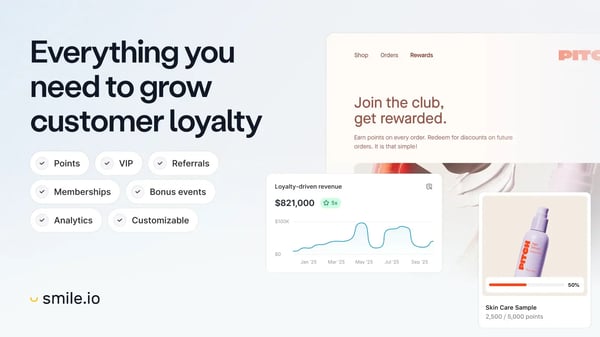
Another area where the platform performs well is structured program management. Points systems, referral campaigns, and VIP tiers are straightforward to configure, and teams can monitor reward activity without needing advanced tools. Combined with its position among rewards and incentives software solutions, it provides a strong foundation for retention strategies while staying accessible.
That said, the depth of customization becomes more limited as programs grow more sophisticated. Smile.io is designed to keep things simple, which works well for most small and mid-sized teams, but businesses looking for highly tailored workflows or deeply branded experiences may need additional integrations or development support. For its core audience, that simplicity often helps maintain speed and usability rather than becoming a blocker.
Feature access can also vary by pricing tier. Some advanced capabilities — such as deeper analytics or expanded program flexibility — are tied to higher plans. While this is typical across loyalty platforms, growing teams may need to plan for it as their requirements evolve, even though the core functionality remains strong for getting started.
The strongest fit for Smile.io is clear. It works best for e-commerce teams that want to launch quickly, keep loyalty programs easy to manage, and drive repeat purchases without building a complex infrastructure. For businesses prioritizing efficiency and accessibility, it remains one of the most practical options among the best loyalty management software available today.
“What I like best about Smile.io is how easy it is for both our customers and our team. Customers love being able to earn and redeem points on purchases, which gives them an extra incentive to shop with us and helps them save money. On the backend, it's incredibly simple to manage and extremely affordable. We can quickly view customer rewards activity, make point adjustments when needed, and customize the program to fit our business. The Shopify integration is seamless, and once everything is set up, it runs smoothly with very little maintenance required, with 24/7 support.”
- Smile.io review, Julia M.
“The pricing can be high for a small business, especially as you upgrade for more features. I also wish bonus campaigns were more flexible. Currently, bonus campaigns multiply regular points during a set time period, but you can’t easily assign a flat bonus (for example, +50 points for purchasing a specific product). To do that, you have to use Shopify Flow, which adds complexity. It would be much easier if Smile allowed simple product-based bonus point rules directly inside the platform.”
- Smile.io review, Nellie W.
If you're expanding beyond loyalty programs into broader retention efforts, this guide on customer marketing strategies explains how to turn repeat buyers into long-term brand advocates.
LoyaltyLion doesn’t position itself as the fastest way to launch a loyalty program — it’s built for teams that want to refine and expand one over time. As I worked through G2 reviews and product data, it became clear that most users adopt it after outgrowing simpler tools and needing more control over how loyalty ties into their broader retention strategy.
That difference shows up quickly in how programs are structured. Based on the G2 feedback I reviewed, teams aren’t just setting up points and referrals — they’re layering rules, segmenting customers, and shaping reward logic around specific behaviors. This makes it particularly relevant for finding loyalty management solutions that simplify workflows and reduce manual work while requiring minimal training, especially as programs become more detailed.
Instead of feeling like a separate loyalty add-on, the platform integrates directly into the e-commerce experience. Reviewers consistently describe how loyalty data—points, rewards, and activity—flows naturally into storefront interactions and marketing workflows. This is even more impactful for brands that also use review management software, where loyalty and customer feedback strategies reinforce each other.
The onboarding experience also reflects this “build for growth” approach. Rather than pushing teams toward a quick setup, LoyaltyLion focuses on structured implementation. The data supports this, with an average implementation time of 1.6 months, suggesting teams invest time upfront to design programs properly rather than rushing to launch.
Once implemented, the platform holds up well in day-to-day use. G2 data shows 88% ease of use and 90% ease of admin, and that balance came through clearly in the reviews I read. Teams are able to adjust campaigns, manage rewards, and monitor activity without needing constant technical input, even as program complexity increases.
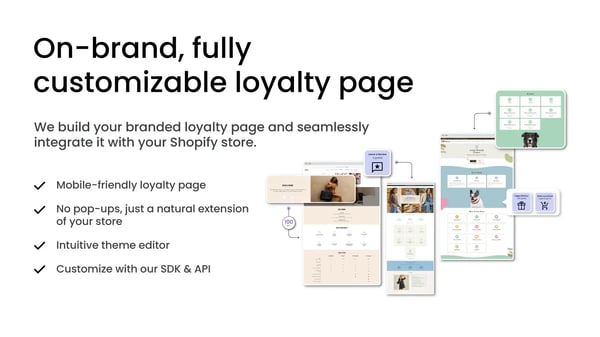
Customer engagement is another area where LoyaltyLion stands out. Rewards are visible, clearly communicated, and tied closely to customer actions, which helps reinforce repeat behavior. Many teams build on this with strategies similar to gamification examples that boost customer engagement, using structured incentives to guide purchasing decisions.
Where the platform requires more consideration is in how those advanced capabilities are configured. As programs become more customized — particularly for on-site components or tailored workflows—setup can involve more steps and planning. For growing brands, this often reflects the system's flexibility rather than a usability gap.
Cost and onboarding time also scale alongside program maturity. Some G2 reviewers mention that expanding into more advanced features requires higher-tier plans and that implementation can take longer than expected. At the same time, many teams view this as part of building a more robust loyalty system rather than a short-term campaign tool.
LoyaltyLion is best suited for e-commerce brands that are actively investing in retention and want a platform that can evolve with them. For teams focused on building structured, scalable loyalty programs rather than quick deployments, it offers a level of control that simpler tools don’t.
“From what I have seen of LoyaltyLion, the overall system and service provided is the best we have experienced as a company. The smoothness of the integration with Shopify and the way the system manages the rewards points by calculating how much a customer spends with us is fast and seamless. The fact that it now processes refunds of points back to customers who may return orders makes it especially standout. I like how straightforward the layout of the site is, and the dashboard layout on each customer is easy to navigate and locate how many points someone may have. I think our business is overall very happy with the performance and the price we are paying for this facility, as it has been amazing all the way through using.”
- LoyaltyLion review, Leah W.
“Speed to get up and running. Onboarding was very structured but took about 6 weeks. Also, it is worth noting that you begin paying for the service for onboarding, but not getting the benefit of the program being live yet.”
- LoyaltyLion review. Morgan R.
If you're evaluating how loyalty programs impact long-term growth, these customer retention stats highlight why repeat customers drive significantly higher revenue.
AdvantageClub.ai operates differently from most tools in this category because it does not focus only on customer loyalty programs. As I worked through G2 reviews and product data, I found that it combines rewards, recognition, and engagement into a broader system designed to influence behavior at scale, particularly in enterprise environments where programs need to reach large and diverse user groups.
That positioning is reflected in its customer base. Around 70% of users come from enterprise businesses, which explains why the platform emphasizes centralized control, global reward catalogs, and multi-layered engagement workflows. Instead of running a single loyalty campaign, teams are managing incentives, recognition, and engagement across different user segments within the same system.
The breadth of features is one of the first things that stands out in the reviews I analyzed. G2 users consistently mention the ability to manage rewards, perks, wellness programs, surveys, and incentives in one place. This makes it easier to connect engagement initiatives with broader customer retention strategies, especially for organizations trying to influence long-term behavior rather than short-term participation.
Ease of use is another strong point, particularly given the platform’s scope. The latest data shows 95% ease of use and 94% meets requirements, which aligns with reviewer feedback around intuitive navigation and straightforward reward redemption. Even with multiple modules, many users describe the experience as accessible once they begin using it regularly.
Reward variety is where AdvantageClub.ai differentiates itself most clearly. The platform supports a large global catalog, with options spanning travel, shopping, dining, and experiences. Based on the reviews I read, this breadth helps keep programs relevant across regions and employee groups, which is often difficult to achieve with more limited reward systems.
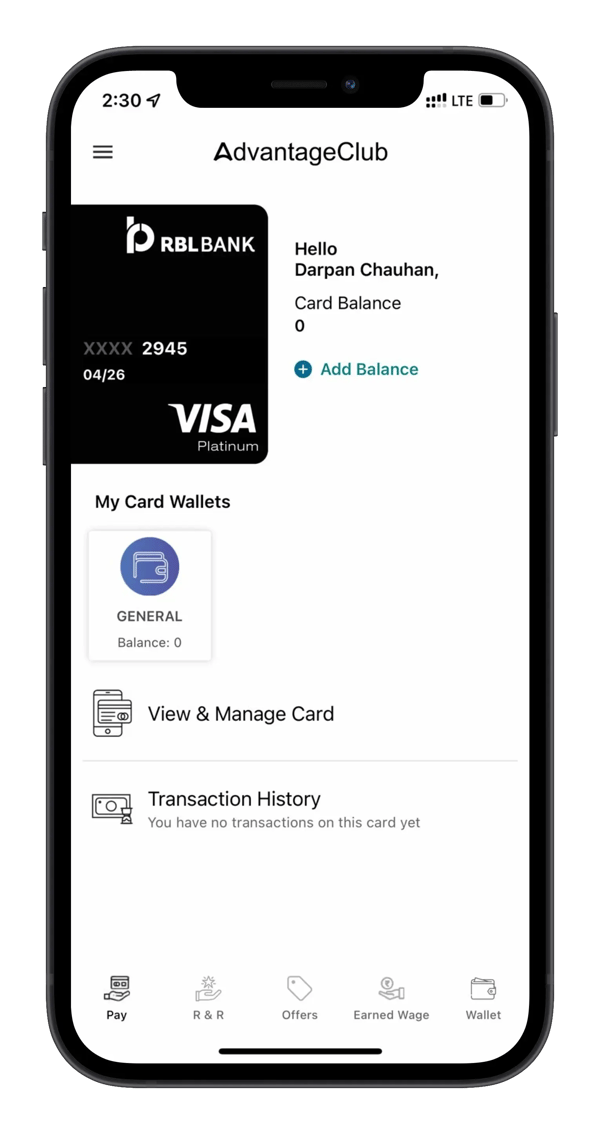
Another strength is the speed at which rewards can be redeemed and delivered. Several reviewers highlight how fast the process is, with minimal friction between earning and redemption. This immediacy plays a direct role in engagement, since users can see value quickly rather than waiting through delayed reward cycles.
The platform also integrates into broader enterprise ecosystems. For organizations that already rely on systems such as retail POS systems or internal engagement tools, AdvantageClub.ai serves as a centralized layer for incentives and rewards rather than a standalone loyalty tool.
This broader capability is also why it fits into discussions around Top loyalty management solutions delivering measurable ROI within the first six months of deployment. Instead of focusing on a single loyalty metric, teams often track engagement, participation, and behavioral impact across multiple programs simultaneously.
At the same time, the platform’s breadth can introduce some complexity. With multiple modules, dashboards, and workflows, the interface can take time to fully navigate, especially for users who do not interact with it regularly. For enterprise teams, this often reflects the system’s depth, though it may require initial guidance to use effectively.
There are also occasional mentions of performance and reward availability. Some G2 reviewers note delays during redemption or limited availability for certain rewards, particularly across regions. While these issues are not universal, they can affect the experience in specific use cases, even though most users still report positive overall engagement outcomes.
AdvantageClub.ai is best suited for organizations that want to manage engagement, incentives, and rewards at scale rather than run a single loyalty program. For enterprise teams looking to centralize these efforts and drive measurable participation across large user bases, it offers a different kind of value compared to traditional loyalty platforms.
“AdvantageClub.ai brings rewards, recognition, perks, wellness, incentives, surveys, and community engagement together in a single system. Employees can redeem points from a catalog of 10,000+ global and local brands across 100+ countries, covering shopping, travel, dining, wellness, and experiences. It is very easy to use.”
- AdvantageClub.ai review, Krishi G.
“One thing I dislike about AdvantageClub.ai is that the platform can sometimes feel overwhelming, since there are so many sections and features to navigate. Also, some rewards or offers have limited availability or don’t always feel equally relevant to every employee, which can take away from the overall experience.”
- AdvantageClub.ai review, Amit K.
Okendo stands out because it doesn’t treat loyalty as a standalone feature. As I went through G2 reviews and product data, I found that most teams adopt it to unify reviews, referrals, quizzes, and loyalty into a single customer experience layer rather than managing them across separate tools.
That unified approach shows up early in how brands use the platform. Instead of launching a loyalty program in isolation, teams are often tying incentives directly to customer feedback, surveys, and post-purchase interactions. This makes it easier to influence behavior across the entire lifecycle, especially for businesses focused on how to improve returning customer rate through more consistent engagement.
The integration layer plays a major role in making this work. Based on the G2 reviews I analyzed, Okendo connects cleanly with Shopify, Klaviyo, and other marketing tools, allowing customer data and engagement signals to flow between systems without extra setup. This is where it fits naturally into discussions around which loyalty management platforms integrate seamlessly with existing systems and provide excellent vendor support, since users frequently highlight both integration quality and responsiveness from the support team.
Another pattern that came up repeatedly in reviews is how flexible the platform feels when building experiences. Teams can create quizzes, collect reviews, trigger rewards, and customize how content appears across the storefront. This flexibility helps brands design more personalized journeys instead of relying on fixed loyalty workflows.
Usability also holds up well despite the broader feature set. The data supports this with 92% ease of use and 92% ease of setup, and that consistency came through in user feedback around straightforward dashboards and easy campaign management. Most teams are able to launch and iterate without needing heavy technical involvement.
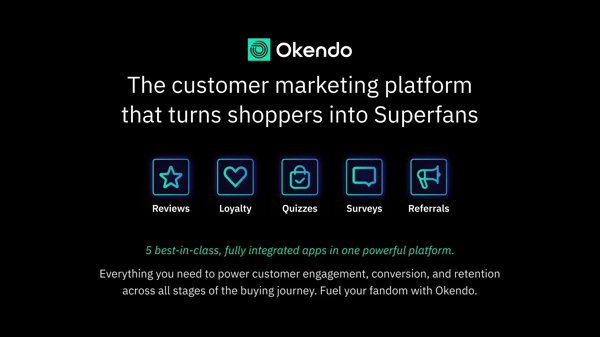
Customer feedback collection is one of the platform’s strongest differentiators. Review automation, media uploads, and moderation workflows are all built into the system, which allows brands to continuously gather insights while also rewarding engagement. This becomes particularly useful when paired with channels like WhatsApp marketing tools, where customer communication and incentives can work together.
The platform also contributes to broader community-driven engagement. Some teams extend their use beyond reviews into surveys, quizzes, and brand interactions, which aligns well with strategies typically supported by online community management software. This makes Okendo more than just a loyalty tool and closer to a customer experience platform.
From a performance standpoint, the platform shows strong adoption. The additional data point reflects an average user adoption rate of 70% with an ROI period of around 7 months, which suggests that teams are not only implementing the product but actively using it to drive measurable outcomes.
There are still some areas where teams may need to plan ahead. Customizing certain workflows beyond default configurations can require additional effort, particularly when trying to achieve highly specific use cases. For most teams, this reflects the platform’s flexibility rather than a limitation, though it can add setup time.
Some users also mention gaps in deeper analytics or advanced reporting. While the platform provides strong operational insights, extracting more granular data or building custom reports may involve additional steps or external tools. Even so, many teams continue to rely on Okendo for day-to-day decision-making because of its ease of use and centralized data.
Okendo works best for those who want to connect loyalty with customer feedback, reviews, and engagement rather than treating them as separate initiatives. For teams focused on building a more connected customer experience, it offers a practical way to bring these elements together without adding unnecessary complexity.
“Okendo’s platform is super user-friendly. The subscription widget is easy to set up and looks beautiful, and the Quizzes and Surveys are great for collecting customer feedback and driving sales. It also has a great Klaviyo integration that really helps us target customers and is super helpful for our team. Their support team is always there to help, whether through chat or email. We rarely have any problems, but when we do, they jump in quickly to help and fix things. Our account manager is amazing, and if you need any kind of migration (we’ve done one for Quizzes) they do all the heavy lifting so you don’t have to worry. The whole team always listens to our feedback whenever we need something changed or improved.”
- Okendo review, Mariana F.
“I really wish the platform offered more native analysis around specific review themes. Right now, I have to export our review data and run it through a separate AI tool just to identify recurring topics or product-specific complaints. A built-in “theme engine” that could automatically cluster feedback into clear categories like “fit,” “durability,” or “packaging” would save me a lot of manual effort and make it much easier to spot patterns quickly."
- Okendo review, Joe H.
Yotpo tends to show up in conversations where brands are trying to reduce fragmentation across their marketing stack. Instead of running loyalty, reviews, SMS, and subscriptions separately, the platform brings them into one place. As I went through G2 reviews, that consolidation came up repeatedly as a reason teams chose it over more specialized tools.
What stood out in the feedback wasn’t just the number of features, but how they connect. Reviews influence loyalty campaigns, SMS drives repeat purchases, and subscription data feeds back into engagement efforts. That overlap makes it easier to execute customer marketing strategies that build repeat buyers without stitching together multiple systems manually.
Integration quality plays a big role in how smooth this feels in practice. Teams working in Shopify ecosystems in particular describe fewer handoffs between tools, with campaign data and customer activity staying consistent across modules. That consistency is one of the reasons Yotpo continues to be referenced among the best loyalty management vendors trusted by companies in retail/apparel & fashion for efficiency, especially where speed and coordination matter.
Day-to-day usability holds up reasonably well given how much sits inside the platform. The latest data shows 85% ease of use and 83% ease of admin, and that matches what I saw across reviews. Most users don’t struggle to move between modules, even when managing reviews, loyalty, and messaging in parallel.
Where Yotpo becomes more interesting is in how it uses customer data. Reviews and user-generated content are not just displayed but fed back into campaigns and personalization efforts. For brands investing in e-commerce personalization software, this creates more context for targeting and segmentation without needing a separate system.
There’s also a noticeable emphasis on speed during setup. Several G2 reviewers mention that getting a review collection or loyalty campaigns live doesn’t take long. That early momentum seems to matter, particularly for teams that prioritize quick wins. It also explains why it’s often grouped with loyalty management platforms with the best user reviews from businesses in retail/apparel & fashion, where ease of rollout is a recurring theme.
As usage expands, the platform starts to behave more like a full engagement suite than a single tool. That shift opens up more advanced use cases around retention and lifecycle marketing. In some cases, teams are applying it in ways that overlap with how AI is being used in churn reduction, using behavioral signals to adjust campaigns and re-engage customers.
There are trade-offs to that breadth. Running multiple modules inside the same system can make workflows feel more layered, especially for teams trying to customize everything at once. For many users, this comes with the territory of having more control, though it can slow things down during setup or iteration.
Performance feedback is more mixed. A few G2 users mention delays when working across heavier dashboards or switching between modules. It doesn’t appear to impact every use case, but it’s something teams managing larger campaigns tend to notice.
Pricing follows a similar pattern. The platform becomes more expensive as additional products are added, which can catch teams off guard if they start with a smaller setup and expand later. That said, many users still justify the cost based on consolidation alone.
Yotpo works best for brands that want to operate loyalty, reviews, and communication as a connected system. For teams evaluating the best loyalty management software, it offers a broader approach that prioritizes coordination across touchpoints rather than depth in a single feature.
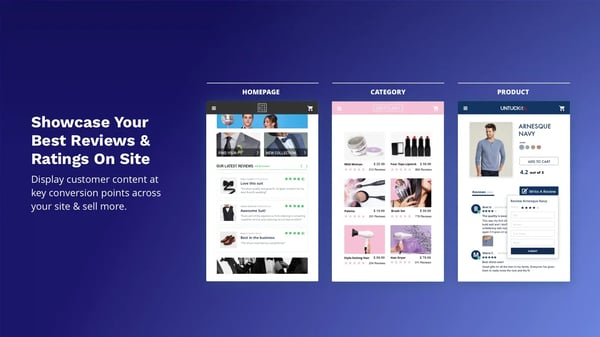
“I use Yotpo to manage images and customer reviews. I appreciate how it's very easy to use and set up. It was quick to get started, and I love how it makes it easy to showcase different customer reviews on product pages and category pages on our website, adding credibility. It's fantastic that customers get automated emails to leave a review, and we can send coupons too. Additionally, during the initial setup, Yotpo took all of our previous reviews and images and added them into the platform, making the transition smooth.”
- Yotpo review, Brittaney F.
“What I dislike about Yotpo is that while the platform is powerful, it can become expensive and overly complex, especially as you add more of their modules.”
- Yotpo review, Migena P.
If you’re comparing lighter-weight options before committing to a full suite, explore free loyalty management tools to see how entry-level platforms differ in features and scalability.
Have more questions? G2 has the answers!
Smile.io and Okendo are strong choices for small teams. Both offer fast setup, intuitive workflows, and quick campaign launches, making them part of the best loyalty management software for businesses prioritizing speed and early return on investment.
LoyaltyLion and AdvantageClub.ai stand out for reducing manual effort through automation and structured workflows. These platforms help teams manage rewards, engagement, and campaigns efficiently without requiring extensive onboarding or specialized technical expertise.
Yotpo, LoyaltyLion, and Okendo are widely used by retail and apparel brands. Their integrations with e-commerce platforms and ability to unify reviews, loyalty, and customer engagement workflows make them efficient solutions for high-volume environments.
Yotpo and Okendo are frequently recognized for smooth integrations with Shopify, Klaviyo, and other tools. G2 reviewers also highlight responsive support teams, which helps reduce friction during setup and ongoing campaign management.
Smile.io consistently ranks highly for ease of use and fast implementation. Its simple interface and prebuilt loyalty features make it a practical option for non-technical teams that want to launch and manage programs without heavy setup.
AdvantageClub.ai and Okendo are often associated with faster ROI due to high adoption rates and quick campaign deployment. These platforms help teams drive engagement and track performance early, making them effective for short-term impact.
Smile.io and Okendo are known for straightforward implementation. Their preconfigured workflows and intuitive dashboards reduce setup complexity, helping teams launch loyalty programs without extended timelines or unexpected technical challenges.
Yotpo, Okendo, and LoyaltyLion receive consistently strong feedback from retail and apparel users. Reviews often highlight usability, integration quality, and the ability to support customer engagement at scale within e-commerce environments.
Smile.io and Okendo are highly rated for building retention programs quickly without requiring custom development. Their built-in features for rewards, referrals, and engagement help businesses scale loyalty efforts without heavy engineering investment.
Platforms like LoyaltyLion and AdvantageClub.ai are often trusted for structured implementation and long-term reliability. Their onboarding support, scalability, and consistent performance make them dependable choices for leadership teams evaluating the best loyalty management software.
The best loyalty management software doesn’t just reward customers. It shapes how your brand shows up across every touchpoint, from reviews and messaging to repeat purchases and long-term engagement. Based on the G2 reviews I analyzed, the difference between average and high-performing loyalty programs often comes down to how well your tools work together, not just what features they offer individually.
Each platform in this list approaches loyalty from a different angle. Smile.io keeps things simple and fast for smaller teams. LoyaltyLion gives growing brands more control over program structure. AdvantageClub.ai focuses on large-scale engagement. Okendo connects loyalty with customer feedback, while Yotpo brings everything into one ecosystem.
The real decision isn’t which tool is “best” in isolation. It’s which one aligns with how you plan to engage customers, scale your programs, and integrate loyalty into your broader strategy. When your stack supports that vision, loyalty becomes a growth engine instead of just another campaign.
Ready to go beyond rewards? Explore the best customer success software to turn loyal customers into long-term advocates and drive retention after your loyalty program is in place.


You’ve optimized your landing pages, fine-tuned your email flows, and tested your ad creative,...
 by Sam O'Brien

For most marketing and growth teams, customer acquisition is the top priority. You spend time...
 by Soundarya Jayaraman

Recently updatedSummer 2026 Grid® Report · Published May 26, 2026 This guide was last...
by Harshita Tewari