


I use LLMs almost every day in my work as a marketer. Sometimes it’s to break through a blank page, sometimes to refine a draft that’s 80% complete, and other times to sanity-check an idea before it goes any further.
When you’re using these tools that often, you stop caring about big promises and start noticing the small things, like how consistent the output feels, how much context the model can handle, and whether it actually saves time or just creates more cleanup.
That’s what pushed me to compile this list of the best LLM platforms on G2 for different use cases. On the surface, most LLMs can do the same basic tasks. But once they’re part of your workflow, that’s when the differences show up. Some are easier to rely on for everyday writing and thinking. Others are better when you’re experimenting, working with longer inputs, or trying to understand how much control you really have over the output.
I used G2 review data to examine how these LLMs are being used, what users consistently praise, and the trade-offs. With that context, here are my top picks, along with their most reliable use cases.
| Best LLM platforms | Best for | G2 Rating | Pricing |
| ChatGPT | General-purpose AI use across writing, ideation, and everyday tasks | 4.6/5 ⭐ | Starting at $20/month |
| Gemini | AI assistance within existing productivity workflows | 4.4/5 ⭐ | Starting at $19.99/user/month |
| Claude | Long-form text generation and content refinement | 4.4/5 ⭐ | Starting at $20/user/month |
| Llama | Open-model experimentation and customization | 4.3/5 ⭐ | Free (license); infrastructure/hosting costs vary |
| DeepSeek | Lightweight experimentation and early adoption use cases | 4.8/5 ⭐ | Usage-based API |
*These are the leading LLM platforms on G2 as of December 2025. Pricing is subject to change.
When I choose the best tools for each use case, I start with G2 Data. I look at a product’s category performance, including its G2 Score, satisfaction ratings, and feature-level strengths. This helps me understand which tools consistently perform well before I narrow them down to more specific scenarios, like small teams, nonprofits, or industry-focused workflows.
From there, I delve into review insights to see what real users have to say. I look for patterns in pain points, frequently praised features, and feedback from people in the same roles or industries that the use case targets. The recommendations you see reflect that mix of quantitative scoring and qualitative sentiment, focused on the tools that repeatedly show up as the strongest fit for that specific need.
If you’re still comparing language AI concepts, it helps to understand how LLMs differ from traditional NLP systems before evaluating platforms.
Marketing at scale puts pressure on consistency more than creativity. The challenge isn’t generating one strong draft. It’s producing usable content repeatedly across formats without rewriting everything from scratch each time. For this use case, I’m prioritizing breadth of application and reliability across everyday marketing tasks.
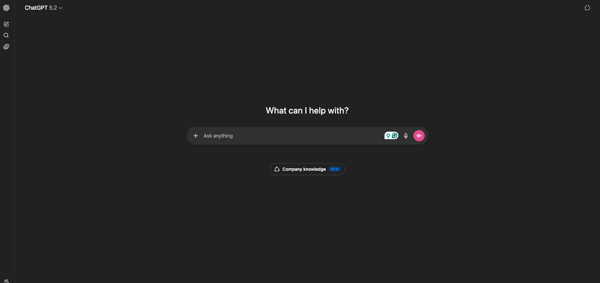
ChatGPT stands out here because it’s the LLM that G2 reviewers most consistently rely on for marketing-related work. G2 users praise it for writing content, generating ideas, drafting emails, and supporting day-to-day marketing tasks. What makes that valuable at scale is range. Instead of being tied to one narrow job, ChatGPT appears across the entire content lifecycle. Reviewers frame it as a tool they use repeatedly.
They describe ChatGPT as something they return to regularly for marketing execution, which is crucial when content volume is high, and workflows need to remain flexible. For marketers using AI to improve brand visibility, understanding LLM seeding strategies can also help shape content that AI tools are more likely to surface or cite.
| Pros | Cons |
| Marketing content creation shows up as a repeat theme in G2 reviews, especially for drafting and refining copy. | Some users say outputs still need a human editing pass to match brand voice and publishing standards. |
| Many G2 users rely on it for idea generation and quick research support when building outlines, campaigns, or messaging angles. | Results can vary when prompts are vague, and reviewers mention needing to provide clearer direction to get consistent quality. |
| Usability and setup experience are frequently described as straightforward, which supports repeat, day-to-day marketing workflows. | Some reviewers treat it as a helper rather than an autopilot, since accuracy and nuance may need verification depending on the topic. |
When I’m choosing an LLM for enterprise-grade document summarization, I’m not looking for clever writing. I’m looking for speed, structure, and reliability. The job is simple to describe and hard to execute consistently: take long reports, internal docs, or dense notes and turn them into summaries that someone can scan, trust, and share without asking, “What did we miss?"
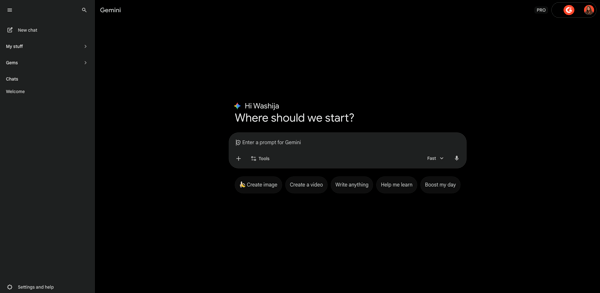
Gemini is my top pick for this use case because its experience aligns with document-first work. In G2 review data, users frequently mention using Gemini to summarize long text, extract highlights, and condense existing materials. That orientation matters in enterprise environments, where work typically begins with reports, notes, or documentation rather than a blank prompt. Reviewers also frame Gemini as a tool that helps make information more digestible, making it a good fit for teams that need summaries to support decision-making or internal communication.
| Pros | Cons |
| Summarization is a consistent strength, particularly when the goal is to extract key takeaways from lengthy or complex text. | Some users still need a quick review pass to ensure summaries capture the right nuances or priorities. |
| Extracting highlights and organizing information into a more scannable format fits well with report and documentation workflows. | Results can vary depending on the structure of the input and the clarity of the desired format specification. |
| The overall experience feels easy to adopt and repeat, which matters when summaries are a weekly (or daily) task. | It’s less oriented toward creative rewriting than tools that skew more toward content generation. |
My team compared Gemini with ChatGPT against 10+ real-world use cases. Check out which LLM fits your need best in the full breakdown of Gemini vs. ChatGPT.
The quickest way I lose trust in an LLM is watching it drop the thread halfway through a long prompt. Long-context reasoning only works if the model can stay coherent across multiple ideas, preserve nuance, and keep its logic intact from start to finish. If it contradicts itself, skips key details, or starts answering a different question than the one I asked, the output stops being analysis and becomes rework.
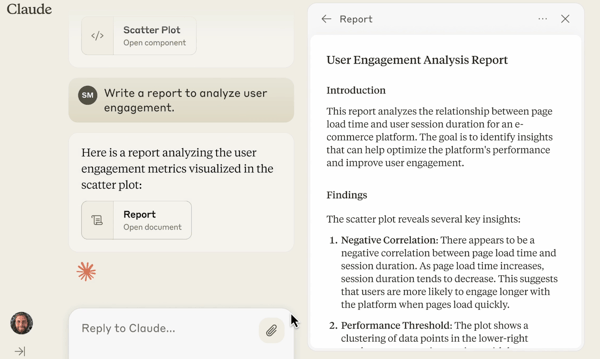
Claude is my top pick for this because the G2 reviewer experience consistently reflects that “stays with the problem” behavior. In G2 reviews, Claude is often described as a tool people use for sustained reasoning, longer inputs, and structured analytical responses. That makes it a good fit for deep analysis workflows where continuity matters more than speed. While it’s not the strongest general-purpose option, it’s the one I’d reach for when the task demands staying consistent across long prompts and multi-step reasoning.
| Pros | Cons |
| Long-form reasoning and analysis show up as a consistent theme in G2 reviews, especially for complex or layered questions. | Some users describe it as less ideal for quick, high-volume drafting compared to more general-purpose tools. |
| Many reviewers describe it as strong at maintaining context across longer conversations or longer inputs. | If the goal is speed over depth, the experience can feel slower or more deliberate than expected. |
| The output style is often described as structured and thoughtful, which supports analytical workflows. | Review themes suggest it’s less commonly used for short, transactional tasks where a brief answer is enough. |
We put Claude and ChatGPT side by side using practical use cases. Discover which model emerges as the winner in our comprehensive ChatGPT vs. Claude comparison.
Local deployment is where the “LLM experience” stops being a chat box and starts being an engineering choice. If a model is going to live on custom hardware, I care less about polish and more about control. I want something I can shape, place where I need it, and adapt without fighting a locked-down setup. That control also comes with security considerations, including prompt injection risks that can influence how an LLM behaves.

Llama is my top pick for this use case because it’s the tool in this list that G2 reviewers most consistently connect with, offering self-managed and customizable setups. Review sentiment leans into flexibility, experimentation, and hands-on control, which is exactly the mindset teams have when they’re deploying locally.
| Pros | Cons |
| Control and flexibility are the headlines in positive reviews, especially for teams that want to run models locally or customize their environment. | I see more signs of hands-on setup and configuration compared to hosted LLM platforms. |
| G2 reviewers often frame it as a strong option for experimenting, tuning, and adapting the model to different constraints. | It’s less of a “start in five minutes” experience, so it can feel heavier for smaller teams. |
| The overall tone of feedback signals ownership: users talk about shaping how it’s used, not just consuming it. | With fewer reviews, there’s less breadth on how it performs across every production scenario. |
My team evaluated Llama against ChatGPT for hands-on, real-world scenarios. Find out which approach works better in the full ChatGPT vs. Llama breakdown.
Code is one of the quickest ways to determine whether an LLM is actually useful or just confident. For automated code generation and review, I want a tool that reviewers clearly associate with technical tasks, not something positioned as a general assistant that happens to write code sometimes.
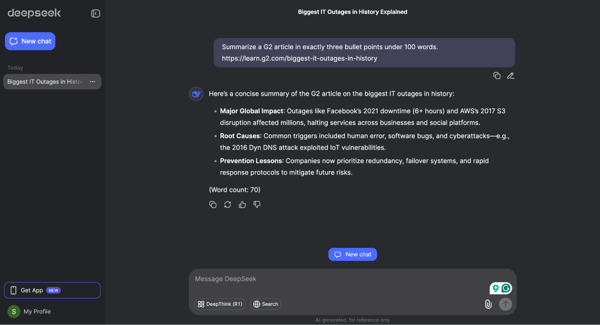
DeepSeek earns the top spot here because its review language is tightly focused on coding and technical use cases. Even with a small review sample, it’s clear that users prefer it for writing code, reviewing logic, and handling developer-oriented prompts. That focus is unusually clear compared to other tools, where coding is often just one of many mentioned tasks. What stands out is how reviewers talk about intent. DeepSeek appears as a tool people specifically reach for for code-related work, rather than a catch-all productivity assistant.
| Pros | Cons |
| Coding and technical problem-solving are the most consistent themes in positive reviews. | Users dislike that image and video generation features are still not available. |
| Reviewers describe using it specifically for writing or reviewing code, not general content tasks. | The ability to filter responses and the length of chat can be insufficient for power users. |
| The tool is framed as focused and task-specific rather than broadly generic. | There’s less insight into how it performs beyond narrowly defined technical workflows. |
We compared DeepSeek with ChatGPT using developer-focused tasks. Check out which tool fits your workflow in the full ChatGPT vs. DeepSeek breakdown.
Still searching for your use case? Find your fit below.
For multilingual support, I look for tools people rely on for translation and fast, conversational responses. Based on G2 review themes, Gemini and ChatGPT show up most often for drafting and responding in multiple languages.
This use case appears more selective and is usually tied to analyzing written information rather than live data. ChatGPT is the most common fit in reviews for summarizing sentiment and spotting patterns in text-heavy inputs.
When prototyping, flexibility matters more than polish. Review themes most often point to Llama for experimentation, customization, and early-stage testing.
HR-focused use cases tend to center on drafting and summarizing internal materials. Reviews most frequently associate ChatGPT with creating onboarding content and supporting internal documentation workflows.
Tutoring use cases usually emphasize explanation and language flexibility. Based on review language, Gemini and ChatGPT come up most often for learning support across multiple languages.
LLMs work best when they’re matched to a specific task, rather than being treated as one-size-fits-all tools. The difference usually becomes apparent after a few days of actual use: how well the model retains context, how much cleanup the output requires, and whether it actually speeds things up.
If you’re narrowing your options, pick one primary use case from this list and start there. Test the tool against the kind of work you do most often, then expand only if it earns a permanent spot in your workflow. The right LLM shouldn’t just answer prompts. It should pull its weight.
For building a broader AI workflow (writing, coding, design, video), see our full breakdown of the best generative AI tools.


Let’s be real for a second: do we really need another AI tool? My browser tabs are already a...
 by Soundarya Jayaraman

A few weeks ago, my internet broke.
by Soundarya Jayaraman

You know you’re living in the future when choosing your AI sidekick feels more like deciding...
by Soundarya Jayaraman