


I’ve seen how shifting consumer purchase patterns have made e-commerce essential for businesses of all sizes. As more shoppers move online to purchase everyday products that once depended on brick-and-mortar stores, an e-commerce platform has become a practical way to reach customers and unlock global revenue opportunities.
Whether you’ve been in business for years or are preparing to launch your first product, I believe choosing the right e-commerce platform to build and manage your website is the first step toward long-term success.

Real-time live video selling with automated comment-to-cart, invoicing, and omnichannel fulfillment across Facebook, Instagram, and websites.
*The software list is arranged alphabetically. These tools offer free trials, free forever options, or freemium models.
With so many free e-commerce platforms to explore, it’s easy to feel overwhelmed. This comparison table breaks down the key features to simplify your decision.
| Best free e-commerce platform | G2 Rating | Free plan | Paid plan |
| BigCommerce | 4.2/5 ⭐ | 15-day free trial | $29/month |
| CommentSold | 4.7/5 ⭐ | 15-day free trial | $149/mo |
| FastSpring | 4.5/5 ⭐ | Free trial available | Available on request |
| Ikas | 4.5/5 ⭐ | 7-days free trial available | $29.28/month |
| nopCommerce | 4.5/5 ⭐ | Free trial available | Available on request |
| PrestaShop | 4.3/5 ⭐ | 14-day free trial | $33.96/month |
| Shopware | 4.2/5 ⭐ | Free trial available | $703/month |
| Square Online (formerly Weebly) | 4.2/5 ⭐ | Free plan available | $49/month |
| Vendasta AI Platform | 4.5/5 ⭐ | 14-day free trial | $79/month |
| Zoho Commerce | 4.3/5 ⭐ | 14-day free trial | $22/month |
*All pricing details mentioned in the article are based on publicly available data at the time of publication and are subject to change.
Launching and managing an online store has become more accessible as e-commerce software continues to evolve. These platforms simplify complex processes, such as inventory management, tax calculations, and order processing, helping businesses operate more efficiently from day one. The global e-commerce software market is projected to reach $20.90 billion by 2030, growing at a CAGR of 15.3% from 2023 to 2030.
What stood out to me while reviewing this category is that you don’t need a large upfront investment to start selling online. Many e-commerce platforms now offer free plans or trials that cover essential storefront features, product management, and basic integrations, making them a practical choice for startups, small businesses, and first-time sellers.
In this list, I’ve rounded up the 10 best free e-commerce platform software options based on real user feedback, ease of setup, and the overall value of their free offerings. I’ll highlight what each platform does best, its limitations, and which types of businesses it’s best suited for, so you can choose an e-commerce solution that supports growth without stretching your budget.
To build this list, I started with G2 Data, shortlisting top-rated tools based on their G2 scores and consistent performance in the e-commerce platform software category.
From there, I reviewed product features and recent, verified user feedback to confirm that these platforms deliver real value and to understand where each one stands out, whether that’s ease of store setup, inventory and order management, payment and tax handling, or integration with third-party tools.
The goal was simple: to see whether these e-commerce platforms live up to their claims, what types of businesses they’re best suited for, and whether there’s a free plan or free trial you can try with minimal risk. Since this is a free-focused list, I paid close attention to what you can actually do without paying, such as product or transaction limits, access to core storefront features, customization options, and any restrictions that might require upgrading to a paid plan.
The screenshots featured in this article may be a mix of those taken from the vendor’s G2 page or from publicly available materials.
Finding the right e-commerce platform can help you build the online store of your dreams and take your business to the next level. With numerous options available in the market today, evaluating your requirements, desired features, and budget is essential before deciding which tool is right for you.
To help you make the best decision for your business, we’ve compiled a list of the best free e-commerce websites according to data collected from real user reviews. In the context of this list, vendors that offer a free trial are also considered free.
To be included on this list, a solution must have at least one of the following features:
This data was pulled from G2 in 2026. Some reviews may have been edited for clarity and accuracy.
BigCommerce is a leading open Software as a Service (SaaS) e-commerce platform that allows merchants to build intuitive sites and grow their businesses online. The platform offers flexibility, scalability, speed, and agility to boost sales with best-in-class integrations and advanced features that facilitate enterprise-grade functionality. It is used by thousands of business-to-client (B2C) and business-to-business (B2B) companies across over 150 countries and numerous industries.
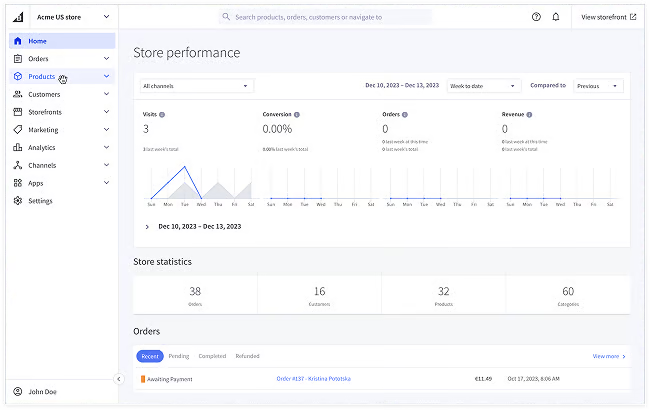
| Pros of BigCommerce | Cons of BigCommerce |
| Easy setup for building and launching online stores | Limited built-in features in the basic plan |
| Strong third-party integrations that extend functionality | Customization often requires additional apps |
| Scales well with external tools and apps | Inventory management can be challenging for beginners |
"BigCommerce offers various customizable themes and templates to help you design your site. It equips users with robust product management tools and multiple secure payment gateways with seamless integration of third-party applications. BigCommerce provides excellent customer support and various resources, including a comprehensive knowledge base and community forum to help users get the most out of their e-commerce stores."
- BigCommerce review, DMS R.
"Customizing un-templated needs can be cumbersome and requires heavy development."
- BigCommerce review, Sam S.
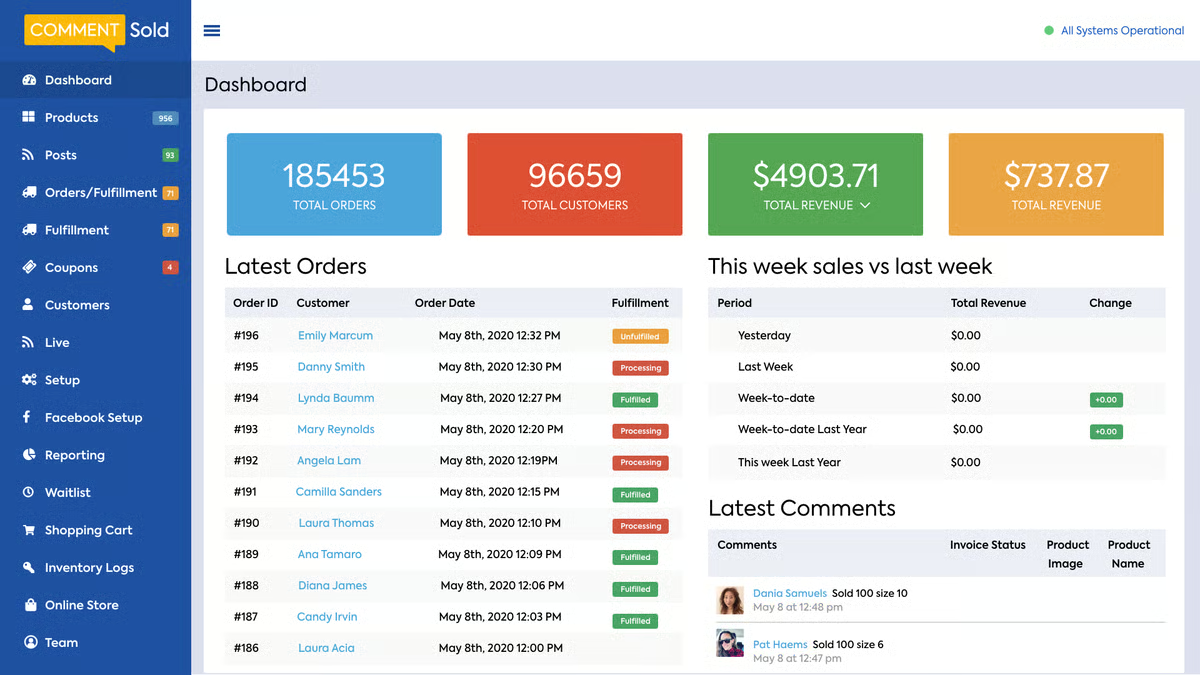
CommentSold offers retailers of all sizes best-in-class solutions for delivering engaging live video transaction experiences. From onboarding, strategy, go-live technology, and live selling best practices to backend solutions for inventory, invoicing, and fulfillment, CommentSold offers everything businesses need to thrive online.
| Pros of CommentSold | Cons of CommentSold |
| Automates sales by turning social media comments into carts and invoices | Monthly fees and commissions can be expensive for small businesses |
| Simplifies order processing, tracking, and reporting | Often works best when synced with platforms like Shopify |
| Integrates with platforms like Facebook and TikTok to boost engagement | Website and shipping setup can feel less intuitive |
"CommentSold is so easy to use for live selling. I love the ease of use and the fact that it handles all the invoicing. You can go live on mobile apps, Facebook, Instagram, and websites. The omnichannel experience is terrific."
-CommentSold review, Elizabeth S.
"The learning and setup curve is steep. If you do it wrong the first time, it's a pain to go back and redo."
-CommentSold review, Amy R.
Before choosing a free plan, know which e-commerce platform features are non-negotiable. Our detailed feature breakdown covers mobile-friendliness, inventory management, and more.
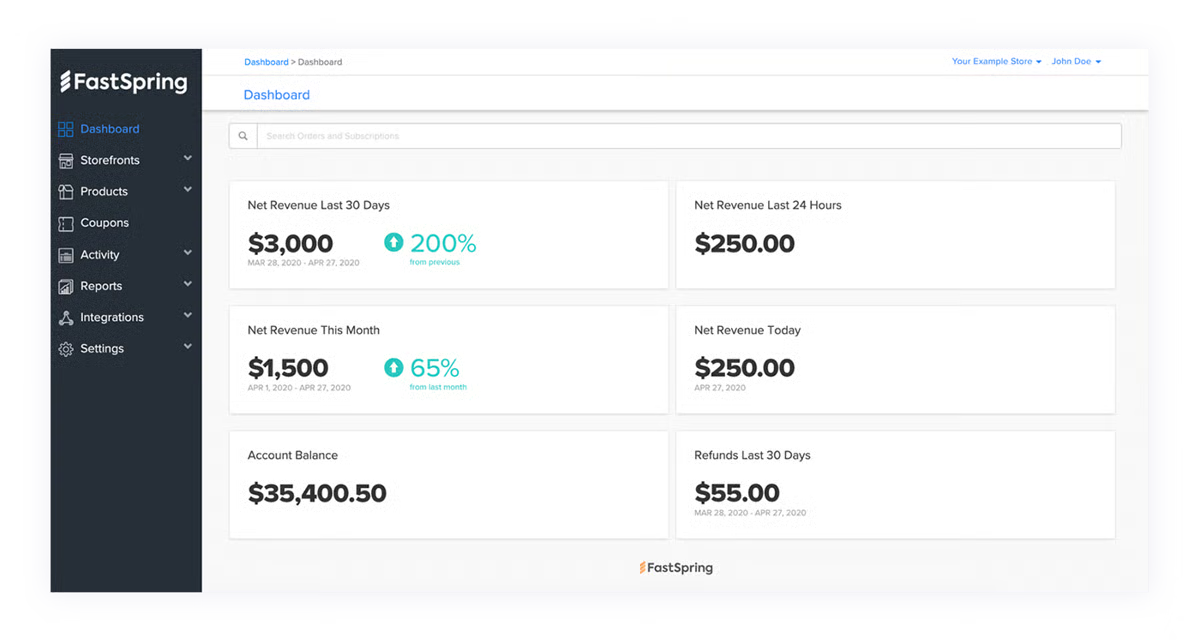
FastSpring is an easy-to-use global e-commerce platform with all the features your company needs to reach a worldwide audience and sell more. It manages all payment needs, from subscription management and tax collection to remittance so your business can focus on what matters – building outstanding products.
| Pros of FastSpring | Cons of FastSpring |
| Responsive and helpful customer support | Dashboard and admin interface feel outdated |
| Built specifically for SaaS, software, and digital products | Complex setup and order management require technical expertise |
| Strong subscription, licensing, and recurring billing features | Limited integrations with some popular website platforms |
"What I like best about FastSpring is how they have simplified the complexity of e-commerce for businesses. They have an outstanding team of designers and developers, knowledgeable and helpful account managers, and a proactive support staff. All this combined makes the process of setting up your site user-friendly and easy. FastSpring caters to all customer needs and regularly updates the platform to meet advanced requirements with minimal disruption to its users."
- FastSpring review, Anabel B.
"Enhancing the dashboard's visual appeal can help users navigate it better, as it can be a little difficult to figure out how it works initially."
- FastSpring review, Uriahs V.
Ikas is an e-commerce platform built for small and medium-sized businesses that want to launch and scale online stores without technical complexity. It allows users to create an e-commerce website quickly and sell products across multiple channels, including marketplaces, physical stores, and international markets, from a single dashboard. With built-in inventory and order management, unlimited products and traffic, payment processing, and marketing tools like discounts and cart reminders, ikas helps businesses manage sales efficiently while improving conversions and overall store performance.
According to G2 Data, it ranks as the 9th easiest to use tool.
| Pros of Ikas | Cons of Ikas |
| Easy-to-use interface for quick store setup | Limited customization for advanced or unique store requirements |
| Simple onboarding and efficient e-commerce management | Missing advanced features for scaling and reporting |
| User-friendly navigation suitable for beginners | Support response times can vary for complex issues |
"It’s super easy to use: I could set up my store quickly without any coding or tech headaches.
All-in-one system: I didn’t need a bunch of extra apps, marketing tools, payments, shipping, analytics, it’s all built in.
No limits on products or traffic: I never worried about hitting a cap as my store grew, especially during promotions.
Practical marketing features: Things like abandoned cart reminders and email campaigns actually helped increase sales without extra tools".
- Ikas review, Ruby G.
"Although ikas is awesome in smaller to mid-sized applications, advanced setups (perhaps shipping or stock tracking in non-fashion workflows) would be served well by having more customization options. Structures had to be manually amended since some of the fields are not applicable in non-traditional retail settings".
- Ikas review, ishant s.
Picking the right platform starts with knowing which e-commerce platform features matter most for your business. Explore our breakdown covering inventory management, personalization, cart abandonment, and reporting.
nopCommerce is the leading open-source e-commerce platform that is ASP.NET-based. It’s a free solution with extraordinary features useful for new online businesses and enterprise-level e-commerce experts. You can take advantage of plenty of plug-ins and themes, upload unlimited products, use built-in marketing and SEO tools, and sell globally using multiple languages and currencies. The platform provides 24/7 free support from an active community worldwide.
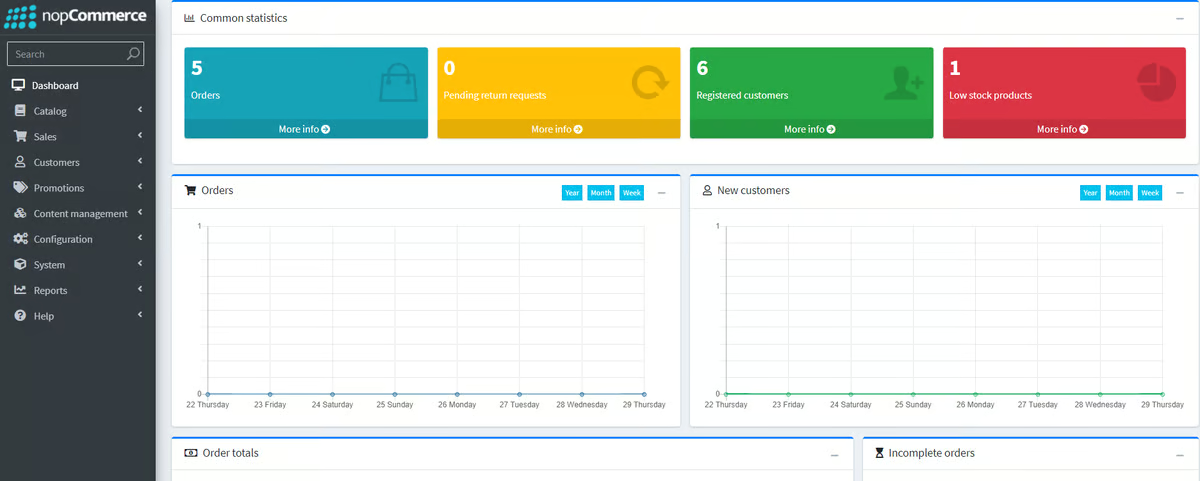
| Pros of nopCommerce | Cons of nopCommerce |
| Open-source platform with no license fees | Requires technical expertise to set up and maintain |
| SEO-friendly features built in | Needs Windows-based hosting with ASP.NET |
| Scales well for enterprise and B2B use cases | Version upgrades can be complex and time-consuming |
"With nopCommerce, you can create plugins that modify the purchase flows and adjust them to your needs. The code is structured well, and you can find much information on the internet to customize it. "
- nopCommerce review, Diego Joshua C.
"Some functions are challenging to integrate and implement or are missing entirely. The support lacks quality, and bug fixes are delayed and incomplete."
- nopCommerce review, Kevin F.
PrestaShop is a leading open-source solution available in Europe and Latin America. Nearly 300,000 sites already use its software. The highly flexible and scalable e-commerce platform comes with all the essential features you need to build and launch an online store to grow your business.
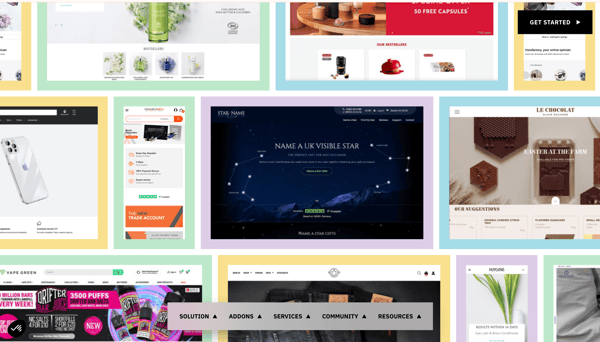
| Pros of PrestaShop | Cons of PrestaShop |
| Easy initial setup with sample data and guided configuration | Heavy reliance on paid modules increases overall costs |
| Large ecosystem of modules, themes, and third-party extensions | Performance issues can arise as stores scale and add modules |
| Easy initial setup with sample data and guided configuration | Inconsistent quality across third-party modules |
"PrestaShop allows you to integrate your product catalog directly into your WordPress pages and modify them with complete freedom. With this approach, you can manage vast product catalogs without paying for additional licenses. Additionally, they offer expert support for troubleshooting and fixing errors in WordPress versions."
- PrestaShop review, Fernanda R.
"The availability of themes is low compared to Shopify and WooCommerce. It runs on a PHP-based backend, making it more vulnerable to attacks and viruses."
- PrestaShop review, Kanishq G.
Shopware is a leading digital commerce platform for mid-sized businesses. It helps elevate B2B and B2C businesses with comprehensive e-commerce solutions. Powered by cutting-edge open commerce technology, the platform offers maximum flexibility and scalability, backed by expert support at every stage.

| Pros of Shopware | Cons of Shopware |
| Highly customizable platform with flexible configurations | Steep learning curve due to technical depth |
| Intuitive backend that supports complex store setups | Update and compatibility issues with plugins |
| Wide range of plugins and third-party integrations | Some core features require paid add-ons |
"Shopware is a good program that allows you to easily create a multilanguage shop and showcase your products. After testing various systems, including XT-Commerce, Shopware is the best for us. It performs well in search engines, and unlike XT-Commerce, most updates can be done on your own without costly fees, making it a cost-effective choice for our needs."
- Shopware review, Uwe L.
"The roadmap features need to be upgraded to work better for businesses. Silver subscribers' support should be improved. Discounts, especially after buying at full price a week ago, were disappointing, especially in B2B, where Black Friday doesn't matter. The professional tier lacks effective price management, making it not great for B2B use in production without a product information management system. Also, the import speed is too slow and needs to be faster."
- Shopware review, Max H.
Square Online (formerly Weebly) is now a part of the Square product suite. It’s a robust ecosystem of commerce solutions, helping to build sites that make it easy for users to scroll, shop, and pay on a web or phone browser. Whether it's a pop-up store or your own online store, Square takes care of your operations and payments so you can focus on your business.
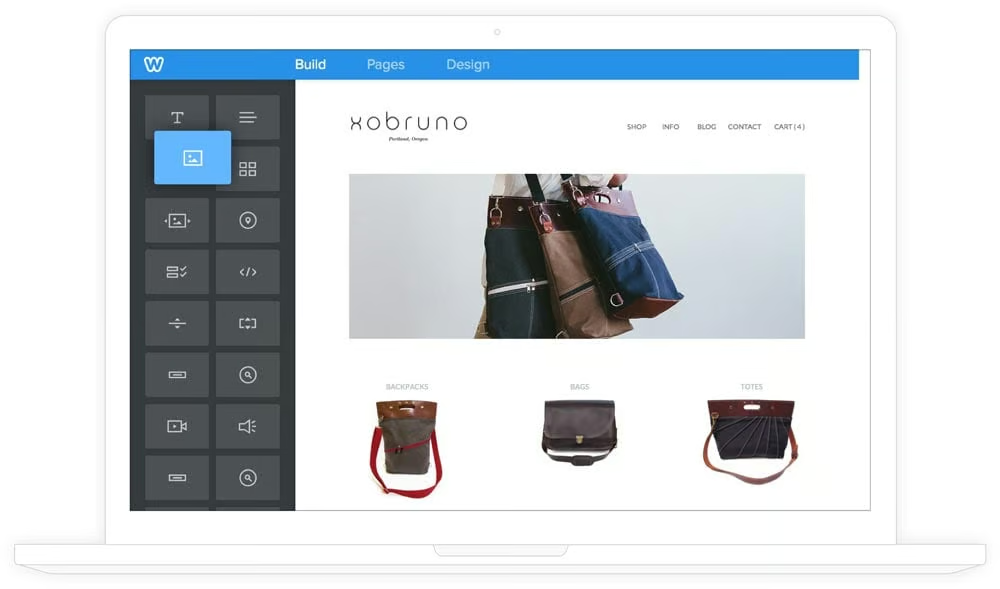
| Pros of Square Online | Cons of Square Online |
| Very easy to use, even for beginners | Limited customization for unique layouts and designs |
| Intuitive drag-and-drop builder for quick site creation | Lacks advanced features for growing businesses |
| Simple customization for basic website needs | Restricted flexibility compared to more robust platforms |
"In 2010, I started using Weebly with very little experience in web design. However, with its features, I was able to build and maintain a website that looks good and performs well. Weebly's intuitive tools helped me add images, link sites, and incorporate various widgets. To date, I have created eight sites using Weebly and have received compliments on their appearance and user-friendliness. Moving forward, I plan to continue using Weebly to build even more websites."
- Square Online (formerly Weebly) review, Jenay A.
"Limited customization options are available, and customer support is functional only for some periods of the day, making it inconvenient. The transaction fees can add up to be quite lofty for high-volume sellers. "
- Square Online (formerly Weebly) review, Johnathan S.
Vendasta AI Platform an end-to-end platform to marketing agencies, independent software vendors (ISVs), and media companies that sell digital products and services to small and medium businesses worldwide. Partners can build a store from their marketplace of cloud-based technologies with over 250 curated products. The platform provides AI-driven marketing automation, a single integrated business app dashboard, sales tools, and an integrated CRM to facilitate go-to-market.
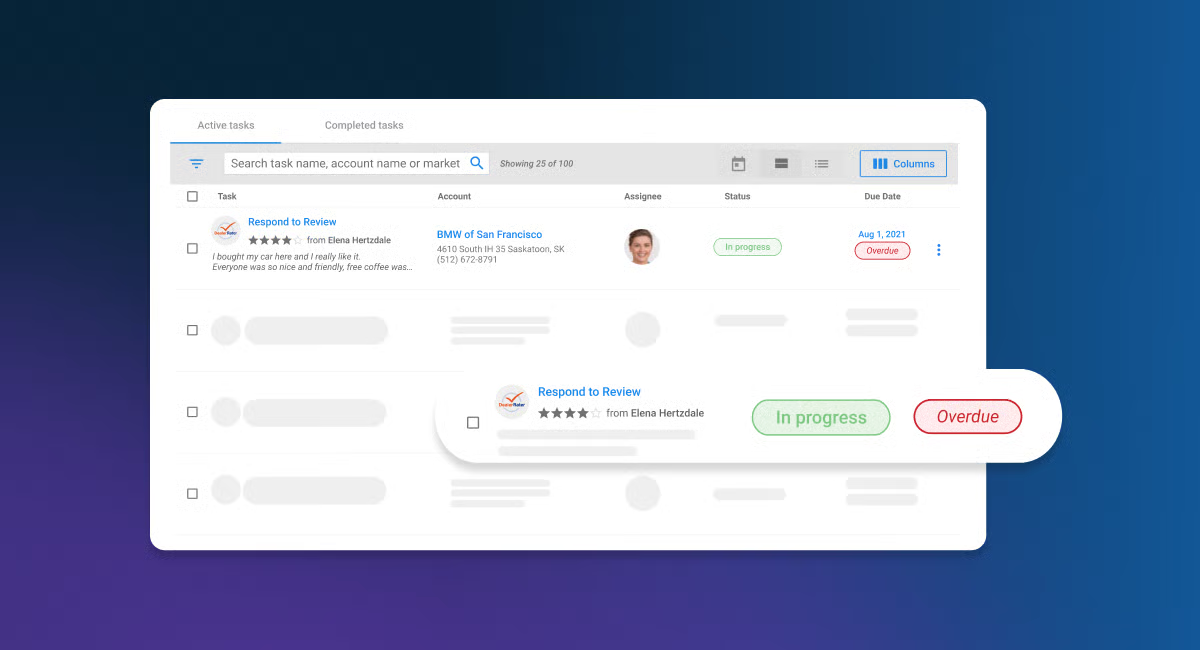
| Pros of Vendasta AI Platform | Cons of Vendasta AI Platform |
| User-friendly interface with flexible, customizable workflows | Steep learning curve for new users |
| Wide range of integrations that improve operational efficiency | Customization options can feel limited for advanced needs |
| Helps agencies expand services and support business growth | Occasional software bugs, especially on desktop |
"Vendasta goes above and beyond to provide top-notch support and software solutions. The support staff is consistently helpful, courteous, and diligent in solving any issues that reach them. My questions or concerns are always noticed and addressed, and that level of service is invaluable. The software features and products available for resale are unparalleled in my 20+ years of experience in the agency world. Thank you, Vendasta, for your outstanding service."
- Vendasta review, Jonathan M.
"Some of their services lack quality – specifically, the control given with their web hosting package. Some of our clients complained of poor speeds, but the Vendasta web hosting package did not allow us to use our own caching plug-in and left the website slow, which hampered our overall user experience."
-Vendasta review, Munib A.Zoho Commerce is a global e-commerce platform that equips users with all the tools they need to create their site. Merchants in over 30 countries use it to organize inventory, accept new orders, manage shipping, and finalize payments. With Zoho Commerce, you can build an online store in just a few steps without needing any coding proficiency.

| Pros of Zoho Commerce | Cons of Zoho Commerce |
| Easy-to-use platform with a low learning curve | Lacks advanced e-commerce features and payment options |
| Seamless integration with other Zoho apps | Customer support response times can be slow |
| Customizable templates and dashboards without coding | Integrations outside the Zoho ecosystem can be challenging |
"Zoho Commerce has a user-friendly interface, a built-in content management system, and additional features like social media integration that I really like. It's an excellent option for small businesses and entrepreneurs looking to establish an online presence quickly and cost-effectively."
-Zoho Commerce review, Saransh V.
"There's room for many new features, which could help improve the site's performance. The platform should focus on strengthening the knowledge base to provide users with the necessary guidance to maximize existing features. Additionally, enhancing the platform's marketing and SEO capabilities would enable users to extend the reach of their sites."
-Zoho Commerce review, Zaneb I.

Have more questions? Find more answers below.
While having an e-commerce website provides a dedicated online space for your products or services, it's not the only way to sell online. You can also use third-party platforms like eBay, Etsy, Amazon, or social media marketplaces to reach customers.
However, having your e-commerce site provides more control over your brand, customer experience, and potentially higher profit margins. It depends on your business goals and preferences.
The time it takes to build an online store varies based on several factors, including the complexity of your website, your familiarity with the platform, and the features you want to include.
With simple website builders, you could launch a basic store in a matter of hours. However, more complex e-commerce sites with custom features may take weeks or even months.
Yes, creating a basic e-commerce website for free is possible using certain platforms and tools. While website builders offer free plans with limited features, you may need to upgrade to a paid plan to unlock more advanced functionalities and remove branding limitations.
Yes, most e-commerce platforms allow you to connect directly to various payment processors. Popular payment gateways like PayPal, Stripe, and others are often integrated seamlessly with major e-commerce solutions.
BigCommerce, Ecwid, and FastSpring are the top free e-commerce platforms.
Free e-commerce platforms typically come with limits on features, scalability, and branding. Common restrictions include transaction fees, limited product listings, basic analytics, fewer integrations, and platform-branded storefronts.
Start by identifying what you’re selling and how you plan to grow. Consider:
If you want simplicity, Square Online or Zoho Commerce are good starting points. If you need flexibility and customization, open-source platforms like PrestaShop or nopCommerce may be a better fit. Businesses planning rapid growth should also check upgrade paths in tools like BigCommerce (via trials).
Yes, but with limitations.
Some free platforms support basic dropshipping workflows, while advanced automation is often locked behind paid plans. Shopware and PrestaShop support dropshipping through plugins and integrations. Hosted platforms like Zoho Commerce and Square Online can handle dropshipping, but supplier integrations may be limited without upgrades.
Yes, many free platforms support digital product sales.
Platforms like FastSpring are designed specifically for digital products, subscriptions, and SaaS (though typically via paid plans). Zoho Commerce and Square Online allow digital downloads, but advanced licensing or delivery controls may require paid tiers.
Some can, at a basic level.
Free platforms may support multiple currencies, international shipping rules, and tax settings, but advanced localization often requires paid plans. PrestaShop and Shopware are strong options for international selling due to their multi-language and multi-currency support. Hosted platforms like Ikas also support global selling, depending on the plan.
Most do, but free access is limited.
Open-source platforms like PrestaShop and nopCommerce support extensive plugin ecosystems, though many add-ons are paid. Hosted tools such as Zoho Commerce and Square Online support essential integrations, with advanced automation often requiring upgrades. Vendasta AI Platform focuses more on digital commerce and marketing integrations rather than traditional storefront plugins.
I believe choosing the right e-commerce platform is a critical step when creating an online store. With so many strong options available, taking the time to explore and find a solution that fits your needs and budget can make a meaningful difference.
The right platform enhances the customer shopping experience, which is why I recommend choosing carefully.
Explore the best eCommerce platforms with a detailed breakdown of pros and cons to find the right fit for your business
This article was originally published in 2024. It has been updated with new information.


To cut to the chase, Agentforce Service, Atera, Fin, Freshdesk, Front, Hiver in Gmail, Jira...
 by Shashank D Shastry

Zoho Desk, Freshdesk, and Zendesk are the top-rated help desk software for small business...
 by Krithika Sathyamoorthy

If you’ve spent more than five minutes researching help desk software, you’ve heard of...
 by Soundarya Jayaraman