


I evaluated 25+ tools to find the 9 best sales training and onboarding software in 2026. These include Mindtickle, Allego, Trainual, SalesHood, SmartWinnr, 360Learning, Spekit, Seismic Enablement Cloud, and Sana Learn.
“Congrats on joining the sales team! Here’s a 94-slide deck and a link to some old Gong calls. Good luck.” If that sounds familiar, your sales onboarding process might be doing more harm than good.
Sales managers are stuck in a loop: slow ramp times, forgettable training, and coaching that’s impossible to scale. The cause is almost always the same: one-size-fits-all training. The same generic deck for every rep, regardless of role, tenure, or what they actually sell.
To fix that, I analyzed 25+ platforms to find the top sales training and onboarding software. Using G2 reviews as my guide, I focused on tools that accelerate onboarding, reinforce skills through real selling activity, and make coaching more efficient, without adding to a manager’s already busy schedule.
Whether you're leading a lean startup team, a mid-size sales org, or distributed reps across a larger SaaS company, these platforms consistently stood out for impact. Based on everything I uncovered in G2 reviews, these nine sales training and onboarding software solutions are the ones I’d recommend to any team that wants to accelerate reps to full productivity.
Mindtickle: Best for data-driven sales readiness
Combines skills assessments, coaching, and revenue-linked insights to certify reps and track enablement impact. (Pricing available on request)
Allego: Best for video-based coaching and peer learning
Offers mobile-friendly video training, asynchronous feedback, and content management for ongoing sales development. (Pricing available on request)
Trainual: Best for process-driven onboarding
Makes it easy to document SOPs, playbooks, and role-specific paths so new hires ramp faster and more consistently. (Pricing available on request)
SalesHood: Best for scaling onboarding across teams
Provides structured onboarding, peer coaching, and real-time tracking to align enablement across global sales orgs. ($45/user/mo)
SmartWinnr: Best for gamified sales training
Uses quizzes, contests, and scorecards to drive rep engagement, reinforce learning, and track performance readiness. (Pricing available on request)
360Learning: Best for collaborative training content
Lets enablement and sales teams co-create training with built-in tools for peer feedback, updates, and knowledge sharing. ($8/user/mo)
Spekit: Best for in-the-workflow learning and adoption
Surfaces bite-sized training inside tools like Salesforce, Slack, and Outreach so reps learn as they work. (Pricing available on request)
Seismic Enablement Cloud: Best for role-based practice and coaching
Enables interactive learning, scenario-based practice, and performance feedback tailored to each sales role. (Pricing available on request)
Sana Learn: Best for AI-generated training and instant answers
Builds, translates, and updates sales training with AI and answers reps' questions on the spot from your own content. ($13/user/mo, starts at 300 users)
*These recommended sales training and onboarding software are top-rated in their category, according to the Summer 2026 G2 Grid Report. I’ve also added their standout features and pricing details for easy comparison, except for the ones not available publicly.
Forget the spreadsheets and “shadow a top rep” playbooks. As I dug into the sales training and onboarding software category, it became clear that these old approaches can’t keep up with how teams sell today. Sales moves fast, products change constantly, and buyers expect more from every conversation. Without a system that keeps pace, training turns into noise instead of progress.
That’s where sales training and onboarding software comes in. The best platforms help teams personalize learning by role, assess knowledge, reinforce skills, and track progress without micromanaging. When done right, they can shorten ramp time and give managers a clearer view of who’s actually ready for customer conversations.
It's no surprise that the market is booming. The global sales training platforms market is estimated at $3.64 billion in 2026 and is expected to reach $11.31 billion by 2034, growing at a 15.2% CAGR during the forecast period.
I started with G2’s Grid Report to identify the sales training platforms most trusted by sales teams, based on verified user reviews. This gave me a mix of market leaders and fast-growing challengers, all backed by verified user feedback.
From there, I used AI-assisted analysis to break down hundreds of G2 reviews. I looked for patterns in what sales managers loved (like onboarding templates, certifications, and analytics) and where tools fell short, such as limited integrations or UX friction.
What gives these picks weight is the evidence behind them: each platform's effectiveness shows up in recent, verified G2 reviews from real buyers and users, including SaaS teams describing their own onboarding results. The strongest picks naturally fell into a few key use cases: data-driven readiness, SDR coaching and methodology practice, fast onboarding, and AI-built training. That’s how this list is organized.
The goal here isn't to crown the biggest name, but to map which tool fits which team, so you can match a platform to your size, sales motion, and onboarding goals instead of chasing the loudest brand.
All product screenshots featured in this article come from official vendor G2 pages and publicly available materials.
Not all training software is built for sales. Some platforms lean on generic content instead of tailoring the curriculum to your sales motion. Others lack structure entirely. I considered the following factors when evaluating the best-rated onboarding software for sales teams:
The list below contains genuine user reviews from the Sales Training and Onboarding Software category page. To be included in this category, a solution must:
*This data was pulled from G2's Summer Grid Report in 2026. Some reviews may have been edited for clarity.
Mindtickle is a sales enablement platform that centers rep onboarding on organized learning paths and scalable assessment tools. Based on G2 Data, it’s used heavily in enterprise settings, and 68% of reviewers come from companies with over 1,000 employees. It also sees strong adoption in the IT, software, and pharmaceutical industries, and across 2,300+ reviews it holds a 4.7 out of 5 rating, with 99% of users scoring it four or five stars.
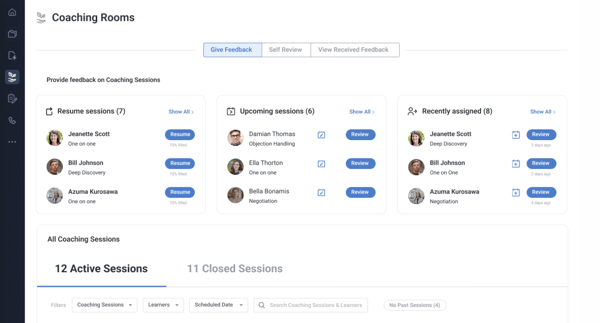
Through reviews, I found that Mindtickle’s dashboards and reporting capabilities are one of its most widely praised features. Several G2 users referenced built-in tools that show how reps are moving through their learning tracks and meeting certification requirements. That level of visibility seems valuable for large or distributed teams, and it lines up with the 94% G2 gives its manager portals.
I noticed several reviews highlighting the impact of gamification, too. Tools like quizzes, contests, and scorecards were credited with keeping reps engaged and competitive throughout onboarding and ongoing training.
Mindtickle’s ability to support role-based learning paths is another strength. Teams reported setting up tailored tracks for SDRs and other sales functions with relatively little friction, a strength echoed by its 95% score for customized learning paths on G2.
Reviewers often described the platform as straightforward and accessible for both reps and admins. The crisp layout for both groups makes a big difference when rolling out training across regions or departments.
Certification is another piece users single out. Assessments, quizzes, and certification checks give managers a way to confirm a rep has absorbed the material before they're customer-facing — and on G2, certifications is Mindtickle's highest-rated feature at 95%, against an 88% category average. For teams that have to prove readiness, that verification step carries real weight.
Where Mindtickle reaches past core training is coaching and conversation intelligence. In the reviews I read, users described practicing pitches, getting AI-assisted feedback, and tying call analysis back to learning paths, with several pointing to the AI assistant and Copilot integration. For a team connecting what reps learn to how they actually sell, that link is what sets it apart.
The depth of the video library is part of why onboarding lands, but the most common content note in recent reviews is a wish for shorter, more skimmable video segments over longer walkthroughs. Because admins decide how content is chunked, teams can build tighter modules that lead with the key examples, and the users who raised it still credited the underlying material as useful.
There were also a few comments about slower load times when launching content. It didn’t seem like a widespread complaint, but users noticed it when working in a hurry. Still, most reviews pointed to the platform’s overall stability and usability as a strength.
For teams focused on onboarding sales reps with formalized training and progress tracking, I found Mindtickle to be a well-rounded option based on what users shared in reviews.
"The most helpful thing about Mindtickle is that it centralizes training, coaching, and performance tracking in one platform, making it easier to onboard, upskill, and monitor sales team effectiveness."
- Mindtickle review, Cheth L.
“There is nothing much left about the dislikes but only thing is instead of longer versions of videos, it would be helpful to save some time if those are shorter videos with best examples”
- Mindtickle review, Ravindran G.
Related: Build rep confidence around the core sales skills high-performing teams train for during onboarding and ongoing readiness.
Allego supports modern sales learning through a mix of video, peer collaboration, and on-demand content. As for its user base, 46% of G2 reviewers come from mid-market companies and 41% from large enterprises (G2 Grid Report data). It's particularly common in industries like financial services, medical devices, and software, where continuous product training and real-time coaching are critical.
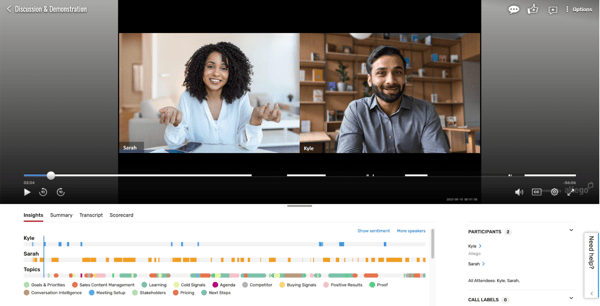
One of the biggest strengths mentioned by reviewers is how well the platform supports video-based learning. Teams use it to record coaching sessions, walk through product demos, and provide feedback asynchronously. I found in reviews that this format helped reps retain knowledge better and revisit recordings when needed.
Coaching and feedback are where I’d say Allego is strongest, and the G2 scores agree: both features sit at 92%, a notch above the category average. I saw many users describing recording practice pitches, sending feedback on their own schedule, and letting reps self-review before a live call. For a team running continuous enablement rather than one-off training, that loop between practice and feedback is the engine.
From what I read in reviews, the microlearning approach was also a user favorite: short, focused lessons that reps could complete between meetings or while traveling. Several described this as a more realistic fit for busy sales roles than long-form courses, and Allego's 92% mobile-support score, against an 89% average, reinforces that on-the-go fit.
Collaboration comes out as a strong theme, as well. Allego lets users comment on shared videos, offer peer feedback, and surface best practices from top performers, which a number of teams said helped build a culture of coaching.
The thing I noticed most often in reviews is how approachable people find it. Users describe Allego as user-friendly and easy to navigate from day one, with several noting their reps got going without much hand-holding. For a rollout that spans regions and roles, that low barrier to entry is part of why adoption holds.
Support experience also earns repeated mentions, and G2's 95% quality-of-support score reflects it. Recent reviewers single out the customer success team for staying close through onboarding and after. Having a responsive team behind the platform is often what keeps momentum from stalling when a question comes up.
As content libraries grow, a few reviewers note that keeping them tidy takes some upkeep. Large, mature libraries benefit from periodic cleanup and sharper filtering. This tends to surface for teams with very high content volume rather than newer setups, and same reviewers also credit the structure that's already there.
Allego does so much that users tend to ask for the next refinement. What I saw in a few reviews were requests for deeper connections to existing systems, like Salesforce transcripts flowing in automatically and tighter ties to tools teams already run, alongside more customization, like content-archiving controls and dashboards that flex per team. I take these as a sign of how much reps lean on the platform, and from what I've gathered the vendor ships updates often enough.
“It's really strong for sales enablement, and being able to quickly share content, record practice pitches, and give feedback all in one platform makes a big difference to performance and consistency across the team.”
- Allego review, Ross M.
“At times, things can be hard to find as there are several tabs.”
- Allego review, Carson H.
Related: Learn how strong sales enablement content helps reps find, use, and share the right materials during onboarding, coaching, and live buyer conversations.
Trainual documents company knowledge and delivers structured training in a way that’s approachable even for lean teams. According to the G2 Grid Report, it is widely used by small businesses (66%), with reviewers from companies with fewer than 50 employees. It’s common in service-driven fields like construction, real estate, and consumer services.
A frequently praised aspect in reviews is how well Trainual supports documentation of processes and SOPs. Users described building detailed guides, sales playbooks, and onboarding tracks that are easy to reference and assign across roles.
Ease of use is the loudest signal I found, and G2's 93% ease-of-admin score backs it where it counts. What I'd stress is that this holds for lean teams without a dedicated admin: reviewers describe getting processes documented and assigned without specialized help. For a small-business owner already wearing five hats, that accessibility is the whole pitch.
Building the content itself comes across as refreshingly low-effort. I kept seeing teams embed videos, screenshots, and quizzes straight into a guide, so a policy doc turns into something a new hire actually engages with. Trainual's course builder scores 91% on G2, and for documentation that has to be read and retained, that mix of media is what keeps it from gathering dust.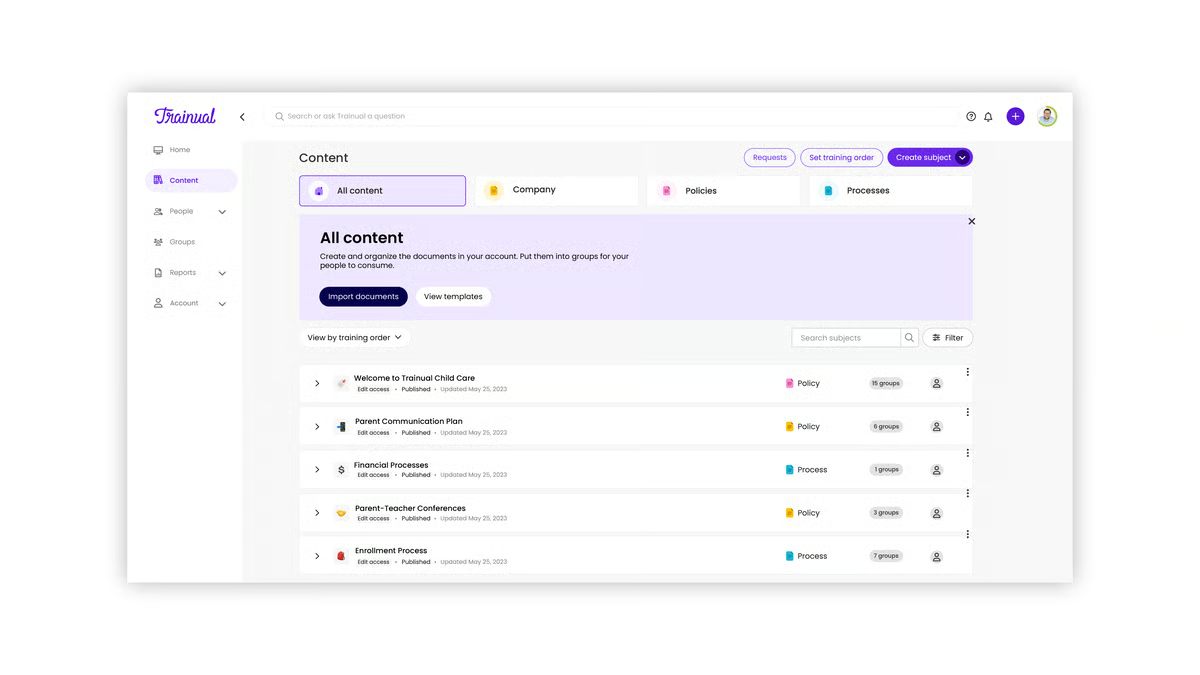 Structure is the next thing I'd point to. Pre-built templates hand teams a starting skeleton, and role-based assignment means an SDR, a CSR, and a new manager each get the track built for them. Across recent reviews, templates and onboarding assignments each surface in about a quarter of the feedback I read: the backbone of turning scattered know-how into a repeatable program.
Once training is live, the tracking side earns its mentions. Completion reports and assessments let an owner confirm who has actually gone through the material instead of assuming it, and G2 rates Trainual's manager portals and assessments at 91% each. For compliance-minded teams, that visibility is what makes the documentation defensible.
The AI tooling is where recent reviews show the most momentum, and it's the strength I'd watch. In the feedback, I read users leaning on it to draft SOPs from a few notes, auto-generate tests, refine wording, and search across their own content for answers, the kind of help that takes the blank-page work out of documentation. For a small team, that's real hours back every time a new process needs writing up.
Where I'd set expectations is on visual customization. A number of recent reviewers want tighter control over branding: uploading a company style guide, locking in fonts and colors, keeping formatting intact when they import a document. The templates are deliberately standardized, which is part of why setup stays quick, so this lands mainly with brand-conscious teams.
On connectivity, for many small teams, Trainual’s standard embed options cover the day-to-day workflow well. During my review analysis, though, I noticed some users asking for deeper ties to the broader tech stack, including EOS platforms, a ChatGPT-style way to query Trainual content, and smoother media imports such as drag-and-drop video. G2’s feature data also points to integrations as an area to check, with an 84% rating, so I’d treat this less as a blocker and more as something teams should validate against their existing tools before rollout.
For small teams trying to turn everyday processes into systematic onboarding, I found Trainual to be a practical and well-supported option based on what users shared in reviews, and reviewers consistently credit the support team when questions come up.
"I find Trainual very easy to use, and the AI they've added for creating documents and finding information is extremely valuable — saving us time and effort when developing and writing SOPs."
- Trainual review, Joe V.
"I wish we could use our company branding to make it look more custom to our needs… so that the Trainual fonts, colors, etc. align with our company's guide."
- Trainual review, Stephanie Y.
Related: Turn repeatable training into a cleaner workflow with this guide to automating the onboarding process.
SalesHood supports asynchronous training, sales coaching, and collaborative learning through a mix of content formats. It is commonly used by mid-market and enterprise sales teams, with G2 Data showing a near-even split: 46% of reviewers come from mid-sized companies and 44% from enterprises. It’s most often adopted in software, IT services, and telecom companies.
One of the most frequently mentioned strengths in reviews is SalesHood’s video-based learning experience. Sales managers and enablement teams use it to assign product walkthroughs, onboarding lessons, and pitch practice videos, allowing reps to learn from top performers and improve their own delivery.
What stood out to me reading the reviews was how seamlessly the platform supports asynchronous coaching: reps can submit videos for review, and managers or peers can provide feedback on their own time. G2 rates SalesHood's coaching at 92%, a notch above the category average, and from what I gathered that practice-and-feedback loop is the feature people actually come for.
The content hub is the next thing I'd single out. After ease of use, it's the most-praised capability in recent reviews, turning up in roughly half of them. Users said it helped centralize resources across regions, making it easier to manage a growing library of onboarding assets and keep content aligned with sales messaging.
Several reviewers also highlighted the value of self-paced learning paths, noting that reps appreciated being able to progress through lessons at their own pace, without waiting for scheduled sessions. SalesHood's customized learning paths score 92% on G2, above the category average.
I also found comments describing the platform as collaborative, with peer-based feedback and social learning features that help reinforce knowledge.
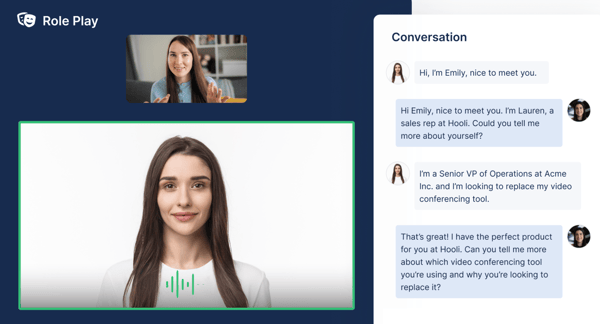
Lastly, while still evolving, the platform’s AI coaching tools were noted by some teams for surfacing insights on rep performance or guiding feedback, particularly helpful in fast-moving environments where managers can’t review every submission. In the recent reviews especially, I kept noticing enthusiasm for the newer AI features: AI roleplays and faster content creation, with one user crediting them for making ramp noticeably easier.
Where I'd set expectations is on the builder side. A handful of reviewers find that configuring huddles, nested multi-part assignments, and formal certification programs takes a few extra steps to set up. Day-to-day use stays easy; this surfaces mostly during initial setup, and reviewers describe the SalesHood team as hands-on while programs are being stood up.
The other pattern I traced shows up as libraries scale: when there's a lot of content, navigating the folder structure and getting search to surface the right result can take some refinement, and a couple of teams wanted an easier way to clear out older docs. For smaller libraries it rarely comes up, it's the high-volume accounts where a little content housekeeping pays off.
For teams looking to scale coaching and peer-driven onboarding across regions, I found SalesHood to be a well-established option with strong adoption in complex sales environments.
“I like that SalesHood supports AI powered coaching and handles sales conversations easily. It comes with gamification capabilities as well as sales enablement features.”
- SalesHood review, Prosper L.
"It can be slightly difficult to navigate the folder systems when there is a lot of content to sift through."
- SalesHood review, Will H.
Related: Compare the broader sales enablement software stack that helps teams centralize content, coaching, and training as they scale.
SmartWinnr delivers a mix of gamified learning, AI-powered coaching, and microlearning designed to support ongoing sales enablement. Based on G2 Data, 68% of its users come from large enterprises, and it's most common in regulated, field-heavy industries like pharmaceuticals, insurance, and medical devices. Across 240+ reviews it holds a 4.9 out of 5 rating, with every reviewer scoring it four or five stars, and 98% saying they'd recommend it.
Gamification stood out in reviews as one of the platform's most appreciated aspects. It turns up in about half of the recent reviews I analyzed. Users said SmartWinnr helped drive rep engagement through quizzes, scorecards, roleplay, and leaderboard-style competitions. Some teams even used reward systems to further motivate reps and build a sense of accountability.
The lightweight modules were another recurring theme. Several reviewers described how training was broken into short, digestible modules that reps could complete between calls or while traveling. This structure made it easier to build a habit of ongoing learning without adding to the team's daily load.
AI-powered coaching also earned praise. A number of reviews highlighted the ability to run scenario-based assessments and deliver targeted feedback based on rep performance, which helped reinforce learning and prepare reps for real selling situations. On G2, SmartWinnr's coaching, assessments, and certifications each score 99%, comfortably above the category averages, which tracks for regulated fields where proof of competence matters.
The mobile experience rounded out the positives. G2 reviewers noted that reps could complete lessons on the go without much friction, which was especially useful for distributed sales teams.

What I'd single out as a distinct strength is reinforcement. A recurring point in the reviews I read was how the steady cadence of short quizzes and smartfeed updates keeps product knowledge current rather than front-loaded at onboarding. For field teams who need the latest messaging in their heads before every call, that drip of reinforcement is the part reviewers tie most directly to results.
The other theme I couldn't miss was support. It shows up so often that it carries even the section where reviewers are asked what they dislike. Users repeatedly credit the team for fast responses and for tailoring the platform to specific needs. For an enterprise rollout in a regulated field, that kind of hands-on partnership is worth weighing.
Cons are genuinely hard to find here: roughly half the recent reviewers I read specifically said there’s nothing they'd change. Among the few who did, the point that came up most concerns reporting depth: a couple of reviewers wanted to deep-dive into custom metrics or segment the data further than the standard dashboards allow. But the same reviewers call the reporting useful as it stands, and SmartWinnr is widely credited for building custom views on request.
The second theme is configuration flexibility on the authoring side, where a few admins would like more options when shaping quizzes and content formats. This sits mainly with power users running large programs; for most teams the templates cover the need, and where they fall short, reviewers describe the vendor team adapting things for them.
For enterprise sales teams looking to boost engagement through modern training methods, I found SmartWinnr to be a strong option based on what I read in reviews.
"The roleplays feel natural and the avatar does not just wait for a scripted answer. It asks follow-up questions, challenges the rep, and keeps the conversation moving. It also gives trainers like me a more realistic picture of who is ready and who still needs support.”
- SmartWinnr review, Jayant A.
“While SmartWinnr is great for engagement and training, a few areas could be improved. The reporting and analytics dashboard, though useful, sometimes lacks the flexibility to deep-dive into custom metrics or segment data the way we need for strategic decisions.”
- SmartWinnr review, Hiren S.
360Learning blends collaborative course creation with structured learning paths tailored for sales teams. According to G2 Data, the platform is most commonly used by mid-market companies (60%), with notable adoption in the IT services, software, and retail sectors. Many teams rely on it to co-create content across sales, enablement, and product marketing, helping keep onboarding materials aligned with real-world selling.
In reviews, I found that course creation came up as a major plus. Users frequently said they could build lessons using built-in tools and standard content types without needing much training. What seemed to make the biggest difference was how collaborative the process felt. Teams could share knowledge directly, comment on content, and make quick updates when products or processes changed, with subject-matter experts contributing alongside enablement. This co-authoring model gives 360Learning its name.
I also saw consistent praise for how easy the interface was to navigate. Ease of use is the single most common theme in recent reviews, turning up in roughly six of every ten I analyzed. G2 users described the platform as simple to operate, with minimal distractions that made it simple for reps to stay focused on their learning.
As a learning experience platform, engagement is part of the pitch, and reviewers bear it out. About a quarter of the recent reviews I read point to interactive elements, like quizzes, in-course feedback, and a format that keeps learners moving, as the reason completion holds up rather than stalling after the first week.
Structure is the other piece I'd highlight. Teams assign role-based learning paths and onboarding programs, and 360Learning's programs feature scores 94% on G2, above the category average. For an enablement lead sequencing what a new rep sees and when, that programmatic backbone is what turns a content library into an actual onboarding plan.
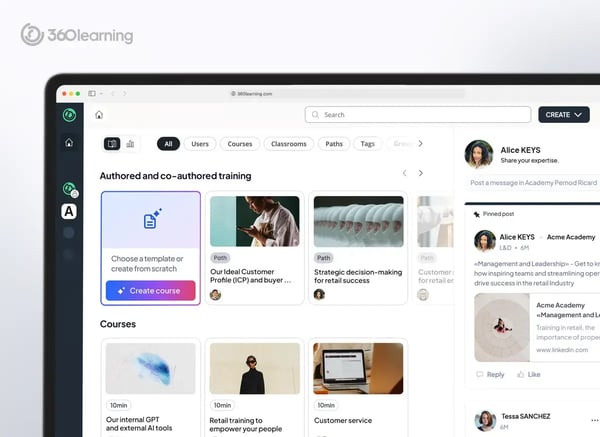
Customer support stood out as another strong theme. Many users highlighted how responsive and knowledgeable the support team was. I read multiple comments about quick turnaround times, helpful walkthroughs, and consistent follow-ups, and at half of the recent reviews, support is the second most-cited strength after ease of use.
Where reviewers most often want more is course styling. The recurring ask I saw is wanting more control over the look and feel of course modules and landing pages, so the experience can match a company's branding. The standard formats are part of why authoring stays fast, so this lands mainly with brand-conscious teams. For many, though, the defaults do the job.
The other recurring request is depth on the reporting side. Basic progress tracking is easy to read. Reviewers like seeing who has completed what but teams wanting custom analytics, or breakdowns by department, location, or region, note the built-in reports can run shallow, and a few route data into their own BI tools. This shows up most in larger orgs with detailed reporting needs.
Based on what I gathered from reviews, 360Learning stood out for teams looking to keep sales onboarding collaborative, current, and aligned with how reps actually work.
"A platform that is easy to use for both learners and designers. A "paths & modules" logic that is very suitable for internal acculturation and also for the animations we set up: it facilitates the structuring of courses and the long-term engagement of participants.”
- 360Learning Review, Sarah M.
“There is always room for continued enhancement of reporting and administrative tools, but overall the platform has met our needs well and the customer support team has been responsive."
- 360Learning review, Kimberly C.
Related: Learn why collaborative learning helps teams keep training content current through peer input and shared expertise.
Most teams rely on Spekit to embed onboarding, enablement, and ongoing guidance into platforms like Salesforce and Slack. It’s especially popular with mid-market companies; 68% of G2 reviewers fall into that segment. It frequently shows up in industries like software, IT services, and nonprofit management.
What stood out to me across reviews was how accessible everything felt. Users consistently said they liked how Spekit integrates training into daily workflows, whether through the Chrome extension, in-app tooltips, or its Salesforce integration. Reps don’t have to open a separate LMS; they can just get help on the spot, and G2 scores Spekit's integration at 90%, above the category average.
The part reviewers mention most, though, is how quickly they can build and update the guidance itself. Creating and editing Speks came up in roughly six of every ten recent reviews I read, and G2 rates documentation at 91%, also above average. For a lean enablement team, being able to publish a fix the moment messaging changes is what keeps content from going stale.
Approachability runs through the reviews on both sides of the desk. Around half describe Spekit as easy to use, not only for reps pulling up content, but for the people creating and editing it, which matters when the content owners aren't full-time admins.
I also noticed reviewers pointing out how it made just-in-time training more practical. Instead of sitting through long sessions or hunting down scattered documents, reps could quickly brush up on specific topics as needed, which several tied directly to faster ramp and less time pulled into formal training.
Customer support came up repeatedly as a bright spot, too. Reviewers described the support team as responsive, knowledgeable, and hands-on during onboarding and implementation. That made a difference for smaller enablement teams rolling the platform out company-wide, and Spekit's 98% ease-of-doing-business score reflects that partnership.
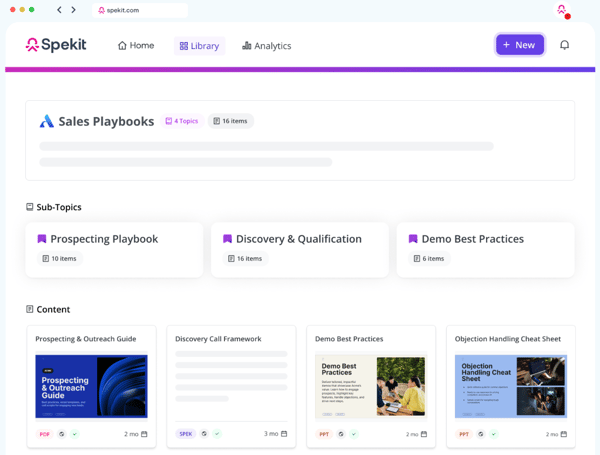
A theme that grew louder in the recent reviews is how much reps lean on having everything reachable in the flow: product knowledge, one-pagers, pricing, and templates. This surfaces where they're already working, increasingly through Spekit's AI assist. For a seller mid-deal, not breaking context to go find an answer is the quiet productivity win.
Cons are light here, and they've shifted with the product. The one I'd surface first is manager-side visibility: from a RevOps perspective, a few reviewers want deeper analytics and better onboarding-progress tracking, which lines up with Spekit's 80% manager-portals score sitting below the category average. It rarely touches individual reps, it's the enablement and ops leaders measuring rollout who notice, and reviewers say the vendor team is actively building here.
The second is finding one specific item as a library grows. Spekit's strength is having content close at hand, but a handful of reviewers said that at scale, locating a particular piece of collateral, or controlling how it's organized, can take a few tries. Where it shows up, a little tagging upkeep goes a long way.
For mid-market sales teams that want to embed training into everyday workflows, I found Spekit to be a lightweight and well-integrated solution based on what reviewers shared.
"When there are multiple stakeholders involved, it’s easy for important details to get lost or buried in someone’s inbox. I really like how Spekit keeps everything organized—both for me as a seller and for the key decision-makers I’m selling to.”
- Spekit review, Josh F.
"I think it would be really cool if there was a way I could dive deeper into the analytics metrics of when somebody comes in and reviews, what that looks like. Right now, you see someone who comes into a deal room and reviews material, how long they were on that particular item. I don't know if there's more that could be captured along those lines.”
- Spekit review, Paul O.
Related: Explore the best digital adoption platforms for surfacing guidance inside the tools employees already use.
Seismic Enablement Cloud supports role-based training, certification, and content delivery for sales teams. Based on G2 Data, it’s most commonly used by mid-market companies (75% of reviewers), with strong representation from industries like computer software, marketing, and retail. The platform is often adopted as part of the broader Seismic ecosystem, connecting learning directly to sales content and enablement workflows.
One of the clearest themes in reviews was how approachable the platform is to use. Sales enablement leaders often mentioned that creating courses, structuring lessons, and managing user access didn’t require extensive training or technical support, and G2 Data puts ease of use at 95%, above the category average. I also found plenty of mentions highlighting how easy it was to build specific learning routes.
Those learning routes are worth pulling out on their own. Reviewers describe assigning function-specific paths, so an SDR, an AE, and a CSM each move through training built for their role, and Seismic's customized-learning-paths feature scores 93% on G2, above average. For a team standardizing onboarding across roles, that role-based structure is the backbone.
Another plus: the platform supports a variety of content formats. I saw examples of teams using text, video, and audio to deliver lessons, alongside interactive assessments ranging from multiple-choice quizzes to video pitch submissions. This gave teams more freedom to mirror real-world sales scenarios in their onboarding, and assessments scored 92% on G2.
Several G2 reviewers praised the reporting features. While not overly advanced, they found the dashboards reliable for tracking lesson completions, certifications, and quiz scores. The overall consensus was that it’s a practical and intuitive tool for delivering structured onboarding at scale.
Support is the strength I saw most after ease of use. It turns up in about a quarter of recent reviews. Reviewers credit the customer success team for hands-on help during rollout, and G2's 96% quality-of-support and 97% ease-of-doing-business scores line up with that. For a mid-market team without a dedicated LMS admin, that partnership carries real weight.
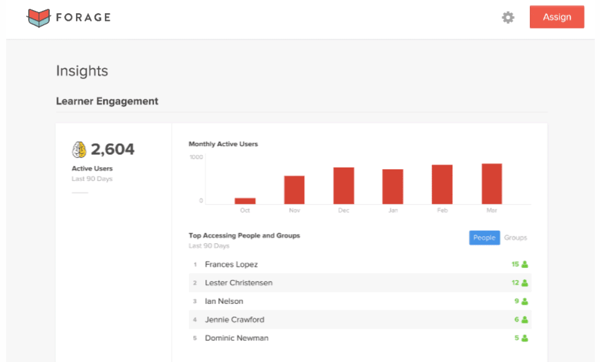
What comes through most in the recent reviews, though, is how tightly learning sits next to the content reps actually use. Because Seismic Enablement Cloud lives on the same platform as the sales content library, a rep can move from a lesson to the live collateral, playbook, or digital sales room without switching tools. For an org already on Seismic, that connection between what reps learn and what they send is the real differentiator.
The most common request by far concerns finding the right thing. Because Seismic houses a large content library, several reviewers said searching for a specific or older asset isn't always precise, and that keeping the library well organized takes ongoing effort. It surfaces most as the library scales. However, teams that invest in tagging and filters, and lean on the newer AI search, report it improving.
Another lighter ask is customization. Some reviewers want more control over how lessons and decks are styled and branded so the experience matches their organization more closely. This lands mainly with teams that hold strong brand standards; for most, the standard presentation does the job.
For teams that want structured, role-based learning sitting right alongside the sales content their reps use every day, I found Seismic Enablement Cloud to be a reliable and well-integrated option, based on the reviews.
"This platform is quite comprehensive for creating relevant sales content, with support for images, videos and product links that ensures we always use up-to-date materials."
- Seismic Enablement Cloud review, Thomas L.
“Search can be inconsistent at times, and it takes ongoing effort to keep the content well organized and up to date."
- Seismic Enablement Cloud review, Shailesh S.
Related: Compare training management systems that help teams centralize training, certifications, and learner progress.
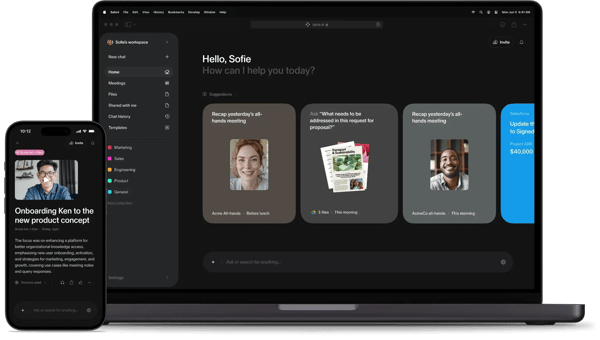
Sana Learn is an AI-native learning platform built to generate training content and answer employees' questions on the spot. One thing to set up front: Sana is aimed at sizable teams, not small ones. Just 7% of its G2 reviewers come from small businesses, with the rest mid-market and enterprise. Early adoption comes from across IT services, insurance, and software, and it also appears in G2's Healthcare and Corporate LMS categories.
The first thing I noticed across the reviews is how low the skill barrier is. Reviewers, many describing themselves as non-technical, call Sana fast to pick up and easy to follow, and G2's 94% ease-of-use score matches that. For a new hire or a first-time admin, that approachability is what gets people actually using it rather than working around it.
Where Sana sets itself apart is letting the AI carry the content load. Reviewers describe drafting courses and lessons with AI instead of starting from a blank page, which for a lean L&D team is the difference between shipping training this week and next quarter. That's the "AI-generated" half of the pitch, and the reviews I read bear it out.
The other half is instant answers. Several reviewers lean on Sana's AI assistant and keyword search to pull a specific answer or surface the right material the moment a question comes up. For onboarding in particular, on-demand retrieval beats hunting through scattered documents.
Engagement comes through as a consistent theme, too. About a third of the reviews I analyzed point to interactive, enjoyable lessons, a mix of reading, video, quizzes, and self-paced flow, that reviewers say kept them moving through training rather than tuning out partway.
The experience itself reads as modern and uncluttered. Reviewers repeatedly describe a clean, intuitive interface and a quick start that doesn't demand a long configuration project. For a team replacing a dated LMS, that fresh design is a real part of the appeal.
Source: Sana Labs
Support rounds out the strengths. Reviewers credit Sana's team for a hands-on, partnership-style approach during setup and after, and the platform's 97% ease-of-doing-business score, above the category average, lines up with that. For a platform still expanding its feature set, that responsiveness matters, because it's how feature requests become shipped features.
The clearest theme on the other side is that the feature set is still filling in. Reviewers point to specific gaps, like offline access, some admin and reporting depth, and API connections that can take work to wire up. What balances it is the pace: reviewers describe a fast, feedback-driven cadence, so a gap today is often the next release's feature. For teams comfortable with a platform that's actively expanding, that momentum works in their favor.
Here's the thing I'd weigh, and it isn't about the software: the skill barrier may be low, but the commitment barrier isn't. Sana is built for organizations of real size, and getting in the door is a meaningful investment rather than a light, few-seat trial. For those larger teams, the depth and the AI earn it; for a small team, it's likely more commitment than the size calls for, and a lighter tool would do the job.
For teams that want AI to take on more of the training lift, including building courses, updating materials, preparing reps to sell, and answering questions from internal content, I found Sana Learn to be a genuinely modern option.
"I like that Sana Learn is easy and intuitive. The AI-generated overlays provided by Sana Learn help guide me through the course content, which is really helpful. I also find the AI-generated content useful for researching specific activities that I might need more insights into. The initial setup of Sana Learn was very easy.”
- Sana Learn Review, Scott M.
"It's new, so features are still developing. Sometimes it prioritises attention grabbing features over more basic feature development.”
- Sana Learn Review, Gemma T.
Related: See how AI in corporate training is changing how teams personalize learning and update content faster.
Got more questions? We have the answers.
Mindtickle, Allego, and SalesHood draw the most consistent trust. Trust shows up as high ratings sustained across volume. On G2, Mindtickle backs it with 4.7 of 5 rating across 2,300+ reviews and a 94% recommendation rate, while Allego and SalesHood have 690+ and 800+ reviews and post 97% and 92% G2 Satisfaction rate.
SalesHood and Spekit show the strongest SaaS onboarding results in G2 reviews. SalesHood's practice-and-coaching model draws repeated mentions of faster ramp and productivity gains; Spekit shortens ramp by surfacing answers inside Salesforce. Both pair onboarding with daily reinforcement, with SalesHood near three-quarters user adoption.
SmartWinnr is the top pick for speed-to-productivity, with Spekit close behind. SmartWinnr's microlearning, gamified reinforcement, and video coaching keep knowledge fresh between calls, and it posts the category's fastest ROI payback and highest user adoption in G2 Data, alongside a 4.9 rating.
Allego, SalesHood, and Spekit suit distributed SaaS teams best. Each delivers training that travels: Allego through recorded video, microlearning, and mobile access; SalesHood through async coaching across regions; Spekit by embedding guidance in Salesforce. None require gathering remote reps live to stay aligned.
Mindtickle, SalesHood, and Allego fit SDR onboarding best. Mindtickle builds SDR-specific tracks and ties coaching to real calls; SalesHood and Allego add practice pitches with manager feedback, both scoring 92% on coaching. That hands-on loop turns a methodology into repeatable rep behavior.
SalesHood and 360Learning fit mid-size teams best, with Allego close behind. Both lean on practice over passive content: SalesHood through coaching and role-play, 360Learning through collaborative course building. Also, both draw 48% and 60% of their reviewers from mid-market companies.
Mindtickle leads for skill analytics, with SmartWinnr and Seismic Enablement Cloud close behind. Mindtickle's readiness dashboards track certifications and skills over time and score 94% on manager portals; SmartWinnr surfaces rep-level performance and contest data; Seismic reports completions and certifications. Each shows improvement, not just activity.
Mindtickle, Seismic Enablement Cloud, and SalesHood lead on a role-based curriculum, scoring 95%, 93%, and 92% on customized learning paths. Each assigns tailored tracks by function and tenure, and 360Learning lets teams build role-specific courses collaboratively, all moving past one-size-fits-all toward stage-specific paths.
SmartWinnr, Allego, and SalesHood combine coaching with active practice best. SmartWinnr blends video coaching with gamified quizzes and role-plays; Allego pairs feedback with recorded practice pitches; SalesHood runs peer practice with manager review. SmartWinnr and Allego both score 92%-plus on coaching.
360Learning, Trainual, and SalesHood tailor training to your process, not generic content. 360Learning co-authors courses with your in-house experts; Trainual converts your SOPs and playbooks into training; SalesHood structures your methodology into practice. 360Learning's 94% course-builder score reflects how custom the curriculum gets.
For onboarding new reps, Mindtickle and SalesHood come up most for guided ramp-ups. Mindtickle structures certifications, skills, and completion in dashboards, while SalesHood leans on self-paced lessons, peer feedback, and AI coaching. Both reinforce learning over time, which is what shortens the gap between a rep's start date and first quota.
It depends on the metric, but Mindtickle is the strongest all-round pick: it carries the category's highest overall G2 Score and largest market presence, with 99% of reviewers rating it four or five stars. If you weigh pure star rating, SmartWinnr edges ahead at 4.9.
For cloud and SaaS teams, Spekit and Allego fit the workflow. Spekit delivers in-app guidance inside Salesforce, so reps learn without leaving their tools. Allego supports asynchronous video and microlearning that travels well across distributed reps. Both suit fast-moving SaaS environments where stopping for formal training isn't realistic.
Trainual is the common pick for service businesses like real estate, construction, and consumer services, where two-thirds of its reviewers come from small companies. It turns SOPs into structured onboarding, and AI-powered search plus easy video embedding help reps find answers and learn on the job.
For startups, Trainual and 360Learning stand out. Trainual's lightweight structure lets small teams build repeatable training and document processes in one place, without a dedicated L&D hire. 360Learning adds peer-driven, collaborative learning that suits the fast, feedback-heavy pace most startups run on.
Allego, SalesHood, and Seismic Enablement Cloud see heavy software and SaaS adoption. Allego centers on video-based learning, microlearning, and peer collaboration; SalesHood pairs practice with AI coaching; and Seismic Enablement Cloud offers role-based learning paths tied directly to the sales content reps use. Each fits technical, content-heavy selling.
Trainual clearly leads here. Built with startups and growing teams in mind, two-thirds of its reviewers come from small businesses. Reviewers consistently praise its straightforward design, customizable structure, and the way it combines onboarding with standard operating procedures, so a lean team documents and trains in the same place.
For mobile and field teams, Mindtickle, Spekit, and SmartWinnr deliver flexible, on-the-go learning. They favor bite-sized content and in-context guidance, and Mindtickle and SmartWinnr add mobile apps so reps can train between calls or while traveling. SmartWinnr's offline support makes it particularly practical for field reps.
One thing I paid close attention to while analyzing these platforms was the return on investment, and the data didn’t disappoint. According to the G2 Grid Report, every product featured here showed a payback period of under two years, and several under twelve months. That means teams using these tools aren’t just checking the boxes on training, they’re actually seeing measurable performance gains in a relatively short timeframe.
And that’s what stood out most across the board: these tools were built to do more than deliver content. They’re helping reps ramp faster, close with more confidence, and retain key knowledge through consistent coaching. Whether it’s through gamified learning, AI-powered feedback, or role-tailored learning opportunities, each platform here solves a real enablement problem with clarity and focus.
If you’re ready to build on that momentum, here’s something worth exploring: Our list of the eight best AI sales assistant tools.


I evaluated 20+ tools to find the six best sales enablement software. These are Agentforce...
.png) by Devyani Mehta
by Devyani Mehta

Sales performance rarely falls apart all at once. I've seen it slip through the cracks when...
by Harshita Tewari

To work as one revenue team, sales and marketing teams need a connected stack across six...
 by Sudipto Paul