HR leaders, People Ops managers, CFOs, and business owners evaluating best PEO providers are often dealing with the same challenges: managing compliance across multiple states or countries, reducing the administrative burden on internal teams, controlling benefits costs, and ensuring payroll runs accurately every time.
One compliance mistake, payroll issue, or poor employee experience can quickly create operational headaches and unnecessary risk.
At this stage, the differences between vendors matter. Some providers excel at multi-state compliance but struggle with support responsiveness. Others offer attractive pricing upfront but add complexity during onboarding, benefits administration, or payroll processing. And when issues arise, the quality of support can directly impact your employees' experience.
To help narrow your options, I analyzed G2's Winter 2026 Grid Report alongside hundreds of verified customer reviews. I focused on the factors that matter most during vendor selection: payroll reliability, compliance expertise, onboarding experience, benefits administration, scalability, customer support, and overall customer satisfaction.
I covered some of the leading PEO providers, including Remote, Deel, Rippling, ADP TotalSource, Justworks, TriNet, and RemotePeople. Whether you're replacing an existing PEO, expanding into new states or countries, or looking for a more scalable HR solution, these are the providers most frequently recommended by real users who have already put them to the test.
*These PEO providers are top-rated in their category based on G2's Winter 2026 Grid Report, with each selection reflecting where the platform stands out on compliance, payroll accuracy, and workforce scalability.
Every provider on this list made it through the same filter. I looked at whether they could handle payroll accurately as headcount grows, whether their compliance coverage holds up across jurisdictions and not just in the easy markets, and whether their support actually responds when something urgent surfaces.
The difference between the providers that made this list and the ones that did not comes down to consistency. Not what they promise in a demo. What verified users report after six months of actual payroll cycles, benefits enrollment, and multi-state or multi-country employment operations.
I also looked at how each provider handles the co-employment structure itself. Liability clarity, documentation standards, and onboarding process quality matter more than most buyers realize until they are mid-expansion and something breaks. The providers here have demonstrated operational stability across those dimensions in G2 review data from real teams at real scale.
The shortlist started with G2's Winter 2026 Grid Report for the PEO category, using verified user satisfaction scores and market presence data across small businesses, mid-market companies, and enterprise organizations to identify platforms with demonstrated traction.
From there, I ran analysis across hundreds of verified G2 reviews to surface what consistently shows up in real workforce operations: payroll accuracy under scale, compliance handling across jurisdictions, onboarding efficiency, benefits administration, support responsiveness, and how clearly providers document employer liability. The goal was to separate platforms delivering consistent operational stability from those that create friction as teams grow.
Because I have not personally used each platform, findings were validated against documented buyer concerns and real-world workforce management challenges reflected across review data. Product visuals and references are sourced from G2 vendor listings and publicly available documentation.
After analyzing extensive G2 feedback and studying how organizations structure and expand their workforce operations, consistent decision-making patterns emerged. These include:
No PEO provider optimizes every variable equally. Some prioritize international expansion speed, while others focus on structured compliance within specific regions. Trade-offs are unavoidable. The critical question is whether a provider’s strengths align with your growth model and risk tolerance. Choosing well means prioritizing the operational pressures you are most likely to face in the next 12 to 24 months, not the ones you solved last year.
Below, you’ll find authentic user reviews from the PEO Provider category. To be included in this category, a platform must:
This data was pulled from G2 in 2026. Some reviews may have been edited for clarity.
Remote is a global employment platform built to help companies hire, pay, and manage talent across borders without opening local entities. I'll put it plainly: it acts as an employer of record, handling compliance, payroll, benefits, and documentation in-country so your team does not have to build that infrastructure from scratch. The focus is on simplifying international employment operations.
What I kept finding as I went through G2's reviews was Remote’s ability to ensure timely payroll and proper handling of taxes, PAYE, and employment documentation. Employees frequently mention that payments are accurate and documents are accessible when needed, which kept coming back to me across review after review. Organizations managing cross-border hiring find that this reduces compliance exposure and keeps workforce administration predictable across jurisdictions.
Expense and reimbursement management is a recurring positive across G2 reviews, with users citing clear visibility into submission status, fast approval turnaround, and straightforward upload workflows. What I kept coming back to across these reviews is how cleanly the reimbursement process sits inside the payroll system itself, removing the back-and-forth that builds up when expenses and pay run through separate tools.
Several reviews emphasize how easy the initial setup process is, particularly when supported by a Customer Success manager. If your team is hiring internationally for the first time, this structured onboarding experience removes a lot of the administrative drag from the process. If your team is hiring internationally for the first time, this structured onboarding experience helps companies hire internationally without extended administrative delays.
Remote scores 94% for management, indicating structured oversight across compliance documentation and workforce operations. For scaling organizations, this governance foundation helps maintain regulatory alignment across regions, and it is the kind of structural backbone I look for when evaluating compliance depth.
One of the most frequently cited benefits is Remote’s ability to act as the local legal employer. The thing that kept surfacing for me was how cleanly Remote handles this: companies can hire in countries where they do not have an office or legal entity, avoiding the time and cost of entity creation. This is particularly valuable for startups and mid-market companies testing new markets or hiring a small number of employees internationally.
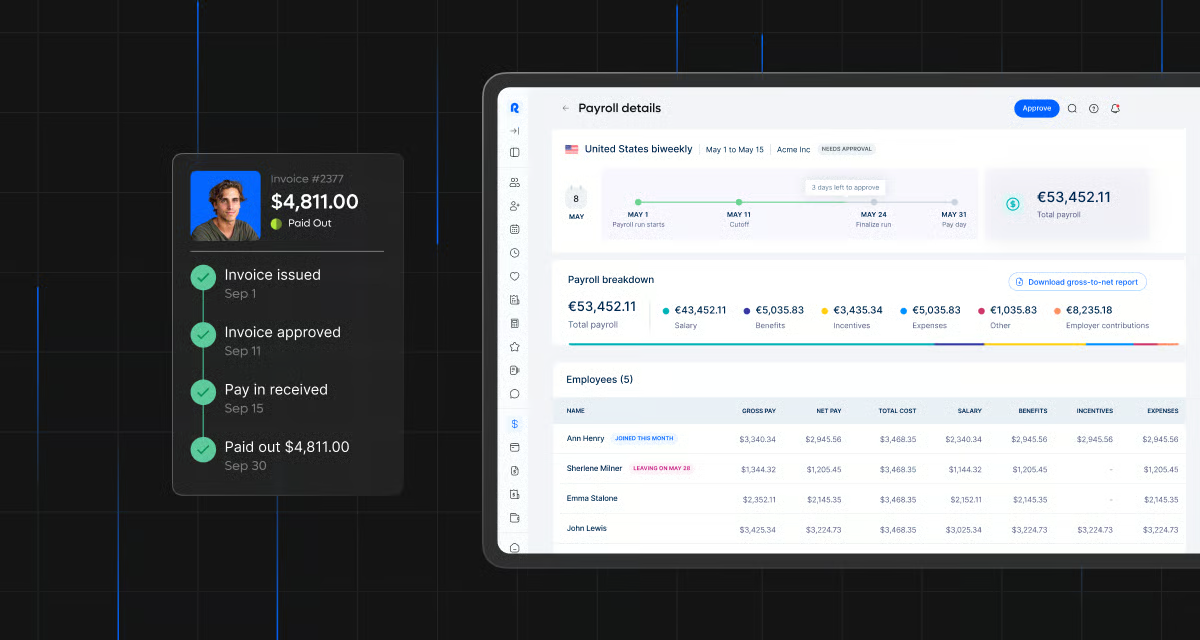
G2 users often describe the interface as intuitive and lean, supporting tasks like uploading documents, managing benefits, and handling reimbursements efficiently, supported by ease of use rated at 94% on G2. The platform is perceived as structured without being intrusive, and for your team that balance matters more during day-to-day operations than any feature list suggests. For employees working across borders, this balance contributes to a smoother day-to-day experience.
G2 reviewers note that response times on complex or non-standard inquiries can extend beyond what fast-moving teams expect. Several reviewers describe open tickets remaining unresolved for multiple weeks, and the absence of phone-based support means complex issues must travel through email and ticketing workflows before reaching resolution. Although, G2 reviews state that ticketing structure creates a documented resolution trail, which keeps compliance-sensitive employment queries traceable across distributed HR teams.
Some G2 users mention manual touchpoints in document processing, which may require coordination with support for fast-scaling enterprises. The teams managing high-volume onboarding across multiple countries feel this more than those with a steadier hiring pace. Remote's compliance coverage and document accuracy remain consistent throughout, which is where the platform's core processing strength sits.
Overall, reliable payroll execution, compliance coverage across jurisdictions, and responsive support give teams the operational foundation to hire across borders without managing the legal complexity internally.I'd recommend Remote most to small and mid-sized businesses making their first serious move into international hiring.
“I find Remote's UI to be intuitive, which makes using it straightforward. The team is very helpful, enhancing the overall experience. I like that the system just works without hassle. The mobile app and web interface are great, making it easy to handle tasks like uploading and retrieving documents, managing benefits, and dealing with expenses and reimbursements efficiently. Overall, it's a pleasant experience, and I highly recommend it.”
- Remote review, Shannon M.
“I think there's more automation they can do. Like, mentioned with mortgages. It's like a bunch of standard documents that I'm sure they can automate. They have all the data, but right now, it still goes through a manual support process. You need to contact support, and they will get back to you eventually. There are other documents that are already automated, so I'm sure it's somewhere in the pipeline for them.”
- Remote review, Niels G.
Focused specifically on hiring across borders without opening local entities? The best EOR software on G2 covers the platforms built for exactly that structure.
When I analyzed G2 feedback on Deel Hire, what stood out was its widespread adoption by businesses looking to streamline global workforce management. The platform consolidates contract management, compliance, and payment processes into a single, integrated solution.
One thing I kept seeing across G2 reviews was how consistently Deel's compliance support was rated; users across company sizes flagged it as a defining strength. Honestly, the platform's ability to navigate complex international labor laws and tax regulations is what I keep coming back to as Deel's clearest differentiator. This feature provides invaluable peace of mind for companies operating in multiple jurisdictions, making Deel a key tool for scaling a global workforce while maintaining adherence to local laws.
Another significant advantage of Deel is its implementation, rated at 91%. Users frequently highlight how quick and seamless it is to set up the platform and integrate it into existing HR workflows. With an intuitive onboarding process, businesses can begin using Deel almost immediately, allowing teams to quickly scale their remote hiring and payroll operations without major delays.
Deel also scores well for its support, which is rated at 91%. Many reviews mention the platform’s responsive support team, which helps users resolve issues promptly. Whether it’s setting up contracts, troubleshooting payroll concerns, or providing guidance on international laws, Deel’s customer service is highly regarded for its reliability and helpfulness. For your compliance-heavy operations, that responsiveness is worth factoring into the decision.
The platform’s ability to manage multinational contracts is another key benefit. Deel supports contracts in various currencies and ensures compliance with local legal frameworks, making it easier for businesses to hire employees in different countries. The number that stuck with me here is how consistently G2 reviewers across company sizes credit this feature with reducing onboarding errors across regional labor law differences.
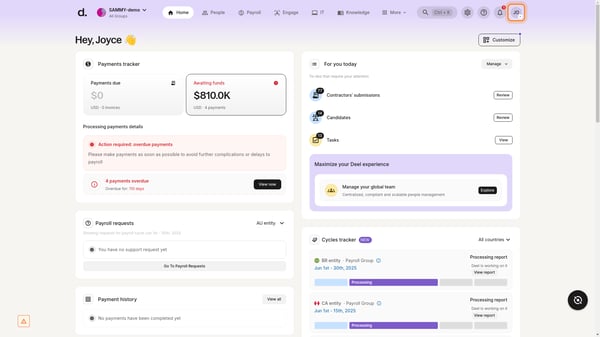
Users appreciate the ability to pay employees and contractors in different countries through a variety of methods, including traditional bank transfers and cryptocurrency. This flexibility is particularly beneficial for businesses operating in countries with limited access to traditional banking services, as it allows them to pay their global workforce without additional complexity.
Deel’s ease of use is frequently praised in user reviews. The platform’s simple interface enables businesses to manage payroll, contracts, and compliance with minimal effort. For companies with limited technical resources, I've seen this come up repeatedly in G2 feedback: Deel’s intuitive design makes it easy to navigate and maintain workflows efficiently, reducing the need for extensive training.
While overall feedback is strong, G2 reviewers flag that card management feature is designed to efficiently handle both virtual and physical cards, within Deel's broader payment infrastructure. Teams running high volumes of card transactions may notice the feature has less configurability than dedicated spend management tools. Keeping card management architecturally separate from payroll preserves processing integrity across high-volume international pay cycles.
G2 reviewers flag that Deel's consulting support thins out on highly specific or complex employment scenarios, where guidance tends toward general advisory rather than jurisdiction-level specialization. Across G2 reviews, teams managing niche worker classifications or atypical employment structures say that they need to source that depth externally or escalate beyond standard support channels. That defined scope keeps compliance guidance consistent and repeatable across the contractor and EOR workflows where accuracy matters most.
Deel Hire is a strong fit for small to mid-market businesses managing global hiring and payroll across multiple countries. Its compliance coverage, flexible payment options, and responsive support make it a reliable platform for teams scaling remote workforces without building complex HR infrastructure.
“ It’s been really helpful for managing payments and setting up whatever flow we need to integrate with our services. I also appreciate the advanced customer support capabilities. Overall, the platform is easy to implement and use, which is why we continue to rely on it as a frequent tool for paying people across the globe. The breadth of features expands our capabilities, makes integration with our current services easier, and helps us keep moving forward with our business needs.”
-Deel Hire review, Manuel R.
"The card management experience could use some improvement. Handling both virtual and physical cards feels less polished compared to the rest of the platform. The process of managing, activating, or switching between cards is not as seamless as I would expect. This is a relatively minor issue, but refining the card features would make the overall experience even better.”
- Deel Hire review, Bruno C.
Pair your PEO infrastructure with the best onboarding software on G2 to keep new hire documentation, task tracking, and compliance verification running without manual coordination.
Rippling positions itself as a platform designed to bring HR, payroll, compliance, and workforce management into a single operational system. Rippling brings employee records, payroll, approvals, and reporting into one unified platform.
The G2 review feedback frequently references the convenience of locating payroll information and operational reports without navigating separate systems, and that ease of retrieval is what stood out to me most at a 95% access rating. This centralized visibility allows HR and finance teams to track workforce activity efficiently while maintaining organized documentation.
The platform’s tools category is rated at 93%, indicating strong alignment with common HR management workflows. Recruiting coordination, employee onboarding, expense tracking, and payroll administration are typically handled within the same interface, and for your HR team that means fewer context switches across your most routine workflows.
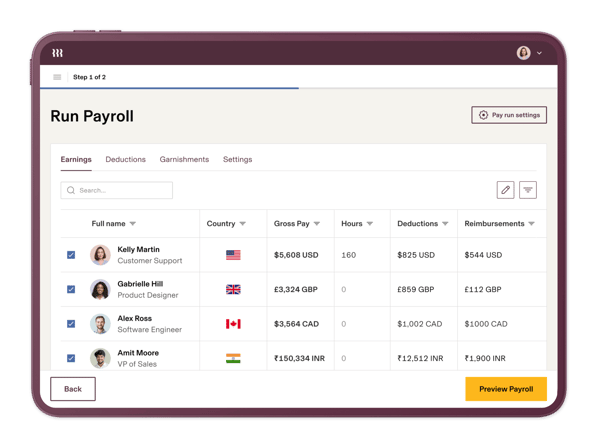
While analyzing G2's review data, I kept coming back to how reviewers described payroll management in relation to the broader workforce processes it connects with. User reviews describe payroll calculations working alongside absence tracking and employee records, allowing time-off data to flow directly into payroll processing. This connection reduces administrative reconciliation and simplifies routine payroll runs which is the thing that stood out to me as genuinely useful for lean HR teams..
Organizations recruiting internationally often use Rippling to manage payments and compliance requirements across multiple locations. Payroll processes for distributed employees can be handled through the same system that manages HR records and approvals. For companies expanding their hiring footprint beyond a single country, this capability reduces the need for multiple payroll platforms.
Operational visibility across HR workflows is supported through the platform’s interface and reporting structure. G2 feedback frequently mentions dashboards that let finance and HR leaders monitor approvals, employee data, and payroll activity in one place. The ability to move between reporting, employee records, and payroll configuration without switching systems contributes to consistent administrative workflows, and that visibility compounds in value as the team scales around me.
Support quality contributes to the overall user experience as well. Across reviews, users receive timely assistance when navigating payroll configuration or HR workflows. Reliable support interactions can play an important role when organizations are configuring workforce management systems for the first time, and if you are mid-implementation that 93% support rating on G2 is worth weighing carefully.
Despite the strengths above, G2 users highlight that configuring payroll structures and migrating historical data requires more upfront preparation than a plug-and-play deployment. That upfront configuration investment produces a payroll and HR environment built to the organization's exact structure, reducing reconciliation overhead at every subsequent pay cycle.
A few recurring themes in G2 reviews suggest that Rippling's modules are tightly connected, meaning the platform operates as a single integrated system rather than a collection of standalone tools. Teams that prefer to adopt individual point solutions may find the scope wider than their immediate needs. However, most users mention that integration eliminates the data-sync overhead that accumulates when payroll, approvals, and HR records run through separate point solutions.
Overall, Rippling aligns best with organizations that are building structured workforce operations as they scale. G2 reviews highlights strong ratings for access, operational tools, and support, reinforcing its ability to organize HR workflows within a single environment. Where I've seen Rippling shine is with small and mid-market businesses building structured workforce operations as they scale, where consolidated employee management, payroll processing, and operational visibility need to work as one system.
“Rippling has made my day-to-day work life noticeably easier. I can handle payroll, benefits, time off, and basic HR tasks in one place without bouncing between systems, and the interface is clean and fast. Onboarding and changes like role updates feel streamlined, and I always know where to go to find what I need. Overall, it’s a smooth, modern platform that saves time and reduces headaches.”
- Rippling review, Barry H.
"Some integration (i.e., Dropbox) is difficult to connect and need to contact customer support to provide us with a customized API code that takes time for them to respond back.”
- Rippling review, Habibah N.
Positioned as a comprehensive HR outsourcing solution, ADP TotalSource is commonly associated with organizations seeking to consolidate payroll, benefits administration, and HR advisory services. G2 review analysis frequently frames the platform as a structured PEO environment where administrative HR responsibilities are supported by a large-scale provider, and that infrastructure depth is what drew me to include it on this list.
Organizations often note that payroll, benefits administration, and employee records are managed within one system rather than across separate tools. For your HR team managing payroll, benefits enrollment, and compliance documentation simultaneously, this centralized structure removes the coordination overhead that builds up fast across separate systems. This consolidation reduces operational fragmentation for businesses managing multiple HR functions simultaneously.
Employee self-service capabilities also appear frequently in feedback. Access holds an 88% rating, reflecting that employees can retrieve pay information, benefits details, and HR documentation through a unified portal. G2 Reviews suggests this visibility allows employees to handle routine HR tasks independently. That self-sufficiency across a distributed workforce is something that registered clearly for me in the review patterns.
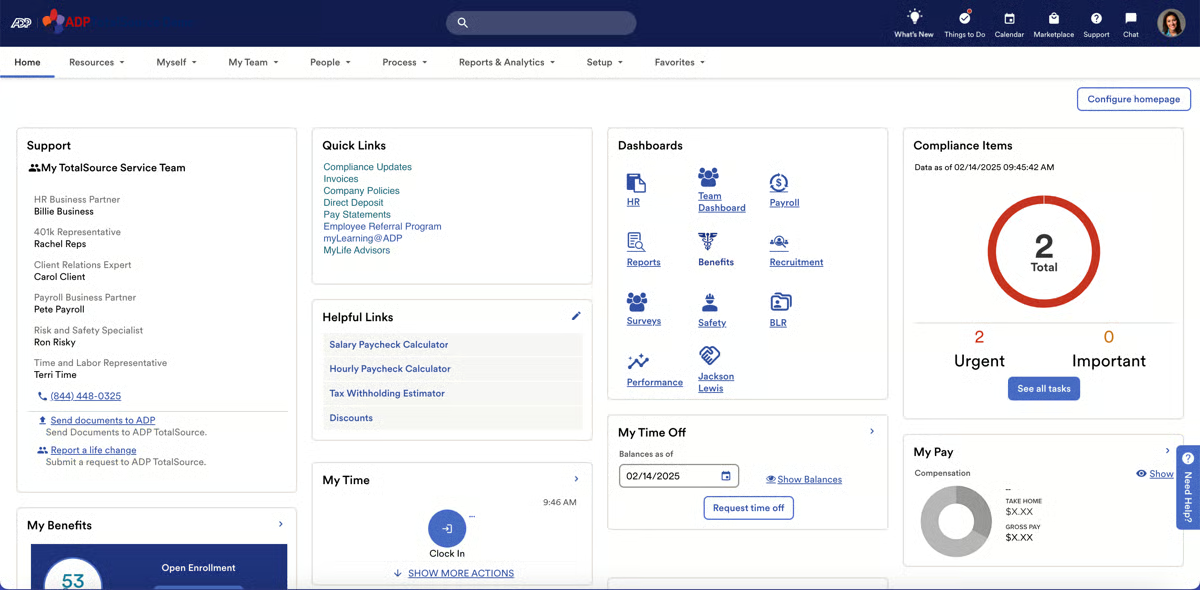
Compliance support is rated at 88%, indicating that organizations often rely on the platform to interpret employment regulations, tax obligations, and workplace policy requirements. G2 reviews commonly mention HR business partners who provide structured guidance when companies navigate hiring decisions or regulatory questions. That structured accountability layer is what stands out to me as ADP TotalSource's compliance model doing real work.
I'd single out the multi-state scalability here as the capability most relevant for organizations managing different local labor laws and regulatory requirements without separate vendor relationships. Scale is rated at 87% on G2, reflecting the system's capacity to maintain HR, payroll, and compliance operations as organizations add headcount and geographic footprint.
Organizations frequently reference HR business partners who provide input on employee relations, hiring practices, and policy interpretation. In my read of the review data, this partnership approach extends the platform beyond software functionality into structured HR support. For companies navigating complex regulatory environments, access to HR expertise contributes to operational confidence.
The platform also manages health benefits, retirement plans, and workers’ compensation, alongside payroll, within a single operational environment. This integration allows HR teams to coordinate employee programs without maintaining separate vendor relationships. Centralized administration helps maintain consistency across workforce policies for growing companies managing expanding benefits programs
G2 users flag payroll and HR assistance as delivered through distributed service teams rather than dedicated regional contacts, which surfaces on location-specific queries. Teams managing country-specific payroll complexities may notice the generalist coverage more than those with straightforward employment structures. G2 user review patterns note that the centralized service delivery keeps HR, benefits, and compliance guidance consistent across every state and employment structure the organization operates in.
Across G2 reviews, one limitation comes up consistently: response timelines reflect a structured support environment managing a large volume of client accounts, which can affect turnaround speed during urgent payroll situations. The structured queue model scales compliance and payroll delivery uniformly across the client base, preventing service variability as account complexity grows.
I'd recommend ADP TotalSource most to mid-sized and enterprise teams that need structured HR outsourcing with the infrastructure to back it up. Compliance depth, benefits administration, and multi-state payroll handled without piecing together separate vendor relationships is where it earns its place on this list.
“ I appreciate how efficient payroll is with ADP TotalSource. I always have a backup if I run into a problem processing, which gives me peace of mind. I also like the ease of use of the software. The transition to ADP TotalSource from our previous system was an upgrade for our business, as it flows better. The initial setup was pretty seamless.”
- ADP TotalSource review, Anna D.
“The primary drawback of ADP TotalSource is the response time from representatives. When urgent issues arise, it can feel as though the support team does not treat them with the same level of urgency. This is likely because individual representatives are managing more clients than they should, leading to delays and frustration for users who need immediate assistance. Oh, and the costs as well, it is getting pricey!”
- ADP TotalSource review, Rowie Z.
If your workforce includes contractors alongside employees, the best contractor payment software on G2 covers the payment and compliance workflows your PEO platform typically does not.
As small businesses grow and workforce administration becomes more complex, Justworks focuses on simplifying HR, payroll, and benefits through a unified PEO platform. If you are running a small team where HR responsibilities are shared across roles, that simplicity is exactly what this platform is built for. The platform emphasizes accessible workflows, centralized employee management, and built-in support for everyday administrative tasks.
While evaluating the G2 reviews, I found interface clarity coming up more consistently than almost any other aspect of the platform. User reviews consistently describe a clean, organized layout that makes payroll tasks, PTO requests, and employee records easy to locate. This structure helps HR teams manage routine administrative work without navigating complex menus or layered workflows. The consistency of that experience across G2 reviews is what gave me confidence placing it on the list.
Centralized HR administration plays a significant role in how teams manage workforce processes on the platform. Employee onboarding, payroll updates, benefits enrollment, and personnel adjustments can be handled within the same system. This allows organizations to keep employee records, compensation details, and compliance documentation connected. That connective tissue across HR functions is what stood out to me as genuinely reducing administrative fragmentation for growing teams.
The platform reports a 92% rating for support, reflecting consistently positive feedback regarding assistance channels. For your team resolving payroll or benefits questions quickly, G2 reviewers frequently reference the chat support as the channel that actually delivers same-day resolution.
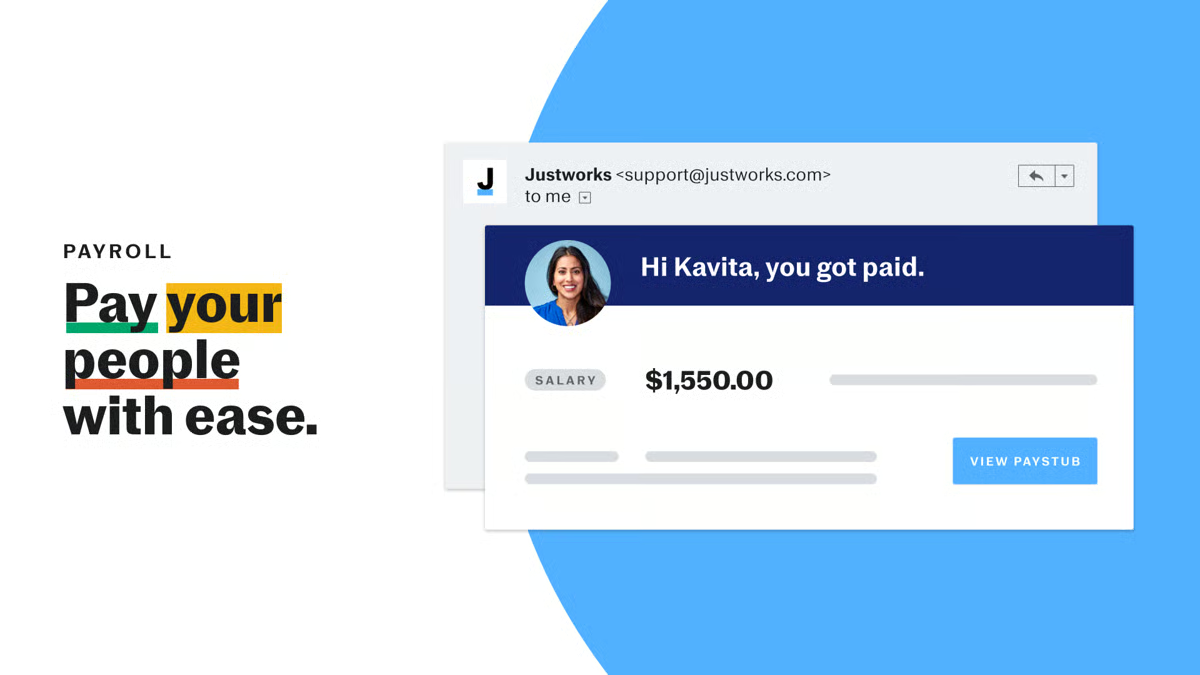
Payroll processing, benefits administration, compliance tracking, and employee data management are handled through the same environment, and the breadth of that coverage at a 92% tools rating on G2 is what keeps coming back to me as Justworks' clearest operational argument.
Access to employee information and documentation is another area that receives positive review feedback. Access is rated at 92%, indicating that payroll records, HR documentation, and employee details can be retrieved quickly. Centralized document access helps organizations maintain compliance records while supporting everyday administrative tasks. I'd call this one of the more quietly reliable strengths across the entire shortlist.
Companies often highlight the variety of benefits administration options available through the platform, including health plans and retirement programs. I've watched this come up consistently as the feature that tips the decision for smaller organizations that cannot negotiate group rates independently. Having benefits enrollment connected directly to payroll and employee records simplifies both onboarding and ongoing administration.
G2 reviewers mention reporting functionality as an area where the platform's operational simplicity has defined limits.Custom data exports and multi-variable payroll reports require manual extraction into external tools, which surfaces quickly for teams running deeper HR or financial analysis. That reporting boundary keeps the platform lean, which is what allows payroll execution and benefits enrollment to stay frictionless for teams without dedicated HR analysts.
G2 feedback highlights that documentation and invoicing workflows are oriented around active, ongoing HR operations rather than deep historical archival access. Organizations with strict audit, compliance, or record-retention requirements may find historical reporting and document retrieval less convenient than they would prefer. Although, orienting workflows around active operations keeps current documentation structured and immediately accessible, which is where daily HR administration actually runs."
Justworks fits organizations that want payroll, benefits, and compliance handled through a single platform without the overhead of a large internal HR team. From what I've analyzed across G2 review data, Justworks is the platform startups and growing teams reach for when they need payroll, benefits, and compliance handled without the overhead of building an internal HR function from scratch.
“This is my #1 choice for PEOs. The platform is easy to use and navigate, organized and well laid out. From onboarding employees, setting up and enrolling in benefits, 401k, to making personnel changes to salary, titles, etc. this platform is the absolute best. I also love that employers still have control and the ability to make changes on their own as opposed to other PEO platforms. Customer service often has same day turnaround, and the chat feature actually solves problems without submitting a case and getting back to you weeks later.”
- Justworks review, Danielle W.
“The biggest challenge we experienced with Justworks was customer support. After we transitioned off the platform, it was extremely difficult to retrieve historical employee documents that were needed for our records. Accessing prior documents felt unnecessarily complicated, which was frustrating given how essential they were for compliance and HR purposes.”
- Justworks review, Alexandra C.
TriNet is a PEO platform that consolidates payroll, benefits, compliance, and HR administration. It is most often chosen by organizations that want a structured HR infrastructure, access to competitive benefits, and compliance guidance without building a dedicated internal HR team. I see why that combination keeps landing with mid-sized businesses across multiple states, specifically.
The platform organizes payroll, time-off requests, benefits enrollment, and HR documentation within a clear, accessible layout. Access is rated at 85% on G2, and navigating between functions is frequently described as straightforward, with employees and HR administrators able to complete routine tasks without extensive training.
Benefits administration is one of the most frequently cited strengths across TriNet's G2 reviews. In my view, the platform provides access to health plans, insurance enrollment, and employee benefits queries through a centralized interface, allowing HR teams to direct benefits-related questions to TriNet rather than managing them internally. Small and mid-sized businesses that cannot negotiate group plan rates independently, access to benefits through a PEO structure extends coverage options that would otherwise require significantly larger headcount to access.
Payroll processing is handled consistently across regular pay cycles, with G2 reviewers describing the core payroll function as reliable and straightforward for standard pay structures. HR teams reference the ability to run payroll, access cost center reporting, and manage employee compensation records without navigating multiple systems. That accuracy and predictability is what matters most to me when evaluating payroll infrastructure at this level.
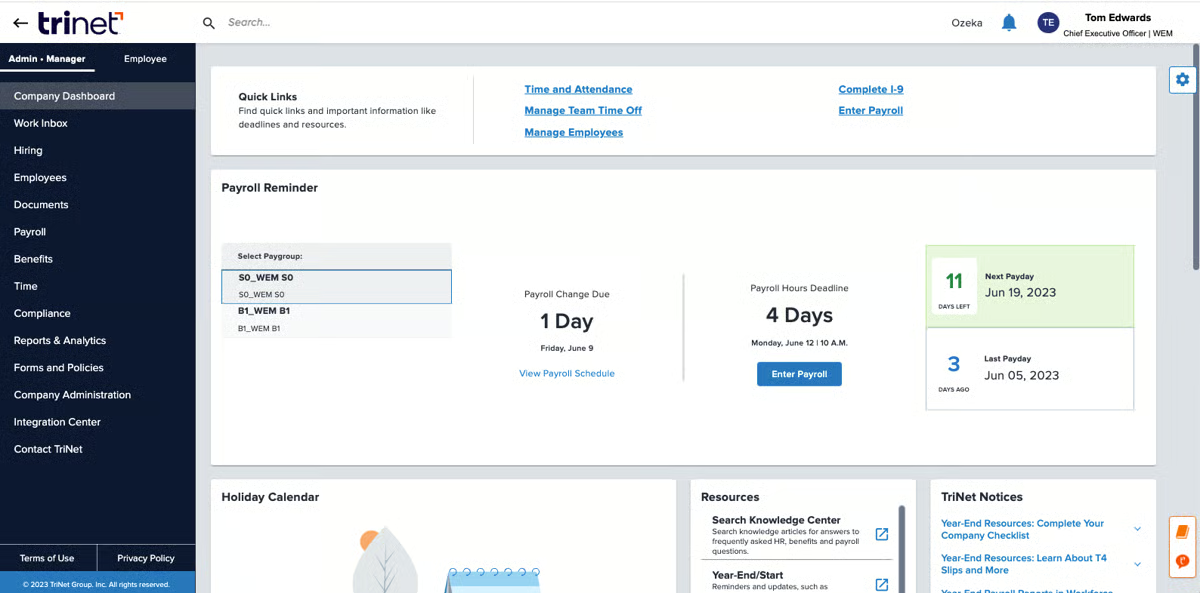
I noticed this pattern that service team responsiveness is rated highly across G2 reviews, with reviewers describing quick replies to HR, payroll, and compliance questions. Multiple reviewers note that having a dedicated contact point reduces the time spent resolving HR questions internally. For businesses managing employees across several states without a full HR department, I'd call that contact model a genuine operational advantage.
Compliance management across multiple states is a recurring positive in TriNet's review data. Compliance support is rated at 84% on G2, and G2 reviewers reference the platform's ability to track changing employment regulations, manage state-specific payroll requirements, and keep organizations aligned with labor law updates. That multi-state regulatory tracking is where I see TriNet earning its place on this list.
Payroll, benefits, time-off management, and employee records are consolidated within a single operational environment rather than distributed across separate systems. For your managers and employees handling administrative tasks without switching between tools, G2 reviewers consistently describe the value of having payroll, time-off, and benefits accessible in one centralized place. This centralization keeps workforce data consistent and reduces the coordination effort required when HR decisions affect multiple systems simultaneously.
G2 reviewers mention platform navigation, with a recurring theme of the interface feeling less intuitive in certain areas than the overall structure suggests. Reviewers describe specific workflows, particularly around making employee changes or accessing certain settings, as requiring more steps than expected. That structural depth supports more granular employee change management and settings control than a simplified interface typically allows.
Some G2 reviewers mention that TriNet's pricing structure can feel substantial relative to the services included, particularly as organizations scale and the per-employee cost compounds. Reviewers note that certain administrative actions carry fees that are not always anticipated, and that the overall cost of the platform becomes a point of active discussion as headcount grows. However, bundling compliance infrastructure, benefits access, and employer liability coverage into a single per-employee rate removes the vendor coordination cost that compounds when those functions are sourced separately.
TriNet suits businesses that need payroll reliability, benefits access, and multi-state compliance coverage without building an internal HR function. G2 review patterns point to consistent performance where employment regulation varies and administrative drag compounds quickly. The combination of centralized workflows and responsive service support keeps routine HR operations running without dedicated specialist oversight.
“I like how easy and intuitive it is to request PTO, see company holidays, and enroll in insurance with TriNet. I appreciate that I can view my W2 on the platform, making it simple to handle taxes. Having access to my PTO allows me to plan my vacation around work. The support chat has been really helpful whenever I have questions about my paycheck. Also, the initial setup of TriNet was very easy.”
- TriNet review, Talha A.
"The cost is something that I have spoken directly with TriNet about, and while TriNet is amazing as a platform, it can get a little pricey.”
- TriNet review, Samantha U.
If you are managing global payroll and contractor payments across multiple regions without a dedicated compliance team, RemotePeople is commonly described as the platform built precisely for that operational gap." It is most often used by organizations hiring internationally that want payroll processing, contracts, and tax documentation managed through a single system.
Automation across payroll and compliance workflows plays a central role in how organizations manage international employment tasks. G2 Data frequently references automated payroll processing, tax calculations, and compliance checks that operate across multiple countries. Automating these workflows across jurisdictions limits the manual coordination required when managing payments and compliance filings in parallel across multiple countries, and that reduction is what struck me most consistently across the G2 review data.
Contractor administration is handled through centralized contract, payment, and documentation workflows. G2 user feedback often highlights the ability to manage agreements, payment schedules, and tax records in a single system rather than scattered spreadsheets or tools. Centralizing agreements, schedules, and tax records gives organizations consistent visibility over distributed contractor networks without relying on spreadsheets or fragmented tools. The operational clarity that creates across a large contractor network is something I keep returning to as RemotePeople's most underappreciated strength.
I'd describe the guided onboarding structure for RemotePeople as one of the strongest in this entire category. Structured onboarding workflows support organizations hiring employees or contractors across different regions. With an assistance rating of 100% on G2, guided onboarding processes move from contract creation to compliance verification through defined steps. Progress notifications allow HR teams to track onboarding stages without constant manual follow-up.
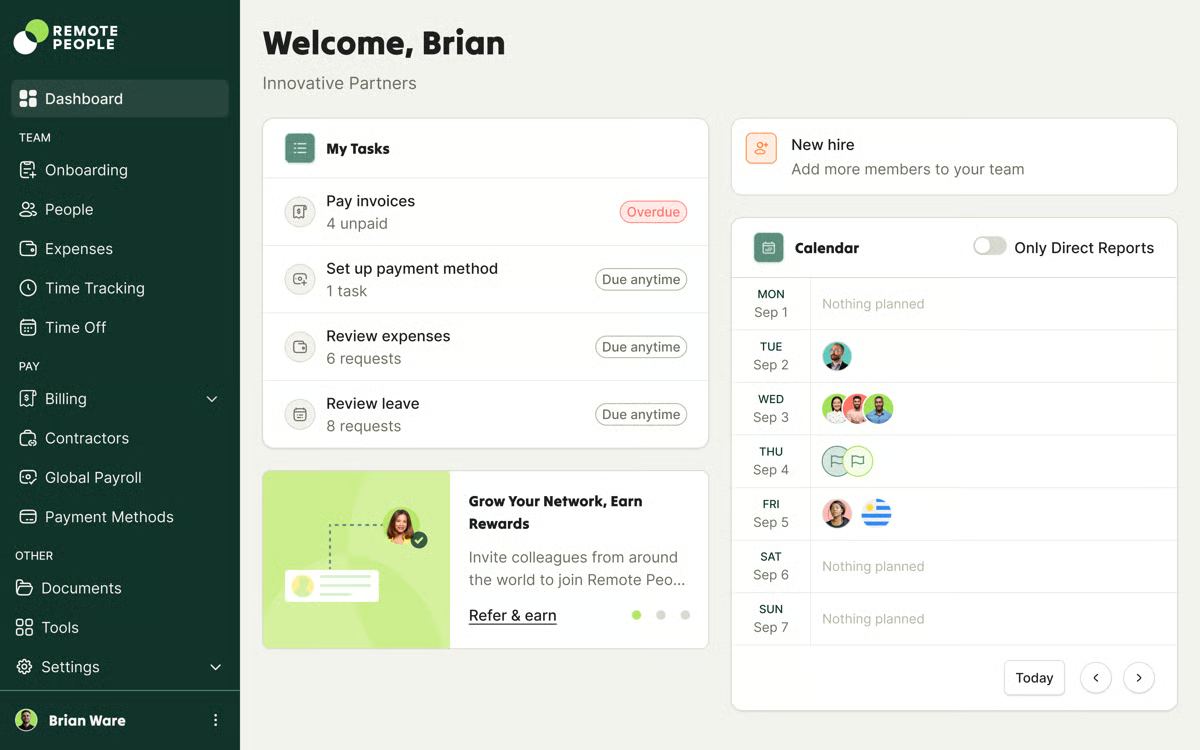
Interface accessibility is another commonly referenced aspect I see in user feedback. For your non-HR staff completing onboarding steps or payroll checks with minimal training, it is described as a layout that removes the specialist knowledge barrier entirely. Organizations operating with lean HR functions find that both specialist and non-specialist staff can handle routine tasks without additional training investment.
Organizations report that adding new hires or contractors does not significantly alter core workflows, allowing teams to expand globally without restructuring HR processes. Employee self-service capabilities also allow workers to access documentation or update details independently. The way that compounds across a growing contractor network is what impressed me most about RemotePeople's scalability story.
Support responsiveness appears prominently in G2 feature ratings. For organizations navigating labor regulations across multiple jurisdictions, dependable support keeps compliance questions from stalling payroll cycles or delaying onboarding. I'd back that up with the 100% support rating on G2, which is the strongest support score across every provider on this list.
G2 reviewers point out that reporting is built around payroll accuracy, compliance records, and financial documentation rather than contractor performance tracking. Teams managing large contractor networks who want utilization or engagement metrics may find this scope narrower than expected. G2 users note that keeping reporting tightly scoped to payroll and compliance outputs means finance teams get audit-ready documentation without configuring or filtering out unrelated workforce metrics.
A pattern in G2 reviews suggests reporting filters prioritize standard payroll and HR views over advanced multi-region analytical breakdowns. G2 reviews talk about organizations which are running complex cross-border workforce analytics may need to supplement with external tools. Though, the standard views built around payroll and filing status give cross-border finance teams a consistent reporting baseline across every jurisdiction without custom setup.
Overall, RemotePeople delivers reliable workflow fit for organizations managing global payroll and contractor operations. Companies prioritizing automated global payroll and dependable support will find RemotePeople a strong operational fit. I'd put it at the top of the shortlist for lean teams managing complex multi-country contractor networks.
“The platform is user-friendly, and the customer support is always available and helpful. It made me feel confident and well-supported in my role.
Being hired through Remote People’s EOR service has been a great experience. The platform is incredibly easy to use, everything from signing my contract to submitting expenses and checking payroll details was clear and intuitive. It made the whole process feel effortless. The customer support team is also top-notch. They respond quickly, explain things clearly, and genuinely care about making sure you’re taken care of. I always felt supported, even when navigating local compliance questions or benefits info.”
- RemotePeople review, Ma L.
"While the platform covers most of our needs, there are occasional areas where additional reporting options and workflow customization would improve the overall experience. Some processes could also benefit from further automation.”
- RemotePeople review, Kayima M.
|
Software
|
G2 rating
|
Free plan
|
Ideal for
|
|
Remote
|
4.5/5
|
No
|
Compliant global hiring without opening local entities
|
|
Deel
|
4.8/5
|
No
|
Managing contractors and EOR employees at global scale
|
|
Rippling
|
4.8/5
|
No
|
Unified HR, IT, and payroll management in one system
|
|
ADP TotalSource
|
4.3/5
|
No
|
Enterprise PEO with compliance and benefits depth
|
|
Justworks
|
4.6/5
|
No
|
US-focused PEO with structured compliance support
|
|
RemotePeople
|
4.9/5
|
No
|
Streamlined multi-country employment and payroll support
|
|
TriNet
|
4.0/5
|
No
|
Multi-state HR, benefits administration, and compliance coverage for small and mid-sized businesses
|
*These PEO Providers are top-rated in their category based on G2’s Winter 2026 Grid® Report. Most offer custom pricing or per-employee plans, with detailed information available directly from each provider.
Got more questions? G2 has the answers!
For scaling teams, Deel, Rippling, and Remote are most frequently highlighted in review patterns. They tend to support multi-country growth, structured onboarding, and payroll consistency as headcount expands.
Rippling and ADP TotalSource are commonly referenced for deeper HR and payroll alignment. Rippling is often chosen for unified workforce systems, while ADP TotalSource is selected when structured payroll compliance is a priority.
Remote, Justworks, and ADP TotalSource are frequently mentioned when compliance clarity is critical. Review patterns suggest these platforms are often selected for handling tax filings, worker classification, and regulatory oversight.
Justworks and Remote People are typically referenced for SMB-focused pricing models. They are often evaluated by smaller teams seeking structured payroll and benefits support without enterprise-level complexity.
ADP TotalSource, and Rippling are commonly associated with stronger data governance expectations. Enterprise buyers often evaluate these platforms for structured payroll security and documented compliance controls.
Justworks, ADP TotalSource, and Rippling are frequently selected for bundled payroll and benefits administration. Review signals suggest buyers value consolidated benefits enrollment alongside payroll execution.
Deel, and Remote are often mentioned for structured onboarding workflows. These platforms are typically evaluated by companies hiring across borders that require standardized employment documentation.
ADP TotalSource,and Justworks, are frequently referenced for access to HR guidance. Buyers often choose these providers when they want structured advisory support alongside payroll and compliance execution.
Multi-state payroll requires tracking different tax obligations, filing deadlines, and employment regulations across jurisdictions. G2 review patterns suggest Remote, Rippling, and TriNet are commonly evaluated for this, with buyers citing consistent payroll execution and state-specific compliance handling as the primary selection criteria.
The most common friction points during transitions involve historical document access, payroll data migration, and benefits continuity. G2 review patterns suggest buyers prioritize providers with structured onboarding support and clear data handoff processes when switching from a previous PEO.
The PEO category is shifting. Providers are moving beyond basic co-employment into integrated workforce platforms that connect payroll, compliance, and HR data in real time. AI-driven compliance monitoring and predictive workforce analytics are becoming baseline expectations rather than premium features. The providers building these capabilities now will absorb regulatory change faster as employment law continues evolving across regions.
Before shortlisting, map your hiring footprint for the next 18 to 24 months. The countries, worker classifications, and states you expect to add will narrow the field faster than any feature comparison or demo. A provider that performs well in your current markets may have real gaps in the ones you are moving into.
The infrastructure decision you make now determines how much friction your HR and finance teams carry through your next growth phase. Choose based on where you are going.
Managing payroll beyond your PEO? Browse the best payroll software on G2 to compare tools built for scale.


The first international hire is exciting. The paperwork that follows isn’t. I speak regularly...
 by Shreesh Singh
Paying one contractor is easy. Paying 25 across five countries, in three currencies, with...
 by Soundarya Jayaraman

Let AI shortlist the best tool for your use case Ask AI 1 Click on the button below2...
by Soundarya Jayaraman

-1.png?width=690&height=400&name=G2CM_FI535_Learn_Article_Images-%5BPeople_Operations%5D_V1a%20(1)-1.png "best PEO providers")