


"Where are all the good freelance jobs hiding?"
If you've ever asked yourself that, trust me, you're not alone. A few years back, when I went on a break from full-time work and started freelancing as a content writer and part-time designer, I spent far too much time navigating many freelance platforms that promised everything but delivered nothing. It was frustrating and exhausting, and honestly, it made me question if freelancing was worth it.
Sound familiar? Whether you're a freelancer from the creative world like me, a writer, designer, or marketer, or someone in the tech world, such as a developer or IT expert, I know the feeling is all too common. The endless search for the best freelance website with quality clients and meaningful work can be an uphill battle.
Chasing low-paying gigs, getting ghosted by clients, or feeling like the right opportunities just don't exist, I've been there too. Not every platform lives up to the hype. Some leave me sifting through low-quality gigs, while others are so complicated that just signing up feels like a full-time job.
But after a lot of trial and error, I found the best freelance websites, the legit ones, where I could land quality clients, grow my income, and finally feel like I was on the right track.
In this article, I'll share the 9 best freelance websites I recommend in 2025 so you can skip the guesswork and start seeing results. Whether you are a writer like me, a full-stack developer, or a UI/UX designer looking for short-time freelance gigs or full-time contracts, I have a platform that'll fit your needs.
* The freelance websites listed here were sourced from G2's Winter 2025 grid report. While some are free to join and use for job seekers, others charge a commission. Some also provide premium plans. I have included their starting prices for easy comparison.
To me, freelance platforms aren't just search websites; they're the bridge between my skills and the opportunities I've always wanted. They've helped me find projects that genuinely match what I do best, connect with clients I wouldn't have reached otherwise, and shape a career in the way I want.
It’s a space that’s growing just as fast as the people powering it, the global freelance platforms market is expected to rise to nearly $14.39 billion by 2030, expanding at a strong 17.7% CAGR as more professionals and businesses embrace flexible, project-based work.
As a content writer and part-time designer, these platforms are the backbone of my freelancing journey, offering the flexibility and freedom I could never find in a traditional 9-to-5 job.
What I love about these platforms is how they're designed to work seamlessly for freelancers and clients. As a freelancer, they've been the perfect way for me to showcase my work, whether it's sharing my portfolio, setting my rates, or building credibility through reviews from happy clients. On the flip side, they make it just as easy for clients to find the right professionals, whether they're looking for copywriting, coding, digital art, design, or any other specialized skill.
Some platforms I've come across are industry-specific, focusing on niches like tech or design, while others are broader and offer opportunities across a wide range of fields. What I appreciate most is how they take care of the practical stuff, like file sharing and payments, so I can focus on what really matters: delivering my work and keeping my clients happy.
I started by analyzing G2’s Grid Reports for freelance platforms. These reports rank marketplaces based on user satisfaction and market presence. This helped highlight platforms consistently trusted by real freelancers and clients.
Next, I conducted hands-on testing by creating freelancer profiles, browsing job listings, and applying for projects. I evaluated each platform for job quality, navigation ease, client reliability, and payment security, key factors that directly impact a freelancer’s experience and success.
To complement this, I used AI tools to analyze G2 reviews and identify recurring feedback themes like ease of finding work, client quality, and payout transparency. Combining G2 data, user reviews, and my own experience made it clear which platforms truly empower freelancers rather than overwhelm them.
All platform data and screenshots are sourced from G2 listings and publicly available materials.
When evaluating a platform, I use a detailed checklist to ensure it meets the needs of freelancers like me. Here's what I look for:
These are the criteria I've used to evaluate freelance platforms over the years, and they've helped me identify the ones that truly deliver value. Based on my experience with over 20+ tools, I've shortlisted 9 best freelance platforms. The list below contains genuine user reviews from G2's freelance platforms category page.
To be included in this category, a solution must:
*This data was pulled from G2 in 2025. Some reviews may have been edited for clarity.
Fiverr is one of the platforms I've used since I started freelancing. What sets Fiverr apart for me is its simplicity and versatility. Whether you're a beginner or an experienced freelancer, Fiverr offers a marketplace where you can showcase your skills and land clients worldwide.
The biggest draw of Fiverr is how easy it is to find opportunities and get started. Creating a profile is straightforward, and you can quickly set up "gigs" that showcase your skills.
I love the idea of gigs because they let you define precisely what you're offering, which reduces the back-and-forth with clients. What makes this structure stand out, in my opinion, is that it is completely different from its close competitors, like Upwork, which rely on us bidding for work. I can clearly define my services, set my rates, and attract clients who are looking for specific expertise. For me, this means less time spent chasing jobs and more time focusing on delivering work.
But remember, creating the Fiverr profile and gig will take time. I spent close to three to four hours setting things up, writing my gig descriptions, taking videos and pictures, and adding my portfolio.
One thing Fiverr does exceptionally well is communication. The platform’s built-in messaging tools are clean and responsive, which makes client interactions much smoother. According to the G2 grid report, Fiverr maintains an 88% satisfaction score for messaging and 84% for RFP (Request for Proposal) creation, confirming my experience that the communication process is one of its biggest strengths.
Another thing I appreciate is the platform's vast range of opportunities. For example, there's literally a market for almost any skill, from copywriting and graphic design to niche services like voiceovers or coding across different countries. Personally, I’ve landed projects from industries I never thought I’d work in, and that’s been a huge advantage for me as I focus on diversifying my portfolio.
Apart from everything else, one feature I truly appreciate about Fiverr is its intuitive dashboard. It’s well-organized and displays all the essential information about my orders, and gigs. At a glance, I can see how my gigs are performing, which orders are in progress, and what’s coming up next. The dashboard gives me a clear snapshot of where I stand without having to dig through menus or click endlessly.
I found the Fiverr paid Seller Plus program interesting. It's specifically designed with advanced analytics and a dedicated support manager for freelancers looking to scale. But it's an invite-only program. I haven’t personally tried it yet, so I can’t say how much of a difference it makes. But I have heard good reviews about it from my peers in the freelancing circle. So, if you are interested in boosting your profile, you can try it out when you get a chance.
Fiverr makes it easy to showcase your skills and reach clients worldwide. The ability to set your own rates and structure gigs gives you full control over your work, which is especially great if you’re just starting or looking to diversify your client base.
That said, Fiverr keeps things simple with preset formatting and character limits on gig descriptions, ensuring consistency across listings. While this can feel restrictive at times, it helps maintain a clean and professional marketplace. The 20% commission might seem high at first, but it covers Fiverr’s global visibility, secure payment protection, and client support infrastructure, making it a fair trade-off for the exposure it provides.
Fiverr is ideal for freelancers who want autonomy, flexibility, and access to a vast international audience. It’s a great launchpad for building credibility and growing your freelance business at your own pace. Just make sure to focus on standing out with well-crafted gigs and competitive pricing to get the most out of it.
"I enjoy working at Fiverr.com. Managing my clients and tasks in one location is incredibly simple. Customer service at Fiverr is excellent. They have always been helpful to me when I have problems. Almost daily, I utilize Fiverr. There are a number of features."
- Fiverr Review, Ashvin K, Data Entry Operator.
"Some not ideal quality of life elements that are designed to push all sellers into the same mold (the limit in number of characters and special characters, the limit on formats and size to upload on the portfolio). It would be nice to be able to personalize our seller page ad gig pages even more to make it more distinguished and appealing."
- Fiverr Review, Francesco S, Writer.
Want to know how much you can make freelancing? Check out our resource of freelance statistics listing how much one can make on average by job role.
: Best for beginners seeking diverse projects. If you ask me, Upwork is practically a household name in the freelancing world, along with Fiverr, and for good reason. I’ll admit, I was a little hesitant to use it at first when I started freelancing a few years back because it seemed so competitive, but once I got the hang of how it works, I realized why so many freelancers swear by it.
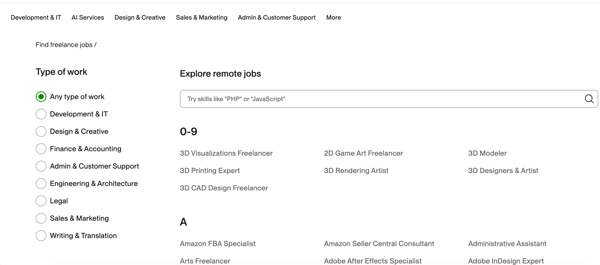
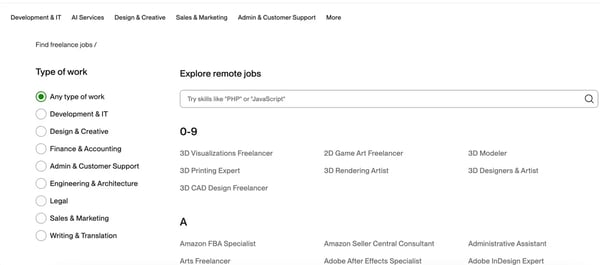
One of the things I appreciate about Upwork is how easy it is to browse jobs without even logging in. Once my profile was set up, I could see the best matches and most recent postings, almost like scrolling through a job search site. This approach made it simple for me to identify opportunities that fit my skills.

Another feature I love is receiving job invitations alongside the ability to send proposals. It feels rewarding to have clients reach out based on my profile, and it adds a layer of convenience. Upwork’s interface is also incredibly user-friendly, with clear navigation, excellent time-tracking tools, and a messaging feature that makes staying in touch with clients seamless.
My impression of Upwork aligns closely with what G2’s data shows, Upwork holds a 91% satisfaction rating for messaging, 91% for freelance screening, and 92% for freelance profile management. These numbers reflect how the platform continues to prioritize professional reliability and communication between clients and freelancers.
One feature I really like about Upwork is how it shows a client’s recent history. You can see how many job offers or projects they’ve completed with other freelancers and even the total amount they’ve paid out to talent. This little detail goes a long way in assuring me of a client’s legitimacy.

It helps me decide whether they’re serious about hiring or just testing the waters, which is a big deal when I'm investing time and effort into proposals. Also, Upwork’s service fee is 10%, which is lower compared to Fiverr’s 20%
Upwork continues to be one of the most trusted and versatile freelance platforms, offering hundreds of listings across industries from marketing and design to development and consulting. Its structured system helps freelancers connect with verified clients and build long-term professional relationships.
The Connect system, though sometimes viewed as a hurdle by new users, is actually designed to maintain quality across proposals. Each submission requires a small investment, which helps reduce spam and ensures that clients receive serious, relevant applications. While there’s no guarantee every proposal gets opened, this approach encourages freelancers to refine their pitches and stand out with stronger profiles.
As with any large marketplace, occasional fake listings can appear. However, Upwork actively monitors suspicious activity, and its reporting tools allow users to flag scams quickly. Most G2 users agree that these instances are rare and that Upwork’s verification measures make the overall experience secure and reliable.
For freelancers who are strategic, patient, and ready to invest effort into crafting tailored proposals, Upwork offers one of the most transparent, scalable, and opportunity-rich ecosystems in the freelance world.
"I love how easy the website and app are to use. It's very well-organized and user-friendly. When I have a project, I use it daily, especially for the time tracking and the messaging features. Downloading and signing up was easy. I have never had to work with customer service, so I can't speak to that."
- Upwork Review, Amy E, Content Creator.
"The Connects are what I really hate. I honestly don't want to pay (for Connects) just to apply for a job."
-Upwork Review Danielle S, Senior Merchandizing expert (e-commerce)
Want to explore further? Read my colleague Shreya Mattoo's complete review answering the question: Is Upwork legit?
I first heard about Andela, from my sister, who’s a software engineer. She mentioned it along with other platforms like Turing, and it immediately stood out as something different. So, when it popped again in the G2 grid report, I decided to give it a deep dive.
Let me be upfront, Andela isn’t your typical freelance platform. It’s designed exclusively for software professionals seeking high-quality remote opportunities with top-tier companies. So, if you’re not in the tech field, this one might not be for you. But if you are, Andela could be exactly what you’re looking for.
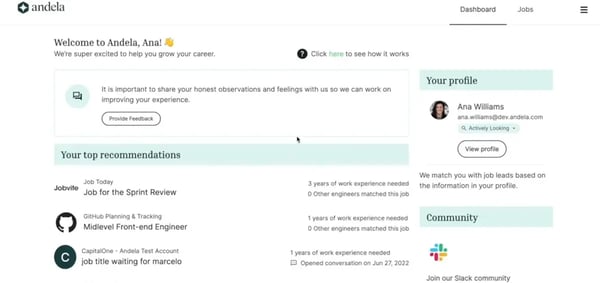
From what I saw, unlike platforms where anyone can sign up, Andela has minimum requirements to join its community. This includes at least four years of professional experience to even apply. The application process itself is thorough: I saw tests for English fluency, technical skills, and a live technical interview. Crack them, you're in for a good gig.
And it’s not just personal experience, G2’s grid report reflects this too. Andela scores 95% for freelance screening and It also holds an 88% satisfaction rating for RFP creation and 86% for messaging, showing that users value its structured, curated workflow and client communication standards.
One thing I admire about Andela, even as an outsider, is how well they support their programmers. My sister mentioned that they provide account managers who regularly check in to offer guidance and ensure everything runs smoothly. This level of support isn’t something you see on every platform.
Another key feature is its professional environment. It’s not about bidding or competing with hundreds of others, once we’re accepted, we’re matched with companies looking for our specific skill set.
Andela stands out for its commitment to matching skilled developers with top-tier global companies. The platform emphasizes quality over quantity, ensuring that professionals get access to impactful, well-paying projects rather than short-term gigs.
Because of this focus, Andela is intentionally built for experienced developers rather than beginners. Its rigorous vetting process ensures that every match aligns with both skill level and project complexity, which is why opportunities are highly curated rather than endless. While this can make competition more intense, it also guarantees that the projects available are meaningful and suited to top talent.
Most roles on Andela are full-time and long-term, reflecting the platform’s aim to provide career stability rather than quick, part-time work. This makes it an excellent fit for freelancers and developers who are ready to fully commit to remote, structured engagements with reputable clients.
For those seeking growth, global exposure, and projects that challenge and reward in equal measure, Andela is a standout platform that prioritizes quality relationships between talent and employers.
"I like the fact that Andela is full of opportunities for me as a remote worker. I have had the opportunity to learn, upskill, network, and work with reputable companies."
- Andela Review, Okall J, Data Scientist.
"Quite difficult to get matched to roles and the mails from bounces can be disheartening."
- Andela Review, John Edeem E, Java developer.
Once freelancers start landing consistent clients, using the best freelancer management systems can help them track projects, payments, and deadlines in one place.
When I first heard about Toptal, I could tell it wasn’t like the usual freelance platforms. Unlike Fiverr or Upwork, where anyone can create a profile and start applying for gigs one day, Toptal is meticulous about the freelancers they have. Their platforms are top-tier.
This meant I couldn't just sign up on Fiverr or Upwork, set up my profile, and start applying for gigs. I had to be an expert in certain industries, such as software development, design, finance, product management, and project management. I started the process by applying as a marketing expert, one of the five categories Toptal focuses on.

Once I finished my application process, I had to take automated communication and technical skills assessments and then live interviews. I’ll admit that it was intimidating at first. I failed once, so I had to retake it after a month and clear it in that attempt. If not, I couldn't apply for another two years. So, it created a lot of pressure. However, once I made it through, I realized how much that process benefits freelancers like me.
That exclusivity translates directly into user satisfaction. According to G2’s 2025 freelance platforms data, Toptal ranks among the highest across key categories, 95% for freelance screening, 97% for freelance profile management, and 93% for messaging. These metrics reflect exactly what I experienced: a platform that prioritizes quality, transparency, and communication.
I was not competing with thousands of other freelancers for low-paying gigs. Instead, Toptal connects me with serious clients who are looking for top-quality work and are willing to pay premium rates for it. Having said that, in the last few years, the competition has become a bit too intense.
The support system at Toptal has been incredible to me, though. Their customer service is highly responsive, and being part of their Slack community makes it easy to connect with other professionals. They even offer certifications and courses, which show how much they invest in helping freelancers grow.
Toptal has earned its reputation as one of the most exclusive freelance networks, connecting top professionals with leading global clients. Its focus on high-quality matches ensures that both freelancers and organizations benefit from reliable, long-term partnerships built on expertise and trust.
Because Toptal prioritizes excellence, its application process is intentionally rigorous. The multi-step screening ensures that only the top 3% of talent make it through, something that protects the platform’s credibility and guarantees freelancers access to premium projects. While this can feel demanding or unclear at times, G2 reviewers often note that the process pays off once accepted, as the quality of clients and compensation is notably higher than on most platforms.
Similarly, Toptal’s rate review system helps maintain fair, consistent pricing across the network. While freelancers don’t have complete autonomy over rate changes, this structure ensures that clients perceive value and that freelancers remain competitive in the global marketplace. For those who prefer full flexibility or entry-level gigs, platforms like Fiverr or Upwork might be more suitable, whereas Toptal is designed for seasoned professionals seeking high-value engagements.
For experienced freelancers ready to work with top-tier companies on challenging, rewarding projects, Toptal offers a vetted, elite environment that values skill, professionalism, and long-term growth.
"Toptal is by far the best freelance platform I have been involved with so far. The support they offer is 10/10, payment is guaranteed, and staff work hard to fill talents with enough work. As a freelancer, Toptal is your best way to focus on actual work rather than searching for clients, ensuring you get paid, etc."
- Toptal Review, Krispin S, Freelance UI/UX Designer.
"The application process for the job is not really clear and transparent to us, in my opinion."
- Toptal Review, Carlo C, Senior Product Designer.
If you’re a developer or tech professional searching for remote gigs with reliable pay and a professional setup, specifically from the LatAm region, CloudDevs.com might be exactly what you’re looking for. If you are from the non-tech industry, you can explore their sister platform, LatHire.
Now, from my trial with the platform and from what I have heard from software developers who used the platform, one of the core strengths of CloudDevs is that it doesn’t take any cut as a service charge from the freelancers. This is a huge deal, in my opinion. What we earn is exactly what we take home.

Also, while CloudDevs has a vetting process, it's not automated like other platforms, from my observations. You are always paired with a developer or someone from the recruiting platform, which personalizes the experience for us.
Another thing I highly value is that the time between the first interview and the starting date with the client is incredibly short compared to other platforms. Also, from what I've gathered, the clients on CloudDevs are genuinely invested in their projects, which makes working with them fulfilling. The pay is also competitive and reflects the value of the work.
Communication is another highlight. On G2, the platform holds an impressive 96% satisfaction rating for messaging, among the highest in its category, underscoring its commitment to smooth, consistent interaction between freelancers and clients. Similarly, its 94% satisfaction score for RFP creation points to how efficiently the platform connects developers to relevant projects without unnecessary delays.
Please note you need 5+ years of experience and should be from LatAm or Europe to join the platform.
While CloudDevs.com stands out for its transparency and reliability, it follows a structured payment system where funds are processed after client confirmation. This approach ensures accuracy and trust in every transaction, though it can take up to two weeks for payments to reflect, something that works well for those who prioritize secure, verified payouts over instant transfers.
The support team is responsive and committed to resolving issues thoroughly, though during busy periods, replies can take a little longer than expected. This careful attention to detail, however, ensures freelancers get accurate resolutions instead of rushed responses.
For experienced developers in the LatAm region, CloudDevs.com offers a dependable, professional platform that balances trust, quality projects, and clear communication.
"Finding the right projects is tricky when you’re a freelancer, which is why I love Cloud Devs. They have a great selection of clients and projects, the platform is open, and the pay is awesome. This freedom to choose between long-term and short-term projects is a big bonus for any of us who have a family life to attend."
- CloudDevs.com Review, Susan T, UI/UX Designer.
"I worked with them for more than a year, and during that time, they always maintained a two-month delay in payments. For example, hours worked in January were not paid until March...
We always had to directly reach out to the client's CEO in order to follow up on our monthly payments, but no one in Cloud Devs cared about it. There are other things I don't like, such as the monitor app that captures what you're doing all day long on your machine, but I think anyone could deal with that if they were paid as/when expected.
- CloudDevs.com Review, Jose T, QA Automation Engineer.
When I first discovered YunoJuno, it was a completely new find for me. Now, I should mention that the platform is primarily geared towards freelancers and clients in the United Kingdom and Europe, but it’s also currently expanding into the US and other countries.
So, if you're a freelancer, especially in the creative field, YunoJuno could be an excellent option. It's ideal for securing high-quality gigs in marketing and creative services, including digital marketing, social media consulting, and design.
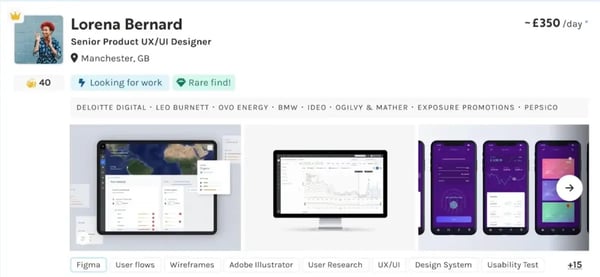
From what I saw, the process is pretty similar to what's available on Fiverr and Upwork. I can create a profile with tags that a wide range of clients can view and contact me about. This is great because it means clients contact you rather than the other way around. It also records a solid 90% satisfaction rating for freelance screening, reflecting the quality of professionals and the fairness of its vetting process.
Now, this doesn't take away my ability to show interest in gigs I like. If I see a brief I want to apply, I can share my application. Since my CV and portfolio are already there, I don't need to spend time filling in forms. Also, since the day rate is set on our profile so there is no awkward quoting process to go through, which makes things much easier.
One of the things I really appreciate about YunoJuno is that the rates reflect the local market of the UK and Europe. Unlike global platforms like Fiverr or Upwork, where rates can vary widely and often skew lower, YunoJuno ensures fair pay that’s more representative of the region.
Another highlight for me was its timesheet and invoicing process. It is super simple, and they send helpful reminders so you never forget to fill it in. There is the added functionality of being able to add extra time in case you need to add a couple of hours instead of a full or half day.
Oh, and did I mention there’s no platform fee for freelancers? That’s right. Like CloudDevs for developers and software engineers, YunoJuno also doesn't charge any money.
While YunoJuno is built to connect top freelancers with reputable clients, it’s also structured for professionals operating as registered businesses. This setup ensures smoother payments and legal compliance across projects, though it does mean freelancers need to have a proper business structure in place, like a limited company or umbrella setup, before getting started. For those used to more casual freelance arrangements, it might take a bit of adjustment, but it ultimately helps maintain a more professional client relationship.
Navigating the platform, particularly around timesheets and invoices, can take a little getting used to. Once familiar, though, the process becomes straightforward, and the support team is quick to resolve any rare invoice discrepancies that arise, ensuring things run smoothly.
For freelancers in the creative and marketing space, especially across the UK and Europe, YunoJuno remains a strong platform. It’s tailored for professionals seeking quality projects and long-term partnerships with well-established clients.
"I have been using YunoJuno for the best part of a year now. The platform has an intuitive interface which makes it very easy to navigate and to find potential leads. It prioritizes quality over quantity, which has led to better matches with potential clients. The results have always been relevant to my skill set, which has allowed me to secure multiple roles. It has become my go to freelancer management system to find my next project!"
- YunoJuno Review, Christian M, Freelance Web Designer and Developer.
"There are two small things: The frequency with which I have to log in can be frustrating. Having to use my browser's 'back' button instead of the '[back to Timesheets]' button on the website so I don't lose my filters can be frustrating. Everything else about the website is helpful and efficient, so these little things are worth working around."
- YunoJuno Review, Kaiya K, Resource Coordinator.
Now, Index.dev isn't one of the mainstream freelance platforms that you might hear buzzing around the digital water cooler, like Upwork or Freelancer.com. It's a very new entrant to the space.
While Index.dev mentions that they support freelancers in tech, marketing, design, and sales fields, I found it to be more focused on tech jobs like Andela and CloudDevs.com.
Now, you already know I’m not a software developer myself. But I’ve had the chance to explore Index.dev and hear firsthand from professionals who’ve worked with the platform, ranging from designers and QA specialists to AI/ML experts and product managers.
From what I’ve gathered, the onboarding process is smooth and straightforward, with the team ensuring that freelancers are set up for success from the start.
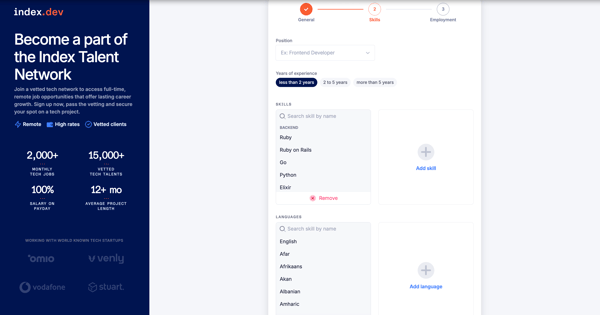
It’s worth mentioning that Index.dev has some pretty specific requirements for freelancers. I've come to understand that you need at least 3-4 years of experience in a particular tech stack and 6+ years of overall professional experience to join the platform. They also focus heavily on developers from Latin America and Central and Eastern Europe. If you meet these criteria, Index.dev could be a fantastic opportunity.
Index.dev holds a remarkable 98% satisfaction rating for freelance screening, one of the highest across all platforms analyzed. It also scores 97% for messaging and 97% for profile management on G2, confirming how effectively it facilitates client–freelancer communication and portfolio visibility.
Now, you may be wondering what makes Index.dev stand out when there are so many other freelance platforms for developers. From my observation, Index.dev goes the extra mile to match freelancers with clients based on their unique skills and experience.
For example, a developer I spoke to was matched with a client who needed an advanced Python solution for automating data workflows. The developer’s prior experience with similar automation projects made the fit seamless, and they were able to jump into the work immediately without any steep learning curve.
It’s this level of curation that sets the Index.dev apart, projects aren’t randomly assigned; they’re tailored to maximize a freelancer’s expertise, which leads to fulfilling and productive collaborations.
Another thing that really sets Index.dev apart is the exceptional support they provide. Developers have shared how responsive and professional the team is, questions are answered quickly, and any minor issues are resolved without hassle. This level of support makes people feel confident and valued on the platform.
While Index.dev is designed to connect skilled developers with vetted global clients, it naturally favors professionals ready for long-term, serious engagements. Since many clients are based in Europe and the US, freelancers from other regions, such as Asia, may need to adjust their schedules for smooth collaboration, though this also provides valuable experience working across international time zones.
The platform’s focus on in-demand technologies ensures a steady flow of projects for senior developers, but opportunities in niche areas like Ruby on Rails can be limited. This focus helps maintain high project quality, though it may require developers with rare skill sets to be open to adjacent tech stacks.
Lastly, while Index.dev does offer some part-time projects, it’s primarily geared toward those pursuing freelancing as a full-time career. This structure benefits professionals seeking consistency and growth rather than short-term side gigs, making it ideal for developers serious about long-term remote work.
"Index has been a unique platform in my coding journey, where I've encountered individuals who genuinely believe in my capabilities to fulfill my role. Throughout the interviewing, assessment, and onboarding phases, they offered unwavering support, aiding me in overcoming challenges and maximizing my potential. Index has truly been a fulfilling opportunity that has met every expectation on my professional wishlist."
- Index.dev Review, Serhat O, QA Automation Engineer.
"There were a few minor hiccups. Sometimes, the time zone differences made scheduling meetings a bit challenging. Additionally, the initial paperwork process was slightly cumbersome and could be streamlined."
- Index.dev Review, Siam A, Lead Product Professional.
Now, if you are looking for alternatives to Andela, CloudDevs, or Index.dev, I have two more options for you, and one of them is Lemon.io.
When I found out about Lemon.io, I was intrigued by its promise of simplicity and quality for developers looking for freelance opportunities. After exploring the platform and speaking to others who’ve used it, I can say it delivers on many fronts, especially for tech professionals seeking well-matched projects.
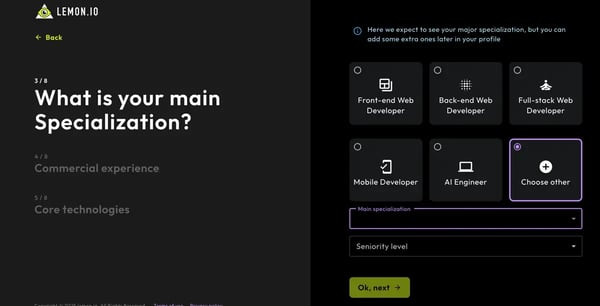
One thing that immediately stood out to me was how fast the process moves. Many freelancers have shared that they landed their first contract within a month of being accepted on the platform, and some even secured their second contract shortly after.
Also, I found that the platform offers a wide variety of job postings, updated daily, which means there’s always something new to explore. The range of opportunities is impressive, with jobs suited for both highly experienced developers and those with more specialized tech stacks.
Of course, no platform is without its quirks. From my observations, some freelancers have mentioned that the availability of new projects on Lemon.io can vary, with certain months being slower than others. This could be a challenge if you’re depending on the platform as your primary source of work.
Lemon.io does an excellent job of connecting vetted freelancers with reliable clients. The platform’s streamlined matching process makes onboarding and collaboration smooth. Its strong communication tools , reflected in its 90% satisfaction rating for messaging, also help maintain transparency and trust between freelancers and clients.
That said, while project matches are generally well-aligned, there are instances where assignments may not fully reflect a freelancer’s primary skill set. This seems to happen because Lemon.io prioritizes client-fit first, ensuring projects are staffed quickly. For freelancers open to exploring adjacent skills or gaining diverse experience, this can actually be a great way to broaden their portfolio.
Occasionally, clients may cancel or postpone projects due to shifting priorities, something that naturally comes with the territory of startup-driven freelance work. While it can be momentarily inconvenient, the platform’s consistent flow of new opportunities helps offset these instances.
One improvement I’d personally like to see is more visibility into client demand trends, such as which tech stacks or roles are most sought after. Offering these insights could help freelancers better position themselves for upcoming opportunities.
Overall, Lemon.io remains a dependable choice for freelancers seeking meaningful, well-paid work with vetted clients, whether as a primary source of income or a reliable supplement to other projects.
"The folks at Lemon.io are not just super nice but also total pros. They make the whole process smooth and fun. What's really cool is that they help us earn in strong currencies while working on exciting projects. Their matching system is spot on, connecting me with gigs that fit my skills and style."
- Lemon.io Review, Roger R, Senior Software Developer.
"I'd like Lemon.io to share more data with their freelancers. Sometimes, questions like Which skills are being more demanded by the clients, and whether my current tech stack is desired by the clients come to my mind. If I had more info, I could prepare myself better for new contracts."
- Lemon.io Review, Matheus F, Software Developer.
UPPER, again, was a completely new find for me. Looking through it, I found it catering to a wide range of freelance professionals in development, AI, data, InfoSec, product, and design. Most of the projects come from Europe and are remote jobs.
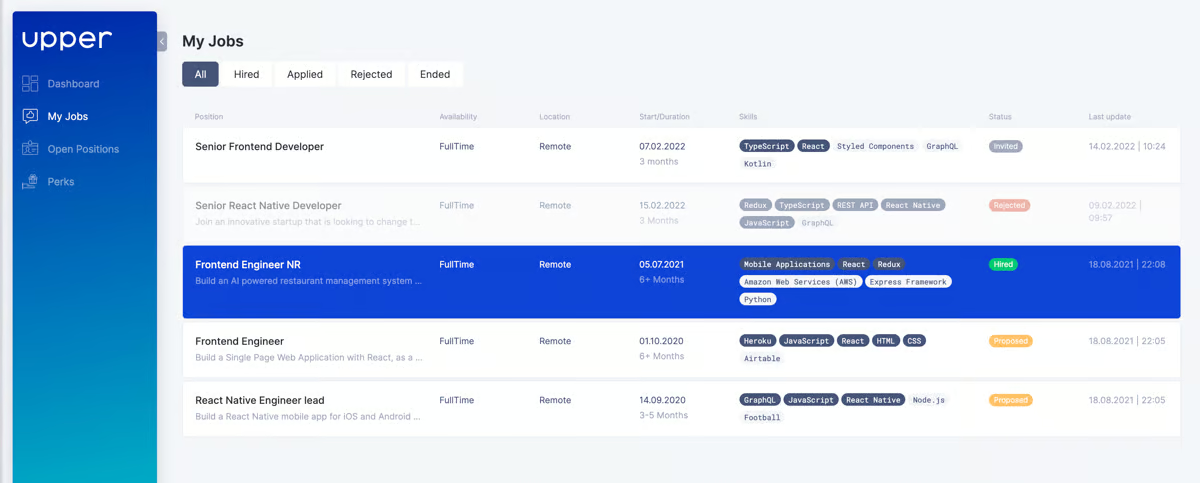
From the very first interaction, I could tell that UPPER was committed to providing a positive experience. Their team has been incredibly responsive and attentive, always willing to go the extra mile to help. According to G2 data, UPPER holds a 96% satisfaction rating for messaging. It’s clear to me that they deeply understand the needs of both freelancers and that they consistently deliver on those.
I really love UPPER’s freelancer area and their app. These tools are invaluable for collaboration and communication, acting as a centralized hub for project management, file sharing, and messaging. It keeps everything organized and ensures that everyone involved, freelancers and clients alike, stays on the same page.
UPPER makes freelancing feel streamlined, offering an intuitive interface, dependable support, and plenty of opportunities in high-demand fields. It’s clear that the platform is built for freelancers who value simplicity and structure in managing projects.
For those looking to grow further, UPPER could expand its learning ecosystem by adding resources like tutorials, webinars, or guides, not because something’s missing, but because the platform already supports so many freelancers that these additions would help users take the next step in professional development. Similarly, the timesheet interface focuses on function and clarity, though freelancers managing multiple projects might appreciate a bit more flexibility in layout.
UPPER also emphasizes quality over quantity, which explains why niche categories like data engineering have fewer listings. This focus keeps the platform relevant to its strongest markets while still leaving room for future expansion.
Overall, UPPER continues to excel at connecting freelancers with meaningful opportunities while keeping workflows organized, a reliable choice for anyone wanting a balance of structure, quality, and independence.
"For me, the UPPER experience was my first job as a freelancer, and it had a huge impact as I was quite afraid to take this step, move from permanent employee to self-employed. I appreciated the collaboration and all the help I got in order to align with the new business requirements, invoicing, contracting, and so on.
In addition to this, I like the Upper Community and the communication, where you get constant information about open roles and opportunities. This is very important when working as a freelancer."
- UPPER Review, Cepoi Scarletia S, Senior SAP Commerce Developer.
"While UPPER has been a great asset for managing my freelance work, one area that could use improvement is the timesheet UI. Currently, it’s not very intuitive, which can make tracking time and logging hours feel a bit cumbersome. The layout could be streamlined to allow for quicker entry and better clarity around recorded hours.
Simplifying the interface and adding a few more user-friendly options would make time tracking much smoother. Improving this aspect would greatly enhance the overall experience, especially for freelancers who rely on accurate timesheets for billing."
- UPPER Review, Farhana S, Solutions Architect.
Want to boost your income freelancing? Read tips from a freelancer on how to make more money from freelance gigs.
If you’re still exploring your options, I have a few more honorable mentions based on popular choice and G2 grid reports that are worth checking out. W
While they didn’t make it to my main list, they’re fantastic in their own right, especially for side hustles and part-time gigs. Each of these platforms offers something unique, whether it’s tailored to a particular industry, a specialized skill set, or a certain type of project.
The best freelancing sites depend on your skill set and needs. Platforms like Fiverr, Upwork, Toptal, and Freelancer.com are popular for a wide range of industries, while niche platforms like Dribbble and Behance are ideal for creative professionals.
Freelance work websites typically allow freelancers to create profiles, list their skills, and apply for projects. Clients can post jobs or directly hire freelancers based on their portfolios and expertise. Many platforms also handle payments and contracts to simplify the process.
Platforms like Fiverr, Upwork and Freelancer.com are beginner-friendly. They offer opportunities for entry-level work, helping freelancers build their portfolios.
You can find online freelance work on platforms like Upwork, Fiverr, and Freelancer.com. These websites offer a variety of jobs across industries, from small gigs to long-term projects.
For developers, platforms like Toptal, Andela, and Revelo stand out. They cater specifically to tech professionals, offering remote opportunities with reputable companies and competitive pay.
Absolutely! Many freelance websites, like Fiverr, FlexJobs, and Freelancer.com, offer flexible opportunities, allowing you to take on part-time and remote projects that fit your schedule.
To find the right platform, consider your skills, industry, and goals. For example, creatives may prefer Behance or Dribbble, while developers might find better matches on Toptal or Revelo. Evaluate each platform’s offerings, fees, and project availability to make an informed decision.
Upwork is generally considered better for larger, more complex projects requiring long-term client-freelancer relationships, while Fiverr is more suitable for smaller, quick tasks with a focus on fixed-price gigs; Go through the detailed analysis of Fiverr vs. Upwork based on G2 review data and make an informed choice.
In my experience, freelancing isn’t just about finding work; it’s about finding freedom. I love the fact that freelancing gives me the choice to take work that's interesting and meaningful to me. It’s not always easy; there are challenges to navigate and lessons to learn, but the right platform can make the process smoother and more fulfilling.
Whether you’re looking to fully commit to freelancing, dip your toes in with a side hustle, or balance it with part-time work, finding the right platform is key. For me, it’s not just about the projects, it’s about the support, the clients, and how well the platform fits my goals. Each of these websites has its strengths, and I’ve learned that using them makes my freelancing journey much better.
So, whether you’re starting out, scaling up, or just testing the waters, take the time to explore these platforms and find the one that fits your style and ambitions. Who knows? Your next big opportunity might just be a few clicks away. Happy freelancing!
Want to make the most out of your freelance gigs? Read our guide on how to truly take advantage of benefits that freelancing offers.


Are you considering Upwork as your next gateway for work?
.png) by Shreya Mattoo
by Shreya Mattoo

Being a graphic designer – creating beautiful visuals and sending them out into the world for...
 by Preston Lee

Hiring freelancers used to feel simple: send a contract, track deliverables, issue a payment....
.png) by Tanuja Bahirat
by Tanuja Bahirat