The first sign that your barcode software is wrong for the job is usually a label your supplier rejects. It won't surface during a demo. Label format support, scanner compatibility, and WMS handoffs only show up under real conditions, which means the gap tends to appear mid-implementation, after your team has already built workflows around a tool that was never the right fit.
I went through hundreds of verified G2 reviews to find the best barcode software that actually holds up past that point. The patterns I was looking for weren't in the feature lists. They were in what operations teams describe after months of real use: where scan accuracy holds under volume, where label formats survive a compliance change, and where the platform connects cleanly to the systems your team already runs.
TL;DR: This guide covers the top ten barcode software solutions, each solving a distinct problem. Increff WMS for enterprise barcode-driven warehouse operations. EZO for barcode and QR code asset tracking across locations. Launchmetrics for sample tracking in fashion and brand environments. inFlow Inventory for scalable barcode inventory management in growing operations. BarTender for industrial label design and print automation. Loftware Cloud for enterprise label management and ERP-connected print workflows. RF-SMART WMS for scan-driven warehouse execution in NetSuite environments. Finale Inventory for barcode inventory tracking in high-volume small warehouses. Label LIVE for precise label design and print automation for small teams. Scandit Barcode Scanning for high-performance mobile scanning across retail, logistics, and field operations.
*These barcode software tools are top-rated in their category based on G2’s 2026 Winter Grid® Report.
The tools I picked here are not interchangeable. Each one made the list because it solves a specific problem well, not because it checks the most boxes on a feature grid.
What I kept coming back to across reviews is where these platforms actually earn their place in a real workflow. The ones worth your attention do not just scan and record. They keep your inventory data honest when things get messy: a mislabeled shipment, a mid-shift device switch, a spike in order volume that exposes every gap your process has been hiding. If a tool could not hold up under that kind of pressure based on what verified users reported, it did not make this list.
The range here is intentional. I built this list to reflect that spread. Whatever your constraint, whether it is ERP dependency, team size, budget, or the specific workflow you are trying to make more reliable, there is a fit here worth a serious look.
My starting point was G2's Winter 2026 Grid Reports, which I used to shortlist platforms with consistent user satisfaction and meaningful market presence across small businesses, mid-market operations, and enterprise environments.
The bulk of the evaluation came from working through hundreds of verified G2 reviews to surface what consistently comes up when barcode software is actually under pressure. Scan reliability, label printing flexibility, how cleanly a platform connects to inventory, WMS, or ERP systems, how quickly frontline staff can get up to speed, and whether reporting gives you something actionable.
I have not personally run every platform on this list through a warehouse. What I have done is cross-reference these findings against real input from operations managers, warehouse leads, inventory planners, and IT teams who use barcode systems in active environments daily. Product visuals and references are sourced from G2 vendor listings and publicly available documentation.
Not every barcode platform fails in the same place. Here is what I found separates the tools that hold up in real operations from the ones that look good until volume hits.
Based on these criteria, I narrowed the field to barcode software platforms that provide accuracy, visibility, and operational control without introducing unnecessary complexity.
Below, you’ll find authentic user reviews from the Barcode Software category. To appear in this category, a tool must:
This data was pulled from G2 in 2026. Some reviews may have been edited for clarity.
I'd point to Increff WMS as the clearest example in this category of a platform built around execution discipline. G2 reviewers consistently pick it for enterprise and mid-market operations where accuracy and throughput are non-negotiable. The review data skews toward teams running high-volume inbound and outbound workflows. If your operation needs serialization-first inventory control and real-time visibility across every movement, this is worth your attention.
Serialization is the operational anchor G2 reviewers return to most on Increff WMS. Every item gets a unique identity that follows it through inbound, storage, and outbound, making stock accuracy provable. The number that stuck with me was 95%, which is where G2 rates serialization, reflecting how dependably this holds across high-volume environments.
This is where things get interesting. Synchronized inventory and order processing keep inbound and outbound movements consistent at scale, with SOP-enforced workflows that reduce manual oversight and catch deviations before they reach customers. Integrations score 90% on G2, reflecting how cleanly barcode activity connects to surrounding systems without gaps quietly opening between them.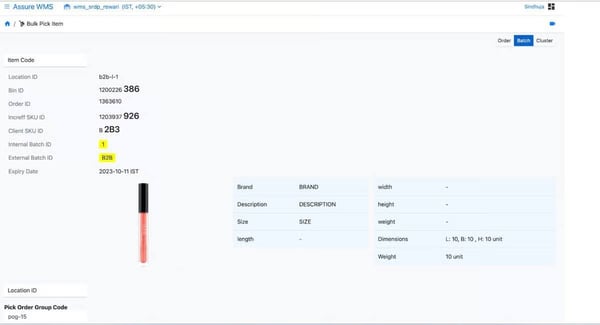
I've rarely seen peak-period reliability cited this consistently across a review base. Live inventory tracking, cycle counting, and fast report downloads hold up exactly when your operation needs them most. Manpower productivity monitoring adds a visibility layer that helps warehouse leads make real-time decisions without waiting for end-of-day reconciliation. G2 reviewers flag these as operational anchors, not occasional wins.
Barcode creation, custom label design, and UPC and ISBN format support sound like table stakes until you see how much inbound chaos they actually prevent. Teams use these to lock down item identification at the point of entry, and the difference shows up fast in outbound accuracy. Label formats score 92% on G2, which tracks with what I kept pulling from the review data: teams lean on this daily without a second thought.
Pick and pack workflows in Increff WMS are built to kill fulfillment errors at the execution level. G2 review data gets specific: faster order dispatch, sharper picking accuracy, fewer mismatches between system records and physical stock. Some reviewers cite 98% sales order fulfillment accuracy as a direct result. When your error tolerance is essentially zero and order volume is climbing, that kind of structure changes what your outbound operation looks like entirely.
Ask anyone who has white-knuckled through a warehouse software implementation, and support quality shoots straight to the top of the list. On Increff WMS, G2 reviewers describe the technical team as active, solution-oriented, and fast to respond, particularly during go-live and when things go sideways post-deployment. That combination reduces risk in ways that matter long after launch, and the sheer consistency of this feedback across the review base tells me it's not a fluke.
G2 reviewers flag that report and dashboard layouts are preset and cannot be customized, and I'll be straight: if your role demands data cuts outside the standard options, the current format won't bend to meet you. Operations managers and warehouse leads who need role-specific views will feel this gap most. Real-time inventory tracking and fast report downloads continue to serve daily operational decisions without missing a beat.
A recurring theme in reviewer accounts is that GRN and put-away workflows are locked to defined SOPs. If your inbound processes don't follow a standard sequence, that configuration overhead shows up fast. Operations teams moving from loosely structured systems feel this pressure most during setup. The SOP-driven design is precisely what makes your inbound execution consistent and error-free at scale once the platform is live.
Increff WMS is built for warehouse operations where serialization accuracy, SOP-enforced execution, and real-time inventory control are the whole game. Enterprise teams running high-volume environments will find a platform that holds its shape under pressure. I'd back this without hesitation for operations where accuracy is the mandate and a structured go-live pays dividends across every shift that follows.
“I have been using Increff WMS for the past three years and have found the experience to be very good. It is a very useful and easy-to-use software, and the tech support is incredibly active in providing solutions, which I greatly appreciate. Increff WMS has been instrumental in solving issues related to inventory, order delays, and stock visibility, which has made our operations faster, reduced errors, and improved overall efficiency in warehouse management. The real-time inventory tracking, easy order processing, and detailed reporting features are the most useful.”
- Increff WMS review, Leo S.
“Report customization not available for admin users.”
-Increff WMS review, Nithish H.
Need tighter stock control beyond warehouse execution? Read about the best inventory control software for 2026.
If you're evaluating barcode and asset tracking platforms for a mid-market operation, EZO deserves a serious look. G2 reviewers consistently pick it for teams where asset visibility and operational structure are non-negotiable. The review data is clear: this is a platform built for organizations that need multi-location control, detailed asset lifecycles, and reporting-driven accountability. I've spent enough time reviewing the data to say the satisfaction signals here are unusually consistent.
Flexible organization settings, APIs, and role-based access are the capabilities G2 reviewers lean on most for tailoring workflows across multiple locations and asset types. I'd call this the operational backbone of EZO: check-in and check-out, lifecycle tracking, location history, and maintenance scheduling, all described as reliable and well integrated into daily operations. Standard formatting scores 86% on G2, consistent with reviewer feedback describing steady asset data presentation across locations.
Here's the detail that kept jumping out at me across EZO's review base: teams are scanning assets directly from mobile phones, no dedicated scanner hardware required. That's a real equipment cost cut and a faster adoption curve across departments. The operational ripple effect shows up fast. Serialization scores 85% on G2, reflecting reliable item-level tracking across warehouses, offices, and field environments.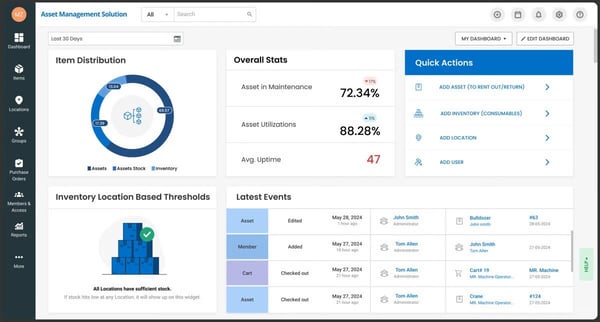
Customizable reports, automated audits, and clear dashboards sound like standard fare until you dig into what they actually replace: spreadsheets, email chains, and the kind of informal tracking that quietly falls apart at scale. EZO reviewers are specific about this shift, and the impact on accountability across teams is hard to overstate. Symbology support scores 85% on G2, and from what I pulled across the review data, that reliability shows up exactly where teams need it most.
EZO's multi-site and multi-warehouse management, combined with barcode and QR scanning and a mobile app for field updates, is consistently cited as the capability that changes that equation. Reviewers also flag that onboarding is approachable even for users without formal inventory management backgrounds, which matters more than it sounds at rollout.
If you're still running asset tracking on spreadsheets and email threads, the EZO reviews will feel uncomfortably familiar. Teams describe moving away from fragmented manual processes toward structured asset control, preventative maintenance planning, and clearer ownership across departments. The operational shift reviewers describe is a complete overhaul of how accountability gets assigned and tracked. That's a meaningful before-and-after that shows up across the review base with striking consistency.
Support quality is one of those things that looks identical on every vendor's website until you're actually stuck mid-implementation at 4 pm on a Friday. EZO reviewers are refreshingly specific: quick response times, earnest helpfulness on billing and configuration questions, and a team that guides you through rollout without vanishing afterward. The consistency of that feedback across the review base is something I don't take lightly. That kind of support changes the entire implementation equation.
Something that surfaces repeatedly in EZO feedback is that navigation gets click-heavy fast. If your team handles large asset sets or frequent location updates as part of a daily routine, that friction adds up in ways you'll notice quickly. Bulk actions, asset history views, and multi-step workflows all demand more clicks than you'd expect walking in. Core asset tracking, check-in and check-out, and reporting remain clean and straightforward for the workflows most teams run every day.
EZO reviewers in field and distributed environments are the ones who call this out most: the mobile app doesn't match the web interface for depth across location audits, bulk editing, and image uploads. Mobile-first teams feel that gap the hardest, and it's worth pressure-testing before you commit. Barcode scanning via mobile phone stays rock solid throughout, handling the core daily tasks teams depend on without missing a beat.
EZO earns its place for mid-market operations where asset visibility, multi-location control, and reporting depth all need to live in one place. I've come away from the review data with a clear conviction: teams that move here from fragmented manual processes don't look back, and the satisfaction signals back that up without ambiguity. If your operation needs structure, visibility, and scalability without sacrificing flexibility, this is where I'd land.
“I love how customizable EZO is, with the API features and the countless organization settings options; it is truly the best option for any application. The GUI is very user-friendly, and even if a user doesn't have a background in inventory management software, there are plenty of free instructional videos online readily available. Our company is using this software quite frequently at five of our locations, and it has been a rather seamless implementation so far. Customer support was very helpful and professional when we had billing questions as well.”
- EZO review, Alyssa B.
“Having to click through pages to scroll down is really annoying for me.”
- EZO review, Kim S.
Combine your inventory workflows with the best supplier relationship management software to close the gap between stock control and supplier performance.
I've seen a few platforms in this category built specifically for brand-driven industries, such as Launchmetrics. The review data pulls heavily toward fashion, luxury, and consumer brand teams managing high volumes of physical samples across showrooms, events, and logistics handoffs. G2 reviewers pick it for structured sample tracking, barcode-based identification, and coordinated distribution across internal teams and external partners. If your world runs on seasonal campaigns and high-value physical assets, this one is worth a close look.
Sample management is the capability that makes your whole operation feel like it finally has its act together, and the G2 review data is emphatic about this. Faster sample movement tracking, dramatically reduced loss, and inventory lifecycle visibility that doesn't buckle under pressure. Printing registers 94% on G2, and from where I sit in the review data, photo-based sample references, allocation tracking, and mobile app access are what separate teams running smooth operations from teams constantly firefighting.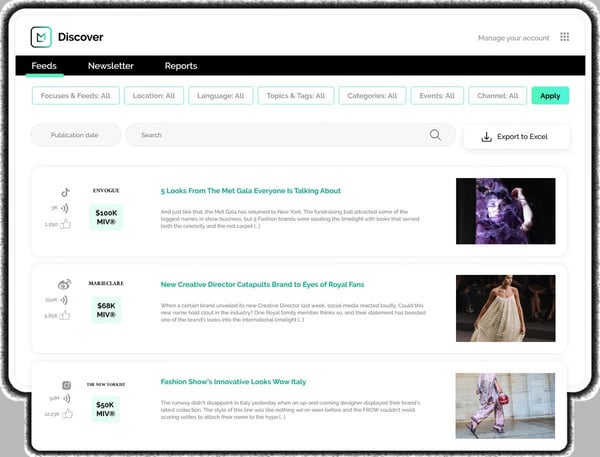
I've dug through a lot of G2 review data in this category, and the reliability signals around barcode-based sample identification in Launchmetrics are striking. Reduced sample loss, sharper visibility into where items are and when they'll return, consistent execution across showrooms, events, and logistics handoffs. Your team stops cross-referencing manually and starts actually trusting the system. Serialization scores 93% on G2, and that number earns its place.
If your team includes junior staff, interns, and seasonal employees who need to hit the ground running fast, Launchmetrics is built for exactly that reality. G2 reviewers describe the layout as something that guides users through functions without heavy training, which, in fashion and brand environments where responsibilities shift constantly, is worth its weight in gold. Symbologies land at 94% on G2, reflecting reliable barcode identification across the full range of sample types and formats teams handle daily.
Contacts, events, and samples operating as connected modules sounds like a feature checkbox. Then your seasonal campaign hits. Sample send-outs, event RSVPs, and press coverage coordination are all running simultaneously, and suddenly having everything in one place feels less like a convenience and more like a lifeline. PR and brand operations teams are vocal about this across G2 reviews. Bouncing between disconnected systems mid-campaign is exactly the kind of chaos this integration kills dead.
End-of-season reconciliation is where reporting tools either earn their keep or quietly embarrass themselves, and from everything I've pulled across Launchmetrics reviews, this one earns it. Teams export accurate sample inventory counts, track exactly which items went to which contacts, and push reports straight into finance workflows without your team doing manual cleanup afterward. For brand operations juggling high-value physical assets across seasonal cycles, that kind of clean handoff is exceptionally rare.
You'll hear specialists called out by name across Launchmetrics G2 reviews, and that detail tells me more about this support model than any satisfaction score could. Reviewers describe training as clear and structured, support as responsive when platform questions arise, and customer success involvement as central to successful onboarding. For teams navigating a platform this operationally specific, having a specialist who actually knows your setup in your corner changes everything.
G2 reviewers are upfront about this one: contact and event workflows involve more steps than the sample tracking side. If you're coming in primarily for sample management, that complexity hits differently than you'd expect. It takes time. I've seen this flagged consistently enough across the review base that it's worth planning around before go-live. Sample tracking and barcode workflows stay reliable and accessible from day one, and that's where the platform's real structural confidence lives.
Some platform configurations in Launchmetrics operate within fixed boundaries, and reviewer accounts across G2 are straightforward about where those boundaries sit. Account structures, access controls, and feature behavior don't stretch easily to niche requirements. I'll be direct: if your operation runs outside the typical setup, you'll feel that ceiling faster than you'd want to. Core sample tracking and barcode workflows hold up dependably across the vast majority of use cases without ever brushing against those limits.
Launchmetrics is the platform that fashion, beauty, and consumer brand teams reach for when sample chaos finally becomes unacceptable. Serialization, printing, and symbology management hold up at scale in ways that generic inventory tools simply can't match in brand-driven environments. I've gone through enough of the review data to say this with confidence: if your operation lives inside seasonal campaigns, high-value physical assets, and coordinated brand workflows, this is the one that was built with your world in mind.
“I like how the platform provides ease with sample management. It has helped improve sample processes within my company, and it's amazing to have a tool that helps keep track of very important sample information. Our Customer Success Specialist Federica has played a huge and supportive role in my company's onboarding process with Launchmetrics, and we are grateful to her for all the help.”
- Launchmetrics review, Michael I.
"I would like to have more control over accounts. Like changing passwords, creating accounts, or making adjustments to people's access on my time without having to send an email."
- Launchmetrics review, Verified User in Retail
Small, operations-driven businesses don't need enterprise-scale complexity. They need barcode accuracy, fast onboarding, and practical execution that holds up under daily pressure, and that's exactly where inFlow Inventory plants its flag. G2 reviewers pick it consistently for teams needing clear visibility across stock, orders, and light manufacturing workflows. I've tracked the review sentiment here closely enough to say the positioning is accurate and the satisfaction signals back it up.
I'd put barcode generation at the top of what makes inFlow worth a serious look. Generating barcodes for products is straightforward; label printing works cleanly across inventory tracking, work orders, and purchase orders without your team having to fight the system to get there. Printing comes in at 95% on G2, consistent with dependable, low-friction labeling across active warehouse and operations environments.
Warehouse rollouts with tight timelines and green staff are where most inventory platforms quietly fall apart. inFlow doesn't. G2 users describe getting teams trained fast, minimal setup effort, short ramp-up, and nobody staring blankly at a screen on day one. Standard formatting reaches 93% on G2, and that consistency across barcode-enabled tasks from the very first shift is exactly what your operation needs when there's no time to hand-hold.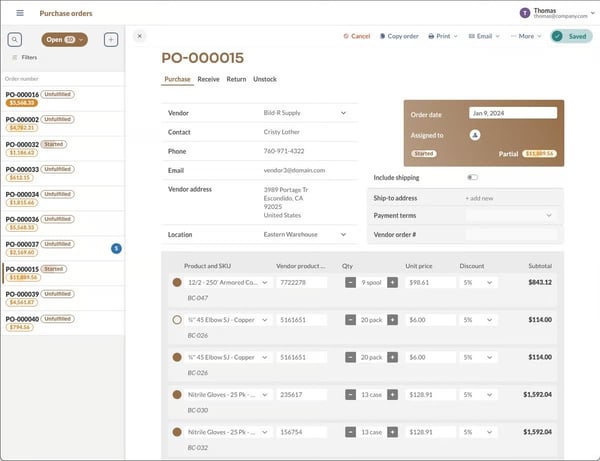
Work orders, reorder points, and cycle count sheets are the unglamorous operational features that quietly keep your daily workflows from unraveling. Setting reorder triggers, tracking burn rates, printing cycle count sheets directly from the platform: inFlow handles all of it without making it feel like a chore. Symbologies hit 88% on G2, in line with reviewer feedback describing consistent barcode output across work orders and inventory tasks that repeat day in and day out.
I've seen customer support described generically across hundreds of G2 reviews, but inFlow's stands out for a specific reason: named staff, fast answers, and detailed help documentation from people who stayed involved through onboarding without disappearing the moment the contract was signed. Teams describe resolving issues without prolonged back-and-forth, which in an active warehouse environment is worth more than any feature on a spec sheet. That track record means something across a review base this consistent.
Connecting inFlow to tools your team already uses is described across G2 reviews as refreshingly straightforward. Accurate inventory syncing with WooCommerce, clean connections to external apps without heavy technical setup, and regular platform updates that add new capabilities without disrupting existing workflows. The kind of integration experience that doesn't require a dedicated IT resource to untangle. For operations teams who need their stack to play nicely together from day one, this one delivers without drama.
Reporting in inFlow doesn't make your team work for answers that should already be obvious. On-hand stock levels, purchase order status, and inventory movements surfacing cleanly for immediate operational use, and reviewers are specific about how much that matters during high-pressure operational moments. The consistency of that feedback across the review base tells me this isn't a capability that overpromises: for operations teams that need a reliable daily snapshot to make faster decisions, this structure delivers.
G2 reviewers are candid about where inFlow's reporting hits its ceiling, and if your operation tracks something granular like chemical usage trends by location or category-level burn rates, you'll hit that ceiling faster than you'd want to. Exporting data to get there adds steps your team didn't budget for. What never wavers throughout are on-hand levels, purchase order status, and stock movement, all surfacing cleanly without your team having to chase the numbers down.
This one catches teams off guard more than almost anything else in inFlow's feedback: item configurations lock at the point of creation, and reclassifying a stocked part or correcting an item type entered incorrectly means rebuilding the entire item from scratch. I'd want your team to map out your product catalog thoroughly before go-live, because discovering this mid-operation is the kind of thing that throws a wrench into an otherwise smooth workflow. Core barcode scanning and order management run without friction once that catalog is solid.
inFlow Inventory is the platform I'd put at the top of the list for small and growing operations where fast adoption, barcode accuracy, and dependable inventory control are the whole brief. The review base is unusually clear on this: teams that fit the profile don't find themselves outgrowing the core capabilities anytime soon. If your priority is a practical operational backbone that your team can actually run without a manual, this one was built for exactly that.
“InFlow helps us keep track of our inventory and even allows us to create work orders and tasks to keep track of all the operations at our facility. It's also very easy to train a coworker on. We use it as the main software in our facility. It's very easy to integrate with other apps. And Katia, with customer support, has been so helpful.”
- inFlow Inventory review, Jeff B.
“One of the only things that I don't like about inFlow is that when the quantity of a part goes to zero, it deletes its sublocation. Then, when more parts come back in, you have to manually put the sublocation back in.”
-inFlow Inventory review, Sara G.
Label accuracy at scale is a deceptively hard problem, and BarTender is one of the few platforms in this category built to solve it without compromise. G2 reviewers position it firmly in manufacturing, logistics, retail, and regulated industries where barcode and label creation needs to be accurate, automated, and centrally controlled. If labeling is a credible operational priority for your organization, the satisfaction signals from this review base are worth paying attention to.
I'll be real: the range of what BarTender handles in label design is startling for operations teams with complex demands. Barcode symbologies, label formats, and personalization options cover everything from basic product labels to GS1-compliant and regulatory formats without breaking a sweat. G2’s "meets requirements" score reaches 96%, reflecting how consistently the platform delivers across the full spectrum of labeling complexity your team can throw at it.
Printing labels directly from spreadsheets and structured data sources sounds like a small efficiency gain. Then your team hits hundreds of label variations across a production line. Manual entry errors start costing real money fast. What caught my attention across BarTender reviews is how specifically reviewers describe this eliminating numeric and transcription errors that previously slipped through undetected. Your label data stays aligned with operational systems automatically, and the difference in volume is dramatic.
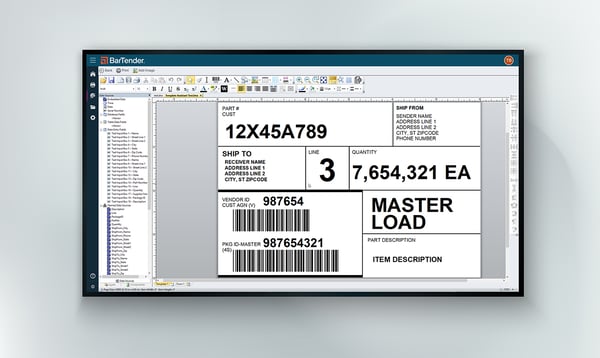
Here's my favorite part of the BarTender story: automation turns labeling from a manual task into a fully embedded production workflow. Trigger label printing programmatically by passing templates, printers, copy counts, and variable data, and your labeling function runs as part of warehouse or fulfillment operations without anyone manually initiating it. Ease of setup stands at 86% on G2, consistent with reviewer feedback describing automation workflows that teams get running without prolonged technical overhead.
I've read enough ERP and WMS integration claims to know when review data is telling a different story from the marketing, and BarTender's integration generator keeps coming up across G2 reviews as the real deal. Your labeling operations embed directly into the systems your business already runs on. For high-volume environments scaling fast, that kind of deep connectivity changes what your production floor actually looks like day to day.
Set up and day-to-day use in BarTender are described across G2 reviews as accessible for floor and operations staff, and that surprised me, given how much technical depth sits underneath the surface. Floor and operations staff navigate it confidently from early in deployment without specialist configuration holding things up. Ease of use stands at 88% on G2, and your team gets to that confidence faster than you'd expect from a platform operating at this level of labeling complexity
You'll find the support team called out as a standout across BarTender's G2 review base. The detail reviewers reach for is telling: responsive, patient, and thorough when resolving issues. The platform keeps improving, too, with reviewers describing the ability to upgrade from older versions without losing existing configurations. For organizations running BarTender in regulated or production environments, that combination of reliable support and ongoing development is what keeps operational risk from quietly compounding over time.
Legacy database versions and tightly controlled change environments turn BarTender's installation and update processes into a longer runway than most teams budget for. G2 reviewers are upfront about where that friction concentrates. Extra time, extra IT involvement, more moving parts than you'd want when a deadline is already breathing down your neck. I'd want your team to pencil in that overhead early rather than discovering it mid-implementation. Once deployed, the platform runs solidly and consistently across labeling workflows without disruption.
Pricing structured for organizational deployment is the polite way of putting it. The blunt version: if your team is evaluating BarTender for personal projects or small-scale setups, the cost model will feel heavy before you even get to the demo. Feedback across the review base is candid about this gap, and I'd be doing you a disservice not to flag it clearly upfront. The SDK depth, support infrastructure, and labeling accuracy that come with that investment hold up without compromise at sustained production scale.
Overall, BarTender is built for organizations where labeling accuracy, automation, and integration are operational priorities. Mid-market and enterprise teams with sustained, high-volume labeling needs will find a platform that holds up under real production pressure. From everything the review data surfaces, this is the one I'd recommend without reservation when complex barcode standards and centralized label management are non-negotiable for your operation.
“I appreciate BarTender for its wide range of encoding options, which is a real asset in various industries. The RFID coding feature is impressive, and I love the ability to print directly from spreadsheets, which minimizes numerical errors. The design tool for creating professional barcode labels is amazing, allowing me to design both simple and complex labels with ease. Printing and customizing labels is so convenient. The intuitive setup makes it easy to get started, and the integration generator is a powerful way to automate many processes.”
- BarTender review, Etigui G.
“The only thing I dislike about Bartender is the price. I use Bartender for work. If my employer didn't purchase it, I couldn't afford to purchase it. If there were a more affordable personal version of the software, I would also use it for my home art business.
- BarTender review, Lisa S.
Enterprise label management sounds like a solved problem until you're running six facilities, three ERP systems, and a compliance audit that won't wait. Loftware Cloud lands squarely in that gap, and the G2 review data makes that positioning hard to dispute. Regulated, multi-site environments where consistent labeling across production, logistics, and compliance functions is non-negotiable: that's where this platform keeps showing up, and that pattern doesn't escape me.
Drag-and-drop label creation that handles GHS symbols, QR codes, data matrix, and a full range of 2D formats without requiring barcode expertise. What the review data keeps confirming is that accessibility and capability rarely sit this comfortably together in one design environment. Label formats hit 92% on G2, reflecting precise, consistent output across the full range of product types and compliance requirements your team will realistically throw at it.
I've sat with a lot of label management review data, and version control this clean is rare. Teams maintain, activate, and roll back label versions without disrupting live production, which means your labels don't ship incorrectly during regulatory or customer-specific change cycles. For operations where a single wrong label version triggers a compliance investigation, that kind of rollback reliability isn't a nice-to-have. It's the whole point.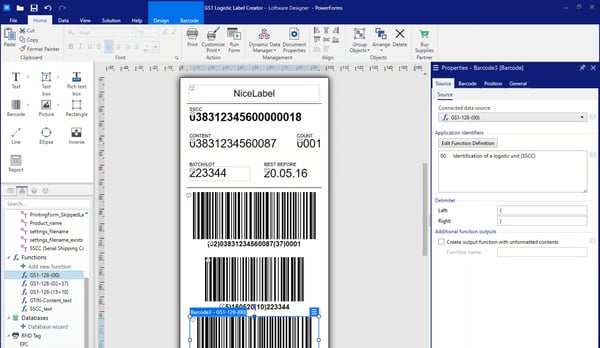
Moving label data from the system to the printer used to mean manual steps, version mismatches, and someone on your team playing traffic cop between platforms. Loftware Cloud cuts all of that out, and SAP reviewers on G2 are specific about how dramatically that changes daily operations. 1D and 2D barcodes score 96% on G2, and that number reflects the format reliability that makes these connected label flows actually trustworthy at enterprise scale.
I'll be upfront: a platform this deep in enterprise capability has no business being this straightforward to set up, yet here we are. Connecting Loftware Cloud to existing environments, including Zebra printers, runs without major disruption. Ease of setup hits 92% on G2, and analytics and print activity data surface alongside label management, giving your team a combined view of label activity and printer performance that makes diagnosing issues feel less like detective work and more like a dashboard check.
GS1-compliant Digital Link QR codes, UDI requirements for medical devices, GHS symbols: all of it sits inside the standard label design environment without your team needing separate compliance tools running alongside production. Reviewer accounts across G2 are consistent on this. For your healthcare, pharmaceutical, or manufacturing operation where a labeling gap becomes a regulatory problem fast, that consolidated coverage changes the risk equation entirely.
The automation section in Loftware Cloud stopped me mid-review, and the reason is simple: reviewers describe it as the most capable they've encountered across any label management platform. APIs and data integrations handle label deployment across your facilities without manual intervention, cutting per-label effort across multi-site print operations.
Seat licenses that don't flex and per-printer costs that stack up fast: that's the reality your finance team will land on as Loftware Cloud deployments scale. Smaller regional teams sitting inside a larger enterprise rollout feel the cost pressure hardest, and reviewer feedback across G2 makes no attempt to soften that. What stays rock solid regardless of where the licensing math lands is the governance depth, ERP connectivity, and centralized label management, which continue to deliver at full strength
Complex QR code manipulation or conditional logic in Loftware Cloud's scripting environment hits a ceiling that users building advanced label solutions will run into faster than they'd like. The platform's review base flags this with notable consistency. Stress-testing the scripting layer during your evaluation is worth the time if advanced customization sits at the center of what your operation needs. Standard GS1, shipping, and compliance labels run cleanly without touching the scripting layer at all.
Loftware Cloud is what regulated industries and multi-facility organizations reach for when label management outgrows. Spreadsheets, siloed tools, and manual version tracking that nobody has time to babysit anymore. Version control, ERP connectivity, and centralized print governance combine into something that holds up under real enterprise pressure without flinching. The review data made this clear to me early, and I'd stake my read of this category on it.
"The user interface is really clean and intuitive. I didn't need much training to get started, which saved our team a lot of time. The system handles label creation smoothly, and the templates are flexible enough to adapt to our specific requirements. Integration with SAP works seamlessly without constant glitches."
- Loftware Cloud review, Jyoti K.
"The initial configuration and migration from our legacy on-premise drivers were more time-consuming than anticipated. Additionally, the pricing structure for seat licenses can be a bit rigid for our smaller regional teams, though the enterprise support is excellent."
- Loftware Cloud review, S. Daud S.
RF-SMART WMS closes the gap NetSuite leaves on the warehouse floor. If you've watched keyboard-and-paper processes quietly destroy accuracy and throughput in an otherwise solid operation, the review data here will feel uncomfortably familiar. It turns ERP transactions into guided mobile barcode workflows across receiving, picking, shipping, and cycle counting. The G2 review patterns pulled me toward one clear conclusion: this is where NetSuite operations come when manual processes stop being acceptable.
Making NetSuite scanner-friendly sounds simple. Executing it without friction across receiving, bin transfers, work orders, and shipping is anything but. RF-SMART pulls it off, and your manual entry points where errors quietly accumulate disappear in the process. “Meets requirements” reaches 91% on G2. Reviewers who previously relied on NetSuite's native mobile support describe the difference as night and day, and that framing kept coming back to me across the review base with striking consistency.
The stat that stopped me cold: 99.99% inventory accuracy each quarter, cited directly in RF-SMART's review data. Automated cycle counts reduce setup time significantly, and your warehouse stops bleeding hours on intensive manual reconciliation just to stay accurate. G2 reviewers describe cycle counting as a day-to-day operational anchor, and that accuracy figure doesn't land in a review base without something exceptional driving it.
Automated cycle counts reduce setup time significantly, and your warehouse stops bleeding hours on intensive manual reconciliation just to stay accurate. G2 reviewers describe cycle counting as a day-to-day operational anchor, and the accuracy figures that show up in the review data don't land without something exceptional driving them. For operations where inventory discrepancies have a habit of compounding quietly into bigger problems, this is the capability that breaks that pattern.
I've processed a lot of implementation feedback across G2 review bases in this category, and RF-SMART stands out for one specific reason: the team stays actively involved throughout setup. Pre-go-live training is structured and thorough. Ease of doing business with stands at 95% on G2, consistent with reviewer descriptions of smooth, well-managed go-lives. That support-led model comes up across both recent and older reviews, which tells you everything about how this team operates.
Label integration and print management in RF-SMART don't just work; they work without your team having to manually coordinate between scanning and printing steps every time a new requirement surfaces. Reviewers in regulated environments, including biotech, are emphatic about this. Multiple distinct labeling requirements are automated cleanly. Bin-to-bin transfers, material reporting, and work order picking all run inside a unified barcode environment that keeps your operation moving without the usual inter-system chaos slowing everything down.
I'd never underestimate how much a single design decision can change the feel of an entire platform. RF-SMART's scan-first approach does exactly that: warehouse staff log in and start scanning immediately through one unified interface. Receiving, picking, and shipping run through one unified interface, and for your team, that simplicity compounds into meaningful throughput gains across an entire shift.
Custom workflows built outside RF-SMART's base configuration sit outside the automatic update cycle, and if your operation runs niche requirements that push beyond the standard module, that's a gap you'll feel accumulate over time. Users across the review base flag this consistently, and I'd want you to go in with eyes open on that tradeoff. The base platform stays current, stable, and well-maintained without any developer intervention needed to keep it running at full strength.
Printer reconnection steps following bundle updates are repetitive, easy to miss, and the friction point your IT-light warehouse will feel most acutely. The RF-SMART review base is consistent on this: if your operation runs lean on technical resources, this is the one area that will eat into your team's time in ways that don't show up on any implementation timeline. Scan-based workflows across receiving, picking, counting, and shipping continue to run at full depth regardless of where the printer configuration sits.
RF-SMART WMS is the platform that makes NetSuite work the way your warehouse actually operates, and the review data builds a case that's hard to walk away from. Scan-driven barcode execution across the full workflow, implementation support that doesn't vanish at go-live, and inventory accuracy numbers that show up in the review base with striking specificity. For NetSuite-connected operations where manual processes are the last thing standing between you and real operational control, this is the one I'd land on.
"RF Smart WMS has given our company a solution that we can customize to fit our specific needs. We are able to use the features that are most relevant to us and continue to expand as we develop our operational processes and improve efficiency. The system’s functions are intuitive, and the workflows provide detailed information and data that would be difficult to achieve with a manual approach. Implementing RF Smart WMS was straightforward, and RF Smart ensured we had ample time to set up and receive proper training on the system."
- RF-SMART WMS review, Lauren S.
"The system allows for extensive customizations, but I find that RFS could benefit from deeper financial integration with NetSuite. Additionally, whenever there are bundle updates, the process often demands multiple reconnections, making it easy to overlook a necessary form."
- RF-SMART WMS review, Shana S.
Descartes Finale Inventory earns its place for small and growing businesses where stock accuracy, barcoding, and purchase order management need to work together without enterprise-level overhead getting in the way. The review data pulls consistently toward operations teams that need practical execution across purchasing, warehousing, and fulfillment without the complexity that comes with bigger platforms. The satisfaction signals here are unusually strong for a platform in this segment, and that pattern made a believer out of me
Stock visibility and purchase order creation sitting this tightly together is rarer than it sounds, and your replenishment decisions feel the difference immediately. Teams monitor inventory daily, catch restocking needs before shortages hit the floor, and move fast without chasing data across disconnected systems. Standard formatting reaches 89% on G2, and that consistency across routine warehouse operations is exactly what keeps daily execution from quietly unraveling.
I notice something specific in how G2 users talk about serialization in Finale: they connect it directly to audit readiness. Batch-controlled and serialized inventory is tracked reliably, discrepancies are reduced, and the movement history is clear across locations. Serialization lands at 89% on G2, and that reliability consistently translates into cleaner reconciliation cycles and fewer of those mid-audit moments that make warehouse managers sweat.
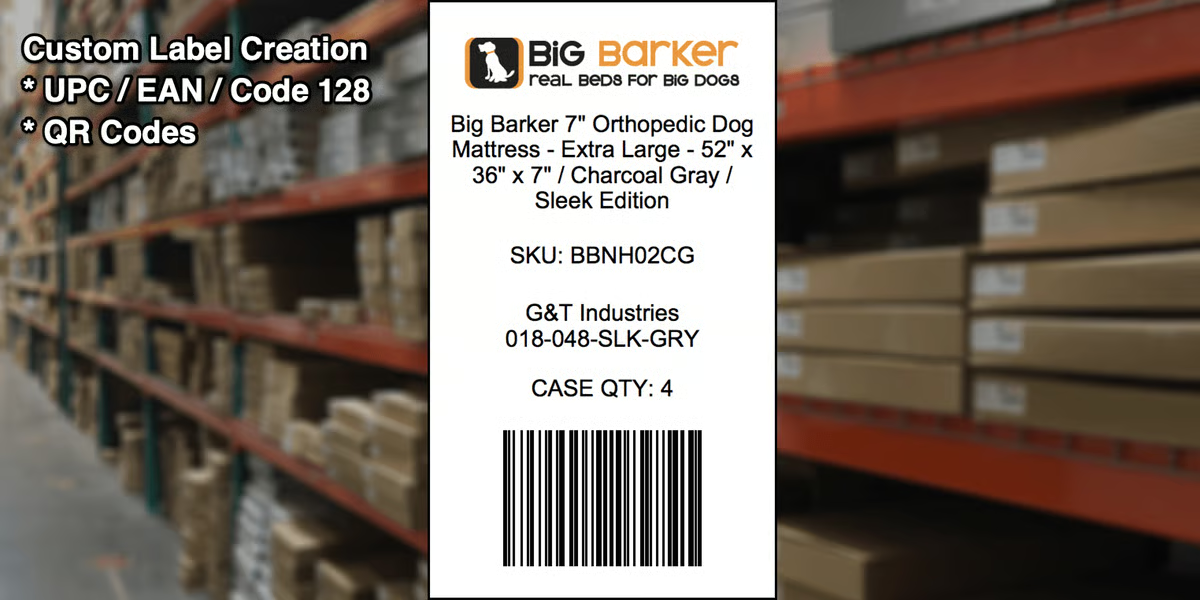
Clearly organized menus and intuitive navigation don't generate excitement until your team is three days into a rollout and nobody has submitted a single support ticket. That's the Finale onboarding experience in a nutshell. Excel imports, bin management, walk paths, batch labeling, and barcode scanning all land with low configuration overhead, and your warehouse staff is executing confidently before the week is out.
Customer support in Finale is the kind that makes your team feel less alone during implementation, and the numbers back that up in a way that's hard to ignore. Fast, knowledgeable assistance, hands-on guidance during onboarding and trials, and a support team that stays involved well beyond go-live. Ease of doing business with reaches 98% on G2, the highest satisfaction metric on the platform, and that 98% tells me everything about what smaller teams actually experience when things get complicated.
I'll level with you: barcode scanning in Descartes Finale doesn't just cover part of your inventory workflow, it covers all of it. Inbound ordering, stocking, picking, packing, shipping: your facility runs on a single system from first scan to final dispatch. The integration range compounds that further, giving your operation room to connect additional tools as you grow, without anyone having to rebuild established scanning and fulfillment workflows from scratch.
Reporting depth is the capability Descartes Finale reviewers get most animated about, and the enthusiasm is specific enough to carry real weight. Clearly organized outputs, robust customization options, reports that map directly to operational needs, and are immediately actionable. Stock movement, purchase order status, and inventory history all surface in formats that are tangibly easy to act on. That combination of depth and accessibility is something the review base returns to with striking consistency.
Stock take workflows involve multiple steps that G2 reviewers describe as slower to work through compared to other daily operations. Teams running frequent or high-volume stock counts are most likely to feel this during active counting periods. The platform's core inventory tracking, barcode scanning, and purchase order workflows remain stable and consistently reliable for operations outside stock take cycles.
Newer features in Descartes Finale sometimes need extra testing time before they settle into active workflows reliably. G2 users flag this most during rollout windows, particularly for operations running on tight timelines where stability is non-negotiable. Personally, this is the one thing I would keep an eye on if speed to adoption matters in your operation. The established core, barcoding, reporting, and inventory management, hold up dependably day in and day out, regardless of where newer additions land.
Finale Inventory hits differently for small and growing operations tired of wrestling with platforms built for someone else's problems. Stock accuracy, barcoding, reporting depth, and support that actually shows up: the whole package lands without your team having to fight for it. The review base made that picture crystal clear to me, and nothing in the feedback contradicts it. This is the one that earns its keep quietly, shift after shift, without making a fuss about it.
"Reporting is where Finale Inventory shines. More integrations than I would ever need, with the ability to add a new one. Very easy to use, with clearly labeled & well-organized menu items. Getting started, I had questions. My questions were answered really quickly by the founder of the company. My phone calls are answered. Easy to implement, with guidance apparently for as long as needed.”
-Finale Inventory review, Michael W.
"I think that it could be slightly lower priced if you have been using it for long periods of time."
-Finale Inventory review, Rino S.
Tracking assets across locations, but need more than barcodes? The best asset tracking software covers platforms built for full lifecycle visibility and maintenance workflows.
When your labeling operation needs precision, repeatability, and automation without the overhead of a full inventory or warehouse system, Label LIVE carves out a niche that larger platforms don't bother with. G2 reviewers position it as a specialist tool: barcode design, data mapping, and print automation built for small and specialized teams where label accuracy is the whole game. The review data here is focused enough that it drew me in immediately.
Label and barcode design in Label LIVE gives your team control over layout structure, spacing, and visual consistency in ways that rigid template-based tools simply can't match. What struck me across the review data was how specifically reviewers describe creating and adjusting complex label layouts without fighting the software to get there. Label formats reach 98% on G2, and that number reflects real control over detail-heavy labeling workflows that demand precision at every print run.
Your compliance requirements don't get to negotiate with label accuracy, and Label LIVE reviewers are specific about how consistently the platform holds up under that pressure. GS1-compliant label creation, FDA medical device UDI requirements, and automated order processing workflows are all cited as real-world applications where barcode accuracy is delivered without workarounds. Serialization sits at 95% on G2, consistent with reviewer feedback describing dependable item-level identification across diverse label environments.
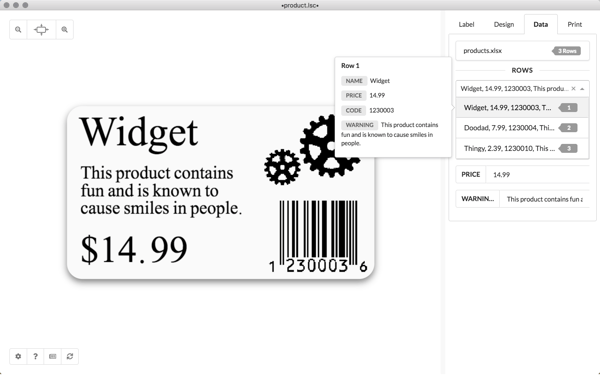 I'll stop dancing around it: batch printing workflows driven by CSV or XML folder monitoring are where Label LIVE's automation story gets truly compelling. Labels generate automatically as new files appear, removing the manual trigger from a process that used to eat up time nobody had to spare. 1D and 2D barcodes reach 96% on G2, reflecting the format reliability that keeps these automated workflows accurate across order processing, production labeling, and asset tagging scenarios.
Integration with spreadsheets, command-line execution, and HTTP-based calls sounds technical until you realize what it actually means for your day-to-day: barcode printing that runs as part of how your operation already works. That adaptability across different team setups caught my attention more than almost any other capability in the review data. It compounds in value as fast as your operation scales
Customer support in Label LIVE operates at a level that makes your team's gaps in label printing expertise feel entirely manageable. Named support staff working overnight to add requested features, same-day issue resolution, and exact code solutions for label-specific requirements: the review base describes a team that treats your problem as their problem. That level of direct involvement means something significant for small teams without in-house label printing expertise who need answers fast.
I want to highlight something the review data makes hard to overlook: native macOS support and standalone operation are differentiators your Mac-first environment will feel from day one. Printing directly from Mac without third-party drivers, saving templates to network drives, operating fully standalone: all of it removes the compatibility friction other label tools quietly introduce. For small teams on mixed or Mac-first setups, that barrier simply doesn't exist here.
Variable-driven designs and conditional logic in Label LIVE take time to configure fully. G2 reviewers are clear that this is where the initial setup effort concentrates, particularly for users coming to data-mapped label workflows for the first time. If you are setting up automated printing for the first time, budget more time for the initial build phase than you think you will need. What does not waver throughout that process is the label design and barcode output quality, which stays precise and consistent from first print to thousandth.
It does not natively support live data pulls from cloud-based sources like Google Sheets. If your label data lives in a live cloud document and you want real-time generation from it, that connection is not there out of the box. G2 reviewers who manage dynamic, constantly updated label data across cloud tools flag this as the one gap in an otherwise capable workflow. That said, CSV and spreadsheet-based imports run reliably and consistently, delivering accurate label output across the full range of daily printing scenarios without a hitch.
Label LIVE is what precision-focused labeling operations look like when the platform actually matches the brief. Small and specialized teams that need production-ready labels with exact control over data, layout, and print execution will find the review data here unusually consistent in its enthusiasm. The focus is deliberate, the capability is deep, and the support model backs your team up in ways that make the specialist positioning feel less like a limitation and more like a serious advantage.
"I particularly like the fact that it is very simple and user-friendly to use, the user interface is a super easy form factor, the features and integrations that the items provide offer a plethora of badge printing solutions. We use it in our business case for conference badge printing, and we have a general template format, set up with our business information, which allows us to easily implement the attendees' information into the software. While we do use this software primarily only twice a year for conferences, we do use it for general item labels as well to which provide a very quick and easy support."
- Label LIVE review, Adam M.
“I have a niche case where I want to add data from sequential rows on a single (split) label. It doesn't seem to support this yet.”
- Label LIVE review, Chris G.
Development teams integrating scanning into existing applications across retail, logistics, healthcare, and manufacturing: that's the operational reality Scandit Barcode Scanning was designed for, and the G2 review data reflects that specificity without ambiguity. An AI-powered SDK that turns any smart device into a high-performance barcode scanner, built for environments where accuracy and difficult-condition performance are non-negotiable.
Scanning speed and reliability under difficult conditions are where your scanning environment either holds up or quietly costs you throughput, and Scandit's review base makes the answer crystal clear. Low light, reflective surfaces, partially damaged barcodes: the engine holds up across all of it. “Meets requirements” reaches 94% on G2, reflecting how consistently the platform delivers across demanding scanning environments where failure isn't an option.
The detail that resonates with me most across Scandit's SDK integration feedback is how specifically reviewers describe the fit into existing application architectures. Fast implementation, clean integration, no stack restructuring required. Ease of use sits at 91% on G2, and the platform covers every major operating system and framework your development team is likely working across: iOS, Android, React Native, Flutter, and JavaScript. The Scandit Solutions Engineering team stays actively available throughout setup, which changes the go-live equation considerably.
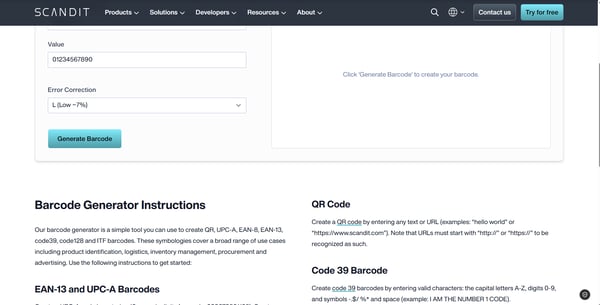
I'll put a number on what hardware-agnostic coverage actually means for your operation: 20,000+ supported device models, including low-end phones without autofocus, all delivering consistent scanning performance. Equipment spend drops, device management complexity drops, and the operational headache of managing a mixed hardware environment largely disappears. Regular software updates maintain compatibility when device manufacturers make changes, without your team having to scramble every time a new handset hits the market.
MatrixScan flips high-volume receiving, stock counts, and order picking from a grind into something your team can actually move through at pace. Multiple barcodes captured simultaneously. MatrixScan Count for batch inventory. MatrixScan Find for locating specific items among dozens in view. MatrixScan AR overlays actionable information directly onto the camera at the point of scan. That three-mode combination impressed me more than almost anything else in this review base.
The capability that made me stop and reread was Smart Scan Intention. AI-powered intent anticipation identifies the correct barcode when multiple codes appear simultaneously in the field of view, analyzing device movement and aiming behavior in real time to filter out background codes without requiring precise camera alignment. Scandit reports that this doubles order picking speed in grocery fulfillment environments.
I'll say this and mean it: every barcode gets processed on the device itself, with all processing handled on-device for consistent performance across low-connectivity environments. Your low-connectivity environments will feel that design decision every single shift in ways that cloud-dependent tools simply can't replicate. Quality of support sits at 90% on G2, reflecting engineering team availability that reviewers in healthcare, finance, and regulated logistics describe as central to navigating strict compliance requirements.
Scandit's scanning speed is genuinely impressive, but it demands that you think carefully about UX integration from the start. Without an explicit scan trigger, the engine captures the first available code before you finish aiming. G2 users are upfront that this is where integration planning matters most. The scanning accuracy and on-device processing at the core of the platform continue to deliver without compromise throughout.
The licensing is built for enterprise and mid-market scale, and if you are a smaller organization evaluating it for lower-volume use, the price will feel steep compared to lighter alternatives. G2 reviewers are candid about this, though they are equally clear that the cost reflects something real: SDK depth, coverage across 20,000 device models, and engineering support that actually shows up. The scanning accuracy and difficult-condition performance that come with that investment reflect what it actually costs to build a scanning engine that holds up under conditions most alternatives can't handle.
Scandit Barcode Scanning is where development teams land when scanning performance under real-world conditions stops being something they're willing to compromise on. AI-powered accuracy, multi-barcode capture, on-device processing, and device coverage that makes hardware conversations largely irrelevant: the review data builds a picture that's difficult to walk away from. For retail, logistics, healthcare, and manufacturing operations where every failed scan has a cost your operation feels, this is the platform the evidence points to.
"Scandit’s barcode scanning technology impresses with its accuracy and speed, even under challenging conditions such as low light, damaged barcodes, or reflective surfaces. The seamless integration into the e-commerce platform SHOPcloud360 highlights its flexibility and ease of use."
- Scandit Barcode Scanning review, Maik G.
“It is not a real disadvantage, but you really have to think carefully about how to integrate the engine from a UX/UI perspective. The capturing is so fast that sometimes you can't "aim," and the engine scans the first available code. However, this can be easily solved by, for example, a "Scan" button in the camera view. The technology comes at a price. You get a really good solution and great support, but the licensing costs should not be underestimated for small and medium-sized enterprises.”
- Scandit Barcode Scanning review, Verified User in Wholesale.
|
Software |
G2 rating |
Free plan |
Ideal for |
|
Increff WMS |
4.7/5 |
No |
Enterprise barcode-driven inventory and fulfillment operations |
|
EZO |
4.4/5 |
No |
Barcode and QR code asset and inventory tracking |
|
Launchmetrics |
4.6/5 |
No |
Barcode-enabled sample tracking for fashion and brand teams |
|
inFlow Inventory |
4.4/5 |
No |
Scalable barcode inventory and order management |
|
BarTender |
4.5/5 |
No |
Industrial barcode label design and printing |
|
Loftware Cloud |
4.4/5 |
No |
Enterprise label management and ERP-connected print automation |
|
RF-SMART WMS |
4.3/5 |
No |
NetSuite-connected scan-driven warehouse execution |
|
Descartes Finale Inventory |
4.8/5 |
No |
High-volume barcode inventory for small and growing operations |
|
Label LIVE |
4.9/5 |
No |
Small-business barcode label design and printing |
|
Scandit Barcode Scanning |
4.3/5 |
No |
High-performance mobile scanning for retail and logistics |
*These barcode software platforms are top-rated in their category based on aggregated user feedback reflected in G2’s 2026 Winter Grid®-style evaluations.
Got more questions? G2 has the answers!
BarTender is frequently recognized for comprehensive barcode generation across multiple industries, supporting a wide range of label formats, standards, and printer types. Loftware Cloud and Scandit also receive strong feedback for flexible label creation and high-performance scanning across diverse item types and compliance needs.
When evaluating support for different barcode symbologies (QR, Code 128, UPC, Data Matrix, etc.), teams look at both breadth and ease of use. BarTender and Loftware Cloud are commonly chosen for broad industry standard support out of the box. EZO and inFlow Inventory are also evaluated for offering solid symbology coverage with straightforward configuration.
inFlow Inventory and EZO are often selected when integration with inventory management or POS systems is critical, syncing barcode activity directly into stock levels and sales records. For enterprise-grade workflows, RF-SMART WMS and Increff WMS are frequently evaluated for deeper bi-directional connections with ERP and WMS systems.
Mobile scanning and cloud sync are essential for distributed operations. Scandit is purpose-built for high-performance mobile scanning on smartphones, making it a strong fit for retail and field teams. RF-SMART WMS also receives strong feedback for mobile scanning in warehouse environments where real-time ERP sync matters.
Teams typically evaluate how easily platforms handle large label runs, template libraries, and design flexibility. BarTender and Loftware Cloud stand out for batch printing and enterprise-grade design controls, while Label LIVE is commonly chosen for straightforward label generation at a smaller scale without heavy IT involvement.
In warehouse settings, scan accuracy under real conditions, handheld scanner support, real-time location updates, and integration with picking and receiving workflows are key. Increff WMS and RF-SMART WMS are frequently referenced for warehouse-grade capabilities and robust integration with enterprise WMS and ERP systems.
Error detection and validation reduce misreads and reconciliation work. Teams look for features such as checksum verification, prompt feedback on invalid scans, and automatic correction logic. Scandit and BarTender often rank highly here, with tools that validate incoming scans and ensure data integrity before it is posted to the system.
Reporting that shows scan volume, discrepancies, throughput by location, and exception tracking is important for operational insights. inFlow Inventory, Descartes Finale Inventory, and EZO are commonly cited for reporting capabilities that help teams understand usage trends and inventory movement without manual log extraction.
When APIs and developer tools matter, teams ask about endpoints for creating and retrieving barcodes, syncing scan events, and integrating with external systems in real time. Scandit and BarTender are frequently evaluated for API maturity, documentation quality, and flexibility in supporting custom workflows or automation at scale.
Pricing transparency and scalability tend to split along team size. EZO, Finale Inventory, and Label LIVE offer predictable costs that work well for smaller operations, while Increff WMS, Loftware Cloud, and RF-SMART WMS are built for multi-site scale with pricing that requires a direct conversation. Launchmetrics sits in the middle, suited to retail and brand teams that need product tracking without full WMS overhead.
There is a deadline I would factor into your evaluation that most shortlists are not accounting for. The GS1 Sunrise 2027 initiative is pushing the industry toward 2D barcodes at the point of sale, replacing standard 1D formats with QR codes and DataMatrix that carry richer data and link physical items directly to digital records. If the platform you are considering has no clear path to 2D support, you are likely making a short-cycle purchase dressed up as a long-term decision.
Cloud architecture is the other pressure point worth checking before you commit. As your operation spreads across more locations and devices, platforms without centralized cloud-based label management become a scaling problem faster than most teams anticipate. That rebuild cost tends to surface after the contract is signed.
I am also watching how AI is starting to show up in this category, as a backend layer that flags recurring scan errors and surfaces demand signals from scan data without manual extraction. The platforms investing here now are building a gap that will be harder to close once 2027 compliance pressure lands. It is worth asking your shortlisted vendors directly where they stand on it.
If your next priority is tightening stock control across locations, check out the best inventory control software for a deeper look at what sits directly above barcode workflows in the operational stack.


When evaluating the 20+ best label printing software tools, options such as Loftware Cloud,...
.png) by Devyani Mehta
by Devyani Mehta

If you’re evaluating the best shipping software, it’s usually because your current setup isn’t...
 by Disha C

I evaluated 20+ tools to find the 9best inventory control software. These are Xero,...
.png) by Tanuja Bahirat
by Tanuja Bahirat