.png?width=400&height=150&name=Untitled%20design%20(56).png)

When evaluating the best SRM platforms, I focused on features that help teams enhance supplier performance, mitigate risk, and improve visibility across the entire supply chain.

I've noticed too many companies treat supplier interactions as tactical checkboxes rather than strategic levers. They collect contracts, run onboarding sessions, and monitor spend, yet problems still slip through the cracks. Quality inconsistencies, surprise shortages, and quiet compliance failures continue to surface, often when it’s already too late to respond.
In a world defined by global disruptions and increasingly fragile value chains, reactive supplier management isn’t only inefficient but also risky. A recent industry survey found that 73% of supply chain leaders experienced supplier disruptions in the past year, with many reporting negative impacts on revenue and operations. Additionally, it slows operations, weakens resilience, and limits a company’s ability to innovate with confidence.
That’s why I took a deeper look at today’s best supplier relationship management (SRM) software for procurement leaders, supply chain managers, and operations teams navigating increasingly complex supplier ecosystems
I analyzed industry research, compared feature sets, and studied how top organizations use these systems to transform suppliers from cost centers into competitive allies.
Whether your goal is to automate onboarding, gain real-time visibility into supplier performance, or unlock collaborative innovation across your supply base, this guide will help you choose an SRM solution that elevates your supplier network from a potential liability into a clear source of value.
*According to G2's Winter 2026 Grid Reports, these supplier relationship management software programs are top-rated in their category. Pricing information is available on request
While testing and comparing these tools, it became clear how much they streamline collaboration, transparency, and performance tracking across supplier networks.
The global supplier relationship management software market is projected to reach $35.9 billion by 2032, with a CAGR of 11.36% from 2025–2032.
The right SRM platform enables more efficient, data-driven, and strategic supplier management, whether it involves onboarding new vendors, monitoring compliance, or optimizing procurement decisions.
That’s especially valuable for manufacturing and retail companies managing global suppliers, procurement teams seeking cost efficiency, and operations leaders aiming to strengthen supplier partnerships.
These platforms stood out for their usability, scalability, and ability to drive long-term value for suppliers.
To identify the top SRM tools, I analyzed verified user reviews on G2 to understand how these platforms perform across different supplier management processes, including supplier onboarding, contract compliance, performance tracking, and risk management.
I also used AI to sift through user reviews and G2 Grid® Reports to compare ease of use, feature depth, and overall satisfaction across SRM categories. This guide includes screenshots from vendor G2 pages to give you a clear view of what these platforms look like in action.
I’ve curated this list to help procurement, supply chain, and operations teams find the right software to build stronger supplier partnerships, improve transparency, and optimize efficiency, whether you’re scaling a global supplier network or modernizing an existing one.
When evaluating the best SRM platforms, I focused on features that help teams enhance supplier performance, mitigate risk, and improve visibility across the entire supply chain.
The list below contains genuine user reviews from our best Supplier Relationship Management category page. To qualify for inclusion in the category, a product must:
This data was pulled from G2 in 2025. Some reviews have been edited for clarity.
SAP Ariba is a comprehensive, cloud-based platform that streamlines the entire procure-to-pay lifecycle.
A consistent theme I’ve noticed is how effectively the platform centralizes procurement and supplier management. Reviewers frequently mention that having sourcing, purchasing, and supplier collaboration in one place reduces the chaos of juggling spreadsheets and disconnected systems.
Something G2 reviewers seem to really appreciate is its automation across sourcing, invoicing, and approvals. Users say these automated workflows reduce repetitive tasks, minimize manual errors, and make the procurement cycle more predictable.
Across multiple reviews, I’ve seen users highlight the strength of Ariba’s extensive supplier network. Many note that having access to such a broad marketplace simplifies collaboration and expands vendor options without additional outreach.
I noticed that about 27% of all G2 reviewers highlight Ariba’s sourcing modules, including Request for Proposals (RFPs), Request for Information (RFIs), and auctions. Some users also mention that the artificial intelligence-driven supplier recommendations help them identify vendors they might not have considered, making sourcing efforts more strategic and less manual.
Another commonly appreciated element is integration with the broader SAP ecosystem. Reviewers who already use SAP note that this alignment makes implementation smoother and helps maintain data consistency across procurement, finance, and spend management.
Looking at broader review trends, I’ve noticed recurring mentions of the platform’s ability to reduce manual work and speed up procurement tasks. Many users say that workflows that once took hours became more structured and efficient, allowing teams to focus on strategic initiatives instead of repetitive operational tasks.
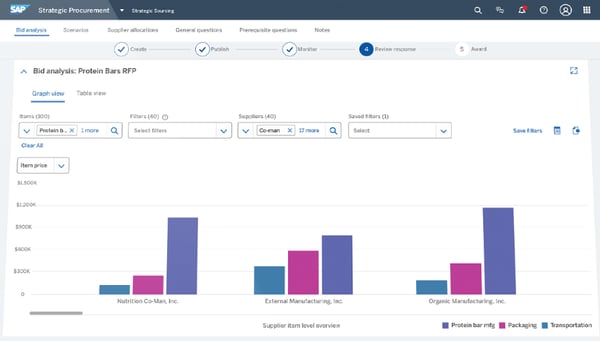
I’ve noticed that some G2 users mention that the platform can take time to get comfortable with, which may not work well for small teams or organizations looking for quick, low-effort adoption. In contrast, procurement teams managing complex buying cycles, multiple approvers, and large supplier networks often find that the structured workflows become an advantage once the system is fully adopted.
There’s also feedback around challenges integrating SAP Ariba with non-SAP systems, which can be limiting for companies with highly customized or lightweight tech stacks. However, larger enterprises with dedicated IT resources and strict compliance requirements tend to benefit from the platform’s depth, governance controls, and enterprise-grade security.
Overall, SAP Ariba earns strong praise for bringing automation, intelligence, and structure to procurement — especially for organizations that prioritize scale, control, and compliance over simplicity.
"I appreciate SAP Ariba for centralizing all procurement tasks such as purchase requests, order approvals, and supplier information, which keeps everything organized and reduces delays. I find the purchase request and approval tools, along with the supplier management features, incredibly useful, helping me work faster and maintain easy access to all the needed information."
- SAP Ariba review, Sudhanshu P.
"On occasions when the system gets stuck and the Advanced Shipping Notices (ASNs) cannot be modified after they have been created, trying to delete them can become very tedious."
- SAP Ariba review, Pedro Luis V.
SAP S/4HANA Cloud is consistently described as a powerful ERP for organizations that need real-time visibility, integrated processes, and global scalability.
I've observed that many G2 reviewers emphasize that the in-memory SAP HANA database delivers extremely fast performance, with reports refreshing instantly and complex operational data becoming accessible without delay. Many note that this level of speed makes finance, supply chain, procurement, and operations feel more connected than traditional systems allow.
A commonly appreciated element in G2 user feedback is the platform’s real-time insights and predictive analytics. I've noticed a frequent mention that the system analyzes live data continuously, allowing it to make decisions based on what’s happening now rather than relying on outdated snapshots. 23% of G2 users praise its custom reporting feature.
Across multiple G2 reviews, I’ve noticed users highlight the role-based Fiori UI. Several mention that the tile-based layout and consistent workflows reduce cognitive load, making day-to-day navigation more efficient.
Another standout capability I noticed is the tight integration with other SAP products, such as Ariba, SuccessFactors, Concur, and SAP Business Network. G2 reviewers say this native connectivity reduces manual reconciliation and minimizes data mismatches.
Examining broader review trends, there’s considerable appreciation for S/4HANA Cloud’s flexible deployment options. Some reviewers value having both pure SaaS and hybrid models, especially teams transitioning from older SAP environments.
One feature that consistently receives praise is the platform’s continuous quarterly updates. Reviewers highlight improvements, including new AI features, expanded automation, and industry best practices. Several users mention that these updates help the system stay modern and competitive without requiring manual upgrade efforts.
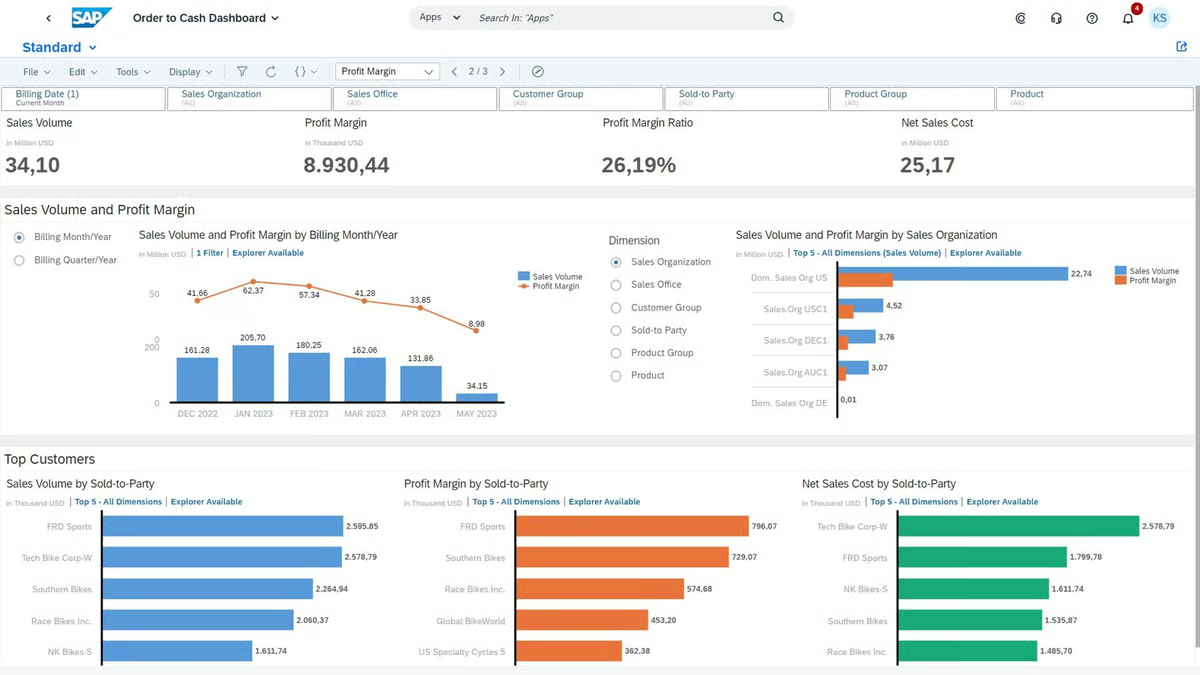
Some G2 users note that the pricing can feel on the higher end for smaller businesses that are still in the early stages of their digital maturity. For organizations with larger teams, complex environments, or long-term cloud strategies, reviewers often say the investment aligns better with the platform’s scalability, reduced maintenance, and enterprise-grade capabilities.
Finally, I’ve seen users mention challenges with integrating non-SAP or legacy systems. This tends to matter more for organizations running lightweight or highly customized tech stacks, while SAP-centric enterprises often view the tighter ecosystem alignment as a trade-off for stability, governance, and long-term reliability.
Overall, according to feedback gathered from G2 users, SAP S/4HANA Cloud is viewed as a robust, modern ERP designed for organizations seeking strong analytics, comprehensive process coverage, and alignment with the SAP ecosystem.
"I find SAP S/4HANA Cloud to be a great product. Its finance, procurement, and data integration capabilities significantly streamline our operations. I'm impressed by its SaaS model, which features efficient data center management that doesn’t require in-house engineers. The pricing, functionality, and licensing options are appealing. Its integration with BTP solutions enhances ease of use, and the simple UI aids both business understanding and collaboration. I value its regular updates, which keep us aligned with market advancements and help us effectively utilize new technologies like AI. The impactful support system and fair pricing options further ensure that I would choose this product again."
- SAP S/4HANA review, Manish K.
"I feel that SAP S/4HANA Cloud is expensive to maintain and involves costs for manual scaling, which I find burdensome. Additionally, I believe there is room for improvement in the user interface and the ease of customization, making it more user-friendly and adaptable to specific needs."
- SAP S/4HANA review, Aiswarya N.
Avetta is a helpful platform for managing supplier relationships and mitigating risk, especially in environments with complex contractor networks.
One capability that I frequently see G2 reviewers highlight is the platform’s document management. Many users say uploading and managing safety, insurance, and compliance documents feels simple.
Avetta’s compliance management and automated reminders are also a commonly praised element in G2 user feedback. 42% of users say that Avetta tracks contractor compliance levels and renewal dates. Many point to helpful alerts for expiring documents and missing requirements, which help teams stay ahead of compliance risks rather than reacting after an issue arises.
Many G2 users also speak positively about the platform’s dashboard clarity. The clean layout gives quick visibility into contractor status — who’s compliant, who’s pending, and where action is needed. I believe that this is extremely valuable for a team that manages multiple suppliers. Reviewers say this level of visibility is particularly valuable.
Something G2 reviewers seem to appreciate is Avetta’s support for Environmental, Social, and Governance (ESG) reporting and sustainability assessments. Several reviews mention that the platform helps evaluate contractors not just on safety but on broader responsible sourcing criteria, which aligns well with evolving industry priorities.
Another theme I’ve seen appear often is the value Avetta adds in multi-client coordination and onboarding. Reviewers note that because contractors frequently work with multiple companies, having one central environment cuts down duplication and keeps expectations aligned. I’ve also noticed appreciation for customer support. G2 users note that the team is responsive, helpful, and especially valuable during the onboarding process.
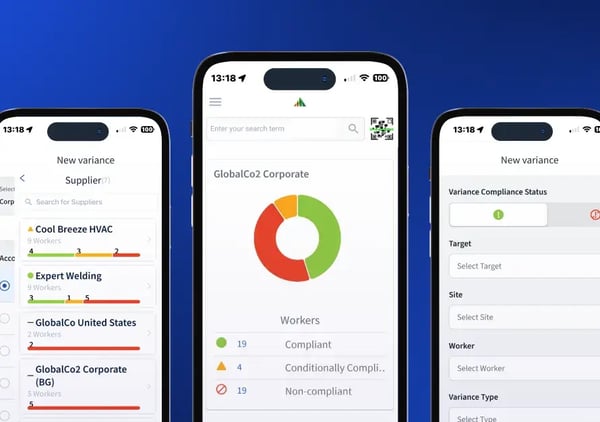
Some reviewers mention billing complexity and slow refund processes, which can be a concern for smaller organizations or teams managing only a limited number of contractors. However, companies overseeing multiple contractor sites, high-risk work environments, or geographically distributed vendors often find that Avetta’s compliance monitoring and centralized oversight justify the added cost and administrative effort.
I’ve also seen users point to time-consuming processes and delays during verification. Initial setup, document reviews, and certain navigation flows can feel rigid, particularly for teams seeking fast onboarding. That said, safety, procurement, and risk teams operating in regulated industries report that once documents are approved and workflows are fully configured, the system becomes stable, predictable, and easier to manage at scale.
Overall, based on G2 user feedback, Avetta delivers strong compliance oversight, clear visibility into contractor status, and dependable risk-management tools — especially for organizations where safety, risk, and regulatory adherence are non-negotiable.
"Avetta’s safety and compliance platform is user-friendly, convenient, and time-saving. Avetta keeps everything organized and helps us stay up-to-date with training and regulations. The automated reports save time, and the support team is always helpful. It’s a reliable tool that makes managing compliance simple and stress-free."
- Avetta review, Jorie A.
"Users are not able to remove clients without going through a hassle with Avetta. Clients can add or remove us without warning, but we do not have this option as contractors."
- Avetta review, Erick L.
Discover top contract lifecycle management platforms on G2 and bring structure to your supplier agreements.
apexanalytix is a tool that delivers control, accuracy, and consistency for large procurement teams. According to G2 Data, 84% enterprise-level businesses use it on a daily basis.
Many G2 users commend apexanalytix for its comprehensive risk management coverage. Reviewers highlight the depth of insights across fraud indicators, sanctions lists, geopolitical factors, and sustainability metrics. Having these risk signals consolidated in one place helps teams assess suppliers holistically, rather than evaluating them purely from an operational or financial perspective.
One recurring theme is the value to having a centralized portal for supplier data and onboarding, which eliminates the need for scattered documents and lengthy email chains.
Another commonly appreciated element in the reviews is how checks catch incomplete or mismatched supplier details early, reducing the need for back-and-forth communication.
I've noticed G2 users repeatedly highlight how effective the platform is at detecting overpayments and uncovering areas where financial leakage tends to occur. Many say this feature boosts their confidence in financial accuracy and helps them refine internal processes.
Across multiple reviews, the value of the support team is highlighted. Feedback often describes the team as collaborative, responsive, and proactive, offering not just answers but practical guidance.
A consistent theme I’ve noticed is the platform’s emphasis on security and data ownership. G2 users appreciate having a secure space where suppliers can enter their own information, which reduces manual handling and preserves data integrity.
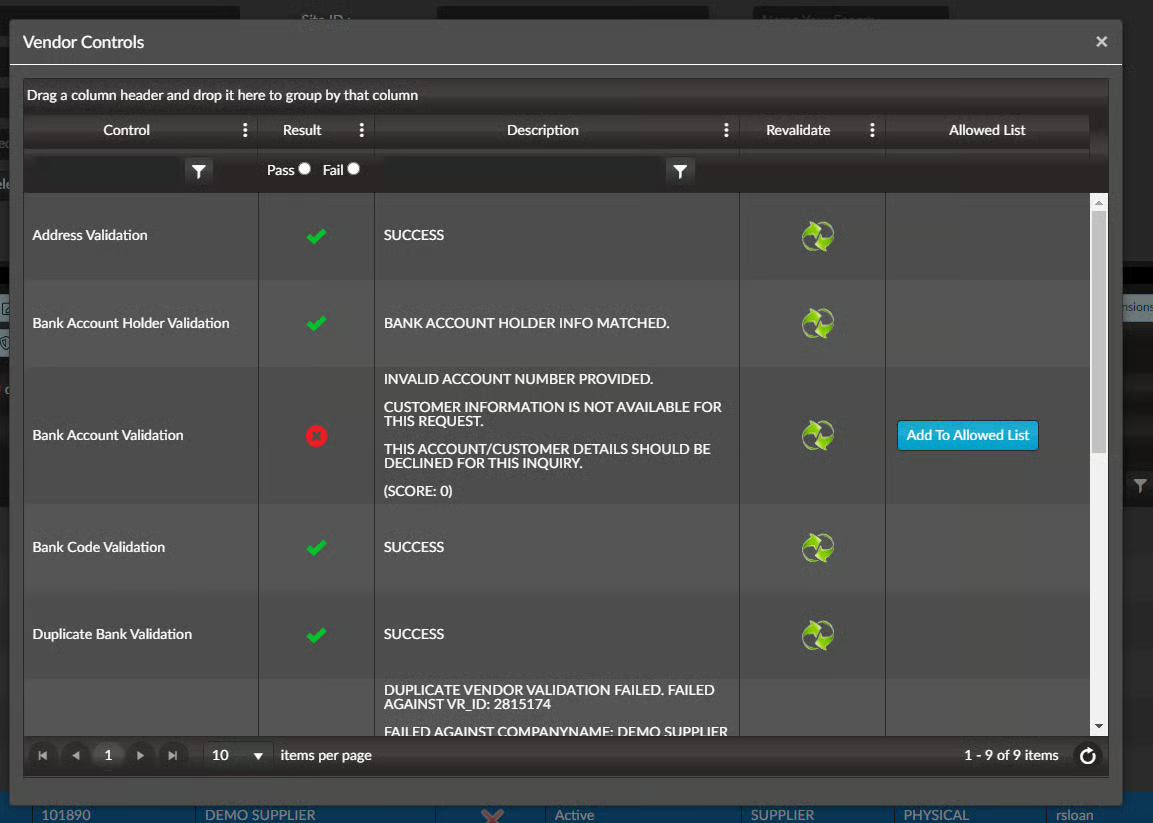
Even though many G2 reviewers describe the system as approachable once they get used to it, some feedback points to complex UX/UI elements, which can slow adoption for teams expecting highly guided or intuitive interfaces. However, compliance, finance, and audit teams managing large supplier datasets often find that once they’re familiar with the workflows, the platform’s depth becomes a clear advantage.
A few G2 users mention that during development or configuration, more built-in recommendations or best-practice prompts would have been helpful — particularly for teams without prior experience in recovery audits or supplier compliance programs. That said, organizations with established internal processes report that once apexanalytix is fully configured, it runs reliably and offers the flexibility needed to support complex, enterprise-level requirements.
Overall, based on the G2 feedback I’ve reviewed, apexanalytix is regarded as a high-value platform that strengthens supplier compliance, improves data quality, and delivers measurable financial protection — especially for enterprises focused on recovery audits and risk mitigation at scale.
"APEX has been a valued partner of Chevron in accounts payable, driving stronger internal controls and process delivery."
- apexanalytix review, Mars T.
"I hope for more interactive FAQ/chatbot/guideline-type information within the portal so that users can self-help more quickly."
- apexanalytix review, Siyoun K.
SafetyChain is a digital plant and supplier management system that brings structure, visibility, and real-time insight into daily manufacturing operations.
G2 users often value the platform’s wide feature set. Tools for audits, sanitation, production checks, and supplier compliance are frequently mentioned as key reasons why teams can consolidate multiple systems into SafetyChain. According to G2 Data, 45% of SafetyChain users highlight its supplier evaluation capabilities as a key strength.
A recurring theme I’ve seen in G2 feedback is the praise for responsive customer support and coaching. Users frequently mention that the team is hands-on during onboarding and quick to assist with workflow questions or form configurations.
I’ve also noticed a lot of positive feedback around its easy-to-use interface. Many G2 reviewers point out that operators and monitors on the plant floor, often not the most tech-savvy users, adapt quickly. The simplicity of the layout appears to reduce training time.
G2 users consistently highlight its real-time data collection. Many mention that capturing data instantly allows teams to identify deviations early and prevent issues from escalating.
They also note that they can tailor forms, workflows, and processes to match their existing operations. Instead of forcing teams to change how they work, the platform appears to adapt to their procedures.
There’s also a great appreciation for the strength of digital record-keeping. Many reviewers describe how it eliminates paper-based processes and centralizes supplier documentation, QA checks, and plant records. This shift not only improves traceability but also reduces the time spent locating files during audits.
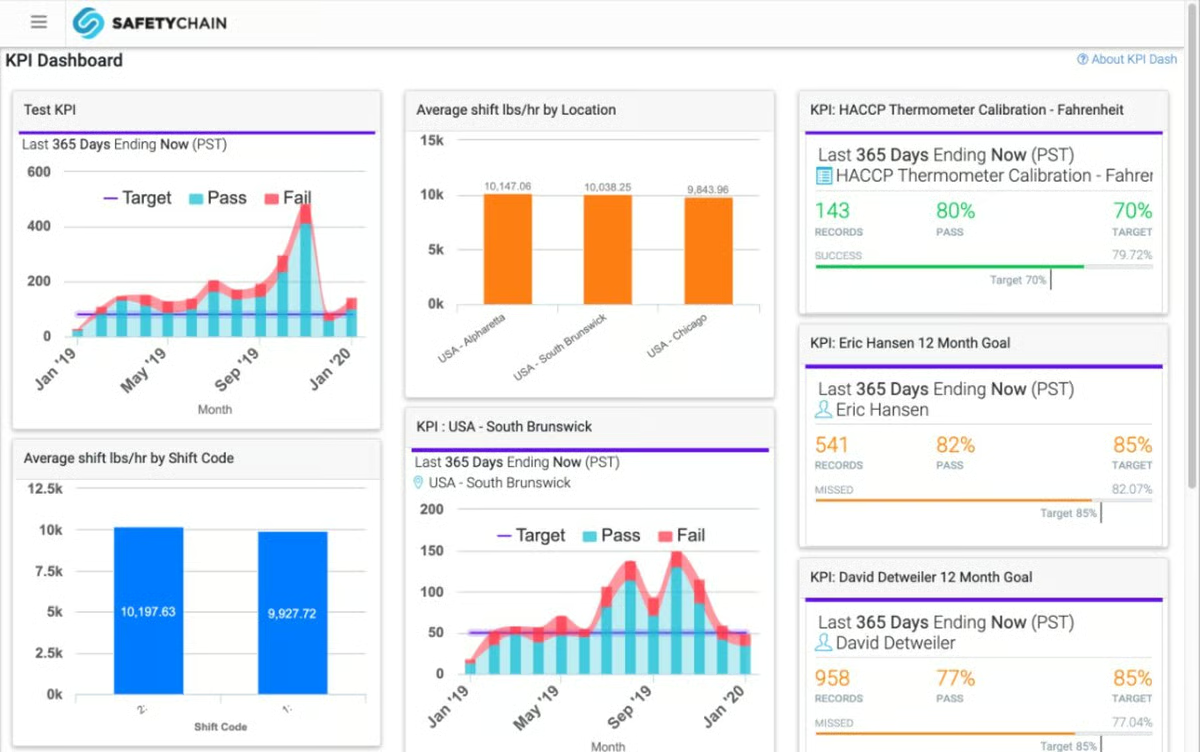
However, I’ve noticed that G2 users sometimes find certain workflows to be slow or overly complex. Multiple reviewers mention that some processes require more steps than necessary, particularly for beginners. Still, they also share that familiarity and configuration adjustments tend to make these workflows smoother over time.
Some users also express that enterprise-level scalability and integrations could be more robust. A few reviews point to occasional inconsistencies in document control and search functionality. Even with these limitations, many mid-sized plants report that day-to-day operations run reliably and benefit significantly from the platform’s real-time visibility and digital structure.
Based on the G2 feedback I’ve reviewed, SafetyChain is seen as a high-value solution for teams prioritizing operational consistency, compliance, and plant-floor usability.
"I love how easy it is to apply for studies and how clear the eligibility criteria are. The payout is fast, and the topics are usually interesting. Also, the platform UI is very easy and smooth to use. The customer support is also very helpful."
- SafetyChain review, Ashutosh M.
"Many studies require passing multiple qualification questions (“screeners”) before you can participate, which can make it difficult to qualify. For example, users have noted that being filtered out by two or three screeners is a common occurrence. In my experience, only a fraction of applications get approved, as dozens or even hundreds of participants may apply for the same slot. This competitive process means you need to frequently check and apply to many studies to get selected."
- Respondent review, Lokesh G.
Explore the top quality management systems on G2 to enhance your vendor audit processes.
Coupa is a supplier relationship management and spend management platform. It is known to bring structure, visibility, and automation to procurement, largely because it unifies vendor onboarding, purchasing, invoicing, and expenses in one place.
I’ve noticed G2 users highlight the value of the supplier performance tracking and risk assessment features. The platform appears to consolidate key vendor data in a way that helps teams evaluate compliance, reliability, and overall vendor health. Many reviewers credit this visibility with helping them improve sourcing decisions.
I frequently see G2 users praise Coupa’s real-time analytics and dashboards. These tools seem to give teams the spending visibility they need to spot anomalies, understand purchasing patterns, and make informed budget decisions.
About 66% of G2 reviewers praise its expense reporting capabilities, often highlighting how intuitive, structured, and easy to navigate the process feels. Reviewers frequently note that Coupa simplifies submissions, reduces manual effort, and provides clear visibility into approvals and policy compliance.
There’s also a lot of appreciation for Coupa’s guided buying experience. It helps teams choose compliant items and approved vendors, ultimately improving policy adherence with minimal manual oversight. Many G2 users mention that even colleagues without procurement backgrounds find the system intuitive.
Based on my review of G2 user feedback, automation is one of Coupa’s key strengths. I see repeated mentions of smooth 3-way matching, automated routing, and efficient invoice creation. Reviewers often note that these workflows reduce manual errors and expedite processing times.
One practical feature that comes up often is auto-population of P-card transactions. Reviewers note that this speeds up reporting and improves accuracy by reducing the need for manual categorization. Although it may not be the flashiest feature, users consistently describe it as a valuable time-saver.
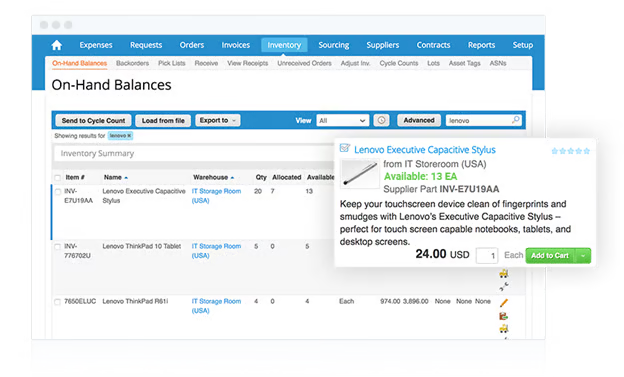
Considering broader review trends, G2 users note that the mobile app and certain UI elements can occasionally feel sluggish.
Smaller teams or organizations relying heavily on mobile workflows may find this limiting. That said, procurement and operations teams managing multiple devices or cross-location approvals report that the core functionality remains reliable, and once they adjust to the interface, these inconsistencies are manageable. In fact, 30% of G2 reviews highlight ease of use across phones and tablets.
Another recurring point is the complexity of configuration and setup. Teams without dedicated IT or onboarding resources may toil with custom fields, troubleshooting, or supplier onboarding. However, larger procurement teams or enterprises that invest time in initial setup often benefit from a highly powerful and scalable system once workflows and configurations are properly established.
Based on the feedback I’ve reviewed, Coupa earns strong praise for its analytics, automation, and unified procurement workflows — particularly for teams focused on scalability, process consistency, and multi-device management.
"I have been using Coupa for almost 3 years. It is very user-friendly and simple to use. The way it is implemented is very user-friendly, and it can be integrated with other tools as well."
- Coupa review, Dilip D.
"There are multiple requirements and a lot of back and forth when submitting an expense report. I wish it were more streamlined and simplified when finding the reasons why it was rejected and how to mitigate them. At times, I felt that I was searching for the answer."
- Coupa review, Ellice H.
SAP Ariba is a top choice for large organizations. It supports end-to-end supplier collaboration, contract management, and sourcing workflows at scale, making it ideal for global procurement teams.
SAP S/4HANA Cloud excels in this area, offering integrated supply chain and finance management that enables teams to directly link supplier performance to cost, risk, and planning decisions.
apexanalytix leads in advanced supplier risk detection. It uses AI to identify duplicate suppliers, prevent fraud, and analyze high-risk vendor patterns before they affect operations.
Yes. Coupa stands out for detailed spend analytics, supplier scorecards, and performance tracking. It helps procurement teams make data-driven decisions and strengthen supplier accountability.
SafetyChain is ideal for manufacturing environments that require strict quality checks, plant-floor compliance, and real-time supplier verification.
Coupa is a strong fit for mid-size teams thanks to its intuitive dashboards, automated supplier scoring, and built-in performance tracking.
apexanalytix is the leading choice for teams seeking real-time supplier risk scoring and automated fraud prevention, powered by AI.
With the right SRM platform, you finally get a full picture — who’s performing, where risks are forming, and which partners help (or hurt) your operations.
Good supplier management isn’t just about organizing vendors; it’s about making smarter, faster decisions backed by real data instead of assumptions. And once you’ve chosen a system that consolidates your supplier information in one place, everything, from onboarding to compliance to performance reviews, becomes easier, clearer, and more predictable.
Select the SRM tool that best fits your workflow and watch the chaos settle into something you can manage with confidence.
To deepen those insights even further, connect your SRM with risk management software so every decision is built on real-time alerts.
.png)

Is your supplier network skewed?
 by Dave Hulsen

Managing business purchases might seem simple until invoices pile up, approvals get delayed,...
by Devyani Mehta

Professional Service Automation
G2 Grid® Report · Summer 2026 Best Professional Services Automation Software Updated...
.png) by Tanuja Bahirat
by Tanuja Bahirat