

.png?width=1600&height=928&name=7%20Best%20Accounting%20Firms%20I%20Recommend%20(2026).png "7 Best Accounting Firms I Recommend (2026)")
You're down to two accounting firms. Both checked out on paper. Both interviewed well. And yet, you're still here, tabs open, second-guessing. Because hiring an accounting firm isn't like buying software, you can cancel next month. A bad fit shows up in your first close, your first audit, your first filing deadline, and by then, switching costs you more than the mistake did.
My evaluation of the best accounting firms draws on G2 Data, Winter Grid Reports, and G2 reviews from firms serving early-stage startups, scaling businesses, and established enterprises. The firms that earned consistent marks are the ones that close fast, communicate proactively around tax deadlines, and flag issues before they become audit risks. When those qualities are absent, you end up absorbing the gap yourself, and that cost rarely shows up on any invoice.
I've mapped seven accounting firms to the scenarios where they deliver most clearly. Pilot and Zeni cover early-stage startups that need clean books and real-time financial visibility without an internal finance team. Inkle fits founders navigating cross-border compliance and multi-jurisdiction filing obligations. Collective handles solopreneurs and S-Corp owners who want taxes, payroll, and bookkeeping under one subscription. Indinero suits growing businesses that have outgrown basic tools and need controller-level oversight alongside chief financial officer (CFO) guidance. KPMG and PwC belong at the enterprise end, where audit depth, regulatory credibility, and institutional advisory carry direct consequences.
The goal is clear guidance so you can match the right firm to your stage and complexity without second-guessing the fit.
*These accounting firms are top-rated in their category based on G2's Winter 2026 Grid® Report. I've included their strengths and ideal use cases to help you choose the right partner for your financial operations, compliance needs, and growth stage.
The firms on this list go beyond filing returns and reconciling accounts. What you are really hiring is the financial clarity that lets you make decisions ahead of problems, not after them.
What I found separates stronger firms is not the size of their client list. It is how they behave when things get complicated. Proactive communication before a deadline hits. Advisory depth that scales as your business does. The ability to manage multi-entity structures or cross-border obligations without it becoming your problem to chase down.
That need cuts across business types. Whether you are a solo operator running an S-Corp, a founder managing your first audit, or a finance lead at a scaling business with limited internal capacity, the stakes are the same. Inaccurate books affect your tax liability. Slow closings affect investor confidence. Poor guidance affects the decisions you make with incomplete information.
The firms I evaluated on G2 are the ones that deliver where it counts, not just in normal months, but when complexity builds and deadlines stack.
I used G2's Winter 2026 Grid® Report to shortlist firms based on user satisfaction scores and market presence across solo operators, growing businesses, and established enterprises. The focus was on firms actively managing client finances, not broad financial services providers with limited accounting specialization.
From there, I ran AI-driven analysis across verified G2 reviews to surface what consistently separates reliable firms from unreliable ones. The signals I tracked included close accuracy, responsiveness around tax deadlines, bookkeeping consistency, onboarding speed, communication clarity, and how well firms stay intact as client complexity grows.
I haven't personally worked with every firm here, so I validated my conclusions against feedback from founders, finance leads, and operators who rely on these firms day to day. Visuals and service references are sourced from G2 vendor listings and publicly available documentation.
After reviewing a large volume of G2 user reviews and analyzing feedback from founders, finance leads, and operators, the same themes kept coming up. Here is what I prioritized when evaluating the best accounting firms:
Where each firm lands depends on your stage, your complexity, and how much you need from an accounting partner beyond the basics.
Below, you'll find authentic user reviews from the accounting firms category. To appear in this category, a firm must:
This data was pulled from G2 in 2026. Some G2 reviews may have been edited for clarity.
Pilot sits at the intersection of automated bookkeeping and high-touch advisory for early-stage companies. It covers month-end close, tax filing, research and development (R&D) credits, and financial reporting through a mix of software and dedicated accountants. What I find most compelling about the pitch is how clean it is: founders who want accurate books without building an internal finance function can hand the whole problem to Pilot.
From the reviews I've gone through, tools that promise effortless setup and immediately prove otherwise are more common than they should be. With Pilot, banking, payroll, and invoicing tools connect from day one, and switching mid-growth stage is nowhere near as disruptive as it sounds. Gusto, Brex, and Stripe integrations kill the manual data handoff that bogs down most early-stage workflows, and clean books arrive faster than most founders expect.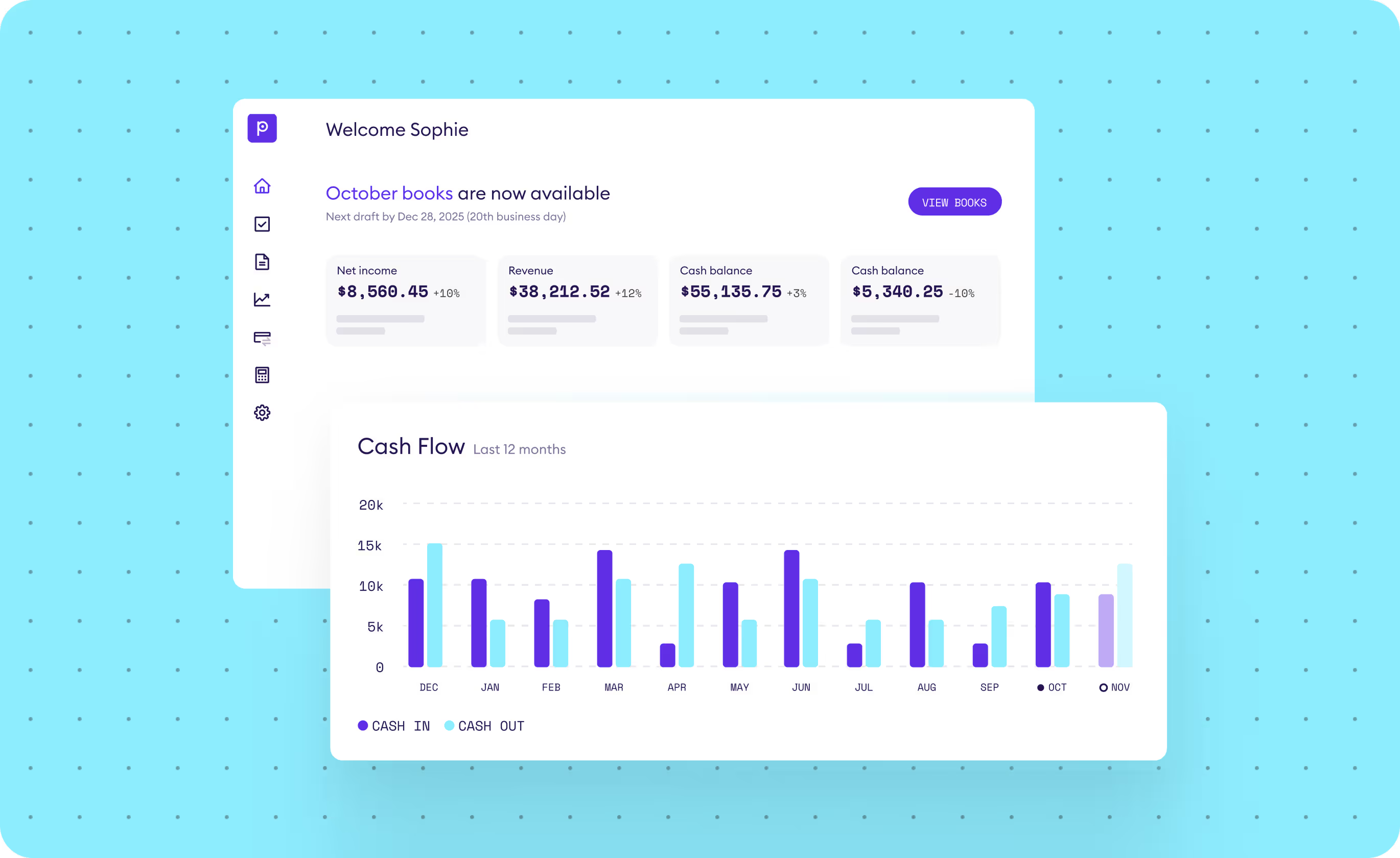
Consistency of a single point of contact is one of those things I'd call quietly underrated in an accounting relationship. Scoring 97% on the level of professionalism, the ramp-up cost that compounds every time a provider rotates staff simply doesn't work here. The sentiment across reviews reads closer to a trusted hire, and from where I sit, that distinction is nearly impossible to manufacture.
When a board update or investor report is on the line, how fast you get an answer matters more than most accounting checklists admit. With a communication skills rating of 95%, categorization questions get resolved, unusual transactions get flagged, and compliance clarity lands without the days-long wait that dogs most accounting relationships. That, for me, is what kills the recurring drag that builds up silently in founder workflows.
Founders who have spent years avoiding their own financials tend to describe the portal as the first time accounting felt like something they could actually navigate. Reviewing books takes under ten minutes with no accounting knowledge required, and the built-in Q&A function lets you ask questions in context without chasing anyone down by email. Users with no financial background describe it as the first time accounting actually felt manageable, and that is not a small thing to pull off.
I'll be upfront: tax season is where most accounting relationships show their cracks, and R&D credit management is usually where the manual document chaos peaks. With Pilot, tax handling integrates directly from connected accounts, filing asks almost nothing of you, and R&D credits get managed without the usual document scramble. The expertise of the team rating sits at 94%, and the tax knowledge here is specifically what keeps users from shopping around. From what I've seen across reviews, that loyalty is well earned.
Cutting a full day of monthly accounting down to under ten minutes is the kind of claim I'd normally take with a grain of salt, but the review pattern here made me reconsider that position myself. Former certified public accountants (CPA) specifically call out that the operational efficiency remains steady under technical scrutiny, and for me, that lands differently than general user satisfaction. Meeting that standard is a harder thing to pull off than most platforms in this category ever manage.
As accounting needs grow in complexity, particularly around Generally Accepted Accounting Principles (GAAP) compliance rigor and proactive financial guidance, G2 reviewers note that Pilot's service can start to feel like it's hitting a ceiling. If you're deep in fundraising prep or pushing toward investor-grade reporting standards, that gap becomes harder to ignore. That said, the core bookkeeping and tax execution that got you this far stays the course to exactly the same standard it always has.
The monthly fee sits above entry-level bookkeeping alternatives, and some G2 users are upfront about feeling that pinch early on, especially before revenue has found a steady rhythm. Founders who are still in the pre-traction stage notice the cost more acutely than those with consistent transaction volume coming through. What doesn't change at any price tier is the quality of the close, books come back clean, deadlines don't slip, and nothing falls through the cracks.
What keeps coming back to me after going through the full review picture is how consistently Pilot delivers exactly what early-stage teams need: clean books, accurate taxes, and a responsive team without the founder touching any of it. Satisfaction holds from incorporation through early growth rounds, and the track record here speaks for itself. For startup founders who need investor-ready financials without the overhead of an in-house finance function, I would back this one without hesitation.
"It's honestly easy to use. I love the support, consistency, and same point of contact. I enjoy being able to understand all aspects of our financial health as a rising startup. Couldn't be easier."
- Pilot review, Kris G.
"The one area we find challenging with Pilot is the timing required for the full monthly book closing. Because they need around four weeks to prepare the books for a complete month, we are not able to follow our daily or real-time cash flow as closely as we would like. This means we have had to develop and maintain our own internal financial projections and interim tracking systems to manage daily cash flow, since the official financial statements arrive a little later than is ideal for immediate operational decisions."
— Pilot review, Walt J.
On a budget? Explore the best free accounting software to see which tools cover bookkeeping basics without a monthly retainer.
2. PricewaterhouseCoopers (PwC): Best for enterprise audit, tax, and advisory
I've spent enough time across the G2 review data to know that PricewaterhouseCoopers (PwC) occupies a different category entirely. Audit and assurance, tax, advisory, and legal services spanning virtually every industry and geography are brought in when the stakes are high enough. For this very reason, the firm's credibility carries as much weight as the quality of the work itself. Stakeholders, investors, and regulators are watching, and that context is exactly where PwC was built to operate.
Audit and assurance work that boards, regulators, and external stakeholders can receive without a single qualification attached. That is a high bar to clear consistently. The output across reviews is described as defensible and independently verified. For me, the line that sticks is this: when financial statement integrity carries legal or reputational weight, that level of assurance stops being a service and becomes a necessity.
A PwC audit goes well beyond clean financials. Stakeholder standing improves. Confidence in financial reporting sharpens. Investors and partners receive a reputational signal that the books have been independently verified to a high standard. I've watched this pattern repeat consistently across the review data. For businesses heading into a funding round, a regulatory review, or a major transaction, that signal carries weight very few firms can match.
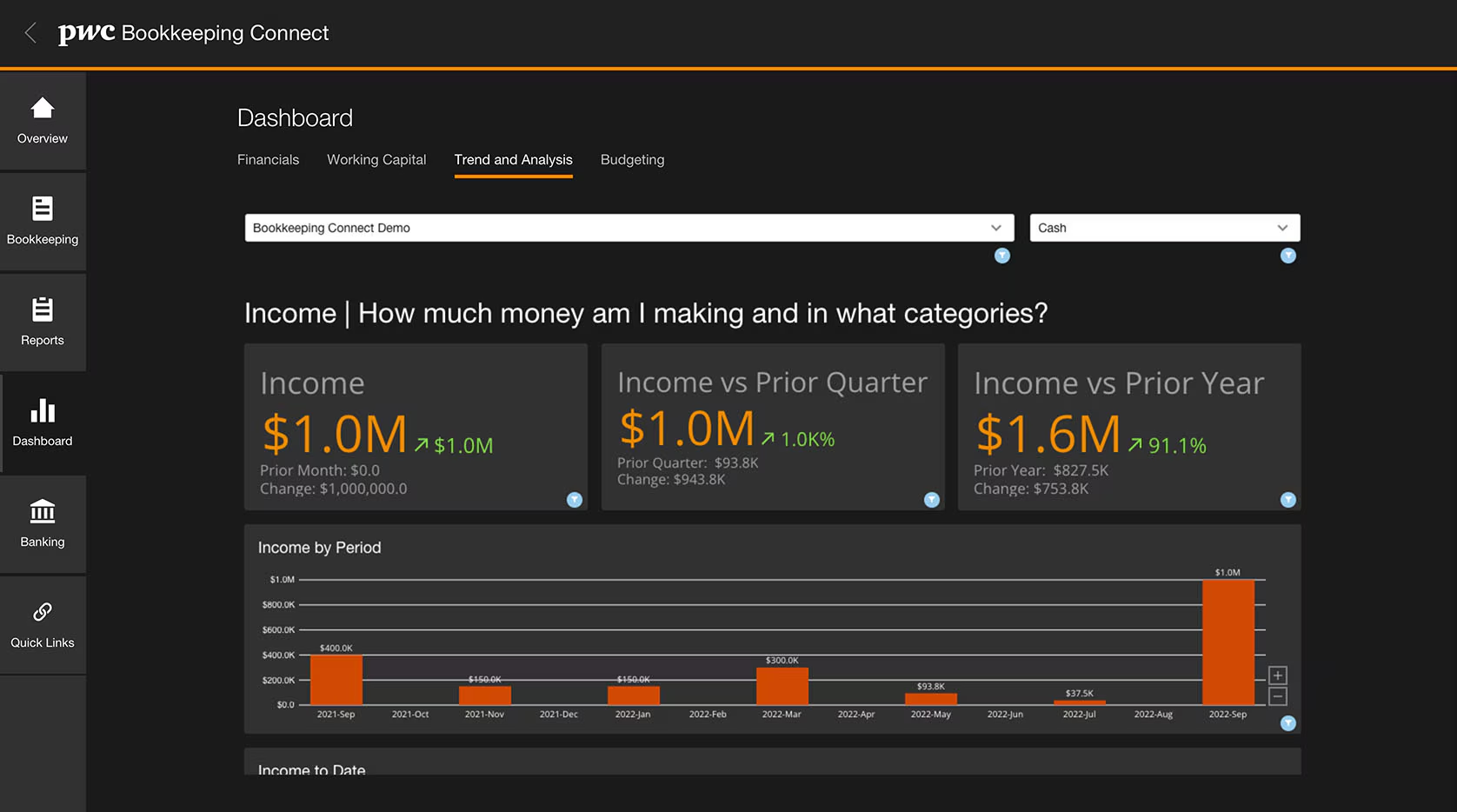
Audit, tax, advisory, and legal needs are addressed through a single relationship. The value of that consolidation became clearer the deeper I went into the review of the data. Scoring 90% on ease of doing business with, PwC stays in close communication throughout the engagement. The coordination overhead that builds when complex financial work gets split across multiple specialist firms simply doesn't accumulate here.
Advisory work that actually moves the needle is rarer than the industry likes to admit. The expertise of team rating comes in at 87%, and the analysis here is granular, analytically rigorous, and built to inform real decisions. For engagements involving inventory valuation, transaction advisory, or strategic financial analysis, the depth goes several layers beyond what generalist alternatives ever get close to. If you have been burned by surface-level findings before, you will feel that difference fast.
I'd put staff quality near the top of what the review data keeps surfacing about PwC. Technically strong, deeply invested in understanding each organization's specific needs, and consistent well beyond senior-level interactions. A professionalism rating of 94% backs what reviewers describe: that caliber doesn't thin out as you move deeper into the engagement. For organizations where the caliber of the people doing the work matters as much as the firm's reputation, that consistency is what the entire engagement rests on.
PwC's fees sit at the higher end of the market, and if you're scoping an engagement for the first time, the cost demands honest evaluation against what the mandate actually requires. G2 users are candid that smaller organizations whose needs fall within a mid-tier firm's range feel the gap most. For those mandates, though, where the stakes are real and the output will face serious scrutiny, the quality of what gets delivered never wavers.
A few recurring themes in G2 reviews suggest that in broader diagnostic engagements, advisory outputs can spend time restating what the organization already knows before getting to the sharper, more useful conclusions. Teams running wide-scope strategic reviews tend to notice this earlier in the process. Even so, the analytical rigor and research behind every PwC engagement mean the work, when it reaches a conclusion, is precise enough to stake real decisions on.
For mid-market and enterprise organizations where defensibility carries direct consequences, the benchmark conversation starts and ends with PwC. Institutional weight, global reach, and service depth that maintain its footing under the most demanding scrutiny. The benchmark conversation for organizations where defensibility carries real consequences starts and ends here.
"The best thing about PWC is the services and professionalism they provide. They have the best professionals worldwide who aim to understand your core needs and solve them to the best of their knowledge."
- PricewaterhouseCoopers (PwC) review, Ahmed N.
“Dislike about PwC is that they are a little costly.”
- PricewaterhouseCoopers (PwC) review, Malav S.
If your team is also evaluating how to tighten the close process itself, see G2's picks for the best financial close software to find tools that automate reconciliations and accelerate month-end.
Zeni pulls off something most finance tools don't attempt. AI-driven bookkeeping paired with a dedicated finance team, covering accounts payable, accounts receivable, bill pay, month-end close, and fractional CFO services within a single engagement. Having gone through the review data, what struck me is how far it stretches beyond standard bookkeeping. Lean startup teams get enterprise-level financial visibility without the headcount to match.
I keep coming back to the dashboard as the detail that changes everything here. Cash flow, burn rate, and key performance indicators (KPIs) surface in real time. No QuickBooks log-in required, no waiting for a monthly report. The bi-directional sync keeps data current without manual reconciliation, and the team matches that speed, scoring 97% on level of responsiveness. Founders who previously avoided their financials describe it as the first time the numbers actually clicked.
Zeni's AI layer handles transaction classification automatically, without the back-and-forth that eats time in traditional bookkeeping engagements. That alone was enough to make me stop and reconsider what the baseline expectation should even be. Intelligent automation paired with human oversight means fewer errors reach the month-end close. Users who switched from a solo bookkeeper or traditional CPA describe the jump in accuracy and speed as immediate and impossible to ignore.
Controller-level oversight for what Zeni charges is the kind of thing I'd normally raise an eyebrow at. With Zeni, structured workflows and tracked requests keep engagements organized as transaction volume scales. Meetings run efficiently because the team arrives prepared every time. A professionalism rating of 98% reflects exactly that standard: for startups without a CFO, that oversight plugs a hole that most software-only tools never even acknowledge exists.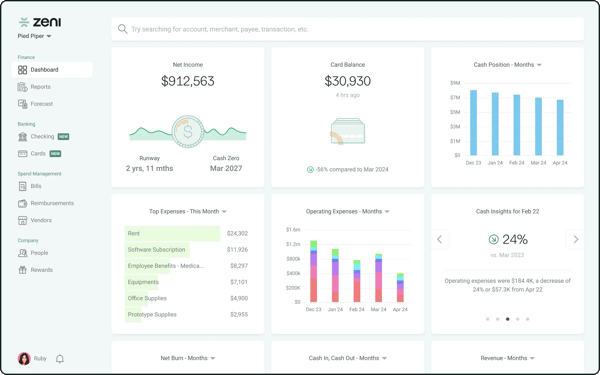
If you are running a complex or high-volume billing model, reporting quality is usually where bookkeeping services quietly let you down. Zeni produces clear monthly financial statements and supports forecasting well beyond the standard three-to-six month window. Visibility across revenue streams that would otherwise require significant internal effort. That level of financial structure at this price point is rarer than it has any right to be.
R&D tax credit management sits within the same engagement, with the Zeni team owning documentation, tracking, and filing end-to-end. Minimal involvement required on the client side. Scoring 98% on the expertise of the team, the tax knowledge here keeps startups with qualifying R&D spend from ever shopping for a specialist. What I didn't expect was how often the credit alone offsets a meaningful chunk of the monthly service cost.
I'd be doing this platform a disservice if I skipped past the pricing story. Sitting below most traditional CPA and controller arrangements, the value case here is hard to ignore. Users who made that switch describe the automation and expert oversight combination as punching well above what a single hire delivers. As needs grow, Zeni absorbs more functions without missing a beat, and that expansion never disrupts what's already running.
G2 reviewers flag that Zeni's team operates largely in time zones that close out earlier than US Pacific hours, which means anything you send after midday may not land until the next morning. If your financial questions tend to come up reactively, that gap is genuinely felt. The response quality when it arrives is thorough and precise enough that most teams stop needing to follow up at all.
Across G2 reviews, intermittent reliability with the bill pay feature and limited dashboard flexibility come up more often than users expect. Founders running high-volume or complex payment workflows will bump into this more. The bookkeeping and financial reporting side of the engagement, by contrast, runs at a standard that gives teams full confidence in their numbers month after month.
What Zeni brings into a single platform is real-time visibility, dedicated expertise, and AI-assisted automation. This is the kind of financial infrastructure most startups would otherwise need multiple vendors or hires to piece together. The review data made that case better than any feature list could. For capital-efficient teams that need a finance function built to outperform its size, Zeni is where I'd point them first.
"Their process discipline and reporting. Zeni is very strong at building clear workflows and actually following them. Their reporting has been especially valuable — it makes forecasting and understanding growth across different parts of the business much easier. In our industry, this level of financial visibility and structure is rare, and it’s been a big differentiator for us."
- Zeni review, Breann C.
"While some of the team is close to our timezone, our accounting team (controller) closes their business day at noon our time. Just an adjustment in our workday. But they are very responsive to inquiries sent after their working hours. We get a response the next morning."
- Zeni review, Val S.
Zeni handles accounts payable, but if you're also looking for tools to manage employee spend directly, see G2's picks for the best expense management software to keep every dollar tracked in real time.
4. KPMG: Best for enterprise tax and regulatory compliance
A Big Four name with the delivery record to back it up is a combination that commands attention, and KPMG earns both. Audit, tax, financial advisory, and legal services run through a two-stage methodology built to catch what a single pass misses. The team stays engaged through full resolution. What I find sets it apart is the depth of its research, which gives organizations real market context alongside every recommendation.
Straightforward, easy to engage, and in it for the full duration. That last part matters more than most professional services buyers give it credit for, and the review data backs that up louder than I expected. KPMG stays through full resolution, and a professionalism rating of 93% backs that consistency up. That consistency across complex mandates is rarer than the industry lets on.
When your board reporting cycle, regulatory submission, or audit timeline has zero room for a missed deadline, delivery reliability becomes the only thing that matters. Scoring 91% on the level of responsiveness, KPMG keeps deadlines and produces work that stands firm under scrutiny. The track record here is specifically what pulls organizations back, engagement after engagement, and that kind of earned loyalty is not something a firm can perform its way into.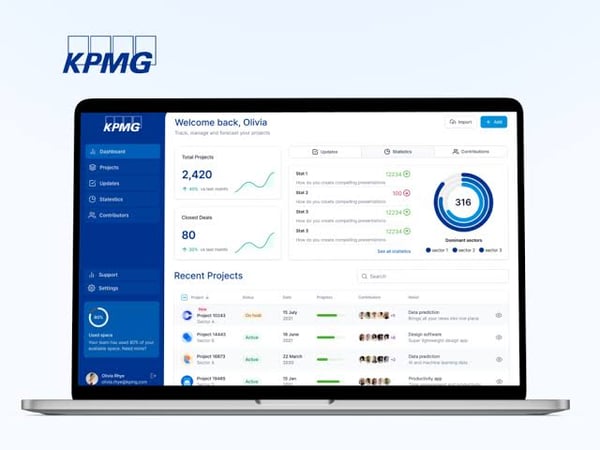
The knowledge base across tax, financial advisory, and legal functions is broader than the firm's headline positioning suggests. Stock option structuring, taxation, and complex financial planning, the team goes well beyond the immediate scope when questions arise. No generic guidance, no surface-level answers. Reviewers describe the team as resourceful beyond anything smaller alternatives can match.
I noticed this thread running consistently across the review data: the feedback KPMG delivers goes deeper than what the defined mandate requires. Questions that fall outside the immediate scope get answered anyway. The team keeps organizations informed throughout, with communication skills rated at 90%, and that proactive engagement is what separates it from providers who stop exactly where the brief ends.
The methodology here does something most advisory work never quite manages: recommendations grounded in real market context and current conditions, landing with the full weight of current market reality behind them. Actionable direction that moves the needle, grounded in what the organization actually needs to hear. For me, the audit methodology stands out specifically, helping teams conclude engagements with a confidence level that is hard to replicate.
G2 feedback points to one consistent pattern with KPMG: the hourly fee structure moves fast, and if you're working with a defined budget, that clock is always running. Organizations with constrained scope feel the ceiling sooner than those bringing genuinely complex, high-value mandates to the table. The rigor and specialist depth that KPMG applies to every engagement, regardless of size, stays completely intact throughout.
Despite the strengths above, G2 users highlight that securing time with KPMG's consulting staff can require more coordination than expected, particularly during periods of high demand. Organizations running on tight internal timelines or requiring rapid turnaround on advisory questions feel this friction most acutely. What doesn't shift in the meantime is the caliber of the work itself, with every deliverable KPMG produces built to the same exacting standard its reputation is founded on.
Mid-market and enterprise buyers with well-defined mandates and the bandwidth to engage actively will find KPMG operating at full capacity. Delivery discipline, specialist depth, and Big Four rigor that never loses its footing across complex, high-stakes engagements. For organizations where execution quality carries direct consequences, KPMG is where the shortlist should start.
"I like that they are easy to work with, fairly priced, and always on time with deliverables."
- KPMG review, John M.
“The process is a bit time-consuming, and functions that need to be transformed need a team or extra efforts for the business ”
- KPMG review, Verified G2 User.
Indinero doesn't just handle the books. Outsourced accounting, bookkeeping, tax filing, payroll, and controller services, all delivered by dedicated staff who learn each business inside out. What pulled me into the review data here is how differently this sits from a typical outsourced arrangement. Teams hand off their finance function entirely. The staff shows up already knowing the business.
I'd argue the dedicated professional model is where Indinero pulls furthest ahead of the pack. Staff build institutional knowledge of each business over time, which means financial reporting, reconciliations, and tax work never start from scratch each cycle. The reset cost that plagues most outsourced accounting relationships simply doesn't show up here; a 92% ease-of-doing-business rating reflects exactly that continuity.
Some organizations bring Indinero in as a direct replacement for an in-house finance director or controller. Budgets, reconciliations, payroll, and accounts payable are absorbed fully, with the consistency of a dedicated hire and none of the overhead of managing one. For me, that last part is what makes this model click for early-stage teams facing a hiring decision that carries more risk than it looks like on paper.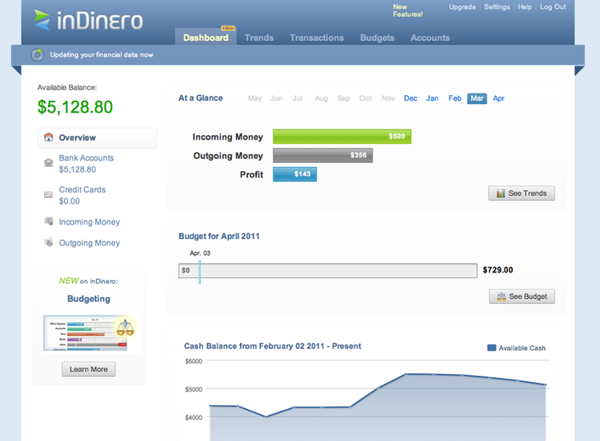
Prompt, dependable, and proactive in flagging issues early before they compound. Scoring 94% on communication skills, the responsiveness here is a specific reason organizations stay year after year. I kept coming across the same framing across reviews: teams describe Indinero as a trusted financial partner, handling AP, payroll, bank reconciliations, and month-end close with accuracy and zero hand-holding required.
As your business grows, the last thing you want is an accounting partner scrambling to keep up. Payroll processing, accounts payable, and controller-level oversight, Indinero absorbs those functions without missing a step. Organizations steadily increase the scope of what the firm manages over time, the delivery standard never wavers, and the ability to execute a rating of 92% backs that up across every expansion.
Financial reporting that comes back audit-ready is something I find myself returning to as the standout detail across the Indinero reviews. Reconciliations happen reliably, the month-end close follows a predictable cadence, and the output has passed external auditor review. For organizations tightening up ahead of a fundraising round or a first formal audit, that consistency is worth more than it sounds on paper.
If your structure spans multiple entities or requires international tax filing, you'll find that Indinero's platform doesn't stretch that far comfortably. G2 users managing cross-border operations feel this more acutely than those running clean domestic books. The dedicated staff model and the institutional knowledge the team builds over time, though, continue to deliver at the same high standard across every function the platform covers.
While overall feedback is strong, G2 reviewers note that communication turnaround and deliverable timing have occasionally run longer than agreed, particularly during periods of high workload. If you're running on a fixed reporting deadline or need outputs early enough to feed into downstream review, that delay lands harder than it would for a team with a more flexible monthly cadence. The accuracy and thoroughness of what Indinero produces when it arrives is what keeps organizations in the relationship year after year.
Startups and growing businesses that want financial operations handled by a team deeply invested in understanding the business will find Indinero difficult to walk away from. The embedded model delivers continuity that most outsourced arrangements never come close to. After digging through the full review picture, my take is simple: for organizations that have outgrown basic tools and need a finance function that scales without losing its footing, this is the one to back.
"Indinero provides a relatively seamless web experience and can be a good option for companies with extraordinarily simple accounting needs."
- Indinero review, Tarek P.
"We need to do tax filing in other parts of the world where we operate on our own. However, their team is able to support through the preparation process."
- Indinero review, Kishan G.
If payroll is driving the search as much as bookkeeping, see G2's picks for the best payroll software to find tools that handle tax filings, direct deposits, and compliance alongside your accounting setup.
Cross-border compliance for early-stage startups is messy by nature, and most platforms treat it as an afterthought. Inkle was built for exactly that challenge. Covering bookkeeping, tax filing, compliance deadlines, and cap table management through software and CPA-led support, with particular depth in US-India structures. What impressed me most about going through the reviews is how cleanly it connects to bank accounts, replacing the sprawling stack of spreadsheets most cross-border teams are quietly drowning in.
A messaging interface that keeps communication fast and contextual changes the accounting engagement experience more than most people anticipate going in. For tax and bookkeeping work where back-and-forth is unavoidable, that format compresses resolution time in ways traditional threaded replies simply cannot keep up with. Scoring 95% on ease of doing business with, and I find that number easy to believe: users describe the experience as faster and more natural than anything they had used previously.
I'd describe the responsiveness here as one of those details that separates a platform from a product. Deadlines get flagged before you need to ask. Outstanding items get followed up on without prompting. For founders managing a Delaware C-Corp with a foreign subsidiary, that vigilance across multiple jurisdictions is worth its weight in gold. The platform scores 96% on professionalism; the team treats that responsibility with the seriousness it deserves.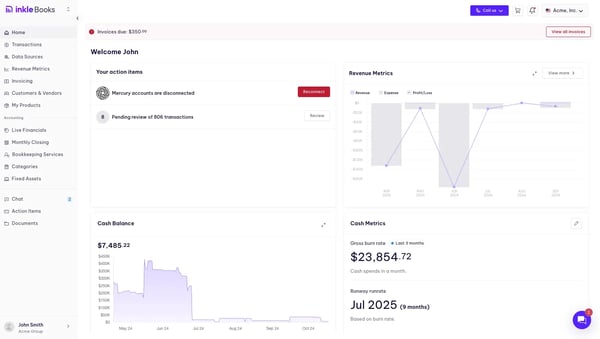
Pulling US compliance, cap table management, and financials into a single dashboard is the kind of consolidation that sounds obvious until you realize how few platforms actually pull it off. Users with US-India operations highlight this repeatedly. For me, the price point is where it gets truly interesting. Few alternatives come close to matching that degree of cross-border coverage at the same cost, and the review data makes that gap impossible to overlook.
Missed compliance deadlines have a way of compounding fast, especially when you are managing filing obligations across multiple jurisdictions simultaneously. Inkle flags upcoming deadlines, follows up on outstanding items, and sends alerts before anything becomes urgent. The ability to execute rating sits at 96%, and without you lifting a finger, the late fees that pile up when deadlines get tracked manually simply stop being a conversation.
Pricing is where Inkle earns a second look across the review data, and I think that story deserves more attention than it typically gets. Sitting well below what comparable cross-border compliance support costs through a traditional CPA firm, the quality of work never reflects that gap. Users with no accounting background describe the CPAs as patient, knowledgeable, and the easiest they have ever worked with. That combination at this price point is hard to find anywhere else.
Connecting directly to bank accounts and handling the accounting process with minimal client involvement, the hands-off model extends further than most platforms in this category attempt. Smooth, largely automated, with the team following up proactively whenever deadlines require attention. For cross-border teams that would otherwise spend time chasing receipts and tracking compliance manually, that administrative load simply evaporates.
G2 users flag that the platform occasionally freezes during bulk uploads, and if you're working through a heavy filing session, that interruption breaks your rhythm more than you'd expect. Teams processing high transaction volumes feel this more regularly than those with standard monthly upload needs. The accounting and compliance output sitting underneath all of that, though, runs at a standard that gives you full confidence in every number that comes out.
Some G2 reviewers point out that tracking the status of submissions and filings within the platform isn't as transparent as it could be. If you're managing compliance deadlines across multiple jurisdictions, that visibility gap creates more mental load than it would for a single-entity structure. The proactive and detail-oriented nature of the Inkle team means the work itself never stalls, deadlines are met, filings go through, and nothing gets dropped.
For early-stage teams navigating cross-border compliance, the coordination burden that builds silently is one of those problems that compounds before most founders notice it. I walked away from the full review picture convinced: US compliance, cap table management, bookkeeping, and taxes inside a single platform, keeping complexity from quietly stacking up as the business scales. Inkle is built for exactly that weight.
"Your around-the-clock support has been exceptional, crucial to ensuring we consistently meet all our deadlines."
-Inkle review, Ravi K.
"While Inkle.io is an impressive platform, some potential drawbacks include its complexity for absolute beginners and potential learning curve for those unfamiliar with US tax and compliance processes. 2 in every 5 Indian startups based in the US face accounting and fund transfer challenges, which suggests the platform might require some initial investment in understanding its features."
- Inkle review, Vicente S.
Not sure whether you need a firm, a platform, or both? Here’s a guide to the best accounting software, covering tools for reporting, reconciliation, and compliance for businesses at every stage.
I've rarely come across a platform this deliberately focused, and that focus is exactly what makes Collective worth paying attention to. Built exclusively for solopreneurs and single-member S-Corps, it handles business formation, bookkeeping, payroll, tax filing, and compliance under one subscription. Self-employed professionals who want to capture S-Corp tax savings without juggling multiple vendors will find everything they need sitting in one place.
The S-Corp formation and election process handled end-to-end is the detail that pulls most solopreneurs in, and it earned that reputation. Limited liability company (LLC) conversion, S-Corp election, and payroll setup through Gusto, all managed within the onboarding flow, without the multi-provider coordination that makes entity setup a headache for first-time business owners. For me, the structured path through formation is what separates Collective from everything else at this stage.
Dedicated relationship managers assigned to each account, many holding CPA credentials or IRS backgrounds. That means most tax questions get answered directly without being escalated, and the expertise and team rating of 95% backs that up. If you have previously relied on a generalist accountant or DIY filing, the level of access to qualified professionals here is meaningfully above what most solo operators have come to expect from a flat-rate subscription.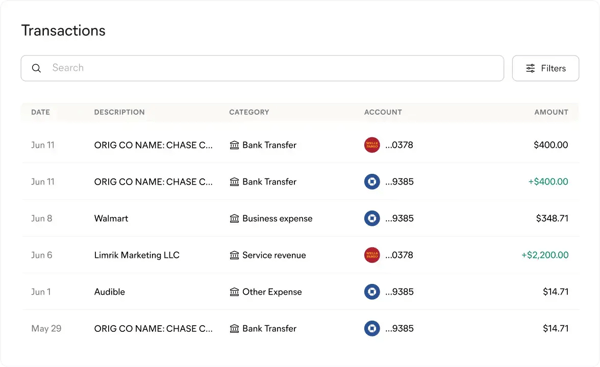
I'd be underselling this platform if I didn't stop at the all-in-one structure. Bookkeeping, payroll, taxes, and compliance under one roof, with the platform pulling data from connected accounts and preparing filings with minimal input during tax season. The ability to execute rating sits at 93%, and embedded in that number is every weekend a solopreneur didn't spend chasing receipts before a filing deadline.
Tax season, covering both business and personal filing within one relationship, changes the dynamic entirely. Joint and separate returns alongside business taxes, without coordinating separate providers for each. For S-Corp owners whose personal and business finances are closely intertwined, that consolidation removes a layer of fragmentation that most tax seasons silently create. After digging through the reviews, I can see why it keeps coming up as a reason users stay.
The Collective communicates proactively throughout every engagement, keeping members informed about what is being worked on, what is needed, and why. For solo operators managing every function alone, that transparency hits differently than most outsourced accounting relationships ever manage. The communication skills rating sits at 93%, and for me, this is the detail that quietly holds the whole experience together, the one users mention most when recommending Collective to other solopreneurs.
Some G2 reviewers are candid that response times during peak periods, particularly tax season, slow noticeably, with complex queries moving through a shared email channel and bypassing the direct line to the assigned contact. If you're a solo operator with an urgent filing question in the middle of January, that delay hits differently than it would outside a high-demand window. The S-Corp formation expertise, payroll handling, and tax preparation that Collective is built around continue to run at the same standard throughout the year.
Across G2 reviews, a subset of users describe encountering bookkeeping errors that required amended filings and repeated corrections. Solo operators leaning on Collective for ongoing high-volume bookkeeping run into this more than those using the platform primarily for entity formation and initial setup. What Collective does exceptionally well, and has always done well, is keep the back office running so you can stay focused on the work that actually moves your business forward.
Self-employed professionals who want to form an S-Corp, reduce their tax burden, and hand off the back-office entirely under one subscription will find Collective delivering on every front. The service holds its standard within the solo operator context it was built for. And for solopreneurs who have been putting off the S-Corp switch because the setup felt too complex, I'd say Collective makes that hesitation very hard to justify.
"I like that Collective gives its members dedicated relationship managers who become very familiar with our individual business. They are also certified accountants, which is so helpful."
- Collective review, Serena F.
"The customer service was a bit rocky getting started, but I also started right at the beginning of the year when everyone is starting to get taxes ready."
-Collective review, Alisha T.
|
Firm |
G2 Rating |
Free plan |
Best for |
|
Pilot |
4.7 / 5 |
No |
Startups and small businesses needing reliable monthly bookkeeping, tax prep, and fractional CFO support |
|
PricewaterhouseCoopers (PwC) |
4.2 / 5 |
No |
Enterprises and mid-market businesses requiring institutional-depth audit, tax, and regulatory advisory services |
|
Zeni |
4.6 / 5 |
No |
Startups wanting AI-powered bookkeeping with real-time financial visibility and a dedicated finance team |
|
KPMG |
4.2 / 5 |
No |
Mid-market and enterprise organizations needing audit, tax compliance, and management consulting support |
|
Indinero |
3.9 / 5 |
No |
Growing businesses that need bookkeeping, tax, payroll, and CFO-level guidance in one outsourced team |
|
Inkle |
4.7 / 5 |
No |
Early-stage startups managing cross-border compliance, tax filing, and bookkeeping from a single platform |
|
Collective |
4.6 / 5 |
No |
Solopreneurs and S-Corp owners needing bookkeeping, payroll, and tax filing under one subscription |
*These accounting firms are top-rated in their category based on G2's Winter 2026 Grid® Report.
Got more questions? G2 has the answers!
Pilot and Inkle stand out for communication speed. Pilot reviewers consistently describe a team that responds within minutes and stays proactive without needing to be chased. Inkle's chat-based interface connects founders directly with tax professionals on demand, with support described as feeling like an extension of the startup.
Collective and Pilot are strong fits for businesses at the earliest stage. Collective handles LLC formation, S-Corp election, bookkeeping, payroll, and tax filing under one monthly subscription. Pilot supports newly formed companies with clean monthly books and startup-specific reporting from day one, with plans designed to scale as the business grows.
Indinero and PwC are the closest fits from this list, depending on portfolio complexity. Indinero's controller-led model covers multi-entity structures and cash flow forecasting for businesses with layered financials. PwC is better suited where scale and regulatory complexity require institutional-depth audit and tax advisory beyond what mid-market firms typically offer.
Pilot and Indinero are options worth evaluating for catch-up work. Pilot reviewers describe the team stepping in to bring structure to disorganized records quickly and without friction. Indinero's dedicated controller team handles backlogged transactions, though reviewers note that communication quality and turnaround can vary depending on the engagement.
Indinero and Zeni offer institutional-quality accounting without Big 4 pricing. Indinero bundles bookkeeping, tax, and CFO-level advisory into tiered monthly plans, described by reviewers as a genuine alternative to hiring a full in-house finance team. Zeni combines AI-driven bookkeeping with human expert oversight at a fraction of what KPMG or PwC typically costs.
Pilot and Inkle are among the more accessible entry points for startups on tight budgets. Pilot's Essentials plan starts at $99 per month and covers cash-basis bookkeeping with monthly closes. Inkle offers accrual-based bookkeeping from $99 per month, built specifically for early-stage US startups, including those with cross-border structures or foreign founders managing Delaware C-Corps.
Collective and Indinero handle both bookkeeping and payroll within a single engagement. Collective covers payroll, bookkeeping, and tax filing under one flat monthly subscription, described by reviewers as a practical all-in-one solution for owner-operated businesses. Indinero scales across both functions and adds controller-level oversight as transaction volume and complexity grow.
Collective and KPMG cover individual tax needs at different ends of the complexity scale. Collective handles personal and business tax returns for solopreneurs and S-Corp owners as part of its membership, with dedicated relationship managers who are often CPAs themselves. KPMG is the stronger fit for individuals with complex financial structures, cross-border obligations, or investment portfolios requiring institutional-grade advisory.
Pilot and Zeni stand out for making financial information accessible to non-accountants. Pilot reviewers describe a team that takes time to explain financials clearly and ensures founders always know where their books stand. Zeni surfaces key metrics like burn rate and cash flow in real time, with a finance team available to interpret numbers and advise without requiring any accounting knowledge from the client.
Accounting is moving away from a once-a-quarter engagement toward something closer to a continuous financial signal. The firms gaining ground on G2 are the ones building tighter feedback loops between bookkeeping, tax planning, and advisory, often supported by AI-driven reconciliation and real-time reporting that used to require a full internal finance team.
Automated close workflows are quickly becoming the standard. Firms that rely on manual processes will struggle to keep up as client complexity grows. At the same time, fractional CFO services are being bundled more frequently into accounting engagements, which means the line between compliance support and strategic guidance is blurring fast.
If you are making this decision now, the question is not just whether a firm can handle your books today. It is whether their infrastructure and advisory depth can absorb where your business is heading. A firm that fits your current stage but cannot grow with your next one will cost you more to replace than it saved you to hire.
Want tighter control over your finances between closes? G2's best accounting software guide covers the tools that automate reconciliations, track expenses, and keep your books current year-round.


Billtrust, HighRadius Accounts Receivables, and Tesorio are the best credit and collections...
 by Krithika Sathyamoorthy

Recently updatedSummer 2026 Grid® Report · Published May 26, 2026 The 10 best...
.png) by Shreya Mattoo
by Shreya Mattoo

Managing receivables doesn’t usually break all at once. It starts with small gaps, missed...
 by Disha C