

I evaluated 15+ tools to find the best free accounting software for small businesses. These are FreshBooks, Microsoft Dynamics 365 Business Central, Odoo ERP, QuickBooks Desktop Enterprise, QuickBooks Online, SAP Cloud ERP (SAP S/4HANA Cloud), TallyPrime, Xero, and Zoho Books.
After going through G2's free accounting software category page and evaluating the top tools against real small business use cases, I found these platforms to be the strongest options available on a free or trial basis in 2026. Each one approaches accounting differently, and where they diverge matters more than their feature lists suggest.
I evaluated each platform based on verified G2 reviews from small business users, specifically looking at how well each tool handles the real work of small business accounting: invoicing a client, reconciling a bank feed, producing a profit and loss report, and understanding how quickly you'd hit the ceiling of what's free.
For this guide, I went through the top products on G2's free accounting software category page and evaluated each one on what it actually gives you for free, how it holds up under real small business conditions, and where each one pushes you toward upgrading. Here's what I found about the best free accounting software for small businesses in 2026.
*Tools are listed alphabetically. These tools offer free trials, free forever options, or freemium models.
Here's a side-by-side look at free plan limits and pricing before diving into the full reviews.
| Tool | G2 Rating | What the free plan covers | Paid Starts At |
| FreshBooks | 4.5/5 ⭐ |
|
$2.30/month |
| Microsoft Dynamics 365 Business Central | 4.0/5 ⭐ |
|
$80/user/month |
| Odoo ERP | 4.2/5 ⭐ |
|
$24.90/user/month (Standard) |
| QuickBooks Desktop Enterprise | 4.3/5 ⭐ |
|
$2,210/year |
| QuickBooks Online | 4.0/5 ⭐ |
|
$38/month (Simple Start) |
| SAP Cloud ERP (SAP S/4HANA Cloud) | 4.4/5 ⭐ |
|
Contact SAP for pricing |
| TallyPrime | 4.5/5 ⭐ |
|
Starting at $7.94/month |
| Xero | 4.4/5 ⭐ |
|
$1.40/month (Lite) |
| Zoho Books | 4.4/5 ⭐ |
|
$15/month (Standard) |
*All pricing details mentioned in this article are based on publicly available data at the time of publication and are subject to change.
The small business accounting software market is growing steadily as more small businesses move away from spreadsheets and manual bookkeeping toward dedicated digital tools. The small business accounting software market is projected to grow from $8.22 billion in 2025 to $16.05 billion by 2035, reflecting a CAGR of 6.92% over the forecast period. Free plans and trials are often how small businesses get started before they know exactly what they need.
I started with G2's accounting software category, focusing on tools with a genuine free tier, freemium model, or substantive free trial. From there, I evaluated each one specifically on what the free plan or trial actually covers, not just what the marketing page claims, including which core features are accessible without a credit card, how long the trial lasts, and where the ceiling appears.
I cross-referenced verified G2 reviews from the Small Business segment from January 2026 to May 2026, to understand how real small business owners and bookkeepers experience each tool day to day, what saves them time, where they hit friction, and when they decide to upgrade. While G2 lists multiple QuickBooks products in this category, to avoid multiple editions from the same product family dominating the list, we included the offerings with the most relevant current free-trial or free-access options. Other QuickBooks editions remain available on the category page.
Any screenshots in this article come from vendor G2 profiles or publicly available product resources. Please note that in the context of this list, software requiring payment after a free trial is still considered free. The list below contains real user reviews from the best free accounting software category page on G2. It's important to note that in the context of this list, vendors offering a free trial are also considered free.
Evaluating free accounting software side by side quickly shows that "free" can mean very different things. Some tools offer a genuinely usable free plan, while others are effectively short-term trials. Here's what I paid attention to:
To be included in this category, a solution must:
*This data was pulled from G2 in 2026. Some reviews may have been edited for clarity.
FreshBooks was designed for people who run their business, not their accounting department. The platform centers on invoicing and time tracking, and that focus shows in how smoothly the core workflow moves: log hours, build an invoice, send it, get paid. For freelancers, consultants, and small service businesses that bill clients directly, that's the loop that matters most, and FreshBooks closes it faster than most tools at this price point.
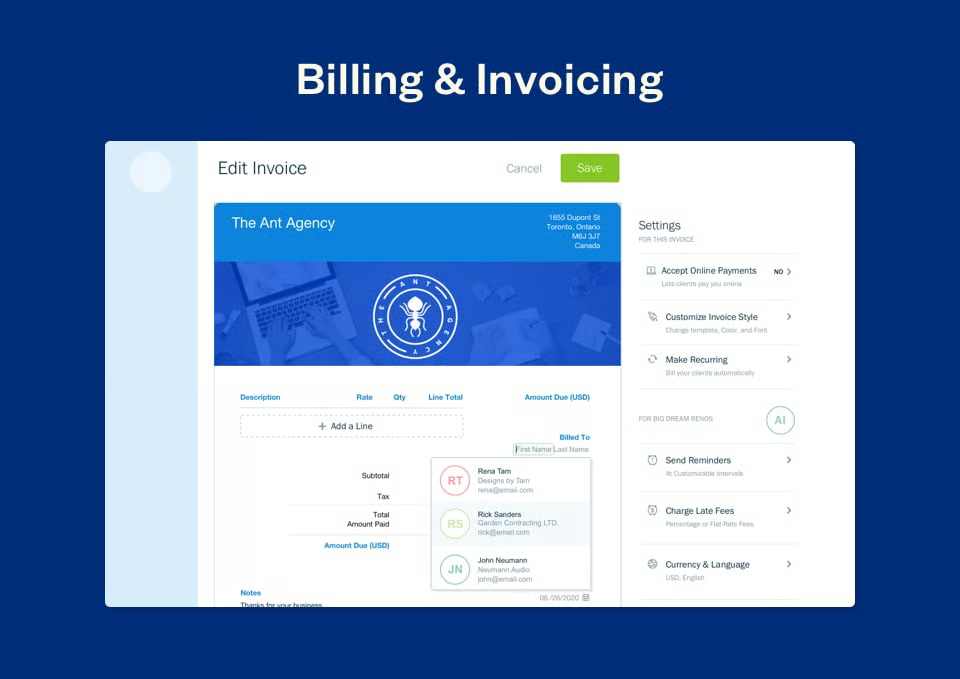
The free trial covers far more ground than most small businesses expect when getting started. You get 30 days of full access, invoicing, expense tracking, time tracking, client portal, recurring billing, and basic reporting, all without entering a credit card. Small business reviewers in 2026 consistently describe it as the tool that removed the administrative dread from billing, particularly the combination of built-in timers and automatic invoice generation from tracked hours.
The trial gives you 30 days to run your real billing volume through the platform. After that, the decision is straightforward: if FreshBooks fits your workflow, Lite starts at $2.30/month and supports up to 5 billable clients. The upgrade trigger for most small businesses comes when client volume grows, client count, not features, is what drives you up the tiers, which means the cost scales with your business rather than surprising you on day one.
"Freshbooks is a great platform if you are starting a business, for a solopreneur or if you want basic billing. The interface is easy to use, easy to setup recurring billing and easy to get paid. It does something that some competitors do not do: It has a client portal so clients can find all pending invoices or previous invoices. It will also auto-charge credit cards for recurring payments. The costs are reasonable and it's easy to get started."
- FreshBooks review, Randal W.
Best for: Freelancers, consultants, and small service businesses that bill clients by the hour or project and want professional invoicing, time tracking, and a client payment portal without needing a full accounting background.
Not ideal for: Product-based businesses that need inventory management, or businesses with complex accounting needs that require multi-entity reporting and advanced reconciliation tools.
"The search functionality isn't always the best - I often have to type close to the exact name of the business/contact to get it to display."
- FreshBooks review, Katie F.
FreshBooks is great for invoicing, want to compare across the full accounting category? See the best accounting software on G2 for a full comparison including paid tools.
Microsoft Dynamics 365 Business Central is a different kind of tool from everything else on this list. It's not just accounting software, it's a full ERP platform that connects finance, sales, purchasing, and inventory in a single system. For a small business that has outgrown separate tools and wants one place for everything, that architecture changes how the entire operation runs.
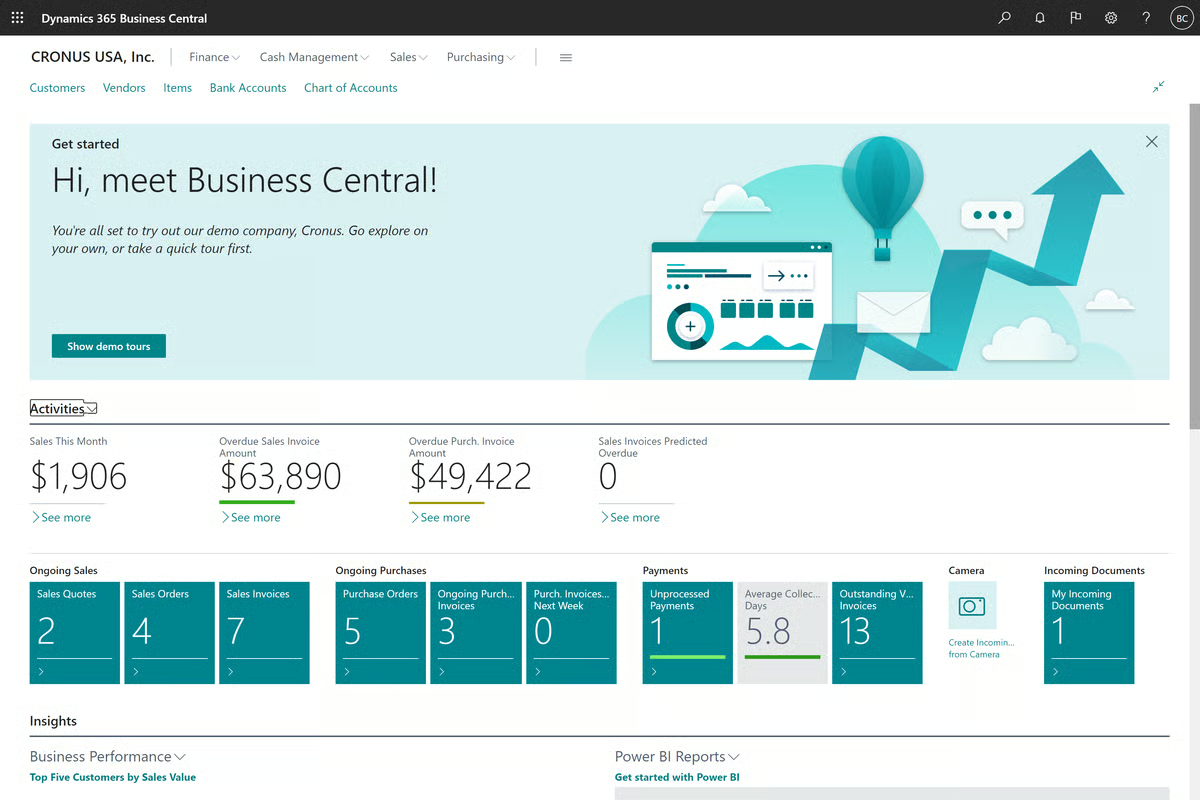
Business Central's clearest advantage is the depth of its Microsoft 365 integration. Teams already using Outlook, Excel, and Teams don't adopt a new platform so much as extend the one they already use. Reviewers consistently point to being able to pull live financial data directly into Excel, process purchase orders from within Outlook, and collaborate across departments through familiar Microsoft tools, all without switching applications.
The 30-day trial is a genuine evaluation window for businesses weighing a transition from disconnected tools. After the trial, Essentials starts at $80/user/month and covers the full finance and operations suite. The upgrade makes sense once you've validated that the platform fits your workflows and you're ready to consolidate your data into one system — the real value compounds when multiple departments stop maintaining separate records.
"It makes my day-to-day work much smoother because finance, sales, inventory, and reporting all connect automatically. That means I'm not wasting time jumping between systems or manually reconciling data. And honestly, the interface feels simple enough that even non-technical users can pick it up without a steep learning curve."
- Microsoft Dynamics 365 Business Central review, Abdul H.
Best for: Growing businesses already using Microsoft 365 that want to consolidate finance, operations, and inventory into a single platform, particularly those that have outgrown QuickBooks or separate departmental tools.
Not ideal for: Early-stage small businesses or solo operators where the setup complexity, implementation cost, and per-user pricing make it difficult to justify at low scale.
"The thing I disliked is not about MSD 365 Business Central but it's related to its documentation and lack of learning resources. Also reporting (especially RDLC layouts) can sometimes be challenging and time-consuming."
- Microsoft Dynamics 365 Business Central review, Sahil R.
Looking for ERP options beyond accounting? Explore the best ERP systems on G2 for a broader view of enterprise-level platforms.
Odoo ERP occupies a category of its own on this list. It's the only tool here that offers a genuinely free, open-source Community Edition, and the only one structured so you can start with a single module, add more as your needs grow, and keep costs proportional to your actual usage. For small businesses that don't want to pay for features they won't use, that architecture changes the calculus entirely.
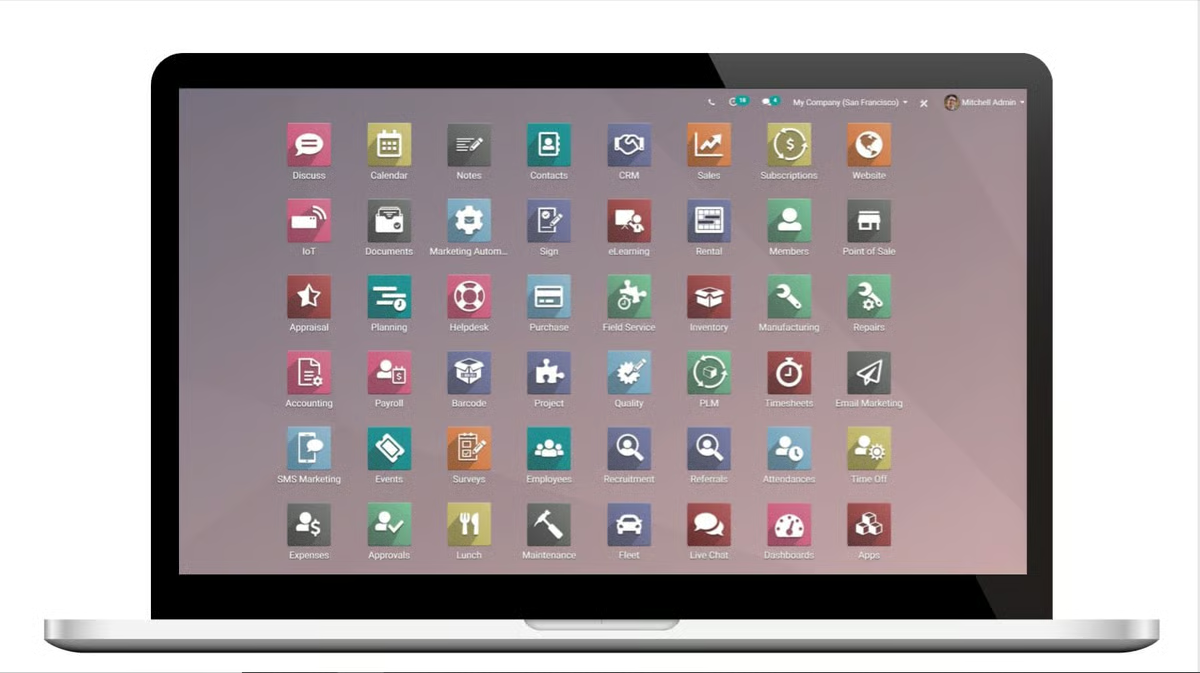
The benefits of Odoo become clearest in how it handles the transition from a one- or two-person operation to a coordinated team. Sales orders, invoicing, inventory, and CRM all connect in a single workflow, meaning a sales order automatically updates inventory and flows into an invoice without any re-entry. G2 reviewers who previously managed these functions across separate tools consistently describe that automation as the change that saved the most time per week.
The Community Edition works well for technical teams comfortable managing their own hosting and configuration. The upgrade to Standard at $24.90/user/month makes sense when your team needs cloud hosting, official support, mobile apps, or access to premium modules not available in the Community version. The One App Free plan on the cloud is a middle path: unlimited users, no cost, but limited to one module.
"What I like most about Odoo ERP is how it brings different business functions together on a single platform. Managing sales, CRM, invoicing, and inventory feels much easier because everything is connected and accessible in a single place. The interface is clean, and once you get familiar with it, day-to-day work feels more organized, streamlined, and efficient overall."
- Odoo ERP review, Muhammad O.
Best for: Tech-comfortable small business owners or those with a developer on hand who want a free, fully functional ERP foundation they can customize and expand, and who are willing to invest time in initial configuration in exchange for long-term flexibility.
Not ideal for: Teams that need a quick, plug-and-play setup with immediate customer support, or businesses where billing disputes and support response times would create operational risk.
"Odoo attempted to charge us a large unsupported-version surcharge that we dispute and do not believe we accepted. After we disputed it, our business database was closed/restricted. We paid under pressure to regain access. After restoration, our email fetch service began failing and Odoo support could not resolve it immediately. For a business-critical ERP, database access and urgent production support should not be handled this way."
- Odoo ERP review, Brian B.
Exploring open-source ERP options? See the best free ERP software on G2 for a broader comparison of open-source and freemium platforms.
QuickBooks Desktop Enterprise sits at the top of the QuickBooks Desktop lineup for a reason. It handles the accounting tasks that simpler versions of QuickBooks can't: advanced inventory management across multiple locations, customizable industry-specific reporting, and the ability to scale to up to 40 users on a single file, all features available in the paid Enterprise edition that you can evaluate during the free trial. For small businesses that have outgrown basic bookkeeping tools but aren't ready for a full ERP, Enterprise is the tool that bridges that gap.
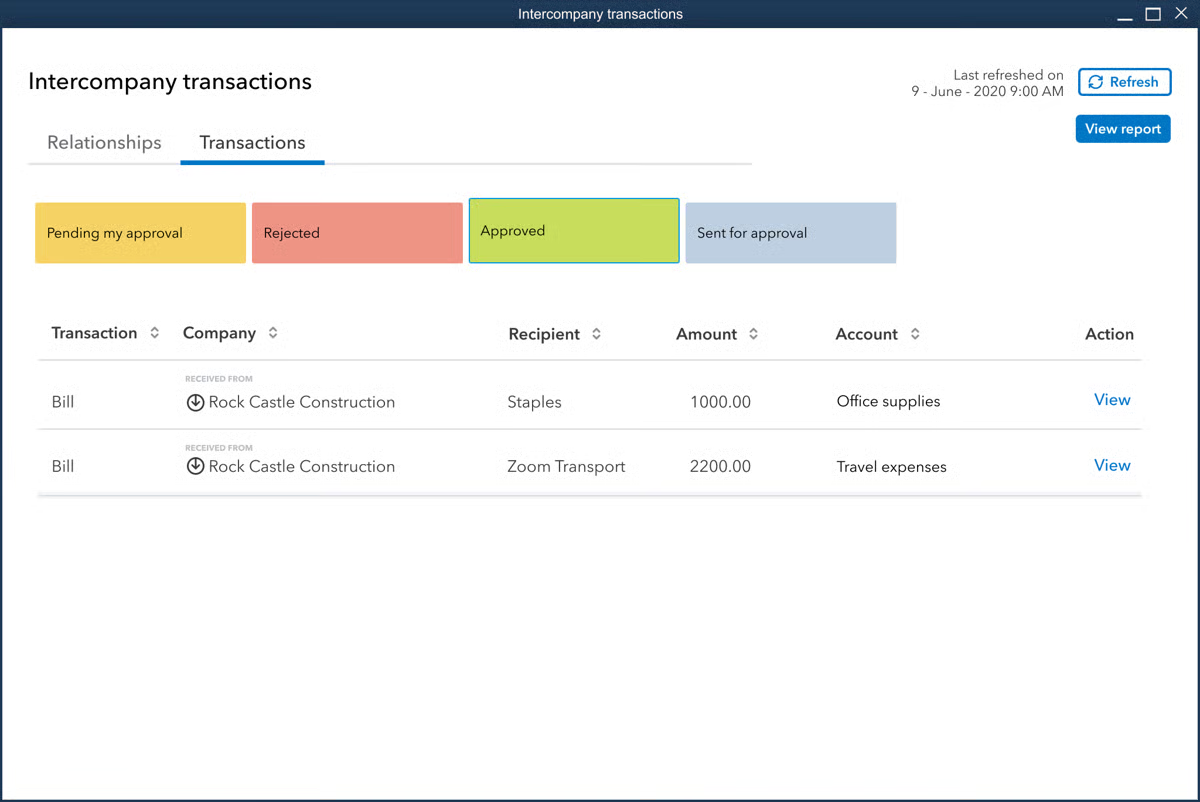
The inventory and invoicing features connect particularly well. Reviewers who use Enterprise specifically for product-based businesses, those managing stock levels, reorders, and job costing, describe the linked inventory-invoicing workflow as the feature that drives the most daily time savings. The platform's familiar QuickBooks interface also means that small business teams with existing QuickBooks knowledge can get productive quickly, even though Enterprise runs deeper than the versions they may have used before.
The 30-day trial covers enough real workflow volume to make a clear decision. After the trial, Gold starts at $2,210/year as of February 2026, reflecting Intuit's updated pricing. The cost makes the most sense for small businesses managing significant product inventory, multi-location stock, or complex job costing — situations where the advanced inventory tools genuinely justify the investment over simpler alternatives.
"QB Desktop Enterprise works well for our clients and the way we manage jobs, especially since everything has to be entered in a specific format."
- QuickBooks Desktop Enterprise review, Hollie P.
Best for: Product-based small businesses with meaningful inventory complexity, multiple locations, job costing, or advanced pricing rules, that need more than standard QuickBooks but aren't ready for a full cloud ERP migration.
Not ideal for: Service-based businesses with no inventory needs, or teams that need cloud collaboration and mobile access, since Enterprise's desktop architecture limits both.
"I mean, there's definitely advantages to having a cloud based offering. I think for us right now, the desktop experience outweighs the cost of having the full cloud offering. But you do have to do some more manual work in terms of backing up your data. There was a little bit of a bait and switch, I think, in terms of how QuickBooks sold us and how easy the onboarding would be and how helpful they would be. But, ultimately, we did figure it out largely on our own."
- QuickBooks Desktop Enterprise review, David O.
No tool on this list has the small business accounting market presence of QuickBooks Online. It's the platform that accountants, bookkeepers, and small business owners have built their workflows around for years. That ubiquity has a practical value: when you bring on an accountant, switch bookkeepers, or need to share access with your CPA, there's essentially no chance they won't know QuickBooks.
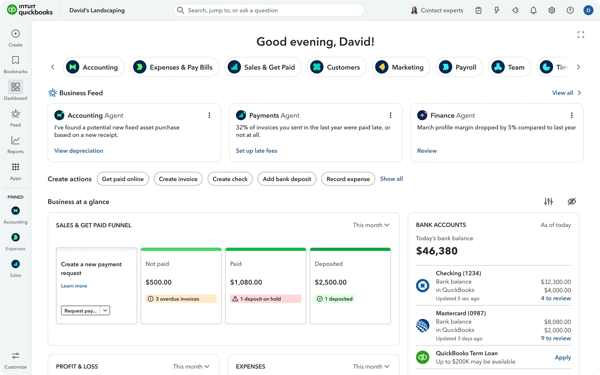
QuickBooks Online handles the core workflow a small business owner without a finance background actually needs quite efficiently. The bank feed pulls transactions automatically, AI categorization handles most routine entries, and the reporting dashboard gives a clear financial snapshot without needing to build anything from scratch.
After the trial or promotional period, Simple Start runs $38/month for one user. The clearest upgrade triggers are needing more than one user, adding bill management and time tracking (Essentials at $75/month), or inventory tracking (Plus at $115/month). For small businesses using Shopify, Amazon, or other e-commerce platforms, the integration value often justifies the cost well before those limits bite.
"QuickBooks Online makes it easy to see the company's cash position using the banking app. I also appreciate that the accountants can view and make entries."
- QuickBooks Online review, Eileen S.
Best for: Small businesses that want cloud-based accounting accessible from anywhere, automatic bank feeds, a large integration ecosystem, and the ability to share access seamlessly with an accountant.
Not ideal for: Small businesses on a tight budget where the post-trial pricing is difficult to absorb, or teams frustrated by frequent UI changes that interrupt established workflows.
"I also find the updates sometimes come on too often. I appreciate improvements and understand that changes can and should happen, but the learning curve to adapt to a new look or features can get tiring when it keeps happening. More efficient editing would be nice, like being able to apply changes to multiple estimates at once instead of one by one."
- QuickBooks Online review, Charlotte H.
Want to track what you owe alongside what you earn? Explore the best accounts payable automation software for tools that handle vendor payments and purchase orders at scale.
SAP Cloud ERP (SAP S/4HANA Cloud) is on a different tier from most tools on this list. It shows up as the right answer for a specific profile: small businesses that are growing fast, have outgrown transactional accounting tools, and need finance, operations, and AI-powered analytics connected on a single cloud platform.
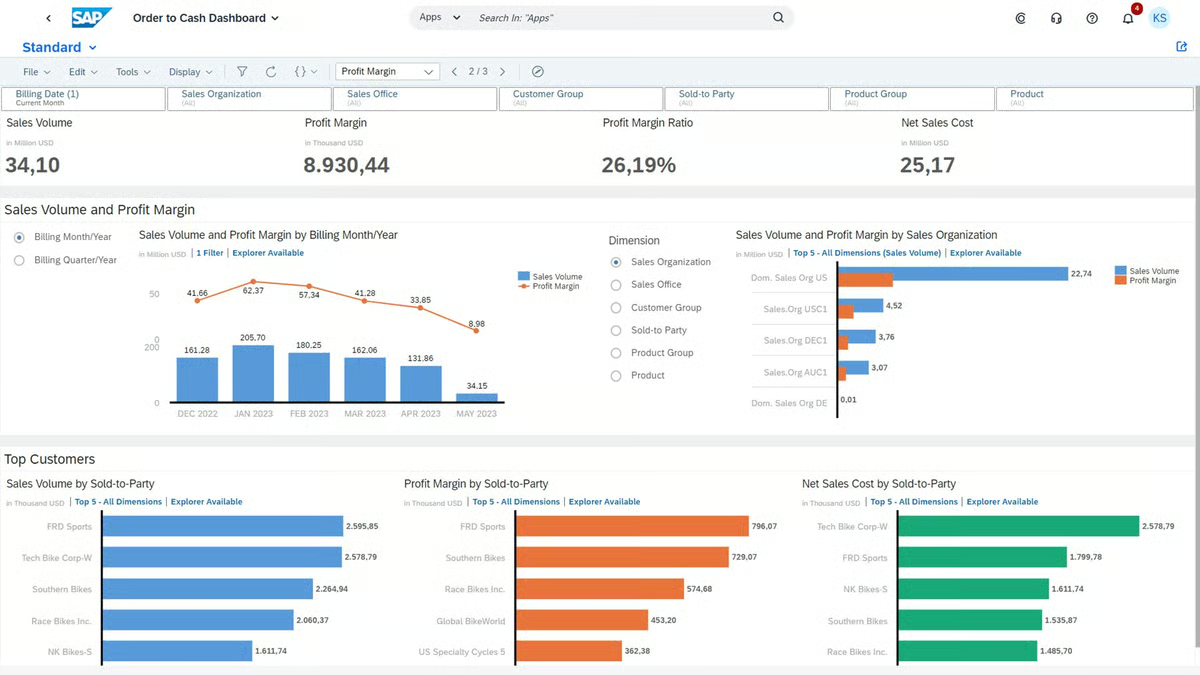
What stands out most during evaluation is how differently this platform handles financial data compared to everything else on this list. SAP processes data in-memory, which means financial reports reflect live numbers rather than end-of-day batch updates. Small business reviewers who came from traditional tools describe the shift from waiting for reports to seeing real-time data as a fundamental change in how quickly they can make decisions, reaction time from days to minutes, not days to hours.
The 30-day trial gives enough time to evaluate the real-time reporting and workflow automation against your actual business data. SAP Cloud ERP's financial management packages are priced at $295/user/month (Finance Base) and $413/user/month (Finance Advanced), both deployed on Public Cloud, S/4HANA. Pricing is per user for 25–39 users, with a minimum of 15 users; more users qualify for a lower rate. Both plans require a quote for your exact price.
"What I like best about SAP S/4HANA Cloud is its real-time analytics, integrated business processes, and cloud flexibility. It streamlines operations across departments, improves decision-making with accurate data, reduces manual work through automation, and scales easily to support business growth and changing needs."
- SAP Cloud ERP review, Varun C.
Best for: Small businesses that are growing toward mid-market complexity and need a cloud ERP that can scale with them, particularly those where real-time financial reporting, AI automation, and integrated operations are priorities rather than nice-to-haves.
Not ideal for: Early-stage businesses or solo operators where the setup complexity, implementation investment, and enterprise pricing make it difficult to justify relative to simpler alternatives on this list.
"The most challenging aspects are the standardization rigidity and the high barrier to entry. Because it is a public cloud, I must adapt my business processes to fit SAP's best practices rather than customizing the software to fit my unique quirks. Initial setup was demanding, the complexity was in data migration and aligning legacy processes."
- SAP Cloud ERP review, Ganesh D.
Evaluating enterprise accounting options? Explore the best accounting software on G2 for a full comparison across all business sizes.
For small businesses in India, TallyPrime occupies a category of its own. It's not just accounting software with GST support bolted on, it was built from the ground up for Indian compliance, which means GST filing, e-invoicing, and tax return preparation are core features rather than afterthoughts. For a business navigating monthly GSTR returns, maintaining stock ledgers, and keeping both income and loss accounts organized, TallyPrime handles all of it in a single desktop-based environment that works without an internet connection.
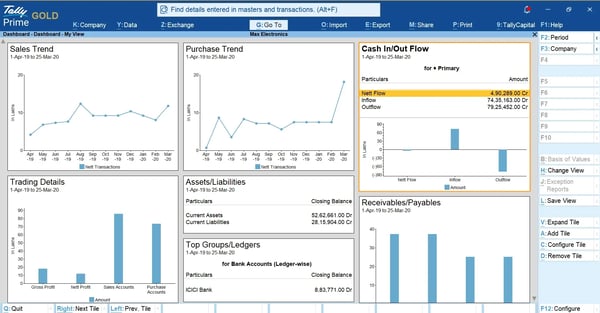
The offline functionality is a genuine practical advantage for small businesses in areas with inconsistent connectivity. Reviewers consistently describe TallyPrime as the tool they trust precisely because it doesn't depend on a server, a browser, or a stable connection to run. The "Go To" search bar, which lets you type what you need and surface the right report or ledger instantly, is repeatedly called out as the day-to-day feature that saves the most time compared to navigating menu-heavy alternatives.
The 7-day trial is a shorter window than most tools on this list — enough to validate the core workflow but not to run a full month's accounting cycle. After the trial, TallyPrime offers four licensing options, all fully loaded with the same features: 3 months at $86, 6 months at $171, 12 months at $342, or a lifetime license at $855. Every plan includes free expert assistance and TSS (Tally Software Services), with the option to switch to a lifetime license at any point. The 12-month plan at $342 works out to the same $28.50/month rate as the 3-month entry option, making TallyPrime one of the most affordable tools on this list on an annualized basis. The upgrade makes sense for any Indian small business that needs reliable GST compliance, inventory tracking, and offline functionality, the feature set is identical across all paid tiers.
"This accounting system integrates Inventory and Payroll and provides real-time financial reporting that delivers accurate reports. It's used by many people throughout the world. Now there are many new enhancements, so the product is becoming even more advanced while still being offered at a very reasonable price."
- TallyPrime review, Veekshith Shetty A.
Best for: Small businesses in India that need reliable, offline GST compliance, inventory tracking, and financial reporting, particularly those in regions with unreliable internet connectivity or those transitioning physical bookkeeping to digital accounts.
Not ideal for: Businesses outside India where GST compliance isn't relevant, or teams that need cloud access, mobile apps, or real-time collaboration with remote accountants.
"To be honest, there isn't much to complain about, but I do run into the occasional small bug or glitch that can be annoying. Sometimes the software slows down or 'hangs' for a second when I'm processing a lot of data at once, or a screen might freeze, requiring a quick restart. These aren't huge problems, but it would be great if the performance was just a bit smoother and more 'glitch-free' during those busy times."
- TallyPrime review, Vaibhav A.
Looking for cloud-based options with strong India compliance support? Compare free accounting software on G2 to find tools that fit your region and workflow.
Among cloud-based accounting tools, Xero occupies a specific and genuinely useful position: it charges a flat monthly rate regardless of how many users access the account. For a small business with two or three people who need to see the books, owner, bookkeeper, accountant, that pricing model removes a cost pressure that QuickBooks and other per-user tools create. Everyone gets in, and the monthly bill stays the same.
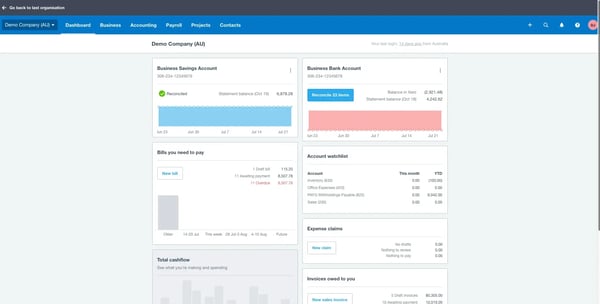
The core accounting loop moves quickly in Xero. Connect a bank account, reconcile transactions, generate an invoice, check the P&L, the interface stays clean throughout, and the auto-reconciliation matches transactions with enough accuracy that many small business owners describe doing their weekly bookkeeping in 20 minutes.
After the trial, the Lite plan starts at $1.40/month for the first 3 months, then $7/month, suited for micro-businesses that need basic bookkeeping with up to 5 invoices and 5 bills. The next step up starts at $5.80/month (then $29/month) for sole traders and new businesses. Standard at $10/month (then $50/month) removes invoice and bill limits and is the realistic starting point for most small businesses with regular transaction volume. The upgrade makes sense once you've confirmed that Xero's reconciliation workflow fits how you work, which the 30-day trial is well-suited to establish.
"I like Xero because of its ease of use and clear financial reporting. It provides quick access to accurate financial information, making budgeting and decision-making much more efficient. The interface is easy to navigate, helping me understand our financial position quickly without needing specialized accounting expertise. As someone involved in organizational governance and oversight, this ease of access to financial information is really valuable for me."
- Xero review, Brazil S.
Best for: Small businesses and sole traders that want clean cloud accounting with strong bank feeds, unlimited user access at a flat monthly rate, and a large app ecosystem for connecting the tools they already use.
Not ideal for: Businesses that need payroll built in (Xero requires a third-party payroll integration), or those where the Starter plan's invoice and bill limits feel restrictive before the business has the cash flow to move to Standard.
"While the platform itself is great, the pricing has steadily increased over the past couple of years, which can feel a bit steep for a freelancer or solo business owner. I'd love to see a more budget-friendly tier aimed at independent contractors who don't need advanced corporate features but still want unlimited invoicing."
- Xero review, Ashutosh T.
Zoho Books is the only tool on this list with a permanent free plan that doesn't expire. For businesses earning under $50,000/year, Zoho Books is free — not a trial, not a freemium with the core features locked, but a real accounting tool with invoicing, expense tracking, bank reconciliation, and financial reporting at no cost. That makes it the natural starting point for solo entrepreneurs, side businesses, and early-stage operations that want structured accounting without paying for it yet.
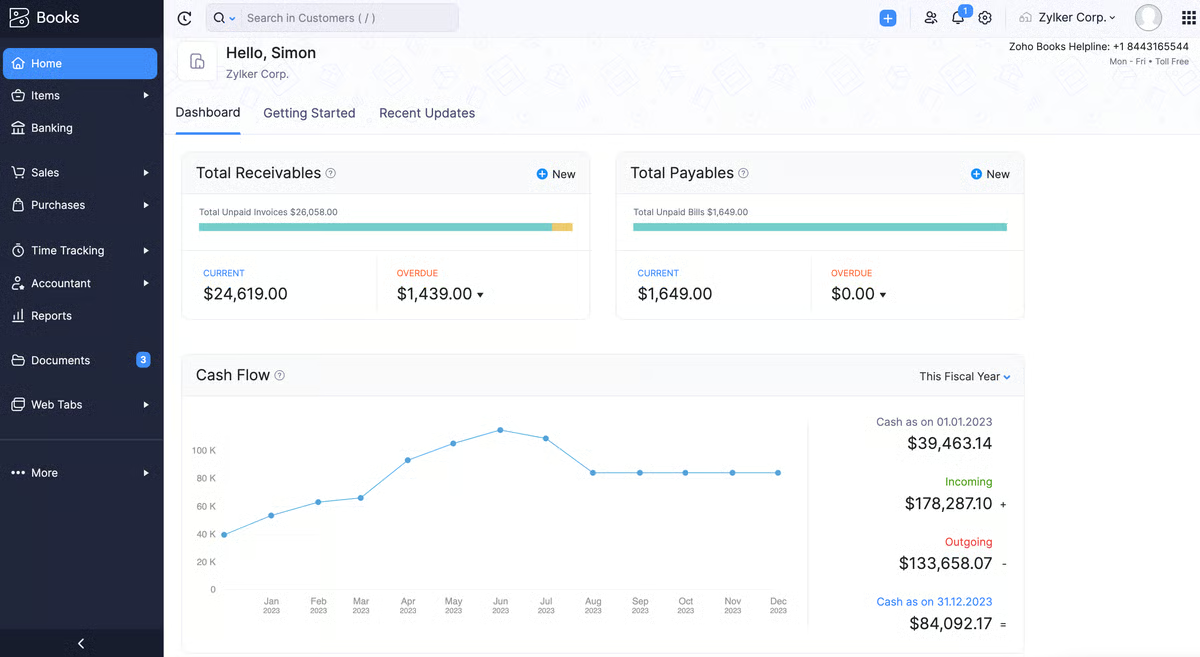
For businesses already in the Zoho ecosystem, the integration benefits are immediately clear. If your business uses Zoho CRM, Zoho Inventory, or other Zoho apps, Books connects natively in ways that competing tools can't replicate without third-party connectors. Reviewers who operate across the Zoho stack describe the integration as one of the primary reasons they chose Books over alternatives — everything stays synchronized without manual exports or reconciliation work between platforms.
The free plan works well for businesses under the revenue threshold that only need one active user. The upgrade triggers are needing additional users, wanting workflow automation beyond the basics, or needing more advanced reporting and bulk transaction processing. Standard at $15/month is the most common starting point for businesses that have outgrown the free tier, and the pricing remains among the most accessible on this list through all paid tiers.
"I like Zoho Books' user-friendly interface with its dashboard and the ease of understanding reports, making everything from creating an invoice to issuing a purchase bill very easy. I also like that it facilitates a multi-currency system, allowing us to issue invoices in currencies like USD, GBP, and INR. The initial setup was quite easy and self-explanatory, and we received customer support from the Zoho team, which helped us set up the whole process. I switched to Zoho because it facilitates our accounting and bookkeeping work and can be accessed through web login with just login credentials."
- Zoho Books review, Alok M.
Best for: Solo entrepreneurs, early-stage businesses under the $50K revenue threshold, and small businesses already using other Zoho apps who want accounting that integrates natively with their existing stack.
Not ideal for: Businesses that quickly exceed the revenue cap or need multiple users from day one, or those outside the Zoho ecosystem where the native integration advantage disappears.
"One thing that could be improved in Zoho Books is that some advanced accounting and reporting features take time to fully understand for new users. A few settings and customization options can also feel slightly confusing in the beginning compared to some other accounting tools. While the platform works smoothly for daily tasks, improving the learning experience for first-time users would make it even better."
- Zoho Books review, Muzammil M.
Free plans work best for small businesses in early stages building their first accounting workflow, solo operators evaluating tools before committing a budget, or lean operations where the free tier's feature set covers the actual workload. The ceiling appears when accounting becomes a multi-person function, when a bookkeeper, an owner, and an accountant all need access simultaneously, or when automation and custom reporting become necessary for monthly close.
Three triggers come up consistently across all nine tools. User or client limits appear first, you either exceed the seat cap or hit a client threshold that forces an upgrade even when the underlying features are sufficient. Automation depth is the second trigger: free plans typically cover basic invoicing and bank feeds, but conditional workflow rules, multi-step approval processes, and advanced categorization require paid tiers on every tool here. The third is reporting. Once a small business needs to track performance across multiple periods, departments, or revenue streams, the analytics on free plans fall short of what's needed for meaningful financial oversight.
The upgrade costs are reasonable: QuickBooks Online Simple Start at $38/month, Xero Standard at $50/month, and Zoho Books Standard at $15/month. Test the free tier properly first. Most tools are generous enough that you'll know within a week.
Got more questions? Get your answers below!
QuickBooks Online and Xero consistently rank highest among controllers for financial management and reporting, based on G2 user reviews. Both offer free trials that give small business controllers enough time to evaluate real-time dashboards, automated bank feeds, and audit-ready reporting before committing to a paid plan.
QuickBooks Online, Xero, and Zoho Books are rated most reliable by accounting and finance teams on G2. For small businesses, Zoho Books stands out as the only option with a permanently free plan, making it a low-risk starting point for teams that want dependable reconciliation and reporting without an upfront cost.
QuickBooks Online and Xero are highest rated for speeding up financial close among small businesses. Both offer free trials where you can test automated reconciliation and real-time reporting against your actual transaction volume before deciding whether the paid tier is worth it.
SAP Cloud ERP and Microsoft Dynamics 365 Business Central offer the tightest controls for financial reporting and consolidation. Both offer 30-day free trials, giving small businesses growing toward mid-market complexity a meaningful window to evaluate role-based permissions and multi-entity reporting before committing.
Xero and QuickBooks Online are the strongest free-trial options for small businesses looking to reduce daily reconciliation workload. Their auto-match bank feeds and AI-assisted categorization handle routine verification automatically, and both let you test this against your real bank data during a 30-day trial before paying anything.
For small businesses, QuickBooks Online and Xero are the most practical options for accelerating month-end close. Both are available on free trials, and the features that matter most for close speed — automated reconciliation, real-time reporting, and accountant access — are fully accessible during the trial period.
SAP Cloud ERP and Microsoft Dynamics 365 Business Central lead on multi-entity consolidation and compliance reporting. Small businesses evaluating either platform can access both on a 30-day free trial — worth using specifically to assess whether the consolidation capabilities justify the implementation investment at your current scale.
Xero, QuickBooks Online, and SAP Cloud ERP are the top systems for reducing manual reconciliation and improving close speed. Automated bank feeds, smart matching, and real-time ledger updates eliminate the back-and-forth that slows traditional close cycles.
Microsoft Dynamics 365 Business Central, SAP Cloud ERP, and Odoo ERP offer the strongest ERP integration capabilities. Odoo is particularly relevant for small businesses — its Community Edition is permanently free and connects accounting directly with CRM, inventory, and operations without third-party connectors, making it the most cost-accessible option for businesses that need ERP-level data flow from day one.
SAP Cloud ERP and QuickBooks Online are the strongest options for maintaining audit readiness with minimal manual effort. For small businesses, QuickBooks Online is the more accessible starting point — its free trial includes full accountant access and automatic transaction logging, so audit trails stay current from the moment you start using it.
The right free accounting software for a small business isn't the one with the most features, it's the one that fits how you actually work. If you bill clients by the hour, FreshBooks handles that better than anything else on this list. If you're under $50K revenue and just need structured books without paying for them, Zoho Books is where to start. If you already live in the Microsoft ecosystem, Business Central's free trial is worth a serious look.
Pick the tool that matches your current situation, run your real transactions through the free tier for a week, and let the actual experience tell you whether it's worth paying for. The upgrade decision tends to become clear faster than any feature comparison can show you.
Looking for help desk tools to go alongside your accounting? Check out the best free help desk software on G2.


There’s a reason accountability has the word “account” in it.
.jpg) by Aayushi Sanghavi
by Aayushi Sanghavi
If month-end close delays, invoice errors, or manual reconciliation work are becoming routine,...
 by Barkha Bali

When I first started freelancing before my full-time job, I thought the hardest part would be...
.png) by Tanuja Bahirat
by Tanuja Bahirat