I know how exciting it can be to imagine creating stunning animations, only to feel limited by the cost of professional tools. The good news is that you don’t need a large budget to bring creative ideas to life. Free animation software offers powerful, feature-rich capabilities with endless possibilities.
Whether you’re a budding animator, a small business owner, or a content creator, I see free tools as a great way to experiment with motion graphics, 2D art, and 3D features to enhance your content.
In this guide, I break down the best free animation software of 2026, sharing in-depth reviews, feature comparisons, and pros and cons to help you choose the option that best fits your skill level, project requirements, and budget.
9 Best free animation software of 2026: My picks
-
3ds Max Design: Best for professional 3D modeling and animation workflows
For detailed character rigs, architectural visualizations, and advanced motion graphics.
-
Cinema 4D: Best for high-end motion graphics and visual effects
For artists who need robust 3D tools, procedural workflows, and seamless, broadcast-ready animation.
-
Harmony: Best for traditional and cut-out 2D animation
For frame-by-frame animation, rigging, and professional cartoon production pipelines.
-
KeyShot: Best for real-time 3D rendering and animation
For fast, photoreal renders with intuitive controls and animation timelines.
- Meshy: Best for AI-generated 3D assets from text or images
Creates detailed, game-ready 3D models from simple text prompts or reference images, dramatically reducing the time and technical expertise needed for 3D content creation.
-
Modo: Best for flexible modeling plus animation creation
For designers seeking robust polygon modeling and responsive animation capabilities.
- Steve AI: Best for turning scripts into animated videos quickly
Automatically converts text scripts into ready-to-publish animated videos using AI-driven scene selection, characters, voiceovers, and transitions, making video creation accessible without design or editing skills.
-
Powtoon: Best for animated presentations and explainer videos
For producing engaging animated slides, business stories, and social content.
-
Vyond: Best for character-based animated storytelling
For creating professional-style business animations, training videos, and scenario walkthroughs.
*The software list is arranged alphabetically. These tools offer free trials, free forever options, or freemium models.
Comparison of the best free animation software
If you feel overwhelmed by the wealth of information about free animation software, this comparison table will help you with all the important aspects:
| Best free animation software |
G2 Rating |
Free plan |
Paid plan |
| 3ds Max Design |
4.3/5 ⭐ |
Free trial available |
|
| Cinema 4D |
4.6/5 ⭐ |
Free trial available |
|
| Harmony |
4.7/5 ⭐ |
Free trial available |
|
| Keyshot |
4.5/5 ⭐ |
Free trial available |
|
| Meshy |
4.7/5 ⭐ |
Free trial available |
|
| Modo |
4.3/5 ⭐ |
Free trial available |
|
| Steve AI |
4.6/5 ⭐ |
Free trial available |
|
| Powtoon |
4.4/5 ⭐ |
Free plan available |
|
| Vyond |
4.7/5 ⭐ |
Free trial available |
|
*All pricing details mentioned in the article are based on publicly available data at the time of publication and are subject to change.
9 best free animation software tools I recommend
The appetite for animation tools continues to grow as visual content becomes a core part of entertainment, marketing, education, and online media. In 2025, the global animation software market was estimated to be worth around $175 billion, underscoring how essential animation tools have become for creators and businesses alike.
The right free animation tool can help you experiment with techniques, learn fundamentals, and even produce polished animations, making it easier to explore your creative vision without hurting your budget.
How did I find and evaluate these free animation software?
To build this list, I began with G2 data, shortlisting top-rated tools based on their G2 scores and consistent performance in the free animation software category.
From there, I reviewed product specs and recent, verified user feedback to confirm that these products deliver real value and to understand where each one stands out.
The goal was simple: to see whether these tools are as good as they claim, what each one is best for, and whether there’s a free version or free trial you can try with minimal risk. And because this is a free-focused list, I paid extra attention to what you can actually do without paying, such as whether the free tier includes core features, how long the free trial lasts, and what limitations might prompt you to upgrade.
The screenshots featured in this article may be a mix of those taken from the vendor’s G2 page or from publicly available materials.
The product list below contains real user reviews from the best free animation software category page. It’s important to note that in the context of this list, vendors offering a free trial are also considered free.
To be included in this category, a solution must:
- Provide functionality for generating animated visuals from 2D and/or 3D images for use in video files
- Import media files from other programs or offer built-in drawing tools
- Integrate with video editing or effects software to finalize animated videos
This data was pulled from G2 in 2026. Some reviews may have been edited for clarity and accuracy.
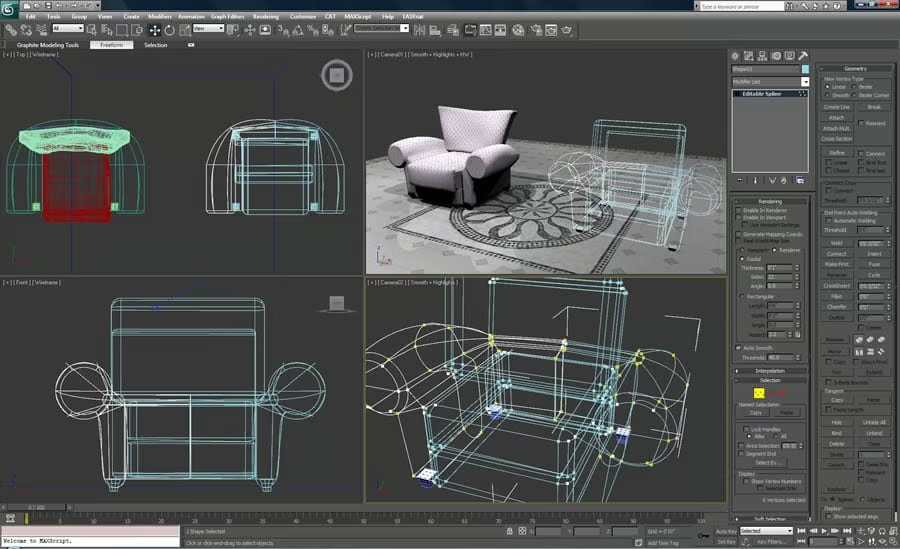
1. 3ds Max Design: Best for professional 3D modeling and animation workflows
3ds Max Design is modeling, rendering, and animation software that offers realistic animation behavior, character rigging, keyframe and procedural tools, sophisticated particle effects, and several third-party extensions. They offer a free trial to get a taste.
Pros and cons of 3ds Max Design: My take
| Pros of 3ds Max Design |
|
| Realistic 3D animations and models |
|
| Extensive feature set |
|
| Large user community and learning resources |
Not likely suited for basic animations
|
What G2 users like about 3ds Max Design:
“3ds Max has one of the best control tools that can help someone sculpt almost anything. Default rendering is equipped with nearly everything that’s needed for the process. And on the other side, we can use other 3rd party rendering engines very easily.”
- 3ds Max Design review, Jitendra C.
What G2 users dislike about 3ds Max Design:
“It is a little tricky to get used to at first. It is like learning a new language with all the buttons and rendering. You definitely need tutorials when you first start out.”
- 3ds Max Design review, Aylin A.
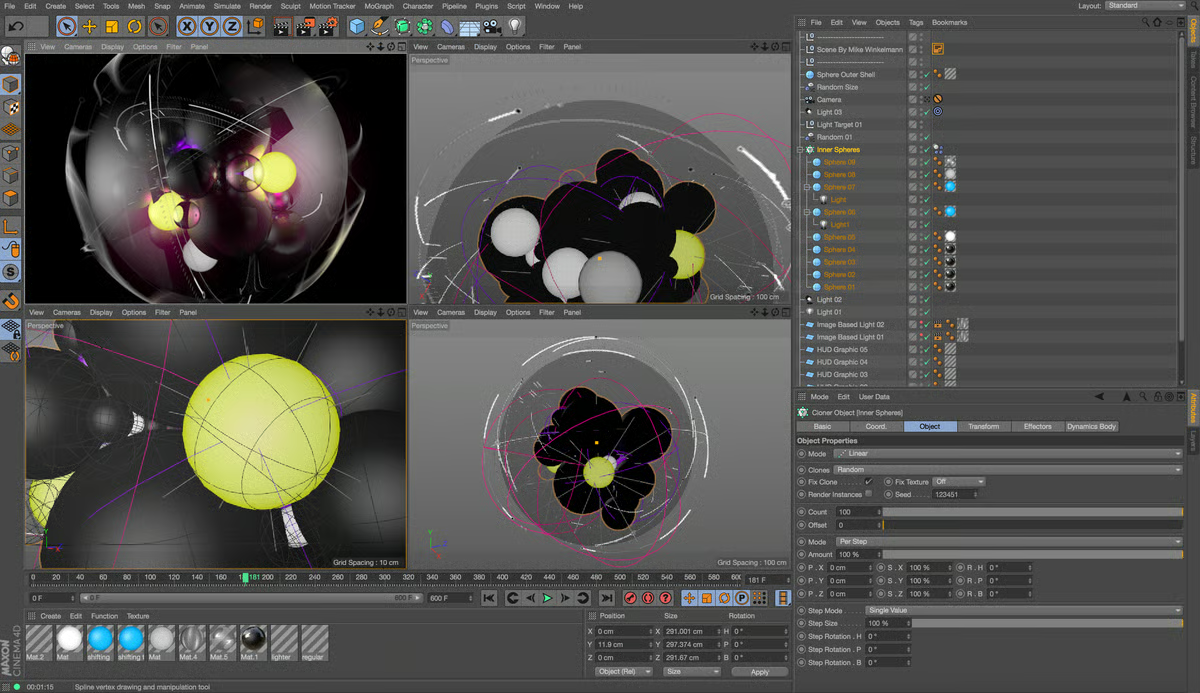
2. Cinema 4D: Best for high-end motion graphics and visual effects
Cinema 4D is a 3D animation software that offers keyframe animation, life-like characters, simulation building, object tracking, flexible rig building, cartoon styling, and all the animation basics. You can get started with a free trial.
Pros and cons of Cinema 4D: My take
| Pros of Cinema 4D |
|
| Robust Mograph module for complex animations |
Limited learning resources
|
| Extensive character animation tools |
|
| Suitable for motion graphics and 3D compositing |
Interface customization options are limited
|
What G2 users like about Cinema 4D:
“The tools in Cinema 4D can be used for a wide range of 3D applications. Users of the program can create basic to complex models quickly, regardless of their experience level. This program not only simplifies modeling but also adds lighting, textures, and animation. If you would like to create a photorealistic image or a cartoon, this program can help.”
- Cinema 4D review, Dennis F.
What G2 users dislike about Cinema 4D:
“While Cinema 4D has a wide range of built-in tools, some advanced features and specialised workflows may require additional third-party plugins, which adds to the overall cost.”
- Cinema 4D review, Pranathi P.
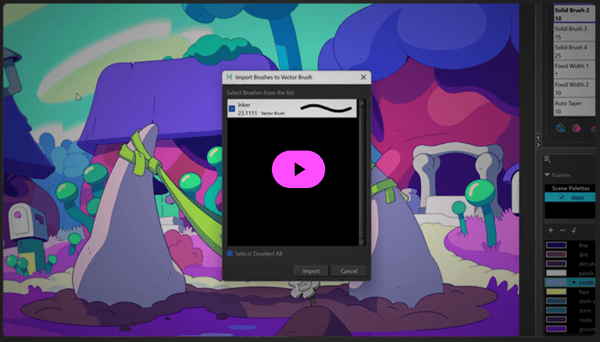
3. Harmony: Best for traditional and cut-out 2D animation
Harmony is 2D animation software specializing in lighting, shading, and special effects. It offers advanced brush engines, cut-out rigging, 2D/3D integration, deformers for more texture, and sound management. Harmony also provides users a free trial of all their subscription plans.
Pros and cons of Harmony: My take
| Pros of Harmony |
|
| High-quality 2D animations |
|
| Robust character rigging features |
No built-in audio editing
|
| Extensive asset management |
|
What G2 users like about Harmony:
“What I like best about Harmony is the way the software gives you so much power to create professional animations and storyboarding. Its user interface is easy to use and flexible.”
- Harmony review, Shawn P.
What G2 users dislike about Harmony:
“When I got my hands on Harmony, things looked really difficult. The learning curve was hard, and some more documentation would be very helpful in the future for new users who want to use Harmony.”
- Harmony review, Stewart T.
4. KeyShot: Best for real-time 3D rendering and animation
KeyShot animation tools support all major 3D file formats and create photorealistic renderings, simple model animations, and interactive visuals. You also get access to environment presets, texture mapping, complex lighting, and more. KeyShot offers a free trial to get you started.
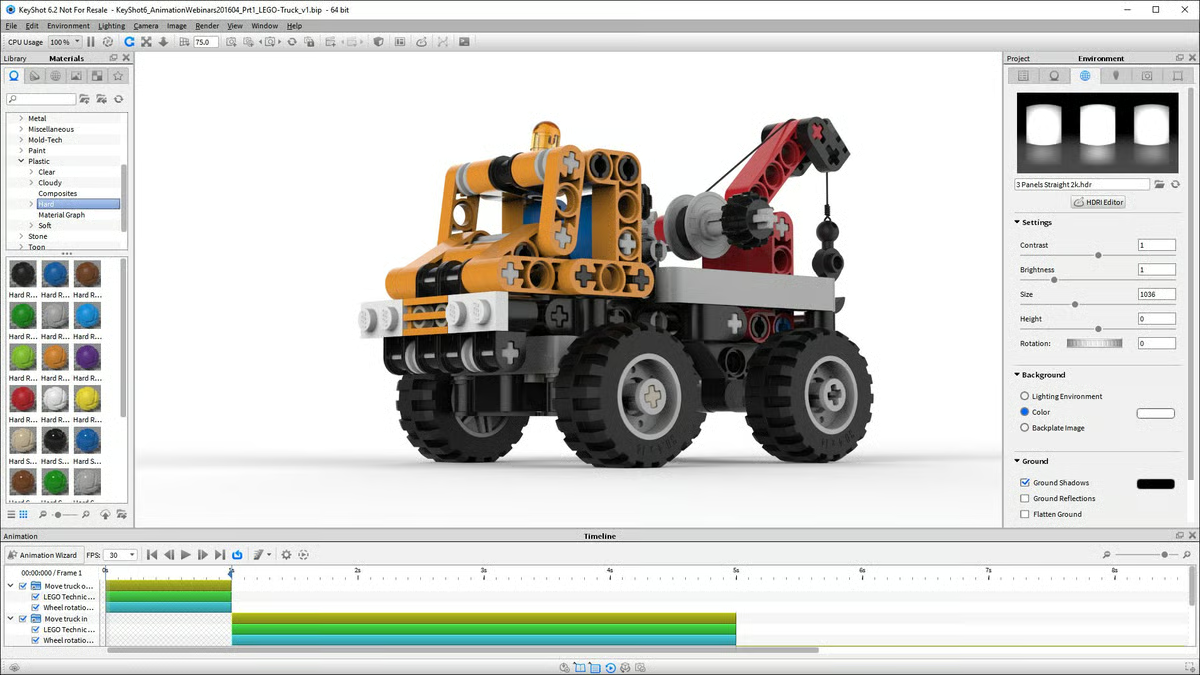
Pros and cons of KeyShot: My take
| Pros of KeyShot |
|
| Real-time rendering |
Limited animation capability
|
| User-friendly interface |
Lacks advanced features for technical rendering
|
| Seamless integration with 3D modeling software |
|
What G2 users like about KeyShot:
“It integrates seamlessly with Creo Parametric, my primary CAD software, which makes the creation process even more efficient. I'm impressed with how KeyShot can take a 3D model from Creo Parametric and transform it into a realistic still image or animation in just a few steps.
The interface is incredibly user-friendly with support for drag-and-drop operations to help you quickly create stunning visuals. Additionally, the library of materials and lighting options allows me to customize my renders even further. With its powerful features and ease of use, KeyShot is definitely worth investing in.”
- Keyshot review, Ammar S.
What G2 users dislike about KeyShot:
“KeyShot lacks in some minor features, like being unable to detect multiple parts of a 3d model. It usually mixes them together into a single model, and therefore can't assign different textures to the different parts.”
- Keyshot review, Subrata S.
5. Meshy: Best for AI-generated 3D assets from text or images
Meshy is an AI-powered 3D model generation tool that helps creators turn text prompts and images into high-quality 3D assets. Designed for artists, game developers, and 3D printing enthusiasts, it simplifies the 3D creation process with features like text-to-3D, image-to-3D, and AI-generated texturing.
Meshy supports multiple art styles, realistic rendering with PBR maps, and exports to popular 3D formats, making it easy to create, refine, and use models across different creative workflows, without requiring prior 3D design experience.
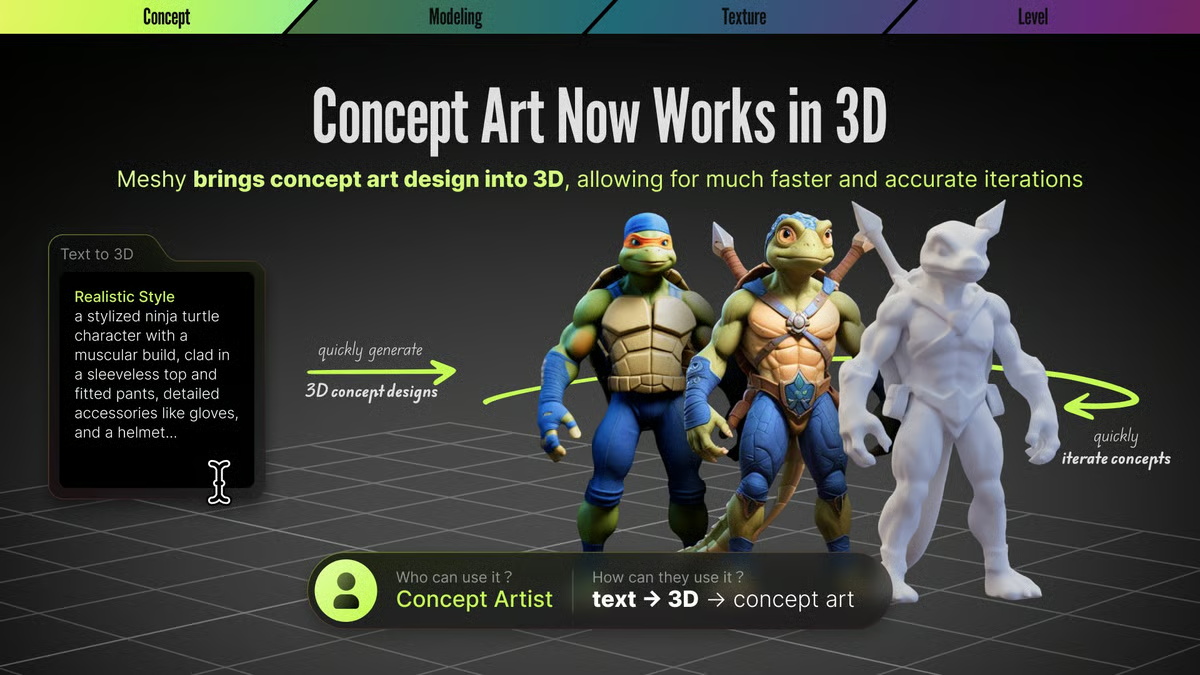
Pros and cons of Meshy: My take
| Pros of Meshy |
Cons of Meshy |
| Very easy to use for fast 3D model creation |
Inconsistent model quality due to limited reference angles |
| Quickly converts images into 3D models |
Topology and accuracy issues may require manual fixes |
| Fast setup with minimal learning curve |
Rendering and texture quality can be uneven |
What G2 users like about Meshy:
"What I like best about Meshy is how effortlessly it turns ideas into usable 3D assets. The speed, quality, and consistency of the generated models are impressive, and the interface makes the whole process feel smooth and intuitive. It’s a real time-saver and a powerful creative boost, especially for prototyping, game development, and visual experimentation."
- Meshy review, Andrew B.
What G2 users dislike about Meshy:
"I'm experiencing issues with the multi-picture upload feature. The details are not as clear or accurate as they appear to be advertised."
- Meshy review, Daniel C.
6. Modo: Best for flexible modeling plus animation creation
Modo is a modeling, rendering, texturing, and animation software. Modo offers extensive modeling toolsets, hybrid renderers, workflow systems, machine learning, and tools to create 2D and 3D animations. Try it out for free.
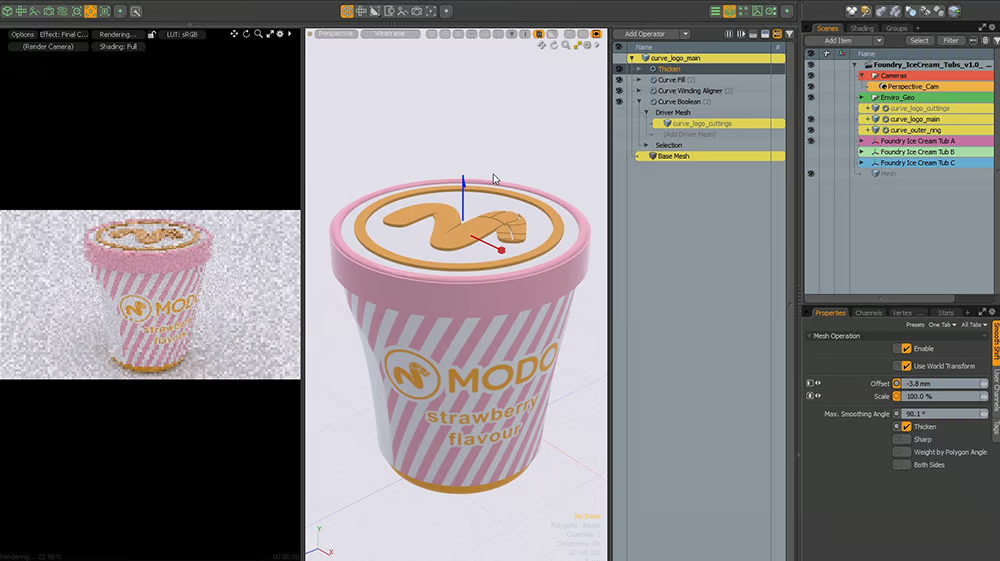
Pros and cons of Modo: My take
| Pros of Modo |
|
| Advanced toolset for professionals |
Significant learning curve
|
| Flexible and customizable |
|
| User-friendly interface |
Occasional slow animation playback
|
What G2 users like about Modo:
“Modo's modeling interface, navigation, and toggling hotkeys altogether make for a smooth work experience. Modeling is very fast, and setting up materials and rendering is also seamless. Modo has a great community of people willing to help with troubleshooting as well.”
- Modo review, Jason B.
What G2 users dislike about Modo:
“Animation playback can be slow at times on scenes with multiple characters. While Modo does have painting and sculpting tools, they could be updated to increase their usability.”
- Modo review, William V.
7. Steve AI: Best for turning scripts into animated videos quickly
Steve AI is an AI-powered video creation platform that helps brands and businesses generate engaging videos in minutes. It transforms simple prompts into polished videos for social media, advertising, and storytelling, without requiring advanced editing skills. With faster rendering, improved prompt-based generation, and direct YouTube integration, Steve AI streamlines video production and supports automated content creation at scale, making high-quality video accessible with minimal time and effort.
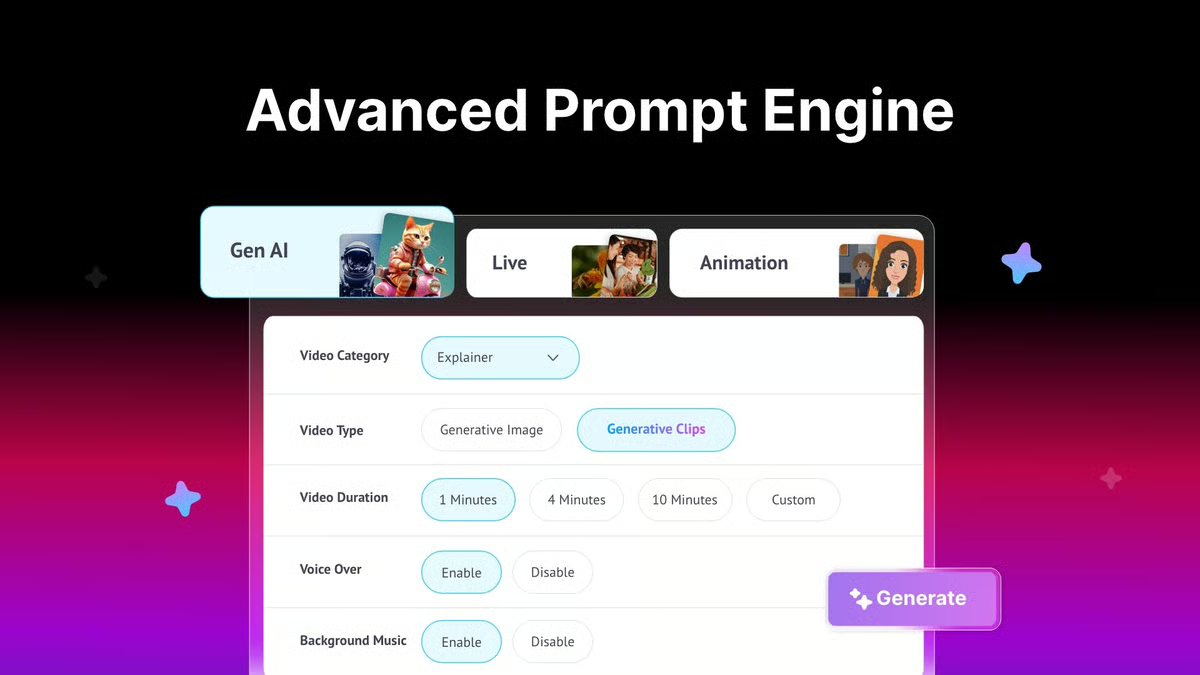
Pros and cons of Steve AI: My take
| Pros of Steve AI |
Cons of Steve AI |
| Fast turnaround for creating professional-looking videos |
Pricing tiers and voiceover options lack flexibility |
| Time-saving tools that simplify video production |
Occasional usability issues with buttons and browsers |
| Responsive customer support |
Video quality may feel limited for advanced use cases |
What G2 users like about Steve AI:
"The diversity and clarity, at the same time, are user-friendly too."
- Steve AI review, Ankita S.
What G2 users dislike about Steve AI:
"I don't like Google and don't like their Chrome browser as well as Safari. It's slower, and all of my extensive bookmarks are on Safari. Steve.ai does work best with Chrome, and that is now what I'm using until Apple (if they ever do) makes good on their browser use.
I'm also using GoPlus as my website software, and it works best with Safari but still has issues when I also use Chrome.
Things are getting really complicated, and for a casual user, good luck. Steve.ai still works extremely well on the Chrome browser, so I have nothing bad to say about the Steve.ai software. Just be patient and document as best you can what issues (if any) you are facing.
Steve.ai's customer support is the best, and this is probably due to the location of the support team. From what I understand, Steve.ai is new, AI is new, and this is a US-based company, even though support is handled outside the US.
- Steve AI review, Richard B.
8. Powtoon: Best for animated presentations and explainer videos
Powtoon is a visual communication platform offering creative tools for short videos and animations. Powtoon gives users access to professionally designed templates, characters, clips, audio, full scenes, and more with paid options and a free plan.
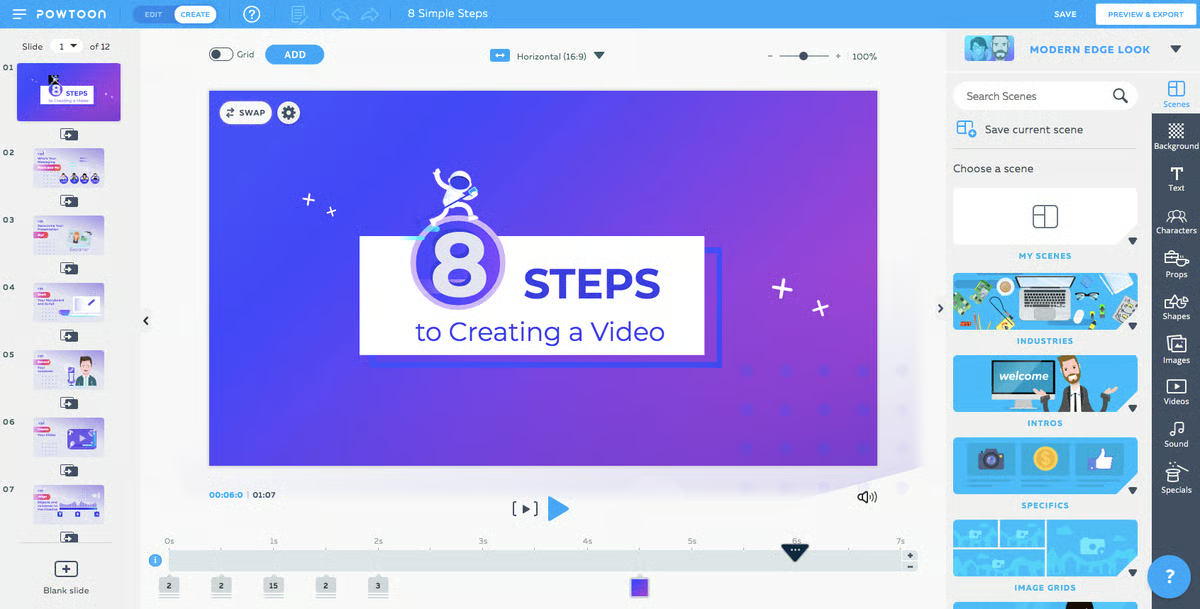
Pros and cons of Powtoon: My take
| Pros of Powtoon |
|
| Variety of pre-built animations and templates |
Occasional glitches or lag, especially with complex projects
|
| On-the-go editing and collaboration |
Watermarks and export restrictions
|
| Intuitive interface with drag-and-drop functionality |
|
What G2 users like about Powtoon:
“Powtoon continuously improves its core product, making a great product even better day by day. I use it to develop presentations, tutorials, and screen recordings that keep audiences engaged. The design canvas is easy to use, and the characters, videos, music, etc., make it easy to tell compelling stories.”
- Powtoon review, Craig E.
What G2 users dislike about Powtoon:
“Personally, the only thing that's not so great is that sometimes the website gets a little slow when your video is too heavy.”
- Powtoon review, Catalina J.
9. Vyond: Best for character-based animated storytelling
Vyond offers users a free trial to dip their toes into a platform built for professionals at all skill levels. With Vyond, you get prebuilt templates, drag and drop controls, dynamic transitions, royalty-free music, stock characters, and the flexibility to adapt to different uses.

Pros and cons of Vyond: My take
| Pros of Vyond |
|
| Intuitive interface for beginners |
Limited features for teamwork
|
| Extensive library for customization |
Restrictive character, prop, and background choices
|
| Pre-Built templates |
Customization limitations
|
What G2 users like about Vyond:
“I have been using Vyond for many years since it was GoAnimate, and I absolutely love the product for explaining complex or dull topics. The ability to get my ideas from my brain into a publishable form is powerful. Their ever-expanding product provides the assets I need to create animations in one platform. And, as I can upload assets, I'm limited only by my imagination. I'm happy I can now quickly unleash my creativity in the Vyond platform, as every other product I tried could not compete!”
- Vyond review, Marvin F.
What G2 users dislike about Vyond:
“I can only think of two things that I am not thrilled with while using Vyond software. I would love to be able to create custom clothing for the characters that includes a company logo, etc. The only other thing is that when exporting a video, it converts the colors just a bit, so brand colors may look a little off. We have had to figure out what hex code to use for our brand colors in order for them to output in the correct color.”
- Vyond review, Deanna G.

Frequently asked questions on free animation software
Q1. Are there any limitations to using free animation software?
Free animation software, while accessible, often comes with limitations. You might find missing advanced tools or video editing features essential for complex projects. Additionally, the quality and format of your final animation could be restricted. Since free software typically doesn't include technical support, you'll need to troubleshoot issues on your own.
Q2. Where can I find tutorials and resources for using free animation software?
Learning to use free animation software is easier than you might think. Most software comes with comprehensive guides to get you started. There's also a wealth of online tutorials on platforms like YouTube and the software developer's website. Plus, you can join online communities to connect with other users and seek help when needed.
Q3. What next steps can I take to get started with animation?
Once you have chosen a free animation software program, you can take the following steps to get started:
- Download and install the software.
- Go through the software's documentation or tutorials to learn the basics.
- Start with a small, simple project to experiment with the software.
- Join online communities to connect with other animators and get feedback on your work.
Q4. Which free animation software is best for beginners?
Beginners usually benefit from tools that prioritize simplicity and templates over technical depth.
- Powtoon is very beginner-friendly for explainer videos and presentations.
- Steve AI works well for users who want AI-assisted video creation with a minimal learning curve.
- Vyond is intuitive but mainly accessible through trials for free use.
These tools help new users focus on storytelling rather than animation mechanics.
Q5. Do free animation tools support 2D and 3D animation?
Yes, but usually not equally.
- Tools like Powtoon, Vyond, and Steve AI focus on 2D animation.
- Professional 3D tools such as Cinema 4D, 3ds Max Design, Modo, KeyShot, and Meshy support advanced 3D animation, though free access is typically limited to trials or educational licenses.
Fully free 3D animation with no restrictions is rare.
Q6. Can free animation software export videos without watermarks?
In most cases, watermark-free exports are restricted.
- Free plans from Powtoon and Vyond usually include watermarks.
- Steve AI may limit exports or add branding in free tiers.
- Professional tools like Cinema 4D or 3ds Max Design allow clean exports during trials, but continued use requires a paid license.
Q7. Do free animation tools include built-in assets or templates?
Yes, especially beginner-oriented platforms.
Powtoon, Vyond, and Steve AI include built-in templates, characters, and scenes to speed up creation. Asset variety is often reduced in free plans, with premium libraries reserved for paid tiers.
Q8. Can free animation software support frame-by-frame animation?
This is rare in fully free tools.
Frame-by-frame animation is typically supported by professional software like Harmony, Modo, and Cinema 4D, but these are accessible for free mainly via trials or student licenses. Template-based tools like Powtoon and Vyond do not support traditional frame-by-frame workflows.
Q9. Does free animation software support collaboration or team workflows?
Collaboration is usually limited or locked in free plans.
- Vyond and Powtoon support team workflows in paid plans.
- Free tiers generally focus on solo creation, with restricted sharing and no role-based access.
Team collaboration is one of the most common upgrade triggers.
Q10. What is the best free animation software for YouTube videos?
For YouTube creators:
- Powtoon is great for explainer-style videos.
- Steve AI works well for quick, AI-generated video content.
- Vyond is popular for storytelling and business content, though free access is limited.
These tools prioritize speed, templates, and readability for online audiences.
Q11. Are free animation tools suitable for game development?
Only to a limited extent.
Professional tools like Cinema 4D, Modo, and 3ds Max Design are widely used in game development pipelines, but they are not truly free long-term. Free, template-based tools like Powtoon and Vyond are not designed for game asset creation or real-time animation.
And scene!
This list may be over, but your animation journey is just beginning. Beginner or expert animation software takes you many steps ahead and helps create attention-grabbing and engaging content.
Need an Adobe Animate alternative? Explore this breakdown of tools that work for different animation use cases.
This article was originally published in 2024. It has been updated with new information.