


Brands nowadays create all kinds of digital assets to promote their products and services. As the online world continues to evolve with new forms of visual, audible, and written media, there’s never been a better time to dive into the world of content creation.
So, if you’ve ever thought about dipping your toes and becoming a content creator, now is the perfect time to get started.
A content creator is an individual who produces original digital content like videos, articles, social media posts, or podcasts to engage an online audience. Content creators build communities on platforms such as YouTube, TikTok, and Instagram and often earn revenue through ads, sponsorships, or merchandise.
A content creator typically has a unique perspective or point of view, which resonates with their target audience and helps them grow a following over time.
Like the field of content creation, its applications have also grown. Thanks to social media, many content creators are now influencers earning money by creating content that includes brand promotion.
Others work as full-time content creators internally at businesses, creating content specifically for that organization. And then some simply create content online for their own enjoyment!
Although the type of media a content creator creates can vary significantly, many of them turn to content creation software for various purposes. These include helping creators write their content, design graphics for social media, or combine their clips into a cohesive video.
Newly developed technology, such as the integration of artificial intelligence (AI), is making content creation faster and easier. This allows creators to spend less time on admin and focus more on being creative.
Just as there are numerous outlets for content to be published, so are the types of content creators. They can be categorized according to the kind of media output they create. Some specialize in one or two, while others have skills across various types.
These include photographers, videographers, graphic designers, and illustrators. They create eye-catching content for platforms such as Instagram, Pinterest, TikTok, and YouTube Shorts. With skills in shooting, editing, and storytelling, visual creators often collaborate with brands or sell prints, templates, or stock content.
Podcasters and audio-based content creators focus on delivering long-form or episodic content. They research, script, record, and edit discussions or interviews, often on niche topics, and upload them to a podcasting hosting platform for distribution. Some platforms include Spotify, Apple Podcasts, and YouTube.
Even with the rise of video and photo platforms, blog content is still lucrative for many content creators. Beyond this, other written content like email newsletters, eBooks, and even scripts for videos or podcasts are all avenues that strong writers can take as content creators. These creators publish on personal blogs, LinkedIn, Medium, or branded websites.
Not all content creators are influencers, but all influencers are content creators. These individuals are often a mix of the above but rely on their large social following to make money from their content.
Whether it’s collaborating with brands to create content for the branded account or promoting those brands on their own channels to their audience, these content creators use their influence to help businesses reach new audiences online.
YouTube creators, Twitch streamers, and short-form video influencers fall under this category. They produce tutorials, reviews, vlogs, live streams, and entertainment content. Monetization often comes from ad revenue, sponsorships, affiliate links, and fan support (e.g., memberships, Super Chat).
These creators focus on tutorials, online courses, explainers, and thought leadership, often in niche or technical domains. They may use blogs, YouTube, LinkedIn, or course platforms like Teachable. Revenue is generated from course sales, consulting, workshops, and speaking engagements.
Although many people don’t think of this group as content creators, they are! Content marketers work for a single brand to create media that aligns with the overarching business goals. Examples could be company blog content, social media posts, or videos for internal stakeholders.
Whether you're making videos, writing blog posts, or building a community from scratch, the most successful content creators blend creativity with strategy, and technical skills with emotional intelligence. Here are the top skills that matter:
Depending on the type of content creator you want to be, there are several ways that you can earn an income from the media you produce. This would typically be a standard salary for internal, company-employed content creators. But for freelance or self-employed content creators, income can come from:
| Content creator type | Core platforms | Main revenue streams | Details |
| YouTubers/video creators | YouTube, Instagram Reels, TikTok | AdSense, brand sponsorships, affiliate links, product sales | Ad revenue is scalable; high CPM in certain sectors |
| Podcasters/audio creators | Spotify, Apple Podcasts, Patreon, YouTube | Sponsorships, listener donations, subscriptions | Requires strong storytelling and audience retention |
| Writers/bloggers | Personal blogs, Medium, Substack, LinkedIn | Affiliate links, ads, gated content, freelance work | High ROI for niche topics and evergreen content |
| Social media influencers | Instagram, TikTok, YouTube Shorts, Threads | Sponsored content, affiliate marketing, merch | Audience trust is key to conversion |
| Educators/thought leaders | YouTube, LinkedIn, Teachable, X | Online courses, consulting, webinars, speaking | B2B creators can earn more from services than views |
| Streamers (gaming/live) | Twitch, Kick, YouTube Live, Discord | Subscriptions, fan donations, sponsorships, affiliate links | Consistent schedule and community-building are critical |
| Designers/visual creators | Instagram, Behance, Dribbble, Etsy | Selling templates, printables, NFTs, and freelance work | Ideal for portfolio building and passive digital product income |
There’s plenty of demand for talented content creators, but there’s also a large number of people trying to make this career their own. While there’s room for everyone in such a vast industry, a few important practices should be kept in mind as you build your portfolio of work.
Trying to be on every platform at once is a fast track to burnout. Instead, start with one or two that best suit your skills and audience habits. If you’re a strong writer, consider Substack, LinkedIn, or a blog. If you’re great on camera, lean into TikTok or YouTube. Designers might thrive on Instagram or Pinterest.
Once you gain traction, expand into other formats or channels. It might make you look more appealing to brands you want to partner with and help you attract a wider audience.
To become an expert in your chosen field, you must know what’s popular and when. Follow other content creators who talk about the topics you want to create content on and learn as much about your niche as possible.
If a new trend comes up, make sure you can turn around content quickly to capitalize on this and give yourself the best chance of creating a viral hit.
Consistency beats perfection. The most successful content creators aren’t the ones with flawless output, but the ones who show up regularly and provide real value. That could mean educating, entertaining, inspiring, or simply helping people solve a problem. Whether you post once a week or daily, develop a sustainable cadence that allows you to maintain quality without overwhelming yourself.
Creating content is only half the job; getting it seen is just as important. Use basic SEO techniques to optimize titles, descriptions, and keywords if you’re writing or uploading videos. Repurpose long-form pieces into social snippets, carousels, or email newsletters to extend their reach. Promote your work in relevant communities, collaborate with other creators, and stay engaged with your audience.
Making content for a living can be lonely, especially if you’re working for yourself. So make sure you’re reaching out to other creators and building a community around you. This also opens up opportunities for collaborations, both with other creators and brands. Take every opportunity to build relationships as you grow your following.
Once you’ve established yourself online and have a portfolio of work behind you, it’s time to start reaching out to brands you might be interested in working with. Don’t wait for opportunities to come to you. Instead, offer to help them promote a new product or service and see who’s interested in partnering with you.
From algorithm shifts to audience criticism, there are certain challenges that can derail even the most passionate creators. Here are the most common roadblocks and how to navigate them.
With so many aspects of content creation, any opportunity to accelerate your process and simplify creating should be taken. G2 helps creators find content creation software that can produce tailored content in various formats for different audiences and platforms.
To be included in the Content Creation category, platforms must:
*Below are the top five leading content creation software solutions from G2’s Fall 2025 Grid Report. Some reviews may be edited for clarity.
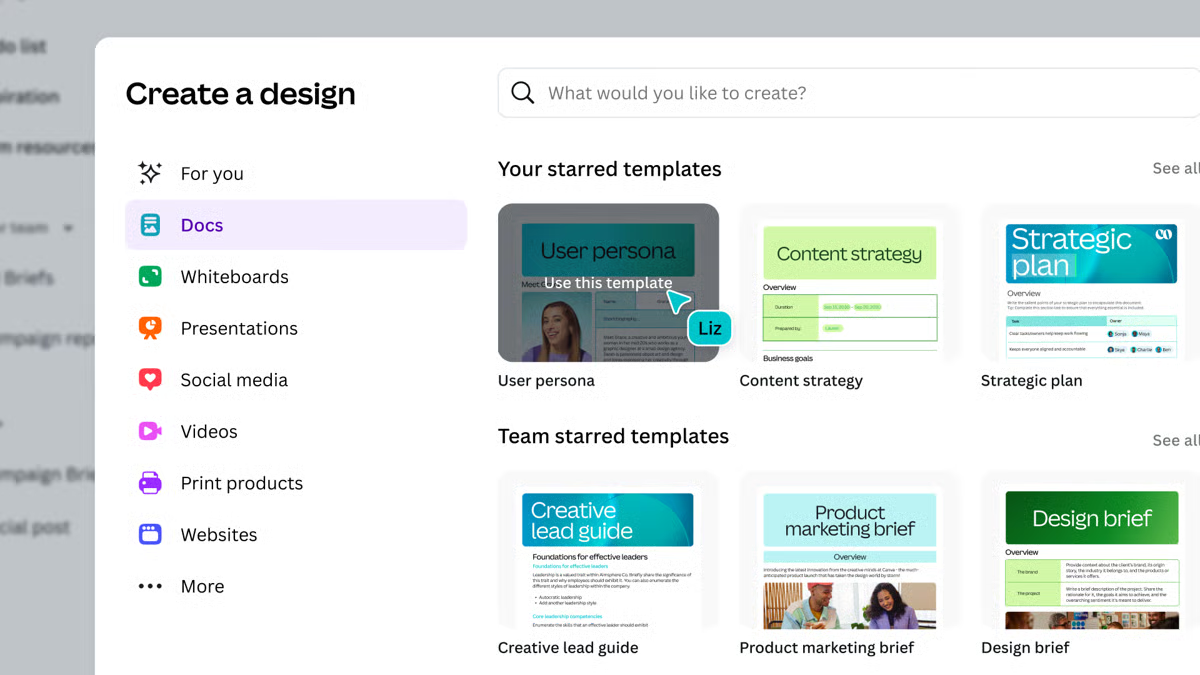
Canva is a graphic design platform that empowers users to create stunning visual content with ease. Whether you're designing social media posts, presentations, infographics, or marketing materials, Canva’s drag-and-drop interface, robust template library, and brand kit features make it accessible for beginners and pros alike.
“I like real-time editing and free availability of copyright-free photos and videos, along with graphics in canvas. This software also has some of the best and high-quality free templates available for designing online posters and banners just in minutes.”
- Canva review, Shaik U.
“Sometimes Canva feels a bit slow, especially when loading templates or elements. A few features are locked behind the Pro plan, which can be annoying when you're in the middle of a design. The mobile app is not as smooth as the desktop version, and collaboration can get confusing when multiple people are editing. Export quality also drops occasionally when dealing with complex graphics.”
- Canva review, Jatin Y.
Synthesia is an AI video generation tool that allows businesses and individuals to create engaging video content. The platform can transform PDFs and images into exciting interactive content while also providing options for creating animated video material and converting text into speech for video voice-overs.
“The editing features make it really intuitive to author engaging videos. Synthesia tools make it easy to animate the layout of scenes with pinpoint accuracy as to script timing and specific behaviors. The avatars are hyper-realistic and keep getting better. The new layers feature makes it even easier to edit complex scenes with multiple images and text features, in ways that were difficult before.”
- Synthesia review, Jay W.
“I would like to see more native speaker languages to make the videos more authentic.”
- Synthesia review, Klaus H.
Snagit is a powerful screen capture and image editing tool built for professionals who need to communicate visually. The platform enables users to quickly grab screenshots or record video of their screen activity, then annotate, trim, and share with clarity.
“The ease of use. It is unambiguous and user-friendly. I use it every single day in my work. There are so many tools at my disposal. I have convinced so many of my colleagues to use this in their work as well. The copy all feature makes this work in every program I use: Canva, Word, Adobe, everything.”
- Snagit review, Victoriana P.
“The main downside is that the video editing features are a bit limited when compared to specialized video editing software. Sometimes, working with large captures can be slow, especially on older computers, and I also wish the export options provided greater flexibility.”
- Snagit review, Vishal D.
VEED is a browser-based video editing platform that simplifies the creation of professional-quality videos without complex software. From cutting and trimming to adding subtitles, effects, and brand assets, VEED helps content creators produce engaging video content for platforms like YouTube, TikTok, and LinkedIn.
“VEED is incredibly easy to use and is fairly versatile. The learning curve is relatively small, even if you have little to no video editing experience. It creates great-looking videos quickly and offers numerous options for voiceovers, stock footage, and effects. Implementing VEED has been easy, and the onboarding was smooth. The customer support is top-tier, and people are very responsive. I use VEED frequently for my role, and have very few issues.”
- VEED review, Erin B.
“I tried using the AI video creation feature in VEED, but it didn't do a particularly good job of following my prompt. This lack of precision in AI-driven tasks was disappointing.”
- VEED review, Matt S.
Semrush is a SaaS platform that allows businesses to complete research and track search engine optimization, content, and paid advertising campaigns. With tools to manage keywords, find new content opportunities, and research competitors, Semrush is essential for content creators across all media.
“I like SEMrush because of how comprehensive and detailed their SEO tool is. The domain overview, keyword gap, keyword magic tool, and backlink analytics are some of the best features out there.”
- Semrush review, Opeyemi O.
“The interface can also be overwhelming due to the vast array of tools and data, making it difficult for beginners to navigate. Moreover, there can be a learning curve to effectively utilize all of its features, requiring time and training. Lastly, while Semrush offers a wealth of data, the accuracy of its traffic analytics and keyword difficulty scores may sometimes be questioned, as they are estimates and can sometimes vary from actual figures.”
- Semrush review, Ivan M.

Got more questions? We got the answer.
Influencers are a subset of content creators who primarily monetize through brand partnerships and their personal following. Content creators may or may not have large audiences, but often focus on educational, editorial, or creative content that delivers value regardless of reach.
Earnings vary widely. Small creators might earn a few hundred dollars a month, while top creators can make six or even seven figures annually. Income depends on the content format, monetization model, audience size, engagement level, and niche.
No. Many creators earn meaningful income with small but highly engaged audiences. They can build trust and, at times, convert better than larger accounts by focusing on niche value and authentic engagement.
Yes. Content creation continues to grow as a career path, side hustle, and marketing channel. With improved tools, more monetization options, and strong demand, it remains a viable and scalable opportunity.
Start by choosing a topic you're genuinely interested in, then pick one platform and content format that aligns with your strengths. Focus on creating valuable, consistent content rather than striving for perfection. Use free or low-cost tools to get started, and learn by doing.
Making any type of content takes time, skill, and endless creativity. But the process can be incredibly rewarding, particularly when you’re making content with brands you love and are generating work you feel good about. And with the right tools to help you, you can quickly transform your content creation hobby into a lucrative new career.
Attract interested followers for your content and reach a wider group of people with content distribution software that puts your hard work in front of new online audiences.
This article was originally published in 2024. It has been updated with new information.


I evaluated 20+ best content creation software to identify the seven platforms that...
 by Shubham Gupta

The way we consume content and media has vastly shifted over the last few decades.
 by Mara Calvello
Recently updatedSummer 2026 Grid® Report · Published May 26, 2026 This guide was last...
 by Yashwathy Marudhachalam