After evaluating 11+ top lifestyle spending account (LSA) software vendors using G2 Data and reviews, I shortlisted the 8 best: Awardco, Forma, Culture Cloud by O.C. Tanner, WEX Benefits, Benepass, Fringe, Espresa, and Grokker.
Consider this: your benefits portal lists a wellness allowance. An employee submits a claim for a gym membership. The request sits in a queue for nine days, then gets rejected on a technicality. HR is then forced to resolve it manually. That sequence plays out over and over at companies running lifestyle spending account (LSA) programs through the wrong vendor.
LSA adoption has more than doubled since 2024, with 10% of companies now offering one, according to Sequoia's 2025 Benefits Benchmarking Report. As programs scale, choosing the best lifestyle spending account vendors has become less a procurement exercise than an operational decision with a direct line to employee trust.
The real gap is between what platforms demo and what they deliver once enrollment volumes hit. Many lead to drifting eligibility rules and stretched reimbursement cycles and a platform that looked clean in the sales call quietly drains HR bandwidth. Configuration capabilities, reimbursement reliability, and support responsiveness separate programs that run well from those that don’t.
I started with the G2 Fall 2026 Grid Report to identify the strongest performers, then evaluated each against recurring G2 review patterns covering program setup, day-to-day administration, and adoption rates at scale. Each section below maps what G2 review data shows about how these platforms help a benefits program succeed and where they hold it back.
*According to the G2 Fall 2026 Grid® Report and real users’ reviews, these lifestyle spending account vendors are top-rated in their category.
LSA platforms give employers a structured way to fund flexible employee benefits across categories like wellness, learning, family support, and remote work. The core mechanic is simple: fund an account, define eligible categories, and let employees spend. What I pay attention to is what happens beyond that baseline, because the mechanics alone don’t determine whether a program actually runs well.
The vendors worth recommending are those that hold up when program complexity increases. Program design choices compound quickly: Compt's 2026 Annual Lifestyle Benefits Benchmark Report shows quarterly-funded LSAs reach 85% utilization, compared to 65% for annual funding. The platform underneath those decisions either supports that kind of configuration or limits it. When your employee population spans multiple states, and eligibility rules differ by role, the platform either handles that complexity or passes it on to HR as manual work.
If you’re evaluating LSA vendors for the first time or auditing a platform that’s started to create friction, these eight cover a meaningful range of use cases. Some are built for enterprise scale. Some prioritize employee experience above all. Some lead with a curated vendor marketplace. Others fold LSA into a wider benefits administration stack. The right fit depends on where your program sits today and where you need it to go.
I started with the G2 Fall 2026 Grid Report for LSA software to identify platforms with strong satisfaction scores and meaningful market presence across SMB, mid-market, and enterprise segments. The Grid Report gave me a structured starting point grounded in verified G2 review volume and user satisfaction data, which filters out platforms with thin review bases or inflated positioning.
From there, I used AI to analyze hundreds of verified G2 reviews across all eight shortlisted vendors, extracting recurring patterns around reimbursement reliability, configuration flexibility, HR admin load, employee-facing experience, HRIS integration quality, and support responsiveness. Rather than relying on feature lists from vendor documentation, I prioritized what G2 reviewers described as working well and what surfaced repeatedly as a point of friction in real program administration.
I haven’t personally run programs on all eight, so this analysis leans on the experience of HR and benefits teams who have. Findings were cross-referenced against G2 review patterns written by HR managers, benefits administrators, and people operations leads who document their day-to-day experiences with these platforms. All visuals and product references in this article are sourced from G2 vendor listings and publicly available product documentation.
The tools that earn strong, sustained ratings aren’t always the ones with the longest feature list. In my evaluation, I focused on what shows up repeatedly as a real decision driver, both at the point of purchase and six months into program operation. These five criteria carry the most weight.
No single vendor scores perfectly across all five. I weighted reimbursement reliability and admin workload heavily, because those two factors drive the most post-launch satisfaction variance across the category. Your priority order should reflect where your current program is breaking down.
To appear in this category, a tool must:
This data was pulled from G2 in 2026. Some G2 reviews may have been edited for clarity.
Ask anyone who’s managed a rewards rollout across a large employee population, and the same friction points come up: slow setup, disengaged employees by month two, and HR fielding redemption questions that should never reach them. Awardco's G2 Data shows a different pattern. Enrollment scales without performance slowdown, and participation holds well past the initial launch window. That combination is what makes it worth leading this list.
The tool’s ease of use is the thread that runs through almost every Awardco review I've analyzed. G2 reviewers mention account creation in minutes, single sign-on through their organization's portal, and immediate point access with no configuration steps required. Ease of use scores 98% in G2 Data, reflecting how consistently that experience holds across the rewards and redemption experience at scale.
The dollar-to-dollar redemption model is where Awardco’s financial case lies. Points convert at face value across most redemption paths, with no platform markup reducing purchasing power. This means a fifty-point balance spends like fifty dollars for your employees. G2 reviewers back this up saying full-value redemption is a core reason the benefit feels real to employees, as every dollar of budget reaches them as a dollar of spend.
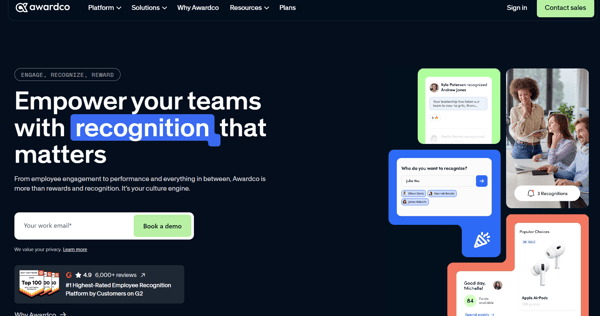
The native Amazon Business integration is a legitimate differentiator. Practitioners outline ordering directly at market-value pricing with home delivery and no point premium applied. The selection spans millions of items across mainstream retail categories, which is where the majority of employee redemptions land. Market diversity scores at 94% on G2 Data, and from what I've understood in the review data, that number reflects real spending breadth across mainstream retail and major gift card platforms.
I'd point to the peer recognition layer as the feature that separates Awardco from a pure spend tool. G2 participants convey giving points through Slack and Microsoft Teams, making everyday acknowledgment visible, culturally embedded and continuous. Reward and incentive scores at 98% on G2 Data, making it the highest-rated feature in the dataset. That number carries weight when program engagement data show recognition-tied LSAs outperforming spend-only models at renewal.
If your program depends on employees feeling the benefit quickly after earning it, this is the detail that stood out to me most in the review data. Cards are instantly issued in digital wallets, work anywhere debit is accepted, and require no HR activation. Hands-on users confirm no waiting period between redemption and access, removing the gap that erodes engagement in slower reimbursement models.
As users describe it, navigating the reward catalog tends to break down under pressure. G2 review data flags clunky filters and a tab structure that makes locating specific items more work than it should be, particularly for anyone accessing the platform infrequently across a wide product range. That said, reviewers note the friction is mostly in the broader catalog. The most-used redemption paths, Amazon and gift cards, are easy to find and well-surfaced, so frequent users navigate them without trouble.
Where the vendor network shows its limits is outside that mainstream core. Several G2 reviewers point to missing local restaurants, limited clothing options by size and color, and certain specialty retailers as absent from the platform. This is most acute for employees whose everyday spending sits outside Amazon and mainstream retail. Worth noting though, this is a scope limitation rather than a breadth failure. The gaps in non-Amazon categories like local dining, niche retailers, and size-specific apparel do exist but the Amazon integration and major gift card platforms perform well for the redemption categories most employees prioritize.
For enterprise HR teams, the renewal conversation on Awardco tends to be straightforward. Employee participation stays high, admin escalations stay low, and the program compounds in value rather than plateauing. If sustained engagement over a two-year program cycle is what your benefits function needs to demonstrate, this is where I'd start.
“I like Awardco because it's user-friendly and the extra points I get from my work are great. Setting it up was pretty easy too, I just had to log in, create a password, and use my work email address. It's definitely a system I'd recommend as I'm giving it a solid 10.”
- Awardco review, Rob B.
“More options to choose from, vendors, local restaurants, gift cards.”
- Awardco review, Chris C.
Lifestyle spending accounts fund the benefit, but recognition platforms sustain the culture. Explore the best employee recognition software to see how dedicated tools drive appreciation at scale across your organization.
Every benefit type added to a stack without consolidation creates another reconciliation problem at renewal. Forma is a benefits platform that runs LSA, FSA, HRA, tuition, and adoption benefits from separate wallets in one interface. Enterprise HR teams, 77% of its Grid reviewers, keep choosing it to cut that reconciliation work.
LSA, FSA (Flexible Spending Account), HRA (Health Reimbursement Arrangement), tuition reimbursement, and adoption benefits run through one Forma interface, each drawing from its own wallet without cross-contaminating eligibility rules or spend data. Users on G2 in administrator roles suggest this consolidation as the most immediate operational gain, and in my reading of the data, that verdict is consistent across company sizes. For anyone weighing multi-vendor setups, that’s the detail worth sitting with. Funding scores 93% on G2 Data reflect how reliably the wallet handles varied benefit types at once.
I've seen claim approval speed treated as a footnote in platform comparisons, but Forma's G2 Data makes a strong case for centering it. The approval flow moves fast: reviewers provide near-immediate confirmation after submission and predictable fund return timelines for approved claims. Automation handles eligible submissions without HR intervention, removing the manual review step that slows reimbursement cycles on less configured platforms.
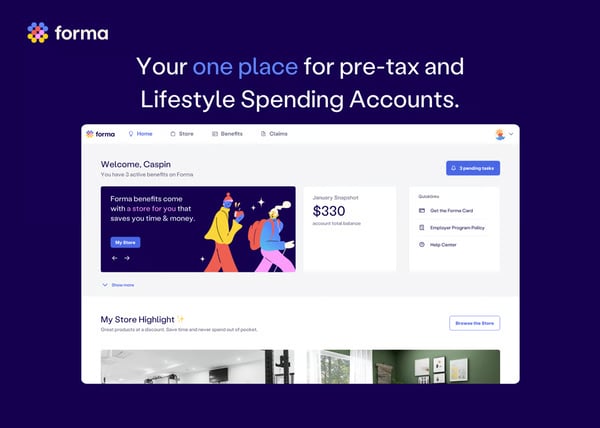
The receipt processing caught my attention early in the G2 data. Forma uses AI to extract relevant fields directly from uploaded receipts, reducing the manual entry that compounds across high-volume reimbursement workflows. Contributors on G2 affirm accuracy as strong on most claims, with the biggest impact on recurring submissions, where re-entering the same provider details each time adds up across a busy benefits calendar.
The submission flow is handled on the employee side. Corporate users emphasize locating the right category, uploading a receipt, and tracking claim status without contacting HR or consulting external documentation. That self-serve reliability matters when your employee population runs into thousands, and individual claim questions can’t land on the benefits team every time. And I would say few platforms consistently sustain that clarity at volume.
Based on my evaluation, I can say that the account management model operates as an earnest working partnership. Platform users reveal support contacts who know the program configuration, respond quickly to transaction issues, and flag edge cases before they compound into admin problems. That level of active involvement stands out in my analysis of the feedback, as proactive account management remains a rare and distinctive offering in this category.
Spend visibility across all submitted claims is clearly visible in the Forma admin portal. Teams in HR and benefits roles underline tracking balances, claim status, and category-level spend in one place without switching between reports. Analysis lands at 90% in G2 Data against a category average of 82%, and the reporting layer is what turns spend breadth into usable program data at renewal.
More than a few G2 respondents note that employees receive insufficient explanation when a claim is declined. This is a recurring source of confusion, particularly for benefits administrators managing broad lifestyle spend policies where edge-case purchases appear regularly. Still, reviewers note the gap is mainly in automated messaging. When employees do reach out, the support team explains the specific qualification rule clearly, and Forma has been expanding the detail in its claim decision notifications.
As per some G2 feedback, the Forma card is sometimes declined by merchants that would otherwise clear with a manual claim submission. This lands hardest for anyone using the physical or virtual card for in-store wellness purchases, where a declined transaction at the point of sale creates immediate friction and delays access to the benefit. However, professionals on G2 note that the approval flow for submitted claims processes the vast majority of purchases correctly and quickly once a receipt is uploaded.
The case for Forma sharpens at renewal, when finance wants category-level utilization data, and HR needs it fast. The platform delivers that visibility without a separate analytics tool, and program changes apply without vendor involvement. For benefits teams that need to iterate quickly and report clearly, that combination is hard to replicate across a multi-vendor setup.
“I use Forma for wellbeing benefits, and it really helps me purchase wellbeing items that aid my daily lifestyle. I like the major coverage in wellbeing areas, which improves individual lifestyles. Forma's wellbeing coverage strategy is flexible and empowers employees, making it standout for modern HR benefits programs. I also appreciate the customizable spending buckets, which boost utilization by 2-3 times. The initial setup is very easy as it uses authentication through our employer's SSO.”
- Forma review, Krishna S.
“Paying with the card/account number itself is especially hard and often gets declined. Things that would be approved when you submit a claim often do not go through with the card. It seems like it needs to be specific vendors.”
- Forma review, Kristina A.
Managing spend visibility across multiple benefit types? Read about the best HR analytics software to see how platforms connect benefits utilization data to wider workforce reporting and renewal decisions.
Milestone moments are where benefits programs tend to slip: the ten-year award that arrives late, the gift card that lands in a spam folder, the follow-up that ends up in HR’s inbox. Culture Cloud by O.C. Tanner is a recognition and rewards platform where employees earn points, redeem them for gifts and gift cards, and mark service anniversaries in one place. Enterprise teams, 88% of its Grid reviewers, keep choosing it to run that experience across large, multi-location workforces.
Support is the first thing reviewers bring up, and the Grid backs it. Quality of support scores 99% on G2 Data, the highest in the Fall 2026 report. Reviewers describe quick, professional replies, missing rewards reissued fast, and step-by-step instructions when a rewards link stops working. When an order goes wrong, the fix tends to land before it becomes an HR problem.
The service-award use case stands out in the review text. Employees describe redeeming ten-year anniversary awards and sending points to peers as part of the same program. Those are the moments people remember, and reviewers describe the process around them as smooth rather than something that needed escalation.
The reward catalog earns credit for range and speed. Reviewers describe a wide spread of awards, from gift cards to physical gifts, and e-gift cards that arrive almost instantly after redemption. Meets requirements scores 97% on G2 Data, which fits how rarely reviewers mention a capability gap.
Ease of use sits at 96% and ease of setup at 94%, and the review text explains both. Recognizing a colleague and redeeming points take a few clicks, and reviewers say new employees pick the portal up without training. Participation is easier to sustain when nobody needs a walkthrough, which is the detail I would weigh most for a large rollout.
Award sizing is guided rather than left to each manager’s instinct. Reviewers describe the platform asking questions about the contribution and then suggesting a recognition level, which keeps awards consistent across departments and helps recognition feel fair. For an enterprise rolling out one program across many managers, that guardrail does real work.
The Grid adds a note of caution that the review text does not. Likelihood to recommend scores 98%, yet product going in the right direction scores 79%, below the 85% category average. I read that as reviewers valuing the program they have today while wanting the platform to move faster on the things they ask for, which the dislikes below bear out.
Navigation shows its seams once you move past the two core tasks. Reviewers describe too many clicks to view past history or browse the catalog, and a minimalist design that feels thin for anyone who wants to explore. Recognizing a colleague and redeeming points stay simple, which makes this a wayfinding complaint rather than a capability gap.
Points are harder to read than they should be. Reviewers want a visible balance of points left to give and points left to spend, a clearer view of what is about to expire, and more control over redemption amounts, since gift cards come in preset values and awards carry a minimum size. Expiry notifications do arrive and the catalog adds items regularly, which narrows the gap without closing it.
Culture Cloud is where I would start when the benefit needs to carry weight at enterprise scale: milestone awards, a global catalog, and support that answers fast. It is a recognition platform first, and only a small share of its more than 1,900 G2 reviews are filed under LSA, so map its reward model to your LSA categories before you commit. For HR teams that already treat recognition and benefits as one program, that overlap is the point.
“Culture Cloud has been an excellent tool for workplace recognition. Being able to share points with peers and carry them over year after year makes the rewards system genuinely engaging, and the overall experience of ordering prizes is great. I also really appreciate how the platform highlights milestones, which helped make my recent 10-year work anniversary feel like a memorable celebration.”
- Culture Cloud by O.C. Tanner review, Erica M.
“Sometimes the points options feel limited, like I don’t have much choice beyond giving 25 points. Also, when I redeem the gift card, I can’t choosxe any amount I want; it has to be a predefined amount. I’d like the option to redeem smaller amounts, like $5 or $10.”
- Culture Cloud by O.C. Tanner review, Paras J.
Run LSA, HSA, FSA, and COBRA through different vendors and every renewal turns into a reconciliation project across portals that were never designed to talk to each other. WEX Benefits is a benefits administration platform that runs lifestyle spending accounts next to health savings, flexible spending, and COBRA programs under one login. Mid-market HR teams, 60% of its Grid reviewers, keep choosing it to cut that vendor sprawl.
The Fall Grid gives WEX Benefits the most lopsided profile in this lineup. Its market presence of 94 is the highest in the report, while its satisfaction score of 35 sits near the bottom, so the footprint is large and the enthusiasm is uneven. Only 12 of its 112 G2 reviews are filed under LSA, which suggests most buyers arrive for health accounts and add lifestyle spending along the way.
Consolidation is the reason administrators give. Nine of the 12 LSA reviewers are administrators, and they describe running supplemental benefits and COBRA from one site and paying through one company instead of tracking several vendors. That matters most for HR teams that inherited a benefits stack one provider at a time.
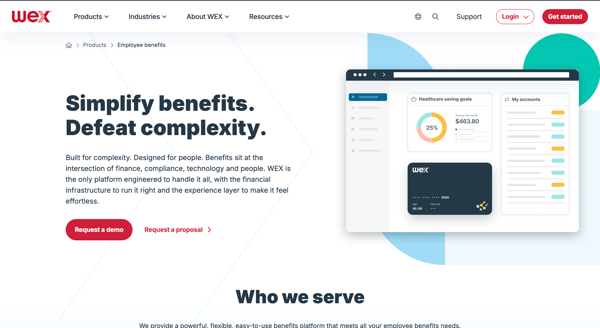
Ease of use lands at 89% on G2 Data, and the review text shows where it comes from. HR leaders call the platform easy to use, praise a claims app that is simple to navigate, and describe participant emails and instructions as clear and easy to follow. Those are small details until an administrator stops fielding the follow-up questions.
Payments travel well. Reviewers describe the card as accepted across the United States, and the single-vendor model keeps LSA spending in the same place as the other accounts administrators already track. Ease of setup scores 80%, which trails every other product in this lineup with a score, so budget implementation time accordingly.
Satisfaction is where the numbers cool. Meets requirements scores 86% and likelihood to recommend 77%, against category averages of 92% and 91%, and an NPS of 10 sits far below the 73 average. The product does the job without producing many advocates, which matches reviews that praise ease and then add qualifiers about service.
Support is where the data turns. Quality of support scores 66% against a category average of 92%, the lowest of the eight products on this list. Reviewers describe slow response times, a service line that is hard to reach, and cases closed with canned replies instead of a resolution. For administrators who handle terminations, renewals, and employee escalations, that gap shows up every week, although reviewers who reach the right person describe termination-reporting issues between payroll software and WEX as easily resolved.
Portal friction shows up in smaller ways. Reviewers mention slow page loads, a separate page to open for COBRA tasks, and annual renewals that ask administrators to re-enter selections instead of confirming them. The guided renewal flow still gets credit for replacing spreadsheets, so the complaint is about polish more than function.
WEX Benefits fits when the problem is vendor sprawl rather than employee experience. For mid-market HR teams already running health accounts and COBRA, adding LSA to the same platform trims logins and payment trails. If support speed is what your program leans on most, the Fall Grid says to test it hard before you sign.
“WEX benefits are easy to use. The emails and instructions I receive from WEX are consistently clear and straightforward, so they’re always easy to follow.”
- WEX Benefits review, Sandra N.
“The response times can be slow at times, which can be a bit frustrating.”
- WEX Benefits review, Mark I.
Distributed workforces expose the gaps in benefits infrastructure faster than anything else: time zone differences, regional platforms, and pay cycle mismatches are where LSA programs quietly break down. Benepass is a benefits platform that puts LSA, FSA, HRA, and commuter funds on a single card and wallet. Mid-market teams, 64% of its Grid reviewers, with employees outside the US keep choosing it for that reason.
In my view, the single-card model is the core reason Benepass earns serious evaluation. Employees access LSA, FSA, HRA, and commuter funds through one virtual card that populates in Apple Pay and Google Wallet immediately upon setup. No separate portals, no switching between accounts to track balances. Scoring 97% for ease of use per G2 Data, that consolidated card experience drives employee-side satisfaction across varied benefit types.
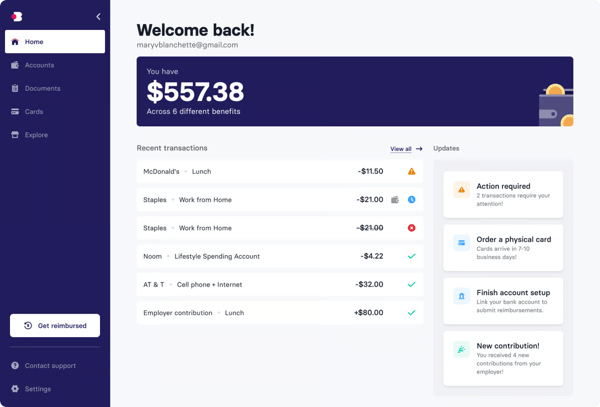
Geographic reach is where Benepass separates from most LSA platforms. The card works on international food delivery platforms like Zomato and Swiggy, with G2-verified users based outside the US confirming acceptance without regional configuration or separate account setup. For distributed workforces spanning multiple countries, that coverage removes the access gap that forces parallel benefit structures in different markets, and that cross-border accessibility is highlighted as a strong signal.
The reimbursement path is fast where it counts most: the submission itself. G2 community voices point to uploading a receipt and moving through without complex approval steps or manual HR coordination. Funding registers at 93% on G2 Data. I'll add that the cross-channel consistency here is worth noting: the process works whether you submit via the mobile app or the desktop portal, and balance updates appear in real time, so employees always know where their spend stands.
Admin reporting is clean enough to run monthly audits without manual reconciliation. Those with firsthand experience in HR roles express a need to track spend by category and employee, pulling imputed income reports, and accessing pre-tax deduction summaries from one place. The dashboard keeps all of that visible without requiring a separate analytics tool, delivering operational clarity. And to me, that represents a meaningful reduction in benefits admin workload at scale.
Customer support handles edge cases fast. People who use it daily communicate same-day responses to questions, proactive follow-up, and a team that takes product feedback seriously. The platform releases updates based on that feedback cycle, per G2 users, which is evidenced in the progression of features mentioned across reviews spanning multiple years. In my estimation, that feedback loop is rarer in this category than the marketing language around it suggests.
The mobile app experience earns consistent praise in G2 feedback. G2 platform users mention navigation as natural, transaction tracking as intuitive, and the overall app as something they never needed support to use. If your employees are managing benefits primarily from their phones, that frictionless experience is one of the stronger reasons Benepass retains high satisfaction scores at renewal.
G2 review data flags this as a recurring gap, stating that spending category controls operate at a broad product-group level, giving businesses a high-level overview of their expenditures. This creates a problem as monthly audits occasionally surface purchases that cleared outside the intended policy scope. Benefits administrators managing compliance across large employee populations feel this most directly. Stepping past that, reviewers note the coarse controls mainly affect edge-case categories. For most standard policies the product-group level is granular enough, and the audit dashboard catches the exceptions that do slip through.
When a transaction is declined, employees rarely get a clear explanation. The pattern across G2 reviews describes vague eligibility rules and unhelpful decline messages that leave employees guessing about what qualifies under their program. Those making frequent or varied lifestyle purchases run into this most. Even so, Benepass publishes a full eligible expense list and built-in eligibility checking that employees can reference before purchasing, reducing unexpected declines for those who use it.
Where Benepass earns its place is in programs where benefits access can’t depend on HR coordination to work. The platform handles compliance, cross-border card acceptance, and balance visibility without manual touchpoints between submissions. For globally distributed teams carrying real operational complexity, that kind of self-sufficiency is the deciding factor.
“I now use it for my HSA funds and it’s just as easy. I will say they have gotten a bit more strict on categorizations and sometimes my items are not as approved, but that is understandable.”
- Benepass review, Hannah M.
“Clear messaging and transaction declines and eligibility rules would help reduce confusion for employees.”
- Benepass review, Khusbu B.
Utilization is the number benefits teams get asked about at renewal, and it is the one that quietly falls after launch. Fringe is a lifestyle benefits platform with a curated marketplace of vendors that employees browse and redeem points across. Mid-market teams, 68% of its Grid reviewers, keep choosing it to hold engagement well past the first quarter.
The marketplace model drives discovery, and I was intrigued to notice reviewers explaining that they return each month with a different category in mind. Browsing Fringe and landing on vendors they’d never considered becomes an engaging and enjoyable habit. Spending time rotating across travel one month and wellness the next is what separates a program that feels alive from one that employees treat as a quarterly task. Market diversity sits at 85% on G2 Data, reflecting how well coverage maps to real employee spending patterns.
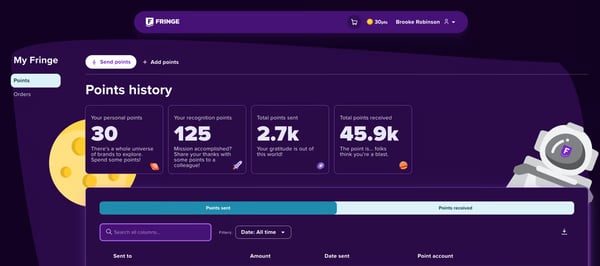
Redemption delivery is fast, and my take from the timing feedback is straightforward: coupon and gift card codes arrive in email within minutes of redemption, with no waiting period between point spend and access. For travel purchases, hotel and airline gift cards move quickly enough that employees use them on active trip plans. Speed at this stage is where the habit loop either builds or breaks.
Points don’t expire on Fringe's standard model, and the design logic here receives a lot of appreciation in the reviews. Professionals specifically call this out as a meaningful design choice, describing the ability to accumulate points over several months and redeem them for a larger travel purchase or premium experience. Programs where points expire create deadline anxiety that undercuts the benefit's perceived value, and Fringe removes that pressure entirely.
The vendor network keeps growing, and for your program, that matters more at renewal than at launch. Fringe is receptive to feedback and actively adds partners over time, with new lifestyle and active living categories launching during reviewers' time on the platform. That responsiveness shifts the evaluation question toward trajectory rather than today's catalog.
The ability to top up a redemption with personal funds when points fall slightly short means employees can always complete the redemption they want, even when their balance doesn’t line up exactly. What registers with me across the feedback is how often reviewers mention it as a design detail they appreciated: a leftover balance becomes something you can still put toward a purchase, rather than a stranded amount waiting for more points.
I'll note this separately because it is rare: everyday users suggest Fringe as something they mention to colleagues and cite when explaining why they stay at their company. Few LSA tools generate that kind of unprompted advocacy. The reward and incentive score registers at 87% on G2, and when a benefits program becomes part of how employees talk about their employer, it’s definitely an LSA worth considering.
Verified reviewers cite the absence of major retailers like Amazon and Target, limited in-store grocery options, and thin coverage for car rental and certain domestic airline partners. This is mentioned by employees whose primary spending habits sit in everyday retail and grocery. Separate from this gap, the core travel, wellness, and food delivery categories remain well-stocked and reliable for regular monthly redemptions.
Point credit timing is inconsistent across third-party vendor integrations, with G2 reviewers noting delays of one to two business days for points to appear in partner platforms like ClassPass. Fitness coordinators and wellness program participants booking time-sensitive sessions feel this gap most. At its core, however, reviewers note the lag is specific to a few partner integrations syncing balances. For time-sensitive bookings, employees can redeem a gift card on Fringe's side instantly and use it directly with the partner.
After a close analysis of G2 reviews, I can say that few LSA platforms show up in retention conversations the way Fringe does. Employees mention it when explaining why they stay. That kind of unprompted advocacy is a different class of program outcome than utilization percentages alone, and for HR teams building a benefits case that extends beyond the renewal cycle, it carries real weight.
“I love how Fringe makes my benefits more accessible and personal. I use it for fun gifts and experiences, as well as for health and wellness or meal prep. I really like the fun options they provide and the rotating free benefits like the free Dashpass and a month of Classpass, which were great additional offerings. These are fun things to try and introduce me to new experiences I might not have explored yet. I tell all of my coworkers about Fringe!”
- Fringe review, Madi L.
“I would love to have the ability to get gift cards to spend them on Amazon.”
- Fringe review, Tricia M.
Pair your lifestyle benefits marketplace with the best employee engagement software to connect spending behavior to broader team culture and participation metrics.
Most LSA vendors hand over the keys after launch and leave HR with a ticket queue. Espresa is a culture benefits platform that combines LSA administration with recognition, events, and tuition reimbursement in one place. Enterprise HR teams, 76% of its Grid reviewers, whose benefits strategy is still evolving choose it for an account team that stays involved.
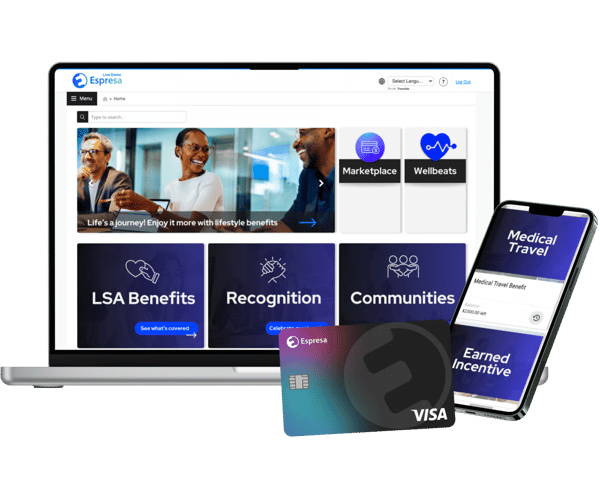
I'll start with the consolidation layer because it anchors everything else in the Espresa evaluation. Global recognition, LSA administration, and tuition reimbursement run from one interface, removing a layer of administrative coordination that compounds quickly at scale across multiple benefit types and regions. The quality of support score registers at 98% on G2 Data, and the account management team is where that number earns its weight in practice.
The implementation process earns specific praise in G2 feedback, with one administrator describing it as the easiest implementation across 30 years in HR. Few platforms land without a protracted setup phase that drains HR bandwidth before the program even launches. That one data point carries weight precisely because it surfaces unprompted across the review base.
If your program brief extends beyond reimbursement mechanics, the event-based programming layer is where Espresa earns its positioning in culture-benefits. Platform reviewers highlight the ability to sign up for on-site massages, cooking classes, and wellness events directly through the platform, tying the spending account to a broader employee experience. Most LSA platforms don’t offer event programming at all, or keep it in a separate module. Espresa builds into the same layer.
I've tracked the claim approval feedback closely, and the picture is clear: submissions process fast, fund credits arrive on their own without pulling HR into escalations, and real-time status tracking stays visible to the employee throughout. The process holds across WFH reimbursements, wellness credits, and perk submissions, with speed staying even across claim types.
The mobile app earns regular praise for reliability and design quality, and this became clear to me as I dug into G2 review data. Multiple review contributors express that the interface never crashes and switches cleanly between mobile and desktop, keeping session state intact. The ease of use score sits at 95% on G2, two points above the 93% category average.
Configuration flexibility is where Espresa earns points with HR administrators who need a platform that evolves with the program. G2 respondents note that they adjust benefit structures mid-cycle, reconfigure eligibility rules, and make program-design changes on their own rather than routing every change through the vendor. Operational responsiveness like this is, by my reckoning, one of the harder platform qualities to find in this category.
Recognition budget updates require manual intervention rather than automatic refresh. G2 reviewers note that administrators either handle changes directly or route requests through their account manager. HR functions managing large employee populations across frequent budget cycles carry this overhead the most. Even so, the account management team turns requests around quickly. LSA configuration, reporting, and program setup remain straightforward throughout.
Pre-built LSA challenges don’t map well to most employer program designs, a gap that surfaces repeatedly across G2 reviews. HR program managers building engagement frameworks around specific population health goals that fall outside standard wellness templates feel this most. Offsetting this, the custom challenge creation tools handle program-specific builds cleanly, with administrators able to configure and launch from scratch without vendor involvement.
Espresa suits programs that are still being designed. The platform accommodates mid-cycle restructuring, supports culture programming alongside reimbursement mechanics, and keeps program changes in HR’s hands as the brief evolves. For enterprise HR teams building benefits infrastructure with a two- to three-year horizon, that adaptability compounds in value quickly.
“I love the flexibility of Espresa, as it helps drive engagement by focusing on what matters to our employees when it comes to wellness. Espresa offers the means to deliver on those needs. Their customer service is top-notch. Implementation was an absolute breeze, probably the easiest I've experienced in over 30 years. Administration is beyond easy, and the reporting is clear, concise, and actionable!”
- Espresa review, Jackie G.
“I don't like that I have to manually update recognition budgets or ask our account manager to do it for me.”
- Espresa review, LeAnn M.
If you're building your live commerce audience through creators, the best influencer marketing software on G2 covers discovery, campaign management, and ROI tracking across every major platform.
Funding a wellness allowance does not guarantee anyone uses it to improve their wellbeing. Grokker is a wellbeing platform that complements LSA programs rather than administering them, with no reimbursement, wallet, or expense administration involved. Programs built around health outcomes rather than spend mechanics keep choosing it, including the enterprise teams that make up half its Grid reviewers.
The content library covers fitness, nutrition, mindfulness, and pain relief across thousands of videos, and the Pain Relief series is the detail that resonates most with me across the content feedback. G2 reviewers in organizations with older or physically active workforces call it out specifically as a differentiator. Most wellness platforms stay in the fitness and yoga lane. Grokker covers the ground that those platforms skip, and reviewers reveal employees finding instructors they return to regularly.
Fresh content lands on a regular cadence, and the cadence data is worth pausing on. G2 reviewers specifically credit it for sustaining usage, unlike static libraries where the same videos cycle indefinitely and employees drift away. Regular updates signal that the program is active and that they are invested in it. That distinction between a live program and a static catalog is where long-term participation rates diverge most visibly.

For your distributed or remote workforce, cross-device reliability is what makes the program practical. G2 verified users can access Grokker on mobile, desktop, and tablet, including while traveling, without configuration or compatibility issues. Ease of use scores 94% on G2, one point above the 93% category average, for a platform carrying a significantly broader content set than most LSA tools include.
From what I’ve seen in the review feedback, the sense of accomplishment after logging wellness minutes is a meaningful motivator that compounds participation over time, driving real and lasting engagement. Ease of admin scores 97% on G2 Data, reflecting how cleanly the tracking layer runs without requiring HR to manage individual progress records manually.
Account team involvement shapes the program more than the feature list does, and the depth of account involvement reflects program partnership and long-term collaboration. Quality of support has a 96% satisfaction score on G2, and reviewers highlight Grokker's staff as proactive, engaged with each organization's specific wellness goals, and available when questions arise.
The holistic framing across physical, mental, and nutritional well-being is what drives long-term adoption, with 93% score on G2 for meets requirements. Users describe discussing recipes, fitness routines, and mindfulness practices in ways absent before program adoption. That cultural shift, in my judgment, is what separates Grokker from platforms that simply process wellness transactions.
Feedback across G2 flags participation data below the district level as a recurring gap. Benefits administrators tracking engagement by location, department, or cohort inside multi-site organizations feel this most, where granular utilization evidence shapes renewal decisions. Even so, district-wide and overall engagement metrics come through clearly without manual extraction, giving administrators a reliable baseline when renewal conversations come around.
Content variety thins outside the core fitness and mindfulness categories, with G2 reviewers pointing to subject gaps as a persistent limitation. Programs built around diverse lifestyle interests carry this most directly. That said, Grokker has been expanding its content library over time, with new categories added in response to reviewer feedback. Core depth across fitness, nutrition, and mindfulness remains strong.
I'd recommend Grokker when the program brief is health outcomes. The platform earns its place at renewal when utilization data needs to show behavior change, not just transaction volume. For HR teams building a wellness program with a two-year horizon, Grokker is built to deepen as that program matures.
“Its development in well-being and improving sedentary habits has been wonderful. All its programs benefit the body and keep it more active.
It is easy to use and carry out the activities it has, apart from the fact that monotony is a thing of the past and work stress has been reduced.”
- Grokker review, Angie L.
“They lack variety of topics. I wish they covered more subjects.”
- Grokker review, Verified G2 user
|
Software |
G2 rating |
Free plan |
Ideal for |
|
Awardco |
4.9/5 |
No |
Enterprise teams managing rewards, recognition, and LSA programs at scale |
|
Forma |
4.8/5 |
No |
Enterprise HR teams running multi-benefit wallet programs with high configuration needs |
|
Culture Cloud by O.C. Tanner |
4.8/5 |
No |
Enterprise teams tying service awards and recognition rewards to employee benefits |
|
WEX Benefits |
3.8/5 |
No |
Mid-market HR teams running LSA alongside HSA, FSA, and COBRA administration |
|
Benepass |
4.8/5 |
No |
Mid-market and enterprise teams managing pre-tax and post-tax benefits on a single card |
|
Fringe |
4.7/5 |
No |
Mid-market teams looking for a curated lifestyle benefits marketplace with strong employee engagement |
|
Espresa |
4.2/5 |
No |
Enterprise HR teams running culture-driven benefits and employee programs in one place |
|
Grokker |
4.4/5 |
No |
Primarily, enterprise and mid-market teams prioritizing on-demand wellbeing content alongside LSA funding |
*These lifestyle spending account vendors are top-rated in their category, based on G2’s Fall 2026 Grid® Report.
Got more questions? G2 has the answers!
Payroll integration comes down to how cleanly benefit spend, tax treatment, and employee changes reach the payroll system. Benepass and WEX Benefits fit this need best. Benepass reviewers describe pulling imputed income reports and pre-tax deduction summaries from one dashboard, which removes manual reconciliation at payroll time. WEX Benefits reviewers describe reporting terminations between their payroll software and the platform, with any issues easily resolved.
Payroll work lands on administrators, so ease of admin is the clearest signal on the Fall 2026 Grid. Forma and Awardco both score 97% for ease of admin, one of the top marks in the report. Forma reviewers describe automation that handles eligible submissions without HR intervention, while Awardco reviewers describe single sign-on and no configuration steps for employees. Both keep manual touchpoints low between payroll cycles.
Adoption at scale breaks when employees need help to claim or redeem a benefit. Culture Cloud by O.C. Tanner and Fringe fit best. Culture Cloud scores 96% for ease of use with 88% of its Grid reviewers from enterprise companies, and reviewers say new employees pick it up without training. Fringe reviewers describe non-expiring points and a curated marketplace that brings employees back to browse month after month.
Custom workflows only help if administrators can change them without opening a vendor ticket. Forma and Espresa fit that need. Forma reviewers describe adjusting spending categories and program rules themselves, with changes applying without vendor involvement. Espresa reviewers describe changing benefit structures mid-cycle and reconfiguring eligibility rules on their own.
The fastest integrations are the ones employees never notice, such as signing in through an account they already use. Awardco and Forma fit that pattern. Awardco reviewers describe single sign-on through their organization’s portal and immediate point access, plus point-giving inside Slack and Microsoft Teams. Forma reviewers describe an initial setup that runs through the employer’s single sign-on with no separate credentials.
Stable performance shows up in reviews as pages that load fast and apps that do not crash. Culture Cloud by O.C. Tanner, Espresa, and Grokker lead on that evidence. Culture Cloud reviewers describe quick page loads and no remembered downtime, and Espresa reviewers say the mobile app never crashes and switches cleanly to desktop. Grokker reviewers describe access across mobile, desktop, and tablet without configuration or compatibility issues.
Trust shows up in advocacy scores and in how administrators describe support. Awardco and Culture Cloud by O.C. Tanner lead on both. Awardco posts an NPS of 96 and 98% for quality of support, while Culture Cloud posts an NPS of 93 and 99% for quality of support. Both score 98% for likelihood to recommend.
Mid-sized organizations need a launch that does not depend on a long implementation. Benepass and Fringe fit best. Benepass scores 97% for ease of setup, and 64% of its Grid reviewers are mid-market companies. Fringe scores 95% for ease of setup with 68% mid-market reviewers, and reviewers describe coupon and gift card codes arriving within minutes of redemption.
Reporting clarity matters most when finance asks for utilization evidence at renewal. Awardco, Benepass, and Grokker lead on that evidence. Awardco scores 92% for analysis on G2 Data, the highest in the Fall 2026 report, and Benepass scores 90% with reviewers describing monthly audits that need no manual reconciliation. Grokker scores 97% for ease of admin, with a tracking layer that runs without HR managing individual progress records.
Compliance without manual workarounds depends on rules the platform applies for you. WEX Benefits and Forma fit that need. WEX Benefits reviewers describe a guided renewal and COBRA flow that replaced spreadsheets and written directions. Forma reviewers describe automation that processes eligible claims without HR review, and eligibility rule changes that administrators apply without vendor support.
The LSA category is shifting. Reimbursement reliability and low admin workload are table stakes now. What buyers are starting to ask is whether their LSA vendor can function as a benefits strategy tool, surfacing spend patterns, utilization rates by employee segment, and program ROI evidence on demand.
That changes how you evaluate today. Reporting depth and configuration flexibility carry more weight than they did twelve months ago. A platform that reimburses cleanly but exports data in flat files creates a second wave of admin work at renewal when finance wants utilization evidence.
Over the next 12 to 24 months, the platforms that hold ground will be those that iterate on programs quickly. The employer needs a shift in how they think about program longevity. A category that drove strong utilization in year one can plateau by year two. The ability to adjust spending categories without a support ticket separates platforms built for long-term management from those built for launch.
Getting this decision right compounds. A platform that fits today but resists change eventually costs more to maintain than choosing the right one from the start would have.
Want to understand how LSA administration connects to your broader benefits stack? Explore benefits administration software features on G2 to find what capabilities matter most when building a program your employees will actually use.