The best employee experience software supports HR teams in managing engagement, recognition, and culture. The real challenge is choosing a platform that fits daily workflows. Engagement dips, recognition inconsistency, and feedback fatigue tend to surface at the same time.
Recent workforce research reinforces the stakes, with global engagement sitting at 20% in 2025, signaling how fragile experience programs remain. This decision often appears during hybrid scaling, retention recovery, or culture reset initiatives. Choosing poorly does not stall strategy alone. It slows participation and quietly weakens trust across teams.
My perspective is shaped by aggregated G2 review patterns of how teams operate these platforms inside real programs. I focus on features that reflect sustained adoption rather than early enthusiasm: recognition that feels natural, feedback loops that close, communication that reaches frontline employees, and analytics that managers can act on.
In this guide, I focus on how different tools align with distinct employee experience priorities. Across G2 reviews, Workvivo commonly attracts teams seeking culture storytelling and internal communication clarity. Review patterns suggest Culture Amp shows up where diagnostic feedback and action planning drive decisions. Achievers tend to surface in organizations needing structured recognition at scale.
The intent is to help you move from broad awareness to confident selection with clarity that reflects real use patterns.
*These employee experience platforms are highly rated within their category based on G2’s Winter 2026 Grid Report. I’ve highlighted where each platform typically appears in real evaluation paths, along with pricing availability, to support confident shortlisting.
Employee experience software helps teams turn fragmented feedback, recognition gaps, and disconnected communication into a structured environment employees can actually engage with. The right platform does more than collect survey responses. It helps organizations understand sentiment, strengthen cultural signals, and create consistent touchpoints that employees notice in daily work.
What I consistently see across strong employee experience platforms is that they extend beyond surveys or rewards alone. They surface engagement trends, highlight recognition patterns, and connect feedback to action so teams know what to address next. Whether that means improving manager conversations, reinforcing peer appreciation, or aligning communication with cultural goals, effective tools replace guesswork with clarity and momentum.
Adoption is not limited to large enterprises building culture programs at scale. G2 Data shows a balanced mix of small businesses, mid-market companies, and enterprises evaluating these platforms as retention and engagement priorities rise. Most tools are designed to integrate with collaboration and HR systems quickly, allowing teams to launch recognition, feedback, or communication initiatives without heavy operational disruption.
Ultimately, strong employee experience software delivers what modern people teams need most: visibility into employee sentiment, consistency in how engagement is reinforced, and confidence that feedback translates into meaningful workplace improvements rather than unused data.
I started with G2’s Grid Reports to shortlist leading employee experience platforms using verified satisfaction scores and market presence across small businesses, mid-market organizations, and enterprise environments. This helped narrow the field to tools that consistently appear in real buying conversations rather than niche or lightly adopted solutions.
I then analyzed hundreds of verified G2 reviews with AI to identify recurring feedback patterns around what teams value most in day-to-day employee experience workflows. This surfaced which tools meaningfully strengthen engagement and which tend to create participation fatigue or administrative overhead.
Since I have not personally used every platform listed, I validated these insights against perspectives shared by HR, People Ops, and internal communications teams who actively run these programs. Product visuals and feature references included throughout the article are sourced from G2 vendor listings and publicly available product documentation to maintain accuracy and consistency.
As I reviewed extensive verified G2 feedback, I focused on how teams describe real adoption outcomes, where engagement programs gain traction, and where they quietly stall. Across reviews and implementation narratives, consistent evaluation themes surfaced. These themes shaped the criteria below, reflecting operational impact rather than feature availability.
Based on these criteria, I refined the list to employee experience software that consistently helps teams maintain list quality, protect sender reputation, and operate reliably as outreach volume grows.
Below, you’ll find authentic user reviews from the Employee Experience Software category. To be included in this category, a tool must:
This information was sourced from G2 in 2026. Some reviews may have been lightly edited for clarity.
Vantage Circle is a platform that centralizes recognition, rewards, perks, and engagement programs in a single digital environment. G2 review analysis indicates organizations commonly use it to maintain appreciation visibility, simplify reward redemption, and support motivation initiatives without relying on disconnected tools. Recognition workflows, voucher partnerships, and performance-linked engagement capabilities position the platform as a structured layer for culture-building and employee satisfaction.
From a scoring perspective, with a G2 Satisfaction Score of 99 and an overall G2 score of 82, Vantage Circle demonstrates strong day-to-day usability and consistent engagement, indicating that organizations find the platform reliable for managing recognition, rewards, and employee experience initiatives within structured workflows.
User feedback consistently highlights the platform’s role in making recognition visible and repeatable across teams. G2 Data shows appreciation programs functioning as a shared achievement space where kudos and peer recognition remain transparent, reinforcing engagement behaviors over time. The strong team-building rating (93%) reflects how these recognition workflows contribute to collaboration and collective morale rather than isolated reward events.
G2 reviewers frequently reference the convenience of redeeming points across a wide voucher ecosystem, including popular marketplaces and service providers, which increases perceived reward value. Corporate discounts and perk partnerships further extend this utility, helping recognition remain relevant beyond symbolic appreciation and encouraging sustained employee participation.
The platform’s portal is also described as straightforward for issuing appreciation, browsing rewards, and redeeming points, reducing the operational effort typically associated with engagement platforms. This aligns with the digital experience management rating of 93% in G2, suggesting workflows remain accessible across roles and distributed work environments.
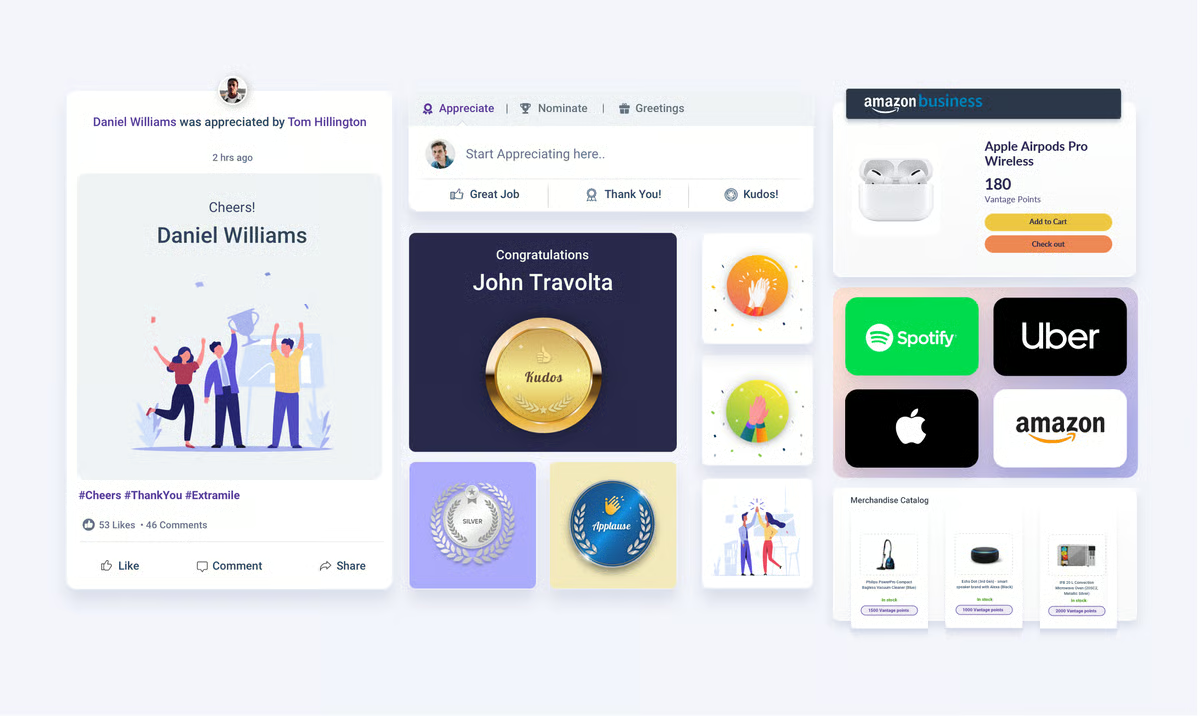
Review insights indicate organizations rely on Vantage Circle as a centralized hub where recognition, perks, and reward programs coexist, helping maintain program consistency and reducing administrative fragmentation. Integration with reward vendors and service partners supports this breadth without requiring teams to manage multiple engagement tools.
G2 feedback suggests reliable assistance and stable integrations that help sustain perk availability and reward redemption continuity. The strong performance management rating (93%) reflects how recognition and reward workflows connect with broader engagement and motivation strategies rather than operating as isolated initiatives.
Another advantage lies in the platform’s ability to drive measurable engagement outcomes. G2 Review patterns indicate that recognition points, visible appreciation, and accessible perks contribute to improved morale, stronger internal connections, and greater visibility of individual contributions.
According to G2 reviews, the mobile interface does not carry the full functionality available on the desktop. Employees who rely primarily on mobile for browsing the perks catalog, managing recognition workflows, or redeeming rewards in detail will encounter a narrower experience. Although core recognition and redemption tasks remain accessible on mobile, the desktop experience is consistently described as smooth and easy to navigate across roles.
G2 reviewers mention that the wellness perk catalog does not yet match the depth of dedicated wellness platforms in terms of specialized partnership variety. Teams running structured wellness programs with specific vendor requirements may find the current offering falls short of their scope. The broader rewards and perks ecosystem, however, remains well-regarded in G2 reviews.
Overall, Vantage Circle brings recognition, visibility, flexible rewards, and perk accessibility into a unified engagement environment suited for large organizations. Its strong team-building capability reinforces consistent appreciation while keeping reward redemption practical, making Vantage Circle a relevant choice for enterprises focused on scalable recognition and engagement programs.
“ Vantage Circle is an employee engagement platform that offers many employee perks, recognition, rand ewards all under 1 roof. It comes with ease of implementation and usage, providing users the flexibility to redeem points easily. It is one of the tools that brings happiness to many faces. It also comes with good customer support to address any queries, further providing ease in integration. It is tied up with almost all the third parties, starting from basic to luxury items that one needs, and provides a wide range of options to choose from.
- Vantage Circle review, Kolan K.
“The app’s responsiveness should be improved, and it would be helpful to have more wellness-related offers available.”
-Vantage Circle review, Sumukh S.
Need deeper insight into goal setting and review cycles? See the best performance management software to evaluate platforms designed for performance-driven teams.
Based on an analysis of G2 reviews, Nectar functions as an employee experience platform that centers on peer recognition, rewards, and engagement initiatives to reinforce appreciation across teams. Organizations typically use the platform to celebrate milestones, acknowledge contributions, and maintain structured visibility of achievements.
User feedback highlights how appreciation posts, milestone celebrations, and peer acknowledgments become part of everyday collaboration, helping employees feel noticed for contributions without relying on informal channels. The strong team-building rating in G2 (94%) reflects how these interactions support camaraderie and reinforce a collaborative workplace culture.
Reward flexibility also plays a central role in Nectar’s engagement model. Recognition points can be redeemed across a diverse set of outlets, linking appreciation with practical incentives that employees can personalize. This reward variety helps sustain participation in recognition programs and ensures that appreciation remains meaningful rather than symbolic.
The platform interface supports sending recognition, browsing rewards, and tracking achievements with minimal navigation effort, allowing appreciation moments to occur naturally within routine activities. Its communication rating (91%) reinforces this dynamic, highlighting how recognition interactions double as connection points across teams.
Nectar also supports connections across remote and hybrid environments. Recognition feeds, birthday celebrations, and work anniversary acknowledgments help maintain visibility of accomplishments regardless of physical location, reinforcing team cohesion. This capability supports organizations prioritizing engagement continuity across distributed workforces.
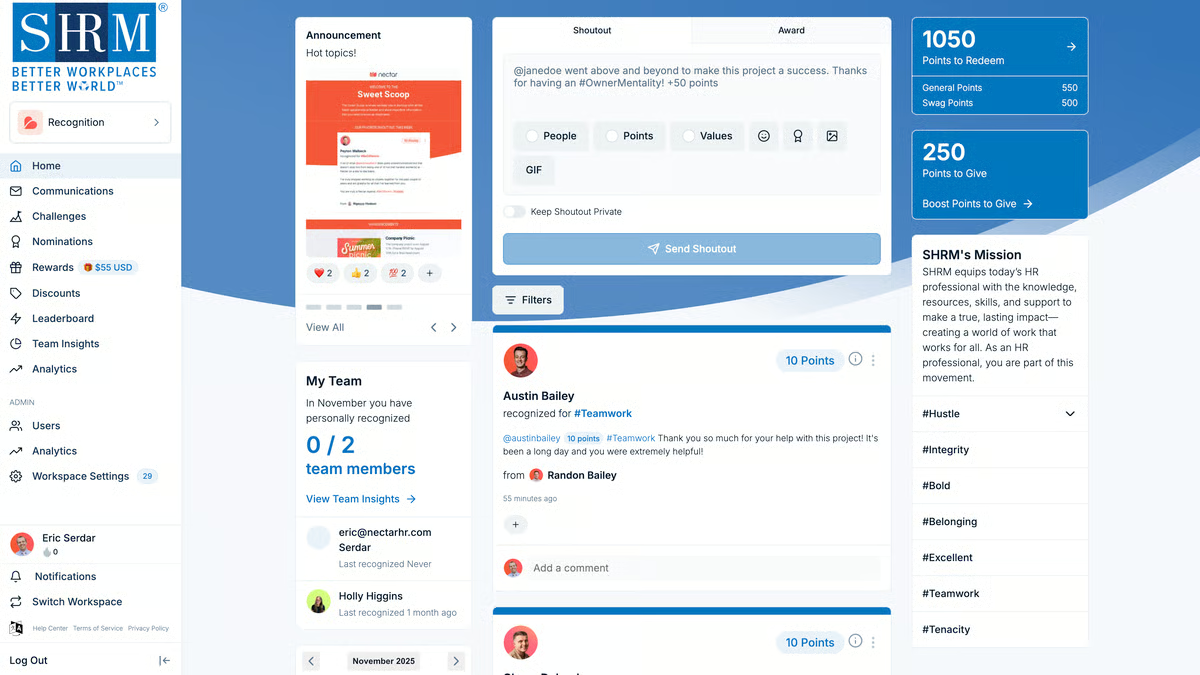
Integration accessibility strengthens Nectar’s adoption profile as well. The platform connects with commonly used workplace tools, allowing organizations to introduce structured recognition without significant workflow disruption. The productivity rating (90%) reflects how recognition workflows align with existing collaboration patterns rather than introducing separate engagement processes.
Another advantage lies in Nectar’s contribution to morale and motivation. Visible appreciation, milestone celebrations, and reward redemption collectively support employee confidence and strengthen internal relationships, helping recognition initiatives reinforce positive workplace behaviors while remaining scalable.
According to G2 reviewers, point accumulation can be slow depending on how the program is configured, meaning employees may wait longer than expected before reaching a redemption threshold. However, once points reach a redeemable level, the reward marketplace offers enough variety to make the wait worthwhile.
A few G2 reviews pointed out that the interface is functional but does not match the visual polish of newer engagement platforms. Teams accustomed to highly designed product experiences may find the UI straightforward rather than refined. Reviewers consistently describe navigation as clean and low-effort, with recognition workflows remaining easy to complete without a steep ramp-up period.
Taken together, Nectar’s strong team-building performance reinforces its relevance for organizations aiming to make appreciation consistent and visible without adding operational complexity. This positioning makes Nectar particularly well-suited for mid-market companies seeking to scale recognition programs while maintaining practical reward value and cultural alignment.
“I like being able to recognize and be recognized for the work that we do with Nectar. I enjoy being able to choose how I cash in my points. I also enjoy learning everyone’s birthday and work anniversary from the shoutouts made by HR. The setup was easy, which was great.
- Nectar review, Ashley B.
"Personally, I wouldn’t say there’s anything I dislike about the application. That said, there are still some areas for improvement, particularly around the app’s interface and revising the points-based matrix so it’s more achievable and easier to use across different outlets.
- Nectar review, Elvis M.
Want to double down on recognition and rewards? Explore the best employee recognition software to compare tools built for consistent, high-impact appreciation.
Designed to centralize internal updates and employee engagement, Workvivo helps organizations share announcements, recognize achievements, and maintain team connection across distributed offices. With a G2 market presence score of 74 and an enterprise-heavy user base, the platform is primarily used by 60% of enterprise teams, 28% of mid-market organizations, and 12% of small businesses.
Workvivo facilitates communication across distributed teams by consolidating organizational updates, leadership announcements, and peer-shared content in a single platform. Teams typically use these channels to stay aware of events, team milestones, and office-specific information across locations. This centralized communication approach is supported by a communication rating of 95%, according to G2 Data, reflecting the platform’s ability to manage information flows effectively across diverse teams.
The platform integrates peer recognition and engagement through profile endorsements, allowing employees to acknowledge achievements and values in a structured, visible manner. Recognition is actionable without requiring broad announcements, supporting collaboration, and reinforcing a culture of appreciation.
G2 users often mention that the “Spaces” feature provides dedicated areas for departments, project teams, or interest groups to share relevant updates. Employees can access critical resources such as HR documents, supplier lists, or project information without relying on external tools, ensuring that information remains accurate and targeted.
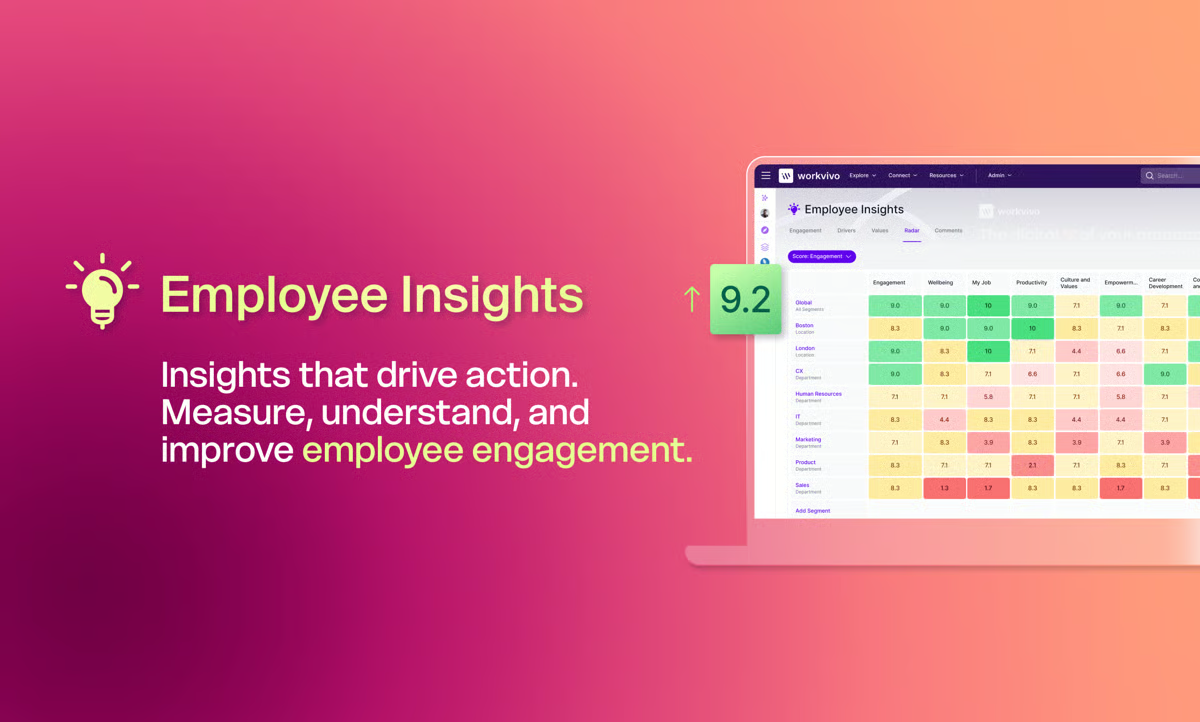
Social and interactive elements encourage informal engagement alongside work-related communication. Employees can share milestones, achievements, or participate in light interactive activities, such as daily puzzle challenges. These features contribute to a sense of inclusion, connection, and community across distributed teams, reinforcing engagement in both professional and social contexts.
The interface is designed for usability, making it straightforward for employees to post updates, browse content, and endorse colleagues. Teams can integrate these activities into routine workflows without additional training, supporting consistent participation. As per G2 Data, the learning rating of 94% reflects alignment with organizational knowledge-sharing and team awareness objectives.
Operational updates, promotional information, and critical organizational announcements are consolidated in one accessible location. Employees can monitor events, warehouse updates, and policy changes efficiently, ensuring alignment between management and staff. This capability is particularly valuable for large organizations where consistent awareness across multiple locations is essential.
According to G2 reviewers, email notification links occasionally redirect inconsistently, requiring users to re-open content directly within the platform rather than landing on the intended update or recognition post. The core communication and update workflows, however, remain reliable and consistently well-structured across the platform.
Workvivo does not offer a persistent stay-logged-in option, meaning employees must actively log back in each session. G2 users note that teams without single sign-on configured may engage with recognition and update feeds less consistently as a result. Organizations with clear onboarding practices, though, report strong adoption, and the structured authentication approach is widely seen as a trust signal.
With a G2 Satisfaction Score of 86 and an overall G2 Score of 80, Workvivo demonstrates reliable usability and workflow fit across distributed teams. These metrics underscore its effectiveness in combining updates, recognition, and social interaction, making it particularly suitable for enterprises seeking to strengthen alignment, engagement, and connection across hybrid or global workforces.
“I use Workvivo to share my work achievements, customer feedback, travel moments with colleagues, and to endorse team members for their values. I also rely on Workvivo for its space feature, which allows me to find the latest supplier list and HRM information without any worry about changes. The spaces feature is great as it lets me add space for specific people based on interest, which is amazing. I like the option to endorse people for the values they follow right on their profile without making announcements, and others can still see it. This provides a convenient way to encourage people. I always enjoy solving puzzles, and the daily Wordle puzzle is a delightful way to start my day with a problem-solving approach.”
- Workvivo review, Rushikesh J.
” There might be some glitch or a bug that needs to be fixed, as clicking on an email with a Workvivo link does not always redirect you to the right link. It would be helpful if there were a feature for employers to auto-login when they click on the link.”
- Workvivo review, Ashfak S.
Looking for tools that focus purely on engagement and participation? Read my guide to the best employee engagement software for a more targeted comparison.
Bonusly provides a structured approach to employee recognition, combining points-based rewards with peer acknowledgment to make contributions visible and actionable. The platform allows employees to redeem points in ways that feel meaningful while fostering transparency and engagement across teams. Recognition workflows integrate with communication tools, ensuring acknowledgment occurs naturally within daily routines.
The platform centralizes recognition activities, allowing teams to consistently acknowledge contributions both large and small. G2 users highlight that points-based awards can be redeemed by recipients according to their preference, providing tangible value while reinforcing engagement. This approach strengthens collaboration across teams, supports morale, and encourages visible acknowledgment of work efforts.
Integration with communication tools such as Slack and other platforms allows recognition to occur seamlessly within daily workflows. Teams can give and receive acknowledgments in real time, maintaining engagement without interrupting regular operations. The system’s G2 Satisfaction score of 98 underscores its reliability and workflow fit for daily recognition processes.
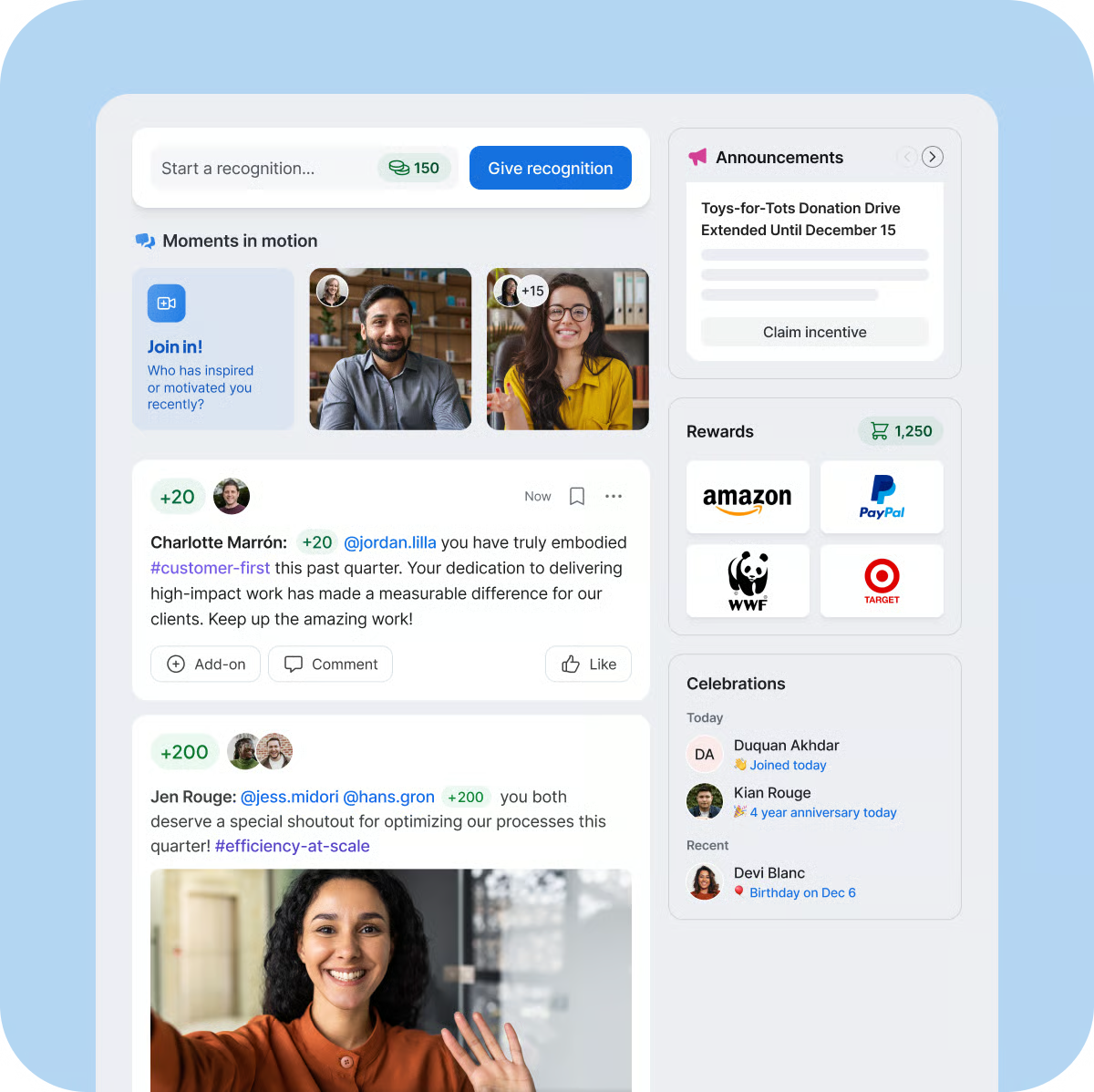
Bonusly provides a wide variety of reward options, enabling employees to choose incentives that are personally meaningful. Flexible redemption options encourage continued participation and make recognition more motivating. Teams can align reward distribution with employee preferences, which supports sustained engagement and a positive recognition culture.
Transparency is enhanced through detailed tracking of points and reward histories. G2 reviewers observe that employees and managers can clearly see recognition activity, ensuring contributions are visible and accurately acknowledged. This visibility supports fairness in recognition programs while reducing administrative overhead.
Interactive features, such as commenting and replying with points, encourage informal engagement alongside formal recognition. G2 users highlight that employees can acknowledge colleagues in context, promoting collaboration and inclusion. The communication rating of 89% on G2 reflects the platform’s ability to support structured, two-way interaction across teams.
The system allows organizations to monitor participation and recognition trends, helping maintain alignment between engagement programs and overall team culture. Insights from point allocation and award patterns provide visibility across teams and help leaders identify participation gaps or imbalances.
According to G2 reviewers, redeeming points through certain merchant integrations requires navigating additional steps before the transaction completes. Employees who expect a direct, single-click redemption experience may find the process adds friction at the final stage. The structured flow, however, supports accurate and secure fulfillment across a broad merchant network.
Another feedback I found in G2 reviews discusses how reporting and analytics tools cover standard recognition activity, but tracking engagement around specific initiatives, such as monitoring participation trends across teams or measuring how recognition language aligns with a particular program, is not deeply supported. Core recognition metrics and point histories, however, remain clear and accessible for day-to-day program monitoring.
Overall, Bonusly combines recognition, engagement, and flexible rewards in a single platform that promotes transparency across teams. The overall G2 Score of 75 signals balanced adoption and usability, confirming its reliability for managing recognition and engagement at scale.
“I appreciate Bonusly for its real-time crediting of points, which saves us from the hassle of manually checking what went to whom and when, as the transaction history is accurate to the last point. I also like that there are more merchants available. Another feature I value is the ability to reply to a post with Bonusly points. The initial setup of Bonusly was a breeze.”
- Bonusly review, Tony R.
"Some rewards take time to reach if recognition isn’t frequent, which can make progress feel slow at times. I’d also like the rewards page to surface more personalized recommendations based on my previous redemptions.
- Bonusly review, Avyan S.
Within the employee experience category, Achievers emerges as a recognition-focused platform supporting peer appreciation, reward management, and milestone awareness through a unified interface. Organizations primarily adopt it to formalize appreciation without introducing heavy HR processes, which aligns with culture-building initiatives.
G2 Data places Achievers in a balanced position with an overall G2 Score of 75, reflecting a midpoint between user sentiment and overall market traction. The G2 Satisfaction score of 83 suggests that day-to-day workflows remain dependable and accessible, supporting routine recognition without excessive maintenance or complexity.
Adoption is largely enterprise-driven, with 68% of customers coming from large organizations, compared to 22% mid-market and 10% small business. This distribution signals procurement confidence among companies managing complex workforces, while also highlighting that the platform’s strengths are most visible in environments where structured recognition at scale becomes necessary.
Recognition workflows are consistently described as straightforward, allowing employees to acknowledge contributions without formal approval layers. G2 Data highlights how milestone reminders and peer recognition features help sustain morale across distributed teams. Team building ratings of 92% reinforce the platform’s alignment with everyday appreciation rather than episodic engagement campaigns.
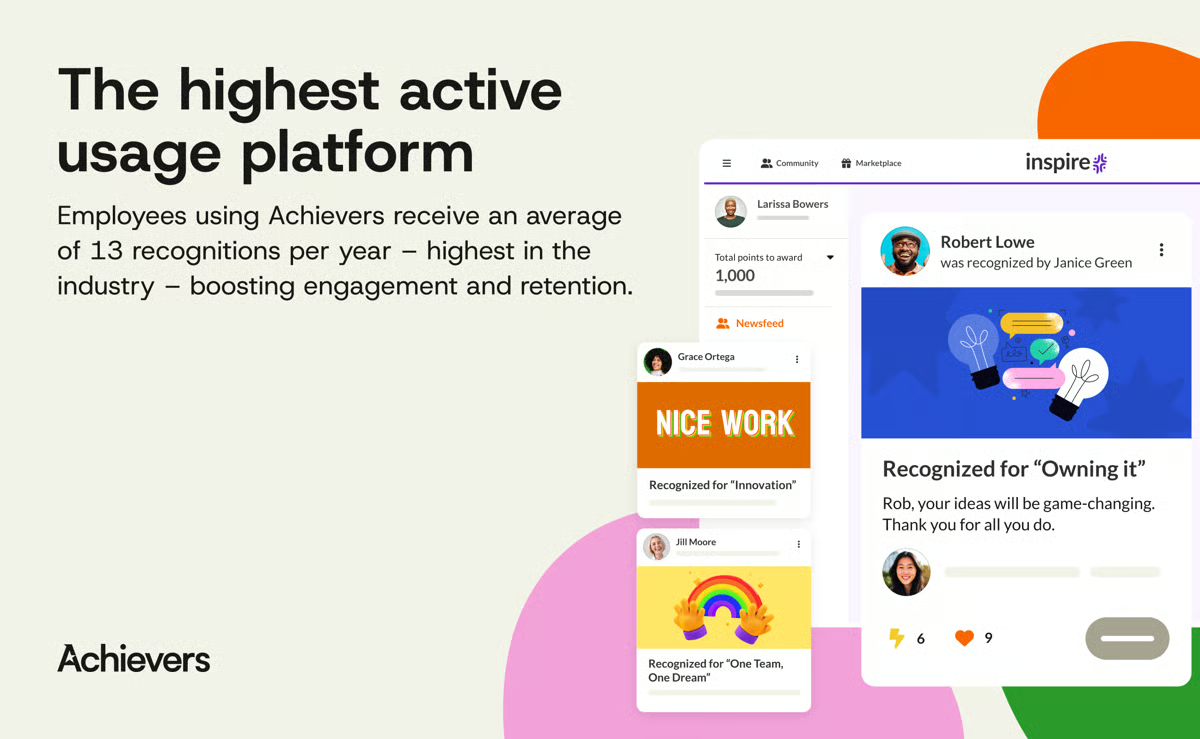
Navigation and interaction patterns are commonly noted as intuitive, supporting quick recognition and reward actions with minimal onboarding effort. The review feedback suggests that employees can engage with the platform immediately, reducing friction in daily use. A Communication rating of 90% reflects how recognition remains visible across teams, strengthening transparency around praise.
Reward redemption workflows contribute to consistent engagement by allowing employees to select and track incentives within the same interface. Users frequently mention the flexibility of virtual rewards as a motivating element that complements recognition moments. This structure supports ongoing participation rather than one-time engagement spikes.
Milestone awareness emerges as a meaningful engagement driver, particularly in large organizations where personal events can be overlooked. It indicates that automated reminders help colleagues acknowledge birthdays, anniversaries, and achievements more consistently. This visibility contributes to sustained cultural cohesion while aligning with a performance management score of 89% in G2.
Collaborative recognition threads enable colleagues to add comments and reinforce appreciation collectively, creating shared recognition experiences. Teams mentions that this social element supports participation beyond direct managers, strengthening peer-driven engagement. The feature encourages continuous feedback while remaining lightweight within everyday workflows.
Structured recognition tracking helps organizations document both planned and spontaneous appreciation activities. Feedback suggests that this historical visibility supports engagement reporting and reinforces recognition as an ongoing cultural practice. The platform’s workflow design, therefore, connects cultural signals with measurable engagement touchpoints.
G2 reviewers point to a few limitations as well. The reward catalog does not offer deep regional customization, defaulting to broadly applicable options that work across markets but miss locally relevant brand choices. Although the catalog's breadth ensures consistent reward availability across geographically distributed teams.
Several platform features are not immediately visible through the main navigation and surface primarily through notifications and prompted interactions. New users who prefer to explore independently may take longer to discover the full capability set without guidance. Once teams move past the initial familiarization period, the platform's core recognition and reward workflows remain straightforward and easy to use consistently.
Achievers reflects a recognition-first approach to employee experience, combining milestone visibility, peer appreciation, and reward workflows into a cohesive engagement layer. It stands as a credible option for organizations aiming to embed appreciation into routine employee interactions while maintaining structured engagement visibility.
“I find Achievers really handy for giving quick recognition to colleagues at work. I appreciate how it makes saying thank you quick and hassle-free, with a constant reminder to provide real-time feedback. I also like its easy-to-use interface for both giving recognition and spending points. It takes less than a minute to give someone in the team recognition, which makes it super efficient.”
- Achievers review, Charlotte T.
“I'd like Achievers to incorporate deals as they are in real-time from retailers. It would be great if I could use my own Gems on top of existing deals, like combining them with discounts from retailers.. “
- Achievers review, Raphel Z.
Analysis of aggregated G2 review patterns suggests Culture Amp operates as a platform centered on listening, feedback analysis, and performance development. The product combines engagement surveys, goal tracking, and action planning into a unified workflow that surfaces employee sentiment alongside development progress.
Listening capabilities are frequently highlighted as a defining strength on G2, supported by a team member listening score of 85%, which is close to the category benchmark. Flexible survey templates and anonymous feedback options enable organizations to capture candid sentiment across onboarding, engagement, and exit touchpoints. This structure supports continuous listening programs that extend beyond periodic engagement surveys.
Performance workflows help connect feedback insights with development conversations through shared goal tracking and progress visibility. With performance management rated at 86% in G2, the platform supports structured evaluation cycles while maintaining transparency between employees and managers. Centralized visibility contributes to consistent coaching and review alignment across teams.
Survey customization allows organizations to explore targeted engagement themes through both recurring and ad-hoc programs. This flexibility enables teams to investigate emerging issues without waiting for scheduled engagement cycles. The approach supports evolving feedback strategies aligned with organizational priorities.
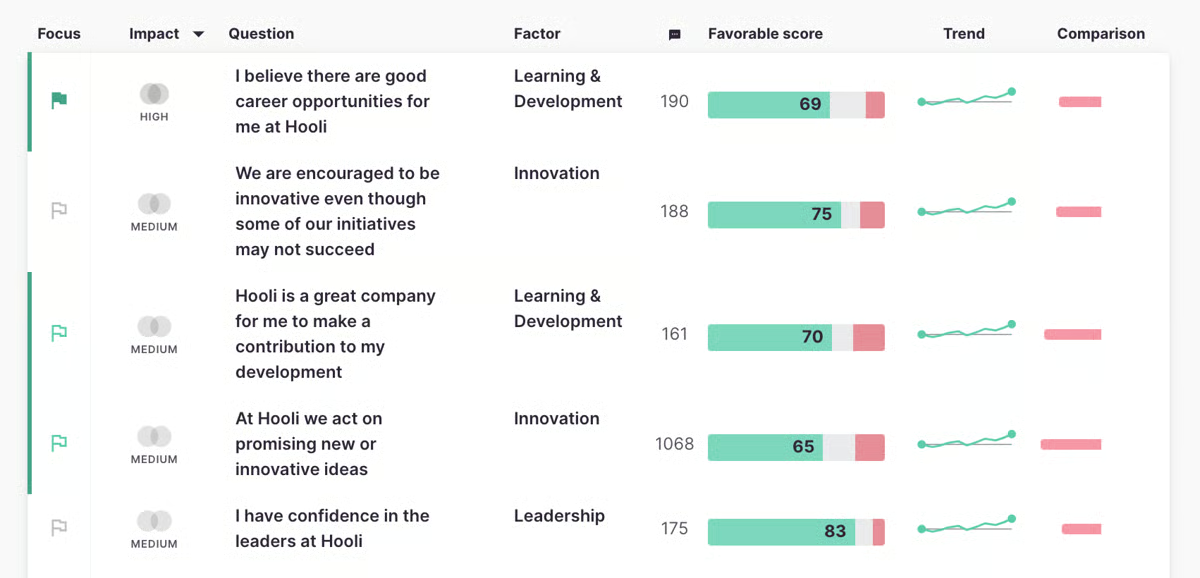
Data privacy controls contribute to confidence in participation by limiting access to hierarchical reporting structures. Controlled visibility supports open feedback while maintaining appropriate confidentiality around individual responses and performance insights. This balance strengthens trust in engagement workflows.
Guidance from customer support and People Science resources is often noted as part of the platform’s value. Organizations benefit from interpretation support when translating survey insights into initiatives, reinforcing features like action plan (84%). This advisory layer helps feedback programs move toward measurable organizational improvements.
Cultural adaptability emerges as a recurring theme, with G2 reviews indicating that ongoing listening insights help employees navigate new organizational environments. Continuous sentiment tracking supports alignment across distributed teams and evolving workplace expectations. This capability reinforces the platform’s positioning as an insight-driven engagement system.
Custom report building requires familiarity with how datasets and fields are structured before producing the views most useful for specific analytics needs. According to G2 reviews, analytics-focused HR teams or people ops leads who need tailored reporting outputs might need to spend more time in the configuration stage. The underlying data depth, however, supports a wide range of engagement and performance insights once report structures are established.
Workflow automation follows predefined pathways, meaning escalation logic and review triggers cannot be freely reconfigured outside the platform's set structure. The structured approach, however, supports consistent and repeatable review cycles that reduce the risk of process gaps across large organizations.
Overall, Culture Amp brings together employee listening, performance visibility, and structured action planning into a cohesive feedback ecosystem. Its strong mid-market adoption underscores its relevance to organizations formalizing engagement strategies while building people analytics maturity. For teams prioritizing feedback depth and measurable improvement initiatives, Culture Amp remains a purposeful choice for turning employee sentiment into structured organizational action.
“I like that the support team has been really responsive, and I've noticed that quite a few of the product requests or changes that I've asked for have actually been implemented, which is great to see in a tool with a big price tag. It's also very easy for employees to use, as it has a very user-friendly and intuitive interface..”
- Culture Amp review, Sarah C.
“It could have more aspects like employees being able to trigger emails for meetings, or if I don't like my review from my manager, then that should highlight to higher management.”
- Culture Amp review, Rishikesh B.
Paylocity is an all-in-one HCM platform that brings HR, finance, and IT together, covering payroll processing, benefits administration, time and attendance, onboarding, performance management, and employee engagement tools. With 79% of its G2 user base coming from mid-market companies, Paylocity feels intentionally designed for organizations that have outgrown basic payroll tools but don’t want the overhead of a full enterprise HCM suite.
When I evaluated Paylocity through G2 reviews and data, the payroll engine stood out first. Reviewers consistently highlight how well it handles both standard processing and more complex scenarios like wage garnishments, tax filings, and year-end reporting. The step-by-step workflows, batch entry, direct deposit management, and W-2 generation all sit within a single interface, which keeps execution structured and predictable. On G2, that reliability shows up clearly with an 89% meets requirements score and 88% user adoption rate, strong signals that the system performs consistently at scale.
The employee self-service experience is another area where Paylocity delivers real value. Employees can update personal details, manage direct deposits, access pay stubs, approve timecards, and handle tax forms through both web and mobile interfaces. What stood out to me in G2 reviews is how much this reduces dependency on HR teams. Instead of fielding routine requests, HR can focus on higher-impact work, while employees get faster access to what they need.
Benefits administration is also tightly integrated into the platform, particularly when it comes to enrollment and payroll accuracy. Paylocity connects open enrollment workflows directly with payroll deductions, ensuring that elections for 401(k), FSA, and other benefits automatically sync without manual intervention. Reviewers on G2 frequently call this out as a reliability advantage, especially during enrollment periods where errors are more likely in disconnected systems.
Beyond core HR operations, Paylocity’s integration ecosystem helps it function as more than just an HR tool. With 350+ native integrations, it connects with accounting systems, project management platforms, and third-party providers, allowing teams to maintain consistent data across departments. Instead of stitching together multiple tools, organizations can rely on Paylocity as a central system that fits into a broader tech stack.
Where Paylocity differentiates itself further is in its built-in employee engagement tools. Features like the Community feed, peer recognition, and employee surveys create ongoing opportunities for feedback and connection, rather than limiting engagement to periodic reviews. G2 reviewers often point to this as a meaningful advantage over payroll-first platforms, especially for mid-market companies trying to scale culture alongside operations.
The compliance dashboard is another strength that came through clearly in G2 feedback. It provides real-time visibility into employee records, tax filings, and documentation completeness, helping HR teams stay ahead of regulatory requirements. For organizations operating across multiple states or entities, this kind of visibility reduces risk and simplifies what would otherwise require manual tracking and audits.
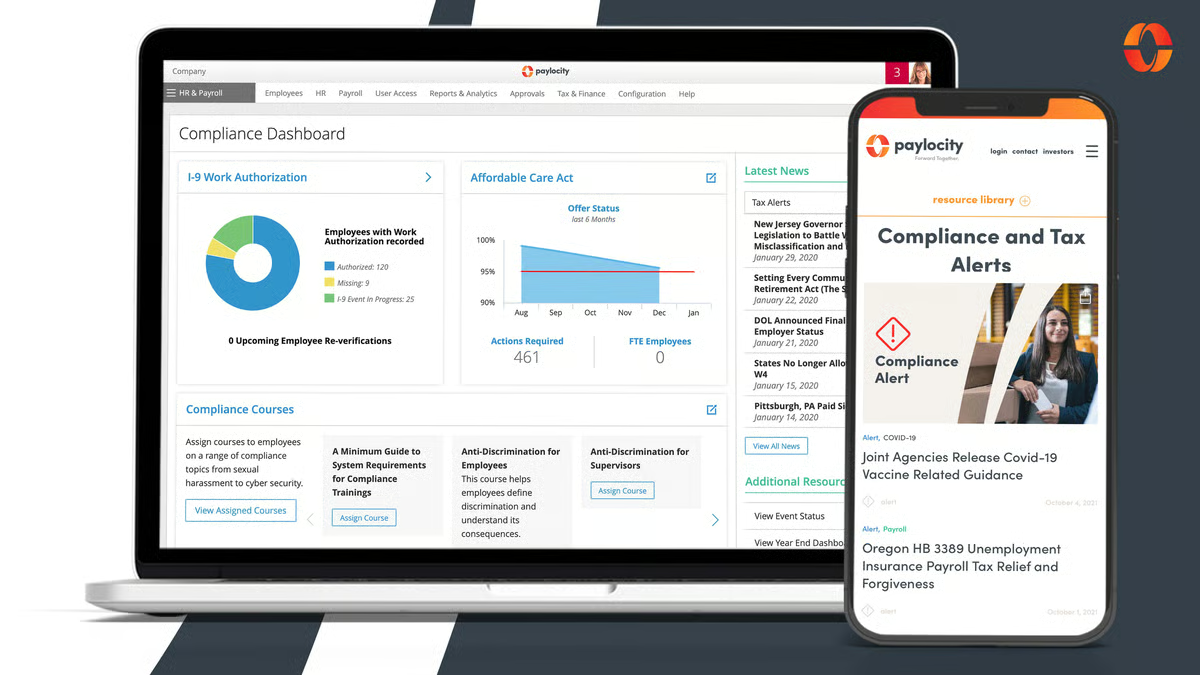
On the onboarding side, Paylocity supports customizable workflows, automated task assignments, electronic document signing, and background checks within the same system. Reviewers mention that this creates a smoother experience for both HR teams and new hires, particularly when onboarding processes need to reflect internal policies rather than follow a rigid template.
Now, Paylocity's reporting engine offers a wide range of pre-built and custom report templates, and reviewers on G2 appreciate the depth of what's available, but several note that finding the right report or building a precise custom query can take some navigating, and occasionally a call to the support team. For teams that rely heavily on ad-hoc or complex reporting, factoring in some ramp-up time for report configuration will help get the most out of the tool. That said, once teams get familiar with the report builder and learn which templates fit their needs, the output is detailed and reliable
Some reviewers also mention that PTO balance syncing and timecard corrections within the time and labor module don't always align cleanly with payroll closing timelines. Organizations with multi-rate or complex scheduling needs may want to map out their time-and-labor workflows during implementation to ensure everything fits together smoothly. Reviewers who invested that setup time upfront consistently say the module runs well day to day, and having time, attendance, and payroll all in one system still saves them significant manual work compared to managing separate tools.
With a 15-month payback period and strong adoption across mid-market organizations, Paylocity is a solid pick for HR teams that want payroll accuracy, employee engagement, and compliance visibility all anchored to a single employee record. If your priority is consolidating HR operations and building a connected employee experience without juggling multiple point solutions, Paylocity is one of the most well-rounded options in the category.
"I find Paylocity very intuitive, easy, and simple, which allows me to figure things out pretty easily. I value the HR and payroll features the most, as we can see all the information for all of the employees. I also appreciate the onboarding feature because it has moved everything online and made it easy to access. This means many of us can just go into the system without having to be in the office, keeping everybody sort of on the same page."
- Paylocity review, Andrea R.
"The time tracking isn't as thorough as on other platforms and needs to allow for project tracking and allocating time based on projects. The initial setup was not easy at all; there were lots of issues, delays, and errors."
- Paylocity review, Natalie R.
Motivosity is often mentioned in G2 as a platform centered on peer recognition, appreciation, and culture reinforcement. Aggregated G2 insights suggest organizations often evaluate Motivosity to strengthen workplace relationships and sustain morale through everyday recognition. Its positioning aligns with culture-building initiatives that emphasize gratitude, connection, and positive reinforcement.
Adoption patterns show 58% mid-market usage, alongside 23% enterprise and 19% small business representation. This distribution suggests particular relevance for growing organizations formalizing recognition practices while maintaining accessible engagement experiences that scale with workforce size.
Peer recognition feeds create continuous visibility around contributions, allowing employees to acknowledge each other in everyday interactions. These shared appreciation moments help reinforce cultural signals and highlight behaviors aligned with organizational values. The workflow encourages recognition to become part of routine collaboration rather than an isolated HR activity.
Reward sharing adds a tangible layer to appreciation by enabling employees to pair praise with small monetary tokens. This approach supports spontaneous recognition and encourages participation across teams regardless of reporting structure. The combined praise-and-reward model helps sustain engagement and highlight collective achievements.
Social interaction elements extend engagement beyond task-oriented communication, enabling employees to build rapport across departments. Recognition comments and shared celebrations create informal connection points that support belonging in distributed environments. These interactions contribute to stronger workplace relationships over time.
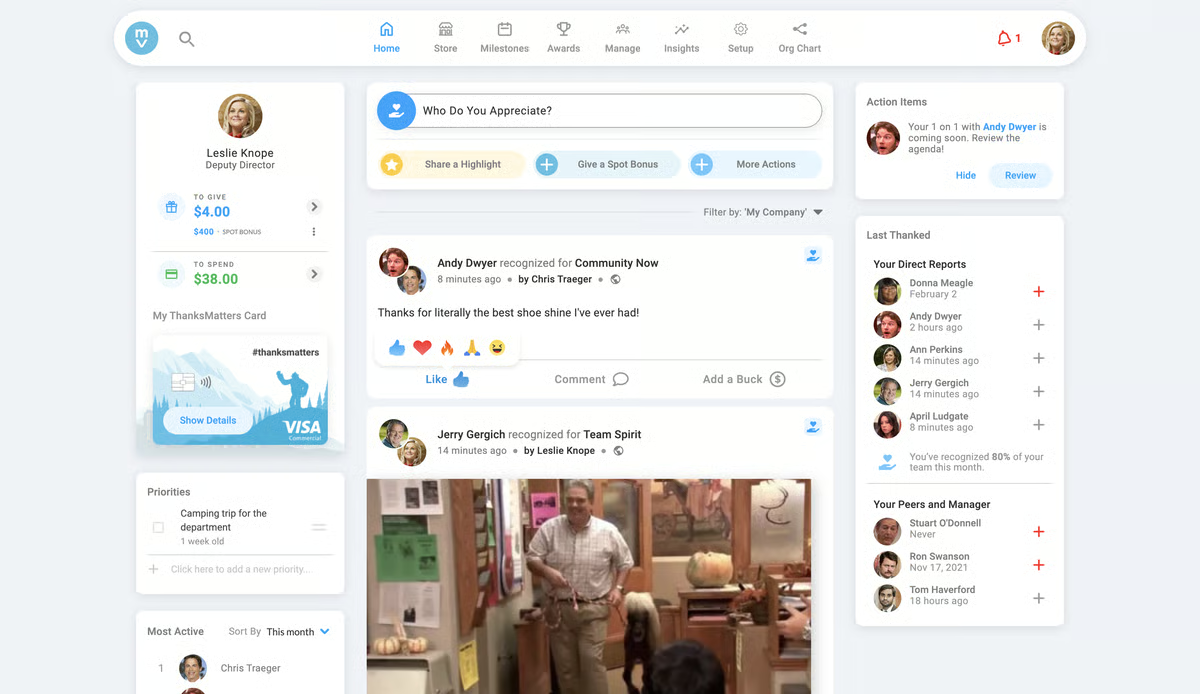
Recognition visibility helps surface employees who consistently demonstrate company values, supporting informal identification of cultural role models. This dynamic encourages positive behaviors and fosters alignment around shared expectations. The platform, therefore, reinforces culture through peer-driven acknowledgment rather than solely top-down evaluation.
Implementation experiences are typically described as smooth, enabling organizations to introduce recognition workflows without major process disruption. Accessibility and intuitive participation support early adoption across teams. Continuous usability improvements further contribute to sustained engagement with the platform.
Recognition-driven engagement helps connect employees who may not collaborate directly, creating opportunities for relationship-building across functions. Appreciation moments serve as shared touchpoints that strengthen cross-team visibility and rapport. This social recognition model supports both morale and collaboration outcomes.
From a scoring perspective, a G2 Satisfaction Score of 73 suggests dependable day-to-day workflow fit with recognition processes that integrate smoothly into routine interactions. A G2 market presence score of 56 reflects moderate adoption relative to category leaders, indicating growing but not dominant scale. The resulting overall G2 Score of 64 balances these signals, positioning Motivosity as a viable consideration for organizations prioritizing recognition impact over enterprise-scale breadth.
Beyond strengths, Motivosity has a few areas of improvement as well. According to G2 users, only reward allocations expire at the end of each cycle and do not roll over, meaning unspent points are lost if employees do not distribute them within the period. Teams that operate on irregular recognition rhythms or prefer accumulating allocations across months will find this cadence restrictive. The defined cycle, however, encourages consistent and timely recognition behavior, keeping appreciation active rather than deferred.
Recognition feeds display a broad stream of appreciation activity without granular filtering options, meaning employees tracking specific team updates or initiative-related recognition must scroll through wider activity volumes. The feed's breadth, however, keeps overall cultural visibility high and ensures no recognition moment goes unnoticed across the organization.
Overall, Motivosity brings peer recognition, reward sharing, and social engagement together into a unified culture experience that keeps appreciation visible in daily interactions. Its mid-market adoption highlights relevance for organizations formalizing engagement while preserving a social, accessible recognition layer. For organizations prioritizing peer-driven appreciation and culture-building at scale, Motivosity aligns closely with its positioning as a solution best suited for recognition-led engagement.
”We have a very large remote population. Motivosity makes it easy to connect people across many departments, roles, and locations. What I love most is that it aligns with our work on the values we have been driving over the past year. You can tie recognition to behaviors you want to reinforce, and it has helped us integrate them into our culture in a meaningful way.”
- Motivosity review, Kila S.
“While the interface is clean, it can sometimes feel like there's a lot going on. It would be helpful to have streamlined options or filters to focus on the most relevant updates. Another interesting idea would be to have team-based or group recognition to further enhance the collaborative aspect.”
- Motivosity review, Steven M.
|
Software
|
G2 rating
|
Free plan
|
Ideal for
|
|
Vantage Circle
|
4.7/5
|
No
|
HR teams running rewards-driven recognition and engagement programs
|
|
Nectar
|
4.7/5
|
No
|
Teams prioritizing peer recognition and culture-aligned appreciation
|
|
Workvivo
|
4.8/5
|
No
|
Organizations strengthening internal communication and culture visibility
|
|
Bonusly
|
4.7/5
|
Yes, Free plan
|
Teams adopting lightweight peer recognition in daily workflows
|
|
Achievers
|
4.6/5
|
No
|
Enterprise teams managing large-scale recognition and performance alignment
|
|
Culture Amp
|
4.5/5
|
No
|
Organizations focused on surveys, feedback insights, and people analytics
|
|
Paylocity
|
4.4/5
|
No
|
Mid-market companies unifying HR operations with built-in engagement, payroll, and employee experience tools
|
|
Motivosity
|
4.7/5
|
No
|
Mid-market teams building connection-led recognition and engagement
|
*These employee experience software are top-rated in their category based on G2’s 2026 Winter Grid Report. Ratings and free-plan availability may change by vendor and region.
Got more questions? G2 has the answers!
Vantage Circle, Achievers, and Culture Amp frequently surface as top-rated choices for HR-led engagement programs. Reviews often highlight their ability to centralize recognition, feedback, and culture initiatives in one structured environment.
Vantage Circle, Nectar, and Bonusly are commonly associated with recognition-plus-rewards workflows. Across reviews, teams mention flexible reward catalogs and peer-driven appreciation as key strengths supporting culture reinforcement.
Workvivo frequently appears in remote-first environments. Review patterns suggest their communication visibility and collaboration-native recognition features help distributed teams maintain connection and culture continuity.
Vantage Circle and Achievers are often shortlisted by enterprise teams. Reviews highlight scalability, governance capabilities, and structured reporting that support large-scale engagement and recognition initiatives.
Culture Amp commonly surfaces where engagement insights connect to growth and performance conversations. Reviews frequently reference continuous feedback cycles and alignment with development planning.
Workvivo is regularly mentioned in hybrid workplace scenarios. Teams often note its ability to bridge communication gaps between remote, office, and frontline employees.
Culture Amp consistently appears in satisfaction tracking use cases. Review feedback highlights survey depth, sentiment segmentation, and reporting clarity that support ongoing engagement measurement.
Culture Amp frequently surfaces in conversations around advanced sentiment insights. Reviews suggest its analytics capabilities help teams interpret feedback trends and prioritize engagement actions with greater confidence.
What became clear while reviewing employee experience software is that these platforms quietly influence how culture is experienced rather than how it is described. Recognition, feedback, and communication are only effective when they are embedded in work instead of operating as parallel initiatives. The strongest solutions create rhythm around appreciation, listening, and connection, so engagement becomes part of daily behavior, not an occasional campaign.
Patterns across feedback suggest that platform fit reveals itself through consistency. When employees see recognition happen in real moments and feedback leads to visible shifts, participation sustains naturally. When tools add complexity or feel disconnected from workflows, even well-designed programs struggle to maintain relevance. Over time, this difference shapes manager confidence, employee trust, and the credibility of people initiatives far more than feature depth alone.
Choosing employee experience software, then, is ultimately a structural decision about how your organization supports people at scale. The goal is not to add another layer of process but to create systems that reinforce culture signals, guide conversations, and make engagement easier to sustain. With clarity on your priorities and a realistic view of how your teams operate, the right platform becomes less of a tool and more of a steady foundation for long-term culture resilience.
Want to strengthen culture and engagement across your workforce? Explore employee engagement software on G2 to improve recognition, feedback, and communication at scale.


I joined G2 during the pandemic while working completely remotely, which made me realize just...
.png) by Tanuja Bahirat
by Tanuja Bahirat
Recently updatedSummer 2026 Grid® Report · Published May 26, 2026 This guide was last...
.png) by Devyani Mehta
by Devyani Mehta
Workvivo, DSMN8, and Viva Engage are the best enterprise social networking (ESN) software...
/DarshayitaThakur-OrangeBG.webp) by Darshayita Thakur
by Darshayita Thakur