.png?width=400&height=150&name=My%20project-1%20(1).png)


Account-based advertising sounds powerful on paper; identify your highest-value accounts, tailor outreach to their needs, and drive larger, more predictable deals. But when most teams put ABM advertising into practice, they quickly uncover the messy reality: fragmented data across multiple systems, intent signals that don’t tell a full story, unpredictable campaign performance, and platforms that promise sales-marketing alignment yet barely integrate with the CRM or MAP.
Across conversations with marketers, product experts, and verified reviewers, the same themes emerge again and again. The tools that succeed are the ones that bring clarity to that chaos.
With that in mind, I evaluated the best account-based advertising software using a mix of G2 Data, product research, and consistent feedback from teams who rely on these tools every day.
The goal is not just to compare features, but to highlight what actually makes a platform effective in real-world go-to-market environments. Some solutions stand out for their predictive intelligence, others for their orchestration capabilities or tight integrations with Salesforce and mainstream marketing automation tools.
*These account-based advertising software are picked based on G2’s Fall 2025 Grid Report. I’ve added their standout features for easier comparison.
Running account-based advertising without the right tools feels a lot like trying to target the perfect buyer with blurry data, inconsistent signals, and campaigns stitched together across spreadsheets. Every marketer knows the frustration: intent data in one place, ad performance in another, CRM records out of sync, and no clear view of which accounts are actually warming up.
That is exactly where dedicated account-based advertising software makes all the difference.
The best ABM advertising platforms bring precision to a process that is usually anything but. They unify firmographic, technographic, and intent data so you can confidently identify in-market accounts. They help you target the right decision-makers, launch coordinated multi-channel campaigns, and actually see which accounts are moving closer to revenue. Instead of guessing who is engaged or manually aligning with sales, teams operate from a single source of truth.
And the momentum behind ABM technology continues to grow. The market for account-based advertising software is expected to be worth USD 1,826.7 million in 2025 and is forecast to grow to USD 5,233.6 million by 2035, reflecting a compound annual growth rate of 11.1% throughout the projected period. As buying committees get larger and sales cycles get longer, companies are investing in ABM tech to cut waste, personalize outreach, and prioritize accounts that are already in-market.
To build this list, I started with G2’s Grid® Report for account-based advertising software to create a shortlist, using a mix of user satisfaction scores and market presence as my guide. My shortlist was based on a mix of user satisfaction scores and market presence, ensuring a balance between usability and adoption.
From there, I evaluated each tool on how effectively it supports account targeting, intent data quality, multi-channel ad execution, audience segmentation, sales alignment, reporting, and key integrations across the revenue tech stack.
I also used AI to analyze hundreds of verified G2 reviews, focusing on what marketing and revenue teams praised most, where they faced challenges, and which platforms consistently delivered measurable impact on pipeline and account engagement.
The screenshots featured in this article come from G2 vendor listings and publicly available product documentation.
After digging into G2 Data and pulling in from my experience, I noticed a clear set of themes that consistently separated the top-performing platforms from the rest. Here’s what I needed the most:
The list below contains genuine user reviews from the Account-Based Advertising category page. To be included in this category, a solution must:
*This data was pulled from G2 in 2025. Some reviews may have been edited for clarity.
6sense Revenue Marketing is a powerful account intelligence and activation platform built to help revenue teams identify in-market accounts, prioritize engagement, and run targeted advertising driven by real buyer intent. It brings together predictive analytics, fit scoring, journey insights, and multi-channel activation capabilities so marketing and sales can focus on the accounts most likely to convert. 6sense Revenue Marketing holds a 4.3 out of 5 rating from over 1,140 reviews, with 95% of users giving it 4 or 5 stars — a strong indicator of overall satisfaction and trust in the platform.
One of the strongest themes across user feedback is the visibility 6sense provides into account behavior. Rather than relying on vague signals or generic ICP lists, the platform highlights what prospects are researching, how recently they’ve shown intent, and where they sit in the buying cycle. Many G2 reviewers emphasized that this depth of intent data reshapes their go-to-market motion entirely.
6sense also ranks strongly on usability, scoring 84% for ease of use and 84% for ease of admin, showing that users find the platform approachable despite its depth. The interface does require some acclimation, but users consistently mention that once you understand how journey stages, segments, and predictive scores fit together, the platform becomes significantly more intuitive.
That progression, from initial complexity to clarity, mirrors how many teams work with enterprise ABM data. Reviewers also praised the segmentation capabilities and audience-builder, noting how helpful it is to filter accounts by intent, stage, or fit with precision.
Another standout strength is how well 6sense ties into the broader revenue tech stack. Smooth integrations with Salesforce, HubSpot, and MAPs help consolidate signals into a single source of truth, which is critical when ABM programs touch multiple tools. This unified view gives teams more confidence in forecasting, prioritization, and outbound sequencing.
Support quality was another consistent highlight. Onboarding specialists and account managers earned repeated praise for being responsive, knowledgeable, and proactive in helping teams map their workflows into the platform. Teams also noted that 6sense’s multi-channel activation, including advertising, email, and conversational marketing, helps them keep engagement consistent across the buying journey.
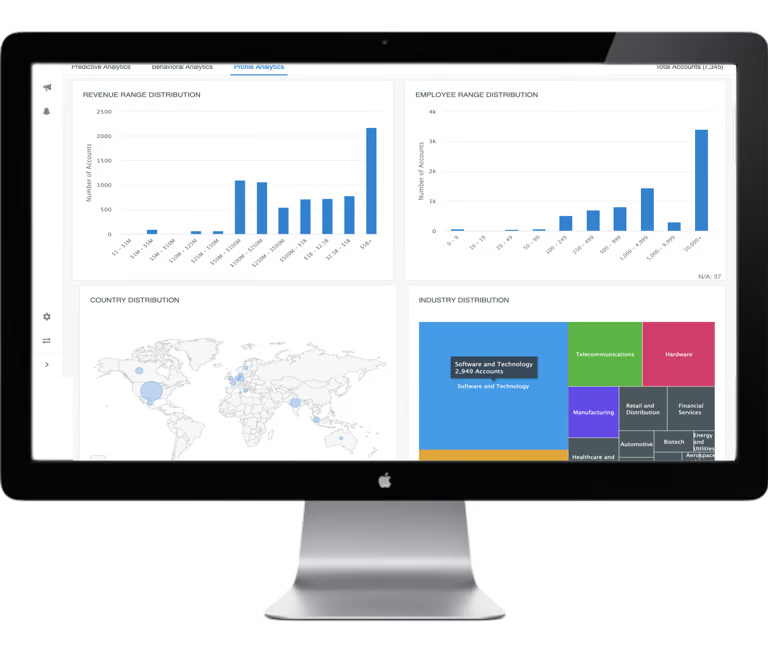
The platform’s depth means its data-dense interface can feel complex at first, but that structure is well-suited for teams that want advanced control over scoring models, intent insights, and detailed journey mapping.
Reviewers also noted that while reporting feels less customizable initially, it’s designed for standardized alignment across marketing and sales — ideal for organizations that prioritize consistent, shared dashboards over highly personalized views.
Even with those nuances, 6sense’s combination of intent modeling, predictive scoring, segmentation, and activation makes it one of the strongest platforms in the ABM advertising space.
For teams focused on identifying revenue opportunities early, aligning go-to-market motions, and influencing pipeline with precision, 6sense Revenue Marketing remains a category-leading choice.
“The quality of the data. We've seen a massive decrease in our cost per opportunity ever since we used 6sense. The alignment from Sales & Marketing, on top of tight segmentation, means we are very efficient and confident in who we are trying to reach. Customer support is awesome, and I know it's dependent on the person you are assigned to, but huge props to Ivan here.”
- 6sense Revenue Marketing review, Charles-Olivier R.
“Easily the worst thing about 6sense are the bugs. The platform is very buggy. While their support team is quick to respond to issues, they sometimes need cajoling to escalate to their engineering team. That said, their engineering team does come through with fixes after a week or two.
Another issue is the lack of intuitiveness of the user interface. This is less of an inconvenience after the recent interface updates, but still persists in certain corners.”
- 6sense Revenue Marketing review, Matthew P.
If you’re layering physical touchpoints into your ABM programs, explore the best Account-Based Direct Mail Software to pair with your ad strategy.
Demandbase One is built to give B2B teams a complete, unified picture of their target accounts, combining intent data, behavioral signals, and advertising insights into a single platform.
The first thing that stood out in G2 reviews was how seamlessly it brings all of these data sources together. The unified dashboard gives them clarity they simply did not have before, making it far easier to understand what accounts are researching, when they’re active, and how close they may be to a buying decision.
Demandbase One holds a strong 4.4 out of 5 rating based on 1,850+ reviews, reflecting broad user satisfaction across enterprise and mid-market teams. According to G2 Data, 97% of users rated the platform 4 or 5 stars, highlighting consistently positive experiences with its ABM and advertising capabilities.
The interface is another standout strength. Reviewers repeatedly praised how intuitive, organized, and visually clean the system feels, even when they’re analyzing large volumes of account data. That level of usability makes shifting between engagement insights, ad performance, and account scoring feel smooth instead of overwhelming. It’s especially valuable for teams where not everyone is an ABM expert; the UI meets users where they are.
Several reviewers also emphasized how much value they get from Demandbase’s real-time alerts. When a high-value account suddenly spikes in interest or views a key piece of content, the platform notifies the right teams instantly. That responsiveness helps BDRs and AEs engage at exactly the right moment, something users consistently described as a game changer for timing outreach.
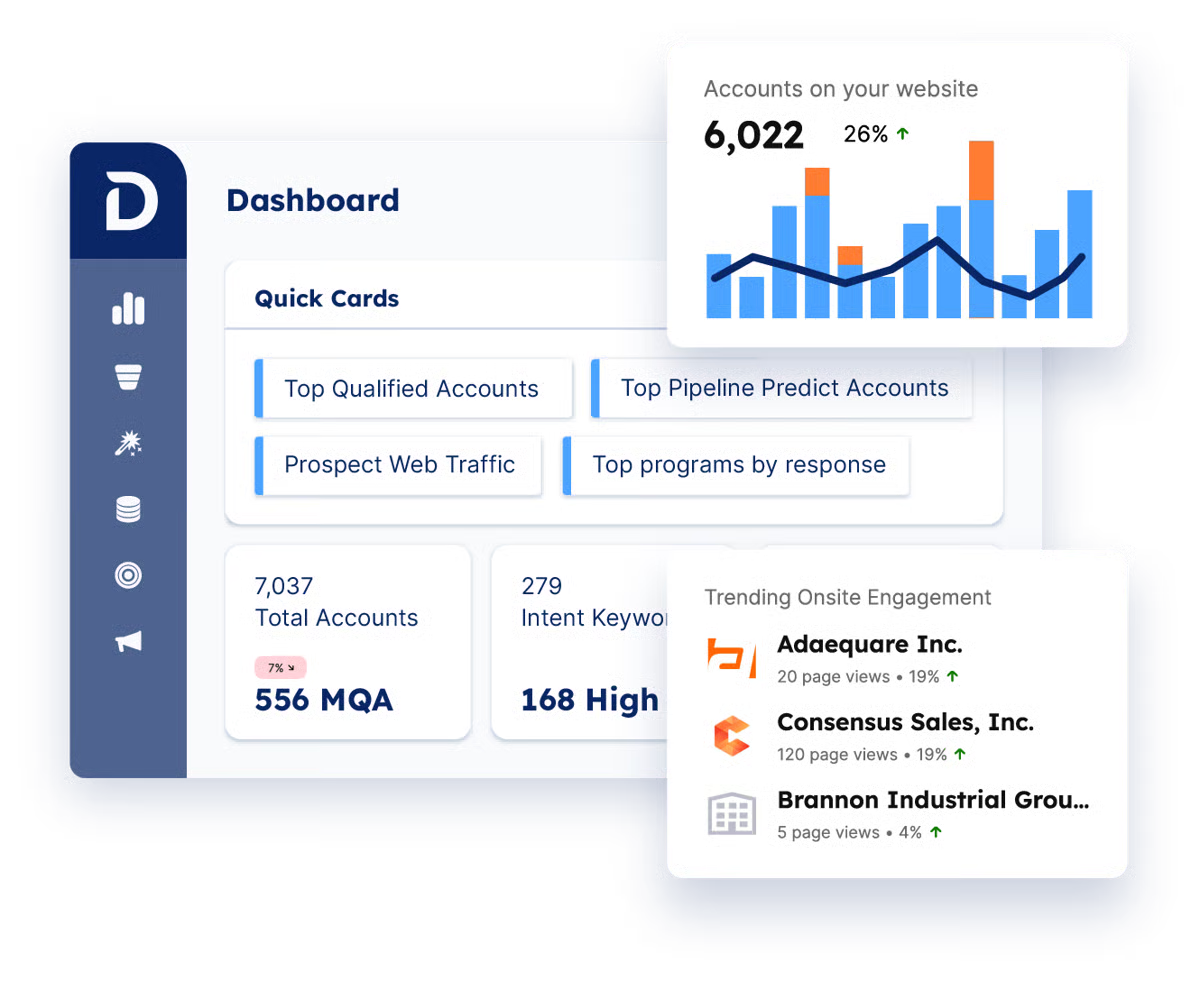 Sales and marketing alignment is another area where Demandbase repeatedly earns praise. Reviewers highlighted how much easier it becomes to keep revenue teams in sync when everyone is using the same account insights and working from the same engagement data. For many teams, Demandbase becomes the “one place everyone checks,” which strengthens collaboration and reduces guesswork.
Advertising capabilities also come up frequently in the reviews. Users appreciate that they can target high-fit accounts through Demandbase’s ad network and monitor performance without juggling multiple tools. Combined with the unified data foundation, this makes campaign targeting more efficient and strategic.
Support quality was another recurring positive theme. Many reviewers mentioned that the Demandbase team is responsive, knowledgeable, and hands-on, especially during onboarding, where personalized guidance helps teams understand how to map their workflows into the platform.
While the platform itself is intuitive, several users mentioned that the support documentation can feel outdated, which may be less ideal for teams that prefer a fully self-serve model but less of an issue for organizations that lean on vendor-led onboarding and ongoing guidance.
A few reviewers also noted that the criteria for entering account stages can feel complex when you first adopt the platform, reflecting a data-rich approach that tends to suit teams looking for more sophisticated, granular definitions of engagement rather than a simplified, one-size-fits-all model.
The overall sentiment across reviews is overwhelmingly positive.
Demandbase One stands out for its unified insights, approachable interface, reliable alerts, strong advertising capabilities, collaborative value, and supportive customer success team. Even with some documentation gaps and early-stage complexity, it remains a top-tier choice for revenue teams that want deeper visibility into account engagement and a more coordinated, intent-driven approach to their go-to-market motion.
“The thing that I like is how seamlessly it combines account-based marketing (ABM), intent data, and sales intelligence into a single, unified platform. It gives our marketing and sales teams a clear, shared view of high-value accounts, helping us prioritize efforts where they matter most. The real-time intent signals are a game-changer; we can see which accounts are actively researching solutions like ours, and tailor outreach accordingly. The integrations with Salesforce, LinkedIn, and other tools are smooth and save a ton of time. Overall, it empowers us to be more strategic, targeted, and data-driven in everything we do.”
- Demandbase One review, Sadhwi P.
“I find the criteria to enter the account-based marketing program in Demandbase One problematic. The data regarding company revenue is often incorrect, and the employee count can be very inconsistent. This inaccuracy results in difficulties ensuring that our target accounts are correctly included and not unjustly denied based on faulty criteria.”
- Demandbase One review, Chase H.
To personalize every stage of the buyer journey, check out top Account-Based Web & Content Experiences Software that complements ABM advertising.
Influ2 takes a different approach to account-based advertising by shifting the focus from broad account targeting to individual decision-makers. As I explored the platform, what struck me first was how detailed and transparent the engagement data is. Multiple reviewers described this as one of the biggest advantages: the ability to pinpoint exactly which people viewed, clicked, or interacted with an ad, and tie those actions to specific buying roles.
According to G2 Data, 96% of users believe the platform is moving in the right direction, and 93% say they would recommend it, signaling strong confidence in Influ2’s roadmap and long-term value.
The platform’s person-based targeting also stood out. Users consistently highlighted how Influ2 lets them deliver ads to named individuals rather than anonymous account lists, which dramatically improves relevance. Reviewers mentioned that this capability helped their sales teams tailor follow-ups with more context, since they knew which stakeholders were active and what content they engaged with. It’s a level of precision most ABM tools simply do not offer.
I also noticed how often users praised Influ2’s clean interface and seamless workflows. The platform feels modern, well-organized, and easy to navigate, making it straightforward to launch campaigns, review engagement reports, and sync insights with CRM systems. Several reviewers said that integrating Influ2 into their existing tech stack was surprisingly smooth, which reinforces its flexibility and enterprise readiness.
The quality of the analytics deserves mention, too. Reviewers repeatedly noted how detailed the reporting is, particularly when tracking individual-level ad engagement, content preference, and buyer signals. This makes it much easier to connect ad interactions to pipeline movement and sales outreach, something that came up again and again across reviews.
Support quality was also a unanimous bright spot. Many users complimented the Influ2 team — especially onboarding specialists — for being proactive, hands-on, and deeply knowledgeable. Having experts who guide teams through setup and optimization clearly shapes the overall experience in a positive way.

Some G2 users wished for more flexibility in dashboard customization, which may feel limiting for teams that prefer deeply tailored analytics, though standardized views often work well for organizations that value uniform reporting across marketing and sales.
Others noted that the ad-approval workflow can feel complex when managing multiple campaigns, a trade-off that tends to matter most to teams running high-volume programs that require more advanced configuration controls.
Overall, Influ2 holds an impressive 4.6 out of 5 rating across 145+ reviews, with 98% of users rating it 4 or 5 stars, highlighting exceptionally strong satisfaction. Influ2 stands out as a highly differentiated ABM platform that excels at delivering precise, person-based advertising.
With transparent engagement data, thoughtful design, strong integrations, and standout customer support, it offers a level of clarity that many ABM programs struggle to achieve.
“Influ2 has given us the most detailed and precise level of targeting we’ve ever achieved. Being able to reach the exact people we want has been a huge step forward for our ABM efforts. The sales team is already seeing early traction and has been incredibly positive about the quality of engagement they’re getting.
A special shoutout to Helen, who made the rollout and onboarding process seamless. She walked us through every step, ensured we were set up for success, and made what could’ve been a complex transition feel easy.”
- Influ2 review, Adam R.
“Because Influ2 targets individuals rather than accounts, the available audience size is inherently smaller. While this level of precision is ideal for targeted engagement, it can limit scale, particularly for high-volume campaigns or initiatives focused on broad brand awareness. Additionally, we've found it challenging to fully leverage Influ2 for smaller accounts that don’t have a sufficient volume of contacts to support effective targeting and performance at scale.”
- Influ2 review, Matheus G.
AdRoll ABM positions itself as an approachable, user-friendly ABM platform designed to help marketing and sales teams identify high-fit accounts, run targeted campaigns, and measure engagement with clarity. As I explored the tool, and as countless reviewers echoed, its simplicity is one of its greatest strengths.
According to G2 Data, 87% of users believe the platform is moving in the right direction, and 85% say they would recommend it, signaling strong confidence in the product’s roadmap and evolution. The interface stands out for being clean, intuitive, and refreshingly easy to navigate, especially when setting up campaigns, uploading creative, or adjusting account lists. Several users mentioned that they could get campaigns live quickly without needing complex training, which is a huge plus for fast-moving teams.
Another theme that shows up repeatedly in reviews is how smooth the campaign setup process is. Users consistently appreciated how straightforward it is to build audiences, configure ads, and manage account-based campaigns end-to-end. This ease extends into AdRoll ABM's reporting, too, many reviewers highlighted how accessible the analytics feel once available, making it simple to understand which ads are performing and how target accounts are progressing.
AdRoll ABM also earns strong feedback for its reporting detail. Users like being able to dig into ad-level performance and account engagement to see exactly what’s resonating. While the reporting sometimes takes a bit longer to populate, reviewers still found the insights valuable once they appear. The segmentation and account-fit tools also came up often, with reviewers mentioning how helpful they are in narrowing down high-potential audiences.
The platform’s reputation for customer support appears consistently positive across reviews. Users frequently praised the responsiveness and reliability of the team, especially during onboarding and campaign optimization. Several noted that AdRoll ABM was quick to offer guidance and troubleshoot errors, something that can make or break the experience when you’re new to ABM.
Users also appreciated the stability of the platform. Aside from occasional latency, AdRoll ABM generally performs smoothly, and reviewers mentioned that errors or outages are rare. The workflow for uploading ad creative and pushing campaign variations live was another highlight for many, simple, predictable, and fast.
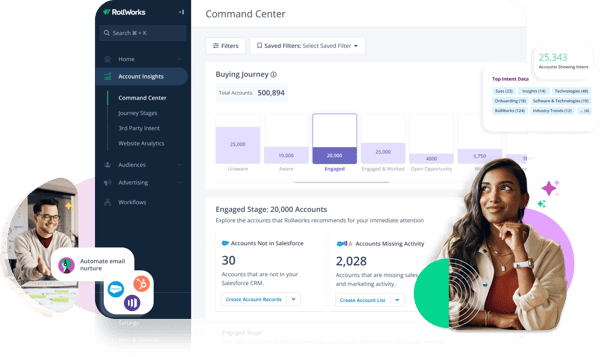
There are, however, a couple of areas where reviewers felt AdRoll ABM is built with specific use cases in mind. Some users mentioned that reporting isn’t as centralized or visually customizable as they’d like, a limitation that primarily matters for teams wanting highly tailored dashboards, while organizations that prefer standardized, easy-to-read metrics tend to welcome the simplicity.
Others noted that certain advanced controls, such as keyword-based targeting or more flexible approval workflows, would be helpful for more complex ABM programs. These nuances mostly affect power users running high-volume or highly segmented campaigns, whereas teams prioritizing speed, stability, and straightforward activation found the existing structure beneficial.
Overall, AdRoll ABM holds a solid 4.3 out of 5 rating across 510+ reviews, with 91% of users rating it 4 or 5 stars, reflecting consistently positive experiences among ABM and demand generation teams. AdRoll ABM stands out as an ABM platform designed for accessibility and speed, especially for mid-market teams or organizations implementing account-based programs for the first time.
“You can easily set up your target audience, launch, and monitor your ABM ad campaigns in a short amount of time. The platform provides a variety of valuable insights about our target accounts, which we find very useful. We also appreciate the ability to create distinct audiences for each ad campaign. Compared to other ABM technology platforms, this one is much more straightforward to use. Additionally, their customer support team is excellent and always ready to assist us with any challenges we encounter.”
- AdRoll ABM review, Jay K.
“We manage several business units using separate AdRoll profiles, but we are unable to transfer the relevant data into Salesforce according to the appropriate groups. Additionally, we face difficulties tracking prospects who visit our website, as it is challenging to identify both their persona and their specific identity. We have also encountered integration issues that have disrupted the proper syncing of data. When reviewing our sales pipeline through opportunities, success reporting would benefit from the use of more advanced filters.”
- AdRoll ABM review, Justin G.
Madison Logic Platform is built for B2B organizations that want deeper visibility into account intent, audience behavior, and cross-channel engagement. Users repeatedly mentioned how valuable the segmentation and audience insights are, noting that the platform makes it easy to understand which accounts are active, what content they’re responding to, and how close they might be to making a buying decision.
According to G2 Data, 90% of users believe the platform is moving in the right direction, and 85% say they would recommend it, showing consistent trust in the product’s roadmap and long-term value.
The data models themselves draw a lot of praise. Several reviewers emphasized that Madison Logic’s intent data feels more accurate and more predictive than what they’ve seen elsewhere, especially for content syndication and multi-channel ABM campaigns. That depth of intelligence helps teams prioritize the accounts that matter and tailor messaging with more confidence. It also supports more strategic media activation, allowing marketers to build campaigns that feel coordinated rather than fragmented.
Another theme that came through strongly in the reviews is how flexible and collaborative the Madison Logic team is. Users described the partnership as one of the platform’s greatest assets — noting that the team is easy to work with, responsive, and willing to adjust programs based on performance. This kind of hands-on support can make a big difference, particularly for companies running complex ABM programs or new to multi-channel activation.
Reviewers also consistently praised the platform's evolution. Many pointed out that Madison Logic is always adding new features, refining workflows, and improving data visibility. That commitment to product growth is something users clearly appreciate, especially when operating in fast-changing ABM environments. The availability of numerous data points and performance metrics gives teams the control they need to optimize campaigns without guesswork.
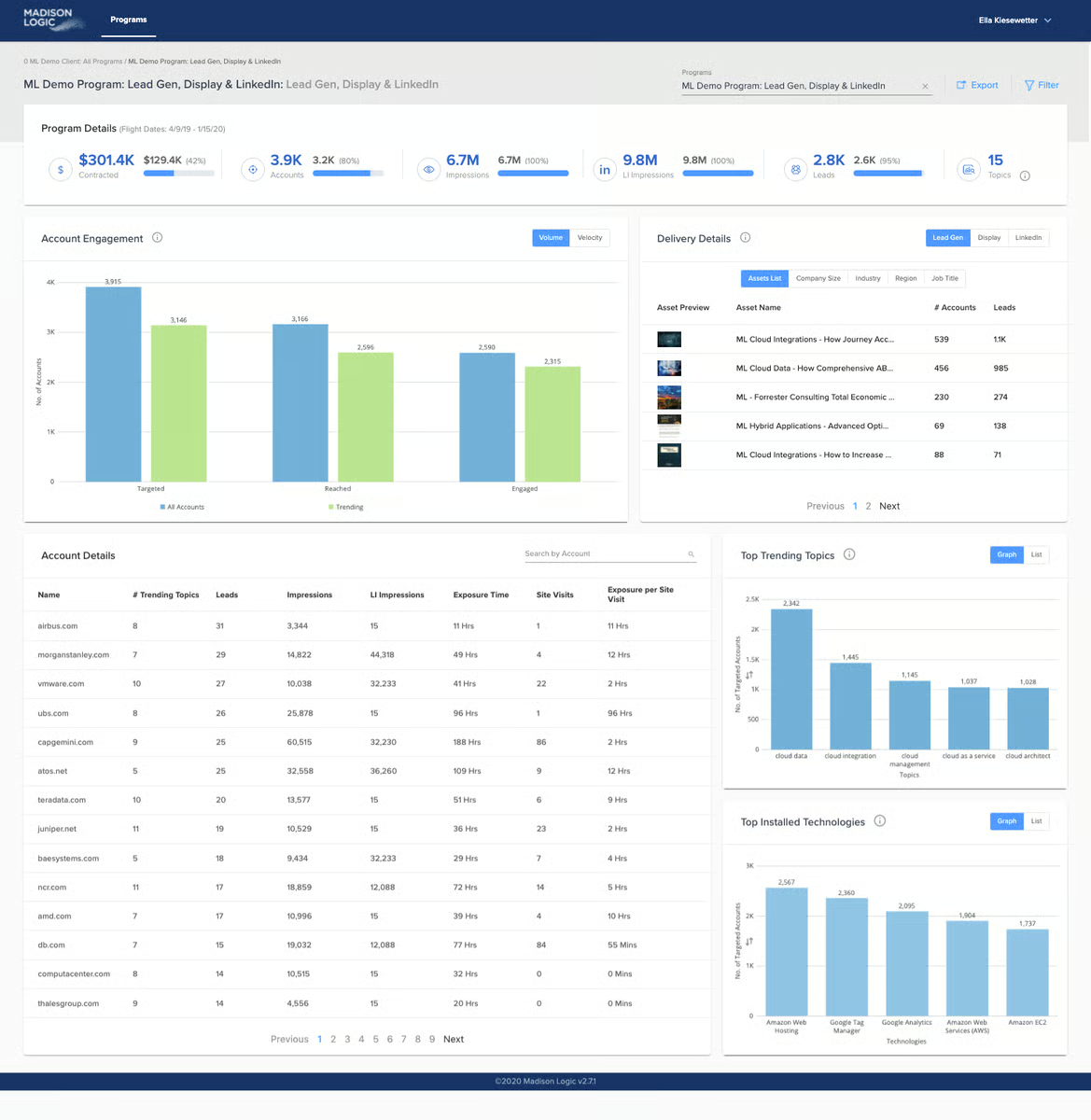
The platform’s ability to handle sophisticated content syndication and advertising programs was another highlight among reviewers. They specifically valued being able to activate campaigns across channels with reliable performance and consistent targeting. For many organizations, this multi-channel approach helps them reinforce messaging and accelerate pipeline activity.
There were, however, a couple of areas where reviewers noted that the platform seems designed with certain user preferences in mind. Some mentioned that the UI and workflow structure can feel more traditional or step-heavy, which may be less ideal for teams seeking a highly modern, minimalist interface, but tends to suit organizations that value structured processes and clear operational checkpoints.
A few reviewers also pointed out that lead-delivery integrations can introduce occasional delays when syncing into CRM or MAP systems. This is a nuance that mainly affects teams needing real-time data flow across complex stacks, while teams operating with scheduled ingestion or batch updates found the process aligned with their existing workflows.
The overall sentiment toward Madison Logic Platform is overwhelmingly positive. Madison Logic Platform holds a 4.3 out of 5 rating from 235 reviews, with 92% of users rating it 4 or 5 stars, indicating strong satisfaction among teams leveraging its intent data and multi-channel ABM capabilities.
With strong data models, rich segmentation capabilities, helpful partnership support, and ongoing product improvements, it offers a powerful foundation for multi-channel ABM. For teams looking to combine intent data, account insights, and activation into one integrated system, Madison Logic Platform stands out as a reliable and evolving choice.
“Madison Logic are consistently evolving the way they work to best suit the needs of the team, and our respective clients. They ensure any communication is handled in a timely manner, and no ask is too big.
The platform is extremely user friendly, giving options to set different KPIs dependant on the parameters of a campaign. The team are always on hand to troubleshoot any issues that may occur, or to run through demos of how to get the best out of their service. It's something we have integrated into our weekly workflow, and really helps with our reporting. The ease of integration and implementation means allows for holistic visibility across all activities.“
- Madison Logic Platform review, Verified User in Advertising and Marketing.
“I’m still in the early stages of using the Madison Logic Platform, so I haven’t had the chance to explore everything in depth yet. That said, the one issue I’ve run into so far was a technical challenge when trying to connect my LinkedIn account to export audiences. It took some extra troubleshooting to get the integration working properly. While the support team was responsive, it did slow down the initial setup.”
- Madison Logic Platform review, Daniel A.

Got more questions? We have the answers.
Top options for ABM with strong LinkedIn activation include AdRoll ABM, 6sense Revenue Marketing, and Demandbase One. These platforms help you sync target account lists, orchestrate LinkedIn ads, and tie engagement back to pipeline impact.
For sales-driven teams, 6sense Revenue Marketing and Demandbase One stand out thanks to their deep intent data, predictive scoring, and shared account views. They make it easier for sales and marketing to prioritize in-market accounts and coordinate outreach.
If you want highly personalized digital experiences, Influ2 is a top choice for person-based targeting and individual-level intent tracking. Paired with platforms like 6sense or Demandbase One, you can personalize ads for both accounts and specific decision-makers.
For mid-market B2B teams, AdRoll ABM is often a strong fit thanks to its user-friendly workflows, clear pricing tiers, and solid ABM feature set. It offers powerful account targeting without the complexity of some enterprise-only platforms.
Enterprise organizations typically look to Demandbase One, 6sense Revenue Marketing, and Madison Logic Platform. These tools provide robust data, advanced segmentation, and global-scale activation to support complex buying committees and long sales cycles.
For programmatic ABM, Madison Logic Platform and Demandbase One are strong choices, offering data-driven, multi-channel activation. They help you run targeted display and content syndication campaigns at the account level with detailed reporting.
In terms of ease of use, AdRoll ABM is known for clean UX and straightforward campaign setup, making it approachable for smaller teams. Influ2 is also relatively intuitive for marketers focused on person-based ad journeys.
To coordinate campaigns across display, social, and other channels, look at 6sense Revenue Marketing, Demandbase One, and Madison Logic Platform. These tools help unify data and messaging so every targeted account sees consistent, relevant experiences.
ROI depends on your strategy and execution, but many B2B teams see strong returns from 6sense Revenue Marketing and Demandbase One because of their predictive models, rich intent signals, and clear visibility into pipeline influence.
For B2B-focused ABM, 6sense Revenue Marketing, Demandbase One, and AdRoll ABM are consistently strong options. They’re built around account-level data, buying committees, and revenue metrics, making them well-suited for modern B2B go-to-market teams.
Account-based advertising isn’t just about buying impressions; it’s about making every touchpoint count. The best ABM ad platforms give you the precision to reach in-market accounts, the intent data to understand where they stand, and the alignment to help revenue teams move faster. Whether it’s 6sense’s predictive depth, Demandbase’s unified data, Influ2’s person-level targeting, AdRoll ABM accessibility, or Madison Logic’s multi-channel reach, each platform helps you focus on the accounts most likely to convert.
Once your advertising strategy is dialed in, the next step is making sure those high-value accounts land on experiences built just for them. That means personalized web pages, tailored content recommendations, and journeys that adapt to where each buyer is in the funnel.
The ads bring the right accounts in. Account-based web and content experiences turn their attention into action.
.png)

Marketing and sales teams talk a lot about alignment, but in practice, it rarely happens.
 by Harshita Tewari

To work as one revenue team, sales and marketing teams need a connected stack across six...
 by Sudipto Paul

Lead scoring plays a central role in ranking prospects consistently, helping replace intuition...
 by Somya Jain