


Video hosting may seem simple until a team actually relies on it. What starts as “we just need a place to upload videos” turns into buffering complaints, access confusion, and the question that always comes next: Did anyone watch this all the way through?
That gap between “upload” and “it works in the real world” is what I’m solving with this list of the best video hosting platforms. Once video becomes a real channel, hosting stops being a storage choice and becomes a distribution, control, and measurement choice. The right platform keeps playback consistent across devices, makes sharing predictable, and gives you reporting you can use.
I’m not ranking tools in a one-size-fits-all order because “best” depends on the job you need the platform to do. Instead, I’ve organized this list by use case, so you can quickly match a tool to your priorities. Every recommendation is grounded in G2 Data, including star ratings, satisfaction scoring, and recurring review themes that show what G2 users praise or struggle with.
If you already know what matters most, jump straight to the use case that fits. If you don’t, the comparison table below will help you narrow your shortlist.
| Video hosting platform | Best for | G2 Rating | Pricing | Likelihood to recommend |
| Wistia | Real-time video analytics and viewer insights | 4.6/5 ⭐ | Starting at $79/month | 92% |
| Loom | Multi-language subtitles and closed captions | 4.7/5 ⭐ | Starting at $18/user/month | 93% |
| Vimeo | Most affordable video hosting platform for SMBs | 4.3/5 ⭐ | Starting at $12/user/month | 85% |
| Vidyard | Top-rated for large organizations | 4.5/5 ⭐ | Starting at $59/user/month | 95% |
| Gumlet | Adaptive bitrate streaming for all devices | 4.7/5 ⭐ | Starting at $15/month | 90% |
| VdoCipher | Advanced privacy and access control features | 4.9/5 ⭐ | Starting at $49/month | 98% |
| Consensus | Buyer enablement insights | 4.8/5 ⭐ | Starting at $600/month | 95% |
| Kaltura Video Cloud | Secure enterprise video hosting | 4.3/5 ⭐ | Available on request | 83% |
| Dubb: Sales Video System+CRM | Integrating video hosting with revenue workflows | 4.6/5 ⭐ | Starting at $42/month | 93% |
| SproutVideo | Fastest streaming speeds | 4.6/5 ⭐ | Starting at $10/month | 93% |
*These are the leading video hosting platforms on G2 as per our Winter 2026 Grid Report. Pricing is subject to change.
When I choose the best tools for each use case, I start with G2 Data. I look at a product’s category performance, including its G2 Score, satisfaction ratings, and feature-level strengths. This helps me understand which tools consistently perform well before I narrow them down to more specific scenarios, like small teams, nonprofits, or industry-focused workflows.
From there, I use AI to delve into review insights and see what real users have to say. I look for patterns in pain points, frequently praised features, and feedback from people in the same roles or industries that the use case targets. The recommendations you see reflect that mix of quantitative scoring and qualitative sentiment, focused on the tools that repeatedly show up as the strongest fit for that specific need.
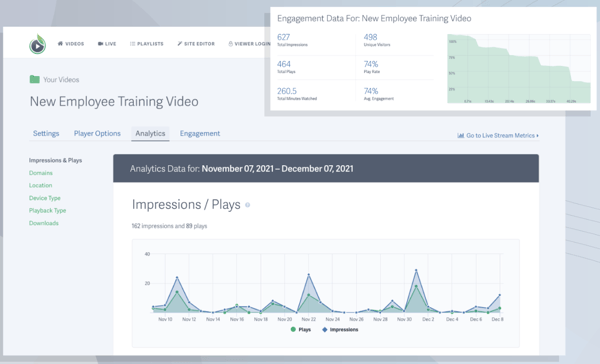
I don’t want analytics that tells me “views happened.” I want insights that change what we publish next. That means understanding engagement, spotting drop-off patterns, and gaining a clearer understanding of what content is effective versus what is merely taking up space in the library.
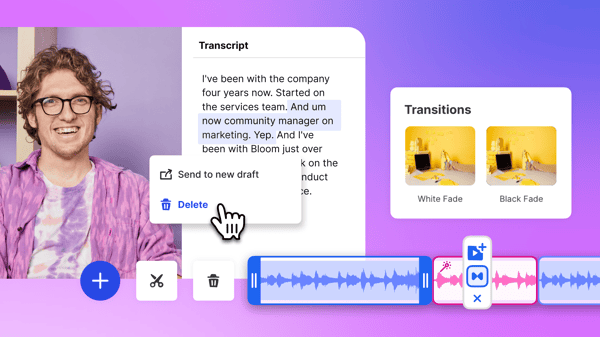
Wistia is my top pick because it consistently positions itself as an analytics-first platform, and the G2 satisfaction signals around fit and usability support that narrative. It scores 94% for meeting requirements and 93% for ease of admin, which matters when analytics is not just something one person checks. Analytics becomes a shared workflow across marketing, revenue, and leadership reporting. Wistia also earns 94% for ease of use, which helps ensure the insights are actually used instead of being relegated to a tab that no one opens after launch week.
| Pros | Cons |
| Users like how easy Wistia makes it to embed and share videos across websites and campaigns. | Some reviewers say pricing and plan structure matter more once teams scale or need advanced features. |
| G2 reviewers point to strong branding and player customization for keeping videos on-brand. | Users note that the built-in creation and editing tools may feel limited for more complex production work. |
| Many users highlight a simple upload-to-publish workflow for everyday hosting. | Reviewers mention that managing larger video libraries can take more effort as governance needs grow. |
Find more Wistia alternatives on G2.
For subtitles and captions, my litmus test is simple: how quickly a team can get captions on every video without turning it into extra work, and how reliably those captions hold up when the video is shared across different audiences and teams.
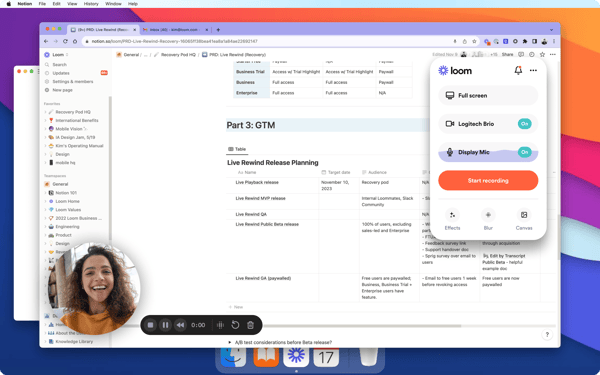
Loom earns its spot here because G2 reviewers consistently describe it as easy to roll out and easy to keep using, which is precisely what you want when accessibility is a repeatable workflow, not a one-off task. As per G2 Data, Loom averages 93% for ease of use and 98% for ease of setup. These signals matter because captions and closed captions only deliver value when teams actually use them consistently, and G2 reviewers say that Loom fits naturally into that day-to-day rhythm.
| Pros | Cons |
| G2 users love Loom for fast screen-and-camera recording for async updates and walkthroughs. | Some users look for more advanced editing than basic trims and quick clean-up. |
| Reviewers praise how quickly Loom turns a recording into a shareable link. | Reviewers note that pricing can become a bigger consideration as more teammates need paid access. |
| Many users say Loom is easy to roll out because it feels intuitive from day one. | Users mention that permissions and sharing controls may feel limiting in stricter org setups. |
Find more Loom alternatives on G2.
An affordable video hosting platform for small and mid-sized businesses is not about the lowest sticker price. I look for a tool that a small team can actually live with: predictable plans, a product that doesn't need constant monitoring, and a setup that doesn't turn into a mini-project every time someone needs to publish a new video.

Vimeo is my pick here because it keeps the day-to-day workflow manageable for small teams, and the G2 satisfaction metrics support this claim. On G2, Vimeo sits at 91% for ease of setup and 91% for ease of use, which are the kinds of scores I want to see when “affordable” also means “we don’t have time to wrestle with this.” It also earns 87% for meeting user requirements, which signals that most teams feel it covers the core hosting basics without needing extra tools right away.
| Pros | Cons |
| G2 users appreciate Vimeo’s reliable playback for day-to-day hosting. | Some reviewers note that advanced configuration can feel limited once needs become more specialized. |
| Reviewers highlight how straightforward publishing and sharing feel for most workflows. | Users note that pricing can become more noticeable as teams require additional features or higher usage levels. |
| Many users also like Vimeo’s simple embed options for distributing videos externally. | Reviewers say branding and customization options may not work for teams with stronger marketing requirements. |
Browse more Vimeo alternatives on G2.
If I call something top-rated for large organizations, I look for two things at once: strong satisfaction at scale and a platform experience that does not get harder the moment you add more teams, more users, and more oversight. Large organizations tend to break tools in predictable ways. Admin controls start to matter. Consistency starts to matter. Reporting starts to matter. And if the platform cannot support shared workflows, it turns into a patchwork of exceptions.
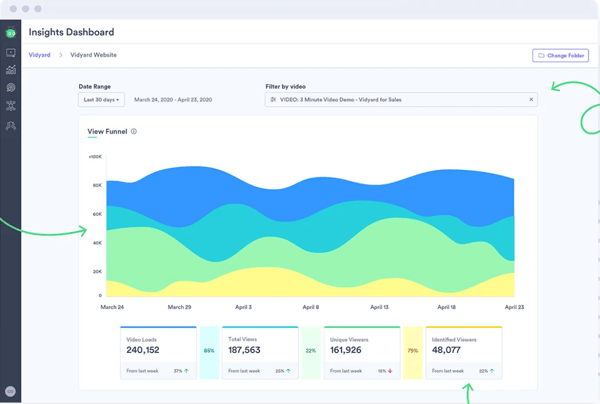
Vidyard is my top choice here because it’s built for team-wide video programs, and it gets strong confidence signals from G2 reviewers. It is rated 87% for ease of admin, which stands out when dealing with libraries, users, and shared standards. It also wins an 88% rating for ease of use and 87% for ease of setup, which helps when rollout needs to move faster than internal change management.
| Pros | Cons |
| G2 users like Vidyard for giving clear viewer engagement signals that help with follow-ups. | Some reviewers note that pricing becomes a bigger factor as usage and teams grow. |
| Reviewers highlight how well Vidyard fits into sales and go-to-market video workflows. | Users mention that built-in creation and editing can feel light for more polished production needs. |
| Many users say it works well for standardizing team video use across libraries and shared content. | Reviewers say setup and integrations may take extra tuning to match every part of their stack. |
Get more Vidyard alternatives on G2.
When I am picking a platform for adaptive bitrate streaming, I am looking for one outcome: the video should play smoothly whether someone is watching on a laptop at home, on mobile in bad reception, or on a shared office network that gets cranky at 3 p.m. Adaptive bitrate matters because it protects the viewing experience without forcing the viewer to think about settings, downloads, or “try refreshing.”
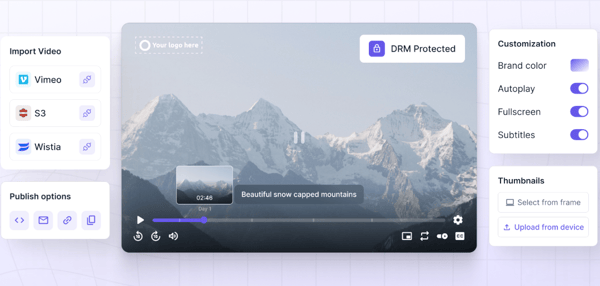
Gumlet is my pick here because G2 reviewers consistently talk about performance and delivery quality in a way that maps cleanly to this use case. According to G2 Data, Gumlet scores 97% for meeting requirements and 92% for ease of setup, which support the fundamentals behind reliable streaming. It also has a 92% rating for ease of use, which is crucial when performance improvements should not come at the expense of day-to-day usability.
| Pros | Cons |
| G2 users regularly highlight Gumlet’s strong playback performance and smooth streaming. | Non-technical teams sometimes find that advanced configuration takes more time than expected. |
| Reviewers say it’s relatively quick to get delivery configured and running. | A few reviewers mention that tuning performance can feel hands-on. |
| Many highlight responsive support, especially during the implementation phase. | Some users note that cost considerations increase as traffic or delivery needs expand. |
Find more Gumlet alternatives on G2.
Privacy doesn’t mean “unlisted link” in my book. It means guardrails that still hold when content is paid, internal-only, or sensitive. That usually means stronger access restrictions, tighter playback protection, and controls that still feel manageable for the teams publishing content.
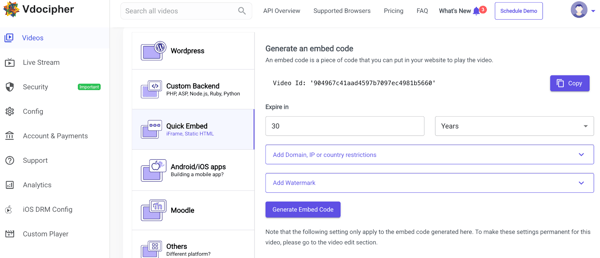
VdoCipher wins the round here because it’s the clearest “security-first” option in this lineup, and G2 Data supports that claim. It scores 97% for quality of support and 98% for ease of setup, which tells me that teams are not just buying protection; they can actually adopt it and get help when they encounter edge cases. It also wins 98% for meeting requirements, which is the kind of confidence you want when access control is not optional.
| Pros | Cons |
| Strong content protection is the standout point in almost every positive review. | Some users look for more freedom to customize the player to their brand. |
| Many users rely on its access control options for sensitive or paid video. | Initial setup can feel detail-heavy when strict security rules are involved. |
| Support tends to be described as quick and helpful, especially for setup questions. | Pricing is mentioned as something teams evaluate closely, depending on how much protection they need. |
Find more VdoCipher alternatives on G2.
When a deal has more than one stakeholder, video stops being “nice content” and becomes a diagnostic tool. I want to know whether the right people watched, which parts held attention, and whether the video is helping a buyer group align or quietly drifting into the pile of tabs they never reopen. That is the difference between “we sent a great walkthrough” and “we can actually tell what moved the deal forward.”
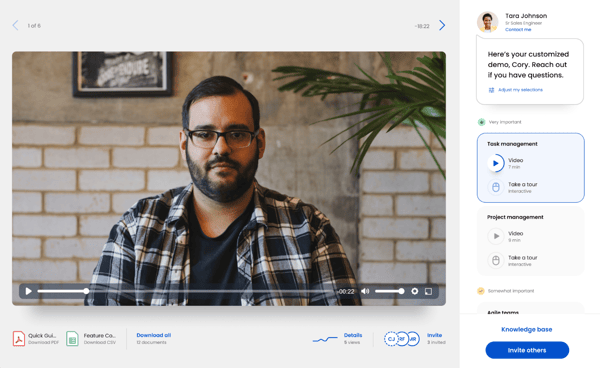
Consensus is perfect for this use case because it is designed for that exact moment in the funnel, where video needs to create clarity, not just views. G2 metrics also support it as a platform that teams can get live without drama. It earns 97% for ease of doing business with, 94% for quality of support, and 91% for ease of setup, which matters because buyer-insight tools fall apart when they need too much process. This one is designed to be used in real sales cycles, not just displayed on a dashboard.
| Pros | Cons |
| G2 reviewers value how Consensus helps deliver guided, buyer-ready video experiences during evaluations. | Some teams say setup requires a clear process to get everything dialed in. |
| Engagement data is a recurring highlight: teams like knowing who watched and what captured attention. | A portion of reviewers wish for more advanced creation or editing features within the platform. |
| Users say the workflow helps them share product information consistently across stakeholder groups. | A few note that navigation or playback can feel less smooth in certain scenarios. |
Get more Consensus alternatives on G2.
Enterprise video hosting usually fails in one of two ways. Either it is easy to upload but impossible to govern, or it is so locked down that teams work around it. When I’m picking a secure enterprise platform, I want something that can handle real organizational complexity: different departments, different audiences, different rules, and a long shelf life for content that cannot be treated casually.
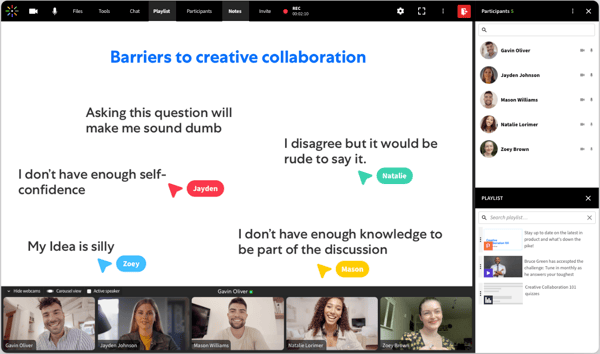
I pick Kaltura Video Cloud because it is built for enterprise-scale video programs where security and governance are part of the job, not add-ons. G2 Data indicates that it generally meets core expectations, scoring 89% for meeting user requirements and 85% for ease of use. At the same time, the ease of setup trend decreases to 79%, which is worth noting because it sets the right expectation: enterprise-grade control often comes with a more involved implementation. If a team is choosing Kaltura, it is usually because long-term governance matters more than getting live in a single afternoon.
| Pros | Cons |
| G2 users describe Kaltura as a highly configurable platform suited for complex video programs. | Implementation often requires more time and planning than lighter tools. |
| Many appreciate the ability to tailor the system to different departments. | Several reviews mention that pricing and packaging are geared toward larger organizations. |
| Reviewers see it as a fit for structured, long-term enterprise video strategies. | Day-to-day users sometimes find the interface heavier than simpler hosting options. |
Find more Kaltura Video Cloud alternatives on G2.
This use case is not just about plugging video into a tool stack. It’s about keeping the entire workflow connected: send video through the same channels teams already use, capture engagement signals, and make it easy to follow up without breaking the thread between marketing touchpoints and revenue activity.
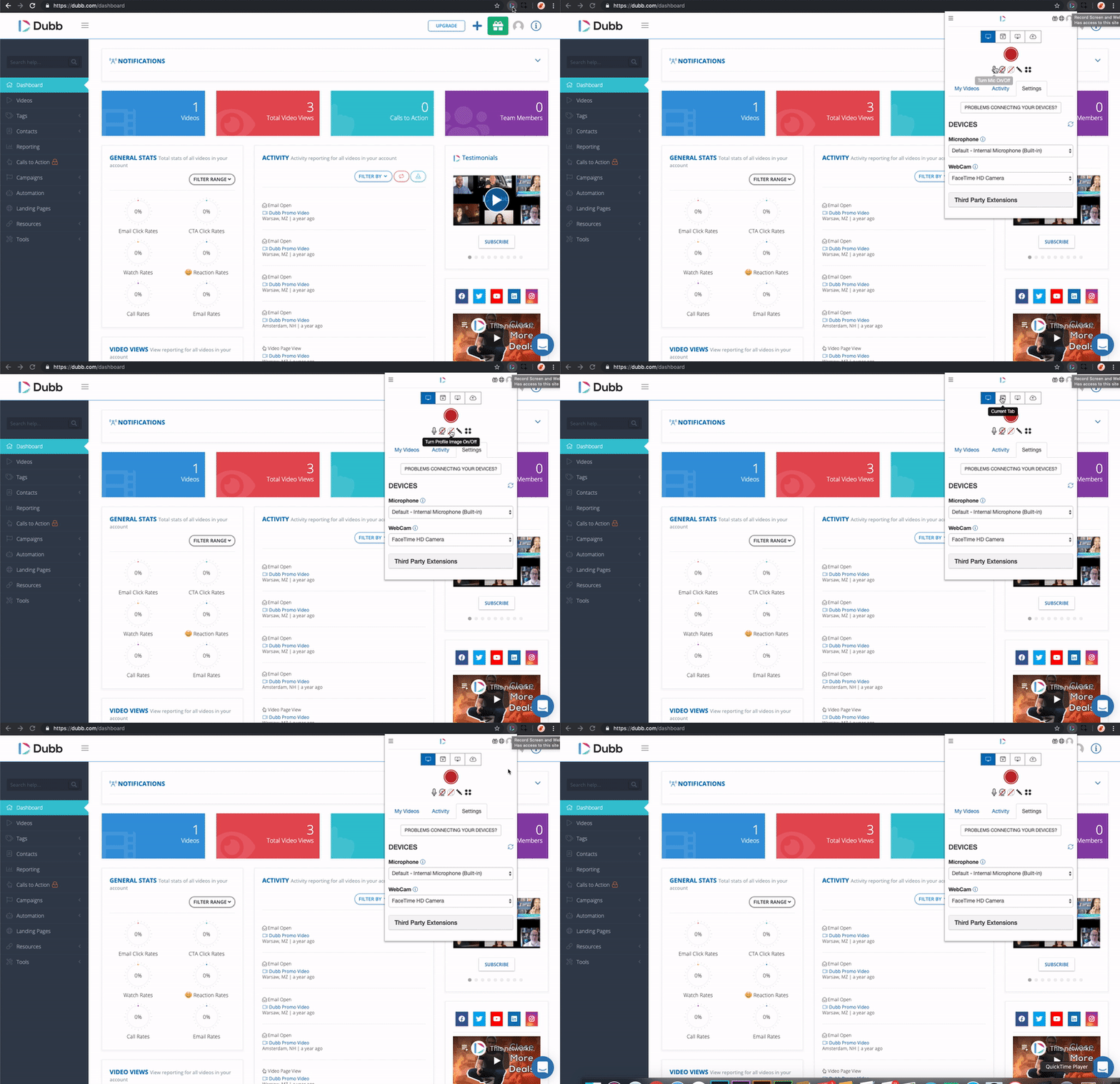
Dubb is my top choice because it’s built around revenue workflows where video is part of outreach, nurturing, and conversion, not just a hosted asset. G2 Data supports that it’s also practical to roll out. Dubb is rated 92% for meeting user requirements, 90% for support quality, and 94% for ease of setup, which is important because integrations often come with edge cases. If the tool is difficult to implement or support is unreliable, the workflow quickly falls apart.
| Pros | Cons |
| Reviewers highlight Dubb’s ability to blend video with CRM and revenue workflows. | Some teams note that support responsiveness varies depending on the nature of the issue. |
| G2 users like how it supports personalized outreach and follow-ups. | Users mention that the integration syncing occasionally requires extra adjustments. |
| Branded video pages often prove to be a useful way to frame content for prospects. | A few say they would like a smoother recording or editing experience for frequent creators. |
Browse more Dubb: Sales Video System+CRM alternatives on G2.
Speed is unforgiving. If a video hesitates, the viewer does not wait politely. They click away, lose the thread, or decide the content is not worth the effort. That is why I treat streaming speed as a baseline requirement, not a bonus feature. It is the foundation for everything else in video hosting, from campaign performance to customer education to internal training.
SproutVideo wins here because it is a hosting-first platform, consistently showing up as a reliable option for smooth playback and delivery. The G2 satisfaction metrics also support that “works when it counts” story. SproutVideo stands at 94% for meeting user requirements and 96% for both ease of use and ease of setup, which helps when teams want the benefits of fast playback without an extended rollout.
| Pros | Cons |
| Teams value SproutVideo for its fast and reliable playback, especially for public-facing videos. | Some teams say SproutVideo’s analytics feel lighter than marketing- or sales-focused platforms. |
| Users appreciate the flexible player customization, which enables them to match embeds and pages to their brand. | Users often rely on other tools for editing or content creation, since those features are minimal. |
| Many find its privacy and access controls straightforward to set up. | A few note that automation and integrations aren’t as extensive as in more workflow-driven platforms. |
Find more SproutVideo alternatives on G2.
If you’re buying video hosting in 2026, the biggest mistake is treating every platform like it’s solving the same problem. Some help marketing teams understand what viewers do after the play button. Some protect content as if it were a business asset. Others win because they load fast, or because they make revenue workflows easier to run without duct tape.
The quickest way to choose is to start with the job that matters most right now. The next step is simple: pick two finalists for your main use case, then pressure-test them with a short checklist. I’d look at how quickly a team can get started, how much administrative work appears after the first month, and whether the reporting aligns with what you actually need to prove that video is working. If those three boxes are solid, you’ll avoid most of the buyer’s remorse that comes from choosing based on “features” instead of fit.
If you’re scaling video and wondering where to store, organize, approve, and reuse your content, explore the best digital asset management software on G2. See what real users say and find a system that keeps your video library usable as it grows.


Managing video content today isn’t as simple as uploading a file and hoping it plays smoothly.
 by Yashwathy Marudhachalam

As customer obsession and remote workplaces simultaneously become the new normal, it’s...
 by Claire Brenner
I have used online learning platforms in different ways.
by Washija Kazim