

February 20, 2026
 by Shruti Nair / February 20, 2026
Lead generation remains a core priority for B2B marketers, demand generation teams, and growth leaders accountable for delivering a revenue-ready pipeline and improving acquisition efficiency.
As teams move closer to buying decisions for 2026, pressure is rising to convert leads at higher rates, control escalating costs, and ensure lead generation efforts directly support revenue outcomes. When lead quality falls short, the impact is immediate: missed pipeline targets, longer sales cycles, and wasted acquisition spend.
This article brings together verified lead generation statistics to help teams evaluate whether their current tools and processes are capable of supporting revenue growth at scale. The benchmarks highlight performance across the funnel, including lead volume, sales readiness, channel effectiveness, nurturing, cost efficiency, and the expanding role of AI and automation.
For teams reviewing strategy or evaluating options in the lead generation software category, these benchmarks provide practical context for planning, optimization, and budget decisions tied to pipeline and ROI.
Generating leads at scale is only the first step. While many organizations succeed at driving consistent lead volume, conversion rates drop significantly as prospects move through the funnel. Lead quality, intent, and follow-up processes play a major role in determining whether leads ultimately become customers.
Even when lead generation is a priority, structural barriers limit performance. The data shows that low conversion rates aren’t driven by a single issue. Instead, factors like lead quality, data accuracy, follow-up speed, and alignment between marketing and sales all influence whether leads ultimately translate into revenue.
Understanding how marketers prioritize lead generation and where they struggle provides important context for why so many leads drop off before becoming customers.
of B2B marketers say delivering quality leads is one of their top marketing challenges.
Source: WPromote
B2B and B2C lead generation differ significantly in terms of buying cycles, decision-making complexity, and qualification requirements. B2B organizations often manage longer sales cycles with multiple stakeholders, while B2C teams focus on higher-volume, faster-moving conversions.
Despite these differences, both segments face similar pressure to improve lead quality and efficiency. Comparing performance benchmarks across B2B and B2C helps highlight where strategies diverge and where best practices overlap.
of B2B marketers who reported revenue growth of 20% or more rate their customer experience as excellent.
Source: WPromote
Lead generation performance varies significantly by channel, with inbound, outbound, and content-driven strategies delivering different outcomes depending on buyer intent, timing, and execution. Breaking these channels apart makes it easier to understand which approaches drive efficiency, which support scale, and how content influences both lead volume and revenue.
Outbound channels are typically used to accelerate engagement with specific audiences, but they often come with higher costs and lower conversion rates compared to inbound approaches. Benchmarks for outbound tactics help set realistic expectations for performance and efficiency.
Content influences lead generation well beyond initial acquisition, shaping engagement, conversion outcomes, and revenue contribution across channels. Performance data shows how content supports both inbound visibility and downstream business impact.
Generating leads is only the first step in the revenue journey. Lead nurturing, personalization, and conversion optimization determine whether prospects progress through the funnel or disengage. As buyers expect more relevant and timely communication, organizations must refine how they engage leads after capture.
Metrics related to response rates, engagement, and conversion performance offer insight into how well teams are supporting leads throughout the decision-making process.
of marketers reported that personalized experiences have increased sales.
Source: Hubspot
Personalization isn’t limited to emails anymore. AI voice assistants are bringing it into voice calls. Explore the top-rated AI voice assistants that are helping companies achieve this in scale.
As acquisition costs rise, cost efficiency has become a central focus of lead generation strategy. Marketing teams are under increasing pressure to justify spend and demonstrate return on investment across channels. Metrics such as cost per lead and customer acquisition cost help organizations assess whether their lead generation efforts are sustainable and scalable. Evaluating these benchmarks provides a clearer picture of how efficiently resources are being used.
Customer acquisition cost is considered an effective performance metric by 33% of marketers.
Are you a B2B SaaS company looking to improve lead efficiency? Product Fruits doubled their ad lead conversion rate using G2 Ads, demonstrating how intent-driven targeting can improve ROI as acquisition costs rise. Read the Product Fruits case study.
Technology continues to reshape how leads are captured, qualified, and managed. AI, automation, and first-party data strategies are becoming essential for scaling lead generation while maintaining accuracy and compliance.
These promise greater efficiency and insight, but also introduce new challenges related to data quality and integration. Understanding how organizations are adopting these technologies helps frame their growing role in future lead generation strategies.
In 2026, success in lead generation will be defined less by how many leads are captured and more by how many are ready to buy. With only a fraction of inbound interest converting into customers, high-performing teams are reallocating resources toward qualification, readiness scoring, and conversion efficiency. These areas have a direct impact on revenue, not just lead volume.
Cost efficiency is also reshaping how demand is captured. Inbound channels such as SEO, blogging, and content marketing continue to outperform outbound tactics on both cost per lead and close rate. Companies that invest in consistent, buyer-led content are better positioned to influence decisions earlier and remain visible throughout longer, more complex buying cycles.
The biggest drop-off often happens after a lead is captured. Lead nurturing has become a critical factor in moving prospects toward sales readiness. Timely follow-up, personalized messaging, and structured engagement paths are now essential for converting marketing-generated leads into revenue and reducing spend lost to unqualified or disengaged prospects.
Personalization will remain a key driver of lead capture and conversion, as buyers increasingly expect relevant, tailored experiences before sharing their information.
AI, automation, and first-party data will shape how lead generation scales in 2026. Organizations that invest in these capabilities and align marketing and sales around lead readiness and efficiency will be best positioned for sustainable growth.
Explore how you can use G2 for marketing and open the door to 80M+ active, low-funnel, high-intent software shoppers that come to G2 every year.

Shruti Nair is an SEO Outreach Specialist at G2, where she bridges the gap between technology and content to help brands gain visibility and traction. With a passion for emerging tech, and storytelling, she’s always exploring fresh ways to connect ideas with audiences. When she’s not optimizing search strategies, you’ll find her experimenting in the kitchen, immersed in a novel, or dancing to her favorite beats.
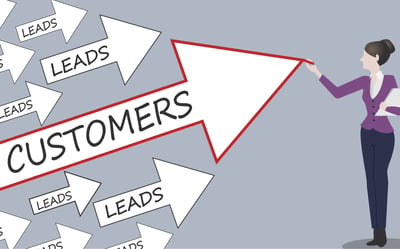
One of the most significant keys to a growing SaaS business is lead generation.
 by Archita Sharma

You have leads in your CRM. Now how do you nurture and keep them interested in your product if...
.jpg) by Brandon Pindulic
by Brandon Pindulic

The pace of online learning has accelerated faster than anyone could imagine in the past...
 by Eduard Klein
One of the most significant keys to a growing SaaS business is lead generation.
by Archita Sharma
You have leads in your CRM. Now how do you nurture and keep them interested in your product if...
by Brandon Pindulic