Most organizations don’t think about choosing the best regulatory change management software until something slips. An update gets missed, ownership isn’t clear, or an auditor asks for proof, and the trail isn’t there.
That’s when the gap shows up. Not because the work wasn’t done, but because it wasn’t tracked in a way that holds up under scrutiny.
Across G2 reviews and the teams I’ve seen using these tools, the pattern is consistent. As regulatory volume increases, manual tracking starts to break. Ownership gets fragmented, interpretation varies across teams, and proving action turns into a scramble.
This is where regulatory change management software actually matters. It brings structure to intake, ties changes to ownership, and keeps a clear record of what was done and when.
In this guide, I break tools down by the problems teams rely on them to solve. Across reviews, Optro shows up with enterprise teams focused on audit readiness and control. Visualping appears with teams tracking external regulatory changes. Ncontracts is common in financial institutions managing policies and exams. Hyperproof is used by teams running ongoing evidence and compliance workflows.
*These regulatory change management platforms are top-rated in their category based on G2’s Winter 2026 Grid Report®. I’ve included their strengths and ideal use cases to help you choose the right platform for your team’s compliance and regulatory workflows.
What I consistently see in strong regulatory change platforms is that they do more than track updates. Review patterns suggest the best tools surface impact, map changes to policies and risks, and force clear accountability. They reduce interpretation drift. They make it obvious which regulations apply, what actions are required, and what evidence will be expected later. Instead of inbox alerts and spreadsheets, teams get a system that creates order under constant regulatory pressure.
This category is not limited to large compliance departments. Adoption patterns show up across financial services, healthcare, manufacturing, and highly regulated mid-market teams. Smaller teams often lean on these tools to compensate for limited compliance headcount. Larger organizations use them to coordinate across legal, risk, audit, and operations without losing traceability. Most platforms emphasize faster setup because regulatory change waits for no one.
I used G2’s Winter 2026 Grid Report®, starting with category-level rankings and satisfaction signals across regulatory change management platforms used by small teams, mid-market organizations, and enterprises. From there, I analyzed a large volume of verified user reviews using pattern-based analysis. I focused on what repeatedly comes up in real compliance workflows.
This made it clear which tools tend to reduce compliance drift and which ones introduce friction as regulatory volume grows. Since I have not personally used every platform covered, I validated these findings through discussions and workflow exposure with compliance officers, risk managers, audit teams, and regulated operations leaders who actively work with these tools.
Visuals and product references in the article come from vendor listings and publicly available product documentation. The goal throughout was consistency, over anecdotes, and separating tools that support sustained regulatory execution from those that simply track change on paper.
These insights come from patterns I’ve seen across many user reviews, along with understanding how teams work in regulated environments. I focus on what tends to break, slow teams down, or create risk when regulations change faster than teams can keep up. Below are the criteria I use to tell apart systems that actually help teams handle regulations from those that mainly just track or document them.
Using these criteria, I narrowed the list to tools that help teams stay clear, accountable, and effective under regulatory pressure. No platform covers everything equally well, so the right choice depends on where your risk sits. Some teams need strong audit trails, while others need faster ways to interpret and act on changes. The goal is to choose a tool that handles regulatory change without slowing down your workflows.
To be included in this evaluation, platforms had to meet all of the following criteria:
This data was pulled from G2’s Winter 2026 Grid Report®. Some reviews may have been edited for clarity.
G2 Rating: 4.6/5
Optro (formerly AuditBoard) is commonly used in audit-led compliance programs, particularly in organizations operating under sustained regulatory scrutiny. It is built to support audits, SOX, risk, and regulatory workflows within a single structured platform. This design aligns well with larger organizations, which is reflected in its user mix where enterprise and upper mid-market teams account for a significant share.
Audits, controls, risks, workpapers, evidence, and frameworks all live in the same system and stay linked to one another. Users describe being able to trace audit tests back to controls and risks with minimal effort, creating continuity across reporting cycles.
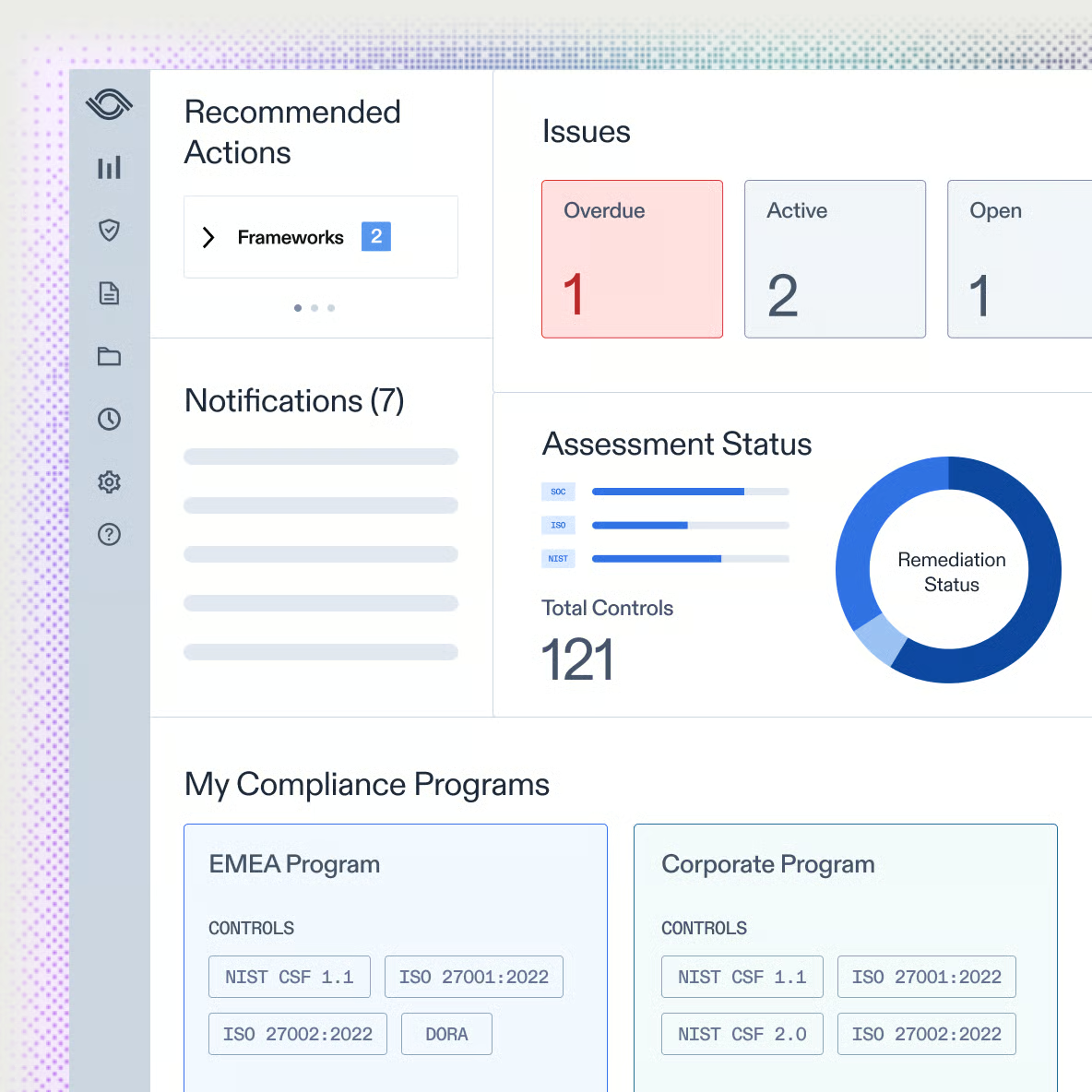
Public companies and heavily regulated teams note that prior audits, historical evidence, and issue resolution paths remain accessible and reusable. This reduces repeated setup work and supports more predictable audit execution.
The platform makes it easier for auditees to handle audits with clear dashboards and structured workflows. All communication stays in one place instead of scattered across emails, which helps teams stay accountable.
Evidence collection, control testing, attestations, and issue follow-ups follow defined workflows. These processes reduce manual coordination and help teams keep documentation current with less effort. For organizations managing multiple audits at once, this structure supports steadier timelines and fewer gaps.
G2 reviewers describe Optro as genuinely responsive to client feedback, with the team taking industry best practices into account as the product evolves. Ease of Setup scores 83%, slightly below the category average of 87%, which aligns with the onboarding investment larger programs typically require. For teams on multi-year programs, this development trajectory supports confidence in the platform as requirements change.
Because the platform is configurable, dashboards and reporting often require setup to match internal tracking standards. Teams with very specific board-level or governance reporting formats may need to invest time tailoring views before they reflect internal expectations. The core audit and risk reporting coverage is solid, and the configuration options give teams meaningful control over how outputs are structured.
Implementation support follows a structured schedule of sessions rather than a hands-on, embedded model. Teams that are new to dedicated audit software and rolling out multiple modules at once may take time to become familiar with terminology and workflows.
Optro functions as a system of record for audit and risk teams that need scale, structure, and long-term consistency. Optro earns its position in programs where audit structure, support quality, and long-term traceability matter more than a lightweight setup.
“I find AuditBoard to be a very simple and user-friendly application. The dashboard is particularly helpful as it allows me to see all project statuses in one place, like submitted, certify, and completed statuses for tests. It's great for managing SOX Control testing and risk registers because I can create tests and easily track details through the dashboard. The initial setup was smooth, thanks to the AuditBoard learning resources, which made it easy to complete tasks like bulk import and document upload.”
- Optro review, VIDYASAGARREDDY K.
“One thing I dislike about Optro is that it can be a bit overwhelming at first, especially for new users who aren’t familiar with audit platforms. The learning curve is noticeable, and while there are plenty of features, it sometimes feels like too many options are packed into one space. Additionally, the system can lag occasionally when handling larger datasets or complex workflows, which slows down productivity. I also think the customization options could be more flexible to better fit unique organizational needs.”
- Optro review, Prince C.
G2 Rating: 4.6/5
Visualping is used by compliance, legal, and web operations teams that need visibility into external website changes. G2 review patterns reflect steady confidence in its reliability as a monitoring tool. The user base leans toward small businesses, which account for 61% of users, with consistent adoption across mid-market and enterprise teams in compliance and QA roles.
Compliance and legal teams use Visualping specifically to catch regulatory page updates, changes to terms, disclosures, or guidance — before they create gaps in internal documentation. That early detection is where the tool earns its place in a compliance workflow. This approach supports different levels of urgency without adding operational complexity. Ease of Use rates 93% and Ease of Setup 89%, both above category averages, reflecting how quickly teams reach productive monitoring.
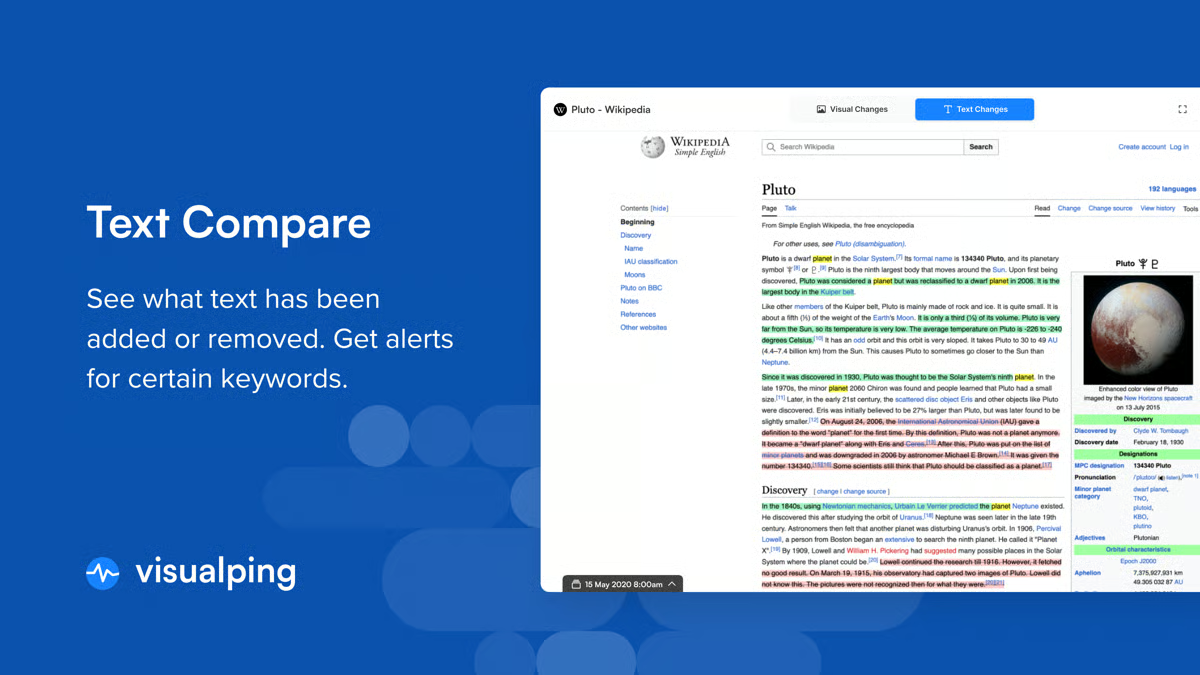
AI text summarization helps teams understand what changed on a page without reviewing raw diffs or screenshots. This is especially useful in regulatory and legal monitoring, where context matters as much as detection.
Alerts are delivered through email and Slack in a consistent and timely way. Teams describe relying on notifications without needing to manually recheck pages. For many users, this supports ongoing monitoring without constant oversight. Meets Requirements scores 94%, above the category average of 90%.
Settings can be refined to reduce alert noise from pages with dynamic elements. G2 reviewers describe adjusting monitoring parameters to filter out cookie banners, rotating ads, and layout shifts that do not reflect meaningful regulatory or content changes. This control helps teams focus on signals that require action rather than managing a high volume of low-value notifications.
Web and QA teams use Visualping for post-deployment checks and site maintenance. Reviewers mention monitoring WordPress updates, plugin changes, and front-end deployments to catch issues early. Integrations with existing tools and features like static IP support allow it to fit into established workflows.
Pages with highly dynamic elements can trigger alerts from minor layout shifts, rotating ads, or cookie banners. Teams monitoring large numbers of URLs may need to invest time dialing in settings before alert volume reflects only meaningful changes. Once configured, the monitoring setup runs reliably without requiring constant manual adjustment.
Credit-based usage and bulk monitoring require operational awareness at scale. Teams running frequent checks across many pages benefit from actively planning monitoring schedules to balance coverage and credit usage. The flexibility to adjust frequency at a granular level helps teams manage this across different priority tiers.
Visualping fits teams that need dependable, automated awareness of website changes. For compliance, legal, QA, and web operations teams focused on understanding when something changes and assessing its impact quickly, it provides a practical and reliable monitoring setup.
“I find Visualping incredibly valuable for automating website change monitoring, which saves me the hassle of manual checks every day. The service helps me stay informed about important changes, like terms and conditions or updates on program pages, which would otherwise be a tedious task. I appreciate how easy and quick the setup was, as I could do it all online without complications.
Visualping consistently provides reliable service, which is why I chose it over other options, even though I considered several. The automatic alerts and the auto red line feature are especially useful for my day-to-day tasks, enabling me to quickly identify and address changes without delay.”
- Visualping review, David R.
"I find that Visualping sometimes flags too many changes, making it difficult to differentiate important updates from noise. The monitoring page often has issues with loading due to blocking bot activity or failures, which complicates the tracking process. The product struggles with websites that fail to load, and I believe I should not be charged if the website shows a loading sign."
- Visualping review, Benjamin N.
G2 Rating: 4/5
Ideagen Policy Logic is designed for organizations operating under sustained regulatory pressure, particularly in education, aged care, and similarly governed environments. The platform focuses on keeping policies aligned with legislative changes and best-practice updates. Reviewers describe this alignment as reducing policy drift and supporting confidence in day-to-day compliance work.
Approval status, historical versions, and published guidance sit in one place, clearly organized so staff always work from current material. This structure replaces shared drives and disconnected folders with a single source of truth.
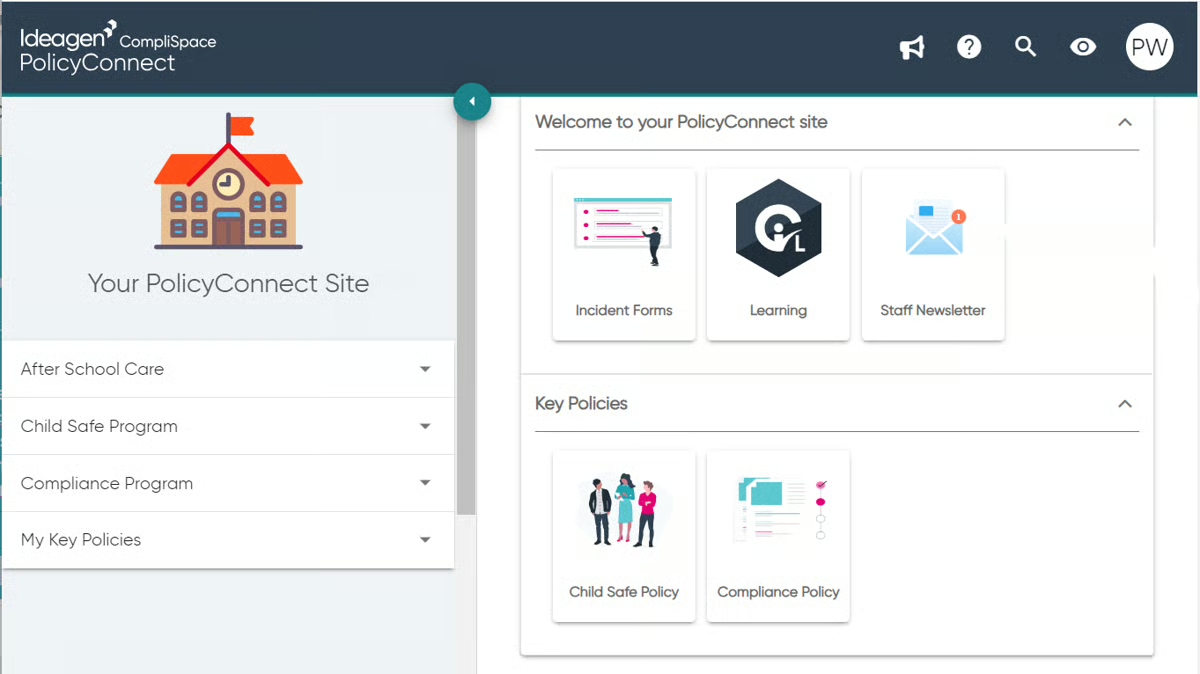
Adoption patterns reinforce where the platform fits best. About 79% of users come from mid-market organizations, with a smaller representation from SMBs and limited enterprise usage.
Policy Logic functions as a central reference point when used alongside modules such as Assurance and PolicyConnect. Policies, forms, incidents, hazards, complaints, and feedback are linked through workflows that integrate compliance into routine operations.
Sector alignment appears clearly in user feedback. Education teams note that templates, language, and workflows reflect real operational processes around duty of care, complaints handling, and risk management. Implementation is described as manageable, and many teams use the main policy page as a central access point for staff. Meets Requirements scores 84%, which sits below the category average of 90%, reflecting the platform's focus on a defined sector rather than broad applicability.
Auditors and external reviewers can be given direct access to the platform to retrieve the information they need independently. G2 reviewers describe this as reducing the back-and-forth typically associated with audit preparation. It also supports cleaner handoffs between internal teams and external oversight without requiring manual document compilation. Quality of Support scores 78%, which is worth factoring in for teams that expect hands-on, ongoing support.
The platform consolidates compliance plans, risk registers, and linked tasks in one place, which G2 reviewers describe as particularly useful for managing obligations across multiple programs. Teams working across several compliance frameworks note that having everything centrally accessible reduces duplication and makes it easier to demonstrate coverage.
Policies remain available and traceable beyond staff turnover, helping preserve institutional knowledge.
Working across multiple linked policies can require navigating several documents in complex scenarios. Organizations with highly specific role structures may spend additional time managing individual content variations to maintain precision across their policy suite. The single-source structure means that once teams are oriented, navigation becomes more predictable over time.
The modular structure means components operate cohesively but not as a single unified interface. Some users also note accessibility considerations, particularly for staff using assistive technologies, where interactive layouts may require adjustment. The platform's sector-specific design means these configurations are typically well-understood within its core user communities.
Ideagen Policy Logic fits mid-market organizations in education, aged care, and regulated public-sector environments that need dependable, legislation-aware policy management. For teams prioritizing centralized access, clarity, and long-term compliance stability, it supports structured governance without introducing unnecessary operational friction.
"Everything from the language used to the structure of policies, templates, and workflows feels relevant and usable. It aligns with how schools actually function. When you're dealing with risk management, child protection, excursions, or complaints handling, the system speaks our language and supports our processes rather than complicating them."
- Ideagen Policy Logic review, Brigette K.
“Not very easy to navigate. There have been instances where I have had to be guided in a school process by various policies and procedures, and I have ended up with a dozen tabs open at the same time, and thoroughly lost.”
- Ideagen Policy Logic review, James R.
Effortlessly turn meetings, interviews, and videos into accurate, searchable text using powerful AI transcription tools.
G2 Rating: 4.5/5
Ncontracts is adopted primarily by regulated financial institutions operating under ongoing audit and exam requirements. A large majority of its G2 user base comes from larger, compliance-focused organizations, which is reflected in how the platform emphasizes structure, documentation, and regulatory alignment.
Reviewers describe this consolidation as reducing manual coordination and making daily compliance work more predictable. Meets Requirements scores 93%, above the category average of 90%.
Regulatory updates are tracked and linked directly to policies and issues. Notifications surface changes as they occur, and reports and templates reflect formats regulators commonly expect during exams.
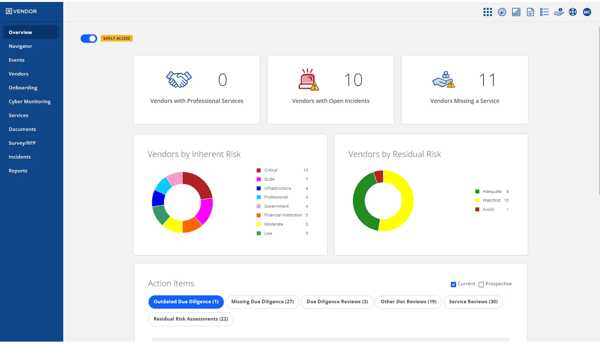
Vendor oversight is handled through the NVendor module. Vendor documents, risk assessments, alerts, and review cycles are managed within standardized workflows. Users describe being able to onboard vendors and maintain compliance even when stakeholders have limited prior experience.
Workflows remain consistent across modules such as NVerify, NFindings, and NContinuity. Navigation and behavior are similar from one area to another, which reduces context switching. G2 reviewers consistently describe the Ncontracts support team as responsive, knowledgeable, and thorough in following through on tickets.
Users note that support staff takes ownership of issues rather than redirecting them. For compliance teams under exam pressure, this level of responsiveness reduces the risk of unresolved platform issues that could affect regulatory readiness. Quality of Support rates 98%, and Ease of Doing Business, With 97%, both well above category averages.
Adopting multiple modules at the same time can require a short adjustment period. Teams rolling out compliance, risk, and continuity areas together may need time to become familiar with workflows and terminology across each area. The consistency of navigation across modules means that familiarity gained in one area transfers relatively quickly to others.
Some processes follow defined manual steps to preserve audit traceability. Teams expecting deeper automation or tighter system integrations with loan platforms and core banking systems may need to plan around these boundaries. For exam-focused teams, the structured approach directly supports the documentation trails that regulators expect.
Ncontracts fits mid-market financial institutions that need centralized, exam-ready compliance and vendor risk management. For organizations prioritizing documentation, regulatory alignment, and predictable oversight, it supports structured compliance work without unnecessary complexity.
“I have been using Ncontracts for two years primarily for compliance purposes through my work, and I've found it very beneficial. I appreciate how straightforward the initial setup process was, as it wasn't difficult at all, allowing us to get up and running quickly. The software excels at streamlining processes, which has greatly saved me time and increased efficiency in my workflows. One of the standout features for me is the regulation change management feature, which has proven to be extremely useful. Additionally, the notification of regulation changes is a smart feature that helps me stay updated with the latest compliance requirements effortlessly. This functionality is instrumental in helping me manage compliance changes effectively, ensuring that I remain informed and can act promptly.”
- Ncontracts review, Celeste B.
“Some of the older features that are part of the products we have do not integrate or transfer well to other areas of the services. These features were resolved through new products and services they have created, but the new offerings come with additional costs. We understand the reason, but being charged for the better versions of something we have is difficult to get through budgeting. They will, however, work with you to find the best balance for costs for your organization.”
- Ncontracts review, Cassandra B.
G2 Rating: 4.5/5
Apptega is designed to bring structure to compliance work without introducing enterprise-level complexity. Its user base skews toward small businesses and mid-market organizations, which is reflected in how the platform prioritizes clarity and daily usability. This positioning aligns well with lean security teams and MSSPs that need repeatable compliance programs without rebuilding processes for every engagement. It sits clearly in the mid-market and SMB space, where structured compliance without enterprise overhead is the priority.
Multiple compliance frameworks are managed within a single workspace. Standards such as NIST, CMMC, ISO, and HIPAA are centralized and supported through pre-mapped controls, reducing duplication across overlapping requirements. Teams select the frameworks they need, and the platform applies a consistent structure underneath, which simplifies setup and ongoing maintenance. Ease of Setup scores 96% and Ease of Use scores 95%, both well above category averages, reflecting how quickly lean teams reach productive compliance work.
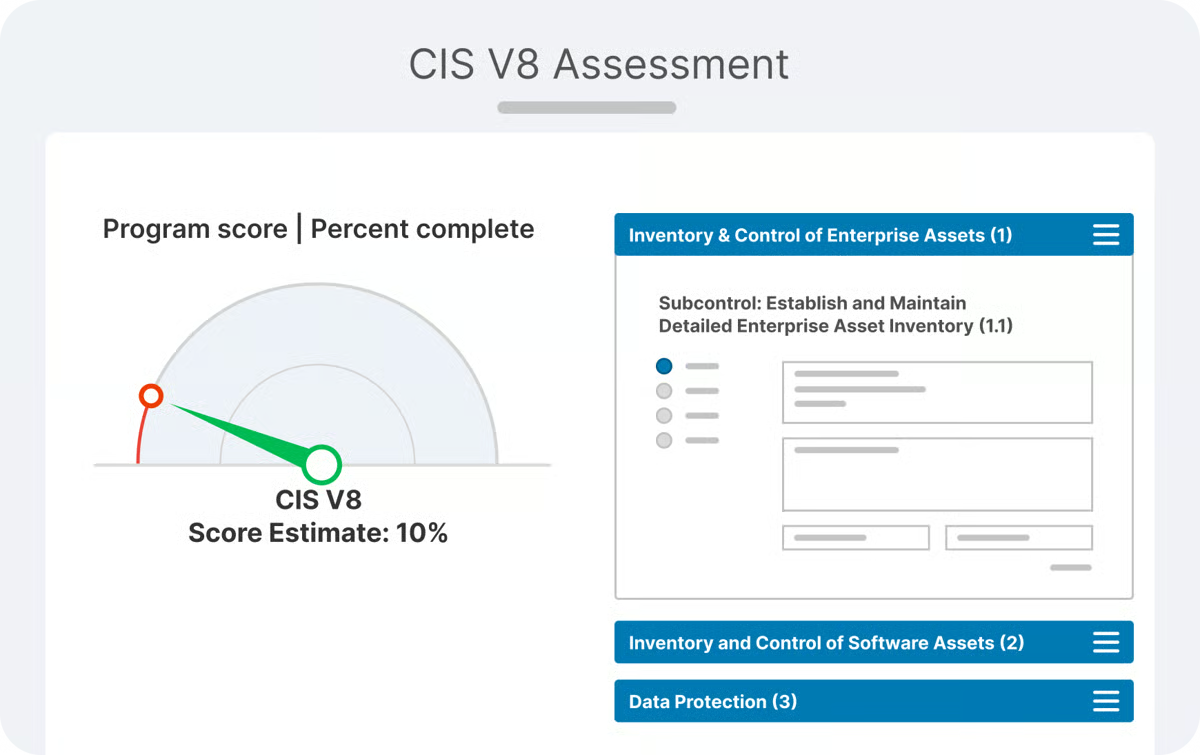
Compliance programs can be built incrementally. Assessments often start at a foundational level and expand as requirements mature, matching how most organizations grow their security posture. This approach supports progress without forcing teams to define every control upfront.
Dashboards and scorecards provide visibility into compliance status and progress. Reporting is designed for executive consumption, giving leadership a clear view of posture without requiring deep technical interpretation. This helps keep stakeholders informed without adding reporting overhead to practitioners.
Customer engagement plays a role in how teams experience the platform. Users describe responsive support and ongoing communication around product updates and roadmap direction. Long-term users note that capabilities have expanded steadily over time, reflecting continued development driven by practical use cases. Quality of Support rates 97% and Ease of Doing Business rates 99%, both well above category averages.
AI text summarization scoring 85% helps reduce the effort required to review compliance content and documentation. AI text generation scores 84%, where G2 reviewers describe it as an assistive layer. This aligns with teams that prefer AI as an assistive layer rather than a primary author of compliance material.
Teams with extensive third-party tooling may find integration options more focused than those offered by larger platforms. These suits defined compliance programs but can require additional coordination in highly integrated environments. The platform's steady roadmap development means integration coverage has expanded over time.
Using common control criteria across frameworks introduces consistency, but it can also abstract framework-specific nuances. Some teams may need to apply additional context when interpreting scores or assessment outcomes against a specific standard. The pre-mapped control structure still significantly reduces the manual alignment work required when managing multiple frameworks simultaneously.
Apptega fits small and mid-sized organizations, consultants, and MSSPs that want a repeatable way to manage multiple compliance frameworks in one system. G2 reviewers note responsive support and steady roadmap communication as part of what makes the platform reliable over time. G2 reviewers also note responsive support and steady roadmap communication as part of what makes the platform reliable over time.
“We've found Apptega incredibly helpful for handling our cybersecurity and compliance needs. The interface is straightforward, and it comes with built-in frameworks like NIST, CMMC, and ISO, which make things so much easier. Automated tracking has really boosted our governance and risk management. We can map controls across different frameworks, keep tabs on progress in real-time, and whip up executive-level reports without any hassle. Their customer support team is also quick to respond and very knowledgeable. Thanks to Apptega, we've moved from being reactive to proactive in our cybersecurity efforts.”
- Apptega review, LeeAnn L.
“Not as many integrations as other platforms, but it's not really a dislike. The Apptega team is very up front with wanting to improve at every opportunity.”
- Apptega review, Carl C.
G2 Rating: 4.6/5
Axeptio is used by organizations operating under European privacy regulations that need consent workflows embedded directly into their digital experiences. Consent collection is handled as part of how sites function rather than as a separate compliance layer. This supports consistent enforcement, documented proof of consent, and stable site operations.
Consent interfaces are customizable and designed to integrate across domains and subdomains. Teams describe aligning consent widgets with brand guidelines while maintaining regulatory requirements across e-commerce platforms, CMS environments, and custom site stacks. Ease of Setup scores 93% and Ease of Use 95%, both above category averages, reflecting how quickly teams reach a working consent configuration.
Consent records are stored with timestamps and historical context, so teams can review consent status and changes without navigating technical logs. This structure supports audits and regulatory reviews with minimal additional preparation.

Tracking technologies can be controlled based on user consent. Tools such as GA4, Meta Pixel, and Hotjar are blocked until consent is granted, without disrupting analytics setups or site performance. This allows teams to maintain visibility while respecting consent boundaries.
Automated cookie scanning identifies active scripts and categorizes them within defined consent groups. Agencies managing multiple domains describe this as reducing manual checks when tools are added or updated. It also supports consistency when managing consent across client portfolios. AI text summarization scores 71%, which is consistent with a platform focused on consent workflows.
Support interactions are part of the onboarding and ongoing experience. Users mention multilingual assistance and customer success teams familiar with regulatory requirements. This helps teams address consent configuration questions with regulatory context in mind. Quality of Support rates 100% and Ease of Doing Business, With 98%, both above category averages.
As traffic volume and cookie complexity increase, pricing and initial configuration require planning. Sites with highly dynamic environments may spend additional time aligning settings across properties.
Some users note that navigating the interface takes time at first. The feature set favors completeness and control, which can require an adjustment period for teams new to consent management platforms.
Axeptio fits European businesses, agencies, and e-commerce teams that need GDPR-compliant consent management without sacrificing control over design and implementation. For organizations that prioritize regulatory accuracy alongside user experience, it supports consent workflows that remain consistent as sites and regulations evolve..
"When I was looking for a CMP, I had the usual concerns — would it be too technical, hurt the design, or make compliance complicated? Axeptio quickly changed that. It’s clear, easy to use, and looks great on the site. It was easy to implement. The support team is fast, multilingual, and even helped me improve conversion rates. But what really matters to me is that I trust Axeptio — not just the product, but their ability to solve complex problems. If they launch new tools for consent management, I’d choose them again without hesitation. They know how to deliver clarity, elegance, and true compliance."
- Axeptio review, Pedro M.
“Not much, apart from the slightly higher price than the competition, but that's explained by the quality of the solution.”
- Axeptio review, Louis A.
G2 Rating: 4.7/5
Hyperproof is designed for teams that want to reduce audit workload without being locked into rigid compliance templates. Its user distribution includes a large share of mid-market organizations, along with representation from enterprise and small teams. This mix reflects a platform intended to support growing compliance programs rather than fully standardized, one-size implementations.
Evidence collection and audit preparation are handled through automation. Teams describe replacing manual tracking and document chasing with workflows that keep proof organized and current. For organizations managing recurring audits, this changes how timelines and capacity are planned.
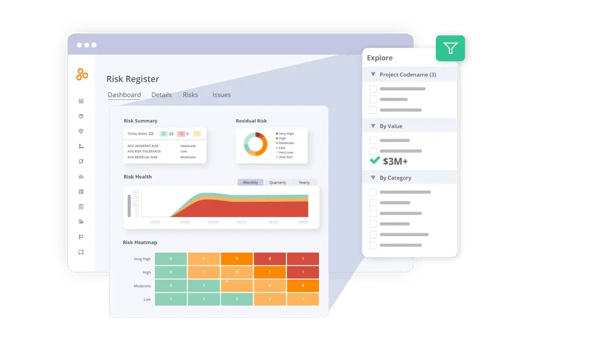
Evidence, controls, and audit status are maintained in one place instead of spread across spreadsheets, shared folders, and email threads. Users describe this setup as reducing back-and-forth and making audit readiness easier to maintain over time.
The platform adapts to existing compliance processes rather than enforcing fixed workflows. Teams configure how audits and controls are managed based on their internal practices. Reviewers note that implementation support plays a role in helping teams translate those processes into the system early on.
The Hyperproof team is described by G2 reviewers as attentive and quick to assist when challenges arise during setup and ongoing use. Implementation support is highlighted as a meaningful part of the onboarding experience, with consultants actively helping teams translate their compliance processes into the platform.
Because the platform is highly configurable, teams benefit most when they already have a clearly defined compliance scope before setup begins. Organizations looking for prescriptive, out-of-the-box workflows may need additional time to determine how processes should be structured within the system. The implementation support available helps teams work through these decisions systematically.
The product continues to evolve, and some capabilities are still maturing. Teams comfortable adopting software that develops over time will find the trajectory encouraging, as G2 reviewers consistently note improvement across releases. Organizations expecting a fully standardized feature set from day one may need to plan for some areas to reach full maturity over time.
Hyperproof fits mid-market and enterprise teams that want to automate audits while retaining control over how compliance is managed. For organizations operating in regulated environments where audit readiness is ongoing rather than episodic, it supports structured workflows without forcing rigid process models.
“I think that easily the most important thing that I can talk about with the software is the ability to customize it to fit the needs of the organization. It's been easy from my perspective to implement. The support from our implementation consultant has been absolutely top-notch. We're still working on the integration with a few of our systems to get it to play nice, but it's been a joy working with them to get set up.”
- Hyperproof review, James O.
“Hyperproof still needs to flesh out a few elements of their functionality, but I fully expect them to keep developing in the right direction based on their existing trajectory.”
- Hyperproof review, Joseph C.
Got more questions? G2 has the answers!
The choice depends on how tightly regulatory change must connect to audits and controls. Optro is best for organizations where regulatory change must connect directly to audit testing, controls, and evidence. Hyperproof is best for teams that want automated evidence collection and continuous audit readiness with flexible workflows. Ncontracts is best for financial institutions managing exam-driven regulatory change, obligation tracking, and vendor oversight in one system.
Most teams adopt these tools after manual tracking starts breaking down. When regulations increase, ownership becomes unclear, or audits require historical traceability, spreadsheets, and inbox alerts stop scaling. Regulatory change management software becomes worth it when you need defensible records, clear accountability, and repeatable execution under regulatory scrutiny.
Ncontracts is the strongest choice for banks and credit unions. It is built specifically for exam-driven compliance, with regulatory intelligence, obligation tracking, and workflows that mirror how regulators structure reviews. Optro is a strong alternative for financial organizations that need tighter links between regulatory change, audit evidence, and internal controls.
No. Ideagen Policy Logic comes closest by combining regulatory change tracking with policy approvals, versioning, and legislative alignment in one platform. Hyperproof and Ncontracts connect regulatory change to compliance workflows, but are not built as dedicated policy management systems. Teams where policy lifecycle is central should look for a platform where regulatory change directly triggers policy review and approval.
Implementation time varies by scope. Visualping can be live within days. Apptega and Ncontracts typically take a few weeks. Optro and Hyperproof take longer due to configuration depth and workflow alignment, but both offer structured implementation support that reduces the risk of setup errors.
Yes, when used correctly. The biggest reductions come from platforms that maintain a clear trail from regulation to impact assessment, assigned action, control update, and filed evidence. Optro and Hyperproof are most consistently cited for reducing last-minute evidence reconstruction during recurring audits.
Strong platforms maintain a clear chain from regulation to assessment, action, and evidence. This allows teams to demonstrate not just compliance, but process. Review patterns show that auditors respond better when decisions, ownership, and timelines are documented systematically rather than reconstructed later.
Monitoring tools (like Visualping) focus on detecting when something changes. Full regulatory change management platforms go further by assessing impact, assigning ownership, updating controls or policies, and tracking evidence. Teams under sustained regulatory pressure typically outgrow pure monitoring tools quickly.
Scalability depends on workflow design. Optro, Ncontracts, and Hyperproof scale best. All three support structured ownership, impact assessment, and evidence mapping across growing or multi-jurisdiction regulatory environments. Visualping and Axeptio are effective for their specific use cases but may need to be supplemented as regulatory volume and complexity increase.
Choosing based on feature lists instead of workflow fit. Teams struggle most when the tool doesn’t reflect how regulatory change actually moves through legal, compliance, audit, and operations. The best results come from platforms that absorb regulatory change without forcing teams to rebuild processes every time rules shift.
These tools are no longer about tracking updates alone. They shape how organizations absorb regulatory pressure without slowing down the business. The right system reduces interpretation gaps, clarifies ownership, and turns regulatory change into a managed workflow instead of a recurring fire drill. That shift matters most when volume rises and scrutiny tightens.
Therefore, it is important to choose the right regulatory change management tool that matches how your organization actually absorbs change, assigns accountability, and defends decisions under pressure. Get that alignment right, and compliance becomes steadier, quieter, and far less fragile. These tools do more than track updates. They help teams handle regulatory change without slowing down work. A strong system reduces confusion, assigns clear ownership, and turns change into a structured process instead of a constant scramble.
Regulatory change management software shapes how compliance runs day to day. It determines whether work follows a repeatable system or stays reactive. That choice affects audit readiness and team confidence. The goal is simple: pick a tool that fits how your team works and handles pressure. When it fits, compliance becomes steadier and more predictable.
Want to connect regulatory change to broader risk and audit workflows? Explore the best GRC software on G2 to find platforms that bring compliance, risk, and governance into one place.


Recently, I underwent a critical customer escalation. I mentioned their product in a different...
.png) by Shreya Mattoo
by Shreya Mattoo

Choosing the wrong audit management software doesn't just slow your team down, it creates...
 by Barkha Bali

Recently updatedSummer 2026 Grid® Report · Published May 26, 2026 This guide was last...
 by Harshita Tewari