


Lead scoring plays a central role in ranking prospects consistently, helping replace intuition with quantifiable signals that improve conversion and sales efficiency. The best lead scoring software goes further, turning those signals into a prioritization system sales teams actually trust.
Research indicates that organizations using automated lead scoring can improve conversion rates by up to 40% compared to ad-hoc approaches. When a wrong platform is chosen for lead scoring, the impact extends beyond workflow friction, slowing pipeline movement, increasing misalignment, and making revenue forecasts harder to trust.
In this guide, you’ll see how the landscape maps to distinct problem subgroups.
My conclusions come from analyzing large volumes of verified user reviews in G2. I separated stronger tools from mediocre ones based on criteria that matter to practitioners: the precision of scoring models, the robustness of integration with sales and marketing workflows, the clarity and actionability of the scoring output user reports, and the predictability of value delivered.
Across reviews, Agentforce Sales is commonly picked for enterprise-grade scoring and CRM alignment. ActiveCampaign tends to show up for automated behavioral scoring in SMB marketing workflows. Apollo.io is often referenced for outbound lead prioritization. ZoomInfo Operations is preferred for operational data enrichment to support scoring accuracy.
*These lead scoring tools are top-rated according to G2’s Winter Grid Report. I’ve highlighted the strengths to help you choose the right platform.
Lead scoring software helps teams turn scattered signals, campaign activity, and mixed buyer intent into a clear prioritization system that sales and marketing can act on together. The right tool brings structure to how interest is measured, helps teams agree on what matters, and keeps follow-up focused as volume grows.
I consistently see that the best lead scoring software goes beyond surface-level scoring. They help teams understand why a lead is prioritized, which signals are driving intent, and how those signals connect to real pipeline outcomes. Whether it’s surfacing engagement patterns, combining behavioral and firmographic data, or using automation to adjust scoring as conditions change, effective tools reduce guesswork and replace it with shared clarity.
This value isn’t limited to large revenue organizations. Adoption data shows usage spread across small teams, mid-market companies, and enterprises, each relying on lead scoring to bring consistency to how leads are evaluated. Many teams are able to implement scoring without a heavy process overhaul, which helps them move faster without introducing new friction between Sales and Marketing.
Good lead scoring software supports what every revenue workflow needs: visibility into buyer intent, consistency in prioritization, and confidence that the right leads are getting attention at the right time, without important opportunities slipping through unnoticed.
I used the G2’s Winter Grid® Report category reports to shortlist leading lead scoring platforms based on aggregated user satisfaction and market presence across small teams, mid-market organizations, and enterprises.
From there, I analyzed a large volume of verified user reviews using AI to surface recurring patterns around what matters most in real revenue workflows. This included how clearly scoring logic is surfaced, how well behavioral and firmographic signals are combined, the flexibility of scoring rules, automation depth, data enrichment quality, CRM and marketing automation integrations, and how easily Sales and Marketing teams can act on scores without manual workarounds. This process helped separate tools that support consistent prioritization from those that require ongoing adjustment as volume grows.
Since I haven’t personally used all these platforms, my conclusions are grounded in a close reading of user reviews and the patterns that repeat across them. I focused on where reviewers agree, where experiences diverge, and how teams describe day-to-day use once lead scoring is live. The visuals and product references included in this article are sourced from G2 vendor listings and publicly available product information.
After reviewing a large volume of user reviews, studying how lead qualification and prioritization workflows operate inside sales, marketing, and finance teams, and analyzing recurring feedback from revenue leaders and operators, the same themes surfaced repeatedly.
Here’s what I prioritized when evaluating the best Lead scoring software:
Based on these criteria, I narrowed the field to Lead scoring tools that consistently support prioritization clarity, cross-team alignment, and operational confidence over time. The right choice depends on how your revenue organization operates day to day and where clarity matters most as leads move through the funnel.
Below, you’ll find authentic user perspectives from the Lead scoring category. To appear in this category, a tool must:
This data was pulled from G2 in 2026. Some reviews may have been edited for clarity.
Agentforce Sales (formerly Salesforce Sales Cloud) is often chosen when lead scoring needs to live directly inside the CRM rather than alongside it. Scoring occurs in the same environment as accounts, opportunities, and rep activity, keeping qualification, follow-up, and forecasting tightly connected.
This structure reduces handoffs and keeps lead prioritization anchored to active deal execution. The G2 user reviews reflect strong day-to-day usability and reliable workflow integration that supports consistent lead qualification across the sales team.
Its strongest capabilities align directly with core scoring workflows, with 91% in lead management, Lead Assignment, and CRM Integration ranking as its highest-rated features. This allows teams to route high-intent leads, enforce qualification rules, and trigger follow-ups without relying on external scoring engines or manual coordination.
G2 Reviews also consistently highlight the platform’s configurability for lead scoring at scale. Teams can adjust scoring models, custom fields, and automation rules to reflect how their sales motion actually operates. Standard objects support most scoring needs, while Lightning Flows and custom objects enable more advanced logic without requiring custom development.
That configurability becomes especially valuable in complex sales environments. Organizations managing multiple pipelines, regions, or segments can apply distinct scoring logic without fragmenting data across systems. This flexibility supports consistent scoring even as sales teams, territories, or product lines expand.
G2 Reviewers frequently mention that Agentforce Sales’ automation capabilities improve productivity across the sales process. Task reminders, workflows, and email alerts help reduce manual effort, ensure consistent follow-ups, and save time for sales reps. This automation also supports faster deal progression and makes it easier for teams to stay on top of pipeline activity.e,
That flexibility extends into reporting. Because lead scores are embedded directly into pipeline and opportunity data, dashboards surface not just volume but lead quality and conversion behavior. Leadership teams get clearer visibility into which leads convert, how quickly reps act, and where scoring assumptions hold or break. This reduces reliance on manual reporting and keeps performance discussions grounded in consistent data.
Adoption trends on G2 reinforce this positioning. Mid-market companies make up 47% of the user base, followed by enterprise organizations at 37%, while small businesses account for 16%. That mix reflects a 99 in the G2 market presence score as the platform most often chosen by teams that need structured lead scoring across larger sales organizations.
G2 users describe being able to track a lead's complete journey from initial capture through conversion, seeing every touchpoint, activity, and stage progression in one view. This complete visibility helps teams identify exactly where to focus effort, which conversion paths work best, and where leads tend to stall, supporting better-informed scoring adjustments and faster deal progression.
Agentforce Sales's lead scoring configuration is designed around structured CRM governance, which works best when clear administrative ownership is in place. Teams preferring lightweight, ad-hoc scoring changes may need extra coordination to update rules and workflows. For organizations with established CRM processes, this structure ensures consistency and prevents uncontrolled scoring drift across the sales team.
In heavily customized environments with extensive role-based permissions and complex page layouts, the Lightning UI can experience slower load times during high-usage periods. This is most noticeable for power users and administrators working with deep configuration. For standard usage patterns, performance remains consistent and responsive.
Agentforce Sales remains one of the strongest options for CRM-native lead scoring. Its 91%-rated lead management and assignment capabilities, combined with its market-leading G2 scores, make it a strong fit for mid-market and enterprise teams that want lead scoring to function as a governed, scalable part of their revenue engine rather than a separate system.
Sales Cloud is extremely strong as a central CRM; it gives a clear view of the full pipeline, accounts, and activities in one place. The biggest upside is its configurability: we can adapt stages, fields, dashboards, and automation to our sales process, rather than forcing the team into a rigid workflow. Reporting and forecasting are also major wins; leadership gets reliable pipeline coverage, rep activity, and conversion insights through dashboards that update in real time. Integrations are another highlight, it connects well with common tools (email, marketing, support, data enrichment), which helps keep records accurate and reduces manual updates.”
- Agentforce Sales review, Mudit K.
“The one thing that I dislike about Agentforce Sales is that the Lightning UI sometimes takes too much time to load. For example, if I make any kind of changes in the page layout or in the flexi page (lightning record page), it takes too much time to get reflected, which is a headache for me as a developer.”
- Agentforce Sales review, Shahil S.
If your team already knows which leads to prioritize, the next step is execution. Explore the best sales engagement software to see how top teams turn prioritized leads into consistent outreach and faster deal cycles.
Apollo.io stands out for how tightly lead scoring is tied to active prospect discovery rather than downstream CRM analysis. The platform brings prospecting, enrichment, outreach, and scoring into one workflow designed for high-velocity outbound teams. In G2’s Lead Scoring category, Apollo.io holds an overall G2 score of 75, reflecting strong confidence among teams that prioritize execution speed and daily usability.
Apollo.io applies lead scoring directly within the prospecting workflow, using firmographic and engagement signals to help teams prioritize leads as lists are built and refined. That means scoring is actionable from the start. Users repeatedly mention how easy it is to identify “the right prospects” and move directly into outreach without switching tools or exporting data between systems.
On G2, the lead builder feature is rated at 95%, reflecting how effectively users can search, filter, and score large prospect lists. This strength allows outbound teams to combine scoring and list creation into a single step, reducing friction between research and execution.
CRM Integration and Data Import & Export Tools both score 94% on G2, highlighting how smoothly scored leads flow into sales systems and outreach sequences. Reviews often describe Apollo.io replacing multiple tools for data mining, enrichment, and early-stage scoring, helping teams standardize prioritization across campaigns.
Users often praise Apollo.io’s extensive contact database and accurate prospect data, which make it easier to find and target the right decision-makers. Reviewers highlight how reliable contact details and advanced filtering let teams narrow down prospects by role, industry, location, and other key criteria, reducing time spent on manual research and improving outreach precision. This strong data foundation supports more efficient prospecting and helps teams build qualified lead lists faster.
The platform’s adoption profile reinforces this use case. With a G2 Market Presence score of 65, 52% of users are small businesses, 45% are mid-market teams, according to G2 Data. This indicates Apollo.io is optimized for teams that value speed, clarity, and repeatable outbound scoring rather than highly customized, enterprise-grade decision engines. Reviewers frequently note how quickly new hires ramp up and start using lead scoring as part of their daily workflow.
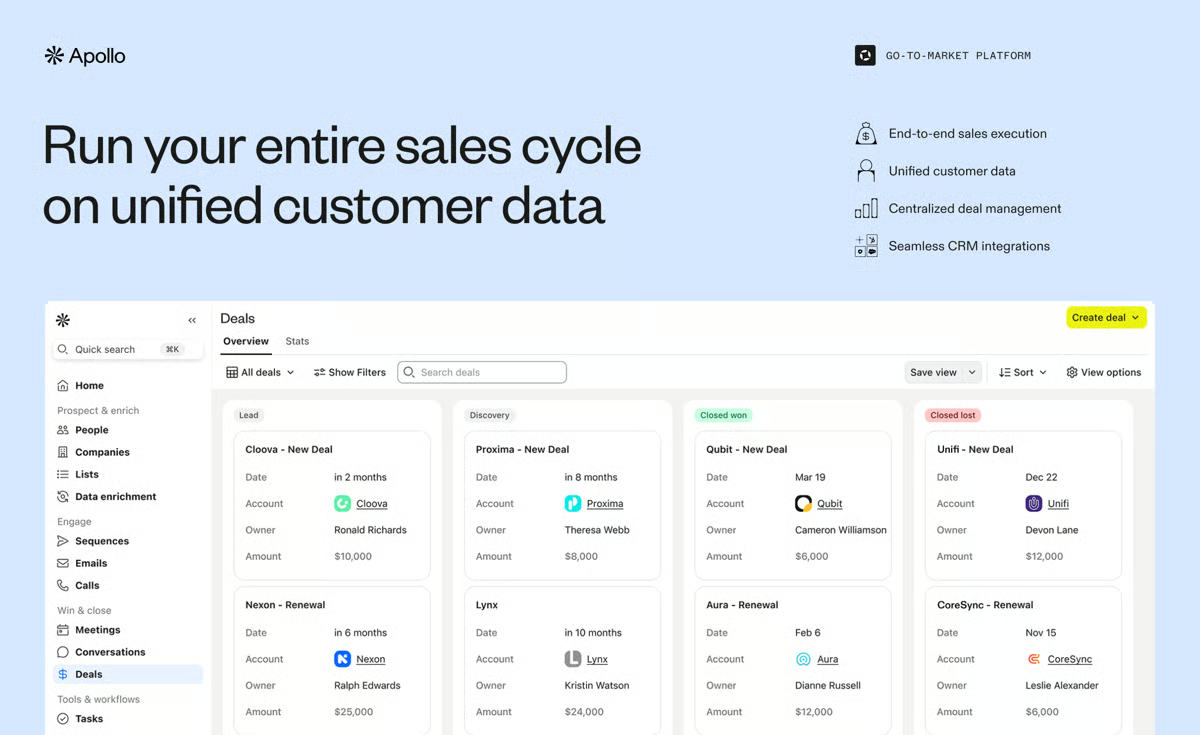
Users often highlight Apollo.io’s intuitive interface and ease of use, which make complex prospecting and outreach workflows more accessible. Reviewers consistently mention that the platform’s guided onboarding and user-friendly design help teams ramp up quickly and navigate features without steep learning barriers, even when dealing with rich datasets and advanced filters. This emphasis on usability supports faster adoption across sales teams and reduces time spent on training or tool switching.
Apollo.io replaces multiple fragmented tools for data mining, email marketing, and enrichment, which G2 reviewers frequently mention as a major productivity gain. Teams describe consolidating previously separate subscriptions into one platform, reducing tool-switching overhead and keeping prospecting, outreach, and scoring in a unified workflow. This integration saves both time and cost while maintaining data consistency across the entire outbound process.
Apollo.io favors transparent, rules-driven prioritization that lets teams understand and control exactly how leads are scored. Teams seeking fully autonomous, self-optimizing scoring models may find this approach more structured than adaptive. However, for organizations that value explainability, audit trails, and predictable scoring logic, this design supports confidence and consistency in outbound prioritization.
During high-volume prospecting sessions with very large datasets, some users notice slower load times as the platform processes dense data queries. This is most noticeable during intensive list building rather than everyday prospecting workflows. The performance remains fast and responsive for standard outbound activities and moderate list sizes.
Apollo.io remains a lead scoring tool consistently associated strongly with outbound velocity and practical prioritization. Its high G2 ratings for Lead Builder and data workflows make it a strong fit for small and mid-market sales teams that want lead scoring to happen where decisions are made, directly inside prospecting and outreach workflows rather than as a standalone analytics layer.
"What I like most about Apollo.io is that it gives us access to information we can’t easily obtain from other platforms, combining accurate contact data with strong filtering and enrichment capabilities in one place.”
- Apollo.io review, Elina S.
"It can be confusing to navigate when I’m trying to find and access the data I need..”
- Apollo.io review, Chris H.
Lead scoring works best when paired with strong automation. See how the best marketing automation tools help you capture, nurture, and score leads based on real engagement signals.
ZoomInfo Operations is positioned among lead scoring platforms that treat scoring as a data problem first rather than a surface-level engagement exercise. It operates as an operational layer that ensures the inputs behind lead scores, contact accuracy, account enrichment, and routing logic remain dependable across systems. This approach reflects how RevOps teams view scoring as shared infrastructure rather than a standalone sales rule set.
The product places strong emphasis on anchoring lead scoring to data quality and segmentation. Lead builder is one of its highest-rated capabilities on G2 (97%), supporting scoring models built on firmographic, demographic, and account-level signals. This depth allows teams to prioritize leads based on who they are and how they fit target segments, not just recent activity.
The platform’s B2B data coverage enables scoring models grounded in real account context rather than inferred intent alone. Reviews frequently point to more confident prioritization when segmentation and enrichment remain accurate, especially in complex B2B sales motions.
With a 96% G2 rating for the CRM integrations feature, users highlight how enriched and scored leads move into CRM systems with minimal manual effort. This tight connection reduces the risk of acting on stale, duplicated, or incomplete data once leads reach sales teams.
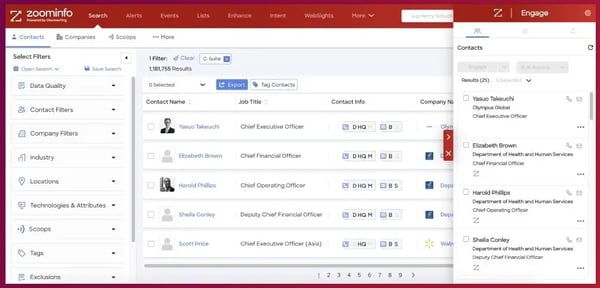
That consistency carries across systems through its data import and export tools, which score 95% on G2. Teams describe being able to keep scoring logic aligned across marketing, sales, and RevOps tools without repeated reconciliation work. This makes lead scoring easier to maintain as systems and workflows evolve.
It centralizes data hygiene and governance across teams. Continuous enrichment, deduplication, and standardization keep records consistent as data changes, which helps lead scoring stay reliable across sales, marketing, and RevOps workflows. Reviews often note that this shared data foundation reduces downstream cleanup and keeps scoring aligned even as multiple teams rely on the same records.
ZoomInfo Operations is often used beyond pure sales use cases. Many organizations rely on it for marketing segmentation, RevOps workflows, and even recruitment data needs. That versatility comes from its ability to continuously enrich, standardize, and de-duplicate records, which keeps scoring models aligned as data changes. Users frequently mention how this leads to cleaner pipelines, more accurate lead monitoring, and less time spent resolving data issues instead of following up with prospects.
Mid-market teams (51–1,000 employees) make up 70% of its user base on G2, followed by small businesses at 25%. That distribution tells me ZoomInfo Operations resonates most once lead volume, segmentation needs, and scoring complexity start to increase beyond what basic CRM rules can handle.
ZoomInfo Operations is feature-rich and designed for complex data operations, which can require teams new to data-centric lead scoring to ramp up. Initial setup and navigation may feel more involved than simpler tools, particularly for organizations without dedicated RevOps support. Once configured, the platform delivers reliable, automated enrichment and scoring, significantly reducing ongoing manual work.
Entry-level plans emphasize core lead scoring and data management functionality, with advanced customization options becoming available as teams scale. Teams expecting full flexibility from day one may find early-tier plans focused on essential capabilities. As scoring needs become more complex, the platform’s architecture scales to support that growth without requiring a migration.
ZoomInfo Operations is best suited for mid-market organizations that view lead scoring as a system-wide capability, not just a sales tactic. With strong G2 scores across Lead Builder, CRM integration, and data management, it supports reliable, scalable lead scoring built on clean, continuously enriched data, exactly where long-term scoring accuracy tends to come from.
“This is one of the best tools for creating business automations, making the process quick and straightforward. The data connectors integrate seamlessly with CRMs and marketing platforms, which significantly reduces manual work. The automation builder, in particular, works exceptionally well and is a pleasure to use."
- ZoomInfo Operations review, Karan K.
"I find that ZoomInfo Operations can be somewhat complicated to configure, often needing a certain level of technical knowledge to achieve full integration with CRM systems. Additionally, the quality of the data is not always consistent, and the cost can be quite steep, especially for smaller teams.”
- ZoomInfo Operations review, Rashad S.
Accurate scoring depends on clean, unified data. Learn how customer data platforms help centralize signals across touchpoints to improve lead quality and scoring precision.
ZoomInfo Marketing connects buying intent directly with account-level context, positioning lead scoring as part of active demand generation rather than a downstream reporting task. As part of ZoomInfo’s broader go-to-market platform, it supports teams running account-based and campaign-driven programs where prioritization depends on knowing who is actually in the market.
ZoomInfo Marketing combines firmographic data, intent signals, and AI-driven targeting to help prioritize leads based on likelihood to convert. Instead of scoring leads purely on activity, it layers in account-level signals that indicate real purchase readiness.
Beyond scoring, the platform surfaces rich account-level context that helps teams understand why a lead is qualified. G2 reviewers reinforce this strength, with lead management and lead context both rated at 94%, highlighting how decisions are supported by deeper visibility rather than surface-level engagement data.
It also performs strongly in lead routing and follow-up execution. Lead Assignment is rated at 92% on G2, reflecting how effectively prioritized leads are routed into the right campaigns and sales workflows. This helps ensure that high-intent accounts receive timely engagement rather than getting lost in generalized nurture paths.
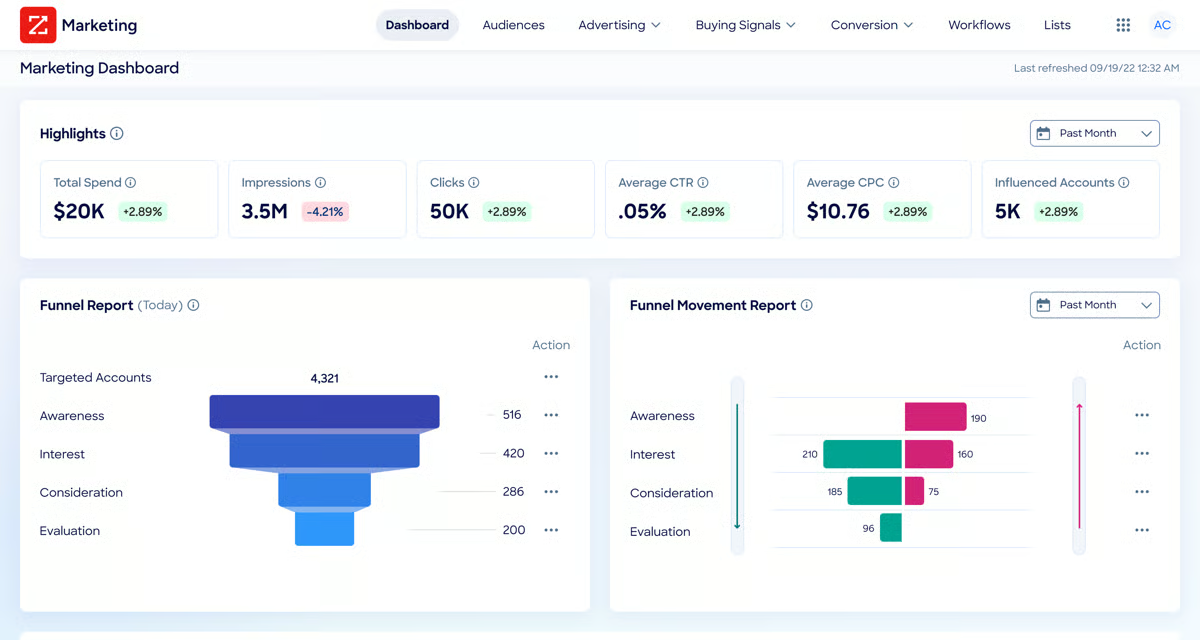
About 44% of customers come from mid-market companies, with 28% split between small businesses and enterprises, according to G2 Data. That mix suggests ZoomInfo Marketing is most often used by teams with structured B2B pipelines who are looking to improve lead prioritization accuracy.
ZoomInfo Marketing works well for scoring leads across multiple campaign types, lead generation, website traffic, and PPC, while keeping everything tied back to accounts. Reviews often mention that intent data and AI-based targeting help teams focus spend and effort on ICPs showing real buying signals rather than chasing passive engagement. This also reflects in G2 Satisfaction Score of 61, as a sophisticated tool designed for mature workflows
The ability to capture and enrich prospect data within campaigns further strengthens scoring accuracy. Users frequently call out improvements in lead quality after deploying enriched forms, noting fewer irrelevant submissions and clearer visibility into who is engaging. This additional context makes downstream scoring more reliable and reduces noise for sales teams reviewing campaign-sourced leads.
ZoomInfo Marketing also supports clearer account-level visibility within active campaigns. Instead of viewing leads in isolation, teams can monitor engagement and intent signals aggregated at the account level, making it easier to identify which accounts are heating up and which contacts matter most. Reviews often note that this view helps teams coordinate campaign timing and focus outreach where buying momentum is strongest.
ZoomInfo Marketing's AI-driven scoring is built on data-rich models that prioritize accuracy and account context, which means teams may need time early on to review outputs and align scoring logic with their ICP. Organizations seeking immediate, fully hands-off prioritization may find the initial setup more involved. However, for teams that value precision and governance in their scoring models, this structured approach ensures reliable, intent-driven prioritization from the start.
CRM integration and data import/export features are designed for teams with established data workflows and mature lead management processes. Teams looking for simple, lightweight syncing without workflow customization may find these features more technical than plug-and-play. For mid-market and enterprise teams running structured account-based programs, these capabilities support precise data control and alignment.
ZoomInfo Marketing stands out as a lead scoring platform for B2B teams that care deeply about intent, accuracy, and account context. Despite the investment and setup depth, its ability to score and prioritize leads based on real buying signals, and its top-rated lead management capabilities, make it a strong choice for mid-market and enterprise demand generation teams that want scoring models aligned with how B2B buying actually works.
“We can run multiple campaigns like lead generation, website traffic, and PPC campaigns. The best thing about a lead generation campaign is that you can get the details of the prospect, which helps in the better lead quality.”
- ZoomInfo Marketing review, Rishav S.
“What I really dislike at times like it's overwhelmed and packed with a lot of tools all, and sometimes when a small team is working on it, it becomes very difficult to manage everything out, and the team becomes very overwhelmed The tool feels expensive at the same time, and sometimes the interface is also not that intuitive. Also, I would say that it really takes a lot of time to get the most out of the tool.”
- ZoomInfo Marketing review, Omkar S.
ActiveCampaign approaches lead scoring through automation and customer engagement data, tying scores closely to campaigns, workflows, and user actions. Lead scoring functions as part of the broader marketing and sales execution layer. Its consistent presence in the Lead Scoring category on G2 reinforces that positioning and prompted a closer look at how those automation-driven scoring features are applied in day-to-day workflows.
ActiveCampaign combines email marketing, CRM, automation, and lead scoring into a single platform. This means teams can score leads based on real engagement signals, clicks, opens, form submissions, and site activity, and immediately trigger workflows without handing data off between multiple tools. Users repeatedly mention how much time this saves, especially compared to setups where marketing and sales are split across separate systems.
About 87% of ActiveCampaign customers are small businesses, with another 12% coming from the mid-market, according to G2 Data, which aligns with teams that want sophisticated automation without enterprise-level overhead.
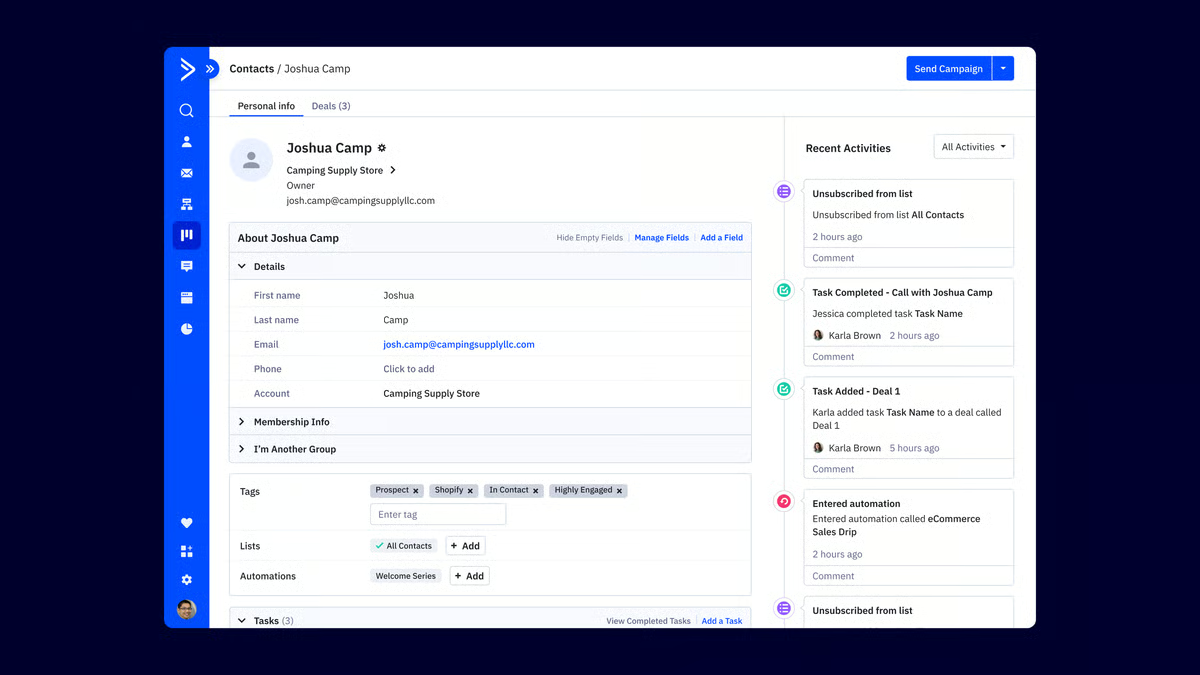
Features like marketing automation integration (86%), lead builder (83%), and workflows (83%) are consistently rated highly. Reviewers highlight how easy it is to build automations based on customer behavior, clicking a link, engaging with a campaign, or moving through a form funnel, and then adjusting lead scores or triggering follow-ups automatically. That tight feedback loop between engagement and scoring is a big reason teams use ActiveCampaign as their central growth engine.
G2 reviewers regularly highlight quick response times and effective problem resolution, which helps teams implement automations, troubleshoot integrations, and optimize scoring workflows without extended downtime. This support quality becomes particularly valuable during initial setup and when scaling automation complexity.
G2 Users also value the “all-in-one” nature of the platform. Instead of stitching together separate tools for email, scoring, CRM sync, and reporting, everything lives in one interface. Several reviews mention how this centralized view makes it easier to see the full customer picture, align sales and marketing, and avoid losing context as leads move through the funnel. For franchise or distributed teams, this setup also enables local autonomy while keeping data standardized and visible at the top level.
As teams build more advanced, highly branched automations, some users note slower load times when editing or running complex workflows. This reflects the platform's depth and the processing requirements of sophisticated automation sequences. For teams running simpler automations or moderate complexity workflows, performance remains fast and responsive.
The platform’s rules-based approach to scoring and automation means logic often needs hands-on configuration rather than fully autonomous optimization. Teams expecting self-adjusting, AI-driven scoring may find this requires more active management. For organizations that value control, predictability, and understanding exactly how their scoring works, this transparent approach supports confidence and consistency.
Overall, ActiveCampaign is well-suited for small and mid-market teams that want lead scoring tied directly to real customer behavior and automated follow-through.
“I like the ability to manage most of your sales and marketing process in Active Campaign with campaigns, reporting, automations, etc. It can free up a ton of time with automations, plus it integrates with most 3rd party tools.”
- ActiveCampaign review, Isabelle O.
"ActiveCampaign is powerful but not always the easiest to use. Setup and implementation can take some time, especially with automations. Customer support is helpful when needed. It’s a feature-rich platform that we use often, and integrations work well once everything is set up.”
- ActiveCampaign review, Lesly B.
6sense Sales Intelligence aggregates buying signals from keyword research, website activity, content consumption, and third-party intent data into a predictive scoring model that ranks accounts by purchase readiness. For sales teams managing large territories with more accounts than hours, this kind of signal aggregation shifts prospecting from guesswork to prioritized, timed outreach.
Mid-market organizations make up 53% of the G2 reviewer base, with enterprise teams at 35% and small businesses at 12%. That distribution reflects the platform's natural fit for sales organizations managing broad account sets where manual prioritization cannot scale. Teams at this size face the clearest gap between the volume of accounts they hold and the time available to work them thoughtfully, which is precisely where intent-driven scoring adds the most value.
The 6QA (6sense Qualified Account) system surfaces accounts showing active research behavior across the buying cycle, from Awareness through to Decision and Purchase. 6sense tells sales teams where each account sits in its journey, helping reps prioritize differently depending on whether an account is warming up or approaching a decision. CRM Integration scores 80% on G2, reflecting how well those scored accounts move into Salesforce and HubSpot for action.
Lead Context scores 78% on G2, reflecting the weight G2 reviewers place on the platform's contextual layer alongside scoring. Keyword and intent signals give sales teams concrete context before outreach begins, letting reps reference what a prospect has been actively researching rather than opening cold. G2 reviewers point to that specificity as the reason outreach lands differently, with more relevant conversations and stronger response rates than standard prospecting approaches.
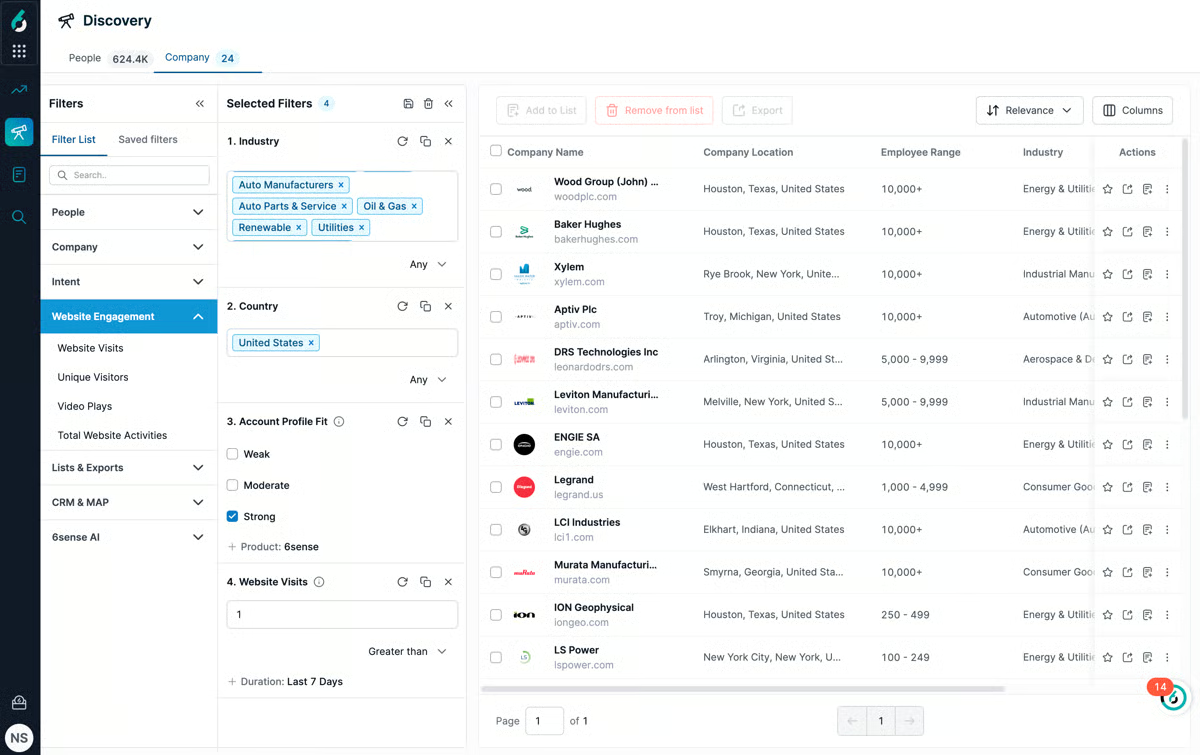
The Salesforce integration receives consistent attention in G2 reviews from teams using it for daily prospecting. Reps describe checking 6sense as a first step each morning, reviewing hot and warm accounts before planning their outreach sequence for the day. The platform's ability to export contacts directly into Salesforce, trigger alerts via Slack, and sync with outreach tools like SalesLoft reduces the steps between seeing an intent signal and acting on it.
Sales and marketing alignment is a practical outcome that G2 reviewers highlight repeatedly. When both teams operate from the same account, scores and buying stage data, territory planning, campaign targeting, and outreach timing converge around shared signals.
Several G2 reviewers mention 6sense as the connective layer that replaced parallel prioritization processes between SDRs, AEs, and demand generation teams. Organizations that previously ran disconnected targeting approaches report cleaner handoffs and less duplication after adoption.
Customer support and onboarding quality come through positively across recent G2 reviews. Reviewers describe training programs that help reps build confidence with the platform quickly, and a customer success team that stays engaged after go-live rather than stepping back after initial setup.
Visibility into competitor research activity is a capability G2 reviewers highlight as directly improving sales preparation. When an account shows intent signals linked to a competitor's keywords or category terms, reps know a buying evaluation is already underway rather than having to infer it. That early awareness changes how outreach is framed and how urgency is calibrated, giving teams the ability to engage while the decision is still forming rather than after it has narrowed.
Intent signals occasionally surface accounts that are not genuinely in-market, including existing customers, partner activity, or single-keyword interactions that inflate a buying stage score. This is most noticeable for reps in net-new focused roles where filtering out known accounts or non-purchase activity requires manual steps. Teams that build internal familiarity with how signals are generated tend to calibrate their trust in the outputs faster, and the platform's core prioritisation value holds up well once that context is in place.
Contact data, particularly phone numbers, is less consistent than the intent and scoring layer the platform is built around. G2 reviewers note outdated mobile numbers and contacts who have since left their roles. Teams that treat 6sense as their primary contact source will need to validate or supplement, while those using it alongside a dedicated contact database are much less affected by this in day-to-day prospecting.
All considered, 6sense Sales Intelligence suits mid-market and enterprise sales teams that need a systematic way to prioritize large account sets based on real buying behavior rather than demographic fit alone. Its intent data layer, CRM integration, and buying stage model are designed for organizations where timing and relevance in outreach directly affect pipeline quality.
"I like 6sense Sales Intelligence for its precise AI-driven intent signals that reveal buying stages early. It combines thousands of digital behaviors like keyword research, content consumption, third-party intent, and website visits into a single buying-stage prediction. This feature makes it easy to see who is in Awareness, Consideration, or Purchase mode at a glance. I also appreciate its integration with CRM platforms like Salesforce and Microsoft Dynamics, which allows syncing account scores, buying stages, and intent signals directly into account and opportunity records."
- 6sense Sales Intelligence review, Shivam S.
"Platform can feel a bit overwhelming at first; there’s a learning curve to navigating the data and dashboards efficiently. It also occasionally surfaces intent signals that aren’t fully aligned with our ideal customer profile, so some refinement is needed."
- 6sense Sales Intelligence review, Xiaomei G.
6sense Revenue Marketing is built for B2B teams that want to replace broad-based campaign targeting with account-level precision. The platform combines intent data, predictive scoring, and buying stage modeling to surface in-market accounts before they raise their hand. G2 reviewers across mid-market and enterprise organizations mention a shift from guesswork-led outreach to coordinated campaigns grounded in real purchase signals.
CRM integration scores 88% on G2, the platform's highest-rated feature, reflecting how reliably intent signals flow into Salesforce and marketing automation tools for action. An anonymous research activity that never touches a form or inbound channel is the core problem the platform addresses. G2 reviewers describe gaining visibility into accounts actively researching their solutions before any direct engagement, which changes how campaigns are timed and how sales and marketing coordinate their first touch.
Buying-stage segmentation provides marketing teams with a framework for personalizing outreach at scale. Rather than sending the same message to every account in a list, G2 reviewers point to building segments around awareness, consideration, and decision stages and adjusting content, channel, and timing accordingly. Cross-system integration scores 86% on G2, supporting how smoothly those segments move across Marketo, HubSpot, and outreach platforms without manual rebuilding.
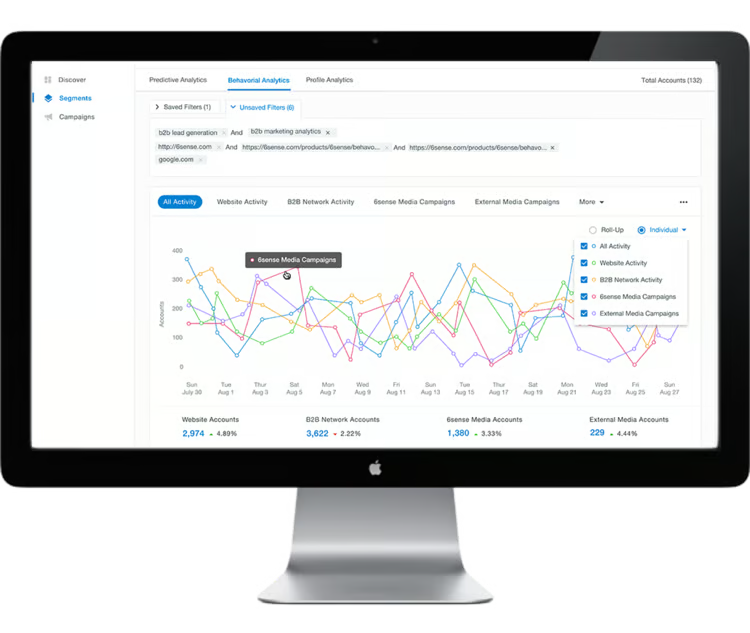
The advertising capabilities within 6sense allow teams to run targeted display campaigns directly against intent-based segments without exporting lists to separate ad platforms. This is a meaningful efficiency gain, particularly for lean marketing teams managing evergreen and ABM campaigns simultaneously. Scoring and ranking scores 85% on G2, underpinning the confidence teams place in the platform's account prioritization as a basis for both outreach and ad spend decisions.
Sales and marketing alignment is a consistent outcome that G2 reviewers highlight. When both teams operate from the same buying stage data, and intent signals, territory prioritization, SDR sequencing, and campaign targeting converge around shared account intelligence. Several G2 reviewers cite 6sense as the reason their sales and marketing teams stopped arguing over lead quality and began working from a shared account list.
The Audience Workflow feature, introduced in recent platform updates, draws specific attention. It allows teams to automate the full sequence from account identification through contact sourcing and sequencing in a single workflow, removing the need to bridge multiple tools manually. Users mention using it to run multiple GTM plays simultaneously with less operational overhead than previous campaign setups required.
Multi-channel orchestration is pulling its individual capabilities together into a unified program. Intent signals, buying stage data, and segment membership feed display advertising, email, and outreach sequences from the same source rather than requiring separate audience builds for each channel. G2 reviewers highlight this as the mechanism that reduces siloed campaign execution and keeps messaging consistent across every touchpoint an in-market account encounters.
The platform's setup and initial configuration require a meaningful time investment. Getting intent taxonomies, keyword categories, and scoring models aligned with a specific ICP can take several months before outputs feel reliably accurate. This is most felt by teams without dedicated marketing operations support. Once the model is calibrated, account prioritization becomes more precise over time.
The interface is feature-rich in a way that requires structured onboarding rather than self-service exploration. New users across both marketing and sales roles benefit from formal training and CSM-guided sessions to get to consistent, confident usage. Teams that invest in that enablement describe strong adoption, while those that skip it tend to use a narrower range of the platform's capabilities.
6sense Revenue Marketing is well matched to mid-market and enterprise B2B teams running account-based programs where precision targeting, sales and marketing alignment, and intent-driven campaign execution are the priorities.
"I like how 6sense Revenue Marketing provides a lot of intent information, which is helpful to understand what our target audience is interested in. I also appreciate that 6sense ABM shows account progression through buying stages, enabling us to craft relevant messaging and reach out to accounts at the right time for them."
- 6sense Revenue Marketing review, Oksana P.
"The taxonomy is pretty detailed, which can be challenging. It would be helpful to have more classes and information about the best use cases. The initial setup was pretty difficult and took quite a bit of time, maybe a year, before any signals were seen. It took about eighteen months before it felt like it was adding value to the company."
- 6sense Revenue Marketing review, Barb C.
Zoho CRM is a full-cycle lead and sales management platform built for teams that need flexibility without enterprise-level cost. The platform covers lead capture, pipeline tracking, workflow automation, and cross-team visibility within a single environment that connects naturally to the broader Zoho ecosystem. For businesses managing growth without a dedicated RevOps infrastructure, this combination of depth and affordability is a consistent draw.
Lead management scores 87% on G2, reflecting how consistently the platform handles the core job of capturing, organizing, and progressing leads through the funnel. Across G2 reviews, teams describe replacing scattered spreadsheets, email threads, and siloed trackers with a single live view of every lead and deal. The ability to track lead status, assign follow-ups, and monitor pipeline progress from one place is the outcome mentioned most often as the direct reason teams stay on the platform.
Workflow automation is where a significant share of day-to-day time savings originates for Zoho CRM users. Teams set up rules that automatically assign leads, trigger follow-up sequences, send reminders, and update deal stages without manual intervention. Lead Assignment scores 86% on G2, placed mid-description here because it directly reflects how well the platform removes the manual coordination overhead that slows inside sales and marketing teams as volume grows.
Custom modules, fields, layouts, and workflow logic can be tailored to fit specific sales processes rather than forcing teams to adapt to a rigid default structure. Teams in insurance, SaaS, and professional services mention building product-specific pipelines and KYC workflows entirely within the CRM. Lead opportunity scores 86% on G2, reflecting how well the platform adapts to the variety of deal structures teams bring to it.
Integration across the Zoho ecosystem gives teams a connected operational layer without paying for third-party connectors. Zoho Mail, Zoho Campaigns, Zoho Analytics, Zoho Desk, and Zoho Cliq connect natively, enabling sales, marketing, and support to operate from shared customer data. G2 reviewers replacing multiple siloed tools with a unified Zoho stack describe cleaner handoffs, fewer data reconciliation steps, and a more consistent view of each customer's journey across functions.
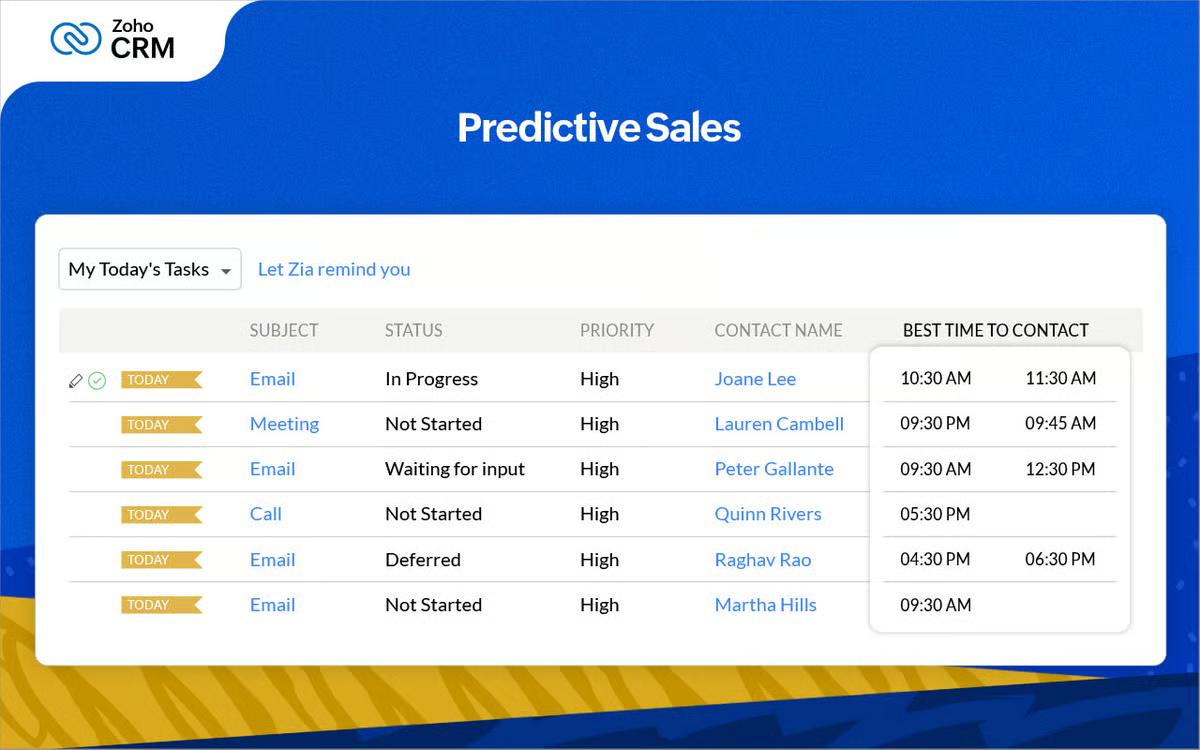
Zia, Zoho's AI assistant, draws attention from G2 reviewers for its practical contributions to daily sales work. It surfaces anomalies in pipeline data, suggests the best time to contact a lead, and flags deals that show signs of stalling.
Rather than functioning as a background analytics feature, G2 reviewers mention Zia as something they interact with actively during their working day, particularly for prioritizing follow-up activity across larger account sets.
Analytics dashboards give teams a real-time view of pipeline health, conversion rates, and lead source performance without relying on manual reporting. G2 reviewers point to the ability to build custom dashboards that surface the metrics most relevant to their sales and marketing processes, from stage-by-stage conversion tracking to campaign attribution. For managers reviewing team performance and leadership monitoring the overall pipeline, the reporting layer turns data that previously lived in spreadsheets into a consistently updated operational view.
Advanced configuration and feature depth require structured onboarding time that teams often underestimate at the start. Setting up custom modules, automation logic, and reporting dashboards works well once the structure is in place, but the initial build requires focused effort. Teams without a technically confident admin tend to feel this most during setup. Once configured, the platform runs reliably, and the ongoing experience is smooth and low-maintenance.
The user interface is functional but less polished than competing CRMs. Navigation across feature-dense sections can feel crowded, and new users benefit from guided training rather than self-exploration. This is most noticeable for teams migrating from visually modern tools. Customer support response times on lower-tier plans are also flagged as variable, with faster resolution more consistently reported by teams on higher plans.
Zoho CRM suits mid-market teams that need a customizable, automation-capable CRM at a price point that scales with the business rather than ahead of it. Its lead management depth, Zoho ecosystem connectivity, and workflow flexibility make it a practical long-term choice for teams willing to invest in setup and training to unlock its full capability.
"This is a seamless integration tool that allows you to manage your company’s live chat, desk, and deals all in one place. It also offers customization options with Slack and Jira, making it easier to tailor the platform to your workflow.”
— Zoho CRM review, Gaurav M.
"Its large number of features can be overwhelming for new users. Also, it shows performance lags with a large amount of data. Overall, it is a great tool for any organization."
- Zoho CRM review, Avantika B.
VanillaSoft is an action-oriented lead scoring platform. It uses lead scoring in a very practical way to keep reps moving through leads with clarity and momentum. That framing aligns well with its user base, which skews heavily toward small businesses (59%) and mid-market teams (31%), according to G2 Data.
Lead scoring in VanillaSoft is tightly connected to workflow execution. Prioritized leads are surfaced automatically in call queues, reducing decision fatigue for reps and keeping activity moving. Reviewers consistently describe how scoring feels embedded into execution rather than sitting in reports or dashboards.
On G2, features CRM integration, workflow, and pipeline acceleration are each rated at 93%, highlighting how well scoring, routing, and task sequencing work together. This setup helps reps move efficiently from one lead to the next without manual sorting or re-prioritization. For teams focused on reaching more prospects efficiently, with lead scoring closely tied to daily execution, this approach is effective, and the platform’s overall adoption is reflected in its overall G2 Score of 52.
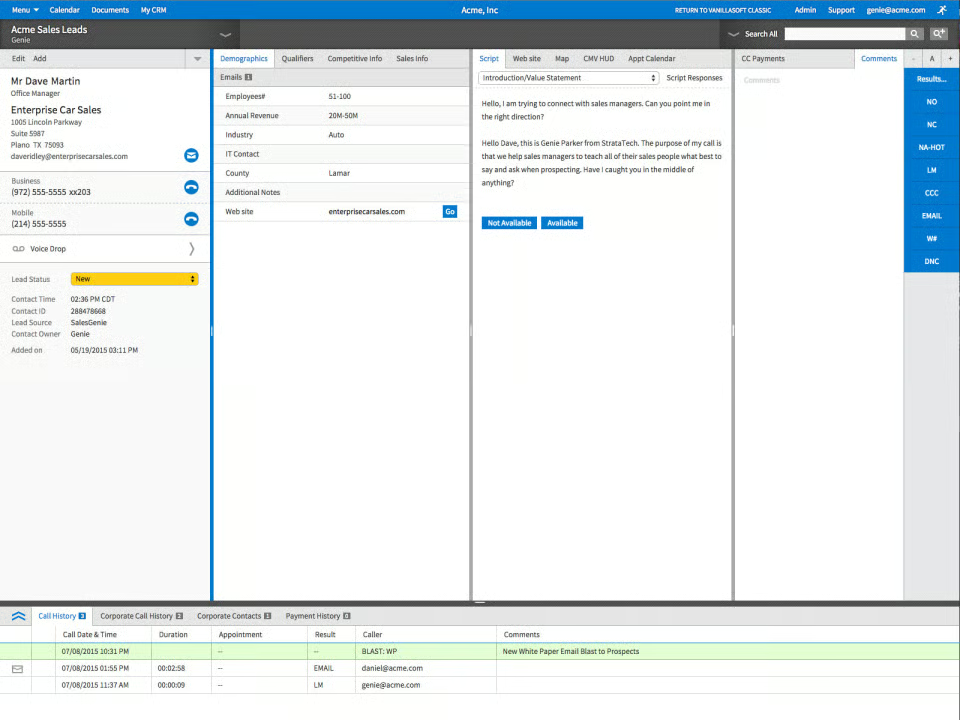
Usability comes up repeatedly in reviews, and there is a consistent pattern around how easy the interface is to pick up, even for less technical users. Reps describe logging in and immediately knowing what to work on next, without needing to move through layered dashboards.
Dispositions, calendar integrations, and built-in dialing keep lead context close to execution, which supports faster follow-up and higher outreach volume. From a lead scoring standpoint, prioritization is embedded directly into the workflow, reducing friction between scoring and action and helping ensure the next best lead is always front and center.
The platform is straightforward to navigate, with an intuitive interface that makes daily operations smooth and efficient even for less technical team members. This user-friendliness helps reps focus on outreach and lead follow-up rather than learning complex systems, reducing training time and increasing productivity.
The customer support team is responsive, accessible, and solution-focused. Reviewers highlight how quickly the support team addresses issues, often resolving problems the same day rather than leaving teams waiting. This reliable support becomes especially valuable during daily operations, as reps can get unstuck and back to calling without extended downtime. Several long-term users specifically mention exceptional customer service as a key reason they continue using VanillaSoft.
VanillaSoft is designed around consistent outbound activity, with workflows optimized for daily use and high call volume. Teams that work more intermittently or sporadically may find that some features take time to fully reveal their value, as the platform's efficiency increases with regular usage patterns. For outbound teams maintaining steady prospecting cadences, this workflow-driven approach delivers maximum productivity.
SMS and texting capabilities are designed for basic communication, which is more noticeable for teams expecting advanced automation or richer messaging features due to character limits and lighter functionality. For phone-based outreach and quick reminders, the features remain practical and easy to use, with the option to extend capabilities through dedicated messaging tools if needed.
All in all, VanillaSoft is a strong fit for sales teams that measure success by daily activity and follow-through. With highly rated CRM integration and workflow tools, it turns lead scoring into immediate action rather than delayed insight. For outbound environments where execution speed matters more than analytics depth, VanillaSoft remains a focused and well-differentiated option.
“The user interface is incredibly intuitive and easy to use. It is customizable to both beginner tech users while having the capability of arming any salesperson with an artillery of self-contained information that offers easy integration capabilities with Google Calendar & texting platforms alike.”
- VanillaSoft review, Jeff J.
“Sometimes the routing process can be a little whacky. Texting through the platform is tough.”
- VanillaSoft review, Julian H.
Seamless.AI shows up frequently in the lead scoring category on G2, particularly among teams that value speed and contact accuracy over complex predictive modeling. With user base concentrated in small and mid-market organizations, it is positioned as a practical scoring tool built around fast prospect qualification rather than long-term behavioral analysis.
Seamless.AI supports lead scoring by removing friction at the top of the process. Users are able to pull verified emails, phone numbers, and firmographic details almost instantly. That immediacy matters because scoring only works when the underlying data is solid. It shifts lead qualification from a research-heavy task into something that happens naturally as part of prospecting.
It is frequently praised by G2 reviewers for its browser-based prospecting capabilities, particularly its Chrome extension that captures contact data directly from LinkedIn and company websites. Reviewers mention that this allows reps to score and enrich leads in real time while researching prospects, rather than switching back to a separate system later. This in-context capture keeps lead scoring aligned with how outbound reps actually discover and qualify prospects.
Decision-making support, workflow efficiency, and cross-system integration all score 95% on G2, which aligns with recurring patterns in user feedback. The platform connects smoothly with Salesforce, HubSpot, and outreach tools, so lead data flows directly into scoring, routing, and follow-up processes. Lead enrichment is built into lead prioritization and follow-up, keeping it part of the same workflow.
Its user distribution also highlights where Seamless.AI performs best. About 56% of customers come from mid-market companies, 35% from small businesses, and 10% from enterprises, according to G2 Data.
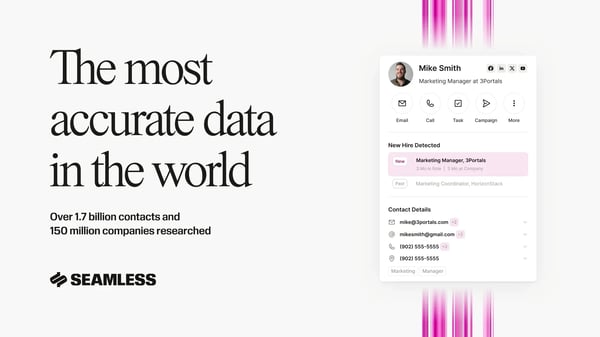
Seamless.AI also supports role-based lead scoring without relying on long behavioral histories. Teams can prioritize prospects based on job relevance, seniority, and verified contact quality, which is especially useful early in the funnel when engagement data is limited. Reviews often associate this approach with faster list readiness and more confident outbound prioritization when speed matters.
G2 Reviewers consistently point out the productivity gains. Users can focus on sequencing, messaging, and follow-ups instead of validating contacts manually. Its G2 Satisfaction Score of 56 reflects how well teams rely on Seamless.AI for efficient, daily lead scoring. The platform also helps enrich existing databases, which improves the reliability of downstream lead scoring and prioritization. That efficiency is one of the main reasons teams keep using it daily.
Seamless.AI significantly reduces prospecting research time, with G2 reviewers mentioning how they build targeted lead lists in minutes rather than hours. This time savings allows sales teams to focus on actual selling and relationship-building instead of manual data gathering, which is especially valuable for high-volume outbound teams.
Seamless.AI is built for speed and broad market coverage, which means contact data may occasionally require light verification, particularly in less active or niche markets. Teams operating in specialized segments may need validation steps as part of their workflow. However, the platform's speed delivers significant productivity gains for high-volume prospecting across mainstream industries.
Others note that lead management and contextual insights are relatively lightweight. Seamless.AI supports scoring based on role and contact accuracy, but teams seeking advanced behavioral scoring, detailed engagement tracking, or adaptive learning models may find these features more lightweight than analytics-heavy platforms. For teams prioritizing rapid contact acquisition and role-based scoring, this focused approach reduces complexity and accelerates prospecting.
Despite those considerations, Seamless.AI consistently delivers on what it’s designed to do. For sales and business development teams that score and prioritize leads based on fast access to accurate decision-maker data, strong workflow integration, and minimal research overhead, it remains a highly relevant and dependable tool in the lead scoring stack.
“What I like most about Seamless.AI is how accurate and comprehensive the contact data is, especially when it comes to identifying decision-makers and qualified leads. After more than two years working with the platform across different companies, I’ve seen firsthand how powerful it is for both prospecting and enriching our existing database. The integration with outreach workflows is smooth, and the tool helps accelerate the entire lead generation process in a way that is difficult to achieve with other platforms.”
- Seamless.AI review, Paulo L.
“Data accuracy can be inconsistent; some contacts are spot on, while others may be outdated or bounce, so you still need a verification step and good list hygiene. Credits can run out quickly if you are building large lists, and it is not always clear upfront which contacts will be the best quality use of credits. Duplicate records and missing firmographic details can also happen, which adds cleanup work before importing to a CRM. Integrations are helpful, but you may still spend time mapping fields and making sure imports match your CRM rules.”
- Seamless.AI review, Mudit K.
|
Software
|
G2 Rating
|
Free plan / Free trial
|
Ideal for
|
| Agentforce Sales |
4.4/5
|
Free plan available
|
CRM-native lead scoring at enterprise scale
|
|
Apollo.io
|
4.7/5
|
Free plan available
|
Outbound-focused lead scoring with intent signals
|
|
ZoomInfo Operations
|
4.4/5
|
Free trial available
|
Data-driven lead scoring with RevOps oversight
|
|
ZoomInfo Marketing
|
4.4/5
|
Free trial available
|
Enrichment-led scoring within campaign workflows
|
|
ActiveCampaign
|
4.5/5
|
Free trial available
|
Lifecycle-based lead scoring in marketing automation
|
|
6sense Sales Intelligence
|
4.0/5
|
No
|
Intent-driven account prioritization for mid-market and enterprise sales teams
|
|
6sense Revenue Marketing
|
4.3/5
|
No
|
Intent-driven ABM for mid-market and enterprise B2B teams
|
|
Zoho CRM
|
4.1/5
|
Yes
|
Customizable lead management for mid-market and growing teams
|
|
Vanillasoft
|
4.5/5
|
No free plan available
|
Sales-driven scoring for high-touch outbound teams
|
|
Seamless.AI
|
4.4/5
|
Free plan available
|
Contact-driven lead scoring with rapid prospecting
|
*These lead scoring software are top-rated in their category, based on G2’s 2026 Grid Report. All offer free trials or demos; pricing availability varies by vendor.
Got more questions? G2 has the answers!
6sense Sales Intelligence offers some of the fastest lead scoring updates in the category, driven by real-time intent signals, website activity, and keyword research data. G2 review patterns highlight how quickly buying stage scores shift as account behavior changes, making it well-suited for outbound teams that need to act on signals before a buying window closes.
ZoomInfo Marketing stands out as the top lead scoring platform for B2B marketing teams. It combines firmographic data, intent signals, and account-level context to prioritize leads inside demand generation and account-based campaigns.
Agentforce Sales offers the most customizable lead scoring models for enterprise teams. Zoho CRM is also worth considering for mid-market teams that need flexible scoring logic, custom fields, and workflow rules without the complexity of enterprise CRM governance. Both allow teams to tailor scoring to reflect how their sales process actually operates.
ActiveCampaign is the most cost-effective option for lead scoring, especially for small and mid-market teams. It provides lifecycle-based scoring tightly integrated with email marketing and automation at a relatively low entry price.
ActiveCampaign integrates best with marketing automation. Lead scoring is natively embedded into campaigns, workflows, and behavioral triggers, allowing teams to score leads and act on engagement signals without switching systems.
Agentforce Sales is the most scalable lead scoring solution. Its CRM-native architecture, governance controls, and reporting depth make it well-suited for large, multi-team organizations managing high lead volume and complex revenue workflows.
Both ZoomInfo Marketing and 6sense Revenue Marketing are strong fits for account-based marketing. ZoomInfo Marketing scores leads using firmographic data and intent signals tied to demand generation campaigns. 6sense Revenue Marketing goes further by surfacing anonymous buying behavior and staging accounts across the full buying journey, giving ABM teams a shared prioritization layer across sales and marketing.
Agentforce Sales provides the strongest analytics for lead scoring performance. Because scores are embedded directly into pipeline and opportunity data, teams can analyze how scoring impacts conversion rates, deal velocity, and revenue outcomes.
ZoomInfo Marketing offers AI-powered predictions by combining intent data, enrichment, and machine-learning-driven targeting to identify in-market accounts and prioritize leads more accurately within campaign workflows.
For intent-driven outbound teams, 6sense Sales Intelligence delivers accurate lead prioritization by combining keyword research, website activity, and third-party signals into buying stage scores that update as behavior changes. For mid-market teams running CRM-native scoring, Zoho CRM provides reliable lead prioritization through customizable scoring models tied directly to pipeline stages and workflow rules.
At this stage, the decision comes down to whether the software strengthens or weakens how revenue teams operate day to day. The most effective lead scoring systems don’t force teams to rethink their process or babysit models. They reduce ambiguity, surface clear priorities, and let sales and marketing act with shared context, lowering cognitive load and keeping pipeline momentum intact.
The biggest gains appear when scoring is treated as an operating layer rather than a setup task. Strong choices embed naturally into routing, follow-ups, and forecasting. Weaker ones surface later as manual overrides, spreadsheet reconciliation, and disputes over lead quality. Those issues don’t stay isolated; they compound into slower cycles and unreliable revenue signals.
Over time, this becomes a structural difference. Good decisions reinforce trust in data and execution rhythm. Poor ones train teams to ignore signals and accumulate process debt. The most reliable way to choose is to focus on how leads are worked under pressure, not how scoring is configured. If the system consistently sharpens focus and reduces rework, it will support confident execution well beyond rollout.
Want stronger lead prioritization? Go beyond point scores with richer intent signals. Explore lead intelligence software on G2.


I don’t pull lead lists, but I know when they’re broken.
 by Harshita Tewari

I know how critical consistent lead flow is once you’re past the experimentation phase and...
by Harshita Tewari

G2 Grid® Report · Summer 2026 Best Sales Engagement Software Updated May 26, 2026 View...
.png) by Shreya Mattoo
by Shreya Mattoo