


This guide was last updated on September 9, 2025. A newer report has since been published. The tools below reflect the scores from G2's Summer 2026 Grid® Report.
Based on verified G2 reviews and the latest Grid® placement.
The tools below have also been exhaustively tested and evaluated, and continue to hold their place among the best Applicant Tracking Systems (ATS) on G2.
The more time I’ve spent working alongside HR teams, the more I realize hiring is a lot like marketing. And after researching some of G2’s best applicant tracking systems, it became clear that the right ATS software can completely shape the candidate experience. Whether you’re trying to automate recruiting workflows, improve candidate management, or figure out which company offers the best applicant tracking system, choosing the right platform is now a critical decision for growing teams.
If you’re already comparing tools, you’re probably searching for the best applicant tracking system for small businesses, evaluating popular applicant tracking solutions for HR teams, or narrowing down the top rated ATS for fast-growing tech firms. The challenge is that without the right software, resumes get lost, communication slows, and top candidates move on quickly.
That’s why I explored G2’s best applicant tracking systems, including Greenhouse, BambooHR, Bullhorn, Rippling, Ceipal ATS, JobDiva, UKG Ready, and Zoho Recruit. I looked at which platforms actually help recruiters streamline hiring, automate repetitive tasks, and support different hiring needs, from enterprise recruiting to user-friendly ATS options for mobile recruitment and the best ATS app for recruiting in software industry hiring.
But which platforms actually deliver?
*These ATS software are top-rated in their category, according to G2 Spring 2026 Grid Reports. I’ve also added their monthly pricing to make comparisons easier for you.
Hiring isn’t just about finding the right people; it’s about managing the entire process without losing momentum. A slow or clunky ATS system can cost you top talent, which is why choosing the best ATS software is a big deal for recruiters and HR teams. That’s true whether you’re trying to figure out which company offers the best applicant tracking system or just need a simple tool that won’t slow your team down.
It’s no surprise then that 97.8% of Fortune 500 companies use an ATS in 2025 to keep their hiring pipelines organized. Without one, even the biggest teams struggle to manage volume efficiently.
But not all applicant tracking systems get it right. Some help you track candidates, schedule interviews, and keep hiring managers in sync. Others? They make things harder than they need to be.
I reviewed the best ATS options to find the ones that offer everything, from automated resume screening to custom hiring workflows, and these tools stood out for all the right reasons.
I started by analyzing G2’s latest Grid Reports, focusing on usability, automation, and how well each ATS system supports hiring teams at different stages. This gave me a solid baseline of which platforms consistently performed well and which had recurring issues. I paid special attention to finding the most recommended ATS service for mid-sized companies, because those teams often struggle with balancing budget, features, and growth.
To go deeper, I used AI-driven analysis to sift through thousands of user reviews, picking up patterns in what people genuinely liked and what caused the most frustration.
Beyond rankings and reviews, I compared core ATS features, paying close attention to candidate tracking, interview scheduling, reporting, and collaboration tools. When I couldn’t understand too much about a platform due to limited access, I turned to HR professionals who use these tools daily, validating their insights with real user feedback from G2.
The screenshots in this article include both images from my evaluation and verified visuals from vendor pages on G2.
The average recruiter is responsible for about 30 hires per month, a heavy workload that makes automation and usability critical. To put the funnel in perspective: the average role attracts 73 applicants, just 3 are interviewed, and only 1 receives an offer. The best ATS platforms help recruiters zero in on those top candidates faster, without losing track of the rest
That’s why I focused on platforms that reduce manual effort and scale with demand. I considered the following factors when evaluating the best applicant tracking systems.
Through all of this, I kept circling back to one core question I’ve heard from so many teams I’ve worked with: what is the best applicant tracking system for small businesses that keeps things simple, helps hiring managers stay organized, and doesn’t require a huge learning curve?
After breaking down each platform’s strengths, weaknesses, and key features, I’ve pulled together a list that caters to several needs and use cases.
The list below contains genuine user reviews from the Applicant Tracking Software category page. To be included in this category, a solution must:
*This data was pulled from G2 in 2026. Some reviews may have been edited for clarity.
Based on my review of G2 user feedback, Greenhouse simplifies recruitment workflows with tools for candidate tracking, team collaboration, and seamless integrations with various HR software. With an 88% likelihood to recommend score and an 87% rating for ease of use on G2, it consistently ranks among the most trusted ATS platforms for mid-market and enterprise hiring teams.
One feature that I frequently see praised is ease of use. Users often highlight the clean and logically structured interface, which makes navigation easy for hiring managers and recruiters. Tracking candidates through different hiring stages feels seamless, with critical information readily accessible. Many G2 reviewers appreciate the system’s ability to facilitate collaboration by allowing multiple team members to leave structured feedback without cluttering the process.
Another standout capability, according to users, is robust integrations. Greenhouse integrates with a wide variety of HR tools, ranging from background check providers to scheduling software. G2 reviewers consistently note that the integration process is straightforward, with no excessive configuration or workarounds required. This makes Greenhouse an ideal choice for companies that rely on multiple tools for different aspects of the recruitment process.
A commonly appreciated element is reporting and analytics. Greenhouse’s customizable reports provide deep insights into hiring trends, recruiter performance, and candidate pipelines. From my review of G2 user feedback, many users value the clear, data-driven metrics that help improve recruitment strategies over time. Whether it's for a quick overview or more detailed reports, users note that the system makes it easy to pull the numbers they need.
Collaboration across hiring teams is another area where Greenhouse performs well. Reviewers describe how multiple team members can leave structured feedback without cluttering the process, and the centralized audit trail keeps everyone aligned on candidate status. For organizations managing roles across multiple countries or departments, this transparency is consistently cited as a key benefit.
The platform's customization depth is also worth noting. Users appreciate the ability to tailor email templates, offer letter templates, approval queues, and workflows to match their specific hiring process. Reviewers who have used Greenhouse for several years mention that the platform has continued to refine its core features while staying true to what a strong ATS needs to deliver.
Employee referral management rounds out the platform's strengths. G2 reviewers praise how simple the referral process is; employees can submit referrals quickly, track their status, and stay engaged with the hiring process without needing recruiter involvement for every update.
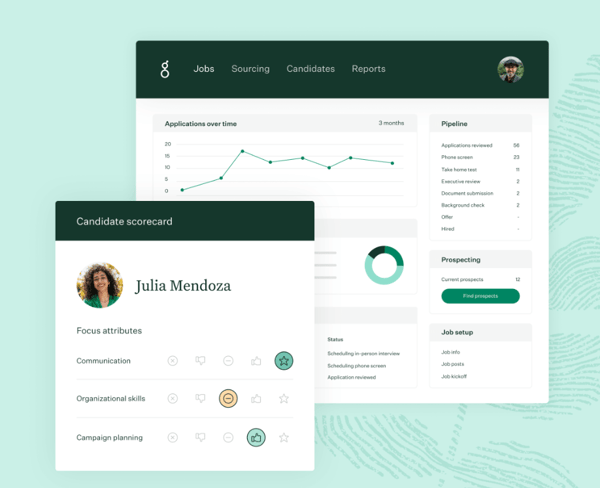
However, reporting depth receives mixed feedback from some users. While the pre-built reports and dashboards effectively cover standard analytics needs, several reviewers note that building highly customized reports or preparing data for executive presentations sometimes requires exporting to external tools. For teams relying on out-of-the-box reporting, the standard options deliver solid coverage.
Additionally, candidate search and filtering are points that some reviewers raise. While the system does a strong job of keeping applicants organized, reviewers managing very large applicant pools mention that the search functionality could benefit from more advanced filtering options. Greenhouse earns a 78% candidate search rating on G2, suggesting there is room for improvement in this area, though the overall candidate evaluation score is strong at 87%.
That said, Greenhouse continues to be one of the most widely trusted ATS platforms, especially for larger teams that need structure and scalability. With 66% of its users in the mid-market segment and 26% in enterprise, it's a platform built for organizations where hiring processes need to be both rigorous and repeatable.
“I use Greenhouse primarily for referral purposes, and it helps collect relevant data easily and streamlines the referral process. I like how simple and organized the software is. It includes all necessary components from both employee and employer perspectives, such as easy tracking and application progress, providing transparency throughout the process, which is very helpful. The initial setup was really easy and straightforward with a single sign-on using my work email.”
- Greenhouse review, Vaishali G.
“The interface could be a lot better; it's a little outdated and clunky compared to other tools. Sourcing tools could be improved so we don't have to source elsewhere.”
- Greenhouse review, Angela A.
Related: Need pricing insights? Explore our comprehensive HR software pricing guide.
From my review of G2 user feedback, BambooHR offers a comprehensive suite of HR tools designed to streamline hiring and employee management. It features a user-friendly interface, a dedicated mobile app for on-the-go access, and an ATS that simplifies the recruitment process.
One feature that I frequently see getting a lot of praise is mobile accessibility. G2 users appreciate how the mobile app allows employees to check schedules, request time off, and stay updated without needing a desktop. Many reviewers mention that the convenience of accessing HR tools anytime, anywhere, significantly enhances daily operations.
Another commonly appreciated element is the automated onboarding workflow. Users highlight how BambooHR automates checklists, time-off approvals, and follow-up sequences so that repetitive HR tasks essentially run themselves once configured. Reviewers frequently mention that this automation saves significant time and reduces the chance of tasks slipping through the cracks during busy onboarding periods.
BambooHR's applicant tracking functionality also receives positive feedback. The ATS module simplifies resume screening, candidate progress tracking, and interview scheduling. According to G2 reviewers, it organizes applicant data efficiently and reduces the need for manual tracking. With an 85% candidate evaluations rating and 81% candidate search score on G2, it provides a reliable foundation for teams seeking a well-structured recruitment tool within a broader HR suite.
Mobile accessibility is another area users appreciate. G2 reviewers mention that the mobile app allows employees to check schedules, request time off, clock in and out remotely, and stay updated without needing a desktop. With an 87% mobility rating, this convenience is especially valued by distributed teams and managers who need to approve requests on the go.
The platform's all-in-one design is also frequently highlighted. BambooHR centralizes payroll information, benefits enrollment, document management, and the company directory alongside its ATS features. Reviewers appreciate having a single hub for employee information, pay stubs, and training materials, which eliminates the need to jump between separate systems. For teams that want an ATS embedded within a broader HR ecosystem, this integration is a significant advantage.
Setup speed rounds out BambooHR's strengths. With a 90% ease of setup score on G2, reviewers consistently describe the implementation process as straightforward and quick. Several users mention that they were up and running in a matter of days, which is especially valuable for growing teams that can't afford a lengthy rollout process.
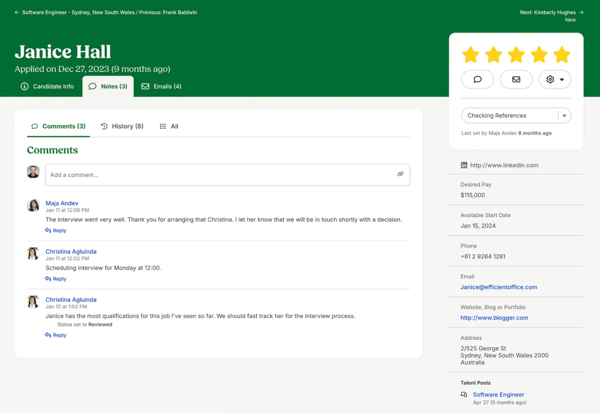
Several G2 reviewers mention that while BambooHR covers basic reporting needs, the customization options for generating detailed or advanced analytics are limited. Users sometimes find themselves exporting data to spreadsheets to get the views they actually need. For teams that rely heavily on data-driven decision-making, this can be a consideration worth weighing, though BambooHR's standard reports handle everyday HR tracking effectively.
Additionally, the mobile experience has some gaps that reviewers mention. While the mobile app works well for time-off requests and clock-ins, some users note that performing more complex tasks, such as reviewing detailed reports or managing candidate pipelines on the go, can feel more limited compared to the desktop version. For teams that primarily use the app for basic employee self-service, the mobile experience delivers well.
BambooHR remains a favorite for HR teams that value simplicity and seamless onboarding. With 86% average user adoption and 34% of its users in the small business segment alongside 62% in mid-market, it's a platform that grows naturally with teams that want an ATS and HR suite working together without unnecessary complexity.
“I like using BambooHR for tracking birthdays and finding historical performance review documents. It's easy to find historical documents, which makes accessing important information straightforward. I also found the initial setup easy."
- BambooHR review, Alex W.
“Logging hours can feel tedious since entries need to be added one day at a time, which makes the process time-consuming for longer periods. It would be much more efficient to have a calendar view that also displays public holidays, company holidays, and approved time off in one place.”
- BambooHR review, Katherine X.
Related: Assess the success of your hiring strategy. Discover how to calculate recruitment ROI.
Bullhorn is a platform I see widely adopted among staffing agencies and enterprise recruitment teams that need to manage high volumes of candidates, placements, and client relationships in a single system. With an 89% average user adoption rate and an estimated payback period of just 7 months according to G2 data, it delivers fast time-to-value for organizations running complex, multi-office recruitment operations.
One area that stands out across G2 reviews is the centralized candidate database. Users consistently praise how Bullhorn keeps all candidate data — profiles, submission histories, communication logs, and placement records — organized and accessible in one place. For staffing firms operating across multiple offices, this centralized view eliminates duplication and ensures recruiters can pick up where a colleague left off without losing context. Reviewers who have used the platform for years describe it as a system that improves their recruitment process daily.
Another standout capability, according to reviewers, is the advanced Boolean search and candidate sourcing. Bullhorn's search functionality, including its auto-build search feature, allows recruiters to craft precise queries and quickly surface relevant candidates from large talent pools. With an 84% candidate search rating on G2, reviewers managing niche or hard-to-fill roles highlight this as a critical time-saver that reduces manual effort significantly.
The platform's integration ecosystem also receives consistent praise. Bullhorn connects with a wide range of tools, from telephony systems like RingCentral to back-office and analytics solutions. G2 reviewers note that having these integrations in place creates a unified workflow where call documentation, email tracking, and candidate engagement all flow into a single system. With an 86% integration APIs score, it serves as a strong connective layer in multi-tool recruitment environments.
Automation and analytics capabilities round out Bullhorn's operational strengths. Users appreciate how the platform automates candidate pipeline management, activity tracking, and reporting. Reviewers mention that generating reports is quick and efficient, allowing them to track placements, client activity, and team performance without manual compilation. The 88% performance rating on G2 reflects the platform's ability to handle the demands of high-volume recruitment.
Customer support is another area that receives positive attention. Multiple G2 reviewers describe the support team as knowledgeable and responsive, with a proactive approach to system maintenance and issue resolution. The 85% quality of support rating reflects a support experience that staffing teams can rely on when operational continuity matters.
Ease of use is a commonly highlighted benefit as well. Despite its depth of features, reviewers describe Bullhorn's interface as user-friendly and easy to navigate. Several users mention that it's one of the easier CRMs and ATS platforms to learn, with a layout that makes day-to-day tasks like managing sales leads, tracking job opportunities, and organizing candidate pipelines intuitive even for newer recruiters.
However, some G2 reviewers note that customization beyond the default settings can require additional investment. While Bullhorn covers core recruitment needs effectively, users looking for highly tailored workflows or custom fields sometimes find that advanced configurations come with additional costs. For teams operating within the platform's standard setup, the functionality is comprehensive and well-suited to staffing operations.
Additionally, occasional performance variability is something reviewers mention. Some users note that the platform can experience slower loading times during peak usage periods or when running large data reports. While these instances are intermittent, they can be a consideration for teams working under tight deadlines. The 85% ease of setup score on G2 suggests that the initial implementation experience is generally smooth, even if day-to-day performance can occasionally fluctuate.
With 36% of its user base in small businesses and 49% in mid-market, Bullhorn occupies a strong position for staffing agencies and recruitment firms that need an ATS and CRM working in tandem. Its combination of database management, Boolean search, and integration depth makes it a platform built for recruiters who manage volume, speed, and client relationships simultaneously.
"I use Bullhorn for sourcing, calling, and maintaining talent pools for hiring people. I love the Boolean search and the auto-build search. If there is any niche requirement, the feature of auto-build search helps in sourcing relevant candidates, and with Boolean search, I obviously get to filter a good pool. The initial setup was super easy; though it took some training to help me go through the search and all, it was smooth."
- Bullhorn review, Nida N
"It can sometimes take a long time to load or glitch out, which makes me rerun a report multiple times."
- Bullhorn review, Zach D.
Rippling is a platform that approaches applicant tracking differently from traditional standalone ATS tools. It embeds recruiting within a broader HR, payroll, and IT management ecosystem. Rather than offering hiring as an isolated function, it connects the entire employee lifecycle from job posting to payroll processing in a single system, which is a core reason it earns a 93% likelihood to recommend score on G2.
One area where Rippling excels, according to G2 reviewers, is the seamless onboarding experience. Users consistently describe how hiring a new team member triggers an automated chain, employment agreements are generated, benefits enrollment begins, and software access is provisioned, all within minutes. Several reviewers note that this end-to-end automation significantly shortened their implementation timelines and enabled them to run their first payroll almost immediately after setup.
The platform's ease of use is another frequently praised quality. Reviewers describe the interface as clean, intuitive, and people-friendly. Users note that finding information, navigating between modules, and completing HR tasks feels straightforward, even for team members who are not technically inclined. Multiple reviewers highlight the guided step-by-step workflows that walk users through processes like payment setup, benefits enrollment, and time tracking.
Automation workflows are a recurring strength in reviews. Rippling's workflow engine allows HR teams to automate repetitive administrative tasks, from time-off approvals to compliance notifications, reducing manual effort across the board. Reviewers in mid-sized organizations particularly value how these automations scale as headcount grows, and the flexibility to tailor these workflows to specific operational needs is a key differentiator users call out.
The unified data architecture is also a consistent theme in G2 feedback. Rippling centralizes payroll, benefits, time tracking, HR records, and now recruiting in a single platform, which reviewers say eliminates the need to maintain multiple systems and sync data across them. The ATS functionality integrates naturally with the broader platform without feeling bolted on, and users managing global teams appreciate that contractor payments, compliance, and onboarding all flow through the same system.
Reviewer feedback also highlights strong implementation support. Users describe their implementation managers as responsive, knowledgeable, and proactive, with clear agendas and practical advice tailored to each team's size and needs. Several reviewers note that setup was completed in a single live session, which is especially valuable for smaller teams that can't afford a lengthy rollout.
The platform's innovation pace rounds out its strengths. G2 reviewers express confidence that Rippling is continuously improving, pointing to features like the AI chatbot, real-time feature enhancement requests, and the free customizable app as indicators that the platform is investing in staying ahead of HR technology trends. The 97% product direction score on G2, the highest among all tools in this list, reflects that forward momentum.
However, some G2 reviewers mention that the authentication and login process can feel repetitive. Several users note that multi-factor authentication prompts appear frequently, even on recognized devices, and that the platform doesn't always remember previously verified computers or sessions. While the security measures are understandable, reviewers mention that repeated verification steps add friction to daily workflows, particularly for employees who log in and out multiple times per day. For teams that prioritize security compliance, this thoroughness is a net positive, but users who prefer a streamlined login experience may need to adjust expectations.
Additionally, the platform's depth can take some initial adjustment. While individual tasks are straightforward, reviewers note that navigating between categories and understanding the full scope of modules requires some attention early on. A few users mention that the menu structure could be more predictable when switching between sections, though once familiar with the layout, they find the platform efficient and well-organized.
Rippling is a strong fit for growing companies that want their ATS to live within a unified HR platform rather than as a standalone system, 36% of its users are in small businesses, and 60% in mid-market. Its combination of onboarding automation, workflow flexibility, and centralized data makes it particularly compelling for teams scaling their hiring alongside payroll, benefits, and IT provisioning.
From my analysis of G2 user feedback, Ceipal ATS is widely appreciated for its ease of use. Many G2 users highlight how intuitive the interface is, making it easy to navigate between different recruitment functions. Whether users are searching for candidates or managing job postings, the platform's simplicity eliminates the need for extensive training, allowing recruiters to focus on hiring tasks rather than mastering complex software.
Another standout capability is multi-job-board integration. Users appreciate how the platform connects with major job portals, including Dice, CareerBuilder, and Monster, allowing recruiters to post jobs and source candidates across multiple channels from a single interface. Reviewers frequently mention that this consolidation eliminates the need to manage separate logins and workflows across different sourcing platforms.
The centralized dashboard and communication tools also receive positive feedback. Ceipal ATS brings candidate tracking, pipeline management, and team communication into a single view, which reviewers say streamlines collaboration and reduces administrative overhead. Users note that having all recruitment data in one place, resumes, submissions, interviews, and follow-ups, makes it easier to stay organized and avoid duplicate outreach.
Boolean search capabilities are another area where reviewers see value. The platform's search functionality allows recruiters to build precise queries and quickly filter through large candidate databases. Combined with the AI-powered matching, reviewers managing high-volume or niche roles describe this as a workflow that surfaces the right candidates faster and with less manual effort.
Automation across the recruitment lifecycle is also a frequently highlighted strength. From automated candidate follow-ups to structured pipeline workflows, G2 reviewers describe how Ceipal ATS reduces repetitive tasks and keeps the hiring process moving. With a 92% customization score and 92% reporting rating on G2, the platform offers flexibility to tailor workflows and generate insights that match each team's operational needs.
Setup and support round out the platform's strengths. Reviewers describe the initial implementation as smooth, with vendor-guided onboarding sessions and demo trials that helped teams get productive quickly. The 93% quality of support and 93% ease of setup scores on G2 reflect an onboarding experience that staffing teams can rely on.
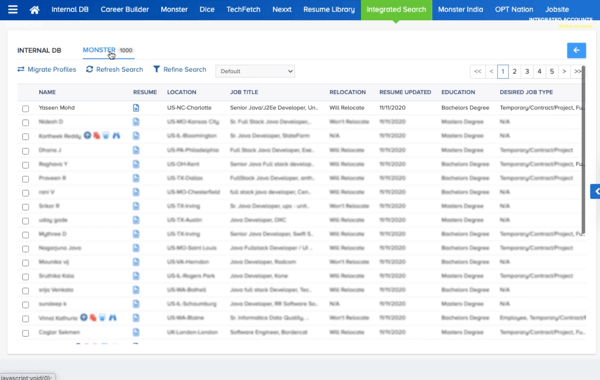
However, some G2 reviewers note that the interface can feel dense at times. While the platform covers a wide range of recruitment functions, users mention that the number of fields, tabs, and menu options can require some adjustment for new users. The layout is functional and gets easier with familiarity, but teams onboarding new recruiters may want to factor in some ramp-up time.
Additionally, performance during high-volume operations is something reviewers occasionally mention. Some users note that loading candidate profiles or running searches through large databases can experience delays during peak periods. While these slowdowns are not consistent, teams managing very large candidate pools on tight timelines may notice them.
With 71% of its users in the mid-market segment and an average user adoption rate of 85%, Ceipal ATS is built for staffing firms and recruiting teams that need AI-powered sourcing, job board consolidation, and VMS integration, all working together in a single platform.
“I use Ceipal ATS for full lifecycle recruitment, managing client requirements, and tracking interviews and pipelines. I like its resume parsing and candidate search functionality, which helps in quick turnaround in submissions and improves both speed and quality of hiring. The initial setup was really smooth with vendor support.”
- Ceipal ATS review, Aryan J.
“While Ceipal ATS is a powerful tool, one thing I find a bit challenging is that the interface can feel slightly complex at first, especially for new users. It takes some time to get comfortable and familiar with all of the features.”
- Ceipal ATS review, Rahul A.
Based on my review of G2 user feedback, JobDiva is recognized for integrating AI-powered features with robust data management capabilities, helping recruiters streamline sourcing, hiring, and tracking applicants while maintaining a centralized database.
One feature that I see getting a lot of praise is AI-powered candidate matching. The platform's algorithm scans resumes and job descriptions to suggest top candidates, significantly reducing manual search time. From the feedback I gathered from G2 users, many appreciate how this automation allows recruiters to focus on engaging with suitable candidates, saving them hours of sifting through applications.
Another standout capability, according to users, is centralized data management. JobDiva centralizes all recruitment data, including candidate history, job details, and communication logs, making it easier for users to track hiring progress and revisit past interactions. I’ve noticed that G2 reviewers frequently highlight the system’s structured approach to organizing recruitment data, which ensures that important details are easily accessible and not lost in the process.
Some users have also highlighted JobDiva’s customer support as a major strength. Multiple G2 reviews mention that the support team is responsive and helpful, resolving both minor and more complex issues efficiently. This level of support is a commonly appreciated element for recruiters who rely on seamless platform performance.
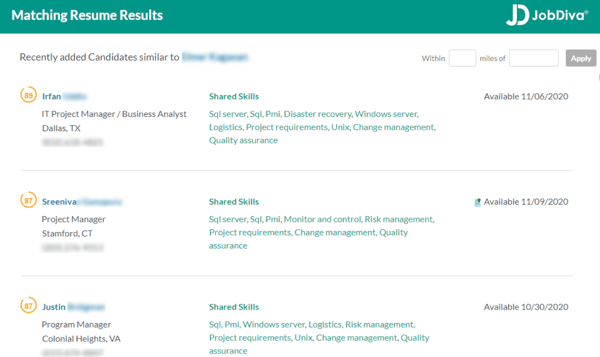
On the flip side, slow loading times are a recurring theme in the G2 reviews. Some users find that certain pages take longer to load than expected, which can become a bottleneck when working under tight deadlines.
Additionally, occasional lag and glitches have been pointed out in several G2 reviews. Users have mentioned that navigating specific features can sometimes result in delays or minor bugs, which require refreshing the page. While this isn’t considered a dealbreaker, I’ve noticed that these issues can hinder efficiency, especially for users managing multiple candidates at once.
Nonetheless, JobDiva shines with its AI-driven candidate matching and centralized data management. Holding a strong G2 rating of 4.7 out of 5, it’s often regarded as one of the most powerful ATS solutions for staffing agencies and high-volume hiring.
“JobDiva is the best ATS I have ever used. Its features are very easy to learn, and using it feels effortless.”
- JobDiva review, Amit R.
“Sometimes performance slow down when running heavy reports, which can be frustrating during peak payroll or billing cycles."
- JobDiva review, Sreyasa D.
Related: Need a payroll app? Discover the 7 best payroll software options for 2025.
Tip: Businesses track this sales metric to see how quickly they are moving customers down the pipeline.
From my review of G2 user feedback, Zoho Recruit stands out for its customization capabilities. A consistent theme in reviews is the platform’s customization options, which allow users to modify modules and automate workflows. Many G2 reviewers highlight how easy it is to tailor recruitment processes to specific business needs. This flexibility ensures that tasks can be more efficient and suited to each organization’s unique workflow, without relying on cumbersome workarounds.
I frequently see G2 reviewers mention recruitment management as one of Zoho Recruit’s strengths. The platform centralizes candidate tracking, interview scheduling, and collaboration, covering every stage of the hiring process. This reduces the need for external tools, making it easier to manage job postings and applicant progress. Once users become familiar with the layout, many note how the system simplifies these tasks.
A commonly appreciated element is customer support. Users consistently praise Zoho Recruit’s support team for being responsive and helpful. According to feedback from G2 users, having quick assistance available is particularly useful during the initial setup phase, easing the transition and helping users navigate the platform with minimal frustration.
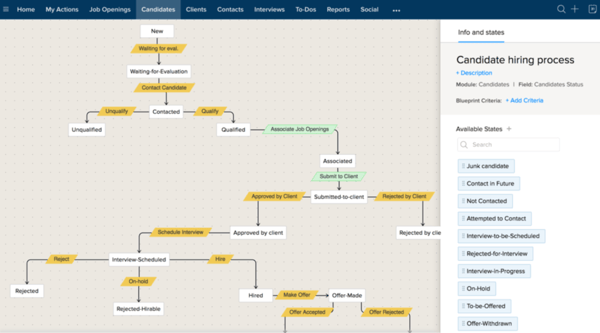
However, based on my review of G2 user feedback, I’ve noticed some users mention a learning curve. While Zoho Recruit offers robust features, many G2 reviewers point out that getting comfortable with all the customization options and settings takes time. New users may need additional onboarding before they can fully take advantage of the platform’s capabilities.
Another challenge that frequently appears in G2 reviews is integration inconsistencies. While Zoho Recruit integrates with various third-party tools, some users note that syncing with calendars or linking to other HR systems doesn’t always function smoothly. These occasional hiccups often require manual adjustments or workarounds, which can disrupt workflow efficiency.
Though the platform comes with a learning curve and occasional integration hiccups, Zoho Recruit is well-loved for its customization and automation capabilities. With a G2 rating of 4.4 out of 5, it’s a versatile option for businesses of all sizes, specifically small businesses.
“I like that Zoho Recruit is organized and has a clean UI, which makes the system good overall. I find the candidate overview particularly useful because I can see the number of candidates and view CVs without needing to download them, which saves time. Additionally, the initial setup of Zoho Recruit was very easy.”
- Zoho Recruit review, Yonos B.
“What I think should be enhanced is the interface because sometimes it can feel cluttered or overwhelming. Also, the initial setup was a little bit tough and I had to look for documentation.”
- Zoho Recruit review, Pamela R.
Explore this pricing guide for applicant tracking systems to understand the key factors to consider when choosing ATS tools.
For recruiters focused on efficiency, Greenhouse offers structured hiring processes, while Lever combines ATS and CRM for better candidate engagement. JobDiva provides AI-driven automation for high-volume sourcing, and Ceipal ATS excels in resume parsing and vendor management. These platforms support organized hiring, collaboration, and data-driven decision-making.
Greenhouse and Lever use AI to rank candidates for effective resume screening, while JobDiva and Ceipal ATS specialize in detailed parsing and keyword matching. Zoho Recruit automates resume analysis, helping recruiters focus on the most qualified applicants.
Small businesses benefit from ATS platforms that are easy to use and adaptable. BambooHR simplifies hiring with built-in HR tools, Zoho Recruit offers cost-effective automation, HROne connects hiring with other HR functions, and Teamtailor helps with branding and candidate experience. These options make hiring more manageable for growing teams.
Staffing agencies rely on ATS platforms that support high-volume hiring. JobDiva stands out with AI-driven sourcing, Ceipal ATS improves candidate tracking with VMS integrations, Zoho Recruit offers workflows built for staffing needs, and Greenhouse helps recruiters assess candidates effectively. These tools make it easier to handle large applicant pools.
Yes, all the listed ATS platforms are cloud-based. They allow recruiters and HR teams to access hiring tools from any location, offering flexibility and integration with other software.
In my experience reviewing dozens of platforms, tools like Greenhouse, BambooHR, Lever, and Zoho Recruit consistently stand out as some of the most popular applicant tracking solutions for HR teams. They offer intuitive candidate pipelines, built-in collaboration tools, and integrations that make it easier for HR to manage hiring from start to finish.
Fast-growing tech firms need ATS platforms that can scale quickly while keeping hiring teams efficient. From what I’ve seen, Lever and Greenhouse are two of the top rated ATS options for tech companies that need flexibility, automation, and CRM-style candidate engagement as their hiring needs grow.
It really depends on your company’s size and hiring needs. Based on G2 reviews, Greenhouse often ranks as one of the best applicant tracking systems for larger teams, while BambooHR and Zoho Recruit offer great options for companies looking for more straightforward, easy-to-manage solutions.
For mid-sized companies balancing growth with budget, Zoho Recruit, JobDiva, and Ceipal ATS have been some of the most recommended ATS services. They offer strong customization, reporting, and automation features that work well for teams that are expanding but don’t yet need full enterprise-level complexity.
Several platforms combine recruiting software with fully built-in ATS functionality. From what I’ve tested, Lever, Zoho Recruit, and Teamtailor offer strong end-to-end recruiting tools where you get applicant tracking, sourcing, interview scheduling, and collaboration features all in one system.
When it comes to recruiting in the software industry, I’ve found that Greenhouse and Lever perform especially well. Both offer integrations with developer hiring platforms, technical assessments, and workflows that make it easier to hire for engineering and product roles where speed and technical fit are critical.
Service companies often need applicant tracking systems that support high-volume hiring, flexible workflows, and strong collaboration features. Based on my testing, Ceipal ATS, Zoho Recruit, and HROne have been solid choices for service industries managing ongoing recruitment across multiple locations and roles.
For tech startups building out early-stage hiring processes, G2 users recommend starting with platforms like BambooHR, Teamtailor, or Lever. They’re flexible enough for small teams but still offer the structure and automation you need as hiring ramps up, which makes them some of the top ATS software choices for tech startups.
Yes. BambooHR is often praised for its mobile app, making it one of the most user-friendly ATS options for mobile recruitment. Teamtailor also supports mobile-friendly workflows, helping recruiters manage tasks anywhere.
Finding the right applicant tracking system can make all the difference in how you hire, manage candidates, and keep your team aligned. Whether you're handling high-volume recruiting, building a structured hiring process, or searching for a solution that grows with your business, the right tool can make every step easier.
From automating repetitive tasks to improving collaboration, the best ATS options listed here are designed to create a smoother experience for everyone. I’ve done the research, breaking down the pros, cons, and key features, so you don’t have to. Now, the only question left is: Which one best fits your hiring needs?
Curious about how your HR operations are performing? Explore HR analytics software.


If you’ve found yourself asking what an ATS is, it’s time to learn more about how an applicant...
 by Mara Calvello

The talent market is a competitive place.
by Mara Calvello

Hiring today moves at a pace most teams aren’t built for. When hundreds of resumes hit your...
.png) by Tanuja Bahirat
by Tanuja Bahirat