


You've already approved three new AI tools this quarter. Your team swears by them. But do you actually know what data those tools are touching right now?
If you're a security or IT leader evaluating the best AI security posture management (AI-SPM) tools, you're past the "should we care?" conversation. Your organization is already running AI agents, connecting GenAI tools to SaaS apps, and automating workflows at speed, and your existing security stack wasn't built for any of it. Endpoint detection, network firewalls, and email gateways — all flying blind to what your AI integrations are doing with your data.
That gap is real. According to G2 Data, only about 15% of professionals feel fully confident in the security and privacy measures of their AI-enabled software when handling sensitive data. Nearly one in six reports low or very low confidence. AI adoption is outpacing security controls, and the market knows it.
The core issue is simple: traditional security tools aren’t built to see or govern AI-driven SaaS interactions. AI security posture management tools close that visibility and control gap, but they don’t all do it the same way.
So instead of giving you a generic market overview, I built this as a shortlist. I compared AI-SPM tools using G2 data, user feedback, and hands-on research to understand where each one actually fits. Some are better for agentic risk management. Others lean into SaaS-native DLP. A few take a broader cloud + AI posture approach.
The goal here isn’t to cover everything. It’s to help you quickly figure out which two or three tools are actually worth a deeper evaluation for your environment. And here're my top picks of the best AI-SPM tools in 2026: Crotex Cloud, and CrowdStrike Falcon Cloud Security, Orca Security, Securiti, Varonis Data Security Platform, and Wiz.
Let's look at them in detail.
*These AI security posture management tools are top-rated in their category on G2 based on satisfaction score and popularity, and are arranged alphabetically.
According to G2 research, 60% have AI agents in production, and 75% of professionals use generative AI tools in their day-to-day work. That level of adoption changes the security equation entirely.
That’s where AI security posture management (AI-SPM) tools come in. AI security posture management (AI-SPM) tools are designed to give you visibility and control over how AI systems interact with your data, apps, and users. The best ones go beyond detection. They help you prioritize and fix risks in fast-moving, AI-driven environments.
From what I’ve learned from security leaders and IT teams, the biggest differentiator is contextual visibility. It’s not enough to know an AI tool exists; you need to understand what data it’s accessing and whether that aligns with policy. The strongest AI-SPM tools map AI activity across SaaS and workflows, then layer in risk insights that reflect real business impact. That’s what enables faster response times and stronger compliance posture.
The best options support expanding AI ecosystems, integrate with core systems like IAM and SIEM, and deliver insights that both security and business teams can act on. That’s what turns visibility into real control.
I started with G2’s category page to build a shortlist of AI security posture management tools based on G2 Score, user satisfaction, market presence, number of G2 user reviews, and review recency. This helped me focus on tools that are consistently rated highly by real users, not just vendor claims.
Next, I analyzed G2 reviews at scale to identify patterns that matter most to security and IT teams: how well each tool delivers visibility into AI usage, where risk detection falls short, and which platforms actually help teams enforce policies.
I paid close attention to feedback around usability, integrations, automation, and how effectively each tool helps teams move from identifying AI-related risks to actually controlling them across SaaS, APIs, and AI workflows.
Since I couldn’t test these tools hands-on, I relied on insights from professionals using them daily and validated those findings against verified G2 reviews.
The screenshots in this article come from G2 vendor profiles and publicly available product documentation.
To cut through the noise, I focused on the capabilities that actually help security teams gain control over AI risk, not just visibility:
One thing worth flagging upfront: AI-SPM is still an evolving category. The tools here don't all define the space the same way, which is exactly why I focused on capabilities that reflect real security needs rather than how vendors are positioning themselves.
Most of the tools here started as CNAPP or DSPM platforms that have extended into AI security, rather than purpose-built AI-SPM solutions. That context matters when you're evaluating fit.
The list below contains genuine user reviews from the AI Security Posture Management (AI-APM) Tools Software category. To be included in this category, a solution must:
*This data was pulled from G2 in 2026. Some reviews may have been edited for clarity.
G2 rating: 4.1/5 ⭐
You might know Cortex Cloud as Palo Alto Networks’ cloud security platform but it now covers AI security posture management too, bringing visibility and protection to AI models, data, and agents across your cloud environment.
From what I can tell, Cortex Cloud covers most of what you’d expect from an AI security posture management solution, but through a cloud security foundation rather than as a standalone AI tool. And by embedding AI security into the cloud security stack, it helps teams address risks earlier in the lifecycle instead of reacting after exposure.
It gives you visibility into AI assets across your environment, including models, agents, training data, and even shadow AI. It maps how these components connect, data sources, dependencies, and access paths, so you can understand where risks exist. That’s a core AI-SPM capability, and Cortex handles it well by tying AI into the broader cloud context.
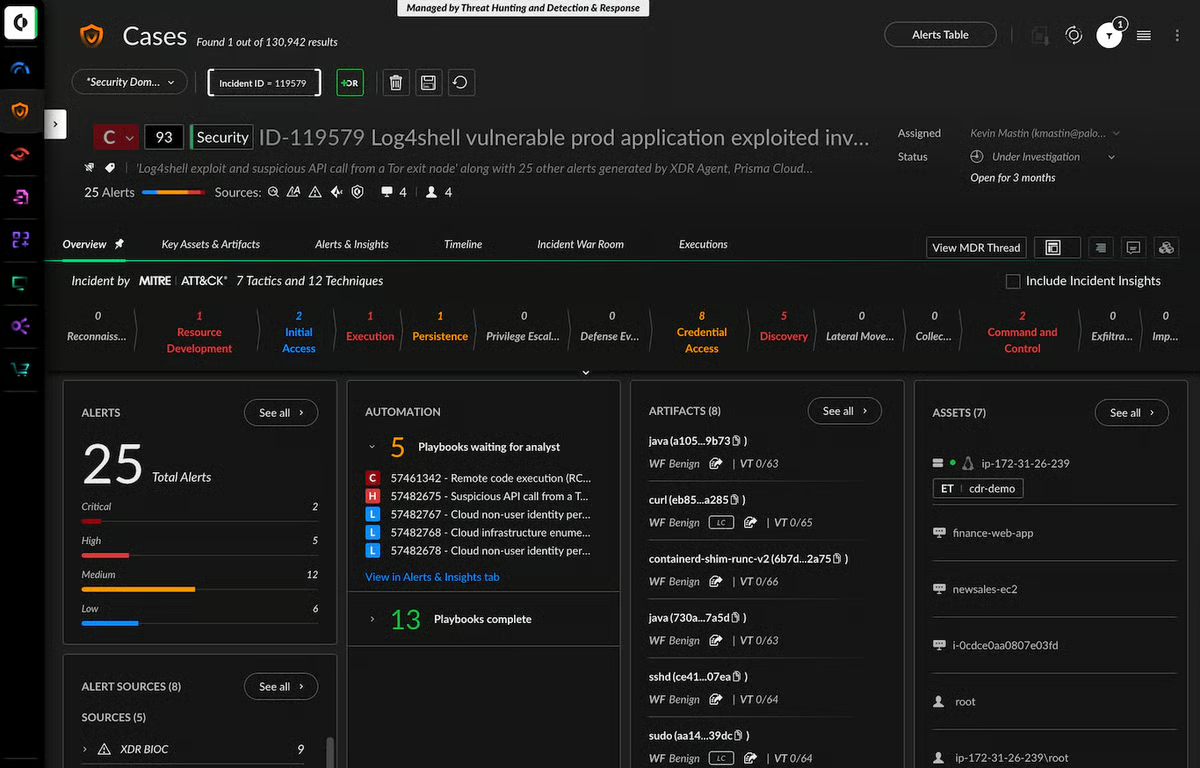
Cortex Cloud also does a solid job of connecting AI risks with identities, workloads, and infrastructure, so you’re not looking at AI in isolation but as part of your broader cloud attack surface.
Another piece I found notable is how it handles ongoing monitoring. Cortex Cloud continuously tracks AI activity and flags unusual behavior, rather than relying only on periodic scans. That includes things like anomalous usage patterns, model-related risks, and supply chain exposure. For teams managing fast-changing environments, having that continuous signal, rather than point-in-time visibility, can make a noticeable difference in how quickly issues are caught and addressed.
The way it brings these insights into a centralized view also helps with prioritization, something G2 reviewers often point out when dealing with complex environments. Because it’s built on a cloud security platform, it connects AI risks with identities, workloads, and infrastructure. That broader context can help teams prioritize more effectively instead of chasing disconnected alerts.
With a fairly balanced split between enterprise (39%) and mid-market (32%) users, it feels like a platform that can work across different levels of maturity without being overly niche.
That said, like many platforms in this category, there can be a ramp-up period initially, especially when configuring Cortex Cloud to match your specific cloud and AI environment. Based on G2 reviews, this is less about usability and more about aligning the platform’s depth to your setup.
At the same time, users highlight that once configured, it brings strong visibility into AI and cloud risks in one place, reducing tool sprawl.
Similarly, for teams with tighter budgets, the cost can feel on the higher side, particularly when compared to more narrowly focused solutions. However, this is often tied to the platform’s wider coverage across cloud and AI security, which many teams find justifies the investment as they scale.
All things considered, Cortex Cloud covers the core capabilities you’d expect from an AI-SPM tool like AI asset discovery, risk identification, and monitoring, but approaches them from a cloud security and threat detection perspective.
"What I like about Cortex Cloud is the scalability, performance, and simplicity of the application. It allowed me to deploy and manage machine learning models effortlessly, with powerful automation and monitoring tools that saved time and reduced complexity. Also, the intuitive interface and strong integration options make it easy to fit into existing workflows, which really streamlines development and production.
My team and I used Cortex Cloud to monitor our product performance metrics across different regions. The ability to set up custom alerts and drill down into anomalies helps our product and engineering teams react quickly to issues and optimize performance proactively. This has saved us hours of manual data pulling and analysis."
- Cortex Cloud review, Otniel V.
"I would honestly say the main dislike of mine will be the high and unclear costing. As well as a steep learning curve that is required to become efficient at using it."
- Cortex Cloud review, Davis L.
Related: Confirm the identities of designated users with an identity and access management tool and follow an authentication protocol to reduce the scope of infiltration in 2026.
G2 rating: 4.6/5 ⭐
CrowdStrike Falcon Cloud Security’s AI Security Posture Management (AI-SPM) is essentially their answer to securing AI/ML systems (especially LLMs) across the cloud lifecycle, from development to runtime. It extends CNAPP into the AI layer.
Based on G2 Data, it’s widely used across both enterprise (45%) and mid-market (43%) teams, particularly in IT and security-focused industries, which reflects how well it fits into existing cloud security operations.
Because it’s part of the broader Falcon platform, it reduces the need for separate agents or tools, which can simplify deployment and ongoing management.
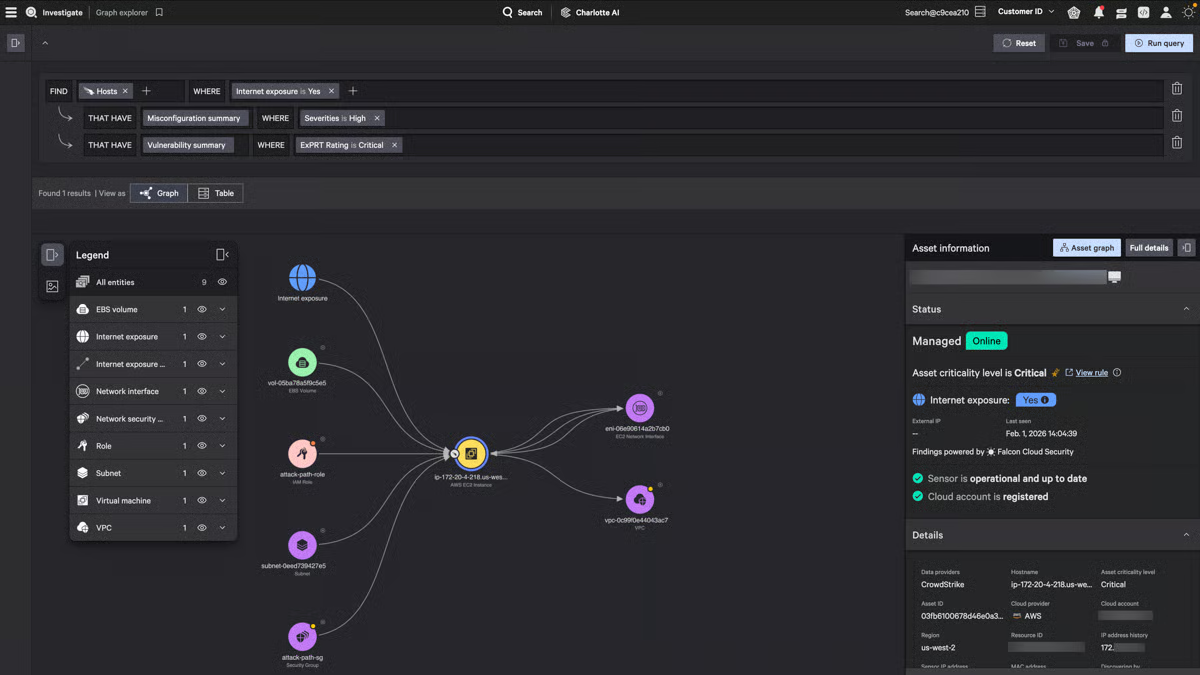
What I find useful here is how it approaches AI security across the full lifecycle, from build to runtime. It starts with visibility by discovering AI assets like models, datasets, pipelines, and even shadow AI, and mapping them to the infrastructure they depend on. From there, it continuously evaluates posture, scanning for misconfigurations and vulnerabilities not just in AI services, but also in the underlying compute, storage, and containers. In practice, this feels like cloud posture management extended into AI-specific surfaces rather than a completely separate layer.
Another aspect I think adds practical value is how it fits into existing DevSecOps workflows. It extends security controls into AI development and deployment pipelines, helping teams secure training data, model builds, and runtime environments without creating a separate process for AI. For teams already running cloud-native applications, this makes it easier to operationalize AI security instead of treating it as a one-off initiative.
Users also appreciate how they benefit from CrowdStrike’s threat intelligence and detection capabilities. It adds deeper context to AI-related risks instead of treating them as isolated misconfigurations.
That said, getting started with Falcon Cloud Security can take some adjustment, especially when tailoring it to your specific cloud and AI setup. From what I’ve seen in G2 reviews, the challenge is less about usability and more about configuring it in a way that reflects your environment and priorities.
Once that groundwork is in place, though, teams often point out that it streamlines how they handle visibility, detection, and response by bringing everything into a more unified flow.
On the cost side, it may feel like a bigger investment compared to narrower tools, particularly for smaller teams. That said, many users highlight that the combined coverage across cloud, workload, and AI security helps justify that spend as their environments grow more complex.
Overall, I’d recommend CrowdStrike Falcon Cloud Security if you’re looking to secure AI as part of your existing cloud security strategy. It works best for teams that want visibility, posture management, and real-time protection for AI systems, all tied back to the broader cloud environment where those systems actually run.
"The platform provides excellent threat visibility, a lightweight agent, and highly accurate real-time detection. It is very reliable, performs consistently well, and the investigation and response capabilities are strong. The management console is intuitive, and the detection quality is noticeably high."
- CrowdStrike Falcon Cloud Security review, Furkan.
"I’ve noticed that some of the findings can feel a bit noisy at times, especially when it flags low‑risk configuration issues that don’t always need immediate attention. The pricing can also be on the higher side as you scale, which makes it harder for smaller teams to justify. And while the dashboard is powerful, it takes a little time to get used to where everything lives, especially when switching between cloud and workload views. However, even the security scans do the same, so this is not a major complaint."
- CrowdStrike Falcon Cloud Security review, Prasanth K.
3. Orca Security: Best for agentless multi-cloud AI and cloud risk visibility
G2 rating: 4.6/5 ⭐
Orca Security is a CNAPP that has expanded into AI-SPM, bringing its patented SideScanning™ technology to bear on AI assets, models, and pipelines the same way it does for broader cloud risk. If you're already using Orca for cloud security posture, the AI-SPM layer doesn't feel like an add-on. It feels like a natural extension of what the platform already does.
What stood out to me from G2 reviews is how consistently users highlight the agentless model as the reason they chose Orca. You connect it to your cloud accounts via IAM roles, and it immediately surfaces vulnerabilities, misconfigurations, exposed secrets, and AI-related risks across AWS, Azure, GCP, and Kubernetes without touching production workloads. For teams managing decentralized cloud environments or onboarding clients quickly, that zero-impact approach is a significant operational advantage.
On the AI-SPM side, Orca maps AI models, agents, datasets, and pipelines into its broader security graph. The result is contextual risk visibility: you're not just seeing that an AI service exists, you're seeing how it connects to identities, storage, and network paths that could lead to real exposure. That's the same logic that makes Orca strong in CSPM, applied to AI-specific surfaces.
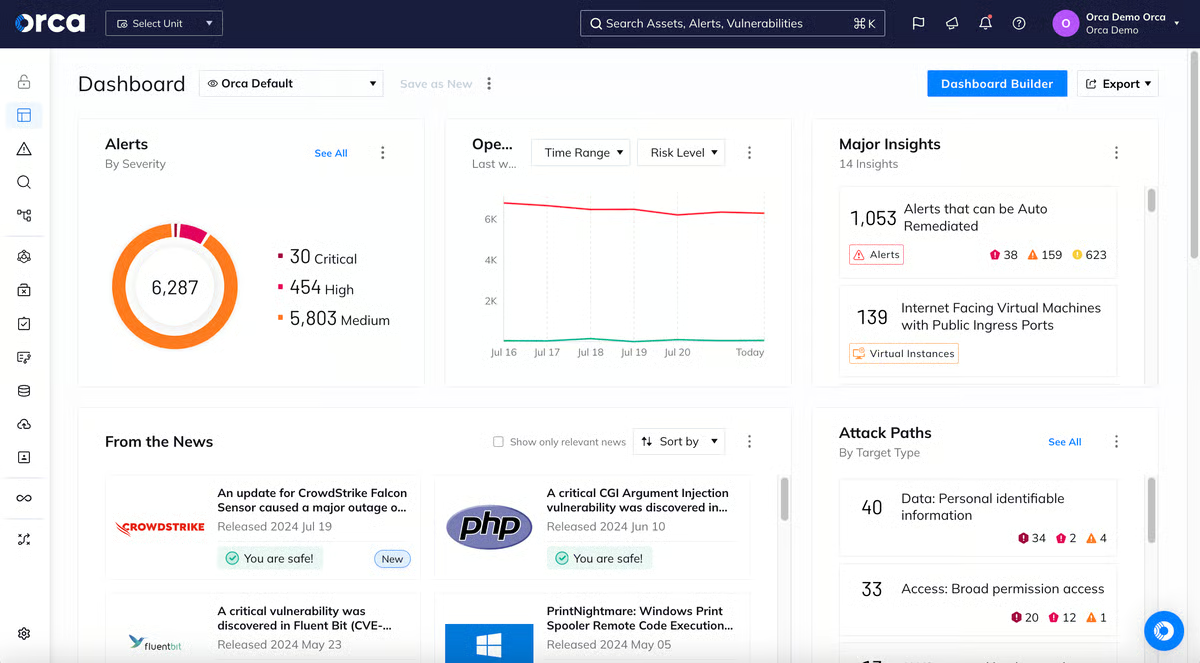
What I find particularly useful is how it handles prioritization. The platform also uses GenAI to generate step-by-step remediation guidance, which users call out as helpful.
The user base skews mid-market (48%) and enterprise (40%), with strong adoption in financial services, IT, and computer software.
That said, some G2 reviewers note that initial scans can generate a large volume of findings before policies are tuned to the environment. Teams should expect to invest time early on in baselining alerts and configuring thresholds but once that groundwork is in place, users consistently say the signal-to-noise ratio improves significantly and the platform becomes much easier to act on.
A few users in multi-tenant or multi-region setups also mention that the dashboard surfaces a lot of information at once, which can feel disorienting when navigating across environments — though most note that this reflects the depth of coverage Orca provides, and that the visibility payoff is well worth the initial orientation curve.
Overall, Orca is worth a close look if you want AI-SPM built on top of a mature cloud security foundation, especially if agentless deployment and fast time-to-visibility are priorities.
"The biggest advantage for us is the agentless setup. We didn’t have to install anything on our workloads, which saved a lot of time and helped us avoid disruption. The side-scanning provides full visibility into vulnerabilities, misconfigurations, and exposed secrets across all of our cloud accounts. I also like that everything is presented in one place, which makes it easier to understand our overall risk posture and see where we need to focus."
- Orca Security review, Tony M.
"Navigating between different regional cloud environments within the main dashboard can be slightly disorienting when I’m trying to compare the risk posture of our European trading servers against our Asian logistics nodes."
- Orca Security review, Saqi B.
4. Securiti: Best for data-centric AI security
G2 rating: 4.7/5 ⭐
Securiti, from what I’ve seen, approaches AI security posture management from a data-first lens, bringing together data security, privacy, and AI governance into a single platform.
With a heavy adoption among enterprise teams (66%), especially in industries like computer software and retail, Securiti stands out for how deeply it connects data context to AI risk. Instead of just focusing on AI pipelines or models in isolation, it builds a unified view using its Data Command Graph, mapping how data flows into AI systems, how it’s accessed, and where risks actually emerge.
What really stood out to me from G2 reviews is how well it handles complex, distributed environments. Teams highlight its ability to scan and classify sensitive data across hybrid multi-cloud setups, everything from SaaS apps to legacy file systems, and map that data into a unified view.
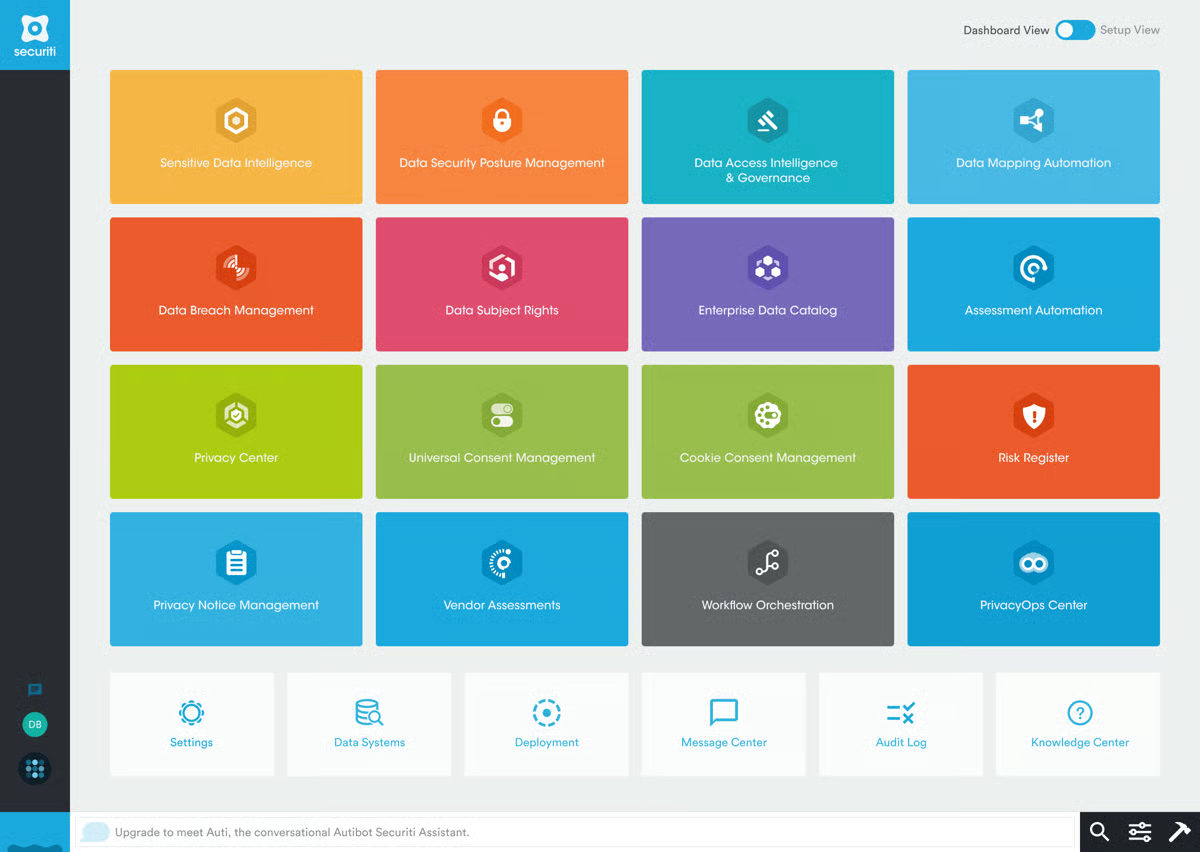
The Data Command Graph plays a big role here, giving you a centralized way to understand where sensitive data lives and how it connects to AI systems. That level of visibility directly translates into better risk awareness and faster decision-making, especially for organizations dealing with large volumes of regulated data.
Another area where I see Securiti clearly differentiating itself in the AI-SPM category is automation and operational efficiency. From what I saw in reviews, users repeatedly call out how automated workflows like tying data discoveries into ITSM tools such as ServiceNow help reduce manual effort for security and SOC teams.
In my view, its strength in data discovery, classification, and compliance workflows makes it particularly valuable for teams trying to align AI usage with privacy regulations and internal governance policies.
Add to that strong integration capabilities (200+ connectors across cloud and enterprise systems) and consistently praised customer support, and it’s easy for me to see why many teams view Securiti as a long-term platform rather than a point solution.
Based on G2 user reviews I saw, implementation can take some time, especially for teams operating at a very large enterprise scale when setting up workflows, configuring integrations, or tailoring the platform to specific organizational needs, but many users also highlight that this upfront effort pays off.
G2 reviewers also note a learning curve, particularly for teams new to the platform, though they often add that once they get familiar with it, the interface and capabilities become much easier to navigate for day-to-day use.
On the whole, I see Securiti as one of the strongest AI-SPM solutions for organizations that care deeply about data-centric AI security and compliance. It’s especially well-suited for enterprise teams managing sensitive data across hybrid environments, where visibility, governance, and automation need to work together.
"I appreciate Securiti for its extensive range of integrations which seamlessly fit into our diverse technology stack. Once configured, it automatically scans numerous technologies, significantly streamlining management for our teams. The availability of these integrations enables us to effectively scan for PII across most of our technology stack, allowing us to focus on prioritizing protection and establishing data retention rules. Furthermore, the initial setup was notably straightforward thanks to the out-of-the-box integrations, which highlight Securiti’s user-friendly design and ease of use."
- Securiti review, Chris G.
"Some functional limitations, a noticeable learning curve, technical support not always quick, and delays with implementing some identified tool enhancements can affect the overall user experience."
- Securiti review, Verified User in Consumer Goods.
G2 rating: 4.5/5 ⭐
Varonis Data Security Platform, from what I’ve seen, is built around one core idea: if you understand your data deeply, you can secure everything built on top of it, including AI.
It’s clear why Varonis shows up consistently in enterprise-heavy environments like financial services and banking, with 65% enterprise and 30% mid-market adoption.
What stood out to me in G2 reviews is how strong it is at data visibility and control, which becomes even more critical in AI-SPM. Varonis doesn’t just discover AI usage. It maps what sensitive data those AI systems can access, how it’s being used, and where the real exposure lies. That “blast radius” view is something users repeatedly appreciate because it turns abstract AI risk into something actionable. Instead of guessing what could go wrong, you can actually see the pathways to data exposure and fix them.
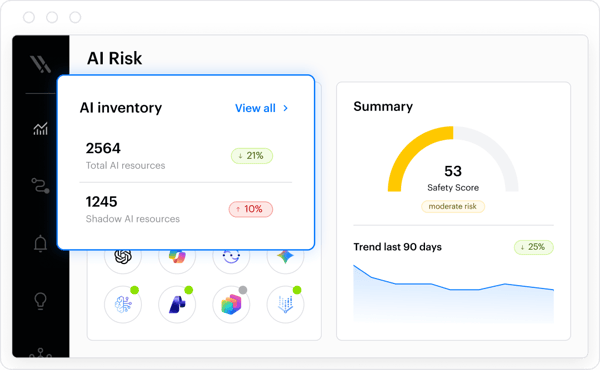
Where Varonis really differentiates itself in the AI-SPM space is in end-to-end lifecycle coverage and enforcement. Through its Atlas platform, it extends its core data security capabilities into AI, covering everything from AI asset discovery and posture management to runtime guardrails and activity monitoring.
I like that it doesn’t stop at identifying risks. It enforces controls in real time, such as blocking sensitive data leakage or detecting prompt injection attempts before they escalate by having an AI gateway in the live request path, inspecting prompts and model responses in real time.
Atlas enforces policy‑driven guardrails inline, generating real‑time issues, alerts, and incidents when unsafe or non‑compliant behavior is detected. It continuously monitors data access patterns and user activity, helping security teams quickly identify anomalies, reduce exposure, and enforce least-privilege access at scale.
Combined with automated remediation (like removing excessive permissions or fixing misconfigurations), it helps teams move from reactive security to proactive risk reduction. From what I’ve seen in G2 feedback, this automation and continuous monitoring are key reasons teams trust it in high-stakes environments.
That said, teams looking for a quick, lightweight deployment might find Varonis more involved to implement. Its strength lies in deep data analysis and governance, which means getting the most out of it often requires time to fully configure policies, permissions, and data classification at scale.
Similarly, for smaller organizations or teams with tighter budgets, the cost can feel high, but users note that the investment reflects the platform’s depth and breadth of capabilities.
On the whole, I’d recommend Varonis if your priority is controlling how sensitive data interacts with AI, especially in complex, regulated environments where visibility and enforcement need to go hand in hand.
"Varonis offers crystal-clear visibility into where sensitive data resides and who accesses it. Its ability to monitor and alert on anomalous behavior in real time provides a level of proactive security that other solutions fail to achieve."
- Varonis Data Security Platform review, Rafa F.
"Initial deployment and tuning can be resource-intensive, especially in large or complex environments. Some alerts require careful baselining to reduce noise, and reporting customization can take time to master. Improvements in dashboard flexibility and faster onboarding for new admins would make the platform even more efficient."
- Varonis Data Security Platform review, Sunday O.
G2 rating: 4.7/5 ⭐
If you’re in the cloud security space, you’ve definitely heard about Wiz, but seeing it shift into an AI-SPM tool is where things get really interesting.
What stood out to me here is how naturally it extends into AI security posture management without feeling like an afterthought. It doesn’t treat AI as a separate problem; it treats it as part of your broader cloud risk surface.
From what I’ve seen in G2 reviews, users call out how quickly they can understand what’s exposed and why it matters. Instead of just listing AI services or models, Wiz maps them into its broader security graph, showing how misconfigurations, identities, data, and network exposures connect. That’s a big deal when you’re trying to trace real attack paths to AI pipelines, not just audit them in isolation.
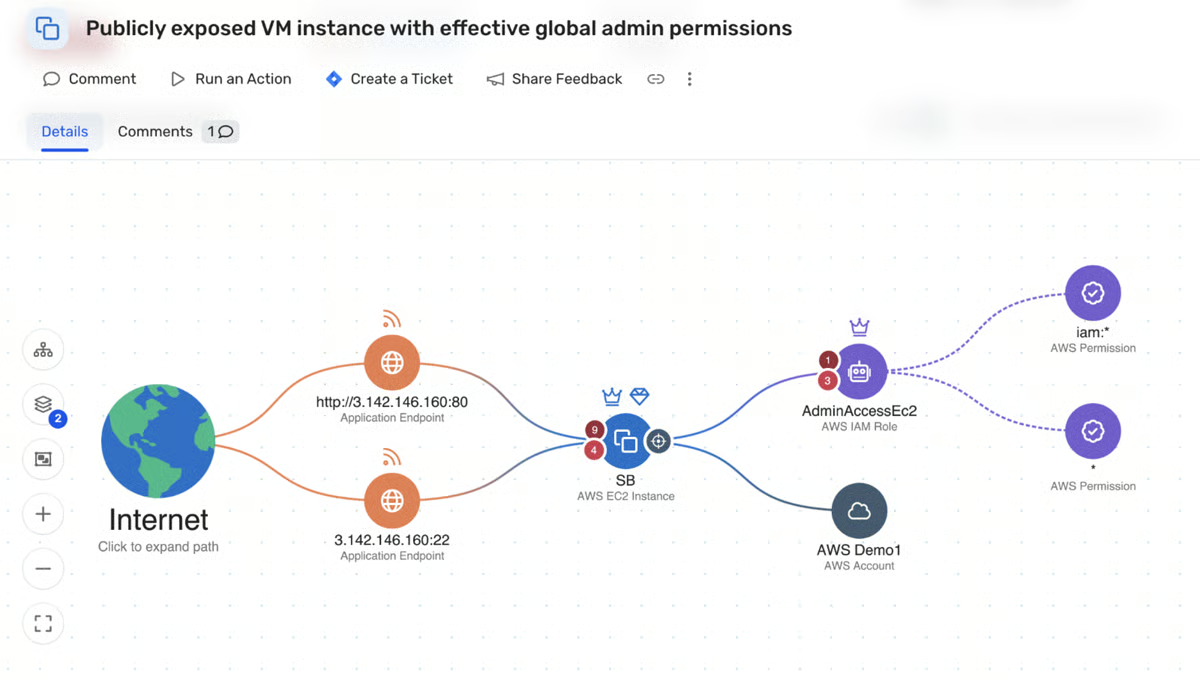
What makes Wiz particularly strong in the AI-SPM category is how it combines visibility with prioritization. Features like agentless discovery and AI pipeline mapping mean you can uncover shadow AI and integrations without adding operational overhead.
But more importantly, it layers in risk context so you can see which misconfigurations or exposures actually create exploitable paths. From what users highlight on G2, this ability to cut through noise and focus on critical risks is where Wiz saves teams the most time, especially in large, complex environments.
Wiz is primarily adopted by enterprise teams (54%), with strong traction among mid-market organizations (39%), reflecting its fit for complex, scaling cloud and AI environments.
From the G2 reviews I analyzed, some users mention that getting fully up to speed with the platform’s depth can take time, especially for teams new to graph-based security models. While the breadth of insights can feel overwhelming initially, the interface is generally praised for usability.
A few others also note that Wiz ships frequent updates. One may need to keep a close eye on release notes to stay on top of what’s changed or improved over time; however, this reflects how quickly the platform is evolving and improving.
Nevertheless, Wiz is one of the best AI SPM software for security teams that want to unify cloud and AI posture management and move quickly from visibility to action.
"Very easy to deploy and quick to start delivering value. It provides excellent visibility across a wide range of security risks and surfaces vulnerabilities that might otherwise go unnoticed. The remediation guidance, particularly the GenAI step-by-step explanations, is genuinely useful for helping teams understand and fix issues rather than just identifying them."
- Wiz review, Dan M.
"There isn't anything I directly dislike, but the rapid pace of product updates and feature enhancements makes it challenging to fully learn the platform from start to finish. With new features being added so frequently, it can be difficult for small teams who have other responsibilities to keep up."
- Wiz review, Verified user in financial services,
Looking for compliance software? Explore the best security compliance tools, reviewed by my colleague.
Got more questions? G2 has the answers!
AI security posture management (AI-SPM) is a category of tools designed to identify, monitor, and reduce security risks across AI systems, including models, datasets, APIs, and pipelines. It helps organizations maintain visibility into how AI is built, deployed, and accessed so they can reduce exposure to threats like data leakage, model abuse, and prompt injection.
While CSPM focuses on cloud infrastructure and DSPM focuses on sensitive data, AI-SPM is built specifically for AI systems. It addresses risks unique to AI deployments and usage.
AI-SPM can complement CSPM and DSPM, but it goes deeper into AI-specific attack surfaces.
The best AI-SPM tools typically combine discovery, monitoring, policy enforcement, and reporting. Buyers should look for features that match both their AI maturity and broader security stack.
AI-SPM tools are designed to reduce a range of emerging AI-related risks that often fall outside traditional security coverage.
Start with visibility into where sensitive data lives, who can access it, and which AI tools or models are interacting with it. AI-SPM, DSPM, and cloud security tools can help identify exposed datasets, risky permissions, and unsafe AI connections before they turn into incidents.
Solutions like Wiz, Securiti, Varonis Data Security Platform, Cortex Cloud, and CrowdStrike Falcon Cloud Security can help organizations improve visibility into these risks.
Preventing data leakage through AI applications requires a mix of data governance, access control, and real-time monitoring. The goal is to limit what sensitive information users and AI systems can access, share, or send to third-party models.
Platforms such as Securiti and Varonis Data Security Platform help reduce overexposure at the data layer, while Wiz, Cortex Cloud, and CrowdStrike Falcon Cloud Security strengthen monitoring and cloud-side protections.
Safe AI usage policies should define what employees can use, what data they can share, and what monitoring or approval requirements apply. These policies are most effective when paired with tools that can enforce them consistently.
Organizations often use Securiti, Cortex Cloud, and related governance tools to turn policy into enforceable controls rather than static documentation.
Ensuring compliance requires visibility into how employees use AI assistants, what data they enter, and whether those interactions violate internal or regulatory requirements. This is especially important for companies handling customer data, intellectual property, or regulated information.
Securiti and Varonis Data Security Platform are especially relevant for governance and auditability, while Wiz and CrowdStrike Falcon Cloud Security can help secure the environments where those AI tools operate.
Securing enterprise AI means protecting the full stack: the data going into models, the models themselves, and the cloud infrastructure they run on. Most organizations need layered protections rather than a single point solution.
Varonis Data Security Platform and Securiti help at the data layer, while Wiz, Cortex Cloud, and CrowdStrike Falcon Cloud Security provide broader visibility into AI workloads, infrastructure risk, and runtime security.
The enterprise AI security market includes a mix of AI-native governance tools and established cloud and data security platforms extending into AI risk management. The right choice depends on whether you need model-level oversight, data controls, cloud security, or all three.
Many buyers end up combining these categories rather than relying on a single AI security platform.
Monitoring AI systems for vulnerabilities requires visibility across models, APIs, prompts, pipelines, data stores, and cloud environments. AI-SPM tools help teams find issues that traditional application or cloud security tooling may miss.
Wiz, Cortex Cloud, and CrowdStrike Falcon Cloud Security are useful for cloud-side monitoring, while Securiti and Varonis Data Security Platform add valuable context at the data governance and exposure layer.
Prompt injection, jailbreak attempts, and other AI-specific attacks are increasingly important in production AI environments. AI-SPM and adjacent AI security tools can help detect and reduce these risks, especially when combined with input filtering, access control, and runtime monitoring.
Cortex Cloud, CrowdStrike Falcon Cloud Security, and broader AI governance tools can support this effort, but prompt injection defense is strongest when paired with solid data and access controls.
Shadow AI refers to employees using unapproved AI tools without oversight from security, compliance, or IT. The best way to manage it is to combine discovery, policy enforcement, and secure alternatives for sanctioned AI use.
Wiz, CrowdStrike Falcon Cloud Security, Securiti, Varonis Data Security Platform, and Cortex Cloud can all play a role depending on whether the main concern is app usage, cloud visibility, or sensitive data exposure.
The best approach to managing generative AI risk is a layered one that combines governance, data protection, cloud security, and AI-specific monitoring. Generative AI increases productivity, but it also expands the risk surface across prompts, outputs, integrations, and user behavior.
For many organizations, that means combining vendors such as Securiti, Varonis Data Security Platform, Wiz, Cortex Cloud, and CrowdStrike Falcon Cloud Security based on existing infrastructure and AI maturity.
The AI-SPM market includes a mix of AI-native security vendors and established security platforms expanding into AI risk management. Some of the best-known AI-SPM tools include the following:
These tools help organizations discover AI assets, monitor usage, detect misconfigurations, and enforce security policies across AI models, data, and pipelines. As the category matures, buyers should evaluate whether they need a dedicated AI security solution or AI-SPM capabilities embedded in their existing security stack.
After comparing these AI security posture management tools, one thing became very clear to me: there’s no “best” tool in isolation; only the one that aligns with how your organization is actually using AI.
Some platforms lean into data governance and compliance (like Securiti), others focus on cloud-native visibility and posture (like Wiz or Cortex Cloud), and some prioritize threat detection and real-time response (like CrowdStrike or Varonis). The real decision comes down to where your biggest risk sits today. If your concern is data exposure, your shortlist will look very different from a team worried about runtime attacks or shadow AI.
If there’s one takeaway I’d leave you with, it’s this: don’t evaluate AI-SPM tools based on feature lists. Evaluate them based on where they plug into your existing security gaps. The best tools don’t replace your stack; they close the blind spots your current tools weren’t designed for.
If you’re thinking beyond posture management and into policy, compliance, and control,explore the best AI governance tools on G2.

When researching the top MDR providers, I kept seeing the same names come up: Sophos MDR,...
by Soundarya Jayaraman
I’ve worked alongside IT teams long enough to notice the pattern. A patch gets delayed, and...
/DarshayitaThakur-OrangeBG.webp) by Darshayita Thakur
by Darshayita Thakur
APIs are now at the center of most modern applications, which makes securing them a lot more...
 by Gunisha