.png?width=400&height=150&name=Untitled%20design%20(56).png)


I evaluated 10+ tools to find the 7 best hotel management software in 2026. These include Mews, Cloudbeds, SkyTouch Technology, HotelRunner, Oracle Hospitality OPERA PMS, Canary Technologies, and roommaster.
Managing hotel operations is no small feat.
Coordinating bookings, guest requests, staff schedules, and last-minute changes can leave even the most experienced hotel managers feeling overwhelmed.
While I don’t have direct hands-on experience with hotel management, I’ve evaluated hundreds of G2 reviews and analyzed user feedback from hotel operations managers to understand what works and what doesn't in day-to-day use.
Reading through those reviews is what shaped my read on each tool. I examined more than 10 of the best hotel management software options, comparing their features and usability against feedback from G2 users, and narrowed the list to seven that stand out.
In this article, I’ll share my findings, breaking down the features, usability, and recurring patterns in user experiences so you can find the right tool for your hotel’s operations.
Mews: Best for automation and guest-centric operations
Automates routine front-desk tasks and connects to a large third-party hospitality app marketplace. (pricing available on request)
Cloudbeds: Best all-in-one solution for bookings, front desk, and payments
Combines reservations, front desk, and payment management in one platform. (pricing available on request)
SkyTouch Technology: Best for user-friendly interfaces and comprehensive tools
Simplifies property management with intuitive dashboards and features. (pricing available on request)
Canary Technologies: Best for hotels digitizing secure guest payments and card authorizations
Provides PCI-compliant digital authorization forms, guest verification, and contactless payment links that replace paper and fax-based processes. (pricing available on request)
roommaster: Best for independent hotels that prioritize reliability and responsive support
Manages reservations, billing, and housekeeping with reliable performance and hands-on support. (pricing available on request)
*According to G2's Summer 2026 Grid Report, these best hotel management software products are top-rated in their category. Pricing for these products is available upon request, except for those I’ve already included the details.
Hotel management software is a set of tools designed to simplify and improve hotel operations. During my research, I found they help manage tasks like reservations, billing, and housekeeping, all aimed at enhancing efficiency and guest satisfaction.
The global hotel management software market is projected to grow from $5.28 billion in 2025 to $9.41 billion by 2032, reflecting a compound annual growth rate (CAGR) of 8.6% during the forecast period.
While exploring the best hotel management software, I realized that handling bookings and guest services manually often leads to mistakes. Issues like double bookings or missing guest preferences can cause stress and negatively impact the guest experience.
These software solutions work by centralizing reservations, automating check-ins and check-outs, and offering insights into guest preferences and behaviors. From my experience evaluating them, I can see how they help hotel managers reduce errors, improve service, and focus on providing the best experience for their guests.
I started by reviewing G2’s latest Grid Reports to see which hotel management software platforms consistently performed well in terms of usability, feature completeness, and overall satisfaction. This gave me a strong baseline of trusted tools hospitality professionals already rely on.
From there, I narrowed the list by examining each platform's features and workflows through verified G2 user feedback, product demos, and vendor documentation, which is how I assessed real-world performance and limitations. I also used AI-powered analysis to scan hundreds of verified G2 reviews, surfacing common praise points and recurring frustrations.
Throughout, I looked at each platform from a hotel operations perspective: Was it intuitive? Did it simplify reservations and guest management? Could it handle daily operations without heavy IT involvement? And, most importantly, did reviewers report that it integrated well with other hospitality systems?
All product screenshots featured in this article come from official vendor G2 pages and publicly available materials.
When evaluating hotel management software, there are several key features I prioritize to ensure it meets the needs of both hotel operations and guest experience:
These features work together to help hotels run efficiently, improve guest satisfaction, and ultimately contribute to a more successful business operation.
The list below contains genuine user reviews from our Hotel Management Software category page. To be included in this category, software must:
This data has been pulled from G2 in 2026. Some reviews have been edited for clarity.
Mews is built around the guest rather than the room, and in my analysis it fits growing independent and boutique hotels and mid-sized groups that want a modern platform to automate daily operations. It's the system I'd point to when a team wants the software to recede into the background so staff can spend their time with guests.
Mews carries the strongest profile in this category on G2. It holds a 4.8 out of 5 rating and has the highest G2 Satisfaction score among Hotel Management products. Every reviewer rated it four or five stars, and 96% said they would recommend it. The reviewer base skews toward hospitality teams at small and mid-sized properties.
What I kept noticing across the reviews is how consistently people frame Mews around the guest rather than the room. In practice, a stay lives on one guest profile and timeline, where the reservation, its charges, its services, and any room move sit in a single record. That design is why daily work holds up as occupancy rises: to check someone in, move them, or add a charge, a clerk opens one record instead of hunting across a room chart. G2 reviewers rates its central reservation system at 100%. For a busy front desk, fewer steps per task is what keeps a check-in line moving.
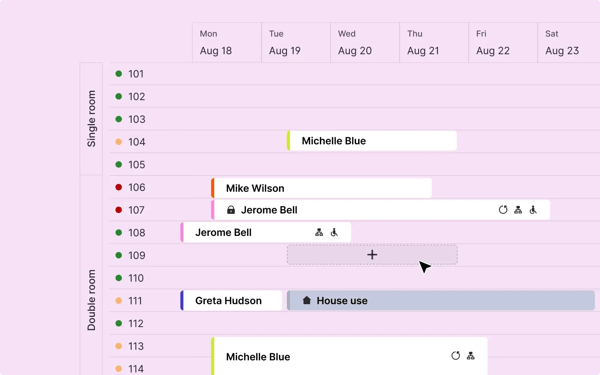
I'd point first to how little training Mews demands, because the interface is built task-first: a single search bar to pull up any guest or booking, and Mews University training inside the platform. That structure is why reviewers with no hotel background report being productive within days, and why managers say new hires need little hand-holding. For any property with seasonal or rotating staff, I read that short hire-to-competent time is a real advantage. On G2, it scores 95% on ease of use, among the category's highest.
Underneath the simple interface sits a deep automation layer. Reviewers single out automated payments, online and kiosk check-in, and automated guest emails as the features that strip manual steps out of each shift. I read this as Mews' real payoff for lean teams: the routine work runs itself, so staff hours go where they matter.
The strength I'd flag for tech-forward operators is the open API and marketplace of more than a thousand integrations, which let a property connect the booking engine, channel manager, payment provider, or POS it already runs rather than replace them. In the reviews, this is the recurring reason teams choose Mews. To my eye, that is the strongest argument for Mews at a property already invested in tools it likes, because the PMS adapts to the workflow instead of dictating it.
On the operations side, housekeeping coordination is a genuine strength, and it's one I looked at closely given how much of a manager's day it shapes. Mews scores a perfect 100% on housekeeping in G2 Data against an 87% average, the top mark in this roundup. Room status updates as guests check out, tasks route to housekeeping, and the front desk sees which rooms are clean, dirty, or inspected in real time.
Mews also stands out in revenue and distribution, which is where I'd say it moves past being a front-desk tool. G2 Data scores its revenue management at 100% and distribution management at 94%, both well above category average, and reviewers managing rates across multiple channels credit it with driving room revenue while keeping the guest journey intact.
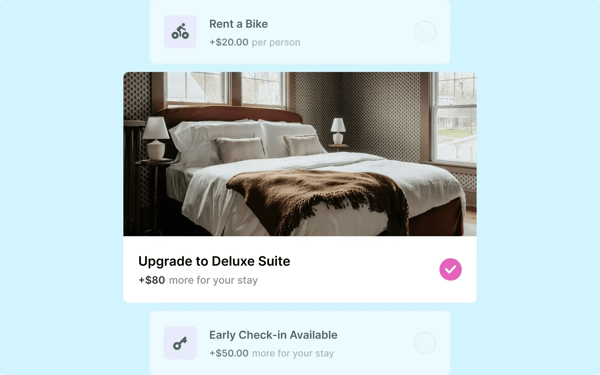
Mews automates the guest-facing side of payments well, but a few reviewers say the back-office billing is less flexible. Some point out that there's no clean way to split an invoice, and occasionally the invoices can't be easily adjusted once they've been issued. This tends to surface in finance and night-audit work rather than at the front desk, but a property with complex billing or group accounting may want to confirm these fit before committing.
The other limit, as I read it, shows up at scale. Mews handles single properties and small groups smoothly, but a few reviewers expanding into larger portfolios note that multi-property management still has gaps, like copying rates between properties. That fits the G2 Data customer mix, where large enterprises are a small share of its base. For an independent or boutique hotel, it rarely comes up; for a growing group managing many properties centrally, I'd check it against your own workflows. Reviewers also note Mews is actively developing here.
Overall: Mews is the platform for independent and boutique hotels that want a modern, automation-first PMS, which connects to the tools they already run.
“We use Mews as our Property Management System, and we couldn’t be happier with the experience. One of the standout aspects is the open API and the wide range of integrations, which allow us to connect different tools and platforms seamlessly. As a result, our overall operational efficiency has improved significantly.
Another major advantage is how easy Mews is to learn and use. Across all departments, including front office, housekeeping, and accounting, it has proven to be intuitive and user-friendly. The modern interface, combined with cloud-based access, keeps daily tasks smooth and efficient, while also making onboarding new team members incredibly straightforward.
Having onboarded over 50 properties to Mews, I can confidently say that implementation has been much easier compared to other platforms we’ve used. Whether it was a brand-new property, a takeover from another Mews environment, or a transition from a different PMS, the process has consistently been smooth and efficient."
- Mews review, Robin G.
“It would be good to improve on Mews Multi-Property and Availability Blocks. In Mews Multi-property, they could implement an easier way to copy an existing rate to another property instead of creating a new one. For Availability Blocks, there is some improvement to be made in the back end so that the block starts when check-in time starts, not at the start of the day."
- Mews review, Tobias S.
Manage orders and track inventory with the best catering software.
Cloudbeds brings the property management system, channel manager, and booking engine together for independent and multi-property operators. In my analysis, it fits small and growing properties that want their bookings, front desk, and distribution running from one place rather than stitched across separate tools.
From my reading of G2 user feedback, Cloudbeds is widely appreciated for its user-friendly interface. Many users highlight its modern design and ease of navigation, which makes it simple to manage reservations, guest profiles, and room availability from a single platform. The reviewer base skews heavily toward small and independent properties, which G2 Data puts at roughly 80% small business. This single platform is praised for providing a real-time solution for hotel management, allowing users to efficiently handle daily operations.
A commonly appreciated element is its extensive library of courses, which seems to help users get up to speed quickly. From what I’ve seen, reviewers often mention how helpful these resources are, allowing them to become proficient with the platform in just a few hours. The ability to make reservations and generate reports with ease is often noted as a standout feature, particularly for those new to the system.
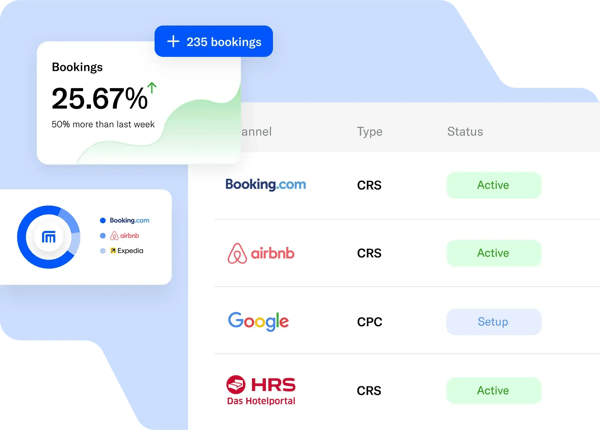
The booking engine also receives a lot of praise from G2 users. According to G2 Data, its distribution management scores 84%, and reviewers describe how the booking engine and channel manager keep room availability consistent across popular OTAs like Booking.com, Expedia, and Airbnb. Reviewers tie this OTA reach to steadier occupancy across channels.
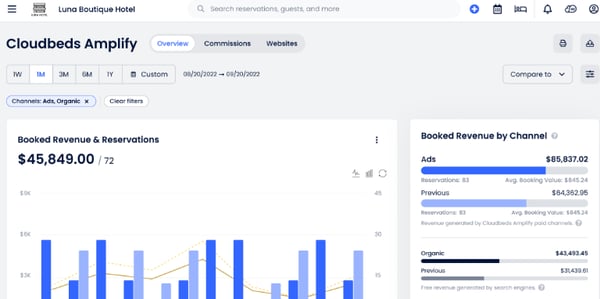
A strength that stands out in recent reviews I read is multi-property management. Reviewers running several properties, even across different countries, describe handling them from one login with consistent reporting, and mention moving between properties without friction. For a group or expanding operator, I read this as one of Cloudbeds' strongest draws.
From what I read, support and onboarding come up repeatedly as a reason teams stay. G2 reviewers credit a knowledgeable onboarding team, a responsive help desk, and 24/7 support for getting them live and unblocking issues quickly. For a small property without dedicated IT, I'd weigh that hands-on support heavily.
G2 reviewers also point to the guest database and day-to-day front-desk flow. Guest profiles and history sit alongside the calendar, and several describe bookings and room moves as the easiest part of the system, simple enough for new front-desk staff. To my eye, that keeps the busiest desk tasks low-friction.
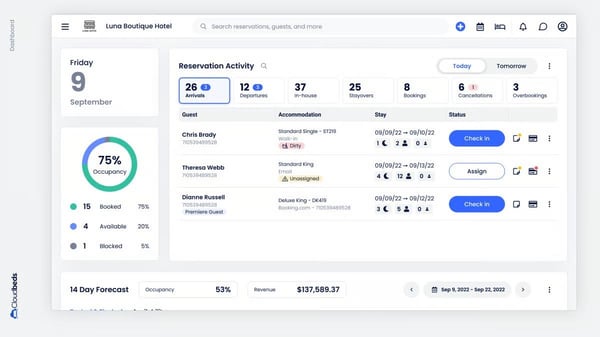
However, I’ve noticed some recurring concerns in G2 reviews regarding reporting. Some note that finding the right report can be hard and that some reports aren't available without asking the help desk. The system provides useful insights, though some users would like more customization to meet their specific business needs. For a team with heavy custom-reporting needs, I'd test the report library early; for standard reporting, it holds up day to day.
Additionally, system performance has some room for improvement. While day to day the platform runs smoothly, platform can lag when updating reservations or modifying guest information in bulk. This may be noticeable during peak periods and I'd weigh it only if your team runs large batch updates regularly. For routine front-desk work, it stays out of the way.
All in all, Cloudbeds is a strong fit for an independent hotel, a hostel, or a group running several properties from one system. If you want a connected, OTA-ready system that a small team can run without dedicated IT, I'd keep it on the shortlist.
“Managing 4 properties across multiple countries could be a logistical nightmare. Cloudbeds makes it feel manageable. One login, consistent reporting, and the channel manager keeping everything in sync across OTAs - it just works.
What I appreciate most is not having to stitch together five different tools. Everything we need is there: reservations, rates, distribution, guest communication, and reporting. For a lean team running multiple properties, that’s everything.
It’s become the operational backbone of our portfolio, and I can’t imagine running without it.”
- Cloudbeds review, Kalimera B.
“It’s limited report system, you need a platform to request certain information and some of the reports are not available.”
- Cloudbeds review, Diana M.
Transform your guest services with the best concierge.
SkyTouch Technology is aimed at economy and mid-scale independent properties. Based on my analysis of G2 user feedback, it fits select-service and limited-service hotels that want a system staff can learn fast and run from any browser.
It holds a 4.5 out of 5 rating across 100+ G2 reviews, where 92% of users rated it four or five stars and the reviewer base is overwhelmingly from hospitality industry small businesses (86%).
SkyTouch Technology is recognized for its intuitive user interface, which many hotel managers appreciate for being easy to navigate. On G2 it scores 94% on ease of use, above the 90% category average, and that simplicity is the thread running through most of its reviews.
From what I’ve seen, users highlight how simple it is to train staff and get started quickly, making the platform a great choice for hotel teams that need to ramp up operations efficiently. Reviewers compare it favorably with major-brand systems that carry a steeper learning curve, noting they picked up the basics of SkyTouch in about a day.
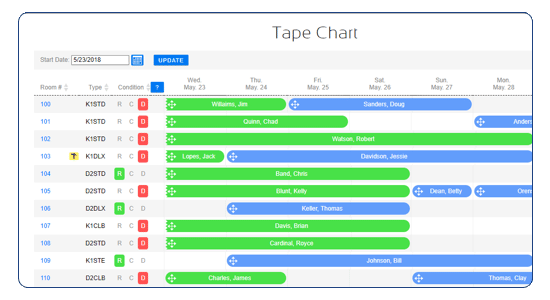
One feature that comes up often in G2 reviews is the centralized dashboard and tape chart, which helps managers oversee operations in real time. For a front desk, it's the single view that keeps arrivals, departures, and room status together.
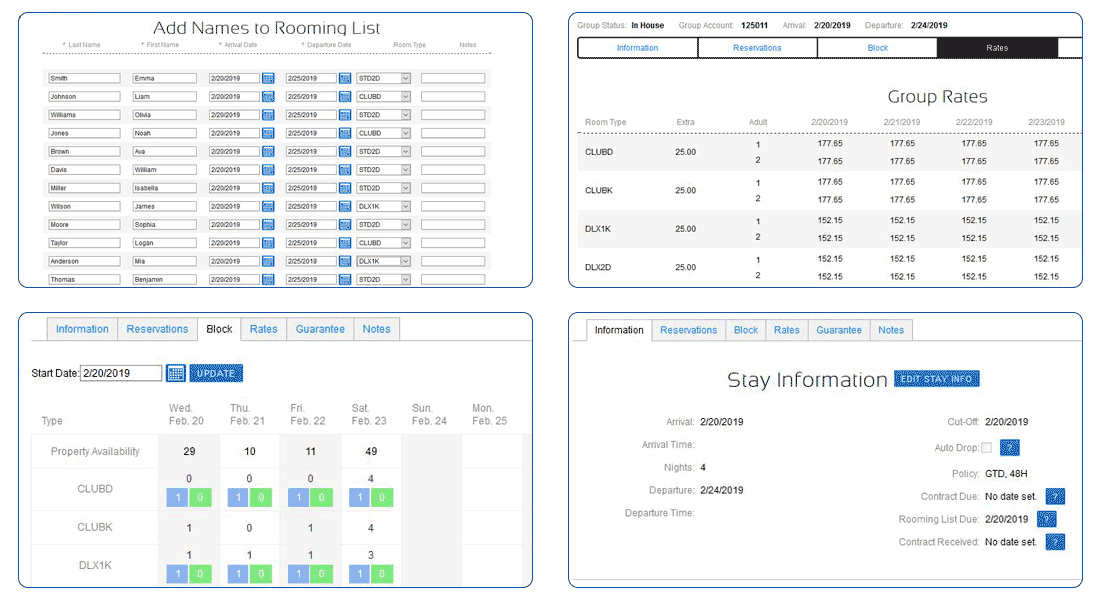
Something G2 users frequently highlight is the fast edit feature, which allows for quick adjustments to guest reservations, especially within the group block. Reviewers find it helpful when changing room assignments or handling special requests, making it easier for staff to accommodate guest needs swiftly.
Another aspect that stands out from user feedback is the integrated reporting and analytics tools. Reviewers say these give clear insight into sales, occupancy, and guest trends, which for hoteliers is useful for spotting areas of improvement and optimizing operations.
Support is the other strength reviewers return to. Many describe SkyTouch's US-based team as quick to reach and quick to resolve issues, and G2 Data rates quality of support at 89%, above the category average. For a small property without an IT desk, I'd weigh that responsiveness heavily.
Performance is the limitation reviewers raise most. The system can be slow to load, particularly when a property is busy, and a few describe glitches that force them to restart a task. Most reviewers still rate SkyTouch reliable overall for day-to-day and note that outages get resolved quickly.
The other rough edge is payment and billing handling. A few reviewers note that sometimes guest cards can be double-charged or left with pending holds, and the billing process can feel rigid. Daily billing works well enough for most properties. But if your hotel handles complex billing or a high volume of card payments, test these workflows.
Where SkyTouch lands for me is a dependable, low-friction PMS for the economy and select-service hotels. The strengths line up with what a small team actually needs day to day: staff learn it fast and the US-based support team answers quickly when something breaks.
“SkyTouch Technology is incredibly intuitive and easy to learn, even for someone without a deep technical background. The user interface is clean and well-organized, making it simple to navigate through features and complete tasks quickly. I especially appreciate how little training was required—most of it felt self-explanatory, which saved a lot of time during onboarding. It's clear that a lot of thought has gone into making the platform user-friendly. Customer support was always there to help!"
- SkyTouch Technology review, Gene R.
“Facing payment issues. Making changes in payment types is difficult."
- SkyTouch Technology review, Lincoln J C.
HotelRunner combines channel management, a booking engine, and a property management system for hotels selling across many online channels. In my analysis, it fits independent and small-to-mid properties that want their OTA distribution, direct bookings, and daily operations running from one place.
On G2, it holds a 4.6 out of 5 rating and scores highly on customer support and ease of use. The reviewer base is concentrated in hospitality and spread across small (54%) and mid-sized (31%) properties.
In the reviews I analyzed, HotelRunner is most often praised for its real-time channel management. Many users highlight how this feature ensures easy synchronization of bookings across OTAs and direct channels. Reviewers describe how it keeps bookings and rates in sync, so inventory stays consistent everywhere a property lists. For a hotel selling on several OTAs and direct channels, that synchronization is what keeps the calendar accurate and lowers the risk of overbookings.
Another feature that G2 users really appreciate is guest communication automation. Reviews mention how this functionality allows hoteliers to send personalized messages to guests before arrival, during their stay, and after departure. From what I’ve seen, this feature is valued for enhancing the guest experience by keeping customers informed, which in turn contributes to higher guest satisfaction and smoother communication.
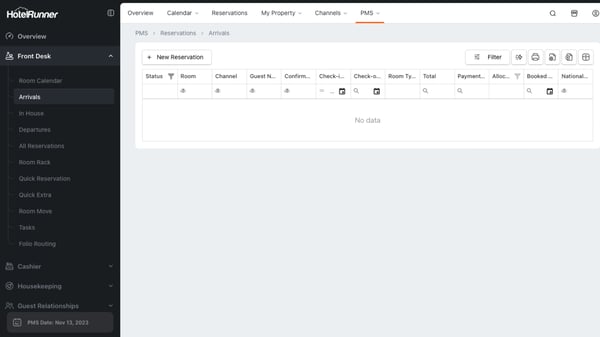
Reviewers also point to managing all bookings from one platform. Rather than switching between systems, managers can oversee reservations across channels in a single place, which several describe as a real simplifier for daily operations. For a lean team, I see the value in not hopping between tools to keep the day running.
Support is a strength reviewers return to repeatedly. They describe HotelRunner's team as responsive and helpful, and G2 rates quality of support at 93%, above the category average. For a property without dedicated IT, I'd weigh that hands-on help heavily, since it often makes the difference in smooth operations.
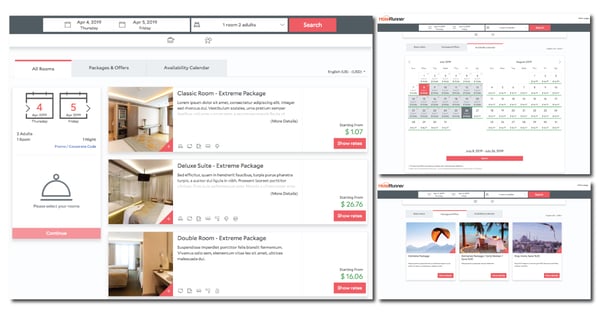
A distinctive part of HotelRunner is its commercial toolkit: a booking engine plus website and online-sales tools. Reviewers describe building a hotel website, driving direct online sales, and running digital marketing alongside distribution, all from the same vendor. I'd flag this for a property that wants to grow direct bookings rather than lean entirely on OTAs.
Setup gets consistent credit too. Reviewers single out personalized setup sessions with agents who walk them through the configuration. For a team that isn't particularly technical, I read that guided onboarding as a genuine lowering of the barrier to going live.
The main issue reviewers mention is the interface. Some say it isn't instantly intuitive and takes a little time to learn. The good news is that once users get familiar with it, they say the system runs smoothly. For teams that are comfortable learning a new tool, this feels more like a short onboarding issue than a long-term problem.
The other area to check is how easy it is to manage settings over time. While HotelRunner is manageable for most teams when the core setup is in place, the area I’d still test is configuration. HotelRunner scores below the category average on G2 for ease of admin, and a few reviewers mention wanting simpler setup for things like pricing rules. It's worth weighing if your team expects to change rates or settings often.
Overall, HotelRunner earns a sweet spot for independent or small-to-mid hotels that sell across multiple OTAs and want to build their own direct channel. It pairs reliable channel sync with a booking engine, website tools, and support G2 reviewers trust.
“It is integrated with all online agency channels, prices and help your hotel to connect with customers smoothly."
- HotelRunner review, Ayushman P.
“Need to get used to the interface. Maybe it could be a little more user friendly. But once you get used to the interface, its works as smooth as butter.”
- HotelRunner review, Rebecca F.
Improve communication and enhance guest satisfaction with the best guest messaging software.
Oracle Hospitality OPERA is an enterprise-grade property management system (PMS) built for large, full-service hotels and chains. In my analysis, it fits properties that need deep functionality across many departments and the scale to run multiple properties or brands from one platform.
It holds a 4.2 out of 5 rating and carries the largest market presence (99 on 100) of any product in this category, the install base behind much of the global hotel industry. Its feature scores are among the strongest in this roundup, particularly for housekeeping and room inventory. The reviewer base skews mid-market (51%) and enterprise (26%).
Based on my review of G2 user feedback, OPERA PMS is widely praised for its comprehensive guest management functionality, with many users highlighting its ability to create detailed customer profiles. I’ve noticed that G2 reviewers appreciate how this feature helps them manage guest preferences and history, making it easier to offer personalized service. For a full-service property, this is the backbone Oracle is known for: a deep, central guest record the whole team works from.
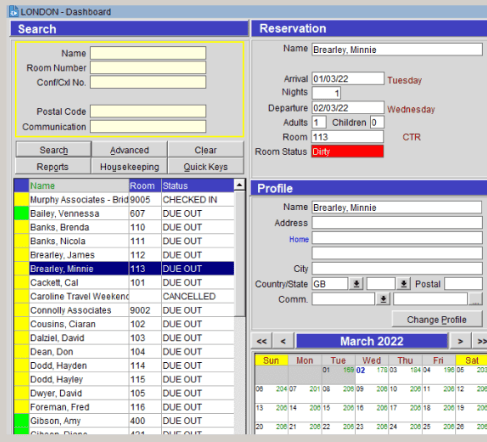
Reviewers also point to how adaptable the system is to different property needs. It allows users to quickly customize bookings, whether for individuals or groups, and configure the platform to their specific operations. For a hotel running complex group business, that flexibility is a practical strength.
One feature that stood out to me is OPERA's integration with other Oracle services, such as financial and accounting tools. I’ve seen multiple reviews mention how this integration helps reduce errors and ensure better data accuracy across departments. Reviewers value it most at large or multi-departmental properties, where keeping finance, operations, and the front desk on the same data matters.
Feature depth is where OPERA separates itself. Reviewers describe it as covering every essential PMS activity and then some, and G2 Data backs that up: it scores 96% on both housekeeping and room inventory, among the highest marks in the category. For a full-service hotel running many departments, that breadth means fewer gaps to fill with other tools.
OPERA is also built for scale. Reviewers run it across multiple countries and brands and describe it centralizing reservations, billing, and guest management for large portfolios. G2 Data shows the heaviest mid-market and enterprise base in this roundup, which fits its reputation as the standard for chains and large groups.
On the commercial side, reviewers credit OPERA's reporting and revenue tools, citing how much data they can pull and how it supports rate decisions. G2 Data scores its revenue management at 94%, above the category average. For a revenue manager at a large property, that depth of reporting is a real draw.
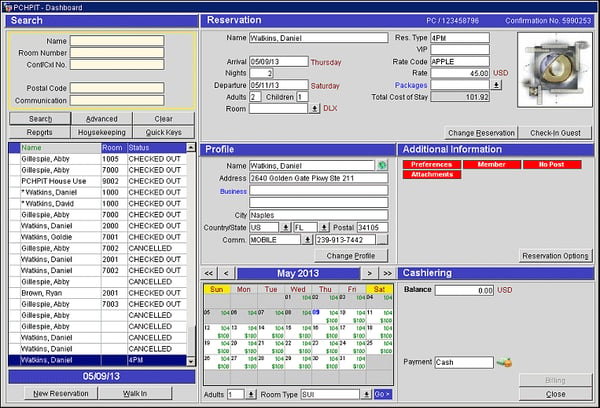
However, based on what I’ve gathered from G2 users, support is the one area where reviewer sentiment runs more mixed. Some mention slow ticket responses and feel Oracle could be more responsive after onboarding. Though, most still rate the product itself reliable, and experiences vary by region and account. If quick vendor help matters to you, I'd raise it during the demo and ask how response times work in practice.
Another point I noticed is the learning curve associated with OPERA. Many users shared that while the system is feature-rich, it takes some time to fully grasp its range of functionalities. Some interfaces feel slightly outdated, which can make initial training more time-consuming. Even so, once staff become familiar with the platform, it offers powerful tools that streamline daily hotel operations and support long-term efficiency.
Overall, OPERA makes the most sense for large and full-service hotels, chains, and groups that need depth over simplicity.
“I like its ability to seamlessly centralise reservations, billing, and guest management into one reliable, industry proven platform for efficient hotel operations."
- Oracle Hospitality OPERA Property Management System review, Verified G2 User in Hospitality
“The Only issue with the operating system that I had experienced was that I had used the system in two different countries, and I found that the support team and prices vary from one country to another.
Even though they provide the same product with the same version, the overall experience is positive."
- Oracle Hospitality OPERA Property Management System review, Hamada E.
Canary Technologies is a guest management platform for hotels, not a property management system. It began as a tool for digitizing secure credit card authorizations and has grown into a broader suite spanning contactless check-in, guest messaging, payments, and upsells. In my analysis, it fits hotels and resorts that want to modernize and secure how they handle guest payments and the digital guest journey, running alongside their existing PMS.
Canary is both highly rated and firmly established. On G2 it holds a 4.8 out of 5 rating and the highest quality of support score (99%) in this roundup. I included it as the focused-but-proven specialist alongside the full PMS platforms.
At its core, the capability Canary is built on is digitizing credit card authorizations. In the G2 reviews I read, users describe replacing fax-and-paper forms with a secure online form that a guest completes from a link, and that origin still anchors the product. For a front desk, it removes a slow, error-prone step from every reservation that needs a card on file.
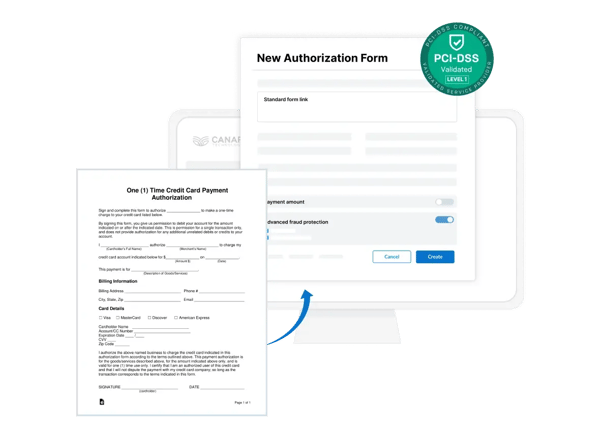
The security layer is what I'd point to next. Users highlight that Canary handles card data under PCI compliance, verifies each card, and collects payment through secure links rather than over the phone or on paper. For a property focused on reducing chargebacks and card fraud, that compliance backbone is the reassurance the product is designed around.
What stood out to me is that Canary has expanded well beyond payments into the digital guest journey. It is highly regarded for contactless check-in and AI guest messaging. For an operations team, that points to shorter front-desk lines and routine guest questions handled automatically.
On revenue, Canary's dynamic upsells pop up relevant offers, like room upgrades, early check-in, late checkout, food and beverage, to guests before and during the stay. Users point to this as the feature that makes Canary a revenue contributor.
Across reviews I read, two strengths were highly prominent: ease of use and customer support. Reviewers say Canary is easy for both staff and guests to learn, and they often praise the support team for being very responsive. G2 Data supports this too: Canary scores 95% for ease of use and 99% for quality of support, which are 5 and 12 points above the category average.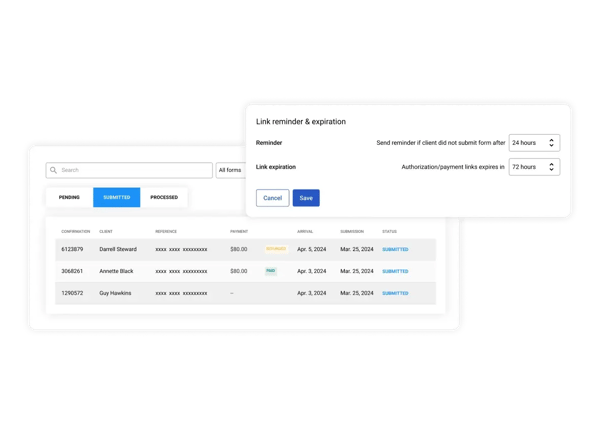
The main thing to be clear-eyed about is that Canary is an add-on, not a PMS. It sits alongside your property management system, which means another vendor and another integration to manage, rather than one system doing everything. Reviewers mention it complements their PMS and integrates well, but it's important to confirm how cleanly it connects to your stack before adding it.
The other consideration is navigation. Canary keeps each task simple, but a few reviewers note that finishing one can mean clicking back and forth between the authorization form, the dashboard, and their email. For most teams, it fades once the routine is familiar, though I'd see how the flow feels in a demo if your front desk runs high volume.
Canary fits a clear brief: hotels and resorts that want to secure and modernize guest payments, and increasingly the wider digital guest journey, without replacing their PMS.
“Canary Technologies makes life easier in many different ways for our Resort. First off, the customer service Team is excellent. The website is very user-friendly and easy to use for all of our Departments."
- Canary Technologies review, Riley A.
“Double check the UI and work out any bugs directly with the team in SF, but go with your designated point of contact, of course.”
- Canary Technologies review, Chip W.
roommaster is a property management system for independent hotels, with a long track record in the market. In my analysis of G2 user feedback, roommaster fits independent, owner-operated properties that value a dependable system and responsive support over the newest interface.
roommaster is small in review volume but consistently well-rated. It holds a 4.6 out of 5 rating on G2 with a reviewer base consisting mostly of small, independent hospitality properties.
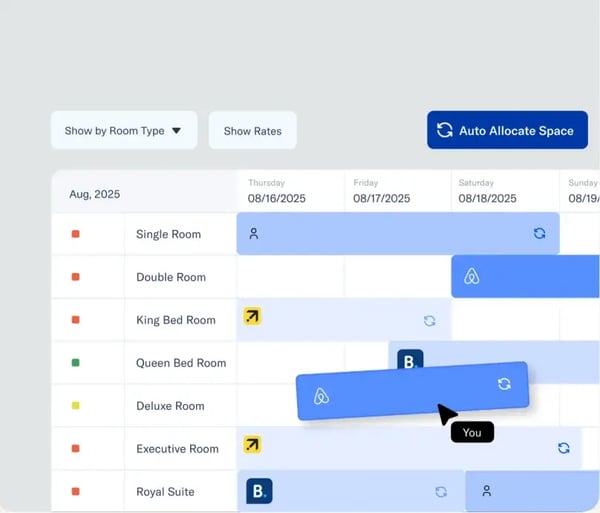
What reviewers value most is how roommaster keeps the daily operation in one place. Reservations, guest information, and billing sit together, which users credit with reducing booking errors and keeping the day organized. For a small front desk, that consolidation is what saves time and keeps mistakes down.
Another strength I noticed is ease of use. G2 reviewers describe roommaster as user-friendly and quick to learn with some mentioning training took only a couple of days. That matches the G2 Data, where roommaster scores 95% for ease of use, well above the category average. That matters because new front-desk staff should be able to get comfortable with the system quickly, without a long training period.
Reliability is where I'd say roommaster earns its place. Reviewers describe it as dependable for daily operations, and it comes from a vendor with a decades-long track record in independent hospitality. For an owner-operator who needs the system to simply work every shift, that stability is the draw.
I'd also point to the front-desk workflow, particularly check-in. Reviewers describe it as quick and straightforward, handling reservations, walk-ins, arrivals, and check-outs without friction. For a busy desk, I see a fast, clear check-in as the difference between a smooth lobby and a queue.
Support is the standout, and the first thing I'd highlight. roommaster scores 100% for quality of support, the highest in this roundup, and reviewers consistently praise the team for being quick, clear, and helpful when issues come up.
What I find rounds it out is the breadth. roommaster pairs the PMS with a booking engine, channel manager, and reporting, so an independent property can run reservations, distribution, and daily reports from one system. For a hotel that wants its core operations under one roof, I read that as a simpler stack to manage.
The most consistent point reviewers raise is the interface. A couple noted that it can feel dated and a little cluttered, and slow at times, which makes some tasks take longer than they should. It doesn't get in the way of the core work, but if a modern, polished interface matters to your team, I'd look at it in a demo first.
The other thing I'd check is flexibility in reporting or workflow configurations. While it covers the essentials well for everyday reservations, billing, and reporting, a few reviewers mentioned wanting the reports to go beyond a short date range or trimming a couple of extra workflow steps. These read as refinements rather than real problems, but I'd confirm that the specific reports and workflows you rely on most are covered.
For an independent owner-operated hotel that values a system it can trust and a support team that picks up the phone, roommaster is a strong fit.
“I like that Roommaster keeps everything in one place, making it easy to manage bookings, guests, and billing quickly and efficiently. It saves time, reduces mistakes, and makes hotel operations smoother, helping me stay organized and provide better guest service. The initial setup was straightforward and easy to get started.”
- roommaster review, James R.
“It can be a bit slow at times, and the interface could be more modern and easier to navigate.”
- roommaster review, Michael K.
Mews is the best fit for coordinating housekeeping and guest services because it links room status, tasks, front desk work, and guest-facing tools in one cloud platform. Its housekeeping module updates room status and tasks through an app, while guest tools cover online check-in, checkout, chat, and kiosks. That reduces handoff gaps during busy arrivals.
Cloudbeds is the strongest option for maximizing occupancy while improving staff productivity because it combines PMS, channel manager, booking engine, payments, and revenue tools in one workflow. Its channel manager syncs availability with 300+ OTAs in real time, and revenue intelligence forecasts demand up to 95% over six months. That helps lean teams price and fill rooms faster.
Oracle Hospitality OPERA Cloud is the best choice when reservations, guest services, and maintenance tracking must live inside one operational system. Oracle documents reservation creation, updates, and cancellations, mobile housekeeping task companions, room-status updates, and room-maintenance requests such as faulty locks or air-conditioning issues. This suits hotels that need auditable cross-department workflows.
Mews and Cloudbeds are the clearest choices for mobile housekeeping and room-status updates. Cloudbeds includes a mobile app with housekeeping on every plan; Mews scores a category-best 100% on G2 for housekeeping and updates room status live. For staff managing turnovers away from the front desk, both let them mark room readiness from a phone.
Mews and Oracle OPERA lead here. Mews tops housekeeping in G2 Data at 100%, with room status updating live as guests depart; Oracle scores 90% for facility maintenance, the highest in the category. Routing maintenance requests against real-time room status is what shortens the gap between checkout and the next check-in.
Cloudbeds and Mews are the best fits for booking-engine and revenue-management integration. Cloudbeds combines a booking engine, channel manager, and Revenue Intelligence; Mews offers a Marketplace with thousands of hospitality integrations, including revenue-management apps; roommaster connects PMS, booking engines, third-party systems, and revenue tools. Choose based on whether you prefer bundled tools or marketplace flexibility.
Mews ranks as the most reliable by reviewer sentiment, holding the category's highest G2 satisfaction score, 98, and a 4.8 rating, with 96% of users likely to recommend it. SkyTouch and roommaster also rate highly for daily dependability. For operations managers, these scores reflect consistent, predictable day-to-day performance.
Cloudbeds is the strongest single answer for preventing overbooking. Its channel manager syncs rates and availability across OTAs in real time, which reviewers credit with eliminating double bookings. Mews adds cross-department coordination, with one guest record and a category-best 100% housekeeping score keeping the front desk and housekeeping aligned. Both close the gaps that cause errors.
Oracle OPERA is the established choice for chains and large groups, carrying the category's largest G2 market presence and the heaviest mid-market and enterprise user base. Mews and Cloudbeds suit growing groups, both offering multi-property management from a single login. For portfolios spanning many properties or brands, Oracle's scale sets the benchmark.
Mews and Cloudbeds are the most trusted full hotel-management platforms by user-review evidence, while Canary leads the guest-management niche. G2 uses verified hotel owner and operator reviews; Mews carries the category's highest satisfaction score (98/100) and a 96% recommend rate, Cloudbeds has second-highest overall G2 score, and Canary posts a near-perfect 99% for quality of support. Match trust signals to your operating need.
Oracle Hospitality OPERA is the property management system most associated with five-star and luxury hotels, deployed across major global chains and full-service properties. It carries the largest market presence in the category on G2. Its depth across reservations, billing, and guest profiles is why large luxury operations standardize on it.
Hotel management software benefits properties of every size, from small boutique hotels and B&Bs to large resorts and multi-property chains. G2 reviewer bases reflect this: SkyTouch and Cloudbeds skew toward small independents, while Oracle OPERA dominates mid-market and enterprise. The right fit depends on property size, complexity, and budget.
Choose a hotel PMS by weighing ease of use, integration needs, and scalability against your property's size and workflows. Confirm it connects to your booking engine, channel manager, and payment tools, and check recent reviews from similar properties. Matching the system to how your team actually works matters more than feature count. A 40-room independent property may prioritize Cloudbeds or roommaster for bundled PMS, channel manager, and booking engine; a chain may prioritize OPERA Cloud for centralization.
Using the right hotel management tools can transform how you run your property.
After evaluating different options, it's clear that the best hotel management tools combine ease of use, robust features, and easy integration with your existing systems.
By carefully selecting the right tools for your property’s unique needs, you’ll be able to maximize productivity, reduce manual tasks, and ultimately deliver exceptional service to your guests.
So, evaluate your options and invest in the tools to make your hotel operations smoother, smarter, and more successful.
Ready to take your hotel operations to the next level? Discover how hotel revenue management systems (RMS) can help.
.png)
Overbookings rarely announce themselves. A rate mismatch between two online travel agencies...
 by Somya Jain

Many organizations mistakenly equate motion with workplace optimization. They install basic...
by Devyani Mehta
The constant juggling of work tasks, personal events, and last-minute changes often left me...
by Devyani Mehta