If you are planning to choose the best conversational commerce platform, the category itself is no longer the question. The pressure is on execution. Revenue conversations now happen inside chat, messaging apps, and support flows, often mid-purchase.
Missed context, slow handoffs, and disconnected channels are already known risks. Consumer demand keeps pushing messaging into the buying path. Across 22 markets, 73.3% of consumers prefer messaging when communicating with a business. This choice shows up in B2B sales teams running high-intent conversations, support leaders protecting renewals, and growth teams trying to stop the pipeline from drifting.
I evaluate these platforms through workflow thinking plus large-scale review pattern analysis, not personal hands-on use of every tool. I look for consistent patterns: ownership and routing of conversations, reliable automation, data handoff into CRM and support systems, and continuity across channels.
In this guide, I group tools by the job they're typically hired to do. Across reviews, Insider is commonly picked for teams prioritizing personalized commerce journeys tied to behavioral data. Review patterns suggest Zendesk for Customer Service shows up when structured service workflows must stay connected to revenue conversations. Sprinklr Service is commonly picked for enterprise teams prioritizing governance and cross-channel control, while LivePerson is typically chosen by teams focusing on AI-driven conversational engagement, where messaging is used to guide, qualify, and convert customers in real time.
*These conversational commerce platforms are widely recognized within the category based on the G2 Winter Grid Report 2026. I’ve focused on where each tool consistently shows up as a strong fit, so teams can match real workflow needs to the right platform.
Conversational commerce platforms exist to solve a very specific problem: too many revenue and support conversations happen in too many places, with no shared context. Emails, chat, social DMs, messaging apps, and bots all compete for attention. A capable platform pulls those threads together so teams can respond with intent, not guesswork, and move conversations forward instead of restarting them.
When you look closely at the strongest platforms in this category, they are not defined by chat widgets, but control. They help teams recognize buying signals, route conversations intelligently, and decide when automation helps and when a human needs to step in.
This category also cuts across company size and function. G2 Data reflects usage across small teams, mid-market organizations, and enterprises, each applying conversational commerce differently. Some teams lean on it to protect conversion during high-intent moments. Others use it to reduce support load or improve response consistency. What unites them is speed to value. Conversations cannot wait for long implementations or brittle workflows.
At the end of the day, conversational commerce platforms shape how modern businesses listen and respond. The right choice gives teams confidence that every message is seen, every signal is captured, and every conversation has a clear next step. The wrong one turns engagement into friction, quietly costing revenue and trust.
I anchored the shortlist in G2’s Grid data, focusing on platforms that consistently rank well on user satisfaction and show real adoption across small teams, mid-market companies, and enterprise environments.
To move beyond surface-level scores, I analyzed large volumes of verified G2 reviews using AI to surface repeated signals in day-to-day conversational workflows. This helped separate tools that scale cleanly from those that introduce friction as message volume increases. Rather than direct hands-on experience with every platform covered, I pressure-tested these findings against how revenue, customer experience, and operations teams describe using these tools in production.
All product visuals and references included here are pulled from G2 vendor profiles and publicly available documentation to keep the evaluation grounded and verifiable.
After analyzing extensive user feedback and examining how revenue, support, and commerce teams manage real customer conversations, a consistent set of signals emerged.
The criteria below reflect how I evaluated conversational commerce platforms and separated tools that hold up under scale from those that introduce friction when message volume, automation, and cross-team handoffs start to compound.
Based on these criteria, I narrowed the list to platforms that consistently improve conversation flow, response reliability, and coordination across sales, support, and customer experience teams. Not every tool is built for the same priority, so the right choice depends on whether your focus is automation depth, channel coverage, intent routing accuracy, or the ability to scale conversations without adding operational overhead.
Below, you’ll find authentic user feedback from the Conversational Commerce Platforms category. To appear in this category, a tool must:
This evaluation framework reflects aggregated user feedback and workflow analysis from the Conversational Commerce Platforms category in 2026. Some reviews may be edited for clarity.
Insider One is positioned as a unified environment for managing customer data, journeys, messaging, and AI-assisted decisioning across digital touchpoints. G2 review analysis frequently associates the platform with teams aiming to coordinate lifecycle engagement without relying on multiple disconnected tools. By combining orchestration and insight in one workspace, Insider One supports organizations managing personalized experiences across web, mobile, and messaging ecosystems.
Adoption patterns indicate a strong mid-market footprint, with 47% of users coming from mid-sized organizations, alongside 27% small businesses and 26% enterprise customers. This distribution reflects buyer confidence among scaling commerce teams while also signaling enterprise readiness for more complex orchestration scenarios.
Features like segmentation, journey design, personalization, and campaign execution operate within a shared system, reducing reliance on multiple engagement tools. This structure supports more consistent communication across touchpoints and helps maintain alignment between marketing and CX initiatives. Teams typically benefit from a unified customer context that streamlines decision-making and journey planning.
Behavior-based engagement emerges as a recurring strength, particularly for lifecycle messaging and retention-focused interactions. Messaging and notifications are rated 86%, indicating reliable support for contextual outreach tied to user activity. Reviews reference automated reminders, follow-ups, and intent-based nudges that maintain continuity across conversational channels.
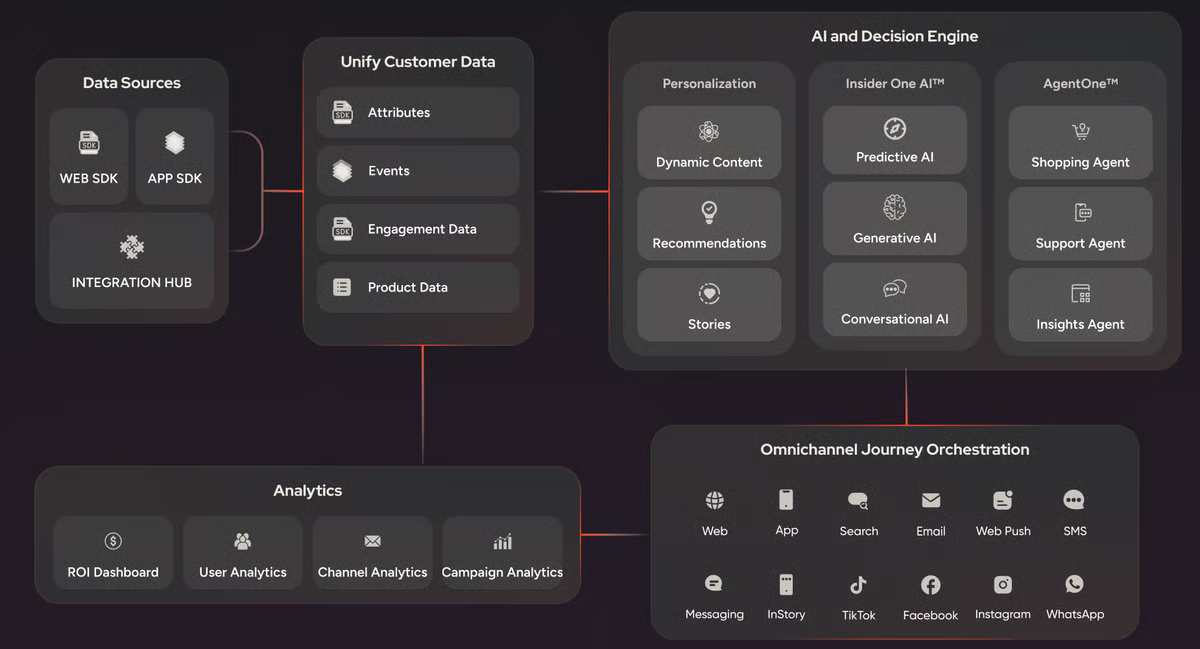
Advanced reporting holds an 86% rating, according to G2 Data, enabling journeys to be connected with conversions, renewals, and engagement milestones. This reporting clarity supports outcome-focused discussions and helps stakeholders prioritize high-impact conversational experiences. Data-backed evaluation becomes more structured, supporting continuous journey refinement.
The E-commerce stores feature scores 85% in G2, reflecting alignment with merchandising and product discovery workflows. Review commentary highlights the ability to tailor onsite experiences and lifecycle messaging through segmentation without continuous engineering involvement.
Visual builders allow non-technical teams to design journeys independently, while deeper configuration options remain available for more mature engagement programs. This layered approach supports cross-functional collaboration and helps organizations scale conversational initiatives without significantly increasing operational overhead.
G2 review data frequently links automated journeys and chatbot-assisted responses with reduced manual handling of repetitive inquiries. Multi-channel reminders and proactive engagement flows help maintain continuity across customer touchpoints, particularly in service-oriented scenarios.
They said, G2 reviewers note that Insider One spans multiple modules, segmentation, journeys, messaging, and personalization, and connecting them takes time during early setup. Teams managing multiple internal stakeholders might need to spend time aligning on priorities before workflows take shape. Although once that foundation is set, the modular structure supports consistent execution across campaigns.
Conversational flows in regulated environments, such as insurance or financial services, take longer to build when both compliance and usability standards apply, as noted by G2 reviewers. Teams managing multi-step chatbot journeys with cross-functional sign-off feel this most during the build phase. Once approved, however, those flows are easy to reuse across new products and campaigns.
Overall, Insider One is well-suited for e-commerce and digital brands managing high-volume, multi-channel customer engagement. With unified orchestration and strong Messaging and Notifications capabilities, it supports scalable conversational journeys while keeping personalization and performance measurement closely aligned.
"Eureka delivers fast, typo-tolerant, intent-aware search results that feel highly personalized for each shopper. Search suggestions and results adapt to user affinities like preferred brands, categories, and price points, which is critical for a marketplace with millions of listings.
Rich faceting and merchandising rules give the team control to boost strategic products, manage campaigns, and fine-tune rankings without developer support.
Being part of the full GMP means search performance feeds into unified profiles and journeys, so insights from Eureka can be used across email, push, and on-site personalization for scalable growth."
- Insider One review, Görkem A.
“Insurance journeys are complex and highly regulated, so designing chatbot content, web experiences, and multi-step flows that are both compliant and user-friendly takes time and cross‑functional alignment. Once the key patterns are designed and approved, however, they are easy to reuse and adapt for new products and campaigns.
- Insider One review, Buket E.
Exploring bot-first solutions? Check out the best AI chatbot software for automating conversations at scale.
G2 consistently frames Zendesk for Customer Service as a centralized environment for managing customer conversations across chat, email, voice, and messaging channels. Support teams frequently reference the ability to keep ticket history, customer context, and agent activity within a single workflow, reducing fragmentation across communication surfaces. The platform is often associated with organizations seeking structured support execution rather than channel-specific tooling.
Macros, triggers, and routing logic help standardize repetitive support tasks, enabling teams to manage prioritization and escalation without constant manual intervention. According to G2 Data, ease of admin is rated 84%, which reflects how manageable the platform stays even as workflow complexity increases. G2 reviews still connect this automation depth with predictable ticket handling and structured queue management.
G2 feedback frequently references chat, WhatsApp, and API-based messaging integrations working alongside ticketing and knowledge base capabilities to create a cohesive service environment. Routing approaches such as round-robin assignment help distribute workload across agents and maintain balanced queue management.
Reporting and analytics capabilities provide structured visibility into resolution times, agent productivity, and customer satisfaction trends. Ease of doing business with is rated 86%, reinforcing dependable vendor coordination and operational alignment during ongoing platform use. G2 review comments often connect these insights with stronger operational awareness and more informed service management decisions.
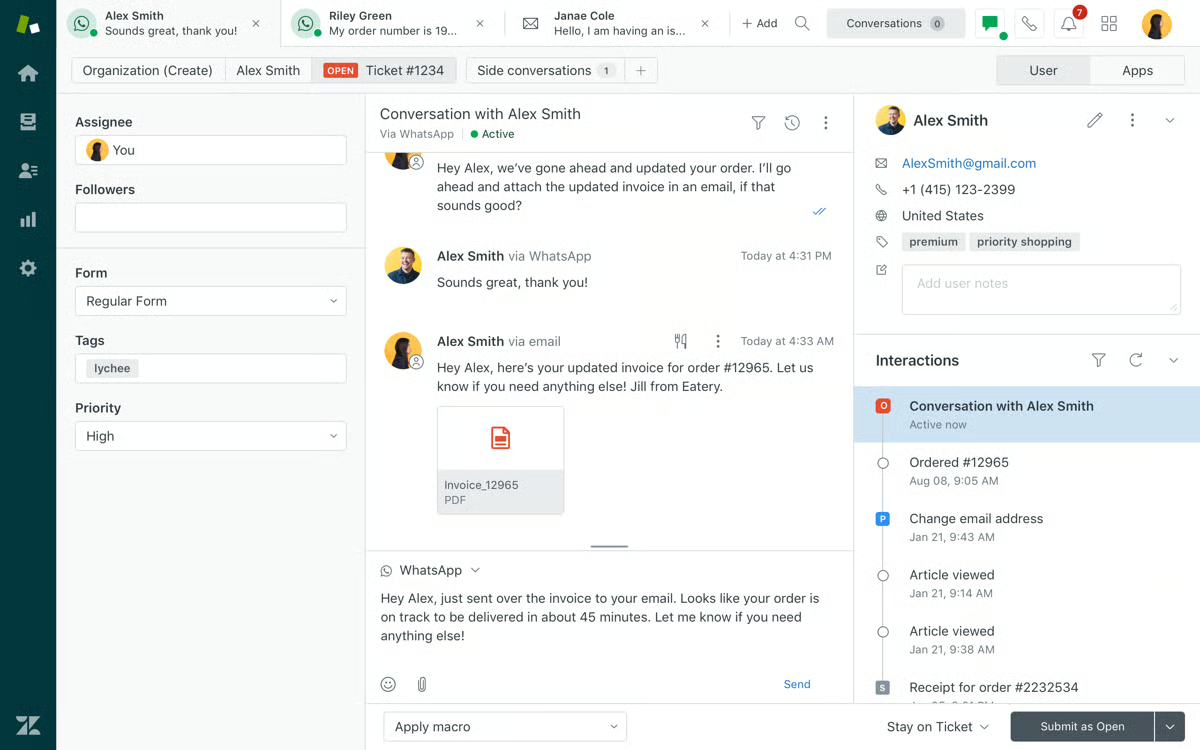
Knowledge base integration and automated response features help reduce repetitive inquiry handling while maintaining response consistency. G2 feedback frequently references structured help content alongside AI-assisted suggestions that support faster issue resolution. By surfacing contextual guidance during interactions, Zendesk enables agents to maintain quality while improving efficiency. These capabilities align with organizations seeking scalable support models.
Agents can access prior interactions, ticket updates, and engagement timelines without switching tools, supporting more informed responses and reduced duplication of effort. Ease of use is rated 87%, indicating the platform stays navigable for agents managing multiple queues simultaneously. This unified context becomes particularly valuable in high-volume environments where agents rotate across queues.
From what I gathered in G2 reviews, a couple of themes come up consistently. Zendesk's breadth of features and configuration options means initial setup takes more time than lighter ticketing tools. The structured configuration pays off once in place, supporting more consistent and scalable support operations.
Others note that several useful features and integrations are available on higher-tier plans, which can narrow the platform's immediate value for smaller teams working within tighter budgets. That said, the core ticketing and workflow functionality available across plans still covers the majority of everyday support needs.
The platform’s adoption across 48% small businesses, 41% mid-market, and 11% enterprise customers reinforces procurement familiarity and cross-segment relevance within customer service environments.
Overall, Zendesk for Customer Service aligns well with organizations seeking centralized, scalable support operations supported by automation and omnichannel engagement. Review analysis consistently references workflow structure, reporting visibility, and evolving AI-assisted features as everyday operational benefits. For teams prioritizing coordinated customer engagement at scale, Zendesk remains a widely recognized platform that supports structured service delivery across channels.
“ Brings integrates tools like ticket management, live chat, knowledge base, phone support, and automation into one platform.
Simplifies handling customer interactions across various channels, such as email, chat, voice, and social media, within a unified workspace.
It is being used regularly, which also helps in monitoring the daily progress of the team.
And I like the support service very much.
Zendesk offers a supportive onboarding experience, including step-by-step guides, tutorials, and checklists to assist users during the initial setup.
First-time users can easily get started thanks to well-organized resources, comprehensive documentation, and accessible training content.
Whether you're connecting standard business apps or building custom workflows, Zendesk makes it easy to integrate data and streamline operations across your tech stack."
- Zendesk for Customer Service review, Swetha S.
“Zendesk can feel a bit overwhelming at first because there are so many features and configuration options. It takes time to set up properly and can be confusing for new users. Another thing is pricing; many useful features and integrations are locked behind higher plans, which can be tough for smaller teams. Also, when ticket volume is high, the interface can feel slightly cluttered.”
- Zendesk for Customer Service review, Radhika R.
Building your commerce stack from the ground up? Compare the best e-commerce platforms for managing products, storefronts, and transactions.”
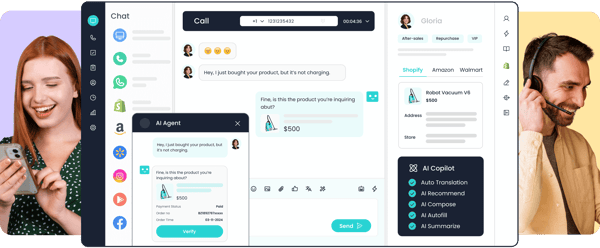
Sobot Omnichannel Suite is a unified platform for managing customer conversations, automation workflows, and support operations across channels. G2 reviews frequently references its role in consolidating voice, chat, email, and social interactions into a single environment. The platform is commonly associated with teams handling multi-channel service delivery, particularly those managing high message volumes across multiple touchpoints from a single workspace.
Voice, chat, email, and social interactions are managed within a single workspace, helping preserve context and reduce duplicate handling across channels. This consolidated approach supports more consistent customer engagement and clearer internal visibility into conversation histories. For teams operating in multi-touch environments, the shared interaction layer reinforces coordinated support delivery.
G2 feedback describes intelligent routing logic and workflow automation that help distribute inquiries effectively while maintaining response quality. This capability is reinforced by Internal tools, which are rated at 100% in G2, suggesting strong alignment with expectations for workflow control and conversational orchestration. As interaction volumes increase, these automation features support scalable service management without extensive manual intervention.
According to G2 Data, advanced reporting (100%) enables teams to monitor satisfaction indicators, interaction metrics, and agent performance from centralized dashboards. G2 reviews suggest this visibility supports data-informed decision-making and structured optimization of conversational workflows. The reporting layer contributes to a more proactive approach to service improvement.
Recurring inquiries, onboarding questions, and routine requests can be handled automatically once conversational flows are configured, allowing agents to focus on more complex interactions. This automation supports consistent response times and helps maintain service quality during peak messaging periods. The chatbot layer integrates with broader workflow automation, reinforcing cohesive conversational experiences.
Payment platform functionality is rated 100%, reflecting alignment with transactional communication workflows where updates, confirmations, or reminders are embedded directly within conversations. This integration flexibility supports commerce scenarios where messaging and transactions intersect.
Features such as live chat and helpdesk workflows allow agents to assign, escalate, and resolve interactions without switching between tools, contributing to streamlined handling processes. This collaborative environment helps teams maintain service continuity while scaling conversational engagement. The cohesive design of these workflows reinforces Sobot’s positioning as an execution-focused conversational support platform.
According to G2 reviewers, configuring advanced automation rules and routing logic takes time during initial setup, particularly for teams building complex workflows from scratch. Support teams new to the platform spend more time in the early phase exploring the admin interface before the configuration feels intuitive. Once the setup is complete, the platform runs with minimal intervention and handles workflows consistently.
G2 users note that while the analytics suite covers day-to-day operational monitoring well, teams focused on custom reporting or longer-range forecasting may find the built-in options narrower than expected. This can matter for teams that rely heavily on visual dashboards or need to slice data in non-standard ways. The core visibility it provides remains clear and dependable for everyday support management.
Taken together, Sobot aligns with organizations seeking unified conversational engagement supported by automation, reporting visibility, and multi-channel orchestration. For teams prioritizing scalable conversational service delivery with dependable automation and performance insight, Sobot remains a relevant platform choice within the conversational commerce landscape.
“As an Executive Sponsor overseeing our customer experience transformation, what stands out most is Sobot’s consistent stability and seamless integration across channels.
The platform’s intelligent routing, automation workflows, and real-time dashboards help us maintain high operational efficiency while ensuring personalized service. The ability to track team performance, customer satisfaction, and interaction trends in one place has elevated our decision-making and accelerated service delivery."
- Sobot Omnichannel Suite review, Olivia R.
“The admin interface could use more guided setup for complex workflows. It’s functional, but the initial configuration requires some exploration. Once set up, though, everything runs smoothly with minimal intervention.”
- Sobot Omnichannel Suite review, Neel S.
Need a deeper look at ticketing and support workflows? Explore the best help desk software for structured customer service operations.
Focused on cross-channel engagement, Sprinklr Service enables teams to manage conversations across social, messaging, and digital touchpoints in one environment. It is described as a platform that serves as a convergence layer, connecting reporting, automation, and collaboration, along with interaction management.
Unified workspace visibility stands out as a recurring advantage in review narratives. Agents can access conversations from multiple channels in one interface, supporting collaboration and reducing fragmentation across teams. This consolidated environment enables smoother query resolution and more consistent interaction handling. A single customer view reinforces continuity as conversations move between channels.
Flexibility in customization is frequently highlighted in user feedback, particularly around dashboards and workflow design. Teams can tailor reporting structures and interaction flows to align with internal performance metrics and operational priorities. This adaptability supports more structured engagement management and enables organizations to refine service strategies around measurable outcomes.
AI-based case routing, sentiment insights, and quick response tools help teams prioritize conversations and streamline repetitive tasks. Review narratives often connect these automation layers with more predictable ticket distribution and consistent response quality. These features support scalable engagement without requiring proportional increases in staffing.
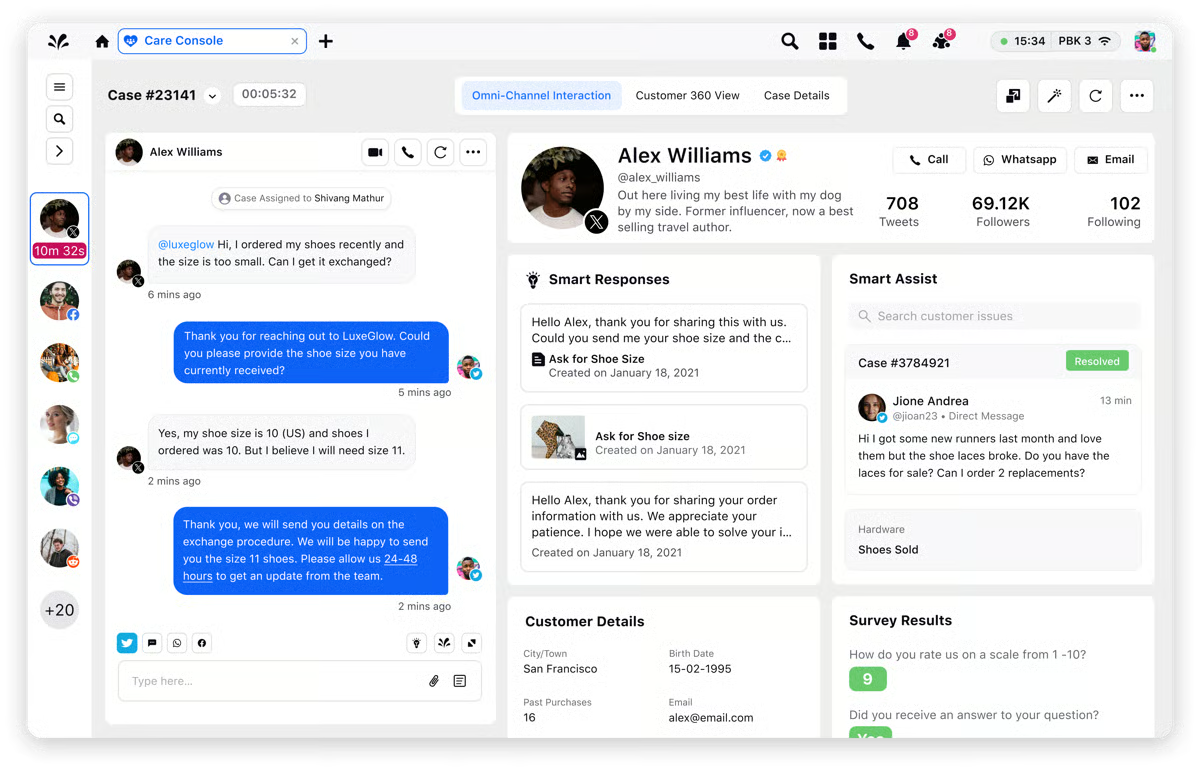
Conversational analytics provide structured insight into engagement patterns and customer sentiment trends. With a 79% rating in G2, analytics dashboards enable teams to monitor interaction outcomes and identify patterns influencing service effectiveness. Feedback frequently links these insights with more informed engagement strategies and operational awareness. This visibility supports decision-making grounded in conversational data.
According to G2 Data, advanced reporting holds a 78% rating and supports customizable dashboards that track productivity, satisfaction signals, and case resolution metrics. This highlights reporting as a mechanism for aligning service delivery with broader business goals. G2 reviewers frequently reference the ability to track engagement patterns over time as a key input for refining team performance and service strategy.
Messaging orchestration remains central to cross-channel engagement workflows. Messaging and notifications are rated at 69%, yet user feedback still emphasizes their role in maintaining conversation continuity across social and messaging surfaces. The ability to manage diverse interaction streams within one environment supports coordinated customer engagement. This orchestration model aligns with organizations prioritizing unified communication workflows.
Despite the strengths, Sprinklr Service has a few areas of improvement. The volume of customization options can make navigation harder to manage, particularly for teams that are still finding their optimal workflow setup. Teams handling multiple use cases across different functions might be affected when trying to standardize how the platform is configured and used, according to G2 reviewers. The same level of customization, however, gives organizations the flexibility to tailor workflows closely to their specific operational needs.
Getting the most out of Sprinklr Service often requires internal alignment on how different teams use the platform, which takes time when stakeholders approach it differently. Organizations where ownership of the platform is spread across functions tend to spend more time on back-and-forth before workflows stabilize. Once teams converge on a shared setup, the platform's depth supports more structured and consistent engagement management.
Taken together, Sprinklr Service is widely adopted by digitally mature organizations that manage high volumes of conversations across social and messaging channels. The usage split between 41% enterprise and 41% small business teams, with 18% in the mid-market, reinforces steady buyer confidence across segments. For teams prioritizing coordinated, social-first engagement supported by reporting and automation depth, Sprinklr Service stands out as a platform built for scaled customer experience orchestration.
“ Sprinklr Service gives us a unified workspace to track and resolve customer queries across all social channels. I love how its automation, like AI case routing, sentiment analysis, and quick replies. saves time and boosts efficiency. Plus, the CRM integrations and reporting dashboards make it easy to monitor team performance and customer satisfaction. It’s helped us deliver faster, more consistent, and scalable support.”
- Sprinklr Service review, Shruti D.
“Sometimes, because of the amount of customization available, it can be overwhelming at times. Possibly a clearer way to navigate the different options available.”
- Sprinklr Service review, Warren A.
Once conversations move beyond initial contact, LivePerson is often used to manage how messaging interactions are handled and scaled across digital channels. The platform centers on AI-led engagement and conversational continuity. Enterprise teams account for 51% of its user base, with 34% in the mid-market, reflecting strong adoption among organizations managing high interaction volumes and always-on customer engagement expectations.
G2 user reviews suggest bots effectively handle repetitive inquiries, allowing agents to focus on more complex interactions while maintaining response continuity. Meets requirements is rated 88%, reflecting strong alignment with expectations around automation coverage and conversational workflow management. This automation structure contributes to faster engagement cycles and more predictable queue management in high-traffic environments.
Omnichannel messaging coordination supports consistent customer journeys. Ease of admin is rated 86% in G2, indicating the platform stays manageable even as conversation volumes and channel complexity increase. G2 feedback frequently references unified conversations across digital touchpoints, helping maintain context even as interactions shift between channels.
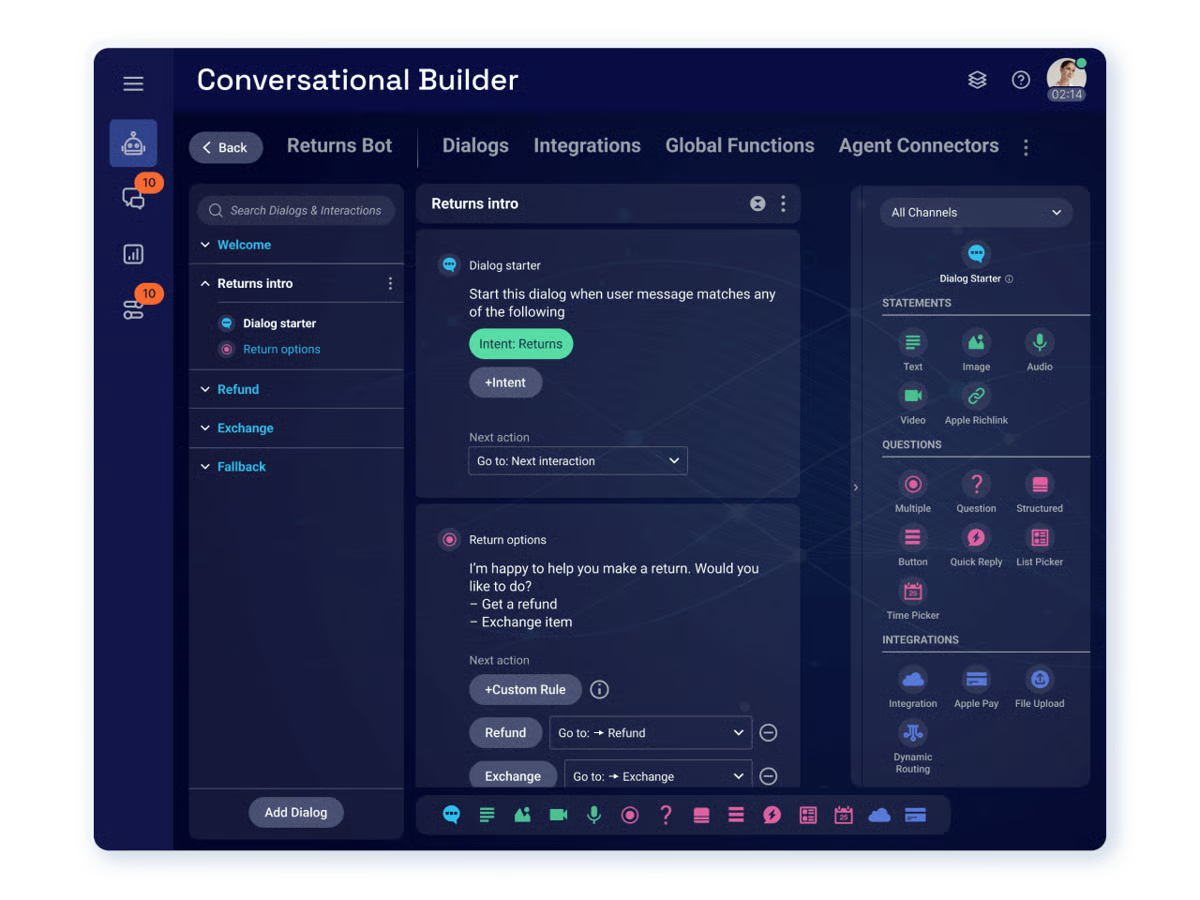
Analytics and reporting capabilities add operational visibility. Reviews describe structured dashboards used to monitor engagement trends, performance indicators, and resolution patterns. These insights support data-driven refinement of conversational strategies without relying solely on manual tracking.
Connectivity with CRM, payment, and analytics platforms helps align conversational data with broader operational systems. Ease of doing business with is rated 86%, reinforcing dependable onboarding and integration coordination across deployments. This interoperability aligns with enterprise environments where messaging data informs downstream processes.
Template-based messaging and multilingual support enhance response consistency. Users consider LivePerson easy to use, as showcased in its G2 Data rating (87%). It allows agents to navigate predefined templates and language options without a significant ramp-up. These features reinforce continuous availability without expanding staffing requirements proportionally.
While the platform excels in omnichannel messaging coordination, some G2 reviewers discuss areas of improvement. The initial setup can feel like a lot to take in for teams that are new to the platform, particularly when configuring bots and automation from scratch. Teams without prior experience managing conversational AI workflows tend to need more time orienting before the platform runs as expected. The configuration effort upfront reflects a platform built to handle complex, high-volume conversational programs once it is in place.
Advanced features and certain automation capabilities require additional subscriptions, which add to the overall cost beyond the base plan. Smaller organizations tend to feel this most when the maintenance and licensing costs are weighed against the scale of their conversational programs. For teams running larger, always-on engagement operations, the feature depth available across plans aligns well with the investment.
Overall, LivePerson aligns with organizations prioritizing AI-assisted messaging, integration depth, and omnichannel engagement continuity. Review patterns consistently connect the platform with scalable conversational workflows and structured automation across digital channels. For teams managing persistent, high-volume engagement across messaging ecosystems, LivePerson remains a relevant option within the conversational commerce landscape.
“LivePerson’s AI-powered chat and messaging capabilities are highly intuitive and customizable. It allows seamless integration with existing systems and helps automate customer interactions without losing the personal touch. The analytics and reporting tools are also robust, providing valuable insights into customer behavior and agent performance.”
- LivePerson review, Elena K.
It's an advanced feature that requires a subscription either monthly or annually, which adds an extra cost to the organization. It is mainly used by large types of organizations because its maintenance charges are not affordable to small-sized organizations.”
- LivePerson review, Anshu K.
|
Software
|
G2 Rating
|
Free plan
|
Ideal for
|
|
Insider One
|
4.8/5
|
No
|
Teams running personalized, data-driven commerce conversations
|
|
Zendesk for Customer Service
|
4.3/5
|
Yes, Free trial
|
Structured customer service conversations across channels
|
|
Sobot
|
4.9/5
|
Yes, Free trial
|
Support teams using AI-assisted chat at scale
|
|
Sprinklr Service
|
4.3/5
|
No
|
Enterprise teams managing governed, multi-channel conversations
|
|
LivePerson
|
4.3/5
|
No
|
AI-led conversational automation for large teams
|
*These conversational commerce platforms are top-rated in their category based on G2’s Winter 2026 Grid Report. Ratings and free-plan availability may change by vendor and region.
Got more questions? G2 has the answers!
Across G2 reviews, Insider is most often associated with in-chat shopping flows. Teams highlight catalog sharing, transactional messaging, and continuity from browsing to purchase without pushing users out of chat.
Insider tends to stand out here. Review patterns point to stronger personalization signals, behavior-based recommendations, and tighter linkage between discovery and conversation.
Sprinklr Service and Zendesk for Customer Service are most often cited for broad channel coverage. Teams value centralized visibility across web chat, social messaging, and customer service channels.
Insider is frequently mentioned for commerce-centric integrations. Reviews emphasize smoother connections to order data, customer context, and transaction-related workflows rather than generic chat overlays.
LivePerson consistently shows up for automation depth. Users point to flexible bot logic, NLP capabilities, and configurable handoffs rather than rigid, scripted flows.
Mobile-first teams prioritize WhatsApp support, push-friendly messaging, and low-friction interfaces. Insider is commonly referenced for mobile-native engagement, especially where messaging apps drive primary traffic.
Platforms like Insider, Sprinklr Service, and LivePerson are more often associated with deeper analytics. Review feedback highlights visibility into intent, drop-offs, and conversion signals tied to conversational touchpoints.
LivePerson is most frequently mentioned for voice and NLP support. Teams using IVR, voice bots, or hybrid chat-voice flows tend to shortlist it.
Enterprise buyers often focus on this when evaluating Sprinklr Service and Zendesk. Teams want to know who can access conversations, what actions are logged, and how customer data is protected. Review feedback highlights the importance of clear user permissions, activity tracking, and controls that meet internal security and compliance requirements, especially in regulated industries.
To compare scalability, look at what happens when message volume spikes. Teams consistently mention Sprinklr Service, LivePerson, and Zendesk because they are built to handle large volumes without slowing response times or breaking routing rules.
What stands out after reviewing the best conversational commerce platforms is how decisively they influence execution, not engagement. These tools sit at the intersection of sales, support, and growth, where speed and context matter more than polish. When the platform works, conversations progress naturally, ownership is clear, and teams stay focused on outcomes. When it doesn’t, effort leaks into manual follow-ups, repeated questions, and missed intent, quietly eroding performance.
The real separation shows up over time. Platforms built to handle volume, automation, and cross-team coordination reduce cognitive load instead of adding to it. Teams spend less energy stitching systems together and more time acting on signals in front of them. Poor choices, on the other hand, introduce friction that compounds. Handoffs slow down, reporting loses credibility, and scaling conversations start to feel like managing exceptions instead of momentum.
Choosing a conversational commerce platform is ultimately a decision about how your organization operates under pressure. The right fit supports your priorities today while holding up as conversations grow more complex tomorrow. Treat it less like a tool purchase and more like an operating decision. That mindset is what turns everyday conversations into a durable advantage.
Struggling to keep product data consistent? Discover top catalog management software on G2 to manage updates, variants, and channel sync from one place.


AI chatbots now support a wide range of workflows, from handling real-time customer...
.png) by Devyani Mehta
by Devyani Mehta

Ever feel like your support team is just a group of highly skilled firefighters, sprinting...
 by Soundarya Jayaraman

When I first set out to find the best contact center software, I wasn’t coming at it as...
.png) by Tanuja Bahirat
by Tanuja Bahirat