


 </p>
</td>
</tr>
</tbody>
</table>
<h2>3. Social media marketing</h2>
<p><a href="https://www.g2.com/articles/social-media-statistics" rel="noopener" target="_blank">Social media</a> is another powerful direct marketing tool for businesses large and small. </p>
<p>Organic social media marketing focuses on building a community and developing relationships with users to promote a company’s brand, and is one of the most-used <a href="https://www.g2.com/articles/direct-marketing-examples" rel="noopener" target="_blank">direct marketing examples</a>.</p>
<p>Many companies use social media to connect with customers, boost brand awareness, and even conduct business transactions. Facebook has recently developed business-friendly features, such as Business Manager and Marketplace.</p>
<p>Social media marketing is so effective that <a href="https://www.kleinerperkins.com/perspectives/internet-trends-report-2018" rel="nofollow noopener" target="_blank">55 percent</a> of people reported making a purchase after seeing a product on social media.</p>
<p>Companies often hire a dedicated social media manager or a third-party firm to manage their Facebook, Twitter, LinkedIn, and other social media accounts. These accounts are regularly updated with news, promotions, and other content relevant to prospective clients. </p>
<h2>4. Display ads</h2>
<p><a href="https://www.g2.com/categories/display-advertising?tab=highest_rated" rel="noopener" target="_blank">Display ads</a> often click through to a company’s website and the company is usually charged per click, so businesses can easily measure the return on investment.</p>
<p>However, these types of ads can be tricky to implement. Display ads, on average, have a maximum of <a href="https://medium.com/@the_manifest/7-tips-for-maximizing-your-display-advertising-in-2018-3c40ed519b5" rel="nofollow noopener" target="_blank">three seconds</a> to convince a user. As web users become savvier, advertising must keep pace with an increasingly sophisticated audience. Display ads are useful for homing in on your target demographic.</p>
<p>A <span style="background-color: transparent;">retargeting campaign supplies a prospective user with a company’s ads if they’ve visited related websites in the past. </span><span style="background-color: transparent;">For example, if a person visited a clothing company in the past week, they are more likely to view ads that are related to other clothing sites.</span></p>
<h2>5. Email marketing<strong><br></strong></h2>
<p>Email is the currency of the internet, and because most web users have an email address, email marketing is an effective way to generate leads.</p>
<p>Through <a href="https://www.g2.com/categories/email-marketing?tab=highest_rated" rel="noopener" target="_blank">email marketing software</a>, brands promote their products and services to prospects and customers through well-crafted email messages. Email marketing has come back into vogue as companies explore increasingly sophisticated ways to reach customers and nurture leads.</p>
<h2>6. SMS marketing</h2>
<p><a href="/what-is-sms" rel="noopener" target="_blank">SMS (short message service) marketing</a> uses permission-based text messages to promote a company’s services or products. The texts send updates, promos, and information to customers to raise brand awareness and increase engagement and sales.</p>
<p>SMS marketing is a quick and cost-effective way for businesses to reach their target market and is especially effective for demographics that consist of heavy smartphone users.</p>
</p>
</td>
</tr>
</tbody>
</table>
<h2>3. Social media marketing</h2>
<p><a href="https://www.g2.com/articles/social-media-statistics" rel="noopener" target="_blank">Social media</a> is another powerful direct marketing tool for businesses large and small. </p>
<p>Organic social media marketing focuses on building a community and developing relationships with users to promote a company’s brand, and is one of the most-used <a href="https://www.g2.com/articles/direct-marketing-examples" rel="noopener" target="_blank">direct marketing examples</a>.</p>
<p>Many companies use social media to connect with customers, boost brand awareness, and even conduct business transactions. Facebook has recently developed business-friendly features, such as Business Manager and Marketplace.</p>
<p>Social media marketing is so effective that <a href="https://www.kleinerperkins.com/perspectives/internet-trends-report-2018" rel="nofollow noopener" target="_blank">55 percent</a> of people reported making a purchase after seeing a product on social media.</p>
<p>Companies often hire a dedicated social media manager or a third-party firm to manage their Facebook, Twitter, LinkedIn, and other social media accounts. These accounts are regularly updated with news, promotions, and other content relevant to prospective clients. </p>
<h2>4. Display ads</h2>
<p><a href="https://www.g2.com/categories/display-advertising?tab=highest_rated" rel="noopener" target="_blank">Display ads</a> often click through to a company’s website and the company is usually charged per click, so businesses can easily measure the return on investment.</p>
<p>However, these types of ads can be tricky to implement. Display ads, on average, have a maximum of <a href="https://medium.com/@the_manifest/7-tips-for-maximizing-your-display-advertising-in-2018-3c40ed519b5" rel="nofollow noopener" target="_blank">three seconds</a> to convince a user. As web users become savvier, advertising must keep pace with an increasingly sophisticated audience. Display ads are useful for homing in on your target demographic.</p>
<p>A <span style="background-color: transparent;">retargeting campaign supplies a prospective user with a company’s ads if they’ve visited related websites in the past. </span><span style="background-color: transparent;">For example, if a person visited a clothing company in the past week, they are more likely to view ads that are related to other clothing sites.</span></p>
<h2>5. Email marketing<strong><br></strong></h2>
<p>Email is the currency of the internet, and because most web users have an email address, email marketing is an effective way to generate leads.</p>
<p>Through <a href="https://www.g2.com/categories/email-marketing?tab=highest_rated" rel="noopener" target="_blank">email marketing software</a>, brands promote their products and services to prospects and customers through well-crafted email messages. Email marketing has come back into vogue as companies explore increasingly sophisticated ways to reach customers and nurture leads.</p>
<h2>6. SMS marketing</h2>
<p><a href="/what-is-sms" rel="noopener" target="_blank">SMS (short message service) marketing</a> uses permission-based text messages to promote a company’s services or products. The texts send updates, promos, and information to customers to raise brand awareness and increase engagement and sales.</p>
<p>SMS marketing is a quick and cost-effective way for businesses to reach their target market and is especially effective for demographics that consist of heavy smartphone users.</p>
 <h2>7. Experiential marketing</h2>
<p><a href="https://www.attorneyatwork.com/five-creative-ways-lawyers-can-use-experiential-marketing/" rel="nofollow noopener" target="_blank">Experiential marketing</a> pulls consumers into an experience to inspire, educate, or entertain, while raising brand awareness and deepening brand loyalty and trust.</p>
<p>Also known as “engagement marketing,” companies often organize an activity that prospects take part in. Common examples of experiential marketing include webinars, podcasts, trade shows, fairs, seminars, and conventions. </p>
<p>Experiential marketing can be time-consuming and requires significant effort, but this type of engagement can help brands connect with new customers and deepen a brand’s relationship with its customers.</p>
<h2>8. Direct mail</h2>
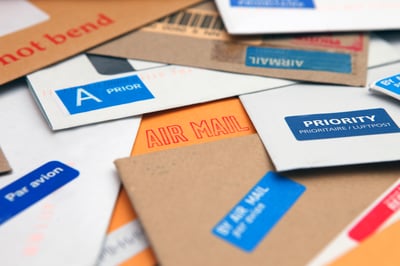
<p><a href="https://www.g2.com/categories/direct-mail-automation" rel="noopener" target="_blank">Direct mail marketing</a> is a traditional type of marketing through which a company reaches out to customers via the postal service. This type of outreach can take many forms such as letters, flyers, brochures, and catalogs.</p>
<p>Direct mail uses geographic targeting and carefully crafted messages to persuade the recipient. </p>
<h2>7. Experiential marketing</h2>
<p><a href="https://www.attorneyatwork.com/five-creative-ways-lawyers-can-use-experiential-marketing/" rel="nofollow noopener" target="_blank">Experiential marketing</a> pulls consumers into an experience to inspire, educate, or entertain, while raising brand awareness and deepening brand loyalty and trust.</p>
<p>Also known as “engagement marketing,” companies often organize an activity that prospects take part in. Common examples of experiential marketing include webinars, podcasts, trade shows, fairs, seminars, and conventions. </p>
<p>Experiential marketing can be time-consuming and requires significant effort, but this type of engagement can help brands connect with new customers and deepen a brand’s relationship with its customers.</p>
<h2>8. Direct mail</h2>
<p><a href="https://www.g2.com/categories/direct-mail-automation" rel="noopener" target="_blank">Direct mail marketing</a> is a traditional type of marketing through which a company reaches out to customers via the postal service. This type of outreach can take many forms such as letters, flyers, brochures, and catalogs.</p>
<p>Direct mail uses geographic targeting and carefully crafted messages to persuade the recipient. </p>
 <p>Even in the digital age, direct mail marketing remains a potent marketing tactic. The <a href="https://facts.usps.com/marketing-mail-volume/" rel="nofollow noopener" target="_blank">U.S. Postal Service</a> sent more than 77-billion pieces of marketing mail last year alone. Although millennials grew up in an age where digital media was becoming commonplace, studies show that 95 percent of millennials <a href="https://www.uspsdelivers.com/millennials-and-mail-5-myths-and-the-truth-behind-them/" rel="nofollow noopener" target="_blank">enjoy receiving mail</a>. </p>
<h2>9. Print ads<strong><br></strong></h2>
<p>Companies use print ads to advertise products and services in newspapers, magazines, billboards, and other print media. </p>
<p>Organizations have used print ads for decades, although print advertising has declined in popularity with the rise of digital media. The effectiveness of print ads can be harder to measure than digital marketing methods.</p>
<h2>10. Catalog marketing</h2>
<p>One of the oldest methods of direct marketing, catalog marketing, involves sending booklets of products to prospective or returning customers – usually through the mail or email.</p>
<p>Catalogs showcase an organization’s products, potentially leading to revenue generation. Typically, catalogs are sent to consumers who have expressed an interest in a company through a past purchase or website visit. </p>
<h2>4 factors to consider when starting a direct marketing campaign</h2>
<p>A successful direct marketing campaign requires careful planning and strategy. Before embarking on a new campaign, consider the following factors.</p>
<h3>1. Target customers</h3>
<p>Direct marketing is more aggressive than most other types of marketing, and customers can find it intrusive, especially if your product or service is not relevant or interesting to them. It’s important to narrow your audience to a targeted group of consumers who are likely to buy your product or service. </p>
<h3>2. Budget</h3>
<p>Money and other resources can limit what a company can accomplish with its marketing budget. For small businesses, internet marketing and social media can make a big impact with a modest budget. </p>
<h3>3. Call-to-action (CTA)</h3>
<p>The main objective of direct marketing is to persuade the recipient to perform an action such as, “call our 1-800 number,” “click on this email,” “download our free guide,” or “sign up today.” </p>
<p>Therefore, a carefully crafted <a href="https://www.g2.com/articles/what-is-a-call-to-action" rel="noopener" target="_blank">call-to-action</a> is essential to success. The call to action must be easy to find, provide clear instructions, and be designed for conversion.</p>
<h3>4. Response tracking</h3>
<p>Response tracking is important to measure the success of a digital marketing campaign. Tracking response data can help a business analyze user behavior and learn more about when, why, and how customers respond to the ad. </p>
<h4>Conclusion</h4>
<p>According to <a href="https://www.hubspot.com/marketing-statistics" rel="nofollow noopener" target="_blank">Hubspot</a>, 63 percent of companies report that generating traffic and leads is their top marketing challenge. Direct marketing remains a powerful way to market to new and existing customers, boost brand visibility, and generate leads. </p>
<p>As the media landscape changes, direct marketing methods and tools will continue to evolve, and brands will find new ways to leverage this type of marketing strategy. </p>
<p><strong>Find the right marketing strategy for your brand by checking out these marketing strategy agencies, only on G2. </strong></p>
<p>
<p>Even in the digital age, direct mail marketing remains a potent marketing tactic. The <a href="https://facts.usps.com/marketing-mail-volume/" rel="nofollow noopener" target="_blank">U.S. Postal Service</a> sent more than 77-billion pieces of marketing mail last year alone. Although millennials grew up in an age where digital media was becoming commonplace, studies show that 95 percent of millennials <a href="https://www.uspsdelivers.com/millennials-and-mail-5-myths-and-the-truth-behind-them/" rel="nofollow noopener" target="_blank">enjoy receiving mail</a>. </p>
<h2>9. Print ads<strong><br></strong></h2>
<p>Companies use print ads to advertise products and services in newspapers, magazines, billboards, and other print media. </p>
<p>Organizations have used print ads for decades, although print advertising has declined in popularity with the rise of digital media. The effectiveness of print ads can be harder to measure than digital marketing methods.</p>
<h2>10. Catalog marketing</h2>
<p>One of the oldest methods of direct marketing, catalog marketing, involves sending booklets of products to prospective or returning customers – usually through the mail or email.</p>
<p>Catalogs showcase an organization’s products, potentially leading to revenue generation. Typically, catalogs are sent to consumers who have expressed an interest in a company through a past purchase or website visit. </p>
<h2>4 factors to consider when starting a direct marketing campaign</h2>
<p>A successful direct marketing campaign requires careful planning and strategy. Before embarking on a new campaign, consider the following factors.</p>
<h3>1. Target customers</h3>
<p>Direct marketing is more aggressive than most other types of marketing, and customers can find it intrusive, especially if your product or service is not relevant or interesting to them. It’s important to narrow your audience to a targeted group of consumers who are likely to buy your product or service. </p>
<h3>2. Budget</h3>
<p>Money and other resources can limit what a company can accomplish with its marketing budget. For small businesses, internet marketing and social media can make a big impact with a modest budget. </p>
<h3>3. Call-to-action (CTA)</h3>
<p>The main objective of direct marketing is to persuade the recipient to perform an action such as, “call our 1-800 number,” “click on this email,” “download our free guide,” or “sign up today.” </p>
<p>Therefore, a carefully crafted <a href="https://www.g2.com/articles/what-is-a-call-to-action" rel="noopener" target="_blank">call-to-action</a> is essential to success. The call to action must be easy to find, provide clear instructions, and be designed for conversion.</p>
<h3>4. Response tracking</h3>
<p>Response tracking is important to measure the success of a digital marketing campaign. Tracking response data can help a business analyze user behavior and learn more about when, why, and how customers respond to the ad. </p>
<h4>Conclusion</h4>
<p>According to <a href="https://www.hubspot.com/marketing-statistics" rel="nofollow noopener" target="_blank">Hubspot</a>, 63 percent of companies report that generating traffic and leads is their top marketing challenge. Direct marketing remains a powerful way to market to new and existing customers, boost brand visibility, and generate leads. </p>
<p>As the media landscape changes, direct marketing methods and tools will continue to evolve, and brands will find new ways to leverage this type of marketing strategy. </p>
<p><strong>Find the right marketing strategy for your brand by checking out these marketing strategy agencies, only on G2. </strong></p>
<p> </p>
</p>

Direct mail marketing has recently come back into style, and it’s not hard to see why.
 by Brianna Valleskey

It’s a regular day. You get up, get yourself ready, and before you head out the door, you...
 by Alexa Drake

Who’s not guilty of scrolling through their feed at 3 AM, finding an irresistible urge to...
 by Manasa Kumar