.png?width=400&height=150&name=Untitled%20design%20(56).png)


As a civil engineering student, I loved environmental sciences. We spent a lot of time outdoors, and when we weren’t, we were in the lab conducting interesting tests, mostly on water and soil samples.During one visit to a testing lab, I wondered how every sample was handled so efficiently — how it was sent to the right testing stations, kept safe from contamination, and tracked for accurate results. Curious, I asked my professor, who introduced me to the best laboratory information management system (LIMS) software. A week later, I was using one of these tools to manage soil samples for my entire batch!
That experience showed me how the best LIMS software makes lab work much easier. It helps track samples, keeps data secure, and ensures everything runs smoothly. Over time, I’ve learned what labs need most from these tools, like accuracy, efficiency, and seamless integration with lab equipment.
Now, as a writer who also reviews software on G2, I've combined my own experience and analyzed user reviews on G2 to create this list of the best LIMS software. Read on to find the right one for your lab.
TL;DR: Based on G2 reviews and my research, the best LIMS software are Thermo Scientific SampleManager LIMS, QBench, STARLIMS, LabWare LIMS, Labguru ELN LIMS, CrelioHealth LIMS, CloudLIMS, SciSure (formerly eLabNext and SciShield), Benchling, and Lockbox LIMS.
Let’s look at them in detail.
For labs that require safety documentation, regulatory compliance, and centralized research data management.
*These LIMS software are top-rated in their category, according to G2's Spring 2026 Grid Report. Pricing for these products is available upon request, except for those for which I’ve already included the starting price details.
Did you know? The global laboratory information management system (LIMS) market is expected to reach $3.56 billion by 2030, expanding at a compound annual growth rate (CAGR) of 6.22% between 2025 and 2030.
LIMS software helped me efficiently manage and track laboratory samples, ensuring accurate data collection and analysis.
The best LIMS software went beyond traditional record-keeping, automating workflows, minimizing human error, and integrating seamlessly with lab equipment. It became an indispensable tool in my daily work by streamlining lab processes and making research more manageable.
When I first started working in a lab, managing samples and data felt overwhelming. I spent hours tracking down information, sorting through paper records, and ensuring everything was in the right place. Once I started using LIMS software, sample management became far easier and faster. It helped me stay organized, ensured accuracy and freed up time for more critical tasks like data analysis. These tools not only made my work more efficient but also improved the overall quality of my research.
In this article, I’ll share my personal picks for the best LIMS software in 2026. I’ve evaluated each tool and will highlight what made them stand out and how they helped me tackle common lab challenges.
I evaluated the best LIMS software extensively to manage and track laboratory samples, automate lab workflows, and assess its efficiency in ensuring accurate data collection and analysis.
To enhance my understanding, I also spoke with laboratory professionals to learn about their needs and challenges in sample management. I used AI to analyze user feedback and reviews on G2 and G2’s latest Grid Report to gain further insights into each tool’s features, ease of use, and overall value.
By combining hands-on evaluations with expert feedback and user reviews, I’ve compiled a list of the best LIMS software to help you select the right one for your lab’s needs.
In cases where I couldn’t personally test a tool due to limited access, I consulted a professional with hands-on experience and validated their insights using verified G2 reviews.
The screenshots featured in this article may be a mix of those captured during my research and those obtained from the vendor’s G2 page.
When evaluating various LIMS solutions, I focused on a few key factors to evaluate how well they address the complex needs of modern laboratories. Here's a breakdown of the aspects I paid attention to when selecting the best LIMS software:
The list below contains genuine user reviews from our best LIMS Software category page. To qualify for inclusion in the category, a product must:
This data was pulled from G2 in 2026. Some reviews have been edited for clarity.
Thermo Scientific SampleManager is frequently described by G2 reviewers as a robust laboratory information management system (LIMS) that offers powerful data analytics through pre-configured dashboards. These dashboards are interactive and present key lab metrics, such as resource availability, inventory status, and performance indicators, in a user-friendly way. From what I’ve read, users consistently praise how easy it is to extract insights without needing to dig too deeply into the data.
Another commonly appreciated element is the deployment flexibility. According to feedback I gathered from G2 users, the option to deploy either on-premises or in the cloud gives labs more control over infrastructure decisions. Many find this useful for balancing IT costs and system security, with cloud deployment offering added benefits like disaster recovery and reduced hardware dependency.
One standout capability, based on several reviews, is the Laboratory Execution System (LES). G2 users report that LES provides clear, step-by-step process guidance that helps ensure SOP compliance. I’ve also seen reviewers mention how well the system manages training records, allowing labs to assign and track training by role and enforce access controls to maintain compliance before tests or equipment usage.
I frequently see G2 reviewers highlight SampleManager’s traceability features, especially how it captures actions and process history. Reviewers say this visibility makes audits and process reviews much easier. In addition, the contract lab portal receives positive attention for simplifying quote, sample, label, and invoice management, all within a secure interface.
From what I’ve seen, integration with the Chromeleon Chromatography Data System (CDS) is another highly valued feature. Users report that it makes handling chromatography and mass spectrometry data smooth, centralized, and secure, which is especially useful for labs managing complex analytical workflows.

Analyzer links can deliver seamless data flow once configured. Some G2 reviewers report that establishing analyzer-to-computer connections may require programming know-how; labs typically smooth this by using vendor connection kits, standard HL7/ASTM profiles, and a short, assisted onboarding. Normal operations are stable for most teams.
G2 Data also shows SampleManager’s strongest performance in sample management (89%), followed closely by workflow management (88%) and qa/qc (85%), indicating consistently high satisfaction across core LIMS capabilities.
While the platform is highly configurable and fit for purpose for most labs, some teams with very niche or specialized workflows may find certain configurations require additional customization or vendor support to fully meet their needs, especially when optimizing for long-term value.
Also, whilethe platformw works reliably for most workloads, G2 feedback indicates that under heavy data volumes, the results entry module can slow down. Optimizing batch uploads and archiving inactive data typically restores responsiveness.
With a 4.3/5 rating on G2, reviewers consistently highlight strong process standardization, auditability, and compliance once configurations are in place.
"As the Lab Supervisor, we needed a solution that could grow with us, both now and in the future, and SampleManager has delivered on that promise. We’re a contract lab that tests in-service lubricants, handling numerous clients and various pieces of equipment. When evaluating potential LIMS software, SampleManager stood out and has certainly met our expectations. The biggest benefit so far has been the significant improvement in turnaround time by streamlining the logging and reporting processes. This has been a major win for our team."
- Thermo Scientific SampleManager review, Craig B.
"The speed is an issue. Despite using AWS within the company, some Windows load very slowly. For example, modifying folders takes around 20 to 30 seconds from clicking to opening. Software should open windows within half a second to ensure it feels fast and usable."
- Thermo Scientific SampleManager review, Raul P.
Based on my review of G2 user feedback, QBench consistently earns praise for its fast and straightforward setup process. Many reviewers highlight how the platform is easy to get up and running without lengthy onboarding or complex configurations. That simplicity seems to be a welcome change for labs used to more cumbersome LIMS implementations.
One standout capability, according to users, is workflow automation and order tracking. I frequently see G2 reviewers highlight how the system enables real-time monitoring of orders, samples, and test progress.
It's no-code philosophy allows you to modify workflows and add custom data fields yourself without waiting for a developer. This adaptability ensures a faster phased implementation, letting labs go live quickly with flexible naming that matches their specific terminology.
A commonly appreciated element is QBench’s flexibility in sample tracking. From what I’ve seen, users value its support for custom fields, which allows teams to tailor the system to their own workflows. This adaptability is cited as a key reason labs across different industries choose QBench over more rigid alternatives.
Something G2 reviewers seem to really appreciate is the platform’s bulk reporting tools. Many users mention how reusable templates simplify the process of generating high-volume reports. This appears to be a huge time-saver for labs with fast turnaround requirements, especially when accuracy and consistency are critical.
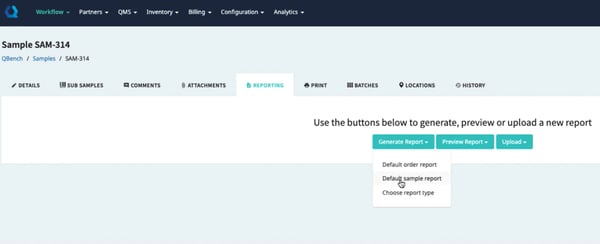
G2 Data also highlights strong performance in sample management (92%), along with workflow management (88%) and data warehouse capabilities (86%), reinforcing QBench’s reliability across core lab operations.
While QBench is fit for purpose for most labs, some users note that performance can slow down when working with large datasets or generating reports, occasionally affecting workflow efficiency at scale, though many teams are able to maintain consistency with optimization and support.
While the platform is highly flexible, some teams with more specific or evolving workflows might find that advanced customizations take time or require technical expertise, particularly during setup and refinement, but most users find the effort pays off in long-term value and adaptability.
With an overall rating of 4.5/5, G2 reviewers consistently describe QBench as powerful and dependable after initial configuration.
"QBench offers a lot of different tools and customizations that allow you to configure the system to whatever best fits your needs. The customer service team, in particular, is excellent and often goes above and beyond to help answer questions and work collaboratively on solutions. I feel comfortable knowing the system is reliable, thorough, and backed by a technically skilled team."
- QBench review, Emron W.
"It is not something wrong with QBench, but an implementation critical aspect. It needs to be very well defined from the beginning, as some features are hard to change once the software has been configured because the relations between databases are already established."
- QBench review, Verified G2 user.
Based on my review of G2 user feedback, STARLIMS stands out as a comprehensive laboratory information management system (LIMS) that supports the full spectrum of lab operations. Many reviewers describe it not just as a tool, but as a complete ecosystem that integrates various workflows across a lab's lifecycle.
One feature that I see getting a lot of praise is sample lifecycle management. From what I’ve read, users value how STARLIMS tracks each step, from collection and processing to storage and archival, with precision and clarity. This is especially important in regulated environments, where accuracy and traceability are non-negotiable.
Looking at broader review trends, I can see recurring appreciation for the platform’s scalability. According to G2 users, STARLIMS adapts well to different lab sizes and needs, whether you’re running a small research facility or a high-throughput testing operation. The ability to scale without major system overhauls is often cited as a key advantage for long-term growth.
Across multiple reviews, I’ve noticed users highlight the platform’s ability to bridge research and quality control processes. This transition from development to manufacturing workflows is seen as a major benefit, particularly in pharma and biotech sectors where reducing time-to-market can have a significant impact.
Something G2 reviewers seem to really appreciate is the reporting and analytics capability. Users consistently mention that STARLIMS goes beyond basic reporting by offering deep insights that support informed decision-making. Many also commend its ability to automate compliance documentation and align with FDA and ISO standards, helping streamline audit processes.
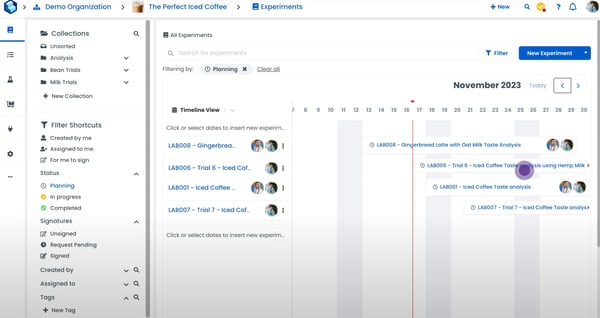
On G2, STARLIMS earns its highest marks from reviewers in sample management (93%), workflow management (90%), and data warehouse (90%) — outperforming category averages across all three.
That said, there are some considerations. While STARLIMS is fit for purpose for complex lab environments, some users note that the interface reflects an older design and workflows can take time to navigate, leading to a learning curve for new users, though teams typically gain efficiency with continued use.
Pricing is a consideration for teams with tighter budgets or simpler requirements, according to a few reviews. Some users highlight that licensing and maintenance costs can be high, but most find the platform delivers strong value for large-scale and highly regulated environments.
Rated 4.5/5 on G2, G2 reviewers consistently highlight the STARLIMS robustness, data integrity, and compliance-readiness as key benefits. With thoughtful onboarding, standardized workflows, and resource planning, most teams transform initial complexity into long-term operational strength.
"STARLIMS offers robust data management capabilities, enabling centralized storage, quick retrieval, and efficient analysis of experimental data. Its comprehensive audit trail function allows users to trace and record the source, processing steps, and results of samples, ensuring the reliability and traceability of the data."
- STARLIMS review, Xueyan Z.
"The SSL language is quite limited, offering only basic functionality with very few system features. Additionally, there is a lack of detailed and up-to-date documentation for these functions, making it difficult for users to fully utilize the system."
- STARLIMS review, Soy H.
Maintain efficiency and accuracy in your lab operations. Explore the best lab inventory management solutions today.
In reviewing LabWare LIMS, one of the first things I noticed from G2 reviewers is how much customization the platform allows. Users often praise the system’s flexibility, especially in settings where lab processes differ significantly. The modular architecture is another aspect that’s frequently highlighted, as it lets organizations tailor features to match their specific workflows.
Based on user feedback, the cloud-based deployment model is seen as a major advantage. It simplifies the setup process and reduces the time needed to get started. A feature that G2 reviewers consistently call out is the visual workflow builder, which helps make system configuration clearer and more intuitive. According to multiple reviews, labs can go live in under 30 days using LabWare’s pre-configured SaaS offering — something many see as a welcome alternative to long deployment cycles.
One standout capability, according to users, is the internal change management system. Reviewers appreciate how this tool tracks updates and changes in an auditable way, which is especially important for regulatory compliance. The flexibility to customize this system based on lab needs is a benefit that comes up often in reviews.
There’s a lot of love for the way this tool handles scanner and tablet integrations. Reviewers mention that collecting and processing data in real time is seamless, with minimal disruption to ongoing tasks. These features seem to help labs operate more efficiently and improve daily productivity.
Another frequently praised aspect is the stability study management functionality. G2 users note that it supports everything from inventory and storage location tracking to sample chain of custody, results entry, and reporting. This end-to-end management appears to be a big time-saver for labs running complex stability studies.
Reviewers also highlight the ELN (electronic lab notebook) as a particularly powerful addition. G2 users note that it can replace most floating spreadsheets in the lab, with audit tracking and traceability tools that are both customizable and compliance-ready.

STARLIMS suits a wide range of lab use cases, though some users note that visual consistency varies across modules — this can require brief adjustment when switching between workflows, but role-based dashboards and customization help maintain efficiency and long-term value.
The platform offers strong depth and flexibility, though some teams find that structured training is important to fully leverage its capabilities, particularly during initial setup. Those who invest in onboarding and best practices typically achieve faster proficiency and long-term value.
Overall, based on the G2 feedback I’ve gathered, LabWare LIMS is a strong option for labs that need a highly customizable and scalable solution. Rated a strong 4.5/5 on G2, teams should be prepared for a potentially steep onboarding process and a need for structured training to make the most of what the platform offers.
"Labware LIMS offers predefined templates that provide a structured framework for your database and LIMS system. It also allows you to customize the interface and processing templates to meet your specific needs."
- LabWare LIMS review, Keegan W.
"The user interface is not intuitive, and the visual workflow solution only offers a basic enhancement, ultimately leading users back to outdated data entry and admin screens that haven’t been updated in 20 years. Additionally, with minimal out-of-the-box functionality, the setup process requires more time and effort for tedious configurations compared to other LIMS products."
- LabWare LIMS review, Gerry Y.
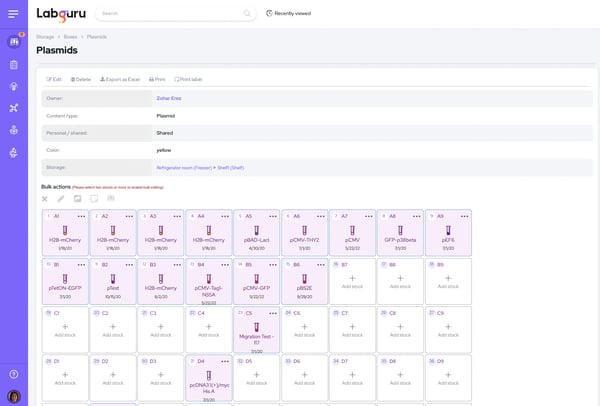
Labguru ELN LIMS is often recognized by G2 reviewers for its streamlined sample and inventory management. From what I’ve seen, users consistently appreciate how easy it is to track where samples and supplies are stored, with automatic updates to inventory levels in real time. This level of visibility helps teams manage stock efficiently, something that’s especially valuable in labs dealing with high volumes of consumables and samples.
One feature that I see getting a lot of praise is the certification analysis tool. G2 reviewers describe how it allows users to digitally sign off on experiments, witness entries, or reject them based on set standards. This functionality supports better documentation and accountability, which reviewers say is critical for labs with strict quality assurance protocols. The shift away from paper-based records toward digital compliance is something users seem to really value.
According to feedback I gathered from G2, instrument management and orchestration also stand out. Users mention how helpful it is to monitor calibration or set equipment maintenance timelines. This proactive scheduling reportedly reduces downtime and improves lab efficiency, which I can imagine is a major win for lab managers overseeing complex instrument fleets.
Something G2 reviewers seem to really appreciate is the platform’s ability to handle large datasets. I’ve read that uploading and exporting sizable research files is smooth, and system performance doesn’t degrade even when working with heavy data loads. This is especially useful in data-intensive environments, where speed and data integrity are non-negotiable.
G2 reviewers also frequently highlight how easy it is to connect experiments, samples, and inventory data within a single view. Reviewers note that being able to jump between related experiments or trace a sample across projects without switching systems significantly speeds up both day-to-day work and manuscript preparation — a benefit that comes up consistently among research-heavy teams.
Based on G2 Data, Labguru ELN LIMS earns its highest marks from G2 reviewers in ELN support (92%), workflow management (91%), and instrument management (89%) ,outperforming category averages across all three.
There are a few things worth noting, too. Some G2 reviewers observe that new users may need some time to get familiar with the platform’s depth and workflows, particularly during initial setup, though most teams report improved efficiency and collaboration as they become more accustomed to the system.
While the platform supports a wide range of lab workflows, G2 users mention that certain advanced or niche use cases may require workarounds or additional feature development, but many find that the existing functionality continues to evolve and delivers strong value for growing research teams.
Despite these gaps, Labguru ELN LIMS is rated 4.6/5 on G2 and is widely regarded as a capable platform. Based on G2 feedback, its strengths lie in compliance tracking, equipment scheduling, and managing research data at scale. It’s clear why this tool appeals to modern labs that prioritize both operational efficiency and regulatory rigor.
"Labguru has a very customizable and intuitive base interface, which can also be tailored in further ways: The first being dashboards, which can be programmed to deliver data visualizations to users, and workflows, which allow for coded scripts to highly automate and personalize the user experience."
- Labguru ELN LIMS review, Matthew C.
"Getting started with Labguru does require some adjustment, as it takes time to adapt to the platform. Occasionally, I find the interface can be somewhat slow, which can be a bit frustrating. Additionally, the cost may be on the higher side for smaller labs and users who are not in academia."
- Labguru ELN LIMS review, Verified G2 user.
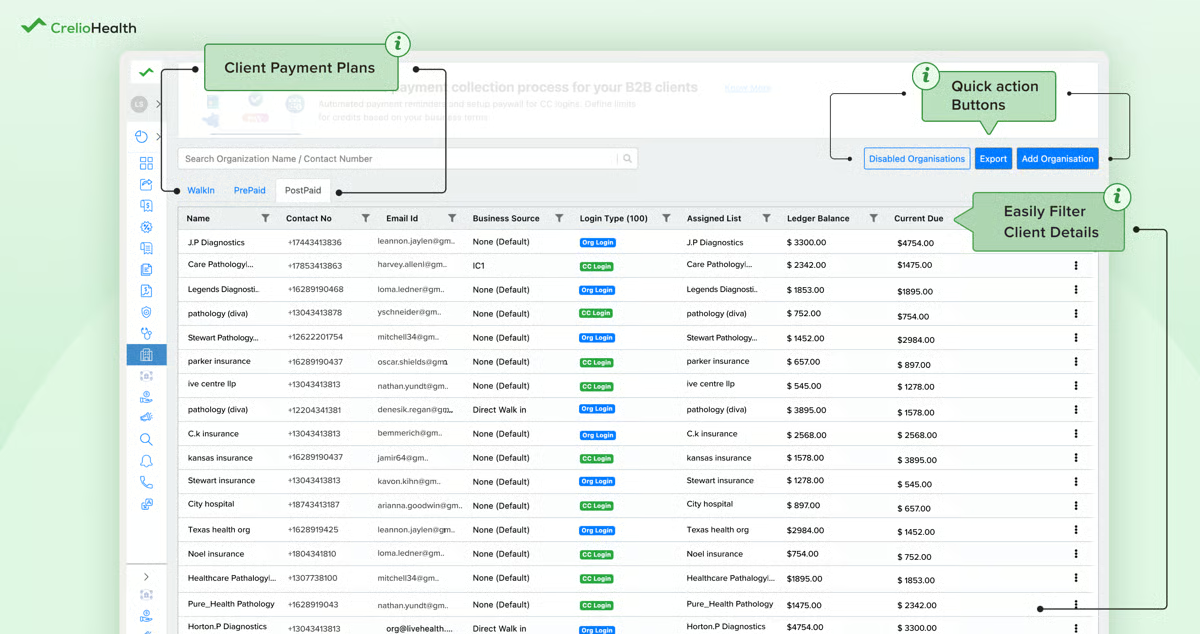
In reviewing CrelioHealth LIMS, one of the first things that stands out from G2 reviewers is how well the platform supports end-to-end diagnostics lab operations. Users frequently highlight how the system connects patient registration, sample collection, processing, and reporting into a single workflow. This unified approach is often praised for helping labs reduce manual steps and maintain better visibility across the testing lifecycle.
Based on user feedback, the cloud-based deployment model is seen as a major advantage. Many G2 reviewers mention that implementation is relatively quick compared to traditional lab systems, particularly for small to mid-sized labs that want to digitize operations without complex infrastructure. The ability to access the platform remotely and manage multiple locations from one dashboard is another capability that users consistently appreciate.
A feature that reviewers often call out is the sample tracking and barcode management functionality. According to multiple G2 reviews, barcode-based tracking helps minimize labeling errors and improves traceability from collection to reporting. Labs running high sample volumes say this capability helps streamline workflows and maintain accuracy during busy processing periods.
Another commonly praised capability is automated report generation and delivery. G2 users note that labs can generate customizable reports and share them directly with patients or physicians through email, SMS, or online portals. This automated communication layer appears to help labs reduce administrative work while delivering results faster to stakeholders.
There’s also strong positive feedback around the integration ecosystem. Reviewers mention that CrelioHealth can integrate with diagnostic analyzers and third-party systems, allowing labs to capture results automatically rather than relying on manual entry. This automation is frequently described as a major efficiency boost, especially for labs processing a large number of tests daily.
Several G2 reviewers also highlight the patient and doctor portal experience. These portals allow users to access reports, track test progress, and manage appointments in a centralized environment. Labs say this improves transparency for patients and reduces the number of manual inquiries their teams have to handle.
CrelioHealth's highest rated features are data warehouse (98%), billing management (96%), and sample management (95%), each scoring well above category averages.
At the same time, some users note that initial configuration and workflow setup can require careful planning. Labs with very specific operational processes sometimes need to spend time customizing test templates and report formats. Many teams mention that establishing standardized templates early helps simplify long-term operations.
Another point mentioned in reviews is that highly specific or advanced use cases, such as complex billing workflows or specialized data handling, may require additional customization or interim workarounds, though many labs find the platform continues to evolve to support these needs and deliver long-term value.
Overall, based on the G2 feedback I’ve reviewed, CrelioHealth is a strong option for diagnostic labs looking for a cloud-based LIMS and lab management platform that supports automation, integrations, and patient engagement.
"CrelioHealth LIMS provides strong financial data visibility with clear, user-wise and test-wise billing reports. Revenue tracking, invoice accuracy, and MIS reports are well-structured, which helps in auditing, reconciliation, and cost analysis. The system makes it easy to monitor collections, pending dues, and financial performance across labs in real time."
- CrelioHealth LIMS review, Pooja G.
"One current limitation we have noted in CrelioHealth is the inability to split samples or reserve individual test orders when multiple tests are issued under the same invoice.
In scenarios where some tests need to be postponed (for example, fasting requirements, repeat collections, or add-on testing), the system does not yet allow flexible reservation or partial sample handling within a single invoice. This can occasionally impact workflow efficiency and requires interim manual coordination."
- CrelioHealth LIMS review, Kareeman G.
While evaluating CloudLIMS, I frequently see G2 reviewers highlight its instrument integration capabilities. Users mention that the system handles data transfers from a wide variety of instruments effortlessly using CSV/XLS files. From what I’ve read, CloudLIMS automatically reads these files and maps the data to the appropriate fields, helping eliminate manual entry and ensuring consistency in lab operations.
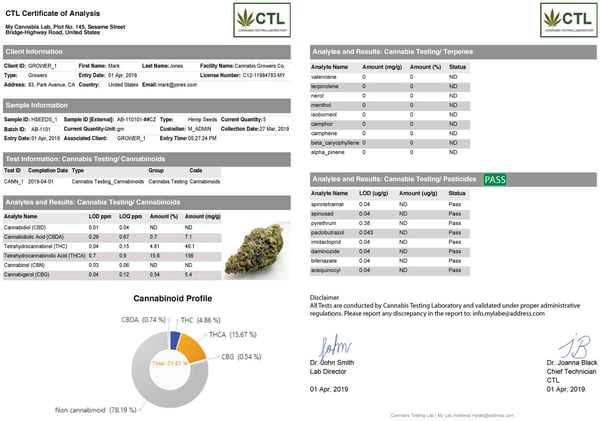
Another commonly appreciated feature is the platform’s reporting and certificate-of-analysis (CoA) customization. According to feedback I gathered from G2 users, the ability to design multiple report templates at no extra cost is a huge benefit. Reviewers seem to really appreciate the flexibility to meet both regulatory requirements and client preferences — especially for labs working with diverse stakeholders.
The functionality around legacy data migration stands out in reviews. Many users point out how smooth and secure the process is, even when transferring data from older systems. I’ve come across multiple mentions of successful migrations without data loss or corruption, which is reassuring for labs switching platforms.
A feature that gets frequent praise is data security and backup. Based on my review of G2 user feedback, CloudLIMS runs regular automated backups and stores them across geographically distributed servers. Users feel confident that even in the event of a disaster, their data will remain safe and recoverable.
Another strength I consistently see in G2 reviews is the responsiveness of the CloudLIMS support team, with users highlighting quick turnaround times, hands-on implementation help, and a willingness to customize workflows, which helps labs get faster time-to-value.
These reflect in the satisfaction score CloudLIMS has on G2, getting rated above category averages in all three of its highest-rated features on G2: data warehouse (95%), sample management (94%), and inventory management (92%).
CloudLIMS supports a wide range of lab workflows, though some G2 users note that out-of-the-box configurations may need refinement to fully align with specific or niche requirements, but its flexibility allows teams to tailor the system and achieve strong long-term value.
The platform is generally easy to use, though some G2 reviewers mention an initial learning curve when transitioning from spreadsheets or other systems, but most teams adapt quickly and see improved efficiency as they become familiar with the workflows and features.
Overall, CloudLIMS holds a strong 4.5/5 rating on G2, and reviewers consistently highlight its quick, cloud-native deployment, real-time sample tracking, and compliance-friendly records. With a few governance patterns (starter dashboards, saved views, guided setup), most labs get fast time-to-value and a platform that scales with their workflows.
"The CoA template was customized to meet our needs, including all essential client and sample details, along with a table displaying analytes and their observed values. Each table cell was designed to capture values based on specific test types. The CloudLIMS team collaborated closely with us to ensure the template matched our expectations. They automated calculations and applied built-in logic and complex algorithms to make this happen."
- CloudLIMS review, Ronel C.
"The modules do contain more sample criteria than what is needed, and it is a bit cumbersome to go through and customize."
- CloudLIMS review, Melissa B
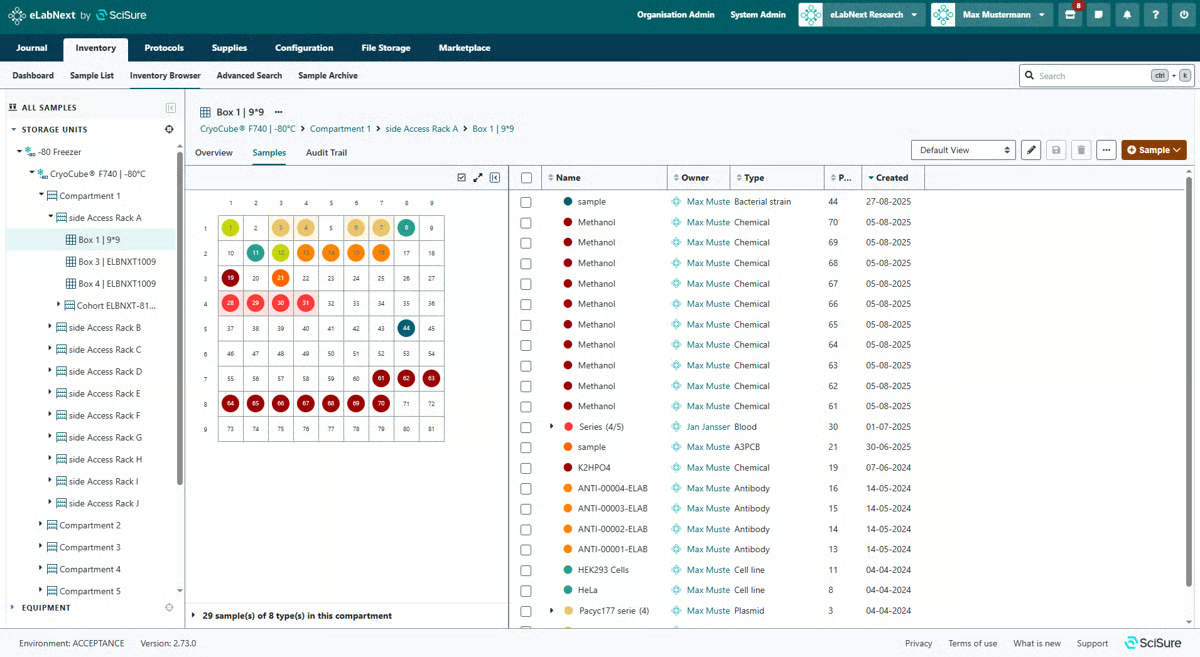
When reviewing SciSure, one of the first things that stands out from G2 reviewers is how the platform brings multiple lab functions into a single system.
Users frequently highlight that SciSure combines tools for research documentation, sample management, safety, and compliance into a single environment. This unified approach helps labs replace fragmented systems like spreadsheets, paper notebooks, and disconnected software tools.
Based on user feedback, the integrated ELN and LIMS capabilities are a major advantage. Many G2 reviewers note that being able to document experiments, track samples, and manage protocols in one platform improves collaboration across research teams. This level of integration appears to reduce data silos and helps labs maintain a more organized research workflow.
A feature that reviewers often call out is the platform’s sample and inventory management functionality. According to multiple reviews, SciSure allows labs to track materials, samples, and equipment with detailed records and barcode-based tracking. Users say this capability improves traceability and helps labs maintain accurate records throughout the lifecycle of an experiment.
Another commonly praised capability is the compliance and audit support built into the platform. G2 users mention that features like audit trails, document management, and compliance tracking make it easier to meet regulatory requirements. These tools are especially valuable for research organizations that need clear documentation and traceability for inspections or internal reviews.
There’s also strong feedback around the platform’s workflow automation and collaboration tools. Reviewers highlight that teams can automate routine lab processes and manage tasks through structured workflows. This helps reduce manual work and improves communication between scientists, lab managers, and operations teams.
Another frequently mentioned aspect is the Environmental Health and Safety (EHS) functionality included within the system. G2 reviewers appreciate that SciSure integrates safety training, hazard management, and regulatory compliance alongside core lab operations. Having these capabilities in the same platform helps organizations maintain safer working environments while keeping compliance documentation centralized.
SciSure supports a wide range of research and lab management workflows, though some G2 users note that navigation and interface consistency can take time to get familiar with across modules, particularly for new users, but most teams improve efficiency as they adapt to the platform and establish structured usage patterns.
The platform offers strong functionality across ELN, LIMS, and compliance workflows, though G2 reviewers mention that certain features, such as hierarchy flexibility, editing controls, or specific module capabilities, may feel bounded, but these help maintain data integrity and support long-term regulatory value.
Overall, based on the G2 feedback I’ve gathered, SciSure, with a 4.2 G2 rating, is a strong option for research labs looking for a unified digital lab platform that combines ELN, LIMS, safety, and compliance tools.
"What I like most about SciSure is its accessibility and how centralized it is. The electronic lab notebook is intuitive and allows seamless linking of text, images, and raw data, which makes documentation efficient and traceable. In addition, the inventory module lets me view all relevant information for a sample or piece of equipment in one place, improving organization, data integrity, and day-to-day lab efficiency.
All of the features are easily integrable and implemented, which is particularly useful if you use the software daily as it is our case."
- SciSure review, Coral C.
"While the platform is great overall, there are still a few areas for improvement. Some links or tabs currently don’t lead anywhere, which can make navigation a bit confusing at times. It would be helpful if these were either removed until functional or clearly labeled as “coming soon.”
Another important feature that I think is missing is an incident tracking module. Most labs need a dedicated space to report, log, and follow up on incidents (equipment failures, procedural deviations, etc.). Ideally, this would include automatically generated incident IDs, the ability to categorize incidents by type or subtype, assign them to specific users, and track their resolution status. Having this built into the system would make it even more valuable for daily lab management and compliance."
- SciSure review, Patricia B.
Based on my review of G2 user feedback, Benchling stands out as a purpose-built cloud platform designed specifically for life sciences teams. Users consistently describe it as a unified environment that connects experimental design, data capture, and collaboration across research workflows.
One of the most commonly praised strengths is Benchling’s integrated ELN and molecular biology toolkit. G2 reviewers highlight how the platform combines experiment documentation with sequence design, plasmid mapping, and cloning workflows, allowing scientists to manage everything in one place without switching tools.
Another capability that gets frequent recognition is real-time collaboration and data sharing. Users mention that teams can easily share protocols, annotate results, and work on experiments together, which helps improve communication across research groups and reduces data silos.
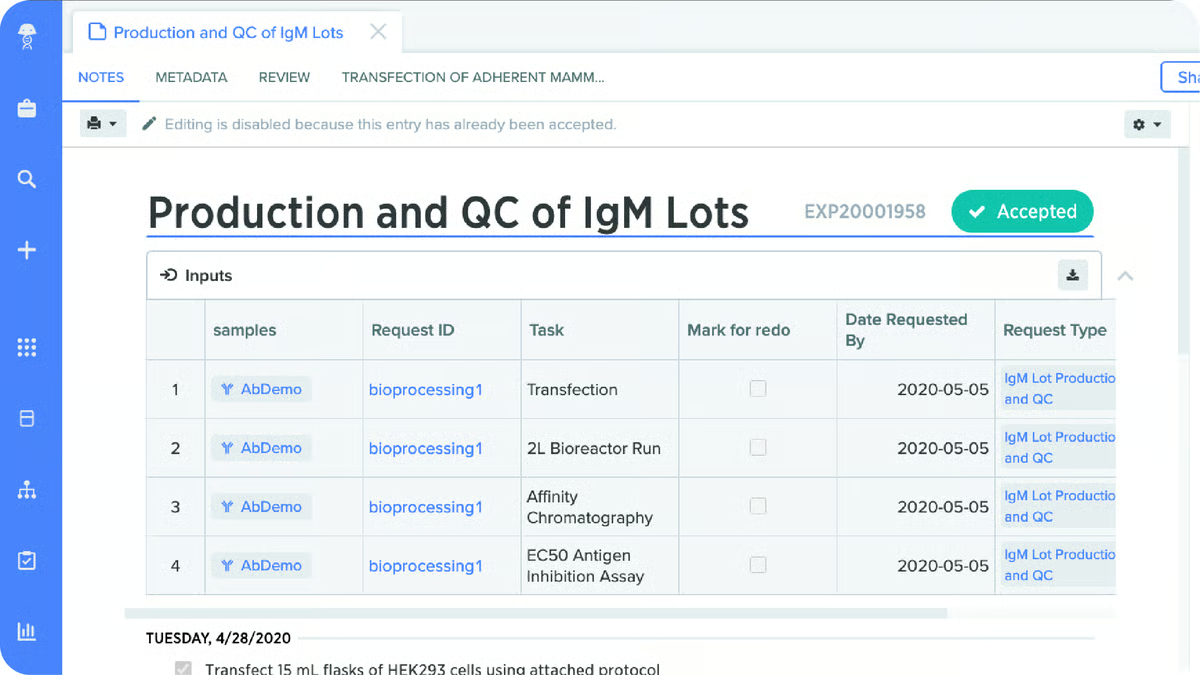
There’s also strong feedback around workflow standardization and templates. Reviewers appreciate the ability to create reusable templates and schemas, which helps enforce consistency across experiments and improves reproducibility in regulated environments.
Benchling users on G2 rate it highest for ELN support (93%), workflow management (91%), and data warehouse (89%), outperforming category averages in its top two features.
Users frequently call out ease of collaboration across complex R&D pipelines. From what I’ve seen, Benchling helps connect different stages of research, from early discovery to development, making it easier for cross-functional teams to work within a single system.
There are some things worth considering, though. Benchling supports a wide range of research and data management workflows, though some G2 users note that navigation and file organization can take time to get familiar with, particularly when working across multiple projects or datasets, but most teams improve efficiency as they establish structured workflows and usage patterns.
The platform offers strong functionality across ELN, data management, and molecular workflows, though G2 reviewers mention that certain advanced use cases, such as data export, file handling, or niche configurations, may require additional setup or workarounds, but many teams find the platform continues to evolve and delivers strong long-term value.
All things considered, based on G2 feedback, Benchling is a powerful, biology-first R&D platform with a 4.5 G2 rating. It excels in collaboration, data centralization, and sequence-driven workflows, particularly for biotech and pharma teams looking to scale research operations in a unified system.
"I liked the ease of use as a digital laboratory notebook, the ability to add in functional tables, link detailed protocols, and tag people."
- Benchling review, Verified G2 user.
"Not sure how to use the audit trails, and it can be difficult to navigate intuitively."
- Benchling review, Robert K.
By integrating medical lab software with your LIMS system, you can fine-tune your operations and set up seamless workflows.
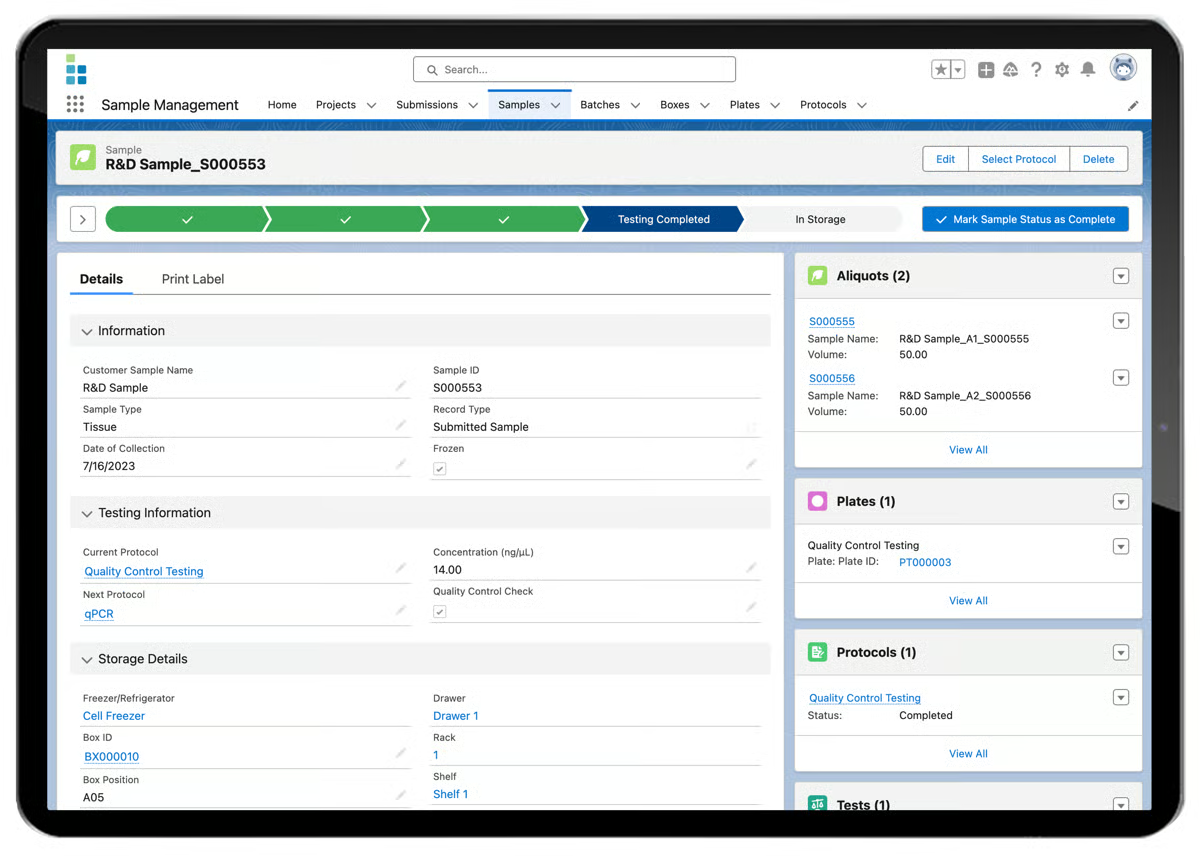
Lockbox LIMS is positioned as a cloud-based laboratory information management system designed to help labs manage testing workflows, track samples, and organize operational data. Across multiple reviews, I’ve noticed users describe it as a platform built to support the complexity of modern laboratory environments while maintaining structured and traceable workflows.
One feature that I see getting a lot of praise is its highly customizable workflows. G2 reviewers frequently highlight the flexibility to adapt processes to match specific laboratory requirements instead of forcing teams into rigid templates. From what I’ve seen, this adaptability is particularly valuable for labs managing different testing methods, experiment processes, and operational standards.
The responsive customer support is another commonly appreciated element. I’ve read multiple reviewers mention that the support team responds quickly and provides knowledgeable guidance when issues arise. There’s noticeable appreciation for how well the team understands both the platform and laboratory workflows, which helps streamline troubleshooting.
Another strength that shows up consistently in reviews is the user-friendly interface. Despite being a specialized lab system, many users describe it as approachable and relatively easy to navigate. I frequently see G2 reviewers mention that new users can learn the platform quickly, which helps reduce onboarding time and speeds up adoption across teams.
The functionality around end-to-end sample tracking and workflow automation stands out in reviews as well. Users often highlight the ability to monitor samples throughout the full testing lifecycle, from intake to reporting. Automation appears to reduce manual entry and lower the risk of human error, improving overall operational efficiency in the lab.
Because the platform is built on Salesforce infrastructure, this is another point that users tend to call out. According to feedback I gathered from G2 users, the underlying platform provides strong cloud reliability, security, and integration capabilities. This foundation helps ensure data stability while allowing labs to connect with other tools when needed.
The compliance and audit trail features also receive consistent praise. I’ve noticed G2 users often reference support for regulatory standards such as 21 CFR Part 11. For laboratories operating in regulated industries, this capability is frequently described as essential for maintaining data integrity and meeting compliance requirements.
G2 Data also highlights exceptional performance in instrument management (100%), along with inventory management (99%) and sample management (97%), significantly exceeding category averages across all three core LIMS capabilities.
That said, some users mention that implementation and initial setup require thoughtful planning. Configuring workflows, integrations, and data structures can take time, especially in complex laboratory environments. Based on what reviewers share, this setup tends to work particularly well for laboratories that approach implementation as a structured project, allowing teams to design workflows and automation that closely match their operational processes.
There’s also occasional mention of administrative configuration and documentation depth. Some users note a learning curve when navigating advanced settings or deeper customization options. From what I’ve seen, this environment works especially well for organizations that want a high degree of control over laboratory operations and are comfortable investing time in configuring systems to support specialized workflows.
Overall, looking at broader review trends, Lockbox LIMS earns its 4.8/5 G2 rating. In my opinion, it's a reliable solution for laboratories that need structured processes, compliance support, and detailed sample tracking.
"I am immensely impressed with the implementation process of Lockbox LIMS by Third Wave Analytics. The engineers listened to our needs and offered ways to streamline our process, building a system to our requirements and modifying it quickly upon request. They utilized their expertise to create a configured system that works even better than what we initially requested. Lockbox LIMS meets our current needs and is designed to adapt to our evolving needs in the future. The TWA team was clear about system needs, flexible in design, and responsive to requests. They also helped us think through our needs to design a smooth workflow during the setup, making the time spent worthwhile."
- Lockbox LIMS review, Claire H.
"Built on Salesforce: in certain system landscapes this can introduce constraints around integration architecture and the need for Salesforce‑specific admin/development skills."
- Lockbox LIMS review, Verified G2 user.
Have more questions? Find the answers below.
If you are wondering what a LIMS is and whether you actually need one for your lab, a laboratory information management system helps you track samples, automate workflows, organize lab data, and support compliance. You likely need a LIMS if your lab handles growing sample volumes, relies on spreadsheets, or operates in a regulated environment. Even smaller labs benefit from using a LIMS because it improves efficiency, reduces manual errors, and creates a stronger foundation for growth.
The best cloud-based LIMS with mobile access for field sample collection is CloudLIMS. It is a fully browser-based platform that works across mobile devices, tablets, and laptops, allowing field teams to collect, track, and upload samples in real time. For labs managing distributed operations or remote sampling, CloudLIMS helps maintain visibility and data accuracy without relying on on-prem systems. QBench is another option, but CloudLIMS is better suited for field-based workflows.
If you are looking for the cheapest but reliable LIMS solution for small private diagnostic labs, QBench and CloudLIMS are the strongest options. QBench is known for its low setup overhead, flexible workflows, and straightforward pricing, which makes it a practical choice for smaller labs getting started. CloudLIMS offers a cost-effective cloud model with built-in automation and compliance support, helping labs reduce infrastructure costs while maintaining reliability.
For teams asking which LIMS platform gives the best mix of compliance and ease of use for a food testing lab, QBench stands out. It combines compliance-friendly workflows with an intuitive interface, making it easier to manage routine testing while supporting standardized processes. CloudLIMS is also a strong option if you need end-to-end sample tracking and reporting across multiple locations, but QBench tends to be easier to adopt for day-to-day operations.
In a LIMS comparison focused on the most flexible API and integrations, QBench and Benchling stand out. QBench offers modern integration capabilities that work well for labs connecting instruments and external systems. Benchling is especially strong for biotech and research teams, with deep integrations across sequencing tools, research data pipelines, and connected workflows. For enterprise environments, Thermo Scientific SampleManager and LabWare LIMS also offer strong integration capabilities.
The LIMS software with the most user-friendly interface for environmental testing labs is often QBench. G2 reviewers frequently highlight its clean layout, intuitive navigation, and relatively fast onboarding, which makes it a strong fit for labs handling repeatable environmental testing workflows. CloudLIMS is also user-friendly, but QBench tends to stand out more for ease of day-to-day use.
If you are looking for a LIMS that's best for genomics workflows and connects to sequencers, Benchling is the strongest fit. It is built for molecular biology and genomics teams, with support for sequence data, plasmid design, and research workflows that need close alignment with sequencing activity. This makes Benchling especially appealing for biotech, genomics, and other sequence-driven research environments.
The top LIMS systems for pharma QC labs that integrate with chromatography instruments include Thermo Scientific SampleManager, LabWare LIMS, and STARLIMS. SampleManager is especially strong because G2 reviewers frequently highlight its Chromeleon integration and support for complex analytical workflows. LabWare LIMS and STARLIMS are also well suited for pharma QC labs that need compliance support, instrument connectivity, and structured process control.
The best LIMS software for a small clinical lab just starting out is usually QBench. It offers a user-friendly experience, quick setup, and flexible workflows without requiring a heavy IT lift. CloudLIMS is another strong option for a small clinical lab that needs cloud-based sample tracking, reporting, and compliance support from the beginning.
The LIMS vendors strongest for biobanking and sample tracking include CloudLIMS, SciSure, and Labguru ELN LIMS. CloudLIMS stands out for sample lifecycle tracking, storage management, and barcode-based workflows. SciSure and Labguru ELN LIMS are strong options for research-driven biobanking environments that need sample tracking alongside collaboration, documentation, and experiment management.
Enterprise reviewers on G2 most often recommend LabWare LIMS and Thermo Scientific SampleManager. Both platforms support complex workflows, instrument connectivity, and high-throughput automation ideal for global lab operations.
Labguru ELN LIMS and Benchling perform best for research environments. Labguru combines LIMS and electronic lab notebook (ELN) features to streamline documentation and inventory, while Benchling appeals to molecular biology and genomics teams for its intuitive, modern interface.
Thermo Scientific SampleManager is widely regarded for advanced automation, scheduling, and robotic instrument control. G2 reviewers note its ability to handle complex lab operations with minimal manual input.
STARLIMS and LabWare LIMS are designed with compliance in mind, offering audit trails, version control, and secure electronic signatures to meet FDA 21 CFR Part 11 and ISO 17025 requirements.
QBench and Benchling rank highly for ease of use. Their clean interfaces and straightforward setup make them ideal for labs implementing LIMS software for the first time.
Labguru ELN LIMS excels in educational and collaborative environments thanks to its combined ELN/LIMS features, while CloudLIMS offers flexible plans for universities and consortium-based research.
According to G2 reviewers, modern LIMS platforms help labs centralize sample tracking, automate data capture, and maintain compliance. This results in better operational efficiency, reduced manual error, and faster audit readiness across regulated and research-driven industries.
After thoroughly reviewing the top LIMS software available, I can confidently say that the right solution for you really depends on your lab's unique needs. Throughout this journey, I’ve explored the features, benefits, and potential limitations of each option, and I’ve come to realize that no one-size-fits-all approach works here.
Some software excels in user-friendliness, making it easy for teams to adopt with minimal training, while others shine in complex reporting capabilities or integration with other systems.
For me, the key takeaway is this: the best LIMS software simplifies your workflows, saves you time, and gives you confidence in the data you’re managing. It’s like picking the right lab partner — you need someone who knows their stuff, doesn’t create chaos, and can help you tackle any challenge that comes your way.
Ready to elevate your lab's performance? Start exploring the power of quality management systems (QMS) today
.png)
No matter your industry, demonstrating your lab's reliability and ability to comply with...
 by Nicholas Evans

Digitization is turning healthcare upside down.
 by Kedar Kulkarni
TeamViewer, Zoho Assist, RemotePC, and Splashtop Remote Access are the best, most affordable ...
 by Darshayita Thakur