


Bad email data does not announce itself. It shows up as rising bounce rates, reputation drift, and campaigns that quietly stop performing. Choosing the best email verification software is now a core infrastructure decision for any team running outbound at scale.
Industry data shows that email lists decay by roughly 22% per year, a figure widely cited across deliverability research and ESP benchmarks. Sales ops, demand generation, and data enrichment teams are where this decision most often lands. When the wrong tool is chosen, the damage compounds operationally rather than causing a small, fixable annoyance.
My conclusions are based on analyzing recurring patterns across large volumes of verified G2 user reviews from teams deploying these tools in real workflows.
In this guide, I break the category by how teams actually use these tools — whether that's bulk list hygiene, real-time validation at sign-up, or verification embedded directly into prospecting.
*These email verification tools are top-rated, based on G2's Winter 2026 Grid® Report and real-world workflow fit.
What I consistently see in strong email verification tools is that they go beyond surface checks. They help teams understand which emails are safe, which are risky, and why. Whether it is detecting catch-all domains, filtering disposable addresses, or signaling spam traps early, the best platforms replace guesswork with clear signals teams can act on.
This is not a niche problem limited to large marketing teams. G2 category data shows adoption spread across small businesses, mid-market teams, and enterprises, often driven by sales ops, demand generation, and revenue teams. Most tools are straightforward to deploy, which matters because verification usually enters the workflow under pressure, right before campaigns scale or deliverability slips.
A reliable email verification software offers what outbound and lifecycle workflows rely on most: trust in the data, consistent campaign results, and peace of mind that reputation damage isn't silently worsening behind the scenes.
I started by using G2’s Winter Grid Reports to shortlist leading email verification platforms based on verified user satisfaction and market presence across small teams, mid-market companies, and enterprises.
From there, I analyzed hundreds of verified G2 reviews using AI to surface recurring patterns around what actually matters in real-world email workflows. This evaluation helped separate tools that quietly protect deliverability from those that introduce risk as volume grows.
I cross-checked these findings against ongoing feedback from the revenue, demand generation, and sales ops teams who are actively using email verification software in production workflows. All visuals and product references in this article are sourced from G2 vendor listings and publicly available product documentation.
After analyzing extensive verified G2 reviews, looking closely at how teams validate contact data and control deliverability risk, and factoring in input from sales, marketing, and RevOps teams, consistent signals started to surface. Those signals shaped how I assessed the most dependable email verification tools.
Based on these criteria, I refined the list to Email Verification Software that consistently helps teams maintain list quality, protect sender reputation, and operate reliably as outreach volume grows. Not every platform is built for the same use cases, so the right option depends on what you value most, whether that’s bulk list hygiene, real-time verification, outbound safety, or tight integration with revenue workflows.
Below, you’ll find authentic user reviews from the Email Verification Software category. To be included in this category, a tool must:
This information was sourced from G2 in 2026. Some reviews may have been lightly edited for clarity.
ZoomInfo Sales is commonly positioned as a prospecting and contact intelligence platform that embeds email verification into a broader revenue data workflow. It operates as infrastructure for identifying target accounts, understanding buying context, and enabling confident outreach at scale.
G2 reviewers consistently describe email verification as part of a larger system built to support reach, precision, and informed decision-making rather than standalone list cleanup. A likelihood to recommend score of 92% reflects how consistently the platform earns repeat confidence from revenue teams.
Teams frequently reference access to verified emails and mobile numbers for senior decision-makers, including contacts inside large and complex organizations. This breadth reduces reliance on manual research and secondary databases, allowing outreach programs to scale without constant data stitching.
Teams can build prospect lists using role, company attributes, firmographics, and buying signals, which helps keep segmentation precise and outreach better targeted. This structure supports consistent outreach execution for sales teams managing large pipelines where prioritization directly impacts cycle time.
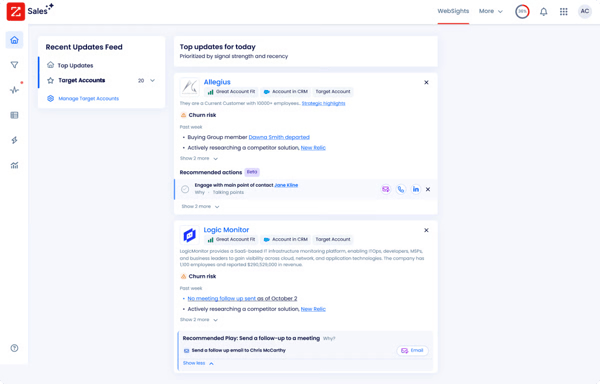
Features like account-level insight extend usefulness beyond contact verification alone. G2 users commonly reference understanding buying committees and internal decision dynamics before outreach begins. Features like decision-making insights, rated at 84%, support prioritization and messaging alignment, reinforcing ZoomInfo Sales as a planning input rather than a purely tactical data source.
ZoomInfo Sales connects with CRM platforms, particularly Salesforce. Teams mention contacts moving directly from ZoomInfo into their CRM with all relevant fields populated, removing the manual effort of copying and re-entering data across systems. Ease of admin at 91% and quality of support at 90% reflect a platform that holds up operationally once teams are past initial setup. That integration keeps prospecting and pipeline management inside a single operational flow, which G2 reviewers associate with measurable time savings and fewer data quality gaps during active outbound cycles.
Intent signals are a capability that meaningfully changes how teams decide who to contact and when. Rather than prospecting from static lists, teams can surface companies actively researching relevant topics and prioritize those accounts. G2 reviewers note this reduces wasted outreach effort and helps sales teams focus on accounts more likely to be receptive, shortening prospecting cycles and improving overall outbound efficiency.
ZoomInfo surfaces technographic data, company size, revenue range, and industry classification within the same workflow. G2 reviewers connect this to faster account prioritization and more relevant first-touch messaging.
Activating multiple data modules can require setup time for teams seeking a more lightweight configuration, particularly during early rollout phases. Once teams are past that initial orientation period, the platform is intuitive and well-structured for daily prospecting work.
International coverage varies by region. G2 reviewers mention that contact depth and mobile number freshness can differ across markets, which may matter for globally distributed prospecting teams. Some also note interest in deeper AI-driven interpretation of intent signals rather than working directly with raw data. For North American and major European markets, G2 reviewers describe the contact accuracy as strong and reliable for outbound execution.
Overall, ZoomInfo Sales reflects a platform built around scale, depth of data, and decision support. For B2B revenue teams relying on verified contacts and account intelligence to power outbound and ABM programs, it remains differentiated by its breadth of data and planning capabilities.
“ ZoomInfo Sales is a massive, feature-rich platform that goes far beyond basic contact info. It consolidates everything from budgetary insights and technographic stacks to detailed employee hierarchies on a single page. Having this many features in one place allows me to research a company’s financial health and their tech infrastructure instantly, making it the most comprehensive 'all-in-one' tool for deep prospect intelligence.”
- ZoomInfo Sales review, Abhishek R.
“I think when it comes to international contacts, the data information for the leads needs to be more correct, with updated phone numbers and emails.”
- ZoomInfo Sales review, Wasim D.
Based on an analysis of G2 reviews, Apollo.io functions as a system that treats verified contact data as the starting point for outbound work. Verification is not isolated to list cleanup; it’s embedded directly into how teams search for prospects, build lists, and initiate outreach. G2 reviewers consistently point to clear navigation and low workflow friction, which supports faster movement from discovery to engagement without breaking context between steps.
Small businesses represent 64% of Apollo’s user base, while mid-market teams account for another 32%, indicating strong alignment with sales and business development teams that prioritize speed and self-serve prospecting.
Apollo’s B2B contact database shapes how teams approach prospecting at scale. G2 users frequently rely on granular filters such as role, company size, location, and industry to surface decision-makers across diverse markets. Verified email addresses and phone numbers appear directly alongside profile data, reducing dependency on external enrichment tools and helping outbound teams maintain consistency across campaigns rather than treating verification as a separate task.

Features like decision-making are Apollo’s highest-rated capability at 82%. In practice, G2 reviewers connect this to clearer qualification and prioritization when building lists, where unified contact data supports faster judgments around who to target and when, especially during outbound planning cycles.
Teams can easily move from contact discovery into sequencing without switching platforms, keeping email verification, enrichment, campaign setup, follow-ups, and CRM integrations in one place. That consolidation reduces manual handoffs and repetitive data work, which is particularly valuable for teams managing steady outbound volume across multiple campaigns.
Apollo's built-in sequencing lets users move prospects directly from a filtered search into an automated email sequence without exporting lists or switching tools. That end-to-end flow cuts outreach preparation time significantly, and G2 reviewers mention it as one of the more impactful parts of the platform for maintaining consistent, high-volume outreach without manual coordination between steps.
Apollo's CRM integrations are keeping prospecting and pipeline management inside a single operational flow. Contacts move from Apollo into CRM systems with relevant fields already populated, reducing duplicate data entry and keeping records current. That continuity is particularly valued by teams managing steady outbound volume, where manual data transfers between tools add up quickly and create gaps in contact accuracy over time.
Initial configuration is described as minimal, reflecting ease of setup at 90%, and new users are commonly able to run searches and begin outreach within their first session. Quality of support registers at 86%, and G2 reviewers mention onboarding assistance as a factor in faster time-to-value for new teams. That accessibility is a recurring theme among small businesses and early-stage team reviewers, who associate it with faster time-to-value compared to heavier enterprise prospecting platforms.
Phone number extraction draws credits separately, which teams dependent on high-volume direct dialing may find requires closer monitoring, particularly where connection rates vary by region. For email-led outreach, G2 reviewers describe the credit model as smooth and predictable within the standard prospecting workflow.
Contact data is strongest in the US and major European markets, with some variation for contacts in other regions or niche roles. Teams with significant outreach outside core markets may find accuracy more variable for those specific geographies. Within well-covered markets and standard B2B roles, G2 users mention data quality as reliable and sufficient for confident outbound execution.
Apollo works best for sales and business development teams that want prospecting, verification, and sequencing inside one system rather than managed across separate tools. A likelihood to recommend score of 92% reflects how reliably it delivers on that promise across its core user base.
“I use Apollo.io for searching email IDs, phone numbers, email campaigns, and cold calling. The accuracy of emails and phone numbers is what I like most about Apollo.io. Working in Business Development, where emails and phone numbers are a major concern for generating leads and revenue, Apollo.io makes the most major impact there. Also, the initial setup was very easy because the customer support team helped us a lot.”
- Apollo.io review, Jerry M.
"Data accuracy can sometimes vary depending on region or role, so occasional manual verification is needed. The interface can feel overwhelming at first because of the number of features, and onboarding new users takes time. Some advanced features are locked behind higher pricing tiers, which can be limiting for smaller teams.”
- Apollo.io review, Elizaveta K.
ZeroBounce is widely described in G2 reviews as an email verification platform focused on reliability and pre-send decision control. Review analysis shows teams using it to determine which contacts are safe to include before outreach begins, especially in cold email and list hygiene workflows where deliverability risk needs to be managed upfront.
That emphasis on decision support is reflected in decision making at 88%, which aligns with how consistently G2 users describe smooth workflows and dependable outcomes during active campaigns. Teams report being able to move from file upload to actionable results quickly, without repeated checks or manual validation steps slowing campaign timelines.
Teams frequently express confidence in how addresses are classified, with clear separation between valid, invalid, and risky emails, such as spam traps or catch-all domains. This clarity allows teams to act on results immediately, particularly when sender reputation and bounce risk need to be tightly managed.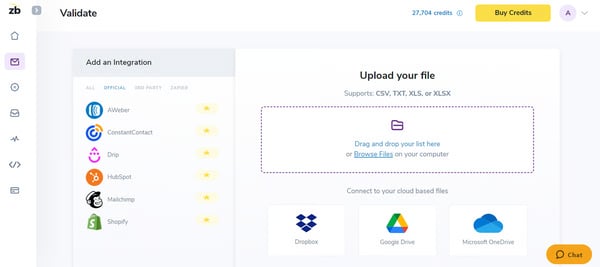
G2 users often mention that verification outputs explain why specific emails were removed, which helps teams trust the process and defend list-cleaning decisions internally. Quality of support at 97% and ease of admin at 95% reinforce that the platform stays manageable without specialist oversight. Clear breakdowns reduce guesswork and make it easier to apply verification outcomes consistently across campaigns.
Workflow simplicity keeps verification embedded in ongoing operations. G2 reviewers regularly reference straightforward list uploads, predictable credit usage, and integrations that allow validation to sit naturally alongside outreach tools or CRM systems. Ease of use and ease of setup both score 96%, reflecting how consistently teams get running without friction. This minimizes data movement between platforms and helps teams keep campaign planning uninterrupted.
Teams building verification into CRM workflows, form submissions, or automated data pipelines describe the API setup as straightforward, with clear documentation that does not require specialist technical involvement to implement. That flexibility allows verification to run continuously in the background rather than as a manual, periodic task, which G2 reviewers associate with cleaner data entering systems from the point of capture.
G2 reviewers consistently connect ZeroBounce to concrete improvements in sender reputation. Teams describe bounce rates dropping significantly after verification, with sustained rates well below thresholds that trigger ESP warnings. Across cold outreach, lifecycle, and marketing use cases, G2 users describe the deliverability improvement as immediate and consistent.
Processing time for very large lists becomes more noticeable as file size increases, which is worth factoring into campaign timelines for teams running high-volume verification close to launch dates. Teams with structured verification cycles that allow for scheduled processing windows find this straightforward to plan around. For standard list sizes and regular hygiene workflows, G2 reviewers describe turnaround times as fast and reliable.
Pricing is structured around a credit-based model, where cost scales with verification volume. Teams running very frequent or high-volume campaigns may find it worth reviewing credit allocation as usage grows to keep costs predictable. For teams with clear verification cycles and manageable list sizes, G2 reviews mention the pricing as fair relative to the accuracy and reliability the platform delivers.
From an operational standpoint, ZeroBounce presents a dependable approach to email verification. For sales and marketing teams that rely on email as a core outbound channel, ZeroBounce fits well when verification needs to function as a clear pre-send control rather than a background utility.
“I like the various easy integration options. No matter how or where you need to validate emails, ZeroBounce has you covered. Also, the ZeroBounce ONE plan is a great deal.
- ZeroBounce review, Matt C.
"What I dislike about ZeroBounce is honestly very minimal. The platform works really well, but if I had to point out something, it would be that the credits can run out quickly when verifying large lists. That said, the accuracy and deliverability improvements easily make it worth the investment.”
- ZeroBounce review, Verified User in Real Estate
Reoon Email Verifier is frequently described in G2 reviews as a verification-focused platform that validates email list accuracy and flags high-risk contacts before they are activated in outbound campaigns. G2 Review data consistently shows that teams rely on it as a pre-send hygiene layer to confirm contact accuracy before launching outbound campaigns. The platform commonly supports workflows where lists are uploaded in bulk, validated quickly, and segmented into categories such as valid, invalid, disposable, role-based, and catch-all addresses.
Features like ease of use and ease of setup are each rated at 97%, reinforcing strong day-to-day usability. G2 users associate these scores with minimal ramp-up effort and reduced administrative overhead during verification routines.
Quality of support registers at 95%, with reviewers referencing responsive assistance during onboarding and ongoing operation, supporting consistent use without workflow disruption.
Catch-all detection, disposable address identification, and real-time API verification appear frequently in G2 review sentiment. These capabilities are closely tied to bounce-rate reduction and sender reputation protection during outbound execution. 96% of reviewers say the platform meets their requirements, reinforcing confidence that core verification tasks perform reliably where list quality directly affects engagement outcomes.
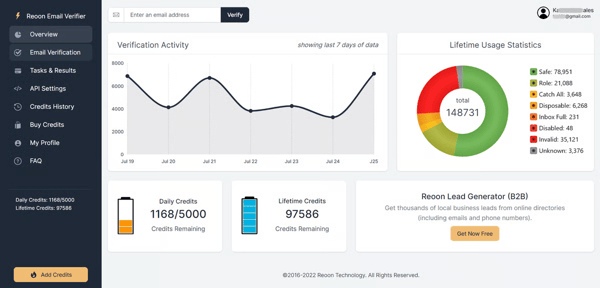
Reduced manual list validation effort is frequently cited across G2 reviewers. Cleaner CRM data, faster campaign preparation, and improved allocation of outreach resources are commonly connected to verification outcomes. Real-time API verification is also referenced as supporting continuous data quality control rather than relying only on periodic batch cleanup.
Clear result presentation supports straightforward list-cleaning workflows. G2 users reference immediate visibility into verification outcomes, allowing teams to act quickly on segmentation results without additional interpretation. This clarity supports consistent execution in environments where verification speed and accuracy directly influence outbound timing.
Reoon's pricing comes up consistently in G2 reviews as a meaningful advantage for smaller teams and individual users. Credits do not expire monthly, removing pressure to use allocations before they reset. G2 reviewers moving from more expensive alternatives note the cost-per-verification as significantly lower while maintaining comparable accuracy levels.
After verification runs, G2 reviewers note that downloading results by category is a practical time-saver in list preparation. Valid, invalid, disposable, role-based, and catch-all addresses export as separate segments rather than requiring manual filtering of a single output file. That segmentation makes it straightforward to decide which contacts move into outreach and which are suppressed, without adding processing steps between verification and campaign activation.
Reporting focuses primarily on core verification outputs rather than advanced segmentation views. G2 reviewers note that teams seeking deeper analytical overlays may extend insights through external reporting tools. Integration patterns center mainly around API connectivity. G2 users mention that while this supports flexible automation design, teams expecting broader native integration ecosystems may require additional configuration to align workflows fully.
Teams expecting out-of-the-box integrations with specific CRM or marketing platforms will need to allow for additional configuration to connect Reoon into their existing stack. G2 reviewers who have implemented via API describe the process as straightforward, with clean documentation that supports fast setup.
Market signals clarify where the platform fits by scale. Small businesses account for 96% of G2 users, with limited mid-market adoption and no visible enterprise penetration.
From a data-quality standpoint, Reoon Email Verifier continues to appear in G2 review analysis as an accuracy-driven platform built for dependable pre-send verification. Its category-leading ease of use and setup scores, combined with fast bulk processing and catch-all detection, reinforce its relevance for marketing and sales teams that prioritize reliable list qualification and deliverability protection in outbound programs.
”I really like Reoon Email Verifier for its powerful API, which is top quality and ensures that the emails I send are definitely going to go through. This helps keep my reputation good. The dashboard is very informative, and the initial setup is extremely easy. I've tried other tools, but Reoon Email Verifier is the first one that actually seems to work properly for me. I use it for cold emails and verifying current coaches on my platform, and it effectively solves the problem of too many bounced emails. I like everything about it.”
- Reoon Email Verifier review, Len K.
“The dashboard could feel a bit more modern, and the reporting could be deeper (for example, more breakdowns and clearer guidance on how to treat catch-all or unknown results). I would also love more native integrations beyond the API.”
- Reoon Email Verifier review, Daniel R.
For outbound teams prioritizing professional network–driven prospecting, Wiza often becomes an early evaluation candidate. Analysis of G2 review patterns shows the platform positioned as a prospecting acceleration layer rather than a broad enterprise enrichment database.
Its buyer footprint reflects this focus, with small businesses representing 74% of G2 users, while mid-market and enterprise adoption remains more selective, aligning with lean revenue teams that prioritize fast list generation and targeted outreach.
G2 reviewers frequently describe Wiza’s approach to combining LinkedIn-based discovery with direct contact verification. Extracted emails and phone numbers are validated alongside professional background context, allowing teams to confirm both reachability and relevance during prospect research. This linkage helps reduce reliance on separate enrichment steps during list creation.
Wiza suits organizations that prioritize speed, ICP precision, and prospect development anchored in professional network intelligence contexts today. A likelihood to recommend score of 90% reflects steady satisfaction among teams running consistent LinkedIn-driven prospecting.
Filtering tied to company size, seniority, and role segmentation supports precise ICP targeting. G2 users reference building tightly focused prospect lists without extensive manual refinement, particularly during outbound planning cycles. This precision helps teams maintain list quality while shortening research time.

Operational setup remains lightweight across review feedback, reflecting the ease of setup at 90%. G2 reviewers mention quick deployment supported by straightforward onboarding and minimal configuration. Verified contact data moves directly into CRM and marketing automation workflows, maintaining continuity between discovery and engagement stages.
Credits are only consumed when a verified contact is successfully returned, rather than being charged for every lookup attempt regardless of outcome. G2 users mention this as making their credit allocation go further compared to platforms that deduct for failed or unverified lookups. For smaller teams managing outreach budgets carefully, that efficiency means more usable contacts per dollar spent and less wasted spend on records that do not pan out.
verified contacts move directly into HubSpot and Salesforce without manual export and import steps. Teams using Wiza alongside LinkedIn Sales Navigator describe a smooth hand-off from prospect identification to CRM record creation, keeping pipeline building continuous. Quality of support scores 90%, and G2 reviewers mention responsive assistance as a factor in keeping integrations stable during setup. G2 reviewers running daily prospecting workflows describe the integration as one of the more reliable parts of the platform.
G2 reviews highlight Wiza's phone number data as a practical complement to email verification, with teams highlighting it as surfacing direct work lines and mobile numbers that other platforms in their stack were unable to find. For outbound teams running multi-channel sequences, having both validated contact types from a single source removes the need for a separate phone enrichment tool.
Pricing structures align most closely with teams running consistent or higher-volume prospecting programs. G2 reviewers note that organizations with occasional discovery needs may need to evaluate usage fit based on frequency. G2 reviewers mention the value as strong relative to the contact data quality delivered for teams prospecting regularly.
Workflow emphasis centers on LinkedIn-driven extraction and verification rather than broad multi-source enrichment. G2 users mention that teams seeking broader enrichment across multiple standalone data sources may view the platform as more specialized around professional network–anchored discovery. Within its core LinkedIn-anchored prospecting workflow, G2 reviewers consistently describe contact accuracy and delivery speed as reliable and well-suited to daily outbound preparation.
Wiza’s usability strength, highlighted by a 92% ease of use rating on G2, reinforces its Best for LinkedIn-driven prospect list building and ICP-targeted discovery positioning for outbound teams seeking scalable pipeline generation without friction.
“I like Wiza for its customization features that help me accurately target my ideal customer profiles (ICPs) in sales. It's beneficial because the data I extract for prospecting is always relevant and accurately ICP targeted. Additionally, I appreciate that Wiza provides filters to isolate my ICPs, such as company size and job seniority, which helps me build hyper-targeted lists. The platform is easy to get started with as it's not complicated to integrate, sign up, or begin using.”
- Wiza review, Akhil J.
“I find the subscription to Wiza costly and wish there was a lower volume option available. The cost also makes it not worth integrating with Salesforce for me.”
- Wiza review, Troy N.
Clearout.io is built for teams that want email verification running automatically in the background — embedded into forms, CRMs, and data pipelines rather than run as a periodic manual task.
G2 reviewers describe automated verification as a steady background process that keeps list cleaning from becoming a separate workstream. The Clearout.io website also mentions that their email verification accuracy is 99.73%. Campaign planning stays moving because validation does not require repeated manual passes across the same contacts. This setup helps teams keep outreach execution consistent across frequent list refresh cycles.
G2 users frequently link verification outcomes to lower bounce rates and fewer deliverability disruptions. Clear separation between valid, invalid, and risky addresses supports cleaner sending behavior, especially in cold outreach, where reputation damage compounds quickly. This clarity helps teams protect domains while maintaining stable outbound throughput.
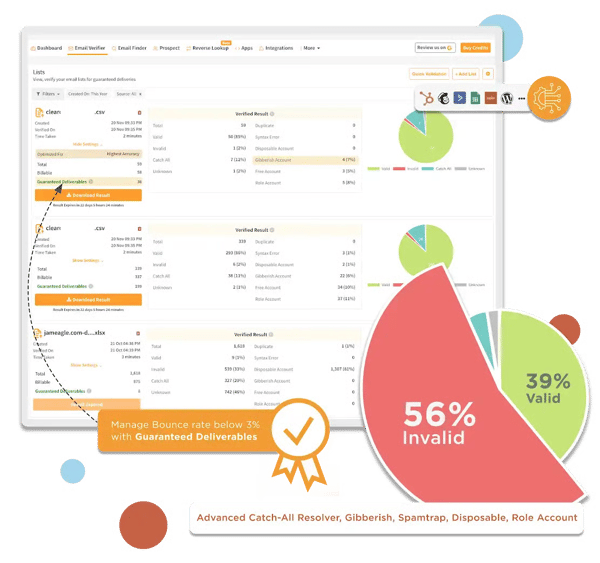
Reference search capabilities are a part of prospect discovery, not only list cleanup. Verified email addresses and professional contact details appear within the same workflow, reducing the need to alternate between verification tools and discovery tools. This consolidation supports teams that prefer to validate leads at the point of selection.
Features like quality of support are rated at 95%, G2 users often mention responsive onboarding and clear troubleshooting. That level of support responsiveness matters particularly for lean teams running verification without dedicated technical resources, where quick resolution of setup or integration questions keeps campaigns on schedule rather than stalling during configuration.
Ease of doing business reaches 96%, which signals alignment with lean teams keeping verification operational without dedicated deliverability specialists. That ease of engagement extends beyond the product itself. G2 reviewers describe straightforward commercial interactions, transparent pricing, and a vendor relationship that does not require ongoing negotiation or technical escalation to keep verification running reliably day to day.
Real-time validation flags invalid and risky addresses at the moment of submission rather than requiring cleanup afterward. Teams using Clearout alongside forms, CRM onboarding flows, or inbound lead capture describe databases staying clean continuously rather than in periodic batches. G2 reviewers associate this with steadier data quality and less reactive list maintenance over time.
Very large batch verification jobs can require structured scheduling for teams running time-sensitive, high-volume campaigns. G2 users mention processing windows becoming more noticeable at scale, particularly during simultaneous dataset checks tied to launch dates. G2 reviewers mention that the processing speed is fast and the results are ready to act on without delay, with standard list sizes and routine verification workflows.
Credit-based verification models can require early familiarity, especially with multi-system workflows. G2 reviewers note that usage visibility becomes more important across multiple campaigns and team members, particularly with CRM or marketing automation integrations in place. Once usage patterns are established, G2 reviewers mention the model as predictable and well-suited to ongoing verification needs.
Review data from G2 shows this positioning reflected in its buyer distribution, with 81% of G2 users coming from small businesses and 17% from mid-market organizations, suggesting strong alignment with growth-focused teams managing outbound volume without enterprise-scale verification infrastructure.
From an operational standpoint, Clearout.io remains a dependable email verification solution for teams of all sizes that need to safeguard deliverability at scale. Its strength lies in quickly validating large contact lists before campaigns go live, which makes it especially valuable for sales and marketing teams where bounce reduction and sender reputation directly affect outreach performance.
“The accuracy is the best part. The email verifier is fast and reliable, and the email finder helps us quickly find valid emails without much manual work. The interface is simple, and results are easy and actionable to understand, unlike other services we used previously.”
- Clearout.io review, Jerry H.
"I would like to have a warning message if I'm about to consume more than 10% of my current budget. Recently, I accidentally used up 100% of my budget because I uploaded the wrong file using the API. A warning message would have prevented this.”
- Clearout.io review, Santiago B.
Designed to simplify prospect research and outreach validation, RocketReach helps organizations identify decision-makers and verify contact data without heavy manual research.
G2 Review patterns suggest teams typically use RocketReach as a workflow accelerator that connects prospect research, discovery, and verification into a single environment.
G2 reviewers frequently reference contact discovery taking place directly inside prospecting workflows. LinkedIn overlays and browser extensions surface verified contact details during live research, reducing the need to alternate between tabs or platforms. This approach allows teams to capture decision-maker data while browsing profiles rather than rebuilding lists afterward.
Filtering capabilities support targeted list construction with minimal refinement effort. G2 users describe using job titles, company size, and industry segmentation to narrow outreach targets quickly, especially during outbound planning. Export flexibility supports CRM ingestion and campaign workflows, helping teams move from discovery into execution without additional processing steps.
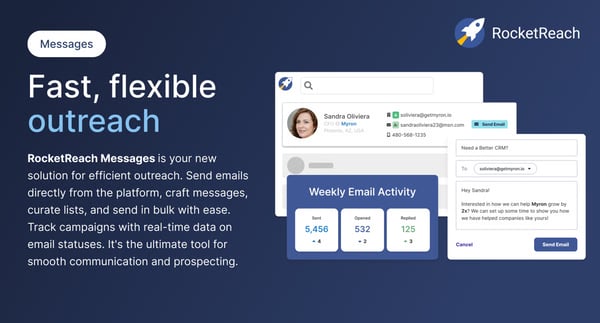
Speed and accessibility are closely tied to RocketReach’s day-to-day use. G2 reviewers associate the platform with measurable time savings across lead generation, recruiting outreach, and stakeholder identification. Verification scoring appears frequently as a signal for prioritizing contacts with stronger deliverability likelihood during outreach preparation.
G2 users describe navigation as straightforward and approachable, bringing its ease of use rating to 93% on G2. This helps smaller or resource-constrained organizations onboard without extended training cycles. This usability contributes to faster rollout across sales, recruiting, and partnership functions. Ease of setup is rated 91% by G2 reviewers, contributing to faster rollout across sales, recruiting, and partnership functions.
G2 reviews describe RocketReach connecting cleanly with CRM platforms, including HubSpot and Salesforce, with contacts moving from discovery into the CRM with relevant details already populated. That integration removes manual data entry steps and keeps records current throughout the outreach cycle, which G2 reviewers associate with more time spent on active selling and less on data management.
With a rating of 92% for meeting requirements, G2 users consistently position RocketReach as delivering strong contact data quality at a price point accessible to smaller sales and recruiting teams. Teams moving from more expensive enterprise platforms describe it as covering the majority of their prospecting needs at a significantly lower cost, with accuracy that holds up well for core use cases across mainstream industries and roles.
Contact coverage can vary across niche industries or very senior roles. G2 reviewers note that highly specialized prospecting efforts may require supplemental validation to ensure completeness for narrow targeting needs. For standard B2B prospecting across mainstream industries and roles, G2 reviewers consistently describe coverage as reliable and sufficient for day-to-day outreach preparation.
The credit-based lookup model is structured around consistent, regular prospecting activity rather than intermittent or unpredictable outreach cycles. Teams with variable prospecting volumes may find their credit allocation does not always align cleanly with actual usage patterns across the month. G2 reviewers who prospect on a regular cadence describe the model as straightforward and predictable once a rhythm is established.
From a practical workflow perspective, RocketReach remains a relevant choice for teams focused on rapid contact discovery and verified outreach. RocketReach fits well for organizations prioritizing decision-maker-level outreach speed supported by integrated research and verification workflows.
“ I like RocketReach because it's easy to use and has a user-friendly GUI. The search option is very effective and allows me to see results easily. I also appreciate that it has multiple export options. The type search feature lets me search for any category and find a particular client's name, and with just one click, I can get all their contact details. The initial setup was super easy too, with a one-click signup, so I could start using it right away.”
- RocketReach review, Babu D.
“Good product with a few gaps: pricing/credits could be more flexible, data freshness is uneven for niche/international contacts, dashboard filters are limited for complex searches, and I’d like more bulk-friendly API features. Support is solid but not always fast after hours. “
- RocketReach review, Andrew B.
Kickbox is positioned as an email verification platform built around validating contacts early in the outreach lifecycle rather than treating verification as a final list cleanup step.
Small businesses represent 60% of Kickbox’s customer base, while mid-market organizations account for 35%, suggesting strong adoption among teams prioritizing usability and cost efficiency.
Ease of use is rated at 95%, and G2 users associate this with fast deployment and consistent verification routines that do not require ongoing administrative effort. Users mention being able to run verifications, interpret results, and act on outputs without needing technical support or extended onboarding, which keeps the platform accessible across both marketing and sales functions from day one.
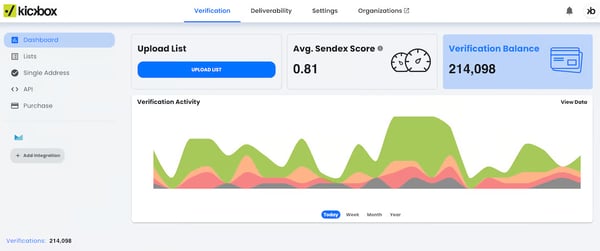
G2 reviewers frequently describe Kickbox as being embedded into acquisition and onboarding workflows. Early validation supports deliverability control before campaigns are launched, while clear verification outputs with multiple result fields and risk indicators help teams categorize contacts. These insights are commonly used to validate inbound leads, audit historical databases, and maintain sender reputation as inbox filtering standards evolve.
Sendex scoring and verification result transparency appear repeatedly across review feedback. G2 users associate these capabilities with improved campaign stability and reduced bounce exposure during outbound execution. Pricing accessibility and verification flexibility are also referenced, particularly by teams running recurring list hygiene processes that require predictable verification costs.
92% of reviewers say the platform meets their requirements. That alignment reflects how consistently Kickbox delivers on its core promise; teams describe running verification as a routine, low-friction step that does what it is supposed to do without requiring workarounds or manual corrections to the results.
A feature like quality of support reaches 89%, and G2 reviewers associate these scores with dependable service responsiveness and consistent data interpretation across marketing and CRM workflows. That support quality is particularly noted during integration setup, where teams mention getting clear, timely guidance that keeps deployment moving rather than stalling on configuration questions.
G2 reviews from technical users consistently describe Kickbox's API as clean, well-documented, and fast to integrate into existing application flows. Teams building real-time verification into sign-up forms or automated pipelines describe the setup as straightforward without specialist support. That ease of integration means verification runs at the point of data capture, which G2 reviewers associate with cleaner data entering systems from the start.
G2 reviewers connect Kickbox to tangible improvements in sender reputation and inbox placement. Teams mention bounce rates dropping after list cleaning, with some noting recovery from deliverability issues that had developed before verification was introduced. G2 reviewers associate this with Kickbox's approach of filtering before sends rather than after damage to the domain reputation has already occurred.
Workflow scope centers on email verification rather than broader outbound execution or campaign automation. Teams running heavily automated outbound ecosystems will find Kickbox covers the verification layer, but does not replace dedicated CRM or marketing automation tools for end-to-end execution. Within that combined setup, G2 reviewers mention Kickbox fitting cleanly into the broader stack without adding operational complexity.
Handling of undeliverable contacts within certain integrations may require additional configuration depending on infrastructure complexity. G2 users mention this primarily in environments with layered automation rather than standalone verification workflows. G2 reviewers who complete the integration setup describe day-to-day verification as running reliably in the background without further maintenance.
Kickbox remains well aligned with teams that prioritize early-stage validation and deliverability clarity. Its Sendex scoring framework and transparent verification outputs support safer outreach decisions without expanding workflow complexity. For marketing and revenue teams that depend on predictable deliverability and efficient database hygiene, Kickbox continues to fit cleanly into fast-moving outbound programs.
“I like using Kickbox because it helps us ensure that we are emailing people who are able to be emailed, right at the beginning of our life cycle process. I find their verification results really clear and appreciate having so many fields to choose from. I love the competitive pricing too; it's affordable and helps us validate emails without breaking the bank. The user-friendly interface makes it super easy to use without any complications, and setting it up was a breeze. I especially like the Kickbox Sendex and the results feature, and use them a lot."
-Kickbox review, Daniela P.
“I wish there were a way to auto-export into HubSpot the undeliverable emails, so I could take care of them in the system without having to upload them as a list.”
- Kickbox review, Lisa N.
Snov.io connects prospect discovery, email verification, and outreach inside one workflow, removing the tool handoffs that slow outbound teams. Verification functions as part of outbound pipeline creation rather than a separate hygiene task, allowing teams to progress from lead identification to campaign launch with fewer tool handoffs. G2 users frequently associate this structure with reduced operational friction during early outbound setup.
G2 reviewers describe verified contact information becoming actionable quickly inside outreach sequences. Ease of use at 93% and ease of setup at 92% reflect how quickly teams move from account creation to active prospecting without extended onboarding. LinkedIn prospecting integrations, automated drip campaigns, and centralized reporting are repeatedly referenced as supporting faster campaign launch cycles. Consolidating lead discovery, validation, and engagement inside a single environment reduces reliance on multiple prospecting and outreach tools.
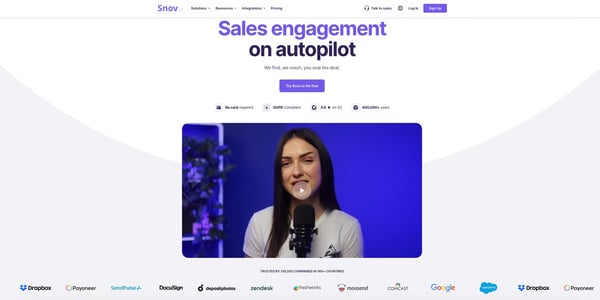
Email warming, deliverability monitoring, and CRM connectivity are closely tied to sustained outbound continuity. G2 users associate these capabilities with reduced manual list cleaning and steadier campaign execution. Keeping deliverability signals visible alongside active sequences supports teams running ongoing outbound programs without fragmenting workflows.
Campaign analytics support visibility across outreach activity. G2 reviewers reference reporting and performance tracking as helping maintain structured follow-up and lead progression rather than managing disconnected sales and marketing processes. Quality of support and ease of admin both score 92%, reflecting a vendor relationship that keeps multi-function workflows running without recurring friction. This visibility contributes to more predictable engagement management across campaigns.
Features like Decision Making hold an 84%. G2 users associate this with reliable lead qualification and prioritization during outreach planning. Combining lead discovery, verification, and campaign orchestration supports structured engagement while improving deliverability predictability.
Teams use the Chrome extension to extract verified emails directly from LinkedIn profiles and company websites without leaving the page they are already on, which removes the extra steps of switching tools or manually copying and searching. G2 reviewers running outbound prospecting describe this as cutting the time from identifying a prospect to having a verified contact ready for outreach, particularly when building lists incrementally during active research sessions.
Email tracking is a feature that meaningfully improves follow-up decisions. Teams can see whether emails have been opened or delivered, which helps prioritize who to follow up with and when, rather than sending follow-ups on a fixed schedule regardless of engagement. G2 reviewers running cold outreach and partnership campaigns describe this visibility as reducing wasted follow-up effort and helping them shift attention to prospects who have shown signs of engagement.
The interface becomes busier when multiple campaigns, analytics views, and prospecting workflows run simultaneously. G2 reviewers note that teams managing higher activity volumes may need additional navigation familiarity to move efficiently across modules. Once teams develop a working rhythm across the platform, G2 reviewers describe the consolidated environment as a meaningful efficiency gain over managing separate tools.
Filtering flexibility and automation allowances on entry-tier plans are structured around straightforward outreach strategies rather than complex segmentation or large-scale automation programs. Teams running advanced targeting or high-volume automation will find some capabilities gated behind higher-tier plans. G2 reviewers who have moved to higher tiers describe the additional capability as unlocking more of the platform's value for scaling outbound programs.
From a practical execution standpoint, Snov.io continues to appear in G2 review analysis as a platform that unifies lead discovery, verification, and engagement into a coordinated outbound workflow. For small and mid-market revenue teams prioritizing efficient prospecting, its integrated structure and category-aligned decision-making capabilities support dependable, streamlined outreach execution.
“Used this in my marketing partnership strategy for finding the mails and initially warming up the mail id, and it's been the best. Easy to use, and implementation was also super easy, plus customer support was also very good.”
- Snov.io review, Shruti Jain.
“The database coverage can feel limited in certain niche industries or geographies, and sometimes the contact details don’t match LinkedIn profiles. The reporting and analytics are also fairly basic; for larger teams, more advanced tracking and insights would be helpful.”
- Snov.io review, Chetan C.
Known for its accuracy-driven email verification and early bounce-risk detection, BounceBan is frequently described in G2 reviews as a platform built to validate deliverability before campaigns begin. G2 Review analysis shows the product used as a preventative data-quality layer, helping teams confirm whether outreach lists are safe to activate rather than correcting issues after bounce rates affect sender reputation. This positioning aligns with organizations where outbound accuracy directly influences pipeline quality and campaign performance.
Verification reliability is consistently emphasized across G2 reviewers. Teams rely on BounceBan to confirm deliverability status with strong confidence, particularly when working with sourced leads or newly acquired contact databases. This accuracy is commonly associated with stronger inbox placement and reduced reputation risk during outbound execution.
Early filtering of risky and invalid addresses supports a prevention-first approach to list hygiene. G2 users connect this approach to fewer downstream corrections and steadier campaign performance. Maintaining clean lists before activation helps teams protect sender reputation without relying on reactive cleanup workflows.
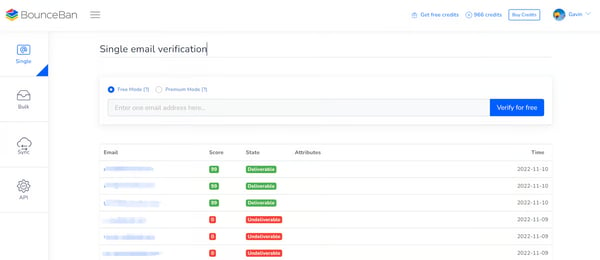
BounceBan posts ratings of 96% for ease of use. G2 reviewers associate this with straightforward onboarding, bulk verification workflows, and minimal configuration, allowing verification to sit naturally within routine list-building.
Meets requirements, scores 95% on G2, which users link to dependable verification outcomes and consistent workflow fit across outbound and list hygiene programs. G2 reviewers describe the platform as reliably delivering what it promises, with vendor engagement that supports teams when questions arise rather than leaving them to troubleshoot independently.
Integration with outbound enrichment and prospecting ecosystems keeps verification embedded within existing lead sourcing workflows rather than requiring separate validation steps. Teams running Clay-based or API-driven prospecting describe BounceBan slotting into their stack without disrupting how leads move from sourcing through to activation, which G2 reviewers associate with faster list turnaround and less manual handling between tools.
G2 reviews consistently identify catch-all domain verification as what sets BounceBan apart from most other tools in the category. Where competing platforms flag catch-all addresses as risky and leave them unused, BounceBan applies deeper verification logic to determine which are actually deliverable. G2 reviewers mention recovering a meaningful percentage of leads from previously discarded catch-all lists without increasing bounce exposure.
G2 reviews from teams running automated prospecting and enrichment pipelines describe BounceBan's API as clean, fast, and straightforward to implement. Teams using Clay and other GTM automation tools describe it as connecting reliably into their existing workflows without heavy configuration. That integration depth means verification runs as part of the broader lead sourcing process rather than as a separate manual step, keeping list preparation faster and data quality consistent across campaigns.
Credit-based premium search availability requires some usage planning for teams verifying very large datasets, particularly when verification frequency is closely tied to campaign scale. For standard verification cycles and moderate list sizes, G2 reviewers consistently describe the pricing as fair relative to the accuracy and catch-all coverage the platform delivers.
Verification outputs focus on deliverability outcomes rather than detailed explanations behind specific risk classifications. Teams that need granular insight into why a particular address was flagged will find the available explanation details more summary-level than analytical. For day-to-day list hygiene and pre-send validation, G2 reviewers describe the results as clear, actionable, and sufficient for confident sending decisions.
BounceBan continues to align with outbound-heavy teams that require high-confidence deliverability checks before campaign launch. Ease of doing business at 96% and quality of support at 93% reflect a vendor relationship that keeps teams moving without escalation.
“What I like best is how simple it is. You upload or check emails, and it quickly tells you which ones are risky before you send. It saves time, cuts down bounces, and you do not have to overthink deliverability. It just does what it is supposed to do.”
- BounceBan review, Jayanta S.
“Sometimes it’s not very clear why an email is marked as risky, and having more insights or examples would help users understand and trust the results better.”
- BounceBan review, Mahendra S.
|
Software |
G2 Rating |
Free plan |
Best for |
|
ZoomInfo Sales |
4.5/5 |
Yes. Free trial |
Enterprise teams verifying emails within large-scale data enrichment workflows |
|
Apollo.io |
4.7/5 |
Yes. Free plan |
Outbound teams combining prospecting with built-in email verification |
|
ZeroBounce |
4.7/5 |
Yes. Free plan |
Teams prioritizing high-accuracy email list hygiene at scale |
|
Reoon Email Verifier |
4.8/5 |
Yes. Free tier |
Teams needing fast, bulk email list validation |
|
Wiza |
4.5/5 |
Yes. Free plan |
Teams verifying LinkedIn-sourced work emails |
|
Clearout.io |
4.6/5 |
Yes. Free plan |
Teams embedding real-time verification into forms and data pipelines |
|
RocketReach |
4.4/5 |
Yes. Free trial |
Sales and recruiting teams validating contacts during discovery |
|
Kickbox |
4.5/5 |
Yes. Free plan |
Marketing teams focused on deliverability-safe email validation |
|
Snov.io |
4.5/5 |
No |
SMBs running verification alongside outreach on one platform |
|
BounceBan |
4.8/5 |
No |
Teams targeting catch-all domain risk reduction |
*These email verification software products are top-rated in their category, based on G2’s Winter Grid® Report. Most offer free plans or trials, with paid tiers varying by usage and features.
Got more questions? G2 has the answers!
ZeroBounce, Reoon Email Verifier, and Kickbox are most often associated with bulk list cleaning. Reviews frequently highlight their ability to flag invalid, disposable, and risky addresses before campaigns go out, reducing bounce risk early.
Reoon Email Verifier and Kickbox are most often described as accessible for non-technical users. Both have straightforward upload flows, clear result categories, and minimal setup. G2 reviewers from small teams regularly describe getting up and running within a single session.
Kickbox and BounceBan are commonly shortlisted when deliverability protection is the priority. Reviews often reference lower bounce rates and better handling of risky or catch-all domains.
ZeroBounce is frequently cited for accuracy-focused use cases. Across reviews, teams mention confidence in results when filtering out risky or non-existent addresses before high-stakes sends.
Clearout.io and Reoon Email Verifier are often mentioned for speed-sensitive workflows. Review feedback highlights quick turnaround times, particularly when verification needs to happen close to campaign execution.
Kickbox, ZeroBounce, and Snov.io are commonly referenced by marketing teams. Reviews emphasize ease of use, deliverability focus, and workflows that fit naturally into campaign planning.
Clearout.io and ZoomInfo Sales frequently come up when CRM alignment matters. Reviews point to smoother workflows when verification runs alongside contact management or enrichment.
Reoon Email Verifier and Kickbox are often described as straightforward. Review patterns highlight simple interfaces and minimal setup for non-technical teams.
BounceBan and ZeroBounce are most commonly referenced for API-driven GTM workflows. Both are described as clean and fast to integrate, with BounceBan specifically called out for its catch-all domain handling inside Clay-based prospecting pipelines.
Clearout.io is frequently chosen for real-time verification scenarios. Reviews highlight its role in validating emails at form submission to prevent poor-quality data from entering systems.
If there’s one clear lesson from evaluating Email Verification Software, it’s that these tools are not about fixing mistakes after campaigns fail. They are about deciding how much uncertainty your outbound and lifecycle workflows can afford. The right choice quietly reduces friction, protects the sender's reputation, and keeps performance stable before problems surface.
What separates strong platforms is not feature depth, but workflow fit. Good email verification removes the uncertainty around who is safe to contact and when, which is what allows sales and marketing teams to move faster with confidence.
Ultimately, this is an operating model decision, not just a software purchase. Some teams need verification embedded directly into prospecting or enrichment flows, while others prioritize bulk hygiene or real-time validation at entry points. Choose the platform that aligns with where failure would hurt most, because when email data is reliable, teams move faster, risk stays contained, and growth becomes far more predictable.
Want more control over email at scale? Explore Email Management Software on G2 to streamline inbox workflows and reduce operational friction.


Email is one of the most powerful tools for connecting with potential customers. It allows...
 by Aastha Shaw

I don’t pull lead lists, but I know when they’re broken.
 by Harshita Tewari

If you’re evaluating the best lead capture software, chances are something isn’t working as...
 by Sagar Joshi