


Most translation service comparisons look the same: features, pricing, turnaround, and integrations. What they don't show is how a service handles a 47-page legal brief under a 48-hour deadline, or what happens when a term is mistranslated in a compliance filing. That's not in the pitch. That's what you find out after.
Sounds familiar, right? I've watched a single mistranslated clause unravel weeks of legal prep, and if you're evaluating the best document translation services right now, you already know the stakes are higher than they look.
So, I went through the noise so you can skip straight to the shortlist. To build this list, I analyzed a large number of providers and anchored my evaluation in G2 review data across legal, technical, marketing, and product content verticals. What consistently stood out wasn't how many languages a service offered, but how well it balanced human and machine translation, held quality at speed, and kept terminology consistent across projects. When those things break down, the rework lands on your team, and that cost grows with every market you enter.
This guide covers seven providers. Andovar for multilingual content localization across documents, video, and e-learning at scale. LILT for AI-assisted translation with embedded human oversight for recurring content cycles. Translated for same-day certified delivery on legal and technical documents with tight deadlines. Renaissance Translations for certified legal and medical content, where a correction round is not an option. Alconost for software and app localization with glossary development and native-speaker precision. Protranslate for round-the-clock availability on technical and legal translation across time zones. Tomedes for high-volume business document translation across 240+ languages with a coordinator-led model.
By the time you finish reading, you'll know which provider is the right fit for your content, your timeline, and your markets.
*These document translation services are top-rated in their category based on G2's Winter 2026 Grid Report.
The providers I'm recommending here earned their place because they invest in understanding content intent before a single word gets translated. That means knowing that a legal agreement can hinge on one term, that technical documentation has zero tolerance for ambiguity, and that marketing copy needs cultural fluency. Generalist services routinely underestimate this, and you end up absorbing the revision cycles they never put on the invoice.
G2 adoption across this category spans early-stage startups through enterprise localization teams, which tells you something useful: reliable translation is a workflow dependency for companies of every size. Where internal linguistic expertise is limited, or delays directly impact product launches and customer experience, the quality of your translation partner shows up fast.
I began by using the G2 Winter 2026 Grid Report for document translation, prioritizing providers based on their user satisfaction ratings and market influence among companies of various sizes. This helped me focus only on translation services that frequently manage large-scale, multilingual projects, avoiding general vendors that lack the necessary specialization.
Next, I used AI to analyze thousands of verified G2 reviews to identify patterns regarding actual translation results, such as how accurate, fast, and consistent they are. I specifically looked at how well they maintain context, communicate clearly, and blend human expertise with machine translation tools.
Since I haven't personally tested every service, I verified my findings by comparing them with input from marketing, product, and localization experts who use these tools daily. The images and references are taken directly from G2’s vendor databases and the companies’ public websites.
To identify the best document translation services, I dug deep, combing through hundreds of G2 user reviews, mapping out how translation actually works in real-world workflows, and listening closely to the people who feel friction the most: localization managers, procurement leads, and operations teams. Certain themes came up again and again, and those are what shaped my evaluation criteria.
Based on these criteria, I narrowed the list to translation services that consistently deliver accurate translations, clear communication, and reliable project outcomes. The strongest providers make large translation projects easier to manage from start to finish.
The providers below qualify by offering professional translators, end-to-end translation workflows, revisions, quality assurance, and industry expertise.
This data was pulled from G2 in 2026. Some G2 reviews may have been edited for clarity.
Andovar is the localization partner I'd bring in when the program is complex, and the formats are varied. Language coverage spans documents, video, e-learning, and marketing materials, and every client gets a dedicated account manager who tracks the full project lifecycle. If your team is managing multilingual content across multiple markets, that single point of ownership takes a meaningful coordination burden off your plate.
I've seen language breadth treated as a checkbox feature elsewhere, but Andovar puts it to practical use. Medical, technical, and marketing content each gets specialized vocabulary handled accurately, and for compliance-heavy material, that precision directly cuts the risk of costly downstream corrections. Medically certified translations earn specific praise from clinical content teams who need more than a general accuracy guarantee.
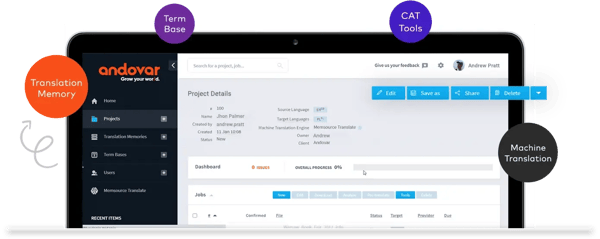
What you get with the account manager model is genuine project visibility. Milestones get tracked, updates come at each stage, and the team knows what has been completed and what is next without you having to ask. A level of responsiveness rating of 96% reflects how consistently that structure holds across different project types and complexity levels.
The multimedia and e-learning capability here is one of the strongest reasons I'd highlight Andovar for content-heavy teams. Rise courses, Canva projects, video transcreation, the team works directly inside client platforms, skipping file handoff steps entirely. For organizations producing multilingual training materials at volume, workflow integration trims production time at every cycle without adding operational overhead.
Termbase development is one of the less visible but more valuable things Andovar does. The team builds and maintains project-specific glossaries capturing industry terminology and client-preferred phrasing. That investment reduces revision rounds on repeat projects, because translators work from an agreed reference.
Yes, the pricing sits above Artificial Intelligence (AI) only alternatives, and I'd say the review base makes a compelling case for why. Output comes back requiring only minor internal edits, revisions happen without pushback, and the accuracy standard holds consistently across engagements. For content where getting it right the first time matters, the return on the rate is real.
One thing that kept coming back to me across the review data is how reliably Andovar hits deadlines even when the scope is wide, and the language count is high, reflected in the ability to execute with a rating of 93%. Quote responses are prompt, delivery dates are accurate once a project is approved, and for teams managing product launches or compliance deadlines across markets, that consistency is literally hard to find.
G2 reviewers note that AI-assisted translation output operates within a different accuracy range than fully human-translated work. This surfaces most on medical documentation, legal materials, and compliance-heavy assets where precise register and regulatory language carry real consequences. Andovar's human translation track addresses this directly, and the team's willingness to revise output until it meets the client's standard means accuracy improves iteratively across the engagement.
G2 review data mentions that the onboarding process for complex, multi-format projects is less structured at the outset than some clients expect. This tends to surface with organizations whose first engagement involves formats like video transcreation, where workflow steps and handoff expectations are less intuitive than straightforward document translation. Once the initial project establishes a shared working process, subsequent engagements run with considerably less friction, and the account management structure provides a reliable point of continuity throughout.
I'd recommend Andovar for organizations managing multilingual content across formats where accuracy, structured oversight, and consistent account management are the priorities. The termbase investment, dedicated manager model, and on-time delivery record make it a service that gets more efficient the longer you work with it. Cost-sensitive buyers will want to weigh the premium, but the review base makes a strong case for what it returns.
“I really appreciated Andovar's project management because it made the process smooth and worry-free for us. I only had to send over our materials and have a short call, and then they took care of everything, which was really nice since we didn't have time to manage the project ourselves. The translation team did a great job with the delivery in Latin Spanish, especially considering our training materials are full of acronyms that need to be consistent."
- Andovar review, Niklas T.
"Higher fees, when compared with some other vendors."
- Andovar review, Chantacan C.
If you're managing localization across products and not just documents, G2's guide to product localization strategy and execution covers the frameworks worth having in place before the next market launch.
If you've ever lost hours chasing translation consistency across recurring content cycles, LILT's architecture is built for exactly that problem. Here's what the data kept telling me: the combination of a context-aware AI engine and a managed linguist network is not a marketing position; it's how the platform actually operates. Human oversight stays embedded throughout, and that makes the output meaningfully more reliable at scale.
The part that got me was how the computer-assisted translation (CAT) tool handles context. Static translation memory pulls from fixed references; LILT's engine reads surrounding segments and prior human input, so suggestions sharpen as project data builds. Reviewers working across multiple language pairs call it useful, and terminology management, translation memory, and quality assurance (QA) checks all live in one interface, eliminating the context-switching that quietly kills active project momentum.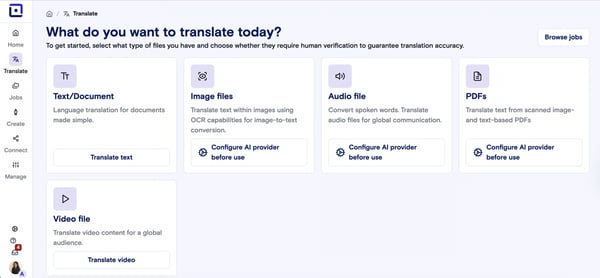
The project manager layer is where a lot of translation platforms fall short, and LILT holds up well here. Project managers are approachable, detail-oriented, and fast to engage when something surfaces mid-project. The speed of project managers’ involvement is what keeps small problems from compounding. G2’s level of expertise rating 93% reflects a coordination team that brings subject matter awareness to every engagement.
Your project coordinators will notice the platform accessibility immediately. Cloud-based, no installation, accessible from any machine, for distributed teams or linguists managing multiple client relationships, which removes a structural friction point that desktop-only tools quietly impose. Getting into the work takes minutes, and that low entry barrier holds consistently whether the team is running one language pair or twelve.
This is the bit most people sleep on: LILT flags questions about submitted content before delivery, not after. I'd say that a single habit is what separates a smooth, continuous localization program from one that keeps cycling back for corrections. On recurring content cycles where material runs similarly, that proactive clarification keeps quality consistent without the back-and-forth that typically follows a first draft.
Progress and payment visibility within the platform is a practical strength for linguists and project coordinators managing multiple concurrent assignments. Reviewers note that job status, expected payment, and delivery milestones are all accessible without needing to contact the team directly. That transparency reduces administrative back-and-forth and keeps all project participants aligned without additional coordination overhead.
I kept circling back to the turnaround reliability numbers in the reviews. LILT delivers on time and stays responsive throughout the engagement, and an ability to execute rating 92% makes that concrete. For content teams working to campaign or product deadlines across multiple languages, translation timelines stop being the variable that holds everything else up.
A few recurring themes in G2 reviews suggest the QA tooling operates within a fixed rule set that does not account for structural variation across all language pairs. Teams working with languages where source-to-target length and capitalization norms differ significantly encounter this most directly, as the tool generates warnings that do not reflect genuine translation errors. Output quality itself remains strong across the review base, and the project manager (PM) team's availability to clarify flagged issues keeps the workflow moving without the warnings compounding into delivery delays.
G2 reviewers flag platform stability as an area worth noting, with inconsistency reported during longer or more complex projects and intermittent freezing across recent reviews. The friction point is highest for linguists carrying high-volume assignments, where extended session time makes the instability more disruptive than it would be on shorter, contained work. The direct working relationship LILT supports means technical issues are typically resolved promptly, and platform improvements across recent updates reflect an active response to the feedback.
Overall, LILT earns its place when translation is treated as an ongoing operational function. The hybrid model keeps quality from depending entirely on automation, and the PM layer absorbs complexity before it reaches the client. If recurring multilingual content, tight deadlines, and a platform your team can actually get into without friction are your priorities, this is worth your serious attention.
"What I like most about LILT is its intuitive and user-friendly design. The platform is easy to navigate, significantly reducing the time spent managing projects and allowing me to focus on supporting our language teams and ministry partners. LILT also streamlines our translation workflow by centralizing requests, assignments, and deliveries in one place. This efficiency, combined with its translation memory and terminology management features, helps us work faster while maintaining consistency and quality across languages."
- LILT review, Lucas N.
"The fact that I sometimes receive job offerings through automatic service assignment emails without any contact from one of the team members to know if I have availability and to give more details about the job.”
- LILT review, Dirk V.
Pairing a managed translation service with the right platform keeps terminology and memory consistent at scale. Explore the best translation management software to see which tools automate what a service alone cannot.
This one is built for deadline pressure, and I mean that more literally than it sounds. Translated pairs dedicated project managers with same-day certified delivery and the kind of technical subject matter depth that generalist platforms rarely get close to. If you're up against a legal filing window or an administrative deadline that cannot move, the combination of speed and precision here is worth paying close attention to. The team even absorbs client-side errors without turning them into delivery problems.
The number that stopped me was three hours. That is how quickly certified translations have landed for some clients in recent reviews, with one working day being the standard. G2’s level of responsiveness rating of 87% reflects a pace that holds throughout the project, keeping everyone informed at every stage.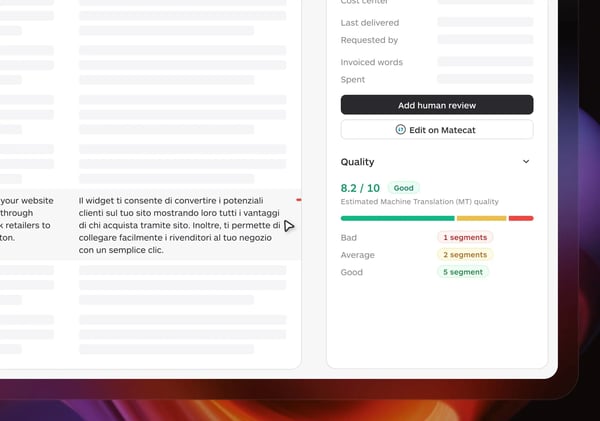
The dedicated project manager model is what separates Translated from platforms that route every request through a generic inbox. Clients get a named contact who knows the account, tracks the project, and stays reachable throughout the engagement. Long-term clients consistently describe a "one team" dynamic, and the communication skills rating sitting at 84% makes that more than just a feel-good claim.
Here's what got my attention: Translated handles ultra-specialized technical content with the kind of subject matter depth that goes well beyond linguistic fluency. Output on highly technical jargon reads like it was produced by someone who actually works in the field. The ability to execute rating lands at 85% across the review base, and for industries where a single imprecise term creates operational or compliance exposure, that domain-level precision changes what an accurate translation is actually worth to the teams depending on it.
Your team gets operational flexibility that most services do not extend. Payment after document delivery is available for qualifying clients, and the level of professionalism rating of 84% reflects arrangements that are handled smoothly. The team has also been noted for absorbing client-side errors into project scope without additional charges, which says something real about where their priorities sit.
This is where I'd say Translated earns its reputation beyond speed: the ability to handle varied content types and register ranges within a single engagement. G2 reviewers describe the service shifting between content categories and adjusting formality on request without missing a beat. For teams whose translation needs span multiple content types, that adaptability removes a sourcing headache that adds up fast.
An ease of doing business with a rating 85% is the number I'd lead with here, because it captures something the review data backs up consistently: quotes come back fast, same-day answers are the norm, and ambiguities get cleared before they have a chance to become delivery complications. For teams juggling tight timelines, that responsiveness makes Translated the kind of service you can actually build a production schedule around with confidence.
Some G2 reviewers mention output quality inconsistency on projects where content complexity or localization requirements are not clearly scoped upfront. The gap is felt most acutely in work where the distinction between literal translation and culturally adapted localization is significant, and where those requirements have not been established at the briefing stage. The project management team engages proactively when clarity is in question, and that early intervention keeps quality on track before inconsistencies have a chance to run through the full delivery.
G2 users flag one area worth noting: customer service response times can lag on certain request types, particularly for clients reaching out through general channels. One-off requests bear the brunt of this more than ongoing account relationships, where a named contact handles queries directly. Within an established account relationship, response quality tightens considerably, and the dedicated project manager model means communication becomes faster and more consistent the longer the partnership runs.
I keep coming back to Translated for one reason: it gets more reliable the longer you use it. The dedicated PM model, same-day certified delivery, and technical depth compound in value over time, and for teams where translation quality has real operational consequences, that trajectory matters. If the brief is tight, the deadline is real, and accuracy is non-negotiable, this belongs near the top of your list.
"Their ability to support our needs, their communication, and flexibility. We believe that we work together as one team towards a common objective. They designate specific project managers who are always there for us. Special thanks to Francesca Zavettieri and Arianna D'Andrea."
- Translated review, Nada K.
"Translation workflows can sometimes present small challenges, which is natural in a collaborative process. However, whenever something comes up, the team is always very supportive and quick to help resolve it. “
- Translated review, Vinicius S.
Translated documents don't manage themselves once they land. See G2's picks for the best free contract management software to keep legal files organized without adding to your budget.
If speed and accuracy are both non-negotiable for you, Renaissance Translations is built around exactly that combination. Quote responses land within minutes, output holds up to native speaker verification across complex content types, and the team stays reachable across time zones without the communication lag that derails so many translation partnerships. This is one that delivers on the operational promises most services only make in their marketing copy.
The accuracy record here is the kind that made me stop scrolling. Native speaker verification across multiple language pairs, with flawless results reported on content as demanding as book-length manuscripts and full technical documents. The ability to execute rating comes in at 99%, and for teams used to building correction rounds into their post-delivery schedule, that standard meaningfully changes how tight a production timeline can actually run.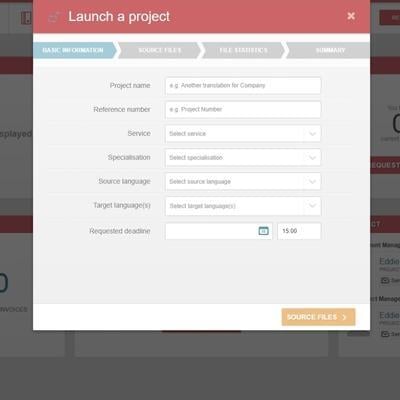
Once a project is underway, project managers flag questions and provide status updates without prompting. Reviewers operating across different time zones note that turnaround expectations were met without the delays that typically accompany cross-timezone coordination.
What kept coming up in the data was how directly and transparently the team engages at every stage. Questions about submitted content get raised before they become errors, which keeps the project moving without the client having to chase anything down. Communication skills ratings of 98% put a number to what reviewers describe as a working relationship that feels collaborative from brief to handoff.
Your team gets live visibility into translation status through the platform, with direct translator access during the project. Production cycles run without the guesswork that normally sits between submission and delivery, and for teams managing time-sensitive content, that transparency keeps everyone aligned without anyone having to chase a status update.
File type breadth and track changes handling across project phases quietly removes a layer of reformatting work that typically falls back on the client post-delivery. The level of professionalism rating reaches 96%, reflecting a client-considerate approach that shows up in how the operational details get handled. For teams working across multiple document formats within a single project, handoffs stay clean without additional preparation overhead.
Delivery reliability at Renaissance Translations runs at a level that stood out to me across the entire review set. G2 reviewers across different regions describe projects completing on schedule, with delivery occasionally arriving ahead of the committed date. For organizations where translation feeds directly into publishing, compliance, or product cycles, that kind of reliability means translation stops being the stage where the schedule breaks down.
Across G2 reviews, one limitation comes up consistently: full payment is required upfront before translation work begins, which sits outside the procurement flow that some organizations operate on. This lands hardest for teams running multi-step internal approval processes, while organizations with direct purchasing authority move through it without meaningful disruption. Turnaround speed and output quality are consistently noted across the review base as outcomes that make the upfront commitment straightforward to justify.
G2 feedback points to one consistent limitation: project availability across certain language pairs can be narrower than some clients would prefer, with less common or regionally specific combinations bearing the brunt of that gap. Teams whose requirements sit within major global language pairs move through the process without encountering availability friction. Quality within core language coverage remains consistently strong, and the team's proactive scoping conversations mean any coverage boundaries are identified before they affect delivery timelines.
Renaissance Translations is the one I'd come back to when the stakes are high, and there is no room for a correction round. Every request, regardless of size or complexity, gets the same level of attention across the review base, and that consistency is what brings clients back. If your work feeds directly into compliance cycles, legal filings, or publishing deadlines where accuracy is the only acceptable standard, this is a service worth building into your workflow permanently.
“My request was answered in 15 minutes, receiving a price quotation for translating my book into Latin Spanish and Brazilian Portuguese. The quality is flawless, and the price is fair!"
- Renaissance Translations review, Brittany H.
"Before the service is rendered, the translation service fee must be paid."
- Renaissance Translations review, John B.
Legal translation and contract management are two sides of the same workflow. See G2's guide to the best contract lifecycle management software to find tools that keep translated agreements organized, tracked, and enforceable.
Software localization is where I'd pick Alconost without much debate. The team assigns a dedicated manager to every project, coordinates the full workflow, and sources language coverage even for less common requests without sending clients elsewhere. If your product ships in multiple markets simultaneously, that coordination model takes a significant layer of operational complexity off the table from day one.
Language coverage here extends well beyond what most generalist platforms can staff. Even less common language requests get fulfilled in-house, with translators actively matched to content type. For product and content teams consolidating multilingual work under one vendor, that breadth removes the sourcing overhead that managing multiple specialist relationships creates.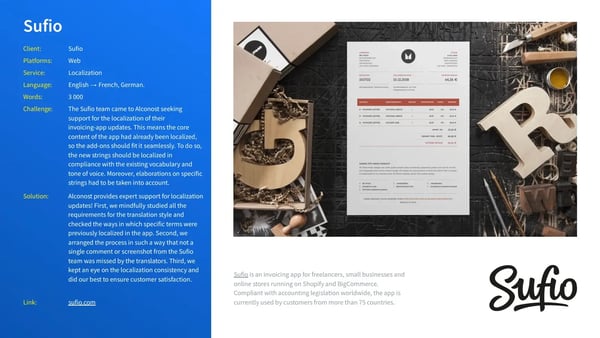
The translator's behavior here caught my eye more than almost anything else in the review data. Native speakers matched by subject matter, asking clarifying questions mid-project, flagging inconsistencies in source text, and occasionally catching typos in the original English before they carry through. An expertise of team rating of 98% is what you get when translators treat accuracy as a shared responsibility.
Your localization lead will appreciate that glossary development and linguistic quality assurance are built into the workflow from the start. Managers help build terminology references at the briefing stage, and those references carry through to every translator working on the project. The level of professionalism rating at 99% reflects a team that treats terminology consistency as a structural commitment, and for multi-language deliveries where that consistency is non-negotiable, that investment at the front end pays off at every subsequent cycle.
Crowdin integration gives clients direct visibility into translation progress, with live translator communication available throughout the project. For product teams running localization alongside active development cycles, that transparency keeps translation integrated with the broader release workflow without creating a separate coordination track.
The responsiveness numbers here are the best I came across in this entire review set. Level of responsiveness ratings hit 100%, and reviewers across different time zones back that up specifically, noting the pace holds even when urgency is real and the deadline cannot flex. That kind of consistency across geographies is not something most translation services can claim with data behind it.
I've rarely seen PM proactivity described this way in review data: clients occasionally finding themselves as the bottleneck because the manager has already moved ahead. Updates arrive before they need to be requested, problems get flagged early, and the engagement stays active throughout. The ability to execute a rating of 98% shows a team that follows through on exactly what that level of involvement promises.
Some G2 reviewers mention minimum order thresholds applying to certain request types, which limit how translation can be structured for iterative or short-string work. Product teams running frequent small batches in active development cycles feel this most acutely, as the requirement introduces scheduling gaps that longer, more contained projects do not face. When projects reach sufficient scope, the coordination and quality model operates at full strength, and delivery reliability follows consistently from that point forward.
G2 reviewers flag that exported translation files for certain content types can contain duplicate lines, adding a collation step that falls on the client's internal team before the output is usable. The issue is encountered most by teams working with platform-generated files, while those submitting standard document formats move through to usable output without that additional step. The team addresses duplicate line issues promptly when flagged, and an ease of doing business with a rating of 96% reflects how consistently the overall working experience holds across different project types.
I'd point product teams toward Alconost when native-speaker precision, built-in glossary development, and a PM model that stays engaged from brief to delivery are the priorities. The depth and coordination here handle complexity without adding to it. If your release calendar runs tight and multilingual consistency is non-negotiable across markets, this is a service that earns its place in the workflow fast.
“I like that Alconost delivers high-quality translations fast, understands the tone we’re going for, and makes the whole process easy and hassle-free.’
- Alconost review, Polina K.
"Sometimes translators may miss task instructions, but in most cases, it is related to the complex workflow we use.”
- Alconost review, Nadya S.
The category Protranslate sits in is one I take seriously: content where a mistranslation has real consequences. Legal filings that need to clear notarization, technical documents that engineers rely on, and marketing copy that needs to read as though it were written in the target language. If your content carries real consequences when it gets it wrong, the combination of round-the-clock PM availability and a consistent quality standard across multi-year client relationships is worth your attention.
Multi-year client relationships with no drop in standards are not common in this category. Reviewers working on technical specification documents and brochures specifically call out that output quality is held across engagements spanning over two years. The level of professionalism rating sits at 99%, and for regulated or compliance-adjacent content, that consistency means legal and operations teams receive output they can act on without building in a correction round.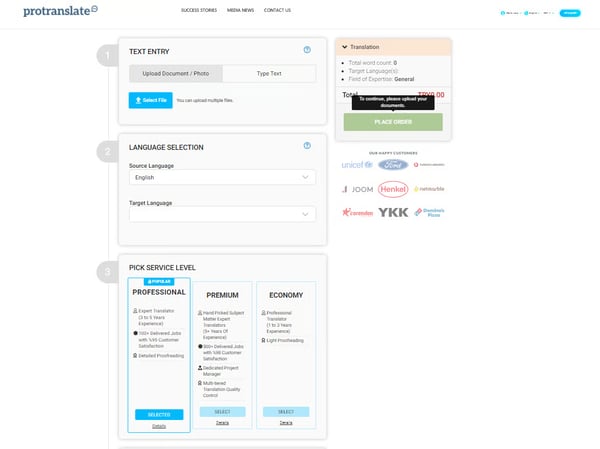
I'd back that claim with the numbers: a level of responsiveness rating of 97%, and a review base that describes the same experience repeatedly, someone picks it up, the deadline is noted, and the work moves forward without the client needing to follow up to confirm it. For teams tied to hard external deadlines, that availability at any hour across any time zone removes a structural risk that slower services simply cannot address.
If your marketing copy needs to feel written in the target language and not translated into it, this is where Protranslate earns specific praise. Cultural nuance, tonal shifts, and contextual phrasing are treated as deliberate parts of the process. The expertise of the team rating lands at 97%, and for client-facing materials where a flat or literal translation creates distance, that sensitivity reduces the correction cycles that typically follow a first draft.
The onboarding experience stuck with me as a meaningful differentiator. The platform is straightforward to navigate, and reviewers who have come from more complex tools consistently note how quickly they got productive. Performance tracking and earnings visibility are built into the platform, keeping administrative overhead low for everyone working within it, on both the client and linguist sides.
Transparency is built into how Protranslate operates at every level. Quality feedback goes to translators, questions get flagged early, and small inconsistencies get caught before they run through an entire project. A communication skills rating of 98% is what you get when a team treats early flagging as standard practice across content at volume, extending that discipline to routine assignments as much as complex ones.
Payment reliability and earnings transparency on the linguist side of the review base are notably clean. Both what gets paid and what gets produced follow through on what the service commits to, consistently and without prompting. Earnings are trackable within the platform at any point without waiting for a response from the accounting team, which keeps the operational side frictionless for everyone involved.
G2 reviewers note that notification timing for available projects can be inconsistent, with job alerts occasionally arriving after the assignment window has closed. Translators juggling multiple platform relationships at once bear the heaviest impact from this, as delayed notifications create scheduling gaps that single-platform users rarely encounter. The platform's usability and payment reliability stay consistently strong, and delivery performance on the client side holds without interruption regardless of notification timing.
A few recurring themes in G2 reviews suggest project deadlines can run tight on some assignments, particularly during high-volume periods. Complex or subject-heavy content carries the most deadline pressure, while shorter assignments move through without that intensity. The team's responsiveness and structured feedback throughout the process mean tight timelines get met without output quality becoming the variable that gives way under pressure.
The consistency here is what I'd lean on as the core reason to choose Protranslate. Technically strong, genuinely available, and structured in a way that keeps complex projects moving without friction. If legal, technical, or marketing translation accuracy is the priority and you need a team that stays present between projects as much as during them, this one holds up well under pressure and keeps holding up the longer you work with it.
“One thing I appreciate is the fair evaluation system and timely payments. Protranslate values quality, and they provide helpful feedback to help translators improve. It's also easy to track your performance and earnings, which gives a great sense of transparency.”
- Protranslate review, Mine Güher U.
"Emails notifying of jobs do not always arrive on time, which prevents the jobs from being picked up on schedule. I would prefer to receive more work privately, based on the trust I have established with project managers.”
- Protranslate review, Fabiana C.
High-volume translation programs often feed directly into contract workflows. See G2's picks for the best contract management software to find tools that keep translated agreements organized and moving forward.
High-volume document translation is a specific problem, and I'd argue Tomedes is built for it more deliberately than most. The coordinator model keeps the same project manager close to the work from the first brief to the final delivery, multi-year vendor relationships are the norm, and post-delivery amendments are treated as part of the commitment. If your team ships consistent translation volume and consistency across that volume is non-negotiable, this is a service structured to absorb that pressure without redirecting it back to you.
Register sensitivity is where Tomedes earns its strongest marks on output quality. Clients report results meeting requirements without significant revision, even on content with formal or technical language demands, and the team's attention to source material character ensures the tone carries through. The ability to execute rating reaches 95%, putting that output standard on record across varied document types and content categories.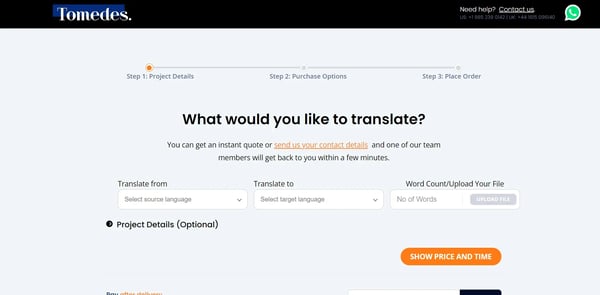
The coordinator model is what sold me on this service. Project coordinators stay invested in each engagement's outcome, absorbing complexity on both the client and translator sides and keeping the project moving without the client having to step in and manage it directly. Reviewers describe it as a team that stays present throughout, supported by strong communication skills, with a rating of 94% on G2.
Your deadline does not move, and Tomedes operates as if it knows that. Every communication gets a swift and helpful reply, the team is reachable at any point without meaningful lag, and reviewers working to externally imposed deadlines call out that accessibility specifically as what kept their timelines intact. Level of responsiveness ratings of 96% put a consistent baseline on record across different project types and urgency levels.
Payment reliability and process transparency on the linguist side run with a consistency that impressed me across the review data: on time, straightforward, and no follow-up required. For linguists managing multiple client relationships, that predictability removes an administrative friction point that other platforms routinely introduce. The ease of doing business with a rating sitting at 96% reflects a service that keeps the operational side clean across both ends of the working relationship.
I was struck by how far post-delivery flexibility extends here. Layout issues, text amendments, and scope changes that fall outside the original brief get absorbed without friction and handled with patience. Whether the project ran smoothly from the start or required additional handling after delivery, the team's conduct stays consistent, and the relationship stays intact throughout.
Professionalism holds consistently across every level of the Tomedes team, from initial coordinator contact through to delivery and post-project communication. Multiple G2 reviewers describe the same experience regardless of which project manager or associate they work with: prompt, courteous, and conducted to a clear ethical standard, reflected in its level of professionalism, rating 93% on G2. For organizations managing ongoing translation programs where team composition may shift across projects, that consistency removes the variability that makes some translation relationships difficult to scale.
G2 reviewers flag the per-word pricing model as a cost factor that grows on large-volume projects, where cumulative rates produce totals that can sit above what a per-page or flat-rate model would deliver for the same content. Organizations translating long documents at scale feel this most directly, while teams working on shorter or contained projects move through without the cost compounding in the same way. The quality and reliability of delivery are consistently noted across the review base as outcomes that make the rate straightforward to justify.
G2 feedback points to one consistent pattern: output quality on certain language pairs can fall short of expectations on first delivery, requiring a correction round before the final version meets the brief. Teams managing a wide language mix encounter this most often, while those working within a smaller set of well-resourced pairs move through to a usable first delivery more consistently. The team's responsiveness to flagged errors means corrections are absorbed without friction, and the overall engagement stays on track as output quality improves across subsequent rounds.
I'd put Tomedes in the long-term workflow category without hesitation. The coordinator model, register sensitivity, and post-delivery flexibility compound in value the longer the relationship runs, and the review base reflects a service that gets easier to work with over time. If volume and consistency define your translation priorities, and you need a team that stays close to the work from brief to delivery and beyond, this is a strong fit.
"The professionalism and customer service are truly top-notch.”
-Tomedes Translation review, Hawa M.
What G2 users dislike about Tomedes Translatio:
“One downside is that when the translation cost becomes very expensive due to a large amount of text, as they charge per word.”
- Tomedes Translation review, Gabriel M.
|
Service |
G2 Rating |
Free plan |
Best for |
|
Andovar |
4.5 / 5 |
No |
Enterprise localization across eLearning, gaming, and media with dedicated account management |
|
LILT |
4.4 / 5 |
No |
AI-powered translation with human linguist verification for fast, repeatable content workflows |
|
Translated |
4.4 / 5 |
No |
Same-day certified and technical document translation with dedicated project management |
|
Renaissance Translations |
4.9 / 5 |
No |
Deadline-critical certified, legal, and medical document translation with real-time project visibility |
|
Alconost |
4.8 / 5 |
No |
Software, app, and game localization into 70+ languages with native-speaker translators and built-in LQA |
|
Protranslate |
5.0 / 5 |
No |
Technical, legal, and marketing translation with round-the-clock project team availability |
|
Tomedes Translation Company |
4.7 / 5 |
No |
High-volume business and technical document translation across 240+ languages with coordinator-led delivery |
*These document translation services are top-rated in their category based on aggregated user feedback from G2's Winter 2026 Grid® Report. Most operate on custom pricing models tied to placement fees or monthly retainers, with consultations available on request.
Got more questions? G2 has the answers!
Protranslate and Tomedes Translation Company are the strongest options for small businesses, balancing cost and quality. Protranslate's per-word pricing is competitive for professional output, and Tomedes offers volume discounts on request. Both maintain consistent quality regardless of project size.
LILT and Alconost both handle terminology precision well at speed, with LILT's translation memory improving output over time and Alconost's glossary development locking terminology from the outset. For one-off fast turnaround, Translated delivers certified translations within a single working day without sacrificing accuracy on technical content.
Renaissance Translations and Andovar are the strongest fits for medical content. Renaissance Translations handles certified translations with the accuracy medical documentation requires, while Andovar's medically certified translation track provides assurance for clinical content teams working under compliance requirements.
Renaissance Translations and Translated are the two strongest options. Renaissance Translations delivers certified translations with quote responses in minutes and a track record of meeting tight administrative deadlines. Translated offers same-day certified delivery with experience meeting notarization requirements for immigration and legal filings.
Renaissance Translations and Tomedes Translation Company both handle PDFs without requiring format conversion on the client side. Renaissance Translations supports a wide range of file types and manages track changes across project phases, reducing the reformatting work that typically falls back on the client. Tomedes handles layout and formatting issues after delivery without additional friction, which is particularly useful for complex PDF structures.
Andovar and Translated are the strongest fits, both operating with dedicated account or project managers who limit the number of people handling sensitive documents. For highly confidential engagements, raising non-disclosure agreement (NDA) requirements directly with the service at the scoping stage is recommended regardless of the provider.
Protranslate and Renaissance Translations are the most consistent performers for legal contract translation. Protranslate meets notarization requirements alongside translation accuracy, while Renaissance Translations' client communication model surfaces questions before they become errors at delivery.
Andovar and Alconost are the strongest options for technical manuals across multiple languages. Andovar's project-specific termbases carry through every language version, while Alconost's subject matter-matched translators flag source text issues before they propagate across language versions.
Renaissance Translations and Tomedes Translation Company are the most reliable options for academic and diploma translation. Renaissance Translations' certified capability and same-day turnaround suit admissions deadlines, while Tomedes handles formal document translation across 240+ languages with a coordinator model that ensures accuracy on content where register is non-negotiable.
This guide covers seven services: Andovar for enterprise localization, LILT for AI-assisted translation with human review, Translated for fast certified and technical work, Renaissance Translations for deadline-critical specialist translation, Alconost for software and app localization, Protranslate for technical and legal translation, and Tomedes for high-volume business document translation.
Translation needs are shifting. Faster content cycles, expanding global markets, and growing demand for domain-specific accuracy are raising the bar for what a reliable provider actually looks like. The teams getting the most out of their translation workflows are not just picking based on price or speed. They are thinking ahead about volume, consistency across formats, and how well a provider can scale with their content as it grows.
Before committing to anyone, get specific about what a poor translation would actually cost you: wasted revision cycles, delayed launches, compliance risk, or damaged credibility with a new market audience. That cost is your real evaluation benchmark, and it should guide every conversation you have with a shortlisted provider.
Start by auditing one recent translation project. Where did friction show up? Was it in the brief, the review stage, or after delivery? That answer usually points directly to the capability gap worth prioritizing in your next provider search.
Want to scale your translation program? Explore G2's best translation management software to centralize multilingual projects and keep terminology consistent at scale.

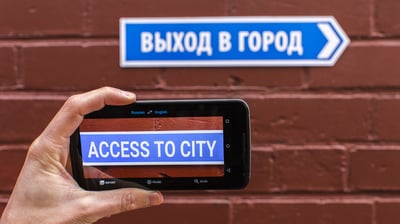
In April 2006, Google launched Google Translate, an app that started out as an online-only...
 by Rebecca Reynoso

Humans can decipher words organically due to the brain's central signals. They can interpret...
.png) by Shreya Mattoo
by Shreya Mattoo

Images have the power to transcend language barriers.
 by Mara Calvello