

If you're evaluating the best payment gateway software right now, here's what I'd want you to know before you commit: I've watched teams get well into integration before realizing they picked the wrong one. Payment gateway migrations are punishing enough that "we'll fix it later" rarely stays on schedule. Getting this right at the evaluation stage is genuinely worth the extra time.
Digital payment volume is forecast to reach US$37.45 trillion in 2026, growing toward US$46.25 trillion by 2030. At that scale, a gateway that looked fine during scoping starts showing its limits in production: settlement timing that doesn't match your forecasting cycle, regional compliance requirements that only surface when you're trying to expand, and checkout flows that quietly lose mobile transactions before anyone notices.
In this guide, I connect each tool to the operational profile it actually fits, so the decision in front of you has a clear answer rather than more research to wade through.
*These payment gateway tools consistently surface as leading options based on aggregated user review patterns and category positioning seen in G2 2026 Winter Grid.
Payment gateway software is where checkout intent becomes confirmed revenue, and it goes without saying that the gap between those two states is larger than most teams expect until they're troubleshooting it in production.
What separates strong platforms from adequate ones goes beyond the feature list on the pricing page. It's how they behave under the conditions that actually stress a payment stack: high-volume settlement windows, cross-border authorization attempts, disputed transactions that need clean audit trails, and checkout flows that have to work on mobile without friction. I looked specifically at how each tool in this list handles those conditions, not just whether it technically supports them.
From my evaluation, the platforms that hold up tend to share a few traits. They surface transaction-level signals clearly enough that engineering and finance aren't chasing the same data from different dashboards. They handle volume spikes without authorization performance degrading mid-peak, particularly during high-volume windows when decline rates compound. The ones worth recommending also tend to keep post-transaction work inside the platform rather than routing it through external queues.
Adoption across G2 reviews spans small merchants running lean stacks to SaaS teams managing subscription billing and enterprise marketplaces coordinating multi-party payouts. The operational priorities differ, but the underlying requirement is consistent: a gateway that stays out of the way once it's configured.
I shortlisted platforms using G2's Winter 2026 Grid Report, then ran AI-assisted analysis across hundreds of verified reviews to surface what consistently comes up in real-world feedback: where authorization holds or slips, how dispute handling works at volume, and whether reconciliation output is actually finance-ready.
Since I haven't personally deployed every platform, I cross-referenced findings with G2 Data and reviews from ecommerce operators, SaaS billing teams, and finance leads who use these tools in production. Visuals and product references are drawn from G2 vendor listings and publicly available documentation.
My criteria came directly from what G2 reviewers flagged as breaking points, cross-checked against how ecommerce, SaaS, finance, and product teams actually run payment workflows in production.
No gateway leads across every dimension here. The right call depends on where your current stack is leaking, whether that's authorization performance in new markets, reconciliation overhead at month-end, or dispute volume you're absorbing manually. Match the tool to the friction, not the feature count.
To be included in this category, a solution must:
*This data was pulled from G2 in 2026. Some reviews may have been edited for clarity.
PayPal Payments is one of those gateways customers already trust before you've said a word. It supports online transactions, digital wallets, and cross-border payments across web, mobile, and marketplace environments. What I kept seeing in the review data: teams rely on it to simplify checkout and automate payment flows without complex infrastructure.
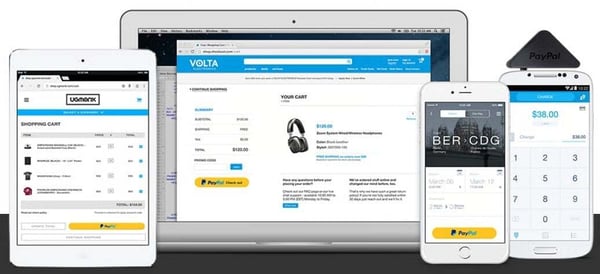
G2 users frequently flag stable processing and smooth completion across recurring and one-time payments, reflected in a 91% performance and reliability rating. I noticed this most among subscription-led teams, where that consistency quietly does a lot of work. Strong day-to-day usability signals suggest it integrates into workflows without adding maintenance overhead.
Set up simplicity appears frequently in feedback. What I found is that merchants can configure payment acceptance and start processing quickly, often without technical involvement. For smaller teams or individual sellers where ramp-up speed matters, that low-friction onboarding removes a real barrier.
G2 users often describe PayPal Payments as a practical channel for receiving funds from global customers or platforms where traditional bank transfers fall short. Instant payment capability is rated at 91% on G2. This is particularly valuable for freelancers and businesses needing to operate across currencies while keeping transaction visibility in one place.
G2 review insights point to broad card acceptance and wallet compatibility, backed by a 93% rating for accepted credit cards and debit cards. What that means in practice: your customers are less likely to hit a dead end at checkout because their preferred payment method isn't supported. Coverage like this reduces drop-off across regions and payment preferences.
Mobile usability comes up repeatedly in G2 reviews. The ability to monitor transactions, send funds, and manage payment activity from mobile environments is a consistent practical advantage. This is particularly relevant for distributed teams and independent sellers who can't always be tied to a desktop to maintain financial oversight.
G2 reviewers note that transaction fees apply per payment and stack with a separate currency conversion charge on international transactions. If your volume is heavily cross-border, that compound cost is worth modeling before you commit. The fee structure itself is transparent and predictable, which at least keeps budgeting clean.
Business account verification surfaces as a friction point in G2 feedback, particularly around KYC workflows that can stretch onboarding longer than expected. If you're setting up a business account for the first time, budgeting extra time for that process is worth doing. Day-to-day operations, once you're through it, are consistently described as clean and reliable.
PayPal Payments remains highly relevant for freelancers, SMBs, and digital-first businesses that rely on global payment acceptance and dependable processing. Across G2 feedback, there is consistent recognition of its broad card support and trusted checkout experience, positioning it as a widely recognized option for scalable online transactions across diverse commerce environments.
"I like PayPal Payments for its ease of use and easy sign-on. I find it valuable that I can use it anywhere and anytime. The initial setup was good, which made starting with PayPal Payments straightforward for me."
- PayPal Payments review, Pankaj R.
"While I was verifying my business account, I wasn't able to find the video KYC options on the website. I had to research on YouTube to figure it out. PayPal could improve the mobile application, which has a very limited number of features. It should incorporate KYC options, payment history options, and should transfer the payments immediately if possible. It was not that easy to make a business account in PayPal Payments. However, I did it with the help of YouTube tutorials."
- PayPal Payments review, Bibhudutta P.
A unified gateway covers authorization, but dedicated fraud tooling goes deeper on detection and chargeback defense. Check out the best e-commerce fraud protection software to see how the two layers complement each other.
Adyen Payments earns its place in enterprise payment stacks by doing something most gateways only partially deliver: keeping processing, fraud controls, and dispute management inside one system. What the G2 reviews reinforced for me is that this isn't just an architectural preference; it's what teams actually rely on when payment complexity scales.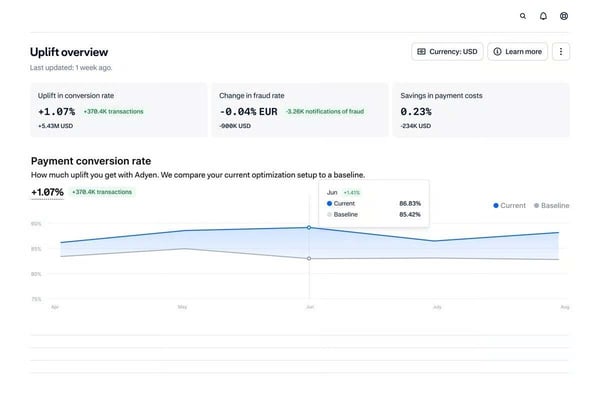
One thing that stood out in the review data was how consistently reviewers highlight Adyen's transaction search depth. Teams describe filtering by card details, IDs, or payment metadata to verify activity quickly during support investigations. The 100% Level 3 processing rating reflects just how much transactional detail the platform actually surfaces.
Authorization performance is where Adyen tends to pull ahead in review feedback. Teams describe routing logic that improves approval rates on cross-border and high-value transactions, which is precisely where most gateways start showing gaps. If international expansion is on your roadmap, that's a meaningful advantage to have built into the stack from the start.
Refund tracking, payment state monitoring, and ARN sharing all live inside the platform, which means your support and finance teams aren't playing telephone to resolve customer queries. This is particularly valuable in reviews from larger operations where that coordination overhead adds up fast across high ticket volumes.
Fraud scoring, Dynamic 3D Secure, and automated chargeback defense are cited repeatedly as differentiating features. Businesses link these controls to fewer fraud-related losses and less manual investigation effort. Adyen manages to strengthen fraud defense without introducing friction that bleeds into legitimate transaction completion rates.
Engineering teams benefit from comprehensive documentation and sandbox environments that simulate real payment scenarios before deployment. These resources meaningfully reduce production risk rather than just checking a compliance box. That reliability aligns with its 100% rating for e-commerce integration on G2.
Finance teams reference the platform's ability to connect payment data directly to reconciliation workflows, rated at 100% for accounting integration on G2. Transaction matching and financial reporting run without manual exports, which keeps books clean without requiring additional tooling. For teams managing multi-market settlement flows, that tightness removes a recurring source of month-end friction.
Chargeback automation and workflow configuration require meaningful setup time before they operate as intended, particularly for teams managing complex dispute volumes or multi-market payment flows. Operations with straightforward chargeback needs reach a steady state faster. That upfront investment does produce a defense layer that handles responses without ongoing manual intervention once live.
G2 users point to the absence of visual analytics as a practical slowdown for finance and ops teams expecting at-a-glance trend views. Charts, graphs, and performance visualizations aren't part of the dashboard layout. That said, the underlying transaction data is complete, consistently structured, and straightforward to export when a more formal review is needed.
Adyen Payments holds a strong position in the payment gateways category by combining authorization performance, fraud controls, and unified transaction visibility in one platform. What the G2 review data kept reinforcing for me is that these capabilities work together in a way that directly benefits e-commerce, marketplaces, fintech, and global retail teams managing multi-region payment operations.
"I really like the search functionalities and how the features like disputes and reports are organized in the portal. It makes it very easy to find what I need. The chargeback fees are also very competitive compared to others. Additionally, the auto-defend feature for chargebacks is a great tool that saves a lot of time."
- Adyen Payments review, Abdelaziz I.
"The Adyen dashboard isn't particularly user-friendly, as it lacks visual analytics, which makes it harder to interpret data at a glance. Additionally, I've noticed that the Adyen component occasionally fails to load on the payment page, which can be frustrating."
- Adyen Payments review, Arpan K.
See how leading processors handle checkout, settlement, and fraud across markets with the best payment processing software on G2.
Apple Pay doesn't try to do everything, and that focus is precisely what makes it effective. Biometric authentication, tokenized payments, and reduced checkout steps define the experience across in-store, online, and peer-to-peer environments. What I found in the review data is a remarkably consistent picture: customers move through checkout quickly, and merchants notice.
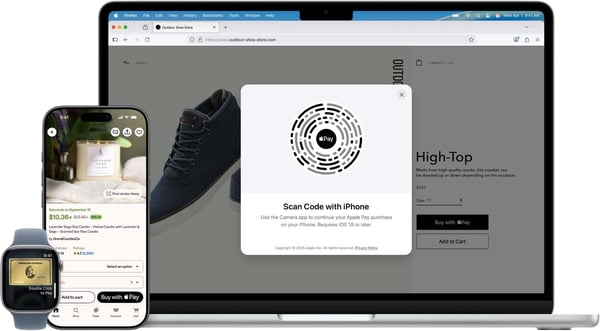
Security here runs underneath the experience rather than on top of it. Payment credentials are replaced with tokens at the point of transaction, earning a 96% data tokenization rating on G2. Your customers get a fast checkout; you get reduced fraud exposure. The architecture handles both without asking either side to make a trade-off.
If you're running high-volume, low-value transactions, checkout speed isn't a nice-to-have. Customers authenticate through biometrics, rated at 96% for two-factor authentication on G2, and complete purchases within seconds. Merchants consistently describe Apple Pay as the point where their abandonment rate quietly improved without any other changes to the flow.
Integration with iPhone, Apple Watch, and iPad gives businesses access to a large, already-converted user base. Merchants describe adding Apple Pay as one of the lowest-effort ways to meet customers on their preferred payment method. That ecosystem depth is genuinely difficult to replicate through any other single integration.
Fraud protection sits at 95% on G2, above the category average of 90%, and the reviews back up what that number implies. Verified authentication keeps disputed transactions lower, which matters more as volume grows. If dispute management is already a cost center in your current setup, that gap relative to category average is worth taking seriously.
In physical retail, the tap-and-go expectation is already there for a growing share of customers. Apple Pay meets it without asking merchants to do much. The speed benefit shows up most clearly for businesses with real queue pressure, where shaving seconds off each transaction actually adds up.
Not all your customers carry iPhones, and Apple Pay can't help the ones who don't. It's the most important constraint to reality-check early: look at your device split, and if Android is meaningful, plan your stack accordingly. Within its lane, though, the checkout experience is hard to fault.
Built-in promotional and loyalty tooling sits outside Apple Pay's design scope, which surfaces as a consideration for merchants building campaign-led or loyalty-driven commerce experiences. Businesses running promotions through separate tools find that Apple Pay integrates cleanly alongside them. The payments-first focus keeps checkout consistent without layering in complexity that would slow the core experience.
Apple Pay holds a steady position in the payment gateway category through reliable usability and broad SMB adoption. Its strengths in secure authorization, rapid checkout, and contactless payment alignment support smooth day-to-day transaction workflows.
"Apple Pay is very convenient and secure for paying merchants online and in person. I don't need to physically carry my cards anymore and I know I can just use the Apple Pay option to pay for merchandise."
- Apple Pay review, Omar K.
"Although Apple Pay has gained popularity, not all customers use it as their preferred payment method, which makes sense, but not all merchants support apple pay either."
- Apple Pay review, Spencer S.
Businesses operating across multiple regions use checkout.com to consolidate payment acceptance without losing visibility into what's actually happening at the transaction level. The platform combines API-driven orchestration, fraud monitoring, and reporting in one place. What I found across the G2 reviews is consistent adoption among teams that want genuine control over cross-border payment flows, not just nominal coverage.
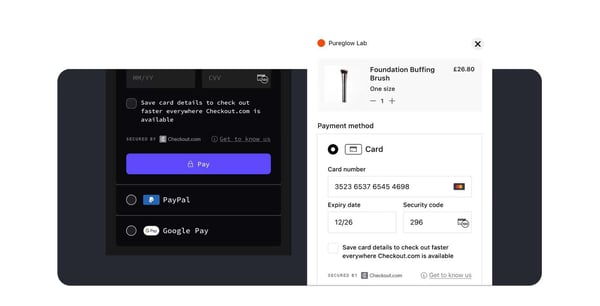
Authorization holds steady across domestic and cross-border payments alike, which is more notable than it sounds. A lot of gateways handle one well and show cracks in the other. The 94% performance and reliability rating on G2 reflects what reviewers actually describe: fewer interruptions during high-volume periods and checkout continuity that your customers don't have to think about.
If your team has strong engineering resources, the API depth here is genuinely worth your attention. Flexible architecture and clear documentation support clean integration into existing platforms, and the 95% card coverage rating on G2 means you're unlikely to hit gaps that force a second gateway into the stack.
Global payment method coverage is one of the more practical reasons teams consolidate onto checkout.com. Managing regional payment options through a single gateway simplifies expansion considerably, and the 94% PCI-aligned security rating gives finance and compliance teams a cleaner line of sight into cross-border transaction performance without juggling multiple provider relationships.
Risk and finance teams tend to single out the same features in reviews: transaction logs, dispute tracking, and fraud monitoring. Built-in rule configuration for flagging unauthorized transactions adds operational control without requiring external tooling. This combination shows up most among teams scaling quickly, where payment governance can otherwise fall behind growth.
Dedicated relationship managers and responsive technical teams get consistent recognition in G2 feedback, particularly through integration and geographic expansion phases. Support stays engaged well past onboarding, which is exactly when payment complexity tends to spike and generic queue-based support starts to show its limits.
Reporting and reconciliation support gets consistent recognition in G2 feedback from finance teams managing cross-border volumes. Settlement data exports cleanly, transaction records are well-organized, and month-end reconciliation doesn't require manual correction.
The integration setup requires real developer involvement upfront. APIs, payment flows, and routing rules all need configuration before the gateway performs as intended. For businesses expecting plug-and-play deployment, that's a genuine mismatch. For developer-led teams that want control over their payment stack, that same depth works in their favor.
The dashboard takes time to navigate confidently, and that comes through clearly in G2 feedback from teams new to the platform. Key views aren't always where you'd expect them. The underlying transaction data is thorough and well-structured, though, and teams that push through the learning curve tend to stop mentioning it after a few weeks.
checkout.com reflects the capabilities expected from a modern payment gateway, combining global payment coverage, flexible integration pathways, and centralized transaction visibility. G2 users consistently highlight reliability and scalability as its defining strengths, supporting organizations managing multi-region payment operations where authorization consistency and developer control are the deciding factors.
"What I really like about Checkout.com is how smooth and reliable it is to use, especially when handling international payments. Everything from the API to the dashboard, just works cleanly and it gives clear visibility into every transaction. It feels modern, fast and easy to manage."
- Checkout.com review, Vasudha P.
"Setting it up can be a bit of a hassle, especially for smaller startups. The dashboard is super useful, but it's not easy to understand. Some of the advanced features need help from a pro. It would be great if they had more self-serve tools."
- Checkout.com review, Varun R.
Paytm Business is built for merchants transitioning from cash to digital collections, combining UPI, QR codes, cards, and wallet payments in one interface. What I kept seeing across the reviews is merchants pointing to payment method flexibility as something that directly reduced friction at the point of sale, not just a feature they ticked off during evaluation.
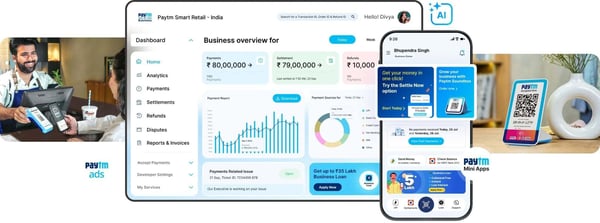
Broad payment method support is reflected in a 92% rating for the online payment portal on G2, and in practice, that breadth translates to fewer customers abandoning at checkout because their preferred method isn't available. For businesses serving diverse payment behaviors across both in-store and online channels, that coverage does quiet but consistent work.
Onboarding is straightforward enough that you can get from account activation to live transactions without a steep learning curve or external help. Merchants consistently describe the dashboard as something they picked up fast, which matters if your team is lean and can't afford to spend weeks getting oriented before collections start running.
Real-time transaction monitoring is where reconciliation actually gets done for most of these merchants, and the 93% real-time payments rating on G2 reflects that. If you're managing a busy transaction environment, having live visibility into payment activity means you're catching discrepancies as they happen rather than untangling them at month-end.
Settlement predictability is a recurring theme in feedback. Direct bank transfers and clear payment records give you a reliable handle on cash flow timing. This matters more for high-frequency, small-value transaction environments than almost any other gateway feature. Planning around collections becomes significantly less stressful when the timing is consistent.
Two-factor authentication is rated at 93% on G2, and what struck me in the reviews is how rarely merchants mention security as something they actively think about. That's the best version of fraud protection: it does its job without asking you to manage it, so your attention stays on the business rather than the payment infrastructure.
POS device and soundbox pricing isn't clearly outlined during onboarding, and merchants running hardware-dependent setups have flagged discovering variable costs only after committing. If your model leans on QR and UPI with lighter hardware needs, that ambiguity has less practical impact. The digital payment stack itself carries no equivalent cost surprises.
Cross-border payment support is narrower than most competing gateways, and if serving international customers is part of your growth plan, you'll hit that ceiling relatively quickly. For businesses focused entirely on the Indian market, though, that boundary is largely irrelevant. The UPI and QR depth here is built around exactly how domestic consumers actually pay, and that focus shows.
Paytm Business earns its place through reliable collections across the payment methods Indian consumers actually use. Its UPI and QR depth is the sharpest differentiator for retail and service merchants focused squarely on the domestic market, where payment method breadth and real-time visibility matter most.
"It's a great app for receiving customer payments via UPI, POS, and other methods. It was among the first few apps to help revolutionise the UPI payment boom. The setup is straightforward, and it's quite easy to use day to day."
- Paytm Business review, Ankit D.
"Sometimes the network gets busy but it's rare. Also, it would be great if Paytm Business provided more offers for business vendors to increase their profit."
- Paytm Business review, Harish C.
Selling in-store as well as online? Compare the best retail POS systems on G2 to pair counter hardware with your payment stack.
NMI Gateway surfaces consistently in evaluations where processor-agnostic flexibility and multi-merchant program management are the priority. What struck me going through the review data is how clearly it's engineered for two audiences at once: direct merchants who need a reliable gateway, and the partners managing payment programs on their behalf, with fraud controls, reporting, and oversight built for both.
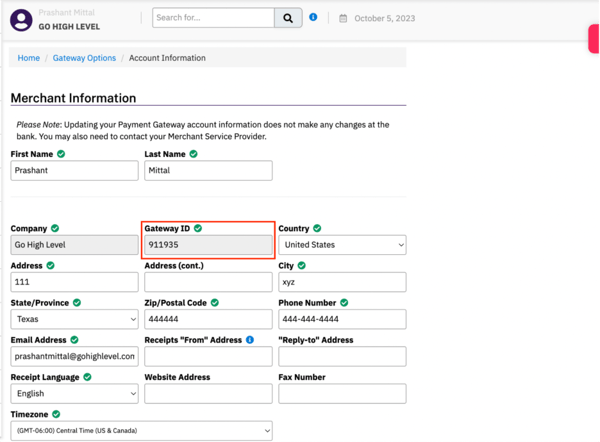
Multi-MID functionality lets you manage regional and offshore payments within a single gateway environment, keeping domestic and international transaction accounting cleanly separated. Each transaction gets a unique ID for traceability and fraud verification, and card acceptance breadth across payment types is reflected in a 97% rating for accepted credit cards and debit cards on G2.
The interface consistently gets called out as genuinely easy to navigate, and this feedback comes predominantly from resellers and ISOs who need to operate the full gateway independently without leaning on support for routine tasks. That self-sufficiency is backed by a 95% online payment portal rating on G2.
White-label capability is where NMI pulls ahead for resellers and ISVs. You can apply your own branding to the gateway experience end-to-end, and reviewers describe the configuration process as straightforward enough that go-to-market timelines don't get eaten up by setup. If you're launching a payment program under your own identity without building proprietary infrastructure, that's a meaningful head start.
Recurring billing is rated at 96% on G2, and automated billing cycles and stored credentials quietly remove friction from ongoing merchant-customer relationships without requiring custom development. For SaaS businesses and service providers running predictable payment cycles, that reliability compounds over time in ways that manual billing management simply can't match.
Support quality gets genuine recognition across the review data. Relationship managers take ownership of issues directly rather than routing you through generic queues. Merchants describe support interactions as the kind where someone actually understands your business context, not just the ticket in front of them.
Reporting and transaction search capabilities give you transaction-level detail, approval status, and fraud signals across merchant accounts without manual reconciliation effort. During disputes or support investigations across complex multi-merchant environments, the ability to search by multiple parameters is the difference between a quick resolution and a lengthy back-and-forth.
G2 users highlight that the initial integration requires developer involvement, and smaller operations without dedicated technical resources will feel that friction upfront. The documentation is comprehensive, and partner support engages directly rather than leaving you to figure it out alone, but the setup investment is real and worth factoring into your implementation timeline before you commit.
G2 feedback points to one consistent trade-off: NMI does not support semi-integrated or fully integrated physical terminals, meaning merchants who need card-present hardware alongside their online gateway cannot consolidate both within NMI alone. Purely online operations, SaaS businesses, and partner-led payment programs are entirely unaffected by this boundary.
NMI Gateway holds a strong position among processor-agnostic payment infrastructure options, particularly for ISOs, ISVs, and resellers that need flexible multi-merchant management within a single platform. White-label architecture, billing depth, and direct partner support give NMI a durable edge among processor-agnostic gateways built for scale across diverse merchant programs.
"I like that with NMI Gateway, as the Processor, I can log in and assist my merchants, which is crucial for those who are not tech-savvy. This proactive support capability sets NMI apart from other gateways like Authorize.net. The login function is really helpful as it allows me to see exactly what the merchants are looking at or to get the details they are missing. Another big feature I find incredibly useful is the ability to have multiple processing backends loaded up on NMI. This lets me easily swap or point to another backend without needing a whole new gateway, especially if one goes down. The uptime has been phenomenal, and it's been a great experience using them for about 6 years with very few issues. It's my top recommended gateway, a 10 for me."
- NMI Gateway review, Charles A.
"The reporting capabilities could use some work. Not always able to view/find what they need as far as transaction/settlement reports."
- NMI Gateway review, Angel S.
Alipay connects merchant checkout with consumer wallets through app-based authentication, shaping how payments move from initiation to confirmation in markets where mobile wallets are already the default. What I found going through the G2 reviews is that adoption is sharpest where wallet behavior is already embedded in daily life, not where merchants are trying to introduce it.
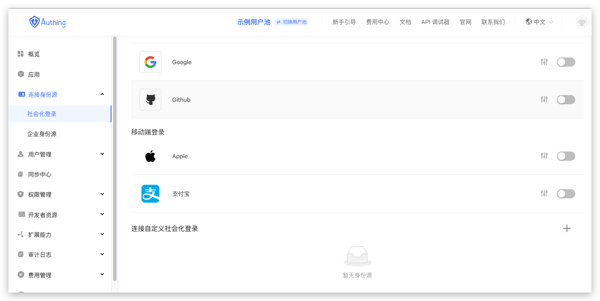
Payment speed is central to how reviewers describe the Alipay experience, and the 95% instant payment rating on G2 reflects that accurately. QR scans and saved-contact transfers remove input steps entirely, letting transactions close in seconds. If your customers are already Alipay users, that speed is something they'll expect from the first interaction rather than appreciate as a bonus.
Getting set up with bank account linking and initiating your first payments is described consistently as low-effort in G2 feedback. Routine actions like transfers, QR payments, and merchant checkout stay accessible without complex configuration steps, and the 93% online payment portal rating reflects stable checkout execution that slots into existing routines without requiring workarounds.
Consumer familiarity does real conversion work in markets where Alipay is part of daily life. Buyers in Alipay-native markets move through checkout without the hesitation that unfamiliar payment methods tend to trigger. That behavioral comfort is something you can't manufacture through UX improvements alone; it comes from the platform already being trusted.
SDK availability and straightforward implementation mean you can embed the gateway into websites or apps without extensive customization. The 93% accounting integration rating on G2 further supports operational visibility by connecting payment activity with reconciliation workflows, helping your finance team track transactions without bolting on separate financial tooling.
Day-to-day payment reliability is something reviewers describe almost by its absence: Alipay processes consistently, handles volume without disruption, and stops being something merchants actively think about. That invisibility is cited as a long-term confidence builder, which is a different kind of endorsement than feature praise but arguably a more meaningful one.
G2 reviewers highlight that portions of the interface remain in Chinese without translation. If you're navigating advanced account settings or management sections as an international user, you'll encounter text that requires an external translation tool to interpret. Core payment workflows stay functional and accessible throughout, so day-to-day transaction processing remains unaffected even when account management sections are harder to navigate.
Merchant adoption outside China-facing and cross-border ecommerce contexts is limited, and G2 feedback from businesses outside those regions reflects customer uptake too low to justify Alipay as a primary gateway. If your business specifically targets Chinese consumers or operates in travel and luxury retail, though, that regional concentration flips from a constraint into a direct competitive advantage.
What I noticed in G2 reviews is that Alipay's relevance is sharpest where mobile wallet behavior is already established. In those contexts, strong instant payment capability and frictionless transaction speed combine to make it a natural anchor for ecommerce, retail, and peer payment flows targeting Chinese consumers and cross-border audiences.
"Alipay offers you an easy interface rather than a complex way to go through multiple checks."
- Alipay review, Isha S.
"Limited applications for US to US digital payments, but is expanding constantly."
- Alipay review, Dana B.
EBizCharge surfaces in evaluations where embedded payment processing and accounting system integration are the deciding factors, not gateway feature breadth. The platform connects credit card, ACH, and eCheck acceptance directly into ERP environments, removing the need to process payments outside the systems your team already works in. Adoption clusters around businesses that want payments to live inside existing workflows, not alongside them.
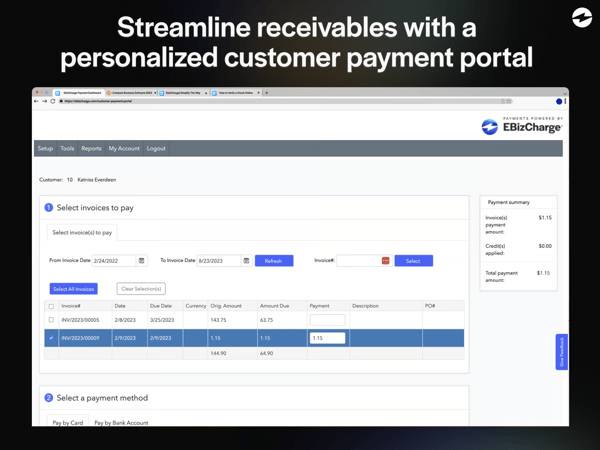
ACH and eCheck processing capabilities are rated at 97% on G2, and B2B finance teams consistently describe measurable improvements in cash flow after consolidating card and ACH acceptance into one platform. If your current setup has you toggling between tools to cover different payment types, that consolidation alone tends to justify the switch.
ERP integration depth is the most frequently cited strength in G2 feedback. Reviewers describe seamless connections to Acumatica, QuickBooks, SAP, and Business Central that keep payment records aligned with accounting workflows without manual data entry. The 97% credit and debit card rating on G2 reflects how completely payments stay inside your ERP environment rather than creating context-switching that inflates reconciliation workload.
Transactions complete inside your own platform without redirecting customers to external pages, backed by a 97% real-time payments rating on G2. That embedded approach gives you full control over the checkout environment while keeping the experience intuitive for the people on the other end of the payment. Reviewers describe this as the feature that most visibly changed how their customers perceived the payment process.
Security and fraud protection get consistent recognition across G2 feedback, with enterprise-grade data protection keeping sensitive card information off business systems entirely. Reviewers frame it as protection that handles compliance requirements without surfacing as something your team needs to actively manage day to day.
Support responsiveness is one of EBizCharge's clearest differentiators in the review data. Reviewers describe sub-hour response times and follow-through on issue resolution rather than one-time replies. Support teams understand both the EBizCharge platform and the specific ERP integrations you're running, which shortens resolution cycles considerably compared to generic payment support.
Automated billing setup is described as genuinely low-effort in the reviews, with stored credentials handling recurring collection without custom builds. If you're running predictable billing cycles across a service business or SaaS operation, that automation removes ongoing configuration management from your team's plate without requiring engineering involvement to maintain it.
G2 reviewers note that initial integration complexity is a friction point for teams without dedicated technical resources. Some reviewers describe the setup process as requiring external technical assistance before payments can run smoothly within their ERP environment. Once the integration is complete, reviewers consistently describe the day-to-day payment experience as straightforward and reliable across all transaction types.
Some G2 reviewers mention that automated payment import workflows can produce duplicate entries in certain configurations, requiring a switch to manual imports to keep reconciliation clean. Finance teams managing high-frequency imports are more likely to encounter this than those with lighter transaction volumes. The platform's broader automation capabilities across recurring billing and ERP synchronization remain unaffected.
EBizCharge holds a strong position among ERP-integrated payment gateways, particularly for B2B businesses running Acumatica, SAP, QuickBooks, or Business Central environments where payment processing needs to sit inside existing workflows rather than alongside them.
"I like Ebizcharge because its integration, automation and security control. You can connect with tools I already use such as quickbooks. Also I'm able to set up recurring payments and what I like the most is the fraud protection it offers."
- EBizCharge review, Gladys Z.
"If we had one suggestion for improvement, it would be to enhance the remittance emails to include a breakdown of which payments are included in each deposit. This small addition would make reconciliation even easier. Overall, EBizCharge has been a valuable solution for our payment processing needs, and we're happy to recommend them."
- EBizCharge review, Stephanie L.
Authorize.net is infrastructure you configure once and largely stop thinking about. Ecommerce checkouts, subscriptions, and invoice payments run without requiring active security management on your end, with fraud controls, stored payment data, and recurring billing consolidated in one environment. What the G2 reviews kept reinforcing is that reliability over time is what earns this platform its place on shortlists, not feature novelty.
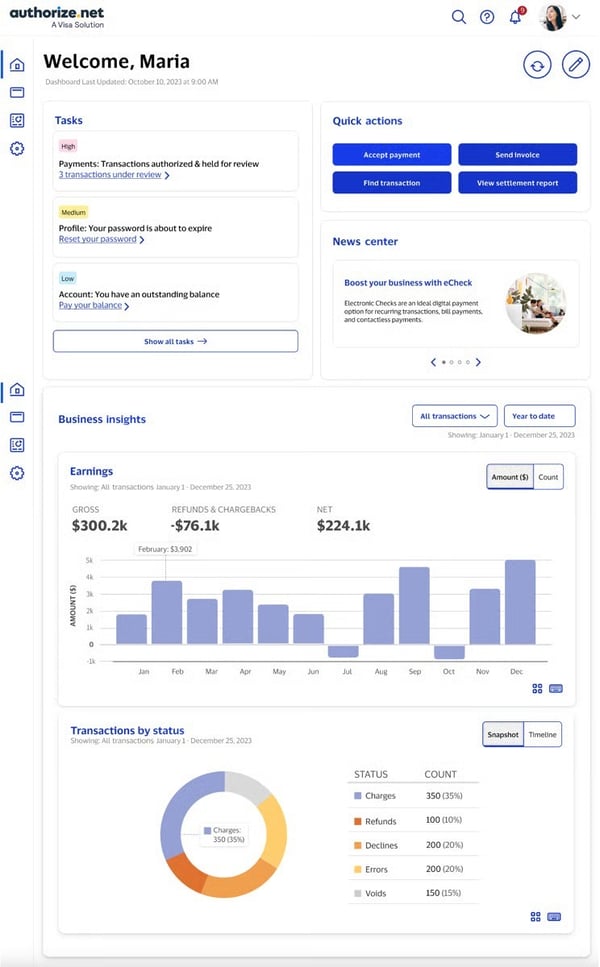
The 94% credit and debit card acceptance rating on G2 reflects broad ecosystem compatibility that shows up practically in how payment tracking gets done. QuickBooks and CRM integrations surfaced repeatedly in reviews as the connectors that keep reconciliation from becoming manual work. If your business runs across multiple collection channels, that integration breadth removes a lot of the coordination overhead that typically accumulates quietly.
Fraud detection controls and encrypted transaction handling earn a 90% PCI compliance rating on G2, and reviewers describe these capabilities as something that runs in the background rather than requiring active configuration on their end. For teams managing chargeback exposure across ecommerce and subscription environments, having that protection layer operate without constant oversight frees up attention for higher-priority work.
Transaction stability is one of those qualities that only gets noticed when it's absent, and Authorize.net's 90% performance and reliability rating reflects what reviewers describe: processing you can count on across high-frequency payment environments. Merchants point to minimal downtime as the reason they've stayed on the platform long after evaluating alternatives.
Recurring billing and customer information management are where Authorize.net earns particular recognition from subscription-led businesses. Automated billing cycles, digital invoicing, and stored credentials handle ongoing payment relationships without custom development. The ability to migrate processors while retaining stored credentials gives you genuine negotiating leverage when reassessing payment partnerships down the line.
The ability to manually key in phone or in-person payments alongside online transactions expands your operational coverage beyond ecommerce environments without requiring a separate tool. Transaction history search and security configuration are described as accessible enough that day-to-day administrative tasks don't require technical familiarity to complete, which suits lean teams managing mixed payment scenarios across channels.
G2 users flag that Authorize.net charges a mandatory monthly gateway fee on top of per-transaction costs, a pricing structure that becomes more expensive than competing gateways for merchants processing low or inconsistent transaction volumes. High-frequency ecommerce and subscription operators will find the fixed billing cadence easier to plan around, while irregular-volume merchants carry more of the cost burden relative to activity.
Customization options for payment fields, layouts, and checkout design are more restricted than newer developer-first gateways, a consideration for businesses wanting tighter control over the checkout experience. The focused feature set keeps the platform stable and well-suited to teams prioritizing processing reliability over visual flexibility.
Authorize.net stands out as a reliability-focused gateway suited to ecommerce and subscription businesses that prioritize secure, uninterrupted payment processing. Strong card acceptance and PCI-aligned infrastructure reinforce its role as a dependable transaction backbone.
"Authorize.net is helpful in fraud tools, robust technology, integrated security with different plans and features like digital invoicing, customer information management and payment processing."
- Authorize.net review, Hitesh V.
"The monthly payment gateway fee. A lot of other popular gateways don't charge one."
- Authorize.net review, Claudia M.
Paying contractors across borders? Read about the top-rated contractor payment software for compliance, multi-currency payouts, and speed.
Borderless AI is built around a straightforward premise: contractors and distributed teams get paid accurately, on time, and without the complexity that typically comes with cross-border transfers. The platform combines invoice processing, multi-currency payouts, and payroll management in one interface. What I found going through the G2 reviews is that adoption centers on teams where payment reliability isn't negotiable and operational simplicity is the deciding factor.
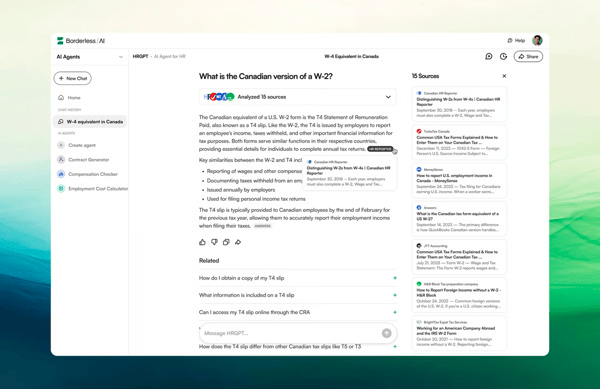
Payment speed is the most unanimously cited strength across the review data, and the 98% payout time rating on G2 reflects what reviewers actually describe: invoices reaching contractor bank accounts within 24 to 48 hours of submission, sometimes faster. If you've managed international contractor payments through traditional bank transfer routes before, you'll immediately recognize how much that turnaround changes the operational picture.
Cross-border payment capability gets consistent recognition from teams managing contractors and employees across multiple countries. Reviewers describe a payable process that removes the friction typically associated with international transfers, and integration with platforms like Workday keeps payment data aligned with broader HR and finance systems without requiring manual reconciliation between them.
Onboarding is described across G2 reviews as genuinely uncomplicated, with an intuitive interface across web and mobile environments and a self-service FAQ that handles common questions without requiring a support ticket. Contractors across different regions and technical comfort levels describe setup as something they completed without assistance, which matters when you're onboarding distributed teams across multiple time zones simultaneously.
Built-in AI surfaces invoice status and flags concerns proactively, removing the need to chase payment updates through support channels. Reviewers describe the AI layer as something that answers routine payment queries accurately before they become support requests. For finance teams managing multi-contractor payroll cycles, that proactive visibility reduces the administrative overhead that typically accumulates around payment status tracking.
Support interactions get described as personalized rather than routed through generic channels, with teams that are quick to engage and effective at resolving issues when they arise. Support responsiveness during active payroll cycles, when the cost of a delayed answer is highest, is precisely where reviewers say it holds up.
Payroll reliability scales with headcount in a way that reviewers find genuinely reassuring. More locations and currencies don't introduce more errors, and the 98% two-factor authentication rating on G2 reinforces transaction security across each payroll run. If your contractor base is growing across new geographies, that consistency across expanding complexity is worth more than it might seem during initial evaluation.
G2 feedback surfaces the absence of a live support agent for urgent issues as a clear gap, with reviewers noting that real-time payment status monitoring is also unavailable. This leaves contractors and finance teams without immediate visibility into whether a payment is processing, delayed, or completed during critical payroll windows. The platform's support team responds promptly through available channels, and payment accuracy remains high once processing is underway.
API access is limited compared to developer-first payment platforms, a boundary that comes through in G2 reviews from technical teams seeking to build custom workflows or deeper integrations on top of the Borderless infrastructure. Teams building proprietary payroll tooling will reach this ceiling relatively quickly. For organizations using the platform primarily for contractor payments and payroll, the existing feature set handles core workflows reliably without requiring API customization.
Taken together, Borderless AI holds a focused position in the cross-border payment and contractor payroll space. Across G2 feedback, there is consistent recognition of payout speed, cross-border precision, and an interface that doesn't demand technical fluency, making Borderless AI the cleaner call for growing teams where contractor payment reliability outweighs gateway depth.
"I find Borderless AI incredibly effective for solving cross-border payment issues, making the payable process smooth, accurate, and efficient. The integration with platforms like Workday is highly beneficial to our workflow. Setting up the software was easy, which was a great start to my experience."
- Borderless AI review, Ganesh R.
"I think there should be an available live agent on standby for urgent concerns and real-time status monitoring of payment."
- Borderless AI review, Maveen Kim Alexis A.
|
Software |
G2 rating |
Free plan |
Ideal for |
|
PayPal Payments |
4.4/5 |
No (No monthly fee, but card charges applied) |
Businesses prioritizing familiar checkout experiences and global buyer trust across ecommerce and digital services |
|
Adyen Payments |
3.7/5 |
No |
Enterprises consolidating global payment methods, risk, and reporting into a unified orchestration layer |
|
Apple Pay |
4.7/5 |
No (No extra fee) |
Mobile-first teams optimizing fast, device-native checkout and biometric authentication experiences |
|
checkout.com |
4.6/5 |
No |
High-growth ecommerce and SaaS companies needing flexible APIs and multi-region payment routing control |
|
Paytm Business |
4.6/5 |
No (Free account setup) |
Merchants serving Indian customers through UPI, wallets, and QR-based payment flows across online and offline channels |
|
NMI Gateway |
4.7/5 |
No |
ISOs, ISVs, and resellers managing multi-merchant payment programs through a processor-agnostic white-label-ready gateway |
|
Alipay |
4.4/5 |
No |
Brands targeting Chinese consumers and cross-border wallet payments in travel, luxury, and ecommerce contexts |
|
EBizCharge |
4.8/5 |
No |
B2B businesses embedding card and ACH payment processing directly into ERP and accounting environments |
|
Authorize.net |
4.2/5 |
No |
SMBs and legacy environments layering secure card processing and recurring billing onto existing systems |
|
Borderless AI |
4.9/5 |
No |
Growing businesses managing cross-border contractor payments and multi-location payroll, where speed and accuracy are the priority |
*These payment gateways consistently surface as leading options based on the aggregated G2 2026 Winter Grid. Most rely on transaction-based or custom pricing rather than free tiers.
Got more questions? G2 has the answers!
Adyen Payments and checkout.com are the strongest calls. Adyen handles local payment methods and reconciliation across markets natively. checkout.com suits high-growth teams needing flexible API-driven routing. Layer in PayPal Payments where consumer brand familiarity affects conversion.
PayPal Payments is a strong fit for smaller teams, with no monthly fee and quick, low-friction setup that often needs no technical involvement. Paytm Business is the most cost-accessible for Indian-market merchants, with UPI starting around 0.40%. Both keep upfront costs low for lean operations.
Adyen Payments is the strongest enterprise call. It centralizes processing, fraud controls, dispute management, and reconciliation in one platform, with smart routing that improves authorization rates across high-volume, multi-region environments.
Authorize.net integrates smoothly with ecommerce platforms, accounting tools, and CRMs, making it a reliable fit for online stores and subscription setups. checkout.com offers API-driven integration for digital-native teams, while PayPal Payments provides broad, low-effort ecommerce checkout coverage.
Adyen Payments leads on fraud detection at the enterprise level, combining Dynamic 3D Secure, automated chargeback defense, and fraud scoring in a single stack. Apple Pay also stands out for tokenization-based fraud prevention, rated 95% for fraud protection on G2.
Paytm Business is the most cost-accessible for Indian market merchants, with UPI starting around 0.40%. PayPal Payments carries no monthly fee, suiting lower-volume operations. Adyen and checkout.com use custom, negotiated pricing based on business profile.
Adyen Payments is the most comprehensive, handling local cards, wallets, and bank-based methods natively without separate integrations. checkout.com covers similar ground with more API control by region. PayPal Payments adds consumer wallet coverage where brand recognition drives completion.
Authorize.net and NMI Gateway are the strongest options. Authorize.net handles automated subscription cycles and stored credentials without custom infrastructure. NMI is rated 96% for recurring billing on G2, making it well-suited to SaaS businesses and multi-merchant payment programs.
Borderless AI leads with a 98% payout time rating on G2, with contractors regularly receiving funds within 24 to 48 hours of invoice submission. For consumer checkout, Alipay and Apple Pay deliver near-instant confirmation through wallet and biometric authentication.
Apple Pay leads on tokenization and biometric authentication, rated 95% for fraud protection on G2, above the category average. For ERP-embedded B2B environments, EBizCharge keeps sensitive payment data off your systems entirely through enterprise-grade data protection.
If you're at the point of finalizing a decision, the criteria and tool assessments above should have narrowed the field considerably. What remains is matching your shortlist against the specifics of your transaction environment: the markets you're entering, the billing model you're running, and the internal teams who will live with the integration.
The gateways that hold up over time aren't necessarily the most feature-rich. They're the ones that fit the actual shape of your payment flows without requiring constant intervention to keep them working. That fit compounds quietly in your favor through cleaner settlements, fewer escalations, and checkout experiences your customers don't notice because nothing went wrong.
Use the G2 reviews linked throughout this guide to pressure-test your shortlist against feedback from teams running similar transaction volumes and business models. That's the fastest way to validate fit before you're committed to one.
Want deeper control over transaction routing and settlements? Explore leading payment processing software on G2.


I believe getting paid should be a simple, straightforward process, not a stressful one.
.png) by Tanuja Bahirat
by Tanuja Bahirat

Our digital world has made it easier to do business across borders and around the globe.
 by Marwan Forzley
Online shopping is almost ubiquitous. Nearly every major brand has an online store, and many a...
 by Lauren Fram