
I've evaluated dozens of cryptocurrency wallets, and the pattern is consistent: teams don't lose funds because they picked the wrong coin. They lose them because they picked the wrong infrastructure. Choosing the best cryptocurrency wallet means having the right recovery path, approval controls, and audit trail before something goes wrong — not after.
That exposure is real: personal wallet compromises surged to 158,000 incidents affecting 80,000 unique victims in 2025, nearly triple the 2022 count, according to Chainalysis. Most weren't sophisticated attacks; they were preventable gaps in how wallets were set up.
This guide maps each wallet to the problem it actually solves, so you can choose based on how your team operates rather than feature lists alone. My analysis draws on verified G2 user reviews, G2's Winter 2026 Grid® Report, and observed deployment patterns across real workflows.
*These are the top-rated products in the Cryptocurrency Wallets category, according to G2's Winter 2026 Grid® Report. I have included their pricing details for an easy comparison.
In my opinion, the best cryptocurrency wallets should go beyond their primary function of simple storage. They surface real-time balance and transaction data, protect private keys against both external attacks and internal mishandling, and offer advanced controls like multi-signature authorization and structured recovery options.
Whether the use case is DeFi activity, multi-coin portfolio management, or enhanced transaction privacy, strong wallets provide that control without demanding technical overhead from every user.
And it's not only large crypto investors or businesses that benefit. G2 Data shows that adoption is widespread among small traders, medium-sized investment firms, and enterprises, all of which rely on these tools to manage their assets securely and efficiently.
What separates the wallets that scale from those that don't is usually operational integrity under pressure: fast onboarding that doesn't trade off security, recovery paths that work when they're needed, and integrations that hold up in production rather than just in demos.
My shortlist started with G2's Winter 2026 Grid® Report for the cryptocurrency wallets category, based on real user satisfaction scores and market presence across small traders, mid-market investors, and enterprises.
I then used AI to analyze hundreds of verified G2 reviews and extracted recurring feedback patterns around what matters most in real-world crypto asset management, such as wallet security, transaction speed, user interface ease, multi-coin support, integrations with DeFi platforms, and mobile accessibility. This went beyond feature checklists to capture how these tools perform when the stakes are real.
My findings were cross-validated with feedback from cryptocurrency investors, blockchain developers, and finance teams who use these tools actively. Visuals and product references are sourced from G2 vendor listings and publicly available product documentation.
By analyzing G2 feedback and engaging with insights from crypto asset managers, investors, and traders, key patterns began to surface. These signals shaped the criteria I used to evaluate the best cryptocurrency wallets, focusing on how effectively platforms secure digital assets, streamline transactions, and integrate with blockchain ecosystems, rather than just on basic features.
Applying these criteria surfaced wallets that excel at securing assets, supporting multi-currency portfolios, and enabling seamless transactions. No wallet excels in every area, as trade-offs are necessary based on priorities. For example, prioritizing DeFi integration may require compromising on security or UI simplicity.
Below, you’ll find authentic user feedback from the Cryptocurrency Wallets category. To appear in this category, a tool must:
This data was pulled from G2 in 2026. Some reviews may have been edited for clarity.
Fireblocks is an institutional-grade cryptocurrency wallet platform built for organizations managing digital assets at scale. The platform focuses on custody infrastructure and transaction orchestration across exchanges, partners, and DeFi networks.
Its architecture is designed to support companies handling operational crypto workflows such as asset transfers, custody management, and institutional trading. While evaluating G2 reviews, I found Fireblocks consistently framed as a wallet infrastructure layer used by organizations running production-level digital asset operations. With 91% Ease of Use ratings on G2, the platform appears to strike a balance between enterprise-grade controls and day-to-day usability for operations teams.
Fireblocks uses MPC-based key management and distributed signing to eliminate reliance on a single private key, strengthening asset protection for organizations managing digital assets. This architecture reduces single points of failure while maintaining operational flexibility across transaction workflows. For companies responsible for safeguarding client or institutional funds, the platform provides a secure framework for custody and transaction authorization.
The platform enables organizations to design approval systems that match their internal financial controls. Teams can configure layered authorization policies, vault structures, and role-based permissions that determine how transactions are approved and executed. This level of configurability makes the platform well-suited for companies operating under strict compliance or risk management frameworks.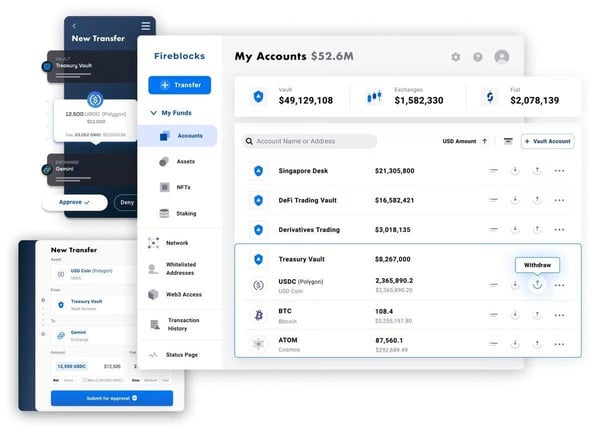
What I found across user feedback is that Fireblocks functions as a centralized environment for custody and wallet infrastructure management. Teams create wallets, structure vaults, and manage assets for large customer bases within a single platform — a structure that suits custodial services, trading platforms, and institutional workflows requiring clear asset segregation.
Many G2 reviewers describe processing hundreds or thousands of transactions per day using the platform’s APIs and operational tools. Fireblocks allows companies to integrate transaction orchestration directly into their financial systems without building custom wallet infrastructure. For exchanges, fintech platforms, and crypto service providers, this scalability supports growing transaction volume while maintaining consistent operational performance.
The extensive governance settings and security configuration options can become a consideration. Teams seeking a lightweight personal crypto wallet may find the operational depth more than necessary. Configuring transaction authorization across multiple workspaces can take additional time. However, teams describe the governance layer as one of the more dependable parts of their daily operations. G2 review patterns mention that configuration investment tends to pay off once workflows are established.
Some G2 user reviews note that administrative tasks and transaction workflows can occasionally involve slower response times. Teams expecting instant processing may notice this during governance-heavy operations. However, this processing time enables the security checks and audit trail that keep high-value transactions fully protected.
All in all, G2 Data portrays Fireblocks as a cryptocurrency wallet platform designed for organizations treating digital asset custody as mission-critical infrastructure. Its combination of institutional security, governance flexibility, and scalable transaction workflows positions it as a dependable choice for companies building or expanding crypto operations.
“As an Operations Manager in the Web3 space, Fireblocks is absolutely essential for our corporate treasury management. The MPC (Multi-Party Computation) wallet technology provides incredible security, but the real star is the Policy Engine. It allows our operations team to set granular, multi-step approval workflows for transactions based on transfer size and destination, ensuring we remain highly secure without slowing down our daily settlements.”
- Fireblocks review, Afzal M.
“Auto log-off feature, where we are logged off if we do not respond.”
- Fireblocks review, Mitul D.
Coinbase Wallet is built to give users direct control over their digital assets through a self-custody crypto wallet. It enables storage, transfers, and portfolio management across multiple blockchain networks while also providing access to decentralized applications, token swaps, and NFT management.
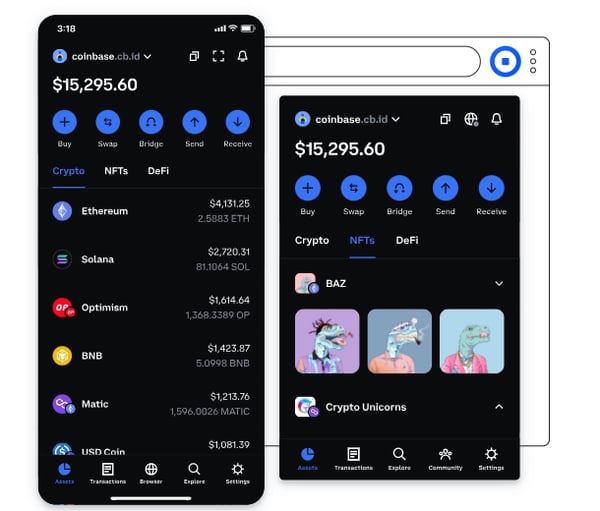
With an ease of use rating of 93% on G2, the wallet features a clear and structured interface that simplifies everyday crypto tasks such as sending, receiving, and monitoring assets. Navigation across both the mobile application and browser extension follows a logical layout that keeps core wallet actions easily accessible. Fewer steps are required to manage transactions or check balances, which helps streamline routine asset management. This structure tends to work well for individuals and smaller teams who prefer a wallet that emphasizes clarity over complex configuration.
The platform supports asset management across multiple blockchain networks within a single interface. Compatibility with ecosystems such as Ethereum, Bitcoin, Solana, Polygon, and others allows tokens and NFTs to be stored and tracked without maintaining separate wallets. This consolidated view improves portfolio visibility for users operating across multiple chains. Managing assets from one environment also helps reduce fragmentation when handling diverse crypto holdings.
The wallet integrates directly with Coinbase, allowing assets to move smoothly between exchange accounts and self-custody storage. What I found consistently across Coinbase Wallet reviews is that this integration is the primary reason users choose it over independent self-custody options. The ability to buy on the exchange and hold in a personal wallet without extra steps removes a friction point that stops a lot of first-time holders.
Its non-custodial architecture allows users to retain full control of their private keys. Additional safeguards include biometric authentication, encrypted key storage, and compatibility with hardware wallets such as Ledger. Features like transaction previews and token approval alerts provide added transparency when interacting with decentralized applications. Together, these controls support secure asset management while maintaining independent custody.
The wallet also functions as an access point to decentralized applications and services. Users can connect to dApps, explore DeFi protocols, and manage NFTs directly from the wallet interface through the built-in Web3 browser. This integration allows blockchain applications to be accessed without switching between multiple tools. For users exploring decentralized ecosystems, the wallet acts as a central gateway to Web3 environments.
Multiple users described the process as fast and straightforward without unexpected delays. What I found across the reviews is that Coinbase Wallet isn't trying to be the most technically capable wallet — it's trying to be the one people actually stick with, and the reliability of core functions is what makes that work in practice.
G2 reviewers note that transaction fees displayed in the interface can sometimes appear higher compared with certain alternative wallets. However, the Coinbase Wallet’s structure aligns well with individuals who prioritize reliability, convenience, and integration within a trusted ecosystem.
Several G2 reviewers mention that credit card deposits are restricted or unavailable in certain countries and that the number of supported payment methods is narrower than they would prefer. That said, the core wallet functions, sending, receiving, and managing assets, remain accessible and well-reviewed across the regions where full payment support is available, with the product team actively expanding coverage.
Coinbase Wallet holds a well-established position in the cryptocurrency wallet category as a widely adopted self-custody solution. Its multi-chain asset management, Web3 connectivity, and integration with the Coinbase ecosystem make it accessible for individuals and smaller teams managing digital assets. For users seeking a trusted, easy-to-use wallet with independent control over their assets, Coinbase Wallet remains a practical and widely recognized choice.
"Coinbase wallet is very simple to set up and use, either on your preferred mobile device or as a Chrome extension on your computer or laptop. The usability and UI are also great, making it simple to use and navigate.”
- Coinbase Wallet review, Armando R.
“I sometimes find transaction gas fees shown in the UI higher than on-chain costs.”
- Coinbase Wallet review, Luca P.
Dfns provides wallet infrastructure for organizations building crypto-enabled products. The platform focuses on programmable wallet management powered by multi-party computation (MPC) and policy-based access controls.
Fraud Detection stands out as one of Dfns’ strongest capabilities on G2, earning a 87% rating. G2 reviewers frequently highlight the platform’s ability to configure approval workflows, role-based permissions, and transaction policies that govern how assets move across wallets. Organizations managing custodial funds, treasury wallets, or multi-user transaction environments gain structured oversight without building policy enforcement from scratch.
The platform follows an API-first architecture that allows developers to create wallets, manage keys, and initiate transactions programmatically without exposing private keys to application layers. This setup enables companies to embed wallet functionality directly into their own products while maintaining control over the user experience. G2 reviews suggest that exchanges, fintech platforms, and Web3 applications often rely on this programmable infrastructure to deliver wallet-enabled services without handling sensitive key material internally.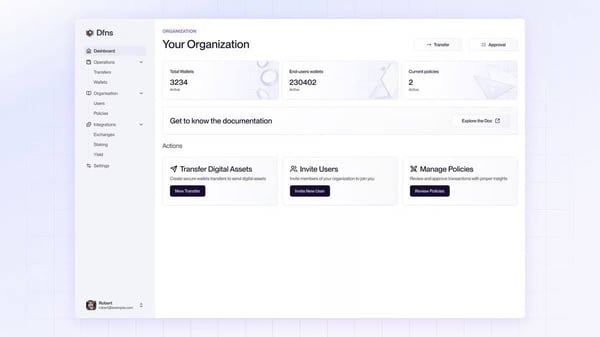
While analyzing G2's review data, I kept coming back to how frequently Dfns is a foundation layer for companies issuing wallets to users or managing custodial crypto assets. The platform enables teams to generate wallets programmatically while applying policies that control access, signing permissions, and transaction rules across users or internal teams.
The platform maintains an active product roadmap with consistent feature releases, evolving alongside the Web3 ecosystem. For organizations building long-term blockchain products, this cadence of development provides confidence that the infrastructure will keep pace with new networks, standards, and operational demands.
From my evaluation of G2 reviews, I noticed that the engineering and support teams assist quickly during integration and technical troubleshooting, consistent with Dfns' quality of support rating of 97% on G2. Feedback also suggests an active feedback loop where customer input contributes to product updates and improvements, which can support smoother implementation for teams deploying wallet infrastructure in production environments.
Compared with enterprise custody platforms, Dfns is often described as having a relatively accessible pricing structure that allows startups and emerging Web3 companies to adopt wallet infrastructure early in their growth cycle, reflected in an ease of doing business with a score of 97% on G2. Predictable pricing can help teams estimate operational costs as wallet usage and transaction volumes increase, which is particularly relevant for organizations experimenting with new blockchain-based products.
Some G2 reviews mention the API as comprehensive but initially complex to navigate. Teams new to wallet infrastructure or MPC-based architecture will notice this most during the integration phase, particularly when working through policy controls and permission structures for the first time. The complexity eases considerably once the integration is complete. Most reviewers describe the platform as straightforward to operate once the initial setup phase is behind them.
Token and blockchain coverage spans major networks but has some gaps, with several G2 reviewers noting limited USDT support and the absence of wallets for certain less common chains. Teams whose products depend on specific token standards or emerging networks may encounter these limitations during integration. It’s worth noting that Dfns ships new network and token support on a regular cadence, with coverage expanding meaningfully alongside each product release.
For organizations building blockchain-enabled products, Dfns provides programmable wallet infrastructure backed by policy-driven security and consistent developer support.
“I appreciate Dfns for its low entry cost and robust infrastructure, which made it an excellent alternative for our needs compared to other expensive options. The setup process was straightforward and easy, which was a great start for us. I'm impressed by the robust wallet infrastructure that Dfns provides, especially with its prebuilt integrations with third-party vendors, which saves us a lot of time and effort as we don't need to integrate them individually. The core functionality of the wallets, particularly sending and receiving, is extremely beneficial for our operations. Additionally, the fact that Dfns frequently ships new features shows their commitment to constant improvement, which is crucial for us. Lastly, I value the team's support and the ongoing updates, which give me confidence in their service.”
- Dfns review, Ibahima S.
"The complexity of the API results in a steep learning curve, but it is still manageable.”
- Dfns review, David A.
Built around a keyless security architecture, Zengo Wallet uses Multi-Party Computation (MPC) and biometric authentication to manage self-custody without traditional key storage. The platform focuses on reducing operational risk while supporting everyday Web3 activities such as token transfers, swaps, and decentralized app connectivity.
The interface is frequently described as clean, responsive, and easy to navigate, allowing users to check balances, send assets, or initiate purchases without moving through complex wallet menus. Zengo Wallet's ease of use score of 95% on G2 reflects this consistency across its user base. In a category where onboarding often involves several technical steps, this design helps users move from account creation to active asset management with minimal setup friction.
Zengo also incorporates dynamic deposit addresses, generating a new wallet address for each incoming transaction. This structure helps reduce traceability patterns that can occur when a single address is reused repeatedly, providing an additional layer of privacy during routine transfers. What I saw in G2 reviews is that this approach is valued by users who prioritize transaction-level privacy while managing assets across different blockchain networks.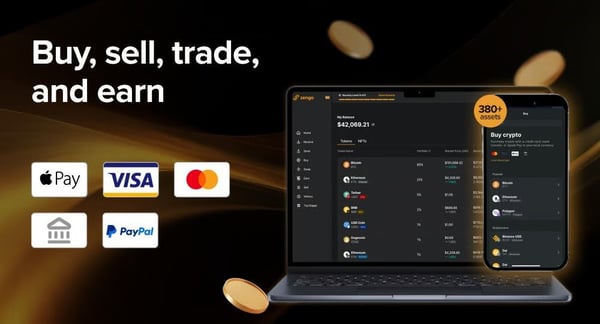
Beyond storage, the wallet supports buying, selling, and swapping directly within the application. Supported payment methods and third-party crypto processors allow users to acquire digital assets without leaving the interface. G2 reviews also reference earning features and token management tools for managing holdings from a single environment. What I kept finding across Zengo's reviews is that this in-app completeness is what retains users. Once buying, swapping, and earning are all inside one wallet, the motivation to manage a second tool disappears entirely.
Quick support responses, accessible in-app help channels, and clear documentation assist with account questions or transaction issues, backed by a quality of support rating of 95% on G2. The platform also provides educational resources that explain cryptocurrency fundamentals and wallet functionality, giving users guidance beyond basic troubleshooting.
The wallet also integrates with decentralized applications through WalletConnect and cross-chain functionality, allowing users to interact with Web3 platforms directly from the wallet environment. G2 review data indicates that multiple token standards and blockchain networks are supported, enabling users to manage different assets while participating in decentralized finance, NFT ecosystems, or other blockchain services without maintaining multiple wallets.
Asset coverage focuses primarily on major cryptocurrencies, so traders targeting niche or emerging altcoins may find the selection narrower than some alternatives. The supported range covers the most actively traded assets and has expanded consistently.
Transaction costs can sometimes be higher for purchases or swaps due to integrated payment providers. Users executing high-frequency trades or prioritizing the lowest possible fees may notice this more. However, G2 reviews describe that the in-app transaction structure removes the need to move funds across platforms, keeping the full buying and swapping experience contained within a single environment.
Zengo Wallet stands out for its keyless MPC security and biometric authentication, removing the complexity of private keys while maintaining self-custody. It offers reliable day-to-day usability, making it a strong fit for individuals and small businesses prioritizing secure, simple asset management.
“I can use my crypto tokens for various activities. For example, I was holding my XTZ tokens for a longer period, but after checking the earn feature on Zengo, now I started getting 5% APR.”
- Zengo Wallet review, Abrar K.
“I feel that some obvious assets are missing from the list of supported assets, and I don't understand why. XRP and HBAR are examples. It's the only reason why I keep assets in other places. I also feel that under each asset, whether cryptocurrency or NFT, there should be a history of transactions for said asset. I should not need to go into the history tab to find a specific transaction under a specific asset.”
- Zengo Wallet review, Verified User in Online Media
MetaMask connects users to decentralized finance and Web3 applications through a browser extension or mobile app. The browser extension allows users to manage tokens, review transactions, and approve smart contract interactions directly within their browser, while account setup typically takes only a few minutes, consistent with the ease of setup score of 90% on G2. A streamlined layout presents core actions such as sending assets, viewing balances, and switching networks, reducing the operational friction often associated with cryptocurrency wallets.
MetaMask functions as a connection layer between wallets and decentralized applications, enabling users to authenticate and approve blockchain interactions directly from the wallet interface rather than creating separate accounts across platforms. What I found in G2 reviews is that this capability is central to participation in DeFi platforms, NFT marketplaces, and other blockchain services. By standardizing wallet authentication and transaction approvals, MetaMask provides a consistent way for users to interact with Web3 applications across different ecosystems.
MetaMask supports Ethereum Virtual Machine (EVM) compatible networks, allowing users to connect not only to Ethereum but also to chains such as Polygon and other EVM-based blockchains from the same wallet interface. This compatibility enables users to manage assets and interact with decentralized applications across multiple networks from a single wallet interface, which matters most for users who regularly interact across more than one chain.
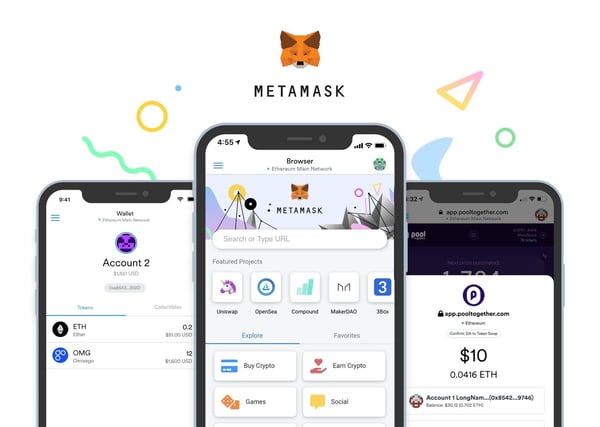
This structure aligns with the decentralization principles that define many blockchain ecosystems. G2 reviewers frequently emphasize that the model allows individuals to manage their own assets and digital identities directly, enabling participation in decentralized finance and blockchain services without relying on third-party custody.
Security mechanisms are integrated directly into the wallet architecture, with private keys encrypted locally and each transaction requiring explicit confirmation before execution. This verification model provides visibility into smart contract interactions and token transfers, allowing users to review actions before approving them. For individuals interacting with DeFi protocols, NFT marketplaces, or token swaps, this transaction-approval layer helps maintain control over outgoing blockchain interactions.
MetaMask is also widely used within blockchain development workflows. I noticed that G2 reviewers frequently reference its usefulness when connecting to blockchain test networks, testing smart contracts, and interacting with decentralized protocols during development cycles. The wallet’s ability to simulate transactions and estimate gas fees before execution provides practical insight into whether a transaction is likely to succeed, making it a commonly used interface in Web3 development environments.
The wallet’s flexibility introduces a level of configuration depth that may require familiarity with blockchain terminology. Users newer to Web3 may need time to navigate tasks like adding custom networks or adjusting transaction parameters. However, G2 reviews mention that the flexibility supports greater control when interacting with decentralized applications and networks.
Some G2 reviewers note that transaction costs can fluctuate based on network conditions, particularly on Ethereum during periods of high activity. Users focused on predictable or consistently low fees may notice this more during peak usage. However, the wallet remains well-suited for interacting across decentralized networks for those prioritizing ecosystem access and multi-chain participation. MetaMask's customizable settings give users direct control over transaction prioritization, allowing costs to be managed based on current network conditions.
MetaMask continues to hold a central role within the cryptocurrency wallet ecosystem, particularly for users engaging with decentralized finance, NFTs, and blockchain development tools. Its browser-native design, broad network compatibility, and integration with decentralized applications position it as a primary interface for interacting with Web3 services.
“As a long-time user of Metamask, spanning over four years, I have witnessed its evolution from a basic Ethereum wallet to a comprehensive gateway into a decentralized finance ecosystem. One of the good things is extensive blockchain support, like a wide range of Ethereum virtual machine-compatible blockchains. I like the seamless integration with DeFi platforms. Easily integrated with a hardware wallet.”
- MetaMask review, Sharin S.
“Security risks. It stores the private key locally, which means they could be vulnerable to malware and phishing attacks if proper precautions are not taken. Limited browser support.”
- MetaMask review, Jigyel Yeshey D.
Built on the MultiversX blockchain, xPortal packages asset management, fiat conversion, NFT storage, staking, and decentralized app access into a single mobile wallet. It targets users who want full self-custody of digital assets without giving up everyday spending utility.
Guardians technology adds an on-chain 2FA layer that protects assets even if a seed phrase is compromised — a level of protection rarely offered by default in mobile wallets. From what I found across the review data, this is the feature that makes xPortal worth evaluating seriously. Most mobile wallets treat security as a setup step. xPortal treats it as an ongoing layer, and that distinction matters when something actually goes wrong.
The interface consistently draws positive feedback across G2 reviews for being intuitive and easy to navigate, a pattern reflected in the ease of use score of 98% on G2. G2 reviewers across experience levels describe setup as straightforward and asset tracking as clear. Review patterns suggest xPortal bridges beginner-friendly design with advanced feature depth without sacrificing either.
The built-in Mastercard debit card is a practical differentiator that I found repeatedly in G2 reviews. It lets users convert crypto to fiat and spend directly, removing the friction of routing funds through an external exchange. Reviewers describe topping up the card from both crypto and fiat sources, making it a fluid bridge between digital and traditional finance. For users who want their crypto to function as spendable money, this removes a meaningful step.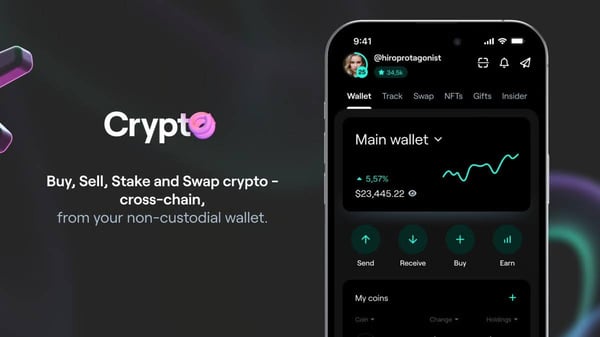
The Hub functions as an in-app store for decentralized applications, covering DeFi, trading, and gaming within the MultiversX ecosystem. G2 reviewers describe it as enabling safe interaction with a range of dApps without leaving the wallet interface. That consolidation keeps asset access in one place and cuts the time lost moving between separate tools. Reviewers coming from multi-app setups describe this as a genuine workflow improvement.
G2 reviewers mention the Earn feature as a useful passive income layer built directly into the wallet. Users can stake crypto for yield without routing funds to external platforms. This keeps the full asset lifecycle, holding, earning, and spending, contained within a single mobile application. Reviewers who actively use staking describe it as one of the features that makes xPortal more than a basic storage tool.
App performance can dip during high-refresh moments, with price charts and daily task reloads running slower on mid-range devices. This is more noticeable for users who monitor price movements frequently or rely on real-time data as part of their daily routine. G2 review patterns show the experience is improving with recent updates, and reviewers on current hardware consistently describe the app as responsive.
The feature set is wide enough that first-time users from single-chain wallets can take time to get oriented across the layout, most noticeable during the first few sessions in the app. Multiple G2 reviewers describe the volume of functions as initially disorienting, particularly for users arriving from simpler wallet environments. Navigation becomes intuitive once the structure is familiar, with most reviewers describing day-to-day use as smooth and efficient.
Taken together, xPortal delivers a mobile crypto experience that goes well beyond basic storage. Staking, spending, dApp access, and on-chain security sit inside one application, and G2 reviewers return to the Guardians 2FA layer and the built-in debit card as features that distinguish it from standard mobile wallets. For users who want their full crypto workflow accessible from a smartphone without relying on multiple tools, the daily experience G2 reviewers describe holds up well.
“The design is amazing, and it offers the most features I have seen on any wallet. Plus, the added security of built-in 2FA is unbeatable.”
- xPortal review, David B.
“A lot of functions can get you lost at the beginning.”
- xPortal review, Golwen K.
Accepting crypto payments without the operational overhead of traditional gateways is where Cryptomus positions itself. The platform combines a payment processor, custodial wallet, and currency converter into one interface, built primarily for online businesses looking to expand payment options beyond fiat.
Processing speed and reliability come up across G2 reviews as core reasons businesses stay on the platform. Multiple G2 reviewers describe withdrawals as fast and transaction handling as consistent, even under high volume. For businesses running high-frequency payments, that dependability is the primary reason they stay.
With 91% in ease of setup, setup and integration land consistently well in G2 reviews, with businesses describing the process of connecting Cryptomus to an existing online store as quick and clean. The API handles payment triggers reliably, and while evaluating G2 review patterns, I noticed that users who moved from other services specifically mention unstable API behavior as the reason they left. For smaller teams without dedicated engineering support, that kind of dependable integration directly reduces the effort needed to go live.
Encrypted payment methods, multiple security layers, and a KYC process that does not create unnecessary onboarding drag appear consistently across G2 reviews. For merchants handling customer payment data, that combination matters. G2 review patterns suggest security is not just a baseline feature here but an active reason buyers choose the platform over alternatives.
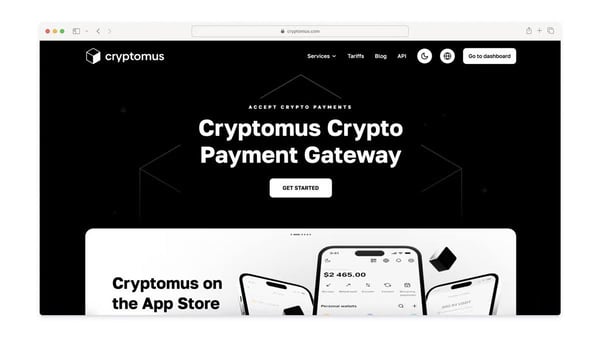 Non-technical business owners consistently describe managing transactions and monitoring holdings without needing external support. G2 reviewers operating across multiple markets point to the interface as accessible regardless of region or crypto experience level, supported by ease of use rated at 96% on G2. That accessibility removes a friction point that typically slows adoption for businesses bringing crypto payments to a non-technical team.
Bitcoin, Ethereum, and a range of altcoins are supported at competitive transaction fees, with no geographic restrictions on who can transact. G2 reviewers describe this as directly expanding the customer base, particularly for businesses targeting international buyers. Multi-currency reach removes the conversion friction that limits the adoption of crypto payment options in cross-border commerce.
The auto-conversion feature, which handles fiat-to-stablecoin conversion automatically, draws specific attention in G2 reviews. The built-in converter manages token swaps within the platform, and reviewers running personal accounts note zero-commission internal transfers. What stood out to me across the G2 reviews is that teams stop looking for a separate tool the moment they realize payment processing and personal wallet utility live in the same account.
Cryptomus currently operates as a web-based platform without a dedicated mobile application. Solo operators and small teams who manage payments across multiple devices throughout the day are most likely to notice this gap. The browser experience covers core payment tasks reliably, and G2 reviewers consistently describe transaction handling and withdrawal processing as smooth and dependable through the web interface.
Educational resources and step-by-step guidance are limited, with multiple G2 reviewers noting that the platform's potential is harder to unlock without structured onboarding materials. This gap is most noticeable during the initial setup phase when users are learning to navigate the payment configuration options, though the platform's core functionality is intuitive enough that most operators describe getting up and running quickly once the initial orientation is complete.
All considered, Cryptomus serves businesses that want to accept crypto payments without the weight of complex gateway infrastructure. The reliability, multi-currency support, and straightforward setup that G2 reviewers return to make it a practical fit for small online businesses looking to add crypto as a payment channel without overhauling existing systems.
"I tried all available cryptocurrency payment services, and all of them have small print, problems with withdrawals can appear, API abruptly stops responding - all of that Cryptomus doesn't have. The support is just great, guys who will go out of their way to help with any issue."
- Cryptomus review, Michele G.
“Pricing and fee clarity could be consolidated in one canonical, easy-to-find page with examples across scenarios, including auto-conversion, cross-network receipt, and payout behavior under different configurations.”
- Cryptomus review, Luca P.
|
Software |
G2 rating |
Free plan |
Best for |
|
Fireblocks |
4.7/5 |
No |
Large institutions that require advanced security controls and multi-signature capabilities to manage crypto assets. |
|
Coinbase Wallet |
4.4/5 |
No (Pricing available on request) |
Individual users and small teams seeking easy-to-use crypto management and dApp integration |
|
Dfns |
4.8/5 |
Yes (Free trial available) |
Users needing highly customizable and secure key management solutions, ideal for both individual and enterprise users |
|
Zengo Wallet |
4.6/5 |
Yes (Free plan available) |
Users prioritizing keyless security and biometric protection without compromising simplicity |
|
MetaMask |
4.4/5 |
No (Pricing available on request) |
DeFi enthusiasts and developers looking for seamless interactions with decentralized apps and Ethereum-based projects |
|
xPortal |
4.8/5 |
Yes (Free wallet, specific costs for card) |
Mobile users managing crypto assets on the go with a streamlined wallet and card experience |
|
Cryptomus |
4.1/5 |
No |
Businesses looking for seamless cryptocurrency payment solutions, especially in e-commerce and digital services |
*These cryptocurrency wallets are top-rated in their category, based on G2’s Winter 2026 Grid® Report. Most offer custom pricing tiers, with demos or trials available on request.
Got more questions? G2 has the answers!
Zengo Wallet and xPortal are strong options for everyday mobile security, with both drawing consistent praise for their security architecture across G2 reviews. Zengo's keyless recovery system and xPortal's Guardians on-chain 2FA are features G2 reviewers return to most when describing why they trust these wallets for daily mobile use. For users who prioritize security without sacrificing usability, both hold up well across G2 reviews.
xPortal and Cryptomus stand out in G2 reviews for competitive fee structures, though each serves a distinct use case. xPortal reviewers consistently describe low transaction costs on the MultiversX blockchain as a practical daily benefit for mobile asset management. Cryptomus reviewers highlight competitive processing fees and no geographic restrictions as reasons it works well for businesses handling cross-border crypto payments. For users whose fee priority sits within either of these contexts, both are well-regarded options in G2 reviews.
G2 review patterns suggest xPortal and Zengo Wallet as strong options for multi-token staking, with both offering built-in earn features that keep staking within the wallet interface. xPortal reviewers describe the staking workflow as straightforward and accessible, while Zengo reviewers highlight the in-app earn feature as a practical way to generate yield on held assets without leaving the app.
MetaMask and Zengo Wallet are both self-custodial, with G2 reviewers citing direct ownership of account access as a core reason for choosing each. MetaMask stores private keys locally with encryption, while Zengo replaces the seed phrase with a keyless MPC-based system that distributes key responsibility without placing it with a centralized custodian. Which fits better depends on whether a user prefers locally managed keys or a seedless recovery model.
Zengo Wallet and Coinbase Wallet are both consistently described in G2 reviews as approachable for first-time holders, with straightforward onboarding and no technical configuration required. Both support BTC and ETH and are regularly recommended as starting points for users new to self-custody.
Zengo Wallet combines a clean interface with MPC-based security that avoids exposing a traditional seed phrase. MetaMask is another option for users who want self-custody without KYC requirements, with private keys stored locally and no centralized party holding account access. Both maintain a privacy-conscious architecture without sacrificing everyday usability.
Coinbase Wallet and MetaMask both offer mobile apps alongside browser-based desktop access, covering the same core functions across environments. Coinbase Wallet reviewers describe the interface as consistent across devices, while MetaMask reviewers highlight its browser extension and mobile app as reliable across platforms. Users managing complex holdings across devices should evaluate both carefully, as neither offers dedicated portfolio sync between desktop and mobile.
Zengo Wallet's cloud-backed MPC recovery model is designed for exactly this scenario, allowing full wallet recovery after complete device loss without a seed phrase. Fireblocks is another option for enterprise-grade key management that does not depend on a single device. For individual travelers, Zengo's recovery architecture addresses lost-device risk more directly than most wallets in this category.
G2 review patterns in this category focus primarily on software wallets, with limited hardware wallet coverage in the dataset. Fireblocks draws attention for institutional-grade key security that shares design principles with hardware-based approaches. For dedicated hardware wallet options, exploring G2's broader security and key management categories would surface more directly comparable products.
Most wallets in this category are built for one use case or the other. Cryptomus is designed specifically for business payment acceptance, while xPortal and Coinbase Wallet are built around personal asset management. Teams needing both functions typically pair a dedicated payment processor with a personal wallet rather than relying on a single tool.
Crypto infrastructure is shifting fast. Regulatory frameworks around digital asset custody are tightening across major markets, MPC-based key management is becoming a baseline expectation rather than a premium feature, and cross-chain interoperability is pushing wallets to support more protocols without expanding the attack surface. The wallet that fits your needs today may need to handle a meaningfully different operational environment within two years.
Before committing to a platform, clarify a few things internally: What does your recovery process look like if a key holder leaves the organization? Does your compliance team have visibility into transaction history in a format they can actually use? Where does your workflow currently depend on manual steps that a more capable wallet could automate?
The right starting point is usually a focused pilot, not a full migration. Pick one use case where your current setup creates friction, test a shortlisted wallet against it specifically, and evaluate from there. That scoped approach surfaces integration issues and security gaps early, before they compound.
Want to understand the blockchain networks behind your wallet? Explore top blockchain applications on G2 for smart contracts, dApps, and multi-chain support.


In a world of digital asset supremacy, robust security is the need of the hour.
 by Washija Kazim
Wondering if Coinbase is the right platform to diversify your crypto portfolio?
by Washija Kazim
In the world of crypto, coins speak louder than words.
by Washija Kazim